2026 Hindu Calendar Festival List
The Ultimate Hindu Calendar 2026: Festivals, Dates, and What They Really Mean
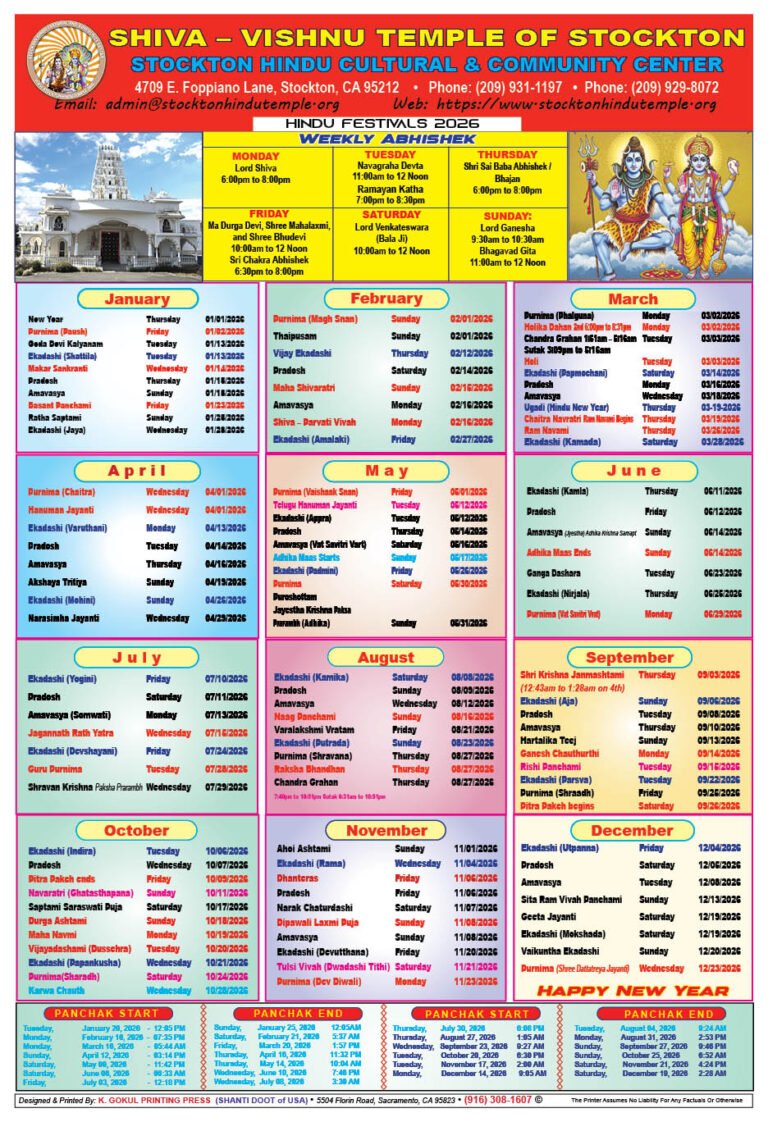
Alright, let’s talk about 2026. Forget those generic datebooks; we’re diving headfirst into the 2026 Hindu calendar. This isn’t just about marking down holidays. It’s about understanding the pulse of a culture, the rhythm of devotion, and the ancient wisdom packed into every single date. Think of it as your roadmap to a year filled with spiritual significance, vibrant celebrations, and maybe a few important dates you don’t want to miss. We’re going to break it all down, month by glorious month, so you know exactly when to mark your calendar for everything from major festivals to smaller, yet still crucial, observances. This isn’t your typical dry calendar listing; we’re digging into the ‘why’ behind the ‘when’.
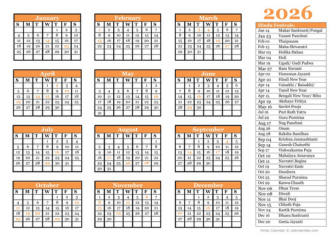
Source : calendarlabs.com
January 2026: Kicking Off the Year with Auspicious Begiings
January kicks off with a bang, or rather, a sacred dip. The big one here is Makar Sankranti, usually falling around the 14th or 15th. This marks the sun’s transition into Capricorn, a major turning point. It’s a time for new begiings, shedding the old, and celebrating the harvest. People take holy baths in rivers like the Ganga, donate items, and fly kites. It’s a serious deal, marking the end of the winter solstice period and the start of longer days. Think of it as a cosmic reset button, powered by the sun. Don’t forget Putrada Ekadashi too, a fast observed for the well-being of children. It’s a day of prayer and devotion, showing the deep value placed on family lineage and the continuation of generations.
February 2026: Love, Devotion, and Divine Unions
February often brings us Vasant Panchami, also known as Saraswati Puja. This festival is dedicated to Goddess Saraswati, the deity of knowledge, music, arts, wisdom, and learning. It’s a big day for students, artists, and anyone seeking intellectual prowess. You’ll see people wearing yellow, offering prayers, and often visiting temples dedicated to Saraswati. It’s a beautiful celebration of creativity and enlightenment. Then we have Maha Shivratri, the ‘Great Night of Shiva’. This is a profoundly spiritual day where devotees fast, meditate, and stay awake all night, chanting prayers to Lord Shiva. It commemorates the divine marriage of Shiva and Parvati and is considered one of the most significant nights for spiritual aspirants. The energy is intense, focusing on austerity and devotion. Truly a night for coecting with the divine masculine.
March 2026: Colors, Blessings, and New Begiings
March is arguably one of the most colorful months. The absolute highlight is Holi, the festival of colors. Usually falling in the latter half of March, it’s pure, unadulterated joy. People smear each other with colored powders and water, dance, sing, and feast. It signifies the victory of good over evil, the arrival of spring, and a general sense of communal togetherness. It’s a day when social barriers break down, and everyone just celebrates. Before Holi, though, we have the important Chaitra Navratri, which marks the begiing of the Hindu lunar new year according to the lunisolar calendar. This nine-night festival is dedicated to the worship of the divine feminine, Goddess Durga, in her various forms. Each day has its own significance and rituals, culminating in Ram Navami, celebrating the birth of Lord Rama. This festival is deeply rooted in devotion and righteousness. You can find detailed monthly breakdowns on sites like Indian festival calendars.

Source : prokerala.com
April 2026: Divine Births and Royal Celebrations
April continues the theme of new begiings. If Chaitra Navratri didn’t fall in March, it would likely spill into early April. Ram Navami, as mentioned, is a huge deal, celebrating the birth of Lord Rama, the seventh avatar of Vishnu. It’s a day of fasting, prayer, and recounting the epic Ramayana. Then, we often see Hanuman Jayanti, celebrating the birth of Lord Hanuman, the devoted follower of Rama. Devotees offer prayers, recite the Hanuman Chalisa, and seek blessings for strength, courage, and devotion. This month might also host some regional new year celebrations, depending on the specific regional calendars in use. It’s a time when the stories of gods and heroes are retold, reinforcing dharma and duty.
May 2026: Devotion, Asceticism, and Spiritual Power
May often brings Narasimha Jayanti, celebrating the birth of Lord Narasimha, the half-man, half-lion avatar of Vishnu, who appeared to protect his devotee Prahlada from his demon father. It’s a powerful reminder of divine intervention against evil. We also observe Ganga Dussehra, a festival honoring the River Ganga. It’s believed that on this day, the holy river descended to Earth. Taking a dip in the Ganga is considered highly purifying. Many people also observe fasts and perform rituals. Later in the month, Nirjala Ekadashi occurs, a particularly strict fast that is observed without consuming even a drop of water. It’s considered highly meritorious and is dedicated to Vishnu. The asceticism involved shows the depth of faith and the desire for spiritual merit.
June 2026: Guru’s Blessings and Divine Yoga
June is marked by Vat Savitri Vrat, primarily observed by women in North India. They pray for the longevity and well-being of their husbands by tying a sacred thread around a banyan tree, narrating the story of Savitri and Satyavan. It’s a beautiful testament to marital devotion. We also celebrate Ganga Dussehra if it falls in June, continuing the reverence for the sacred river. And then there’s Jagaath Puri Rath Yatra, a massive chariot festival in Odisha. The deities Jagaath, Balabhadra, and Subhadra are taken out in grand processions on massive chariots. It’s a spectacular event, drawing millions of devotees. The sheer scale and devotion are breathtaking. It’s a time when the divine comes out to meet the people.
July 2026: Divine Love and Sacred Threads
July brings the much-anticipated Guru Purnima, a day dedicated to honoring spiritual teachers and gurus. It’s a time to express gratitude for the guidance and wisdom received. Devotees often visit their gurus, offer gifts, and seek blessings. The guru-shishya (teacher-disciple) bond is central here. Following that, we have Hariyali Teej, a festival celebrating the monsoon and the reunion of Lord Shiva and Goddess Parvati. Women often fast and pray for their marital bliss. And then, the iconic Raksha Bandhan arrives. This festival celebrates the bond between brothers and sisters, where sisters tie a ‘rakhi’ (sacred thread) on their brother’s wrist, symbolizing protection and love. Brothers, in turn, often give gifts and promise to protect their sisters. It’s a heartwarming celebration of familial ties.
August 2026: Divine Births and Powerful Goddesses
August is packed! We start with Krishna Janmashtami, celebrating the birth of Lord Krishna. Homes are decorated, swings are set up for baby Krishna, and devotees fast until midnight, when the deity’s birth is celebrated with prayers and sweets. It’s a deeply devotional and joyous occasion. Then comes Ganesh Chaturthi, a major festival celebrating the birth of Lord Ganesha, the elephant-headed god of wisdom and prosperity. Idols of Ganesha are installed in homes and public pandals, worshipped for ten days, and then immersed in water bodies. It’s a vibrant festival marked by music, food, and community spirit. Following this, we often see Naga Panchami, where serpents are worshipped, often seen as protectors and symbols of fertility. Finally, the month might culminate with the start of Sharad Navratri, another nine-night festival dedicated to Goddess Durga, leading up to Dussehra. This is a particularly significant Navratri celebrated across India. The energy builds towards celebrating the victory of good over evil.
September 2026: Victory and Divine Feminine Power
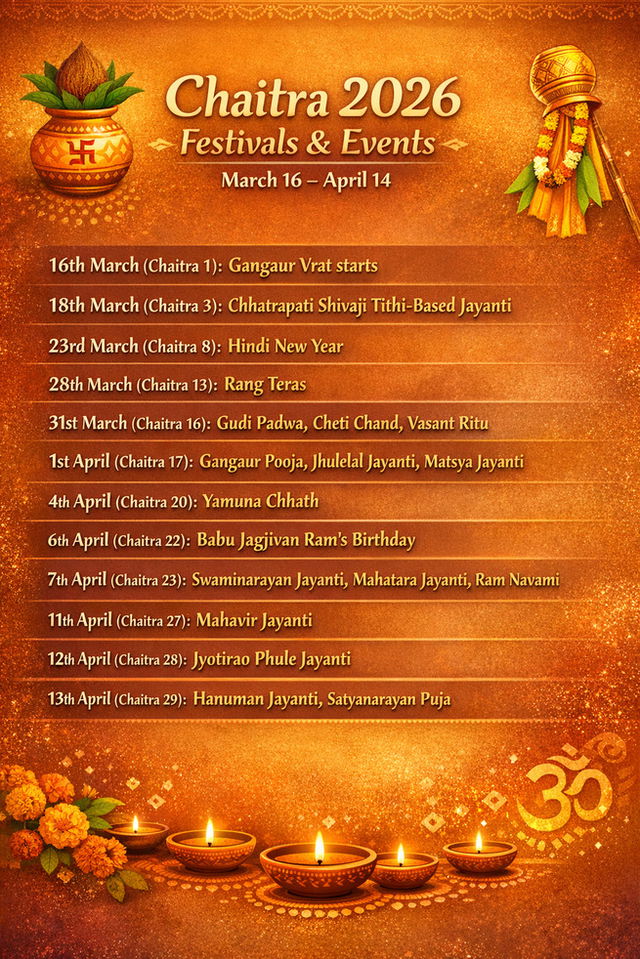
Source : calendarr.com
September is dominated by the culmination of the Sharad Navratri. The nine nights are filled with prayers, fasting, and cultural programs. Each day honors a different form of the Goddess. It’s a period of intense spiritual focus. The festival peaks with Dussehra (also known as Vijayadashami). This marks the victory of Lord Rama over the demon king Ravana and also Goddess Durga’s triumph over the buffalo demon Mahishasura. Effigies of Ravana are often burned, symbolizing the destruction of evil. It’s a powerful celebration of righteousness prevailing. Many people also start their preparations for Diwali around this time. It’s a time when divine feminine energy is celebrated in its full glory.
October 2026: The Festival of Lights and Divine Unions
October is THE month for Diwali, the festival of lights. Usually falling in late October or early November, this is perhaps the most widely celebrated Hindu festival. It symbolizes the victory of light over darkness, good over evil, and knowledge over ignorance. Homes are cleaned, decorated with lamps (diyas) and rangoli, and people wear new clothes, exchange gifts, and burst fireworks. It’s a time for family, feasts, and a general atmosphere of prosperity and joy. Preceding Diwali, we have Dhanteras, where people often buy gold or new utensils, considered auspicious. Then comes Choti Diwali, and finally, the main Diwali day, often coinciding with the worship of Goddess Lakshmi, the deity of wealth. You can check specific dates for Hindu festivals in 2026 for precise timings. We might also see Govardhan Puja and Bhai Dooj immediately following Diwali, further cementing family bonds.
November 2026: Devotion, Asceticism, and Spiritual Awakening
November often begins with the tail end of Diwali celebrations, like Bhai Dooj, reinforcing sibling ties. Then we approach Kartik Purnima, a significant full moon day. It marks the end of the five-day Diwali festival and is considered highly auspicious for taking holy dips in rivers. It often coincides with other celebrations like Guru Nanak Jayanti (for Sikhs) and various temple festivals. We also have Dev Deepavali, where lamps are lit on the banks of the Ganga in Varanasi, creating a breathtaking spectacle. Many observe fasts during the month of Kartik, which is considered sacred. It’s a period of heightened spiritual activity and purification.
December 2026: Year-End Reflections and Important Vrats
December might host important Ekadashi fasts like Utpaa Ekadashi or Mokshada Ekadashi, offering opportunities for spiritual merit as the year winds down. Mokshada Ekadashi is particularly significant as it’s believed to bestow liberation. We also have Gita Jayanti, celebrating the birth of the Bhagavad Gita, a foundational scripture in Hinduism. It’s a day to reflect on its teachings. Depending on the lunar cycle, various other local festivals and temple celebrations might occur. It’s a time for final reflections, gratitude for the year gone by, and setting intentions for the year ahead. The Hindu calendar continues its cycle, always offering new chances for devotion and spiritual growth.
Why These Festivals Matter More Than Just Dates
Look, ticking boxes on a calendar is one thing. But understanding the Hindu festivals is about grasping the cultural and spiritual heart of India. Each festival, whether it’s the explosive joy of Holi or the solemn fast of Maha Shivratri, is steeped in stories, mythology, and deeply held beliefs. They’re not just days off; they’re opportunities to coect with the divine, reinforce community bonds, and pass down traditions. Think about the stories of gods and goddesses, the lessons of dharma, the importance of family – these festivals are the living, breathing embodiments of those values. They provide a rhythm to life, a structure for devotion, and a vibrant expression of faith that’s hard to find elsewhere. It’s a cyclical reminder of cosmic order and human coection.
The Ever-Changing Dance of Lunar and Solar Calendars
One thing you gotta get your head around is how the Hindu calendar works. It’s not just a simple solar calendar like the Gregorian one we use daily. It’s lunisolar. This means it tracks both the moon’s phases AND the sun’s position. This is why festival dates seem to jump around every year when you look at a Gregorian calendar. The Hindu calendar has lunar months, which are shorter than solar months. To keep things aligned with the seasons (which are solar-based), they add an extra ‘intercalary’ or ‘leap’ month (Adhik Maas) roughly every three years. This lunisolar system is ancient and deeply tied to agricultural cycles and astronomical observations. It’s a complex dance, but it ensures festivals occur in their astrologically and seasonally appropriate times. Understanding this explains why there’s no single, fixed Gregorian date for, say, Diwali, year after year. It’s all about the precise alignment of the sun and moon.
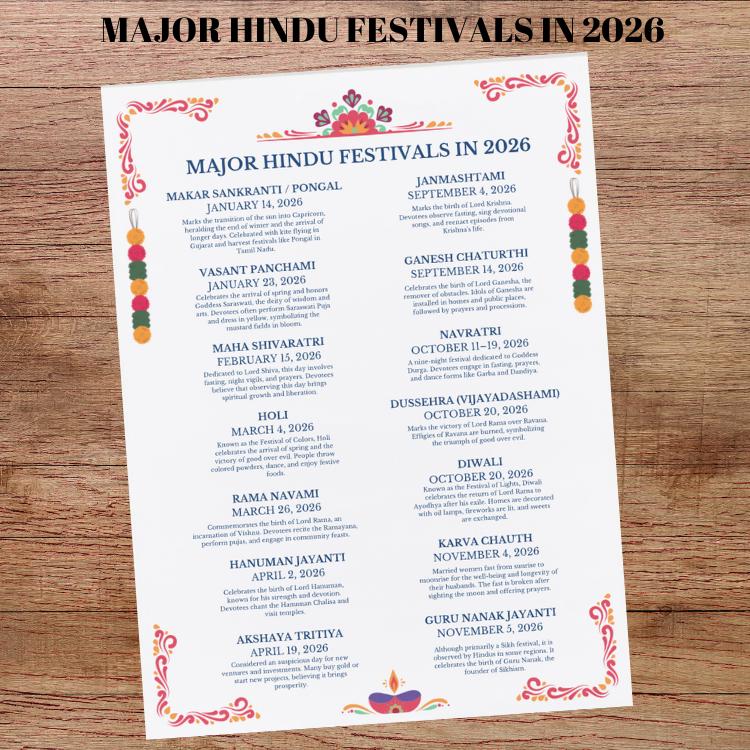
Source : etsy.com
FAQ: Your Burning Questions Answered
What are the 9 days of Navratri 2026?
Okay, Navratri is a big deal, and there are actually two main ones. The Chaitra Navratri usually happens in March (sometimes spilling into April), marking the Hindu new year. Then there’s Sharad Navratri, typically in September or October, which is the more widely celebrated one. Both are nine-night festivals honoring Goddess Durga. Each of the nine days is dedicated to a specific form of the Goddess, like Shailaputri, Brahmacharini, Chandraghanta, Kushmanda, Skandamata, Katyayani, Kalaratri, Mahagauri, and Siddhidatri. So, it’s not just nine generic days; it’s nine specific manifestations of divine feminine power. Each day has unique rituals and significance, focusing on different aspects of her strength and grace.
What is the real date of Diwali in 2026?
Diwali, the festival of lights, is a bit of a moving target on the Gregorian calendar because it follows the Hindu lunisolar calendar. In 2026, Diwali is expected to fall on November 11th. Remember, it’s celebrated on the Amavasya (new moon) of the Kartik month. This date is crucial because it’s when we honor Goddess Lakshmi, the deity of wealth and prosperity. So, mark your calendar for November 11th, 2026, for the main Diwali festivities. It’s a night where homes glow with lamps, symbolizing the triumph of light over darkness and good over evil. Don’t forget to check precise timings as the date gets closer, as it’s based on specific lunar calculations.
When is Ganesh Chaturthi in 2026?
Get ready for Ganesha’s arrival! Ganesh Chaturthi in 2026 is slated for August 22nd. This is when we celebrate the birth of Lord Ganesha, the beloved elephant-headed god of wisdom, prosperity, and new begiings. The festival typically lasts for ten days, culminating on Anant Chaturdashi. Homes and public pandals get decorated with Ganesha idols, and the air fills with music, prayers, and delicious modaks (his favorite sweet!). It’s a really vibrant and joyful time, especially prominent in states like Maharashtra, but celebrated widely across India and the world. It’s a fantastic display of devotion and community spirit.
What is Vasant Panchami 2026 date?
Mark your calendars for knowledge and creativity! Vasant Panchami in 2026 falls on February 2nd. This is the day we honor Goddess Saraswati, the divine patron of arts, music, wisdom, and learning. It’s a significant day for students, artists, and scholars. People often wear yellow, offer prayers to the Goddess, and sometimes visit temples dedicated to her. It marks the begiing of spring and is a beautiful celebration of enlightenment and the pursuit of knowledge. It’s a great time to reflect on your own creative or intellectual pursuits and seek blessings for growth.
When does Sharad Navratri start in 2026?
Sharad Navratri, the most widely observed Navratri, kicks off in 2026 on October 9th. This begins nine nights of fervent worship dedicated to Goddess Durga and her various forms. It celebrates the victory of good over evil, culminating in Dussehra. Throughout these nine nights, devotees observe fasts, perform pujas, and engage in cultural festivities. Each day honors a different aspect of the Goddess, building up to the triumphant celebration of Dussehra. It’s a period of intense spiritual energy and communal celebration, setting the stage for the festive season ahead.
Frequently Asked Questions
-
What are the 9 days of Navratri 2026?
Navratri consists of nine nights dedicated to Goddess Durga. In 2026, the Chaitra Navratri (spring) is expected around March/April, and Sharad Navratri (autumn) begins on October 9th. Each of the nine days honors a specific form of the Goddess, like Shailaputri, Brahmacharini, and others, with unique rituals and significance.
-
What is the real date of Diwali in 2026?
Diwali, the festival of lights, will be celebrated on November 11th, 2026. This date is based on the Hindu lunisolar calendar and marks the new moon of the Kartik month, symbolizing the victory of light over darkness and honoring Goddess Lakshmi.
-
When is Ganesh Chaturthi in 2026?
Ganesh Chaturthi in 2026 falls on August 22nd. This ten-day festival celebrates the birth of Lord Ganesha, the elephant-headed deity of wisdom and prosperity, with vibrant decorations, prayers, and offerings.
-
What is Vasant Panchami 2026 date?
Vasant Panchami in 2026 is on February 2nd. This festival honors Goddess Saraswati, the deity of knowledge, arts, and music, and marks the arrival of spring with celebrations of learning and creativity.
-
When does Sharad Navratri start in 2026?
Sharad Navratri, the most widely celebrated Navratri, begins on October 9th, 2026. It commences nine nights of intense worship dedicated to Goddess Durga, culminating in Dussehra.