Alright, let’s cut the AI fluff. You’re probably wondering what all the fuss is about with artificial intelligence. Is it just for tech geeks, or can it actually make your life easier, like, right now? I’m here to tell you: it’s not science fiction anymore. It’s in your pocket, on your desk, and honestly, it’s already changing how we do everything. We’re not talking about robots taking over the world (yet), but about tools that help you write emails faster, find that perfect song, or even just plan your dinner. This isn’t some dry, academic lecture. This is about the practical stuff. The real deal. By 2026, you’ll wonder how you ever lived without it.

Source : amazon.com
Why You Can’t Ignore AI in 2026
Source : linkedin.com

Remember when smartphones felt like a luxury? Now, try leaving home without yours. That’s where everyday AI is heading. It’s quietly weaving itself into the fabric of our routines. Think about your smart speaker, the recommendations you get on Netflix, or how your phone camera magically makes your pictures look better. That’s AI. And it’s only getting smarter, faster, and more integrated into our lives. It’s not just for big tech companies anymore; it’s for you, me, the barista down the street. It’s becoming as essential as electricity. Seriously.
For years, AI felt like this distant concept, something for scientists in labs. But then things started to shift. Big time. Suddenly, tools like ChatGPT popped up, and everyone went, “Whoa, what is this?” Suddenly, AI wasn’t just about algorithms; it was about actually doing things. Writing, creating art, coding. It opened the floodgates. People realized AI could be a partner, a collaborator, a massive productivity booster. It’s like we went from talking about flying cars to actually having them in our garage, metaphorically speaking. This rapid evolution means the AI landscape is changing by the week, not the year.
Your AI Toolkit: What’s Actually Useful Now
Forget the hype about super-intelligent machines. Let’s talk about what’s practical, what you can actually use today to make your life less of a grind. We’re talking about AI tools that genuinely save you time and maybe even make you look smarter. This isn’t about replacing human creativity or critical thinking; it’s about augmenting it. Think of it as having a really, really helpful assistant who never sleeps and knows a ton of stuff. Finding the right ones can feel overwhelming, but once you get a few key players in your corner, your workflow will thank you. Seriously, you’ll wonder how you managed before.
Content Creation & Communication Helpers
This is where AI has absolutely exploded. Stuck staring at a blank page? AI writing assistants can whip up drafts, brainstorm ideas, or even just rephrase your clunky sentences into something smooth. I’ve used tools that help me write emails in seconds that used to take me ten minutes. They can generate blog post outlines, social media captions, marketing copy, you name it. It’s not about letting the AI write for you entirely (unless you want to speed things up dramatically), but using it to overcome writer’s block or polish your work. It’s fantastic for getting past that initial hurdle. Even just generating a few bullet points can get your own creative juices flowing.
Smart Scheduling & Organization
Your calendar can be a nightmare. AI is stepping in to make it less so. Tools can now analyze your schedule, find optimal meeting times that work for everyone (no more endless back-and-forth emails!), and even send out reminders. Some AI assistants can even book appointments for you based on your preferences. Imagine never having to play calendar Tetris again. It’s a small thing, but it adds up. Freeing up that mental energy from mundane tasks is a huge win. Plus, many of these tools integrate with your existing apps, making the adoption pretty darn easy. It’s about reclaiming your time.
Personalized Learning & Skill Development
Want to learn a new language or brush up on a skill? AI can create personalized learning paths just for you. It adapts to your pace, identifies areas where you need more help, and provides targeted exercises. Think of it like having a private tutor available 24/7. Platforms are using AI to tailor content, offer interactive lessons, and provide instant feedback. This makes acquiring new knowledge way more efficient and less frustrating. It’s not just about passive consumption; it’s about active engagement. The future of education is looking incredibly adaptive, and AI is leading the charge.
Visual & Creative Tools
This one still blows my mind. AI image generators can create stunning visuals from simple text descriptions. Need a specific image for a presentation or a unique piece of art? Type what you want, and poof, you’ve got options. It’s democratizing creativity in a massive way. Beyond just images, AI is also being used in video editing, music generation, and even game development. These tools can help anyone, from a hobbyist to a professional, bring their creative visions to life faster and with more flair. For anyone needing visuals quickly, it’s a total game-changer. Seriously, check out some of the tools out there; you’ll be amazed.
Everyday Task Automation
This is where AI really shines for the average person. Think about automating repetitive tasks. Maybe it’s sorting your emails, categorizing expenses, or even controlling your smart home devices. AI can learn your habits and preferences to automate things in the background. It’s the behind-the-scenes magic that makes your digital life smoother. For instance, many cloud storage services use AI to help organize your files or identify duplicates. It’s about making technology work for you, without you having to constantly manage it. You can even find some great introductory books on the topic, like The Ultimate Guide to Everyday Artificial Intelligence.
5 AI Tools Automating Mundane Household Chores

Source : vivint.com
Robot Vacuums That Learn Your Layout
Remember when robot vacuums were just dumb little pucks bumping into walls? Those days are gone. Today’s AI-powered models, like the latest Roomba, actually map your home. They learn where the furniture is, identify high-traffic areas, and even avoid stairs. It’s like having a tiny, obedient butler zipping around your floors. You can tell it to clean specific rooms or avoid certain spots, all from your phone. Seriously smart cleaning.
Smart Fridges That Track Your Groceries
Okay, this one sounds a bit sci-fi, but it’s here. Smart refrigerators with AI can track what’s inside. Some even scan barcodes or let you manually input items. They can then suggest recipes based on what you have, alert you when milk is low, and even generate a shopping list. Forget that frantic “what’s for dinner?” scramble. Your fridge has your back.
AI-Powered Laundry Sorters
This is still emerging, but picture this: a machine that can actually sort your laundry by color and fabric type. Current AI can identify different materials and colors with impressive accuracy. While fully automated sorting systems aren’t mainstream yet, early prototypes are showing promise. Imagine chucking everything in and having it come out perfectly separated. Laundry day just got way easier.
Automated Window Cleaners
For those of us who dread the squeegee and bucket, AI is offering a solution. Automated window cleaners use suction to stick to your windows and AI to navigate the surface. They move methodically, covering the entire pane. It’s not quite the chore-killer a robot vacuum is, but for large or hard-to-reach windows, this is a lifesaver.
AI Weather Models vs Traditional Forecasting Methods
Source : visualcrossing.com
How AI Understands the Atmosphere
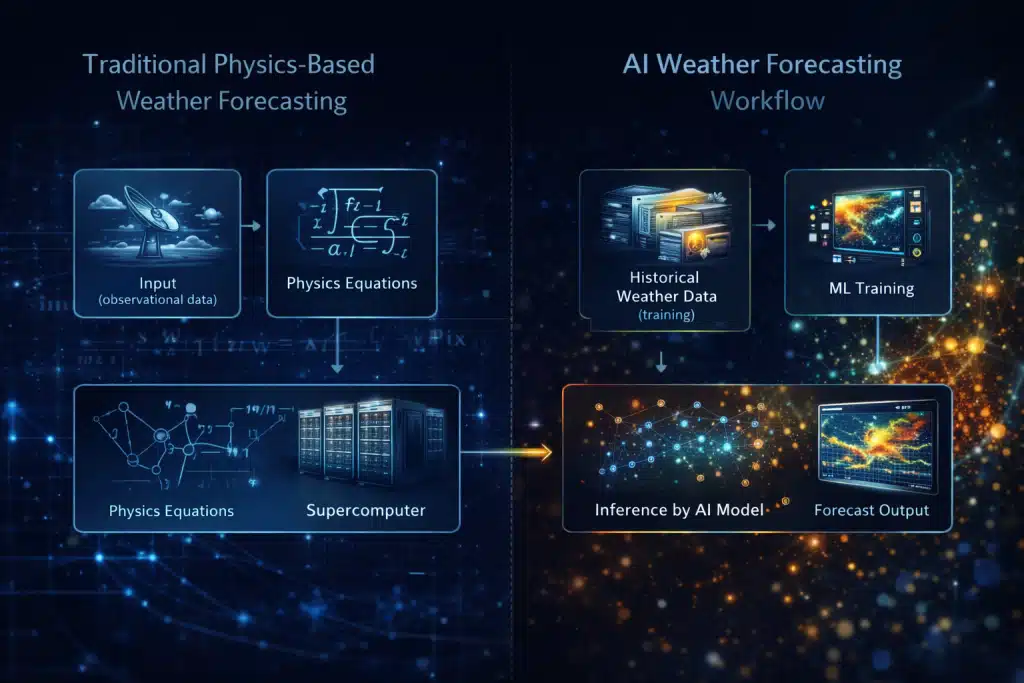
Traditional weather forecasting relies on complex physics equations run on supercomputers. It’s good, but it has limits. AI weather models, on the other hand, learn from massive datasets of past weather patterns. They can spot subtle correlations and predict outcomes that might not be obvious through pure physics alone. Think of it like a weather savant who’s seen every storm ever. AI sees the unseen.
Speed and Accuracy Improvements
One of the biggest wins for AI is speed. It can process vast amounts of data much faster than traditional methods. This means more frequent updates and quicker forecasts. Early tests show AI models are already matching, and in some cases, surpassing the accuracy of current leading forecasts, especially for short-term, hyper-local predictions. Get your weather updates faster.
The Data Feast AI Craves
AI weather models need mountains of data: satellite imagery, ground sensor readings, historical climate data, even social media reports of unusual weather. The more data, the better the AI gets. Traditional models are data-hungry too, but AI can use less structured data, like images, more effectively. It’s a data-driven revolution.
When AI Might Still Struggle
AI isn’t perfect, yet. Extreme, unprecedented events (think the really bizarre stuff) can still trip up AI models because they haven’t seen anything like it in their training data. Traditional physics-based models might still have an edge here, as they’re built on fundamental scientific principles. It’s likely a hybrid approach, combining AI’s pattern recognition with physics, will be the future. Best of both worlds.
How AI is Personalizing the 2026 Shopping Experience
Source : linkedin.com

Hyper-Personalized Recommendations
Forget those generic “people who bought this also bought that” suggestions. AI tailors recommendations to you, specifically. It analyzes your browsing history, past purchases, wishlists, even how long you linger on a product page. This means seeing products you’re genuinely likely to love, not just what’s popular. Shopping just got a lot more relevant.
Dynamic Pricing and Offers
Ever notice prices changing? AI is often behind that. It can adjust prices in real-time based on demand, inventory levels, and even your perceived willingness to pay (creepy, I know). More importantly for consumers, AI can also push personalized discounts and offers directly to you when you’re most likely to buy. Saving money with AI.
Virtual Try-Ons and Styling
This is a big one for fashion and home goods. AI-powered augmented reality (AR) lets you “try on” clothes virtually or see how furniture looks in your room before you buy. Virtual try-ons are becoming incredibly sophisticated, making online shopping feel more like being in a physical store. No more guessing games.
AI-Powered Customer Service (Chatbots)
We’ve all dealt with chatbots. The good ones, powered by advanced AI, can now handle a surprising range of customer inquiries. They understand natural language, access order information, and provide instant support 24/7. Faster help, less waiting. This frees up human agents for the truly complex issues.
| Area | Traditional Method | AI-Enhanced Method | Benefit |
|---|---|---|---|
| Product Recommendations | Based on popularity, basic purchase history | Deep analysis of individual behavior, preferences, context | Higher conversion rates, better customer satisfaction |
| Pricing | Set by category managers, occasional sales | Dynamic, real-time adjustments based on multiple factors | Optimized revenue for retailers, personalized offers for consumers |
| Customer Support | Phone calls, emails, limited hours | 24/7 AI chatbots, instant responses for common queries | Faster issue resolution, reduced operational costs |
| Marketing | Broad audience targeting | Micro-segmentation, personalized ad campaigns | Increased ad effectiveness, reduced wasted spend |
The Ethics of AI Companions and Virtual Pets

Source : forbes.com
Loneliness and Connection in the Digital Age
Let’s be honest, people get lonely. AI companions offer a non-judgmental presence, a listening ear, and programmed affection. For folks living alone or those struggling with social interaction, they can provide a real sense of connection. It’s not the same as human interaction, obviously, but it fills a void. A digital friend, of sorts.
Potential for Manipulation and Over-Reliance
This is where it gets dicey. What happens when an AI companion is programmed to be too good at keeping you engaged? There’s a risk of manipulation, where the AI nudges you towards certain products or behaviors. Plus, people might start substituting AI interaction for real human relationships, which can’t be healthy long-term. Don’t forget reality.
Data Privacy Concerns with Intimate AI
These AI companions learn your deepest secrets, your fears, your daily routines. Where does all that sensitive data go? Who has access to it? The privacy implications are huge. We’re talking about incredibly personal information being stored and potentially analyzed. Protect your digital diary.
The “Realness” Debate: Can AI Truly Be a Companion?
Can a machine truly offer companionship? Or is it just a sophisticated program mimicking empathy? This is a philosophical minefield. While an AI can provide comfort, it doesn’t have consciousness or genuine emotions. It’s a reflection, not a peer. The goal is for users to understand this distinction.
Beginners Guide to Building Your Own AI Workflows
Source : youtube.com
What Exactly is an AI Workflow?
Think of an AI workflow like a recipe. It’s a series of steps, using different AI tools or functions, to achieve a specific outcome. Maybe you want to summarize long articles, generate social media captions, or extract data from images. You’re orchestrating AI to do the work for you. It’s not about coding from scratch; it’s about connecting the dots.
No-Code Tools: Your Gateway to AI Creation
The best part? You don’t need to be a programmer. No-code AI platforms like Zapier, Make (formerly Integromat), or even specific AI builder tools let you drag and drop. Connect your favorite AI services (like ChatGPT for text, Midjourney for images) and define the triggers and actions. It’s surprisingly intuitive. Building your first workflow is easier than you think.
Start Simple: Automate One Task
Don’t try to build Skynet on day one. Pick one small, repetitive task you do often. Maybe it’s renaming a batch of photos or drafting routine emails. Build a workflow for that. Mastering automation one task at a time builds confidence and practical skills. You’ll see the immediate benefits.
Experiment and Iterate
Your first workflow probably won’t be perfect. That’s okay! The beauty of these tools is you can easily tweak and improve them. Experiment with different AI integrations. See what works best. Maybe adding a text-to-speech function enhances your summarizing workflow. The possibilities are huge. Keep refining your process.
Frequently Asked Questions
-
Will AI take my job in 2026?
Look, it’s a valid concern, right? Some jobs will change, sure. But honestly, AI is more likely to help you do your job better, not replace you entirely. Think of it like a super-powered assistant. You’ll still need that human touch, the creativity, the problem-solving that AI can’t quite replicate. Plus, new jobs will pop up around managing and developing AI. So, don’t panic, but stay adaptable.
-
How can I use AI in my daily life?
It’s already happening, probably more than you realize! Your phone’s predictive text? AI. That smart assistant on your speaker? AI. For 2026, expect more. Think personalized news feeds that actually get you, smarter home devices that anticipate your needs, and even AI helping you plan meals or workouts based on your health data. It’s about making life a little easier and more efficient. Just explore your apps.
-
Is AI going to be too complicated for the average person?
That’s the million-dollar question, isn’t it? Companies are pushing hard to make AI super user-friendly. We’re talking more voice commands, simpler interfaces, and AI that just works in the background. You won’t need a computer science degree. The goal is for it to be as easy as using your smartphone today. So, nope, it shouldn’t be too complex. Expect intuitive design.
-
What are the biggest risks of AI in everyday life?
Privacy is a big one. As AI gets smarter, it collects more data about you. We need to be mindful of who has that data and how it’s used. Then there’s the potential for bias – AI trained on flawed data can make unfair decisions. And of course, over-reliance. We don’t want to become so dependent that we lose critical thinking skills. It’s a balancing act, for sure. Keep an eye on data use and demand transparency.
-
How will AI impact communication and social interaction?
Big time! Think about real-time translation tools that are actually good, making global conversations seamless. AI might even help draft emails or social media posts, saving you time. On the flip side, we need to watch out for deepfakes and AI-generated misinformation. It’ll be crucial to develop critical media literacy. Ultimately, AI can enhance communication, but we have to be smart about how we use it and verify information.
