So, you’re thinking about becoming an EMT? That’s awesome. It’s a calling, really. One minute you’re just living your life, the next you’re making life-or-death decisions. It ain’t for the faint of heart, let me tell you.
Forget those slick, overly polished brochures you see online. This is the real deal. We’re talking about sweat, stress, and the kind of adrenaline rush that sticks with you. It’s rewarding, sure, but it’s also demanding. Like, really demanding.
This guide? It’s not going to sugarcoat anything. We’re going to lay out exactly what you need to do, step-by-step. No fluff, no corporate jargon. Just the honest truth about how to get your EMT certification and start saving lives.
Ready to dive in? Good. Because time is often critical in this line of work, and getting certified is your first, most important step.
The “Why”: Beyond the Badge and Siren
Look, a lot of people get into this thinking it’s all about the flashing lights and the drama. And yeah, that’s part of the picture. But it’s so much more than that. It’s about being the first help someone gets when they’re at their absolute worst.
It. You’re often the calm in someone’s absolute storm. The person they look to when they can’t even think straight. That’s a huge responsibility. And it’s why becoming a certified EMT takes dedication.
More Than Just a Job, It’s a Vocation
This isn’t your typical 9-to-5. It’s about showing up when others are running away. It’s about having the knowledge and skills to make a real difference in critical moments.
Seriously, the feeling you get when you help someone through a tough time? Nothing beats it. It’s a profound sense of purpose that few careers can offer.
The Real Impact: Saving Lives and Building Communities
Every single day, EMTs are on the front lines. They’re the initial responders, providing Key care before a patient even reaches the hospital. Your actions directly impact outcomes. That’s not an exaggeration.
You’re not just treating injuries; you’re offering comfort. You’re a lifeline. This role builds stronger, safer communities, one call at a time. It’s about genuine human connection when it matters most.
Getting Your Foot in the Door: The Absolute Basics
.png)
Source : go.bestpracticemedicine.com
Alright, so you’re convinced. You want to do this. Great! But where do you even start? It feels like a mountain to climb, right?
Don’t get overwhelmed. It boils down to a few key requirements. Think of them as the foundation you need to build upon. No shortcuts here, sorry!
Minimum Age and Education Hurdles
First off, you gotta be old enough. Typically, this means you’re at least 18 years old. No exceptions, usually. You also need to have a high school diploma or a GED. They want to know you can handle the coursework.
It sounds simple, but these are non-negotiable. If you’re still in high school, start planning now. Talk to your guidance counselor. Get a head start on understanding the requirements for EMT certification.
The Health Check: Can You Handle the Physical Demands?
This job isn’t sedentary. You’ll be lifting, carrying, running, and dealing with all sorts of stressful situations. So, they’ll want to make sure you’re up for it. Expect a physical exam.
This usually involves checking your vision, hearing, and general physical fitness. They need to Make sure you can perform the Needed functions of an EMT without posing a risk to yourself or others. It’s about safety, plain and simple.
Background Checks: Keeping it Clean
Nobody wants an EMT with a shady past, right? Makes sense. You’ll be subject to background checks. This includes criminal history.
They’re looking for anything that might raise a red flag regarding your ability to act professionally and responsibly. Think of it as a trust exercise. They need to trust you with people’s lives.
The Core of It All: EMT Training Programs
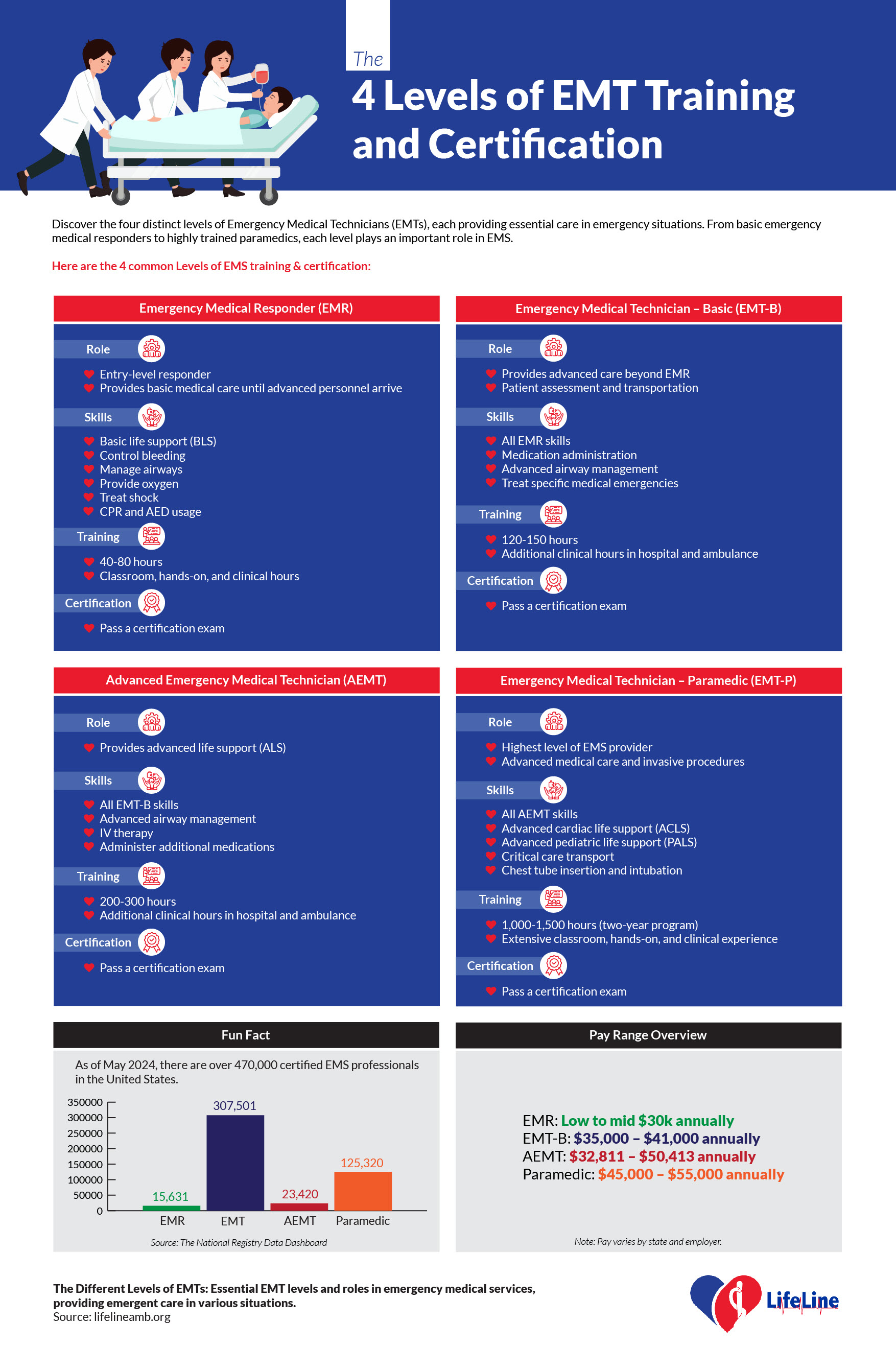
Source : lifelineamb.org
This is where the real learning happens. You can’t just wing being an EMT. You need formal training. And there are a few paths you can take to get it.
Choosing the right program is Key. It sets the stage for everything that follows. Don’t just pick the cheapest or the closest. Do your homework.
Finding an Accredited EMT Course
Not all EMT programs are created equal. You absolutely, positively need to make sure the program you choose is accredited. This means it meets national standards. It’s a huge deal for your future certification.
The National Registry of Emergency Medical Technicians (NREMT) is the big one here. They set the standards. You can often find accredited programs through your local community colleges, vocational schools, or even some private training centers. Check out the official NREMT certification page for guidance on accredited programs.
What to Expect in EMT School: The Nitty-Gritty
EMT school is intense. You’ll cover a ton of material. Anatomy, physiology, medical terminology, pharmacology. You’ll learn how to assess patients, administer basic life support, manage trauma, and handle medical emergencies.
Expect lectures, but also a lot of hands-on skills practice. Think CPR, splinting fractures, controlling bleeding, assisting with childbirth (yeah, that happens!). You’ll also spend time in a clinical setting, shadowing experienced EMTs and paramedics. It’s hands-on learning at its finest.
Program Lengths: From Weeks to Months
How long does it take? It varies. Some accelerated programs can be completed in as little as 4-6 weeks, but they are packed, full-time commitments. Others might take several months, often offered part-time to accommodate working individuals.
Watch: Thinking About Becoming an EMT? (Watch This First)
The duration often depends on the intensity of the course and whether it’s offered during the day, evening, or weekend. Consider your own schedule and learning style when choosing. Rushing through might seem appealing, but comprehension is key.
| Program Type | Typical Duration | Pros | Cons |
|---|---|---|---|
| Full-Time Accelerated | 4-8 Weeks | Fastest route to certification. | Intense schedule, requires full-time commitment, can be overwhelming. |
| Part-Time Evening/Weekend | 3-6 Months | Flexible for those working or with other commitments. | Longer time to complete, requires consistent effort over a longer period. |
| Community College Semester | 4-5 Months (standard semester) | Often more affordable, structured academic environment. | Can be rigid with scheduling, might have prerequisites. |
The Clinical Component: Real-World Experience
This isn’t just about textbooks and mannequins. You have to get hands-on experience. This is your clinical rotation. You’ll ride along with experienced EMTs on actual calls.
This is where theory meets reality. You’ll see firsthand the chaos, the calm, and the critical decisions EMTs make every day. It’s your chance to apply what you’ve learned under pressure. Don’t blow it.
What Are The Requirements To Become Emt Certified In My State

Source : hci.edu
Alright, let’s talk brass tacks. Getting your EMT certification isn’t a one-size-fits-all deal. Each state, bless their bureaucratic hearts, has its own specific hoops you need to jump through. It’s enough to make your head spin if you’re not paying attention.
State-Specific Educational Prerequisites
First off, you’re usually going to need a high school diploma or a GED. No surprise there. But some states might have additional requirements, like proof of immunizations or even a background check before you even start training. Don’t skip this part; it’s foundational.
For instance, in California, you might need to show proof of CPR certification at the professional rescuer level before enrolling in an EMT program. Other states could be a bit more relaxed on that initial step, but you’ll need it eventually. Always check your local Emergency Medical Services (EMS) agency website. That’s your bible for this.
Age and Criminal Background Checks
You generally need to be at least 18 years old to get certified. Makes sense, right? You’re dealing with emergencies, people’s lives. But beyond age, many states are pretty strict about criminal records. A felony conviction, especially one related to violence or drugs, can be a major roadblock. Some states might allow you to petition for an exception, but it’s a tough road.
Think of it like this: would you want someone with a history of serious offenses responding to your family’s emergency? Probably not. So, states have rules in place to protect the public. It’s about trust and responsibility. If you have a past that might be an issue, get clarification early. Don’t waste time and money if you’re going to be disqualified later.
Health and Physical Fitness Standards
This job isn’t for the faint of heart or body. You need to be physically capable. This means you can lift and move patients (often with a partner, but still!), you can handle stressful situations, and you’re generally in decent health. Some programs might require a physical exam to Make sure you meet these standards.
Having to help move someone out of a tricky spot, maybe a narrow staircase or a confined space. You need the strength and stamina to do that without hurting yourself or the patient. It’s not just about paperwork; it’s about being ready for the action. This is a critical component of becoming an EMT.
Immunization and Health Screening Requirements
To protect yourself and the patients you’ll be treating, most states require you to have specific vaccinations. This often includes things like MMR (measles, mumps, rubella), hepatitis B, and tetanus. You might also need a TB test. These are standard protocols to prevent the spread of infectious diseases within the healthcare setting.
Having up-to-date immunizations is non-negotiable. It’s part of the professional responsibility. Hospitals and ambulance services will absolutely verify this. If you’re not current, you’ll need to get them before you can be fully certified and employed. This is a key part of the EMT certification process.
How Long Does Emt Certification Training Take To Complete
So, you’re ready to dive in. But how much time are we actually talking about? It’s not like a weekend course, that’s for sure. Getting properly EMT certified requires a significant time investment. The length can vary, but you can expect a few months of dedicated study and hands-on practice.
Typical Course Duration and Structure
Most accredited EMT-Basic (which is what most people mean by “EMT”) courses are designed to be completed within a semester. Think anywhere from 10 to 20 weeks. This includes classroom instruction, practical skills labs, and often a clinical or field internship component. It’s a packed schedule.
You’ll be hitting the books hard, learning anatomy, physiology, medical terminology, and emergency procedures. Then comes the practical stuff – practicing CPR, bandaging, splinting, spinal immobilization, and all the other hands-on skills you’ll need. It’s a rigorous but Needed part of the training.
Full-Time vs. Part-Time Training Options
The good news is, you often have options. If you can commit to a full-time program, you can blast through it more quickly, often in 10-12 weeks. This is intense, but it gets you certified faster. Great if you want to jump into the workforce ASAP.
On the flip side, part-time courses are common and usually spread over 16-20 weeks. This is perfect for people who are still working another job or have family commitments. It requires more patience, but the end goal is the same. The key is consistency, no matter which pace you choose.
Impact of Clinical Hours on Total Time
Don’t forget the clinical component! Most programs require you to complete a certain number of hours riding along on actual ambulance calls. This is where you see real patients and put your training into practice under supervision. These hours are Key for learning and can add significant time to your program, sometimes pushing the total duration a bit longer, especially if you have trouble scheduling them.
These ambulance shifts aren’t always 9-to-5. You might be working nights, weekends, or even holidays. It’s a real taste of the job. The number of hours varies by state and program, but it’s a non-negotiable piece of the puzzle. This hands-on experience is what makes you job-ready. It’s a Key part of your EMT training.
Accelerated EMT Programs
For the truly driven or those on a tight deadline, accelerated programs exist. These can cram all the material into as little as 4-6 weeks. How? By essentially treating it like a full-time job, with classes and labs happening every single day. It’s incredibly demanding, requiring a huge commitment of your time and mental energy.
These programs are not for the easily overwhelmed. You’re absorbing a massive amount of information and skills in a compressed timeframe. It’s like drinking from a firehose. But if you can handle the intensity, you can be EMT certified much faster than with traditional routes. It’s an option, but a demanding one.
How Much Does Emt Basic Certification Training Cost
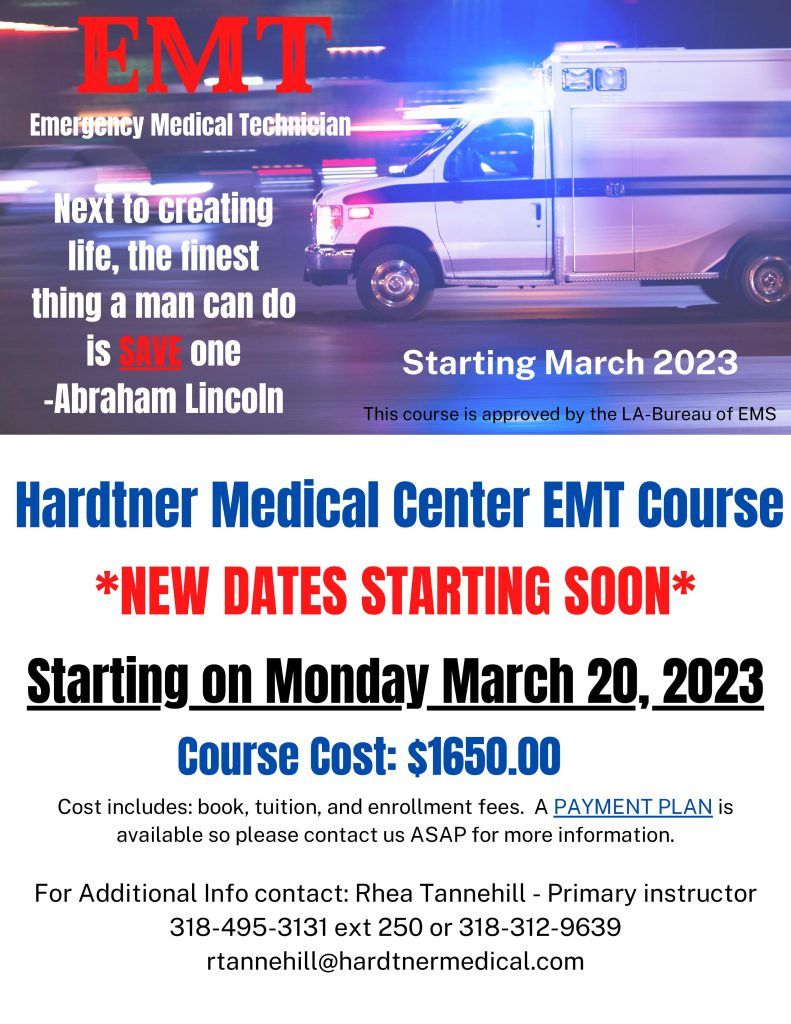
Source : hardtnermedical.com
Let’s get down to the nitty-gritty: money. How much are you looking to shell out for this piece of paper that lets you save lives? The cost of EMT basic certification training can really run the gamut. It’s not cheap, but it’s definitely an investment in your future.
Average Tuition Fees for EMT Programs
Generally, you can expect to pay anywhere from $1,000 to $3,000 for a standard EMT course. This usually covers tuition, books, and sometimes even uniforms or basic equipment. Community colleges often offer some of the most affordable options, sometimes even less than $1,000 if you factor in state subsidies.
Private training institutions or vocational schools might charge more, sometimes pushing towards the higher end of that range, or even a bit beyond. They might offer more flexible scheduling or smaller class sizes, which comes at a premium. It’s worth shopping around and comparing what’s included in the fees.
Additional Costs: Books, Supplies, and Exam Fees
Don’t forget the hidden costs! Beyond tuition, you’ll need to budget for textbooks, which can be surprisingly expensive. Then there are supplies like a stethoscope, blood pressure cuff, trauma shears, and a uniform. Some programs include these, others expect you to buy them separately.
And then there’s the national registry exam fee. You have to pay to take the NREMT cognitive exam, and possibly state-specific exams too. These fees add up. Factor in transportation to and from classes, and maybe even childcare if needed. It’s Needed to get a clear breakdown of all potential expenses before you commit.
Financial Aid and Scholarship Opportunities
Now, before you panic about the cost, know that there are ways to get help. Many community colleges accept federal financial aid, like Pell Grants. Some EMT programs partner with local EMS agencies or fire departments that might sponsor students in exchange for a service commitment. Scholarships specifically for EMS training do exist, though they can be competitive.
Don’t be shy about asking the program director or financial aid office about options. Sometimes, payment plans are available, breaking down the tuition into more manageable installments. Exploring all avenues can make the dream of becoming an EMT much more financially feasible.
Cost Comparison: In-Person vs. Online Components
It’s worth noting that while you can’t complete the entire EMT certification online, some hybrid programs might offer slight cost savings on the didactic (classroom) portion. However, the bulk of the expense comes from the mandatory hands-on skills labs and clinical hours, which are identical regardless of how the classroom theory was delivered. So, while online components might shave off a tiny bit, don’t expect huge savings there.
The real cost drivers are the practical training, instructor time, liability insurance, and certification fees. Whether you learn your anatomy in a lecture hall or via a Zoom call, the equipment and supervised practice sessions remain Needed and costly. This is why the price range remains fairly consistent for quality EMT certification.
| Cost Component | Estimated Range | Notes |
|---|---|---|
| Tuition Fees | $1,000 – $3,000+ | Varies by institution type (community college vs. private) |
| Textbooks | $100 – $300 | Can sometimes be rented or found used |
| Uniform & Basic Supplies | $50 – $200 | Stethoscope, shears, BP cuff, etc.; may be included |
| Background Check/Immunizations | $50 – $250 | Depends on existing records and provider costs |
| NREMT Cognitive Exam Fee | ~$100 – $120 | Paid directly to NREMT |
| State/Local Certification Fees | $20 – $100 | Varies significantly by state |
| Total Estimated Cost | $1,320 – $4,170+ | This is a general estimate; always get a detailed breakdown. |
Can You Take Emt Certification Classes Online
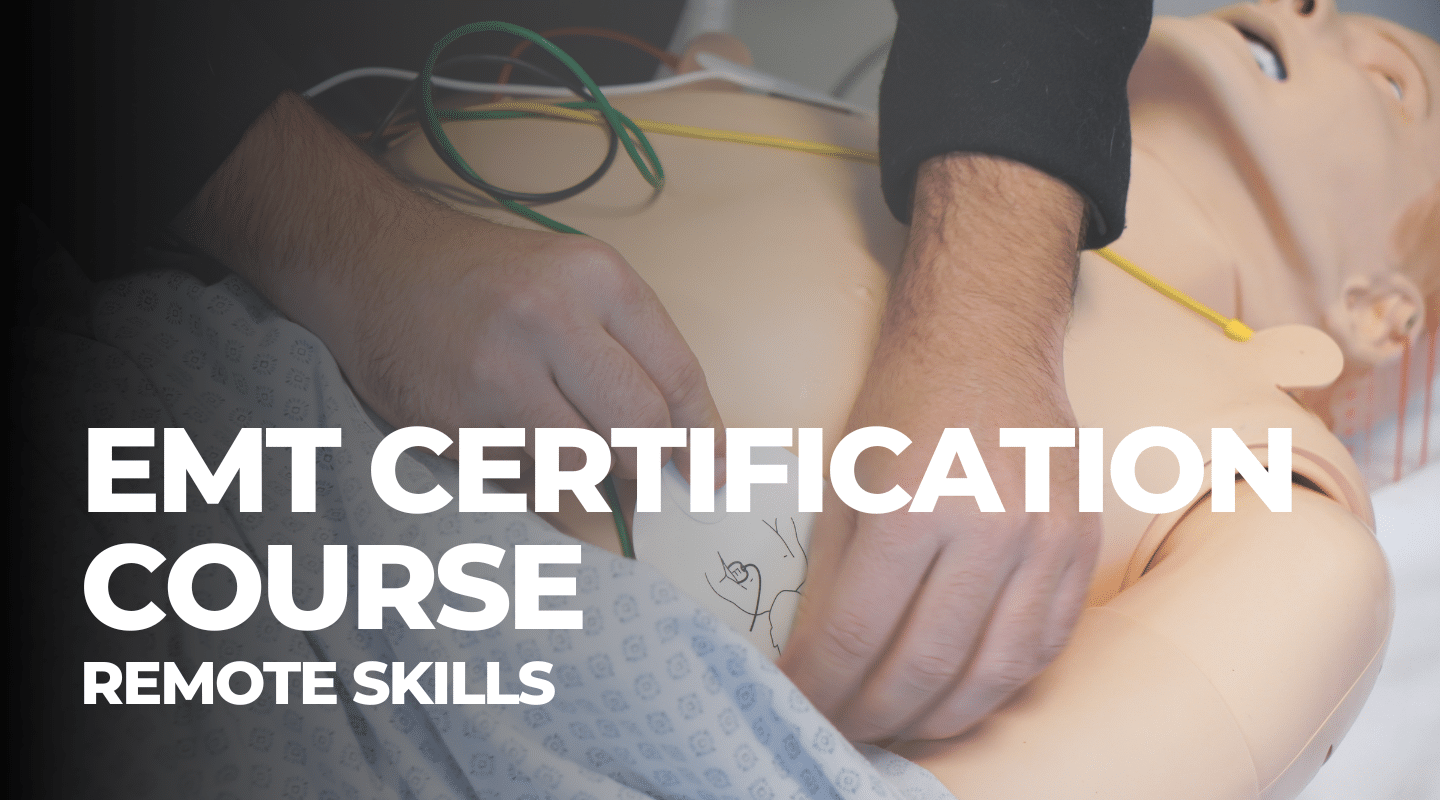
Source : impactems.com
This is the million-dollar question for many folks trying to get their EMT certification: can I just do this from my couch? The short answer is… not entirely. It’s a hybrid situation, and you absolutely cannot get fully certified solely online.
The Role of Online Learning in EMT Programs
Here’s the deal: the classroom portion, the theory, the book learning? A lot of that can be done online these days. Think anatomy, physiology, medical terminology, patient assessment principles. These parts translate pretty well to a virtual learning environment. Many accredited programs now offer hybrid models where you complete these modules at your own pace.
This flexibility is a huge win. It means you can study when it works for you, whether that’s late at night after the kids are asleep or early in the morning before work. It significantly cuts down on commute time and allows for a more self-directed learning experience. It’s a modern approach to an Needed education.
Mandatory Hands-On Skills Labs
BUT. And it’s a big ‘but’. You cannot learn to properly place a cervical collar, perform CPR on a manikin, or manage a bleeding wound solely through a screen. These skills require direct, hands-on practice with certified instructors and peers. You need to feel the resistance of the manikin’s chest, see the correct way to apply pressure, and get immediate feedback on your technique.
So, even in the most online-heavy programs, you will have mandatory, in-person skills labs. These are usually scheduled over a few intense days or weekends where you come to the training facility to practice and be evaluated on every practical skill you’ll need. This is where the real, tactile learning happens. Your EMT training is incomplete without it.
Required Clinical or Field Internships
Just like the skills labs, the clinical or field internship component must be done in person. You need to ride on an actual ambulance, observe patient care in real-time, and participate under the guidance of experienced paramedics and EMTs. There is no substitute for this real-world experience. It’s where textbook knowledge meets chaotic reality.
This is arguably the most critical part of your education. It’s where you learn to think on your feet, manage stress, and communicate effectively in high-pressure situations. You can’t simulate the adrenaline of a true emergency from your living room. This practical immersion is non-negotiable for your EMT certification.
Accreditation and Online Program Legitimacy
When looking at online or hybrid EMT courses, accreditation is EVERYTHING. Make absolutely sure the program is accredited by a recognized body (like CoAEMSP for NREMT-related programs) and approved by your state’s EMS agency. An unaccredited course is a waste of time and money, and you won’t be eligible for national certification. Always verify the legitimacy before you sign up.
Scrutinize the program details. Does it clearly outline the in-person requirements? Are the instructors qualified? What’s the pass rate for the national exam? Asking these questions upfront ensures you’re investing in a reputable program that will actually lead to a valid EMT certification. Don’t get caught out by a scam.
Nremt Cognitive Exam Practice Tests For Emt Certification
![Free NREMT Practice Test [2026] | Will You Pass?](https://www.boostprep.com/wp-content/uploads/2025/04/boostprep-nremt-emt-exam-overview.png)
Source : boostprep.com
Okay, you’ve done the hard yards in class, you’ve aced the skills, and now you’re staring down the barrel of the NREMT cognitive exam. This thing is the gatekeeper to your EMT certification. It’s computer-based, adaptive, and frankly, it can be intimidating. That’s where practice tests come in, and they are your best friend right now.
Why NREMT Practice Tests Are Key
Think of the NREMT cognitive exam like the final boss battle. You wouldn’t go into a major fight without training, right? Practice tests simulate the exam environment. They help you get comfortable with the question format, the adaptive nature of the test (meaning it gets harder or easier based on your answers), and the sheer volume of material.
Using NREMT practice tests helps identify your weak spots. Maybe you’re great with cardiac emergencies but shaky on pediatric trauma. These tests pinpoint those areas so you can focus your studying effectively. It’s targeted learning, which is way more efficient than just re-reading your notes randomly.
Where to Find Reputable Practice Resources
Don’t just Google “free EMT test” and click the first link. You need reliable sources. Many reputable EMT training programs provide access to practice exams as part of their curriculum. Beyond that, there are dedicated online platforms that specialize in NREMT prep. Look for resources that are frequently updated to reflect the current NREMT exam blueprint.
Websites like EMTPrep, Kaplan, or even some textbook publishers often have excellent practice question banks. Some offer free sample questions, while others require a subscription fee for full access. Research reviews and testimonials to find the most effective and trusted resources for your EMT exam preparation.
Simulating the Adaptive Testing Format
The NREMT exam is adaptive. This means if you answer a question correctly, the next one might be a bit tougher. If you miss one, the system might present an easier question to gauge your baseline knowledge. This can be unnerving if you’re not expecting it. Good practice tests will try to mimic this adaptive algorithm.
By using practice tests that simulate this adaptive format, you get used to the flow. You learn not to panic if a question seems suddenly harder or easier. You train yourself to answer each question independently, focusing on the content rather than trying to guess the computer’s logic. This psychological preparation is huge for reducing test anxiety and improving your performance on the actual NREMT cognitive exam.
Key Topics Covered in Practice Exams
What should you expect to be tested on? Everything. Seriously. Practice exams will cover the full spectrum of EMT knowledge: airway management, CPR and AED, trauma assessment and management, medical emergencies (cardiac, respiratory, diabetic, allergic reactions, etc.), obstetrics and gynecology, pediatrics, and operations. You’ll see questions on patient assessment, Key signs, lifting and moving patients, and legal/ethical issues.
Focus on understanding the “why” behind each answer, not just memorizing facts. The NREMT tests your critical thinking and clinical judgment. Practice questions should push you to apply your knowledge to realistic patient scenarios. If a practice test only asks recall-based questions, it might not be the best preparation for the actual EMT certification exam. Use these tools wisely; they are your bridge to passing.
Frequently Asked Questions
What is the fastest way to get EMT certified?
Honestly, if you’re in a huge hurry to get EMT certified, look for an accelerated program. These are often intense, full-time courses that cram everything into a few weeks, maybe 6 to 10. You’ll be living and breathing EMT stuff, but it’s definitely the quickest route. Just be ready for the grind!
Can I get EMT certified online?
Yeah, you can do a lot of the EMT coursework online, for sure. But here’s the catch: you absolutely HAVE to do your hands-on skills training and clinical rotations in person. There’s no way around that. So, it’s a hybrid thing, really. You can’t just click your way to becoming an EMT.
How much does EMT certification typically cost?
Okay, so the price tag for EMT certification can bounce around a lot. You’re probably looking at anywhere from $1,000 to $3,000, sometimes more if it’s a super intensive or private program. That usually covers the tuition, books, and maybe some uniform costs. Don’t forget potential fees for background checks and your national exam, too.
Do I need a high school diploma or GED to become an EMT?
Generally, yes. Most training programs and states require you to have either a high school diploma or a GED. It’s a pretty standard entry requirement, like for most jobs that need a bit of responsibility. Gotta show you can handle the basics before you’re trusted with someone’s life.
What is the EMT National Registry exam?
The NREMT exam is the big kahuna. It’s a standardized test run by the National Registry of Emergency Medical Technicians. Passing it is usually what gets you that national certification, which makes it way easier to get hired across different states. It’s got both a computer-based test (CBT) for the written part and practical skills stations to prove you can actually do the job.
