Alright, let’s talk about tax prep. Not the exciting stuff, I know, but someone’s gotta do it, right? And if you’re thinking about getting in on this action, you’ve stumbled onto the right place. Forget those dry, robotic guides you’ve probably skimmed. We’re diving deep, real talk style.
Look, becoming a certified tax preparer isn’t just about knowing your debits from your credits. It’s about building a reputation. It’s about trust. And yeah, it’s about making a decent living doing something that, frankly, a lot of people dread.
So, how do you actually do it? What’s the path? Is it a sprint? A marathon? Let’s peel back the layers, shall we?
So, You Wanna Prep Taxes?
First off, pat yourself on the back. You’re considering a profession that’s always in demand. Think about it – everyone’s got taxes. Especially around April. It’s a constant. And if you can navigate that maze for others? That’s a valuable skill, my friend. A really valuable skill.
The Skeptical Friend’s Take
My buddy, Dave – you know, the one who still thinks spreadsheets are Latest technology – he looked at me sideways when I mentioned this. “Taxes? Seriously?” he scoffed. “Isn’t that just for accountants in stuffy offices?
I had to set him straight. Nope. Not at all. The world of tax preparation is way bigger than that. It’s Active. It’s growing. And it’s definitely not just for the pencil-pushers.
Why Bother with Certification?
Here’s the kicker. You can technically prepare taxes without a specific certification. Yeah, I know, sounds weird. But the IRS has specific requirements for who needs what. You can find the nitty-gritty on understanding tax return preparer credentials straight from the source, the IRS website. It’s a bit of a rabbit hole, but worth a look.
However, and this is a big “however,” going the extra mile? Getting that certification? That’s what separates the amateurs from the pros. It’s like showing up to a knife fight with a spoon versus… well, a properly certified professional.
It’s About More Than Just the Paper
It from the client’s perspective. You’ve got sensitive financial information. You’re handing over your life savings on a platter. Who do you trust? The guy who says he knows taxes, or the one who has official credentials? The answer’s obvious, right? It’s all about building client trust. Certification is a huge part of that.
The Lay of the Land: What’s Actually Involved?
Source : surgent.com
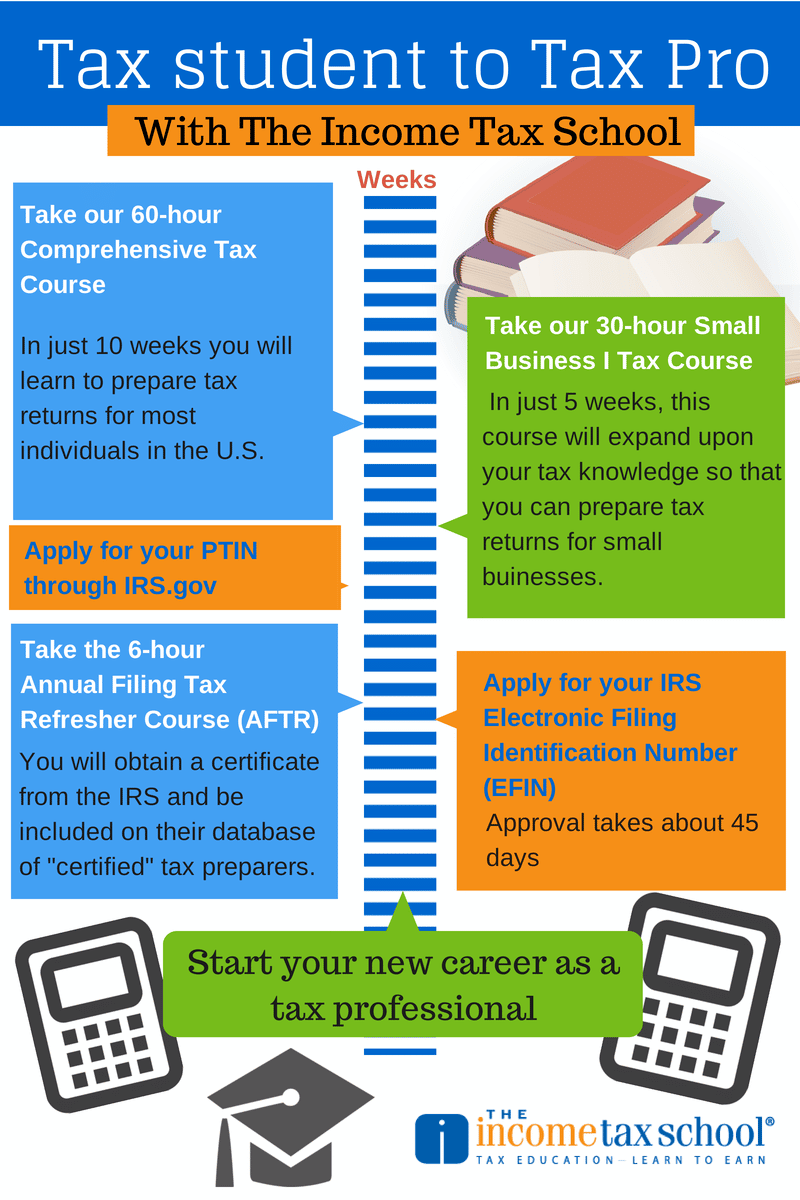
So, what are we talking about here? What does it mean to be “certified” in the tax prep world? It’s not one single test for everyone. It’s more like a spectrum. Some folks go the full Enrolled Agent route (fancy!), others might pursue certifications from private organizations.
Not a One-Size-Fits-All Deal
The IRS has different rules depending on who you are. If you have a Preparer Tax Identification Number (PTIN), you’re generally allowed to prepare federal tax returns. But that PTIN doesn’t automatically make you a “certified” expert in the eyes of the public or potential employers. You need something more.
It’s like getting a driver’s license. The license says you can drive. But taking an advanced defensive driving course? That shows you’re serious. You’re committed. You’re not just phoning it in. That’s the vibe we’re going for here.
Different Paths, Same Goal
You’ve got your path as an EA, which is pretty intense. Then there are other professional designations you can earn through specific training programs. Some states might even have their own requirements, though for federal returns, it’s generally less state-specific. For instance, I read an article about the specific steps needed in Florida, and it’s interesting how some local regulations differ, even when you’re talking about federal filings. You can learn more about how to become a tax preparer in Florida if that’s your neck of the woods.
The common thread? Proving you know your stuff. And not just know it, but know it well enough to stand by it. And to back it up with some official stamp of approval. This commitment is key to professional development.
The PTIN Requirement – The Absolute Minimum
Let’s be crystal clear. If you plan on preparing any federal tax return for compensation, you MUST have a PTIN. This is non-negotiable. You get this from the IRS. It’s your basic entry ticket.
But, and I can’t stress this enough, this is just the entry ticket. It’s the bare minimum. It’s like having a gym membership but never actually going. You’re technically allowed in, but you’re not going to get any stronger (or, in this case, more knowledgeable and marketable).
Levels of Expertise: What Does “Certified” Even Mean?
Source : ca.indeed.com
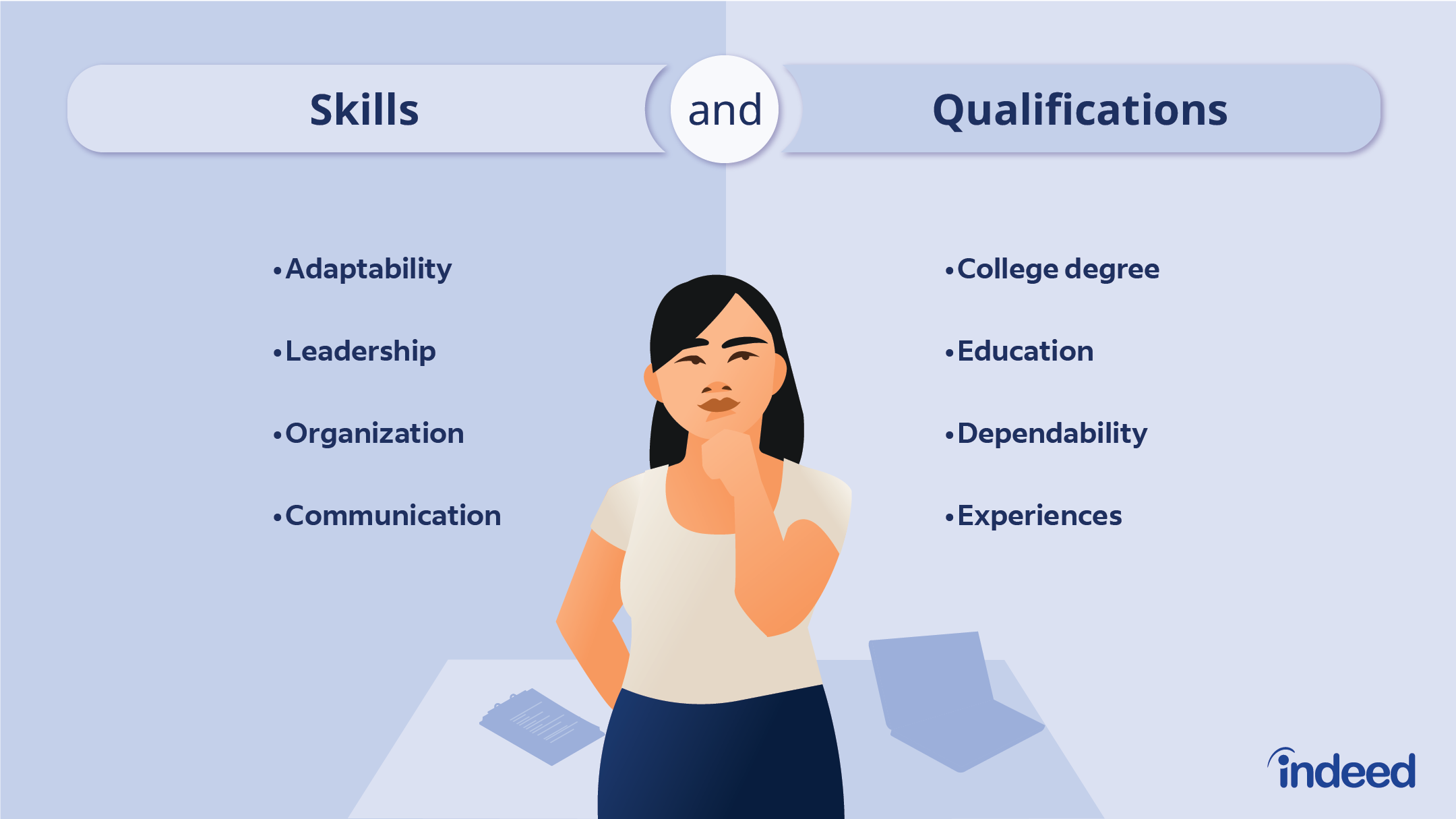
This is where it gets a little fuzzy for some. “Certified” can mean a few different things in the tax world. Let’s break down the most common routes people take to get that “official” status.
The Enrolled Agent (EA) Route
This is often considered the gold standard. EAs are federally licensed tax practitioners who specialize in taxation and are specifically empowered by the IRS to represent taxpayers before the IRS for audits, collections, and appeals. Pretty powerful stuff.
To become an EA, you typically have to pass a Full three-part examination (the SEE – Special Enrollment Examination) or have qualifying IRS experience. This exam is no joke. It covers individual, business, and representation, practice, and procedures.
Certifications from Private Organizations
Beyond the EA, there are various professional organizations that offer their own certifications. These often involve coursework, exams, and continuing education requirements. Think of these as specialized badges.
These can be fantastic for demonstrating specific expertise. Maybe you want to focus on small business taxes, or perhaps estate planning. A targeted certification can really highlight that. It shows you’ve gone above and beyond the basic PTIN.
State-Specific Requirements (Less Common for Federal Prep)
While most of the core requirements for preparing federal returns are national, some states might have additional regulations or licensing for tax preparers operating within their borders. It’s always wise to check your specific state’s board of accountancy or department of revenue.
Don’t assume a national certification covers all bases everywhere. A little local homework can save you headaches down the line. It’s about being thorough.
Watch: How to become a tax preparer (step-by-step)
Why Pursue These Extra Credentials?
Honestly? Because it pays. Literally. Clients see it. Employers see it. A solid certification signals competence, dedication, and a higher level of knowledge. It opens doors for career advancement and often commands higher pay.
It’s the difference between being just another person who fills out forms and being a trusted advisor who can genuinely help people navigate complex tax laws. And in this business, that’s everything.
Alright, let’s dive deep into what it really takes to hang your shingle as a certified tax preparer, especially if you’re starting from scratch. Forget those fluffy intros; we’re getting straight to the nitty-gritty. This isn’t just about passing a test; it’s about building a business, and that requires some serious groundwork.
How To Become A Certified Tax Preparer With No Experience

Source : youtube.com
The “Rookie” Route: Starting with the Basics
So, you’ve got zero tax background. No problem, honestly. Lots of successful tax pros started exactly where you are. The key isn’t experience; it’s the willingness to learn and a good, solid training program. Think of it like learning to cook – you don’t need to have owned a restaurant to master a killer bolognese. You just need the right recipe and a bit of practice.
Many folks jump into this field because they see the demand. Everyone needs their taxes done, right? And come tax season, good preparers are worth their weight in gold. This is your chance to step in and fill that need. You just have to be smart about how you get there.
Choosing Your First Steps: Education Over Apathy
Don’t just wing it. Seriously, don’t. There are tons of tax preparer certification courses out there, and picking the right one is Key. Look for programs that are hands-on, covering not just the tax code but also how to actually deal with clients. That means understanding software, ethical guidelines, and basic business practices. You’re not just crunching numbers; you’re offering a service.
- Look for accredited programs.
- Check reviews from past students.
- Make sure the course covers current tax laws.
- See if it includes practice scenarios.
The Power of Mentorship (Even Unofficial)
If you know someone already in the tax prep business, lean on them. Ask questions. See if you can shadow them for a bit during tax season. Even observing how they handle difficult client situations can be Crucial. It’s the kind of real-world experience you can’t get from a textbook, and it’s free knowledge if you’re willing to ask.
Building Your Knowledge Base Incrementally
It’s not a race. Start with the fundamentals. Master individual income tax returns first. Once you’re confident there, then you can explore business taxes, estate taxes, or whatever else catches your interest. Trying to absorb everything at once is like trying to drink from a fire hose – messy and ineffective.
How To Get A Ptin And Become A Certified Tax Preparer

Source : taxslayerpro.com
What Exactly is a PTIN? (It’s Not What You Think)
Okay, let’s clear this up. A PTIN – that’s a Preparer Tax Identification Number – is basically your license to prepare federal tax returns for compensation. The IRS requires anyone who prepares or helps prepare federal tax returns for a fee to have one. It’s not a certification in itself, but it’s a non-negotiable first step for anyone serious about this career.
Think of it like getting a driver’s license. You can’t legally drive a car on public roads without one, and you can’t legally prepare taxes for money without a PTIN. It’s a simple application process, usually done online, but you need to get it right. Failure to have a valid PTIN when you should can lead to penalties, and trust me, you want to avoid the IRS breathing down your neck.
Securing Your PTIN: The IRS Application Process
Applying for a PTIN is pretty straightforward. You’ll head over to the IRS website and fill out the application. There’s a nominal fee involved, and you’ll need to provide some basic information about yourself. Make sure all your details are accurate; any discrepancies can cause delays. Once approved, you’ll get your unique PTIN number.
The IRS uses this number to track tax preparers. It’s linked to your tax returns, so it ensures accountability. This is also where your background check comes in – they’re looking for any red flags that might disqualify you. It’s a Key part of IRS oversight.
The Continuing Education (CE) Requirement for PTIN Holders
Here’s the kicker: just getting a PTIN isn’t a one-and-done deal. To keep your PTIN active, you must complete a minimum number of continuing education hours each year. For most PTIN holders, that’s 15 hours, with at least 2 hours of federal tax law updates and 2 hours of federal tax law or ethics. This keeps you current with the ever-changing tax code. It’s not optional; it’s mandatory for tax preparer certification.
Missing these CE hours means your PTIN can expire, and you can’t legally prepare returns. The IRS has a schedule for when you need to complete this, so mark your calendars. Courses for these CE hours are readily available from various providers, many of them online.
Connecting PTIN to Actual ‘Certification’
Now, remember: a PTIN itself doesn’t make you a “certified” tax preparer in the way a CPA or EA is certified. However, obtaining and maintaining your PTIN, along with completing the required CE, is a fundamental step. It demonstrates your commitment to the profession and compliance with IRS regulations. Many state requirements or private certifications will often build upon this PTIN foundation.
Irs Approved Tax Preparer Certification Courses Online
Source : intuit.com
Handling the Maze of “IRS Approved”
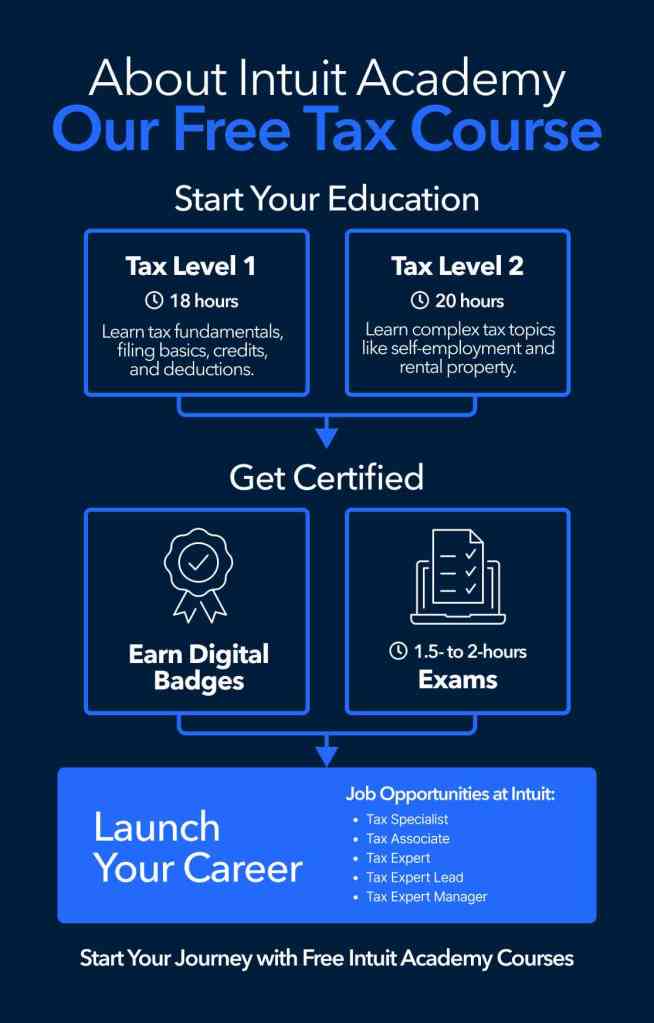
Let’s get this straight: the IRS doesn’t approve specific tax preparer courses in the way you might think. What they do approve are the Continuing Education (CE) providers who offer courses that meet their stringent requirements for PTIN holders. So, when you see “IRS Approved Tax Preparer Certification Courses Online,” it usually means the provider is an IRS-approved CE provider.
This distinction is important. It means the course content adheres to the IRS’s standards for federal tax law and ethics. You’re not getting a stamp of approval from the IRS saying, “This course will make you the best tax preparer ever.” You’re getting assurance that the training meets their baseline requirements for ongoing professional development for tax preparers. It’s a critical piece of the puzzle for maintaining your PTIN.
What Makes a “Good” Online Course?
Beyond the IRS approval of the provider, what should you look for? Look for courses that are Full, up-to-date, and engaging. A great online course will use a mix of text, video, interactive quizzes, and even simulated tax return preparation. This keeps you from nodding off. You want material that’s relevant and practical, not just abstract theory. Does it cover current tax law changes? That’s key.
- Interactive modules and quizzes.
- Up-to-date content reflecting current tax legislation.
- Flexible scheduling to fit your life.
- Clear explanations of complex tax topics.
- Reputable instructors with real-world experience.
Finding Reputable Online Providers
There are plenty of companies out there offering these courses. Some well-known names in the tax and accounting education space include Surgent Tax & Accounting, National Association of Tax Professionals (NATP), and Drake Tax. Do your homework. Check out their websites, read testimonials, and compare their offerings. Some might specialize in introductory courses, while others focus solely on CE credits. For a deep dive into how to become a tax preparer, resources like this article on becoming a tax preparer can offer broad insights.
Beyond the CE: Courses for Foundational Knowledge
While CE courses are mandatory for existing PTIN holders, introductory courses are what you need when you’re starting from zero. Many of these foundational courses are also offered online by the same reputable providers. They’ll walk you through everything from basic tax forms to client interaction. These are the courses that will truly equip you, not just satisfy an IRS requirement.
How Much Does It Cost To Get Tax Preparer Certification
Source : newsroom.unl.edu
The Investment Breakdown: It Varies Wildly
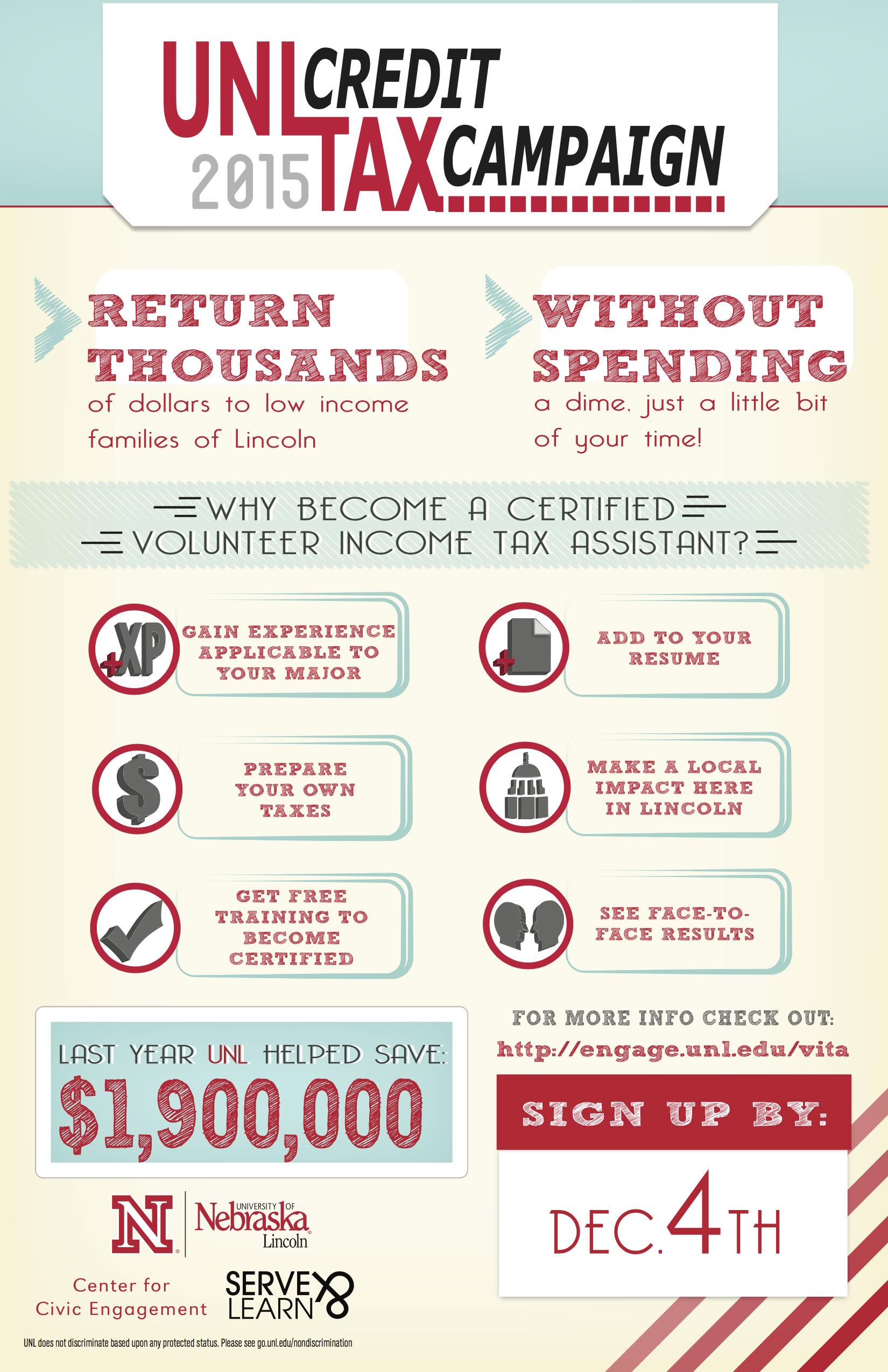
So, you want to know the damage to your wallet? The cost of becoming a certified tax preparer can range from almost nothing to several thousand dollars, depending on the path you choose and the level of expertise you’re aiming for. There’s no single price tag, and that’s because “certified” can mean different things to different people (and the IRS).
Let’s break down the typical expenses you might encounter. It’s not just about the training; it’s about the whole package. Think of it as investing in your future earning potential. A small upfront cost now can lead to significant returns down the line, especially during tax season.
Costs for Basic Training and PTIN
If you’re just aiming to get your PTIN and start with basic tax preparation for individuals, your initial costs might be relatively low. A good introductory tax course, covering fundamentals and preparing you for the basic knowledge, could run anywhere from $300 to $1,000. Add to that the PTIN application fee, which is currently $13.75 for a three-year period (subject to change, of course). So, for the absolute basics, you’re looking at a few hundred bucks.
This level is often suitable for seasonal work or assisting a more experienced preparer. It gets your foot in the door without a huge financial commitment. You’re getting the foundational knowledge to start your journey in tax preparation services.
Higher-Level Certifications and Education
If you’re aiming for more advanced certifications, like Enrolled Agent (EA), the costs jump significantly. EA exam prep courses can range from $1,000 to $3,000 or even more, depending on the provider and the materials included. These courses are much more intensive and designed to prepare you for a rigorous, multi-part federal exam. This is a more serious commitment, both in time and money.
Then there are state-specific requirements. California’s CTEC certification, for example, has its own set of course and fee requirements. These add another layer of cost and complexity, but they can also open up specific markets. It really depends on where you plan to operate and the level of tax expertise you want to achieve.
Ongoing Costs: Continuing Education and Software
Don’t forget the recurring expenses. As mentioned, you’ll need to complete continuing education hours annually to maintain your PTIN. These courses typically cost between $100 and $500 per year, depending on the number of hours required and the provider. Additionally, if you plan to prepare taxes professionally, you’ll need tax preparation software. This can range from a few hundred dollars for basic individual software to several thousand for professional business packages.
| Certification Path | Estimated Initial Training Cost | PTIN Fee (3-Year) | Annual CE Cost (Estimate) | Total First-Year Estimate |
|---|---|---|---|---|
| Basic Preparer (PTIN Holder) | $300 – $1,000 | $13.75 | $100 – $500 | $413.75 – $1,513.75 |
| Enrolled Agent (EA) Candidate | $1,000 – $3,000 | $13.75 | $100 – $500 | $1,113.75 – $3,513.75 |
| State-Specific (e.g., CTEC) | $200 – $800 (Varies by state) | $13.75 | $100 – $500 | $313.75 – $1,313.75 + State Fees |
California Ctec Tax Preparer Certification Requirements
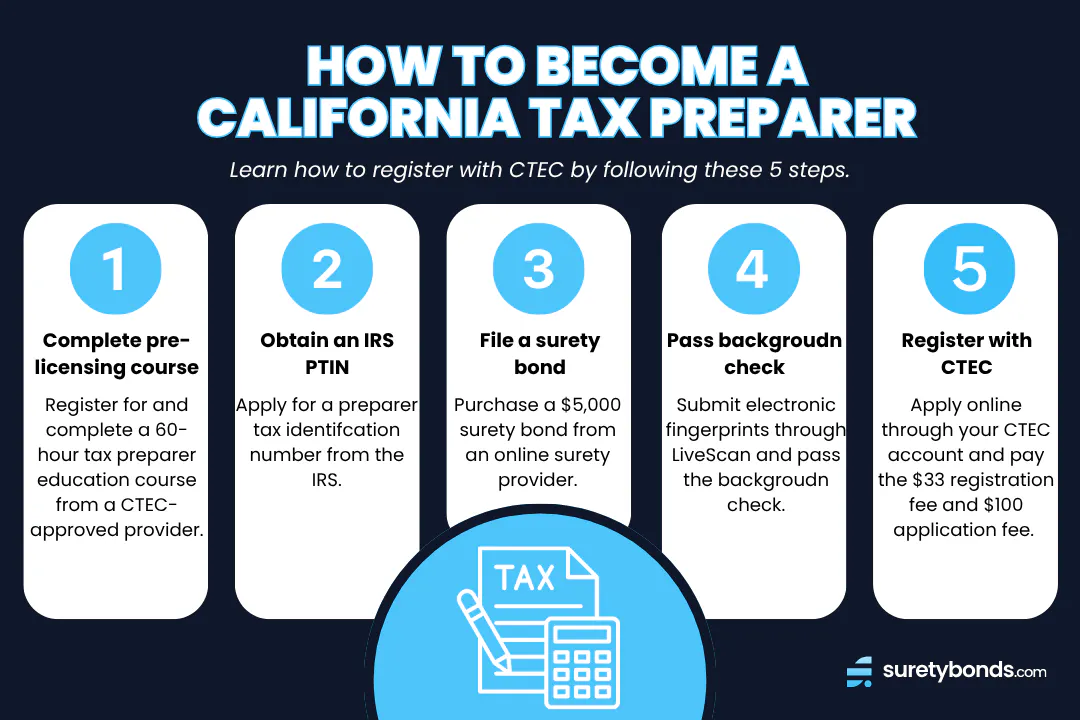
Source : suretybonds.com
California’s Unique Approach: CTEC
California is one of those states that doesn’t play by the same basic rules as everyone else. They’ve got their own thing going on with CTEC – that’s the California Tax Education Council. If you want to prepare state tax returns in California, and you’re not a CPA or an EA, you pretty much have to register with CTEC. It’s an extra layer of requirements on top of the federal PTIN.
If your business is in California, or you’re preparing returns for California residents, you need to be aware of CTEC. It’s designed to Make sure a certain baseline of competence for tax preparers operating within the state. They want to make sure folks aren’t getting ripped off or filing incorrect returns. It’s all about consumer protection.
The CTEC Education Mandate
To register with CTEC, you must complete a specific amount of education each year. This includes 60 hours of qualifying tax education for new preparers and 20 hours annually for renewing preparers. These courses must be from CTEC-approved providers. They cover federal and state tax laws, tax forms, and ethical considerations. It’s a pretty Strong initial training requirement for anyone new to the game in the Golden State.
The key here is “qualifying tax education.” Not just any online course will cut it. You need to Make sure the provider and the specific course are recognized by CTEC. This ensures you’re learning exactly what California expects from its tax preparers. It’s a deliberate step to professionalize the industry, at least within their borders.
PTIN and Registration Fees
On top of the educational hours, you also need to have your federal PTIN. CTEC requires you to submit proof of your valid PTIN when you register. Then, there’s the CTEC registration fee itself, which is currently $59 per year (again, check their site for the latest fees). You’ll also need to pass a background check and submit proof of a $5,000 surety bond. This bond offers a layer of financial protection for consumers.
So, it’s not just about passing a test. It’s about education, federal compliance, state registration, and financial assurance. It’s a Full package designed to build trust. This is a significant hurdle compared to just getting a PTIN elsewhere, but it positions you as a California-compliant tax preparer.
Is CTEC Always Necessary?
There are exceptions, of course. If you hold a current, valid license as an Enrolled Agent (EA), Certified Public Accountant (CPA), or are registered with the California State Board of Accountancy, you are exempt from CTEC registration. So, if you’re already in one of those professional categories, you might be covered. For everyone else aiming to prepare tax returns in California, CTEC is generally the mandatory route. It’s important to know your specific situation and California tax law.
Frequently Asked Questions
How many years does it take to be a tax preparer?
Honestly, it varies like crazy. You could literally get some basic tax preparer certification in a few weeks if you cram. But if you’re talking about the kind of experience that makes clients trust you, especially with tricky business returns? That’s more like a few solid years. Think about it: you need to see a lot of different tax situations to really get good. It’s not just about passing a test; it’s about knowing the guts of the tax code.
Which tax preparer certification is best?
Best? That’s like asking which pizza topping is best – depends on who you ask! Seriously though, for general folks, the IRS’s PTIN is the minimum to even get started. But if you want something that screams ‘I know my stuff,’ look at credentials like the Certified Public Accountant (CPA) or the Enrolled Agent (EA). EAs, especially, have a deep dive directly with the IRS. I’d lean towards EA if you’re serious about specializing just in taxes. CPAs do taxes, sure, but they also do a ton of other accounting stuff.
Is tax preparer certification worth it?
Oh, absolutely! Unless you plan on working for minimum wage at a discount tax shop, then maybe not. But if you want to make decent money, build a real career, and have clients actually rely on you? Getting certified is a no-brainer. It opens doors to better jobs, allows you to charge more, and frankly, gives you the confidence to handle complex returns. Think of it as investing in your own earning potential. It’s definitely worth the effort.
What’s the difference between a tax preparer and an enrolled agent?
Big difference, really. Anyone can call themselves a tax preparer after getting a PTIN from the IRS and passing a basic competency test. They can prepare federal tax returns. But an Enrolled Agent (EA)? That’s a whole other level. EAs have unlimited practice rights before the IRS, meaning they can represent taxpayers on any tax matter, anywhere. They have to pass a Full IRS exam or have specific IRS experience. It’s a specialized designation for tax experts.
Can I prepare taxes without certification?
Yep, technically you can! The IRS requires anyone who prepares federal tax returns for compensation to have a Preparer Tax Identification Number (PTIN). You get that by renewing aually and passing a basic competency test administered by the IRS. So, you don’t need a fancy degree or advanced certification just to file a return for someone. But, and it’s a huge ‘but’, you’ll be way more limited in what you can do and who will hire you without further qualifications. Think of it as the bare minimum to get your foot in the door.
