So, you’re wondering about the damage to your wallet for a basic first aid certification? It’s a fair question. Nobody wants to get nickel-and-dimed, especially for something as Key as knowing how to help in an emergency. Let’s cut through the fluff and get down to brass tacks. The cost isn’t some fixed number etched in stone; it shifts depending on a bunch of things. But I can tell you, for a standard, no-frills course, you’re generally looking at a pretty reasonable investment. It’s way less than you might imagine, and frankly, the peace of mind is priceless.
The Real Price Tag: What Basic First Aid Certification Actually Costs
Forget those vague estimates you’ve been seeing. We’re talking about the actual cash you’ll hand over. It’s not just the class fee, either. Sometimes there are hidden costs, or maybe you need extra materials. I’ve seen people get blindsided by this before. My goal is to lay it all out so you know exactly what to expect, whether you’re a business owner needing to certify staff or just a concerned citizen.
Decoding the Base Course Fee
Most basic first aid courses hover around a certain price point. Think under fifty bucks for the most stripped-down versions. These are your quick, online-only certifications, often completed in an hour or two. They cover the absolute essentials – what to do if someone’s choking, bleeding, or having a heart attack. It’s a starting point, for sure.
Understanding Certification vs. Training
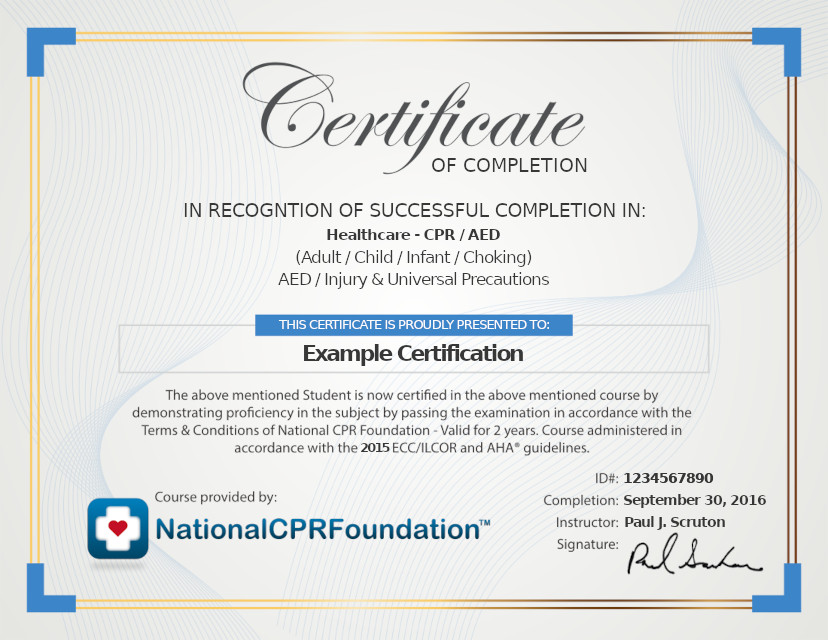
Here’s a kicker: sometimes “training” isn’t the same as “certification.” Training might teach you the skills, but you won’t get an official card. You need to make sure the course you pick culminates in an actual certification card. This is what employers usually demand. The cost difference can be minimal, but it’s a Key distinction.
Regional Cost Variations: It’s Not the Same Everywhere
Where you take the course matters. A major city like Miami might have slightly higher rates than a rural town, simply due to overhead. Rent for the training facility, instructor pay – it all adds up. I remember a friend taking a course in a swanky downtown office and paying nearly double what I paid for a similar one at a community center.
Online vs. In-Person: The Cost Divide
This is probably the biggest factor. Online courses are almost always cheaper. They have minimal overhead. You can often find them for as little as $15-$30. In-person classes, though, offer hands-on practice and instructor interaction. They tend to cost more, maybe $40 to $100, depending on the provider and length. Some Full courses bundle CPR with first aid, which can affect the price too.
Factors That Bend the Price Up (or Down!)
Source : cprcertified.com
You can’t just pick a number out of thin air and expect it to be right. There are specific things that influence how much you’ll shell out. Thinking about these will help you find the best bang for your buck without sacrificing quality.
Provider Reputation and Accreditation
Big names often cost a bit more. Think organizations like the American Red Cross or American Heart Association. Why? They’re trusted. Their certifications are recognized everywhere. Plus, their courses are usually more Full. Cheaper, unknown online providers might offer a certification, but will it be accepted by your employer or licensing board? Probably not. It’s worth spending a few extra bucks for recognized accreditation.
Course Length and Depth
A 2-hour online refresher course is obviously going to be cheaper than a full 8-hour in-person training session. The latter usually covers more scenarios, includes practical drills, and might even offer advanced modules. If you need more than just the basics, expect the price to climb. Think about what you really need to learn.

Source : summitsafetygroup.com
Materials and Equipment Included
Some courses throw in a student manual, a pocket mask, or even a small first aid kit. Others provide nothing but the lesson. Naturally, courses that include physical materials will have a slightly higher price point. This is something to consider, especially if you don’t already own these items.
Group Rates and Discounts
If you’re signing up a whole team from your company, you can often negotiate a group rate. This is where costs can really come down per person. Even as an individual, look out for discounts. Sometimes, signing up early or referring a friend can save you a few bucks. It pays to shop around for deals.
Comparing Provider Costs: A Look at the Numbers
Let’s get specific. We need to see how different providers stack up. This isn’t just guesswork; it’s about tangible figures. I’ve pulled some data to give you a clearer picture of what you might encounter.
The Big Players: Red Cross and AHA
Courses from the American Red Cross and American Heart Association tend to be on the mid-to-higher end for in-person training. You might see prices ranging from $50 to $150 for a combined CPR and First Aid course. Their online-only options can be cheaper, but often require an in-person skills check to get certified. For example, you can find classes in Miami via the American Red Cross, and while the exact cost varies, expect it to reflect their quality standards.
Budget-Friendly Online Options
Then you have the purely online providers. These are the folks offering courses for as low as $15 or $20. Websites like OnlineCPRcertification.net often fit this category. Their prices are hard to beat, but remember the caveat about employer acceptance. Make sure their certification meets your specific needs before signing up. It’s a trade-off: low cost versus universal acceptance.
Local Training Centers and Community Colleges
Don’t forget about local training centers or community colleges. They often offer competitive pricing for in-person courses. You might find basic first aid training for $40-$75. These can be a great middle-ground, offering hands-on experience without the premium price tag of the national brands. A quick search for “CPR certification Miami” might reveal several local options, such as those listed on sites discussing the average costs for getting CPR certified in Miami.
The Ins and Outs of Online First Aid Certification Costs
Online courses have exploded in popularity, and for good reason. They’re convenient. They’re cheap. But are they always the best option? Let’s dive into the cost specifics of going digital.
Rock-Bottom Prices for Digital Courses
Seriously, you can find first aid courses for less than a movie ticket. $19.99? $14.99? Absolutely. These courses are designed for people who need a certificate quickly and cheaply, often for resume padding or very basic awareness. The content is usually delivered via videos and text, with a multiple-choice test at the end. It’s a fast track to a digital certification card.
What’s Included in Those Cheap Online Courses?
Typically, a low-cost online course includes access to the training modules and the final exam. Once you pass, you can usually download a PDF certificate immediately. Some might offer a physical card mailed to you for an additional fee. The depth of content can vary wildly, though. Some are quite thorough, while others feel more like a quick skim.
The Catch with Online-Only Certification
Here’s the big issue: Many employers and regulatory bodies don’t consider a purely online certification sufficient. They want proof that you’ve demonstrated the practical skills, not just memorized answers. This means you might need to find a blended learning course (online theory plus in-person skills session) or a fully in-person class, which, as we’ve discussed, costs more. Always check requirements first!
Potential Hidden Fees in Online Courses
While the initial price looks amazing, watch out for add-ons. Need a physical card mailed? Extra cost. Want access to the course material for longer than a month? Another fee. Sometimes, retaking the exam after failing incurs a charge. Read the fine print to avoid surprises. It’s about finding true value online.
In-Person Training: Understanding the Premium Price
You can’t replicate the hands-on experience of an in-person class online. When you pay for a face-to-face course, you’re investing in more than just a certificate. You’re getting direct feedback, muscle memory, and the confidence that comes from practicing on manikins.
The Cost of Instructor-Led Sessions
These courses naturally cost more due to instructor fees, venue rental, and the physical materials provided. A basic in-person course might start around $50 and go up to $100 or more. More advanced or specialized training (like pediatric first aid) will definitely be at the higher end of that spectrum. It’s an investment in real-world skills.
Source : nationalcprfoundation.com
What Your In-Person Fee Typically Covers
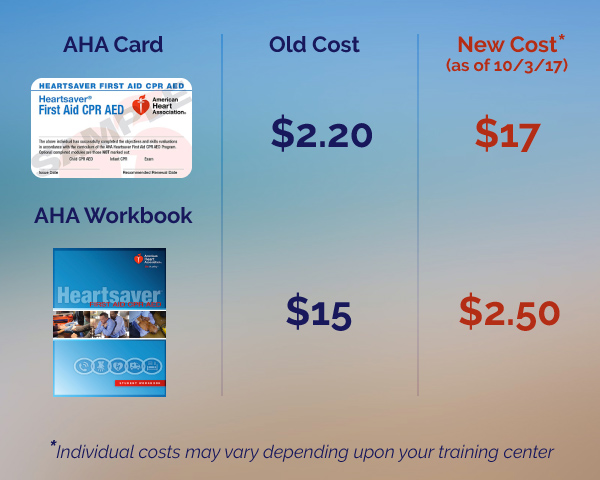
Beyond the instruction, you usually get a student workbook, practice with CPR manikins, and often a pocket mask. The certification card is, of course, included. You’ll also have the opportunity to ask questions in real-time and get immediate feedback from a certified instructor. This direct interaction is Crucial.
Blended Learning: The Hybrid Approach
Many organizations offer “blended learning” options. You complete the theoretical part online at your own pace, then attend a shorter, in-person session just to practice the hands-on skills and take the final assessment. This can be a good compromise, often costing slightly less than a full in-person course, maybe $60-$90. It offers a balance of convenience and practical application.
Why Pay More for Face-to-Face?
The ‘why’ is simple: confidence. Performing CPR correctly, bandaging a wound effectively, or managing choking requires practice. An instructor can correct your technique on the spot. This is Key for emergency situations where hesitation or incorrect action can have dire consequences. The added cost is for practical proficiency assurance.
Cost Breakdown: A Typical First Aid Certification
Let’s visualize this. We need concrete numbers to compare. This table breaks down the potential costs associated with different types of first aid certification, giving you a clear comparison point.
| Course Type | Typical Provider Examples | Estimated Cost Range (USD) | Pros | Cons |
|---|---|---|---|---|
| Basic Online-Only | Various online platforms | $15 – $40 | Very affordable, convenient, self-paced | May not be accepted by employers, lacks hands-on practice |
| Blended Learning (Online + In-Person Skills) | Red Cross, AHA, local centers | $50 – $90 | Good balance of convenience and practical skills, usually accepted | Requires attending an in-person session, slightly more costly than online-only |
| Full In-Person Course | Red Cross, AHA, local centers, colleges | $60 – $150+ | Most Full, hands-on practice, highest acceptance rate | Least flexible schedule, generally the most expensive option |
| Recertification Course | Varies by provider | $20 – $75 | Shorter, less expensive than initial certification | Only available if your previous certification is current; may require in-person component |
Interpreting the Data
As you can see, the range is pretty wide. A basic online course is the cheapest way to get a certificate, potentially under $20. However, if you need a widely recognized certification for your job, you’re likely looking at the blended or full in-person options, which can push the cost to $75-$100 or more. It really boils down to what you need the certification for.
The Value Proposition: Is It Worth It?
It this way: for the price of a couple of fancy coffees or a mediocre dinner out, you can get certified. That certification could literally save a life. Or it could be the credential you need to land a better job. The return on investment here is potentially astronomical, far outweighing the monetary cost. It’s about preparedness and professional development rolled into one.
Hidden Costs Beyond the Course Fee
Don’t forget potential costs like transportation to an in-person class, time off work (if you can’t take it during work hours), or even the cost of a CPR mask if your course doesn’t provide one. Factor these into your budget for a true cost analysis.
Finding Affordable First Aid Certification Near You
Okay, price is important, but so is accessibility. You need a course that fits your schedule and location. Let’s talk about how to hunt down those affordable options without trekking miles.
Leveraging Online Search Tools
Your best friend here is Google (or your preferred search engine). Use specific terms like “affordable first aid certification [your city]” or “basic first aid course cost.” Check aggregator sites that list local classes. You’ll often find a wealth of options you didn’t know existed. Don’t just look at the first result; dig a little deeper.
Checking Local Community Resources
Think outside the box. Community centers, libraries, YMCAs, and even some fire departments offer first aid and CPR training, often at very reasonable prices. These places are community-focused and aim to make Key skills accessible. They might not have the slickest marketing, but the training is usually solid. Check their bulletin boards or websites.
Employer-Sponsored Training
If you’re getting certified for a job, ask your employer! Many companies offer to pay for, or even provide, first aid and CPR training for their employees. It’s a perk that benefits both parties. It saves you money and ensures your workplace is prepared. This is the ideal cost-saving scenario.
Group Sign-Ups for Maximum Savings
Before, getting a group together is a fantastic way to lower costs. Rally your neighbors, friends, or colleagues. Find a training provider and inquire about group discounts. Even a small group of 5-10 people can often secure a better rate per person. It turns a personal expense into a shared investment.
Recertification Costs: Keeping Your Skills Current
Your first aid certification doesn’t last forever. They typically expire every two years. You’ll need to recertify to keep your skills sharp and your credentials valid. How much does that cost?
Source : safetyevolution.com
The Price of Staying Certified
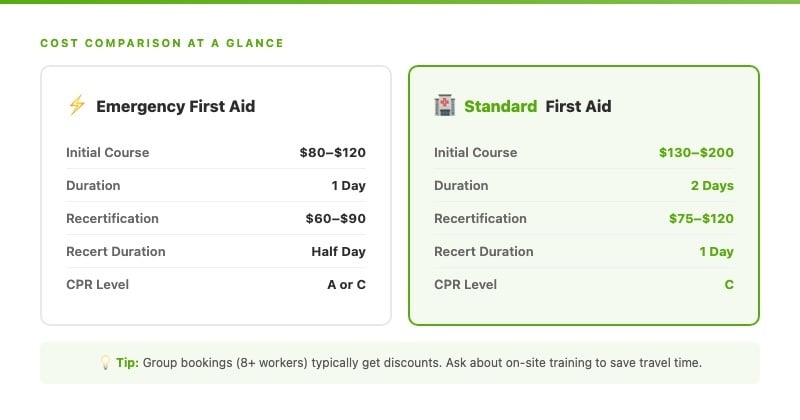
Recertification courses are generally shorter and less expensive than the initial training. You might pay anywhere from $20 to $75, depending on the provider and whether it’s online, blended, or in-person. The idea is to refresh your knowledge, not reteach everything from scratch. It’s a smaller, regular investment.
Online Recertification Options
Many providers offer online recertification, which is often the cheapest route. You’ll review the material and take a test. Some might still require a brief in-person skills check. These are great for individuals who need to maintain their certification without a huge time or financial commitment. It’s about efficient skill maintenance.
Why Recertification is Key (and Cost-Effective)
Yes, it’s another cost. But think about the alternative. If your certification lapses, you might have to retake the full, more expensive initial course. Plus, in a real emergency, outdated knowledge could be dangerous. Staying current is not just about compliance; it’s about competence. It ensures you’re ready when it counts.
Maximizing Value: Getting the Most for Your First Aid Certification Dollar
So, we’ve talked cost, but let’s quickly touch on getting the best value. You want a certification that’s affordable, recognized, and genuinely prepares you. It’s not just about the price tag.
Prioritize Recognition and Acceptance
Always, always, always check if the certification you’re getting is accepted by your employer, licensing board, or relevant organization. A cheap certificate that nobody accepts is a waste of money. Stick with reputable providers like the Red Cross or AHA if in doubt. Reputation equals reliability.
Focus on Hands-On Practice
If your role involves direct patient care or high-risk activities, prioritize in-person or blended learning. The practical skills are non-negotiable. Don’t skimp here if lives could be on the line. The cost is justified by the confidence it builds.
Look for Full Course Content
Does the course cover more than just basic cuts and scrapes? Does it include CPR, AED use, choking emergencies, and possibly even environmental emergencies? A more Full course, even if slightly pricier, offers better overall preparedness. Make sure you’re learning critical life-saving techniques.
Bundle Courses When Possible
Often, you can get certified in CPR, AED use, and First Aid all in one course for a package price. This is usually more cost-effective than taking separate courses. Many providers bundle these essentials, so inquire about combined course options. It’s efficient and saves money.
Frequently Asked Questions
How much is a full first aid course?
A full first aid course can vary, but you’re generally looking at anywhere from $75 to $200. It really depends on the provider, the length of the course, and what exactly is covered. Some might throw in CPR or AED training, which can bump the price up a bit, but it’s usually worth it for the Full knowledge you gain.
Is first aid 2 or 3 years?
Most first aid certifications are valid for about 2 to 3 years. After that, you’ll need to take a refresher course or re-certify to keep your skills and certification current. It’s important to check the specific expiration date on your card and plan ahead so you don’t let it lapse.
What’s the difference between basic and advanced first aid?
Think of basic first aid as the essentials – dealing with common injuries like cuts, burns, sprains, and performing CPR. Advanced first aid dives deeper into more complex medical emergencies, like managing serious trauma, administering certain medications, or handling prolonged care situations. The basic certification is usually what most people need for work or general knowledge.
Are there online options for first aid certification?
Yeah, there are definitely online first aid options, but be careful. Often, you can do the theoretical part online, which is super convenient. But you almost always still need to complete an in-person skills session to get your actual certification. It’s a good way to get started or refresh your memory, though!
Can I get first aid certified for free?
Getting a full first aid certification for free is pretty rare, but not impossible. Sometimes, community organizations or employers might offer subsidized or free courses as a benefit or outreach program. You might also find free online resources to learn the basics, but again, that hands-on practical training and official certification usually comes with a fee.
