So You Wanna Be a SAR Hero? Here’s the Real Deal.
Forget the Hollywood drama. Real search and rescue isn’t about flashy rescues in the rain. It’s gritty, demanding, and incredibly rewarding work. You’re not just looking for lost hikers; you’re bringing hope to desperate families.
Think you have what it takes? It’s not as simple as just showing up. Becoming a certified member involves serious commitment, training, and a whole lot of dedication. This isn’t a weekend hobby; it’s a lifestyle.
Let’s cut through the noise. This is your no-nonsense guide to getting involved and becoming a certified SAR member. No fluff, just the facts you need to get started.
The Unvarnished Truth About SAR

Source : nasar.org
It’s Not Always Glorious
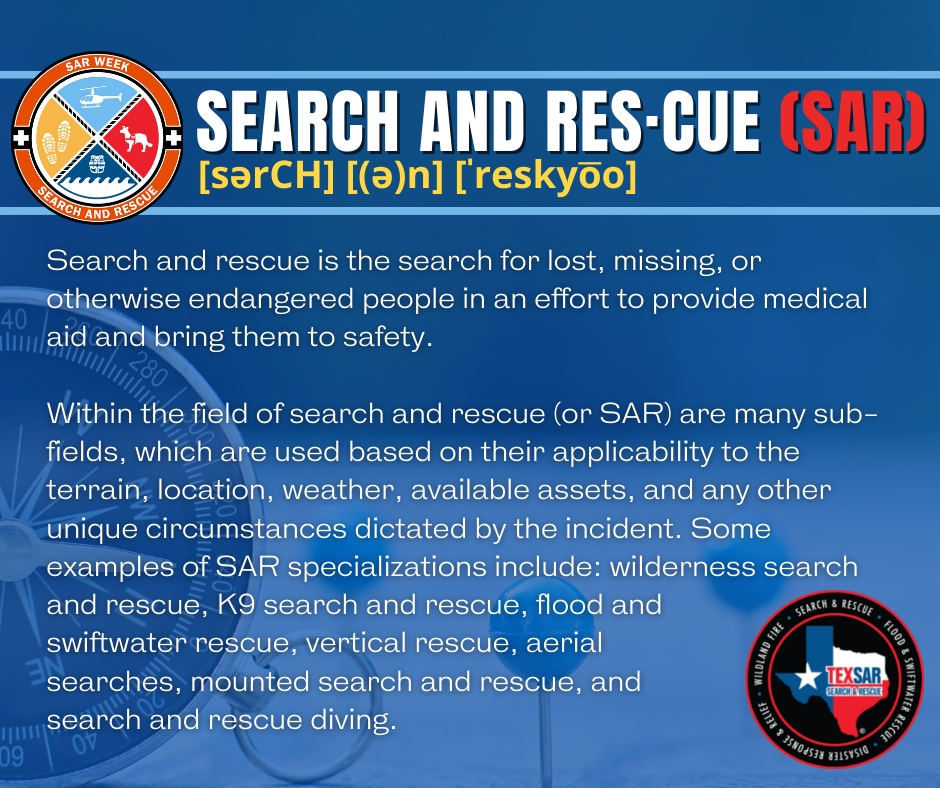
When you picture search and rescue, what comes to mind? Probably dramatic helicopter drops or finding someone just in the nick of time. The reality is often a lot less glamorous. Think days of slogging through mud, freezing rain, or sweltering heat.
Most searches involve looking for people who wandered off from trails, got disoriented, or have a medical emergency. It can be long, tedious work. Hours spent meticulously checking an area, often with little to show for it.
Source : texsar.org
The Time Commitment is HUGE
This is where many people falter. Being a volunteer doesn’t mean you show up when you feel like it. You’ll be expected to attend regular training sessions, drills, and actual callouts. These can happen at any time, day or night, weekday or weekend.
Some teams require a minimum number of hours per month. Factor in travel time to training and incidents. It’s a significant chunk of your life. You need to be realistic about what you can truly offer.
Physical and Mental Toughness Required
You don’t need to be an ultramarathon runner, but you absolutely need to be in decent shape. You’ll be hiking over rough terrain, carrying gear, and potentially assisting injured individuals. Stamina is key.
Mentally? That’s a whole other ballgame. You’ll encounter stressful situations, possibly deal with tragic outcomes, and be away from your family for extended periods. You need resilience. A strong mental fortitude is non-negotiable.
Finding Your SAR Tribe: Where to Start
Identify Local SAR Teams
The first practical step is finding out who operates in your area. Search and rescue isn’t a monolithic organization. It’s made up of many different teams, often specialized by geographic region or function. Your local emergency management agency or sheriff’s department is a good starting point.
Look for teams affiliated with county or state agencies. Some are run by specific volunteer organizations. Check out resources like the National Association For Search And Rescue (nasar.org) which can point you toward member organizations.
Research Team Specializations
Not all SAR teams do the same thing. Some focus on wilderness, others on urban environments. You might find teams specializing in canine search, swift water rescue, mountain rescue, or even aviation support. Consider what kind of environment and operations appeal most to you.
Existing skills. Are you a strong swimmer? Do you have experience in mountainous terrain? Matching your existing abilities with a team’s needs can be a great entry point. But don’t worry if you don’t have specialized skills yet; training is part of the process.
Check Their Recruitment Process
Each team has its own way of bringing in new members. Some have open recruitment drives annually, while others accept applications on a rolling basis. You might find information on their websites or social media pages. It’s often best to reach out directly.
Be prepared to fill out applications, undergo background checks, and potentially go through an interview process. Some teams are more competitive than others. Patience is definitely a virtue here; you might not get in on your first try. As one article puts it, expect to wait a while.
The Gauntlet: Training and Certification

Source : youtube.com
Basic Training is Just the Beginning
Once you’re accepted by a team, the real work begins. You’ll start with basic training covering Needed SAR principles. This includes navigation, first aid, search techniques, and communication protocols. It’s foundational stuff, but absolutely critical.
Think of it like boot camp. You’ll learn the rules, the procedures, and how to operate as part of a cohesive unit. Mastery of these basics is Top before you can move on to more advanced skills. Your initial SAR training is Key.
Advancing Your Skills
After the basics, you’ll likely specialize. This could mean attending courses on advanced first aid (like Wilderness First Responder – WFR), technical rope rescue, swift water rescue, or search management. Many teams will pay for or subsidize these costs, but it’s still time away from your regular life.
Certification bodies like the National Association for Search and Rescue (NASAR) offer various levels of certification. Getting certified demonstrates a standardized level of competence, which is highly valued. It shows you’ve met specific industry standards. This is where achieving certification really matters.
Physical Fitness and Practical Drills
Training isn’t just classroom work. You’ll be out in the field, practicing what you’ve learned. This includes hiking with a loaded pack, practicing navigation in all weather conditions, and participating in simulated search scenarios. Your physical conditioning will be tested regularly.
These practical drills are Key for building muscle memory and confidence. They prepare you for the rigors of real-world missions. Don’t underestimate the importance of staying physically fit between training sessions. Consistent effort builds physical preparedness.
Skills and Gear: What You’ll Need
Needed Soft Skills
Beyond the physical, certain personality traits and soft skills are Key. A positive attitude goes a long way. Being adaptable, able to follow instructions precisely, and working well under pressure are critical. Good communication skills are also Key.
You need to be a team player. SAR is all about collaboration. Trust your teammates, and make sure they can trust you. Your attitude and aptitude are often more important than specific pre-existing skills.
Must-Have Gear (Initially)
You don’t need to buy a top-of-the-line everything on day one. Most teams will provide specialized equipment like radios, GPS units, and medical kits. However, you’ll need to Get some personal gear.
This typically includes sturdy hiking boots, durable outdoor clothing (layers are key!), a good backpack, a headlamp with extra batteries, a compass, and a basic personal first-aid kit. Check with your specific team for their recommended gear list. They can guide you on what’s Needed versus what can wait. Investing in quality outdoor gear is wise.
Specialized Gear (As You Progress)
As you gain experience and potentially specialize, you might need more advanced gear. This could include technical climbing equipment, water rescue gear, or specialized navigation tools. Your team will usually provide guidance and sometimes even loaner equipment for advanced training.

Source : nasar.org
Remember, your gear is a tool. It needs to be reliable and well-maintained. Learn how to use and care for everything you carry. Don’t be the person fumbling with unfamiliar equipment when seconds count. Proper gear maintenance is key to operational readiness.
The Recruitment Maze: Handling the Process
Background Checks and Medical Clearances
Because you’ll be operating in potentially hazardous situations and dealing with sensitive information, most SAR teams conduct thorough background checks. This is standard procedure to Make sure the safety and integrity of the team.
You’ll also likely need to provide proof of good health. Some teams might require a physical exam from your doctor to Make sure you can handle the demands of the job. Honesty and transparency are Key throughout this phase. Clear background checks are often required.
The Interview and Evaluation
Don’t be surprised if you have to interview. Teams want to assess your commitment, your understanding of the role, and how you’ll fit in with the existing members. They’re looking for more than just someone with free time; they need reliable, dedicated individuals.
Be prepared to answer questions about your motivations, your availability, and how you handle stress. They might also present hypothetical scenarios to gauge your thought process. Show them you’re serious about the commitment involved.
Probationary Periods
Many SAR teams have a probationary period for new members. This allows both you and the team to Make sure it’s a good fit. During this time, you’ll be expected to attend all required training and functions. It’s your chance to prove yourself.
It’s also your chance to see if the reality of SAR matches your expectations. If you find it’s not for you, it’s okay to step away during this period. But if you’re committed, this is your time to shine and earn your place. Completing a probationary period successfully is Key.
The Bigger Picture: Why Volunteer SAR Matters
Community Service at Its Finest
Volunteering for SAR is one of the most direct ways to serve your community. You’re providing an Needed service that often fills a critical gap in public safety. When someone is lost or in danger, SAR is frequently the first, or only, resource.
You become part of a network dedicated to helping others, often in their most vulnerable moments. It’s a profound way to give back. The impact of your efforts can be immeasurable. This level of community service is deeply fulfilling.
Personal Growth and Skill Development
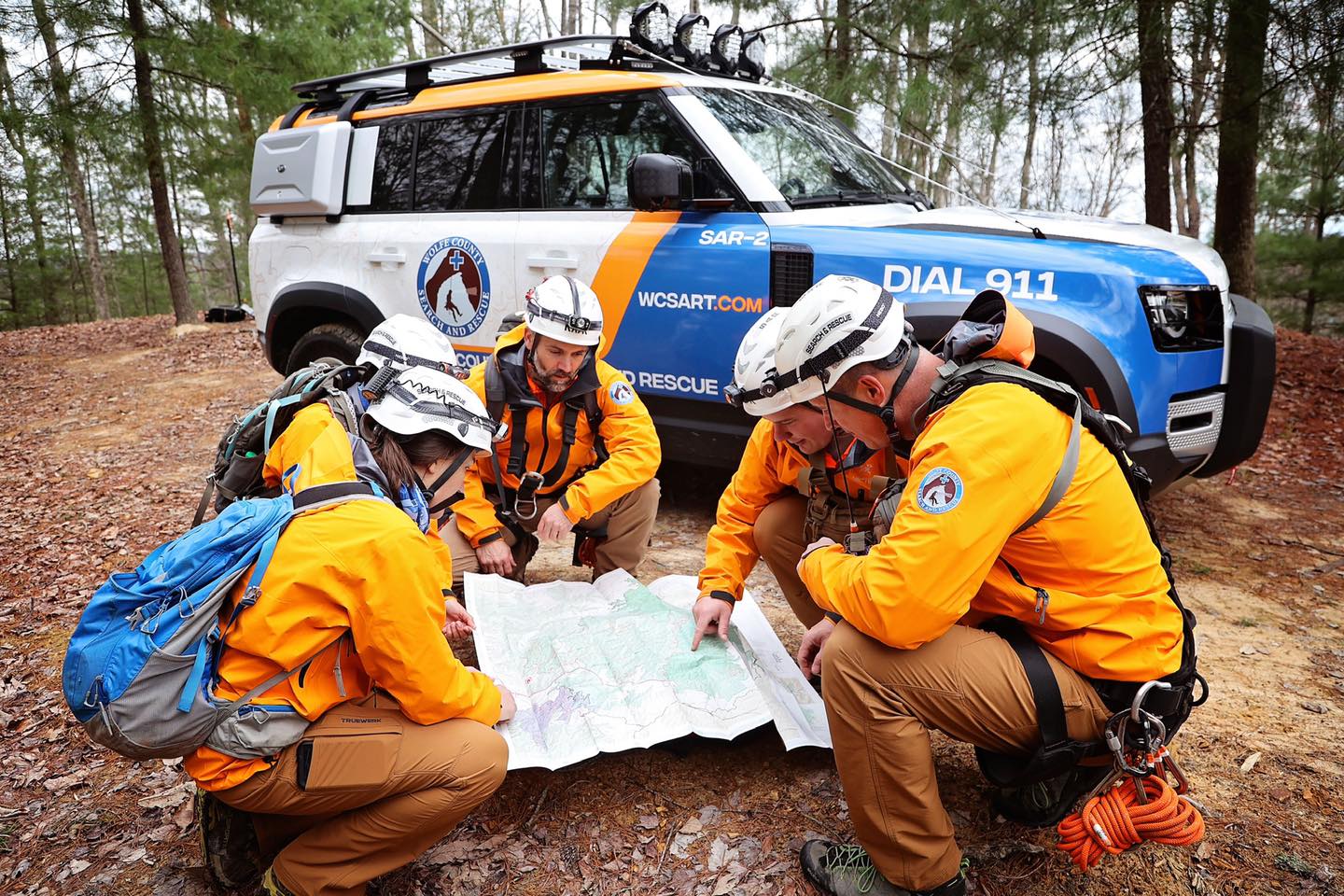
The skills you learn in SAR extend far beyond the search field. You’ll develop leadership abilities, improve your problem-solving skills, and gain expertise in areas like wilderness survival, navigation, and emergency medicine. These are valuable life skills.
Source : wcsart.com
You’ll also learn a lot about yourself. Facing challenges, working under pressure, and relying on others builds character. It pushes you to grow in ways you might not have imagined. The personal growth is Large.
The Incredible Reward of Making a Difference
There’s an Best sense of accomplishment that comes from a successful mission. Knowing that you played a part in bringing someone home safely, or providing Key assistance, is incredibly rewarding. It’s a feeling that stays with you.
Even on missions that don’t end happily, you know you did everything you could. You provided support, comfort, and a professional response when it was needed most. That making a difference is the ultimate payoff.
A Look at Different SAR Structures
County and Local Teams
Many SAR operations are managed at the county or local level, often under the purview of the Sheriff’s Department or Emergency Management Agency. These teams are typically the first responders for missing persons cases within their jurisdiction.
They rely heavily on local volunteers who know the terrain and the community. Requirements and training can vary significantly from one county to another. This is often the most accessible entry point for many.
State Agencies and Specialized Units
Some states have specific agencies that coordinate or operate SAR units. For example, Pennsylvania’s Department of Conservation and Natural Resources (DCNR) utilizes volunteers for SAR efforts within state parks and forests. You can learn more about volunteering through their official channels, like the PA.gov DCNR SAR volunteer page.
These state-level units might handle larger-scale incidents or have specialized capabilities that local teams might not possess. They often work in conjunction with local resources. These roles can offer unique challenges and opportunities.
National and International Organizations
While most day-to-day SAR is local, national organizations like NASAR play a Key role in setting standards, providing training resources, and certifying instructors. They help Make sure a baseline of quality across different regions.
International teams exist for disaster response (like Urban Search and Rescue – USAR teams), but for typical wilderness or local missing persons, the focus remains primarily on regional and state capabilities. Understanding the different levels of organization helps you find the right fit. The National Association is a key resource.
Data Deep Dive: SAR Training Prerequisites and Time Investment
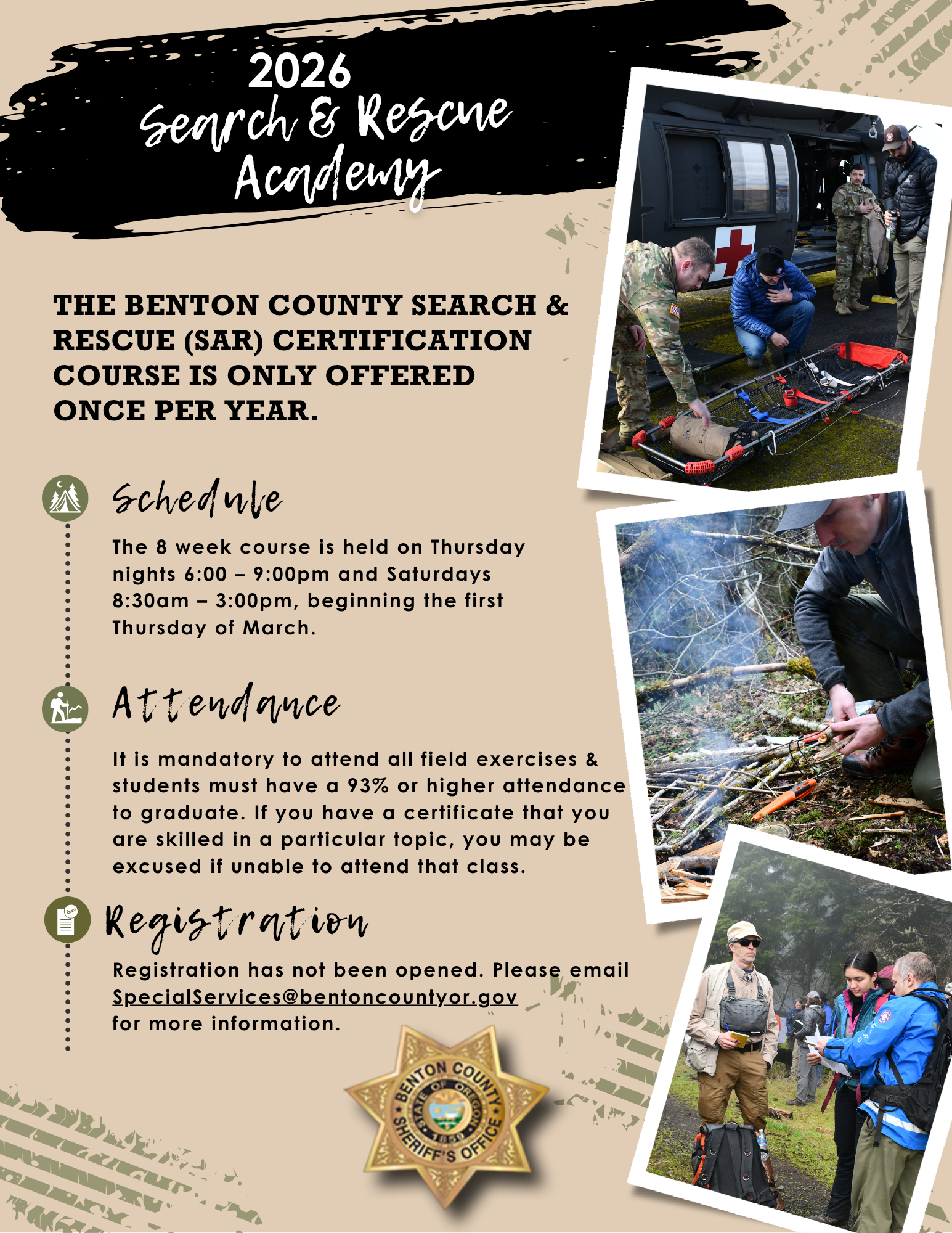
Understanding the typical requirements and the sheer time investment can be daunting but is Needed for aspiring volunteers. Here’s a look at what’s generally expected:
Source : sheriff.bentoncountyor.gov
| Category | Typical Requirement/Range | Notes |
|---|---|---|
| Minimum Age | 18 years old (sometimes 21 for certain roles) | Must be a legal adult. |
| Physical Fitness | Good to Excellent Cardiovascular Health | Ability to hike moderate to difficult terrain for extended periods with a pack. Specific fitness tests may apply. |
| Basic First Aid/CPR | Required prior to or during initial training | Certification must be current. Often Wilderness First Aid (WFA) or higher is preferred. |
| Background Check | Clear criminal record | Standard procedure for all public safety volunteers. |
| Initial Training Hours | 20-50 hours (basic course) | Covers fundamentals like navigation, search theory, first aid basics, and team operations. |
| Ongoing Training Hours | 40-100+ hours per year | Includes drills, specialized courses, and continuing education to maintain skills. |
| Callout Availability | High Availability Expected | Must be able to respond to incidents at any time, often requiring availability for 12-72+ hours per mission. Response time goals vary by team. |
| Commitment Duration | Minimum 1-2 year initial commitment | Teams invest heavily in training; members are expected to stay engaged. |
| Specialized Certifications | Varies widely (e.g., WFR, Swiftwater, Rope Rescue) | Often pursued after initial certification and team integration. Costs may be covered by the team. |
The Reality Check on Time
Looking at the table, it’s clear this isn’t a casual commitment. The annual training hours alone can rival a part-time job. Add to that the unpredictability of callouts, and you’re looking at a significant portion of your life dedicated to SAR.
Many sources, like Outside Magazine articles discussing joining SAR, emphasize the patience required. You need to balance this with your existing job, family, and social life. It’s a juggling act that requires careful planning and buy-in from your support network. Proper time management is Needed.
Training Intensity and Progression
The training isn’t just about accumulating hours; it’s about rigorous skill development. You’ll be pushed physically and mentally. The goal is to Make sure you can perform reliably under extreme stress. You learn to trust your gear, your training, and your team.
Progression often involves demonstrating proficiency in basic skills before being allowed to participate in more complex training or actual callouts. This tiered approach ensures that everyone on a search is competent and safe. Continuous learning is the name of the game. Skill progression is structured.
Costs Associated with Volunteering
While SAR teams provide Needed equipment, there are still costs involved for the volunteer. Personal gear, fuel for travel to training and incidents, and potentially course fees for specialized certifications can add up. Some teams offer reimbursement, but not all.
It’s important to discuss potential costs with a team during the recruitment process. You need to be financially prepared for the commitment. Budgeting for your SAR expenses is a practical necessity.
Making the Cut: What Teams Look For
Commitment Above All Else
This bears repeating: commitment is Top. Teams need members who will show up, participate actively, and be reliable. A history of dropping out of commitments is a red flag. They invest time and resources into training you; they need that investment to pay off.
Attending meetings, training sessions, and being available for callouts. It means prioritizing SAR responsibilities when duty calls, even when it’s inconvenient. Demonstrating unwavering dedication and reliability is key.
Teamwork and Attitude
No one wants a lone wolf on a SAR team. You need to be someone who integrates well, supports others, and contributes positively to team morale. A negative attitude can be toxic and dangerous in high-stress situations.
Are you coachable? Can you take direction? Do you contribute to a positive team Active? These are the questions interviewers are trying to answer. Your teamwork ability and overall demeanor matter immensely.
Watch: How to Prepare to Join a Search and Rescue Team | SAR …
Problem-Solving and Decision-Making
SAR missions are rarely straightforward. You’ll constantly face unexpected challenges and need to make quick, sound decisions, often with incomplete information. Teams look for individuals who can think critically and calmly under pressure.
This doesn’t mean you need to be a genius, but you need to be able to assess a situation, consider the options, and act decisively based on your training. A calm and decisive approach is highly valued.
Final Thoughts: Is SAR Right For You?
Becoming a certified volunteer search and rescue member is a significant undertaking. It requires a Large commitment of time, energy, and personal resources. You’ll be pushed to your limits, both physically and mentally.
But the rewards? They’re profound. The chance to serve your community, develop Crucial skills, and be part of a dedicated team is Best. It’s not for everyone, but for those who answer the call, it’s an experience like no other. It’s about the impact you can have.
If you’re ready for the challenge, start researching local teams today. Be prepared, be persistent, and most importantly, be committed. Your community might just need you.
Frequently Asked Questions
How do you get certified for search and rescue?
Because it varies a bit by organization, but usually, you gotta complete some basic training courses covering stuff like first aid, navigation, and survival skills. Then, you’ll likely have to pass physical fitness tests and maybe some practical evaluations. It’s all about proving you can handle the demands of search and rescue operations.
How long is SARS training?
But honestly, it’s not a one-size-fits-all deal. Some basic courses might be a few weekends, while more specialized training can take months or even a year, depending on the area you want to focus on, like wilderness or urban SAR. It’s a commitment, for sure, to get properly trained for SAR.
What training is required for SAR?
Generally, you’re looking at core stuff like wilderness survival, advanced first aid/CPR, navigation (map and compass are key!), search techniques, rope rescue basics, and incident command system (ICS) training. Lots of SAR teams also require you to have a solid level of physical fitness. Gotta be prepared for anything, you know?
How hard is it to become search and rescue?
It’s definitely a challenge, no doubt about it. But it’s a good kind of hard, the kind that makes you feel accomplished. You’ll need dedication, a willingness to learn, and the ability to stay calm under pressure. The physical and mental demands are real, but so is the reward of helping others.
What are the physical requirements for SAR?
You gotta be in pretty good shape, honestly. Think being able to hike long distances over tough terrain, carry heavy gear, and sometimes even do strenuous tasks like climbing or dragging. Most teams have specific physical fitness tests to make sure you can handle the job without putting yourself or others at risk.
