Alright, let’s talk about the NREMT cognitive exam. You’re probably sweating bullets thinking about it, right? It’s the big one, the gatekeeper to your EMT career. Forget just passively reading notes; you need to dominate this thing. And how do you do that? With practice tests. Not just any practice tests, but the kind that actually mimic the real deal and make you think. We’re diving deep into why Nremt cognitive exam practice tests are your secret weapon. This isn’t about cramming facts; it’s about building the critical thinking muscle you’ll need out there on the street. So, buckle up. We’re going to dissect exactly what you need and how to use these tools to not just pass, but to ace it.
The NREMT Cognitive Exam: What’s Really Going On Here?
Beyond Just Memorizing Facts
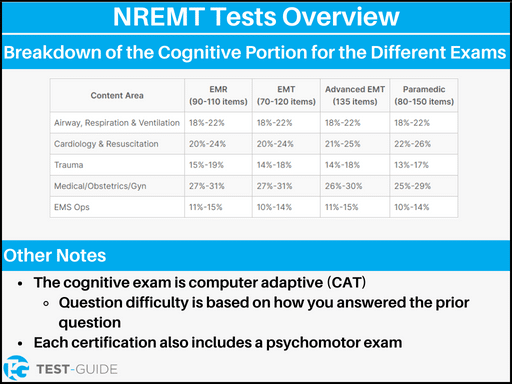
Look, anybody can memorize a list of drug dosages or Key signs. The NREMT cognitive exam isn’t testing your flashcard skills. It’s designed to see if you can apply that knowledge under pressure. Think about it: the exam adapts. Get a question right? It throws something harder at you. Miss one? It tries to find your weak spot. It’s a sophisticated beast, and understanding its adaptive nature is key to crushing it.
Why the Computer Seems to ‘Know’ You
This adaptive testing format is brutal but brilliant. It means there’s no single “test.” Your test is your test. It pinpoints your exact level of competency. If you’re acing tough questions, it keeps pushing. If you’re struggling with the basics, it’ll keep hammering those until you prove you’ve got them down. This isn’t some abstract concept; it’s how they Make sure you’re truly ready to be an EMT.
The ‘Why’ Behind Your Answers Matters Most
This is where NREMT cognitive exam practice tests really shine. A good practice test doesn’t just tell you if you were right or wrong. It explains why. Did you pick the best answer, or just the least wrong one? Understanding the rationale behind each correct answer builds your clinical judgment. It reinforces the decision-making process you’ll need in a real emergency. It’s about building that gut instinct, backed by solid knowledge.
Passing Isn’t the Only Goal
Sure, passing is the immediate objective. But what kind of EMT do you want to be? One who barely scraped by? Or one who walks in with confidence, knowing they’ve got the skills and knowledge to make a difference? High-quality practice helps you achieve the latter. It builds confidence. It reduces anxiety. And honestly, it makes the actual exam feel like just another practice session. You want to be prepared for anything.
The Undeniable Power of Practice Tests
![Free NREMT Practice Test [2026] | Will You Pass?](https://www.boostprep.com/wp-content/uploads/2025/04/boostprep-nremt-emt-exam-overview.png)
Source : boostprep.com
Simulating the High-Stakes Environment
Let’s be real. Taking the actual NREMT exam is nerve-wracking. The time pressure, the unknown questions, the sheer weight of it all can make even the most prepared person falter. Practice tests, especially those designed to mimic the exam format and difficulty, help desensitize you to that pressure. When you’ve taken dozens, maybe even hundreds, of practice questions, the real exam feels less like a monster and more like a familiar challenge. It’s about building familiarity with the format.

Source : amazon.com
Identifying Your Knowledge Gaps (Painfully Honest)
This is where the rubber meets the road. You think you know all about cardiac emergencies, but a practice test might reveal you consistently miss questions related to specific EKG interpretations or medication interventions. Good practice platforms will highlight these weak areas. They’ll often let you focus on specific topics. This targeted approach is infinitely more effective than randomly rereading chapters. You’re not wasting time on what you already know; you’re attacking what you need to learn.
Building Speed and Efficiency
The NREMT exam has a time limit, and while it’s generally generous, you can’t dawdle. You need to read the question, analyze the options, and make a decision efficiently. Practice tests train this skill. The more questions you answer under timed conditions, the faster you become at recognizing keywords, identifying distractors, and recalling the correct information. It’s about developing a rhythm, a flow that carries you through the exam.
Reinforcing Learning Through Repetition
Human brains learn through repetition. Seeing the same concepts presented in different ways across multiple practice questions helps solidify that knowledge. It’s like hearing a song a few times – eventually, it sticks. Each practice question is a mini-lesson, reinforcing key principles and scenarios. This constant exposure, especially to the NREMT cognitive exam style, is Key for long-term retention.
Choosing the Right NREMT Practice Tests: Not All Heroes Wear Capes
Accuracy is King (Seriously)
This is non-negotiable. You need practice tests written by experienced EMTs and educators who understand the NREMT blueprint. If the questions are poorly worded, factually incorrect, or don’t reflect the current standards of care, they’re worse than useless. They’re actively detrimental. Stick to reputable providers. Sites like BoostPrep are known for their accuracy.
Coverage of Key Domains
The NREMT exam is broken down into specific content domains: Airway, Respiration, and Ventilation; Cardiology; Trauma; Medical Emergencies; Obstetrics and Gynecology; and so on. Your practice tests should cover all of these domains thoroughly. A test that only focuses on trauma, for instance, leaves you vulnerable in other critical areas. You need Full coverage of NREMT domains.
Adaptive Learning Features
As we discussed, the real exam is adaptive. The best practice tests mirror this. They adjust in difficulty based on your performance. This gives you the most realistic simulation and the most targeted practice. If a platform offers a fixed-set of questions every time, it’s a major red flag. Look for platforms that adapt to your learning pace.
Detailed Explanations are a Must
Getting an answer wrong is only half the battle. The real learning happens when you understand why it was wrong and why the correct answer is right. Excellent practice tests provide clear, concise explanations for every single question. These explanations should reference the underlying principles and standards of care. It’s not just about knowing the answer; it’s about understanding the reasoning. This is critical for deep learning.
Where to Find Stellar NREMT Practice Resources
Reputable Online Platforms
There are several fantastic online resources dedicated to NREMT preparation. These platforms often offer extensive question banks, adaptive testing engines, and detailed analytics. For example, some sites offer a limited demo, like this NREMT practice test demo, which can give you a feel for their style. Always check reviews and see what current EMTs recommend.
Mobile Apps for On-the-Go Studying
Let’s face it, we live on our phones. Many of the best NREMT prep providers offer mobile apps. This means you can study during your commute, on your lunch break, or while waiting for a call. Apps from companies like Pocket Prep are incredibly convenient. They allow you to fit study sessions into even the busiest schedules. It’s about maximizing study efficiency.
EMT Training Program Resources
Don’t overlook the resources provided by your own EMT training program. Many programs have partnerships with test prep companies or develop their own materials. Your instructors are Crucial sources of information about what to expect and which resources they endorse. They’ve guided countless students through this process, so listen to their advice. They often have the inside scoop.

Source : amazon.com
Study Groups and Peer Learning
While not a direct “practice test” provider, collaborating with peers can be incredibly beneficial. Discussing difficult questions, quizzing each other, and explaining concepts reinforces your own understanding. When you can teach something to someone else, you truly know it. It’s a different kind of practice, but just as Key for solidifying knowledge.
Maximizing Your Practice Test Strategy
Simulate Exam Conditions
Don’t just casually click through questions while watching TV. Treat your practice sessions like the real exam. Find a quiet space. Set a timer. Only use approved resources (no Googling answers!). The more you simulate the actual testing environment, the less of a shock it will be on exam day. This builds mental fortitude.
Focus on Weak Areas, Don’t Just Rehash Strengths
It’s tempting to keep answering questions you know you’ll get right. That feels good! But it doesn’t help you improve. Use the analytics provided by practice platforms to identify your weakest domains and topics. Dedicate extra time and questions to those areas. Target your weaknesses ruthlessly. This is where real improvement happens.
Review Every Single Question
Seriously, every single one. Even the ones you got right. Read the explanation. Did you understand why it was correct, or did you just guess lucky? For the questions you got wrong, dig deep. Understand the mistake. Was it a knowledge gap? A misreading of the question? A faulty assumption? Write it down if you have to. Understanding your errors is key to not repeating them.
Track Your Progress Over Time
Most good practice platforms will track your scores and progress. Don’t just look at your latest score; look at the trend. Are your scores increasing? Are you seeing improvement in your weaker areas? Seeing tangible progress is a huge motivator and helps you gauge when you’re truly ready. Consistent upward trends are a sign of effective preparation.
Common Pitfalls to Avoid with Practice Tests
Treating Demos as the Real Deal
Many sites offer free demos or a limited number of questions. These are great for getting a feel for a platform, but they are NOT a substitute for a full, Full practice test bank. Relying solely on demo questions is like training for a marathon by running a single mile. You’re missing the bulk of the experience and the depth of training.
Ignoring the Explanations
I’m going to say it again because it’s that important: Do NOT skip the explanations. This is where the learning happens. If a practice test doesn’t offer detailed explanations, find a different one. The explanation is as valuable, if not more valuable, than the question itself. It’s the difference between rote memorization and genuine understanding of the NREMT cognitive exam principles.
Getting Discouraged by Low Scores
Your first few practice tests might not be pretty. That’s okay! In fact, it’s expected. The point of practice tests is to find out what you don’t know before the real exam. Don’t let a low score discourage you. Instead, use it as fuel. Analyze why you scored low and create a plan to improve. Every low score is a roadmap to success.
Using Outdated Materials
EMS protocols and medical knowledge evolve. Make sure the practice tests you’re using are up-to-date with the latest guidelines (like NIMS and AHA recommendations). Using outdated questions could lead you to learn incorrect information. Always check the provider’s update policy or publication date. Sticking with the latest is Top.
Source : test-guide.com
The Science Behind Effective NREMT Practice
Spaced Repetition and Recall
Our brains retain information better when we revisit it over increasing intervals. Instead of cramming all your practice into one weekend, spread it out. Take a practice test today, review it. Take another in three days, review it. Then maybe in a week. This spaced repetition forces your brain to work a little harder to recall the information, strengthening the memory trace. It’s a scientifically proven method for long-term learning.
Active Recall vs. Passive Review
Reading your notes is passive. Trying to answer a question without looking at the answer is active recall. Active recall is far more effective for learning and retention. Practice tests are the epitome of active recall. They force you to retrieve information from your memory, which is exactly what you’ll need to do on the NREMT exam. This active engagement is what truly prepares you.
Interleaving Different Topics
Instead of studying just cardiology for three hours straight, mix it up. Do a block of cardiology questions, then a block of trauma, then maybe some airway management. This practice of interleaving, or mixing different subjects, helps your brain differentiate between concepts and choose the right approach for each type of problem. It mimics the diverse nature of the actual NREMT cognitive exam.
Feedback Loops and Error Correction
The feedback loop provided by good practice tests is Key. You attempt a question (output), you get feedback (right/wrong and explanation), and you adjust your understanding (correction). This cycle, repeated thousands of times through practice questions, systematically refines your knowledge and problem-solving skills. It’s a powerful learning mechanism.
A Deep Dive into Practice Test Features: What to Look For
Performance Analytics and Reporting
The best practice platforms go beyond a simple score. They offer detailed analytics. This includes tracking your performance by content domain, identifying your most frequently missed question types, and showing your progress over time. These insights are goldmines for understanding where to focus your efforts. It’s about data-driven studying.
Customizable Practice Modes
Can you create practice tests focused on specific weak areas? Can you set time limits? Can you choose the number of questions? Customizable modes allow you to tailor your study sessions to your exact needs. This flexibility ensures you’re always working on what matters most for your specific goals.
High-Quality Question Rationale
We’ve beaten this horse, but it bears repeating. The quality of the explanation is Top. Are they clear? Are they concise? Do they cite sources or explain the underlying principles? A practice test with weak or non-existent explanations is like a car with no steering wheel – it might move, but it’s not going anywhere useful. Look for thorough justifications.
User Interface and Experience
It sounds minor, but a clunky, difficult-to-navigate interface can be a major distraction. You want a platform that’s intuitive and easy to use. It should feel natural to move between questions, review answers, and check your progress. A smooth user experience allows you to focus on the content, not the technology. Good UX is key for extended study sessions.
Data Snapshot: NREMT Practice Test Platforms Compared
Here’s a quick look at some key features you might find across different NREMT practice test providers. Remember, this is a general overview, and specific offerings can change.
| Feature | Provider A (e.g., BoostPrep) | Provider B (e.g., Pocket Prep) | Provider C (e.g., EMT National Training Demo) |
|---|---|---|---|
| Question Volume | 1000+ Questions | 800+ Questions | Limited Demo Set |
| Adaptive Testing | Yes | Yes | /A (Demo Only) |
| Detailed Explanations | Yes, for every question | Yes, Full | Basic |
| Performance Analytics | Detailed reports by domain | In-depth tracking | Limited |
| Mobile App Availability | Yes | Yes | Possibly via web interface |
| Content Focus | All NREMT domains | All NREMT domains | Broad overview |
![NREMT First Resp./EMR Practice Tests & Exam Prep [2026]](https://www.examedge.com/productImages/2026/nremt-first-responder-emr-emr-practice-tests-sm.jpg)
Source : examedge.com
The Psychomotor vs. Cognitive: Why Practice Tests Matter for Both
Understanding the Cognitive Barrier
The cognitive exam is the hurdle you can’t see. It’s the critical thinking, the decision-making, the application of knowledge that determines if you can handle a patient scenario. Psychomotor skills (the hands-on stuff) are Key, but if you can’t make the right decisions under pressure, those skills are useless. Cognitive proficiency is foundational.
How Cognitive Practice Informs Psychomotor Skills
It: A practice question might present a scenario where a patient is short of breath. The correct answer involves administering oxygen via a non-rebreather mask. This decision directly translates to the psychomotor skill of applying that mask correctly. Your practice in cognitive scenarios reinforces the why behind the how of your hands-on skills. It builds a more Overall understanding.
The National Registry’s Integrated Approach
The National Registry of EMTs doesn’t just look at isolated skills. They want to see that you can integrate them. The computer-based exam (cognitive) assesses your ability to process information and make a plan. The hands-on exam (psychomotor) assesses your ability to execute that plan. Effective NREMT cognitive exam practice tests help prepare your brain for the critical thinking required in both.
Building Confidence for Both Exam Types
Passing the cognitive exam boosts your confidence significantly, which can carry over to the psychomotor exam. Knowing you’ve mastered the decision-making aspect allows you to focus more intently on the physical execution of skills during the practical assessment. It’s a synergistic relationship, and strong cognitive prep is the starting point.
Final Thoughts: Don’t Wing It, Practice It!
So, there you have it. The NREMT cognitive exam isn’t a multiple-choice quiz designed to trip you up; it’s a sophisticated assessment of your readiness to be an EMS provider. And the single most effective tool you have in your arsenal? Nremt cognitive exam practice tests. They simulate the exam, highlight your weaknesses, build your speed, and reinforce your learning in ways that passive studying simply cannot.
Don’t just aim to pass. Aim to understand. Aim to be confident. Aim to be the best EMT you can be from day one. Use the resources available – the reputable platforms, the mobile apps, your training programs. Put in the work, practice intelligently, and walk into that exam room knowing you’ve prepared thoroughly. Your future patients are counting on it.
Frequently Asked Questions
How to pass the NREMT cognitive exam?
To crush the NREMT cognitive exam, you really gotta hit the books, man. But more importantly, you need to do a ton of practice tests. These help you get a feel for the question style and identify your weak spots. Seriously, mock exams are your best friend here.
How many questions are on the NREMT cognitive exam?
It’s not a fixed number, which is kinda wild. The exam is adaptive, meaning it changes based on how you’re doing. It can range anywhere from 60 to 120 questions, maybe even a bit more depending on your performance. The key is to know your stuff, no matter the question count, for your EMT certification.
What is the EMT cognitive exam?
Think of the EMT cognitive exam as the big boss battle to prove you’re ready to be an EMT. It’s a computer-based test that covers all the critical thinking and medical knowledge you learned in your EMT course. It’s the gatekeeper to getting your NREMT card.
Is the NREMT one of the hardest tests?
For some folks, yeah, it can feel pretty tough. It’s not just about memorizing facts; it’s about applying them in real-world, high-pressure scenarios. The adaptive format can also add to the stress. But with solid preparation, especially through practice tests, you can definitely conquer it.
What topics are covered on the NREMT cognitive exam?
It’s a pretty broad spectrum, covering everything from patient assessment and CPR to medical emergencies, trauma, and even obstetrics. You’ll see questions on pharmacology, pediatrics, and airway management. Essentially, it’s designed to test your competence across the entire scope of an EMT’s job. Mastering these areas through NREMT cognitive exam practice tests is Key.
