So, you’re thinking about diving headfirst into the wild world of tax preparation? Good for you! It’s a gig that’s always in demand, no matter what the economy’s doing. But before you start picturing yourself raking in dough and becoming the go-to tax guru on your block, there’s a Key first step. You gotta get yourself a PTIN. Think of it as your official golden ticket to preparing tax returns for a fee. Seriously, without it, you’re just playing pretend. Let’s break down exactly how to snag this Needed credential and then, the bigger picture of becoming a bona fide certified tax preparer.
Why You Absolutely Need a PTIN
The IRS Mandate: No PTIN, No Preparation
This isn’t some optional suggestion; it’s a federal requirement. If you plan on preparing federal tax returns for compensation, the IRS is going to want to know who you are. It’s all about accountability, plain and simple. They need a way to track who’s doing the prepping.
What Exactly is a PTIN?
PTIN stands for Preparer Tax Identification Number. It’s a unique nine-digit number issued by the IRS to individuals who prepare or assist in preparing federal tax returns for compensation. This number needs to be on every federal tax return you file. It’s your personal identifier with the tax man.
Who Needs to Get One? (Hint: It’s Probably You)
This is where a lot of people get confused. If you prepare tax returns for others for money, you need a PTIN. It doesn’t matter if you’re a seasoned pro or just starting out. Even if you’re helping a friend or family member and they give you some cash for your trouble, technically, that’s compensation. So, if you’re looking to make this a business, get that PTIN application ready.
The PTIN’s Role in Tax Return Integrity
The IRS uses PTINs to Make sure that tax return preparers are following the rules and ethical standards. It helps them keep tabs on the industry and maintain the integrity of the tax system. Think of it as a layer of security for taxpayers, too. You know the person doing your taxes has been vetted, at least to some extent.

Source : youtube.com
The Nitty-Gritty: Getting Your PTIN
Source : surgent.com
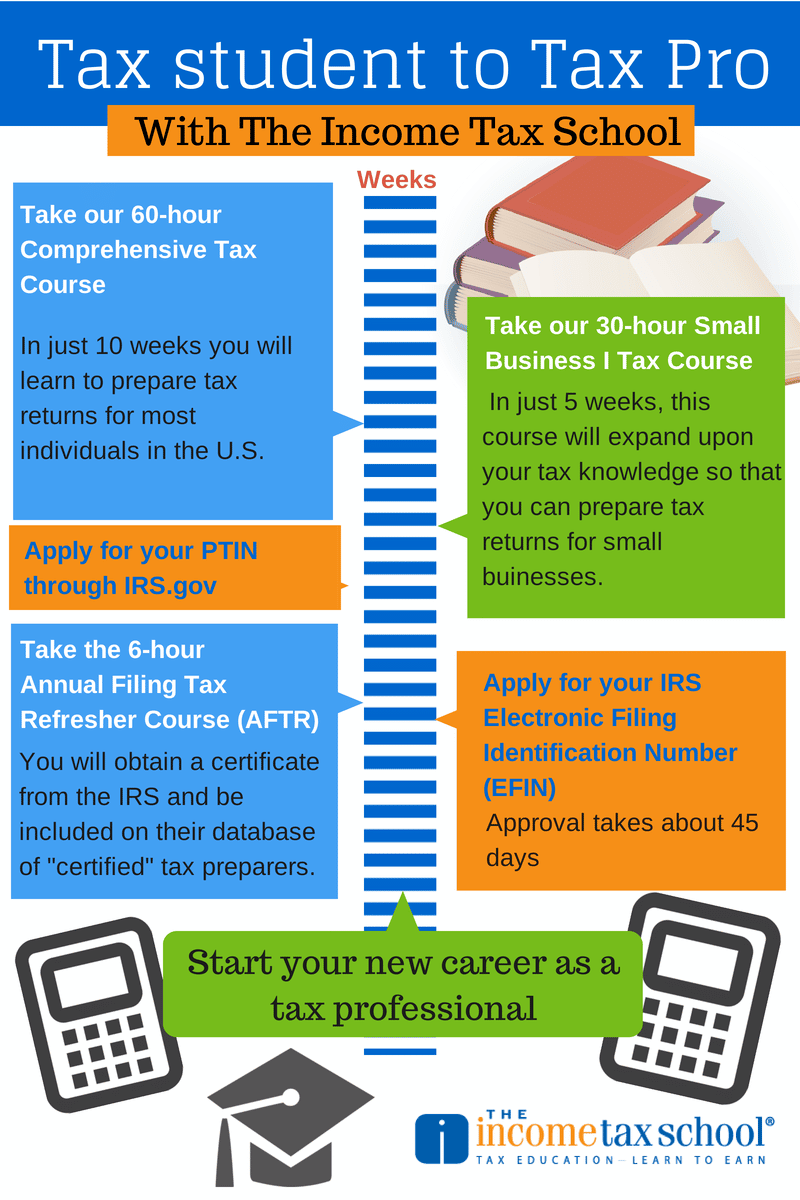
Step 1: The Online Application Process
Hands down, the fastest and easiest way to get your PTIN is online. The IRS has a dedicated portal for this. You’ll need to create an online account with them first. This usually involves providing your Social Security number and some personal information to verify your identity. It’s pretty straightforward, but make sure you have all your ducks in a row before you start clicking around.
Step 2: Information You’ll Need
Don’t jump into the application blind. The IRS has a handy-dandy checklist for a reason. You’ll need your Social Security number, date of birth, and potentially your prior year’s tax return information for verification purposes. If you’ve had a PTIN before, you’ll need that number too. They’re serious about identity protection. You can find the official list of requirements on the IRS website; it’s a good idea to check out the PTIN application checklist before you even begin.
Step 3: The Fee – It’s Not Free
Yep, there’s a fee. Currently, it’s around $14.00 if you apply online. If you opt for the paper route (which, honestly, why would you?), it’s a bit more expensive. This fee helps cover the costs of administering the PTIN program. It’s a small price to pay for the legitimacy it grants you.
Step 4: What Happens After You Apply?
Once you submit your application and pay the fee, the IRS will process it. If everything checks out, you’ll receive your PTIN. This can happen relatively quickly if you apply online, sometimes within a few days to a couple of weeks. If there are any issues, they’ll contact you. Don’t expect a fancy certificate; you’ll get your number, and that’s what matters.
Paper Applications: A Slower Route
While online is the way to go for speed, you can apply or renew by paper. This involves downloading a form, filling it out, and mailing it in. Just be prepared for a much longer turnaround time. It’s a good option if you have trouble with online systems, but for most people, the digital path is superior for getting your PTIN quickly.
Beyond the PTIN: Becoming a Certified Tax Preparer

Source : taxslayerpro.com
“Certified” Isn’t a Single IRS Title
This is a Key distinction. The IRS doesn’t offer a single, overarching “certification” for all tax preparers. Instead, having a PTIN is the baseline requirement. True certification often comes from professional organizations or by passing specific exams, depending on the path you choose. Think of the PTIN as your permit to play, not the championship trophy.
Choosing Your Path: Enrolled Agents vs. CPAs vs. Others
There are several avenues to becoming a highly respected tax professional.
- Enrolled Agents (EAs): These are tax preparers who have unlimited practice rights before the IRS. They can represent taxpayers nationwide, regardless of where they live or the complexity of the tax issue. To become an EA, you must pass a rigorous three-part exam (the SEE – Special Enrollment Examination) or have specific experience as a former IRS employee.
- Certified Public Accountants (CPAs): CPAs are licensed by state boards of accountancy. While they have a broad range of accounting expertise, many specialize in taxation. Becoming a CPA requires a bachelor’s degree, passing a demanding four-part exam, and meeting experience requirements.
- Other Tax Preparers: This category includes individuals with PTINs who may have completed various tax preparation courses or earned credentials from private organizations. They may have limitations on what they can represent taxpayers for, depending on their specific qualifications.
The path you take depends on your career goals and how deep you want to go. For truly specialized tax representation, the EA or CPA routes are the most Strong.
Education and Training: Building Your Knowledge Base
Whether you’re aiming for EA status or just want to be a competent preparer, education is key. Many community colleges and private institutions offer tax preparation courses. These can range from basic introductory classes to Full programs covering advanced tax topics. Investing in quality education ensures you understand the complexities of the tax code, not just the filing software. Check out resources like how to become a tax preparer for general guidance.
Passing the Exams: The Gatekeepers
If you’re gunning for EA status, passing the SEE is non-negotiable. It’s a challenging exam, so serious preparation is a must. Similarly, the CPA exam is notoriously difficult. Even if you’re not pursuing these specific designations, many professional tax organizations offer their own certifications that require passing exams. These exams demonstrate your proficiency and commitment to the field.
Needed Skills for a Successful Tax Preparer
Accuracy and Attention to Detail: Non-Negotiable
This is your bread and butter. One tiny error can lead to penalties for your client (and possibly for you). You need to be Careful, double-checking every number and every entry. It’s about catching those small mistakes before they become big problems.
Understanding Tax Law (It’s Not Static!)
Tax law is a constantly shifting beast. What’s true today might be different next year. You need to be committed to ongoing learning. Staying updated on changes through continuing education, professional publications, and IRS announcements is Key. Ignorance isn’t bliss when it comes to taxes; it’s expensive.
Watch: How to become Tax Preparer with No Experience
Client Communication and Trust
People are entrusting you with incredibly sensitive financial information. You need to be able to explain complex tax concepts in a way that’s easy for them to understand. Building trust is Top. Good communication means not just answering questions but anticipating them and making your clients feel comfortable and informed throughout the process. They need to feel like you’ve got their back.
Proficiency with Tax Software
Gone are the days of manual calculations for most professionals. You’ll need to be Skilled at using professional tax preparation software. Familiarize yourself with the major players in the industry. This software helps Make sure accuracy and efficiency, but it’s just a tool – your knowledge is what truly matters. Knowing how to navigate the software is key to efficient tax preparation.
The Business Side of Tax Preparation
Setting Up Your Practice: Solo or Firm?
Will you work for an established firm, or will you launch your own business? Both have pros and cons. Working for a firm offers stability and access to resources, while starting your own practice gives you autonomy and the potential for higher profits. Starting your own thing means you handle everything from marketing to HR.
Marketing Yourself to Find Clients
How will clients find you? Word-of-mouth referrals are gold, but you’ll likely need a broader strategy. This could include a professional website, online advertising, networking, and building relationships with other professionals (like financial advisors or attorneys). You need to make yourself visible.
Managing Your Time Effectively
Tax season is notoriously intense. The months leading up to April 15th are a whirlwind. You’ll need strong time management skills to handle your client load, meet deadlines, and still have some semblance of a personal life. Planning and organization are your best friends here.
Compliance and Ethical Considerations
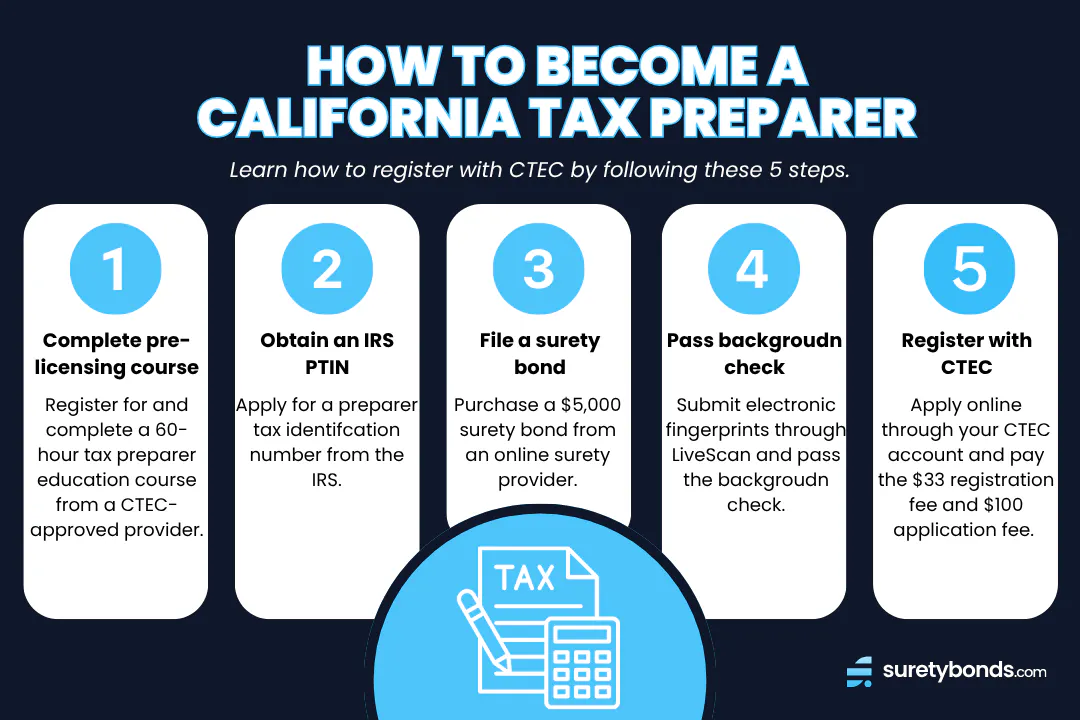
Beyond having a PTIN, you must adhere to ethical standards. This includes maintaining client confidentiality, avoiding conflicts of interest, and ensuring all prepared returns are accurate and filed truthfully. The IRS has specific ethical guidelines that all tax preparers must follow. Violations can lead to serious penalties, including losing your ability to prepare taxes.
Source : suretybonds.com
Continuing Education: Staying Sharp
The IRS Requirement for PTIN Holders
Most tax preparers with a PTIN are required to complete 15 hours of continuing education (CE) each year. This includes three hours of federal tax law update training. The IRS wants to make sure you’re staying current. Failing to meet this requirement can jeopardize your PTIN.
Choosing the Right CE Courses
Not all CE courses are created equal. Look for reputable providers that offer courses relevant to your practice area. Whether you focus on individual returns, small businesses, or specific industries, tailor your education to your needs. Make sure the courses are IRS-approved if you’re seeking to meet the federal requirement. Good CE keeps your skills relevant.
Why CE Matters Beyond Compliance
Continuing education isn’t just a hoop to jump through. It’s an opportunity to deepen your knowledge, learn about new tax strategies, and improve your service offerings. Staying informed about legislative changes and new IRS guidance can give you a competitive edge and allow you to provide better value to your clients. It’s how you become a true expert tax professional.
Resources for Staying Updated
Besides formal CE, make it a habit to read industry publications, follow IRS news releases, and participate in professional forums. Many software providers also offer training and resources. The Field of tax law is always evolving, so continuous learning is non-negotiable. Think of it as professional development that pays dividends.
A Look at Tax Preparer Software and Tools
Popular Software Options
The market is flooded with tax software. Some of the leading names include:
- ProConnect Tax Online: Known for its cloud-based accessibility and integration.
- UltraTax CS: A Strong desktop solution favored by many larger firms for its Full features.
- Drake Tax: Often praised for its user-friendliness and competitive pricing.
- Lacerte: Another established player with a long history and a loyal user base.
Each has its strengths, and the best choice often depends on the size of your practice and your specific needs. Trying out demos is a smart move.
Key Features to Look For
When selecting software, consider:
- Ease of Use: How intuitive is the interface?
- Form Availability: Does it cover all the forms you’ll need?
- Calculation Accuracy: Does it have a strong reputation for error-free calculations?
- Integration Capabilities: Can it connect with other business software?
- Customer Support: How responsive and helpful is their support team?
- Cost: Does it fit your budget?
Don’t underestimate the importance of good support; you’ll need it during the busy season.
Source : keystonetaxsolutions.com
Leveraging Technology for Efficiency
Modern tax software does more than just calculate. It can automate data entry, flag potential errors, offer tax planning insights, and streamline e-filing. Utilizing these tools effectively can save you significant time and reduce the likelihood of mistakes. Welcome the tech; it’s designed to make your life easier and your work more accurate. Technology is your ally in the tax preparation business.
The Financials: Earnings and Costs
Average Income for Tax Preparers
Income can vary wildly. A brand-new preparer at a chain might make an hourly wage, perhaps $18-$25/hour. Seasoned professionals, especially those with their own practice or specialized knowledge (like EAs or CPAs), can earn significantly more. Some successful independent preparers report six-figure incomes. Factors like location, client base, services offered, and reputation all play a huge role.
Startup Costs for Your Own Practice
If you’re going solo, budget for:
- Software: Annual licenses can range from a few hundred to several thousand dollars.
- Office Space: Rent, utilities, furniture (or a home office setup).
- Insurance: Professional liability (Errors & Omissions) insurance is Key.
- Marketing: Website, advertising, business cards.
- Supplies: Printer, paper, general office supplies.
- Continuing Education: Fees for courses and licensing.
It’s not cheap to start, but it’s an investment.
Pricing Your Services
How much should you charge? This depends on the complexity of the return, the time involved, your experience, and your local market rates. Simple returns might be a few hundred dollars, while complex business returns could run into the thousands. Research competitors and understand the value you provide. Don’t undercharge, but be competitive.
Profitability and Growth Strategies
Profitability comes from efficiency, client retention, and offering valuable additional services (like tax planning or bookkeeping). Focus on building long-term relationships. Happy clients return year after year and refer others. Upselling relevant services can also significantly boost your revenue. Strategic growth in tax preparation requires more than just filing returns.
Table: PTIN vs. EA vs. CPA Comparison
| Feature | PTIN Holder | Enrolled Agent (EA) | Certified Public Accountant (CPA) |
|---|---|---|---|
| Primary Role | Legally allowed to prepare federal tax returns for compensation. | Taxation specialist with unlimited practice rights before the IRS. | Broad accounting and tax expertise, licensed by state. |
| IRS Representation Rights | None (cannot represent clients in audits). | Unlimited nationwide. | Generally unlimited, but may be restricted by state regulations or firm policies. |
| Governing Body | IRS (for PTIN issuance). | IRS (after passing SEE exam). | State Boards of Accountancy. |
| Required Education/Exam | PTIN application, annual CE. No specific exam to prepare returns. | Pass the Special Enrollment Examination (SEE). Minimum education requirements may apply. | Bachelor’s degree (or equivalent), pass the rigorous 4-part CPA exam, meet experience requirements. |
| Primary Focus | Tax return preparation. | Taxation, tax controversy, representation. | Accounting, auditing, taxation, business consulting. |
| Ongoing Requirements | Annual PTIN renewal fee, 15 hours CE (including 3 hrs federal tax law). | Triennial CE requirements (similar to PTIN holders, focus on tax). | Annual CE requirements set by the state board, often 40+ hours. |

Source : finepoints.biz
Is Becoming a Tax Preparer Right for You?
Assessing Your Aptitude
Do you enjoy working with numbers? Are you detail-oriented and patient? Can you handle pressure, especially during peak season? If you answered yes, you might be a natural fit. It’s not just about crunching numbers; it’s about helping people navigate a complex system. Your interest in finance is a good starting point.
The Reward of Helping Others
There’s a real sense of accomplishment in helping individuals and businesses save money on their taxes or avoid costly mistakes. You’re providing a valuable service that impacts people’s financial well-being. That satisfaction is a significant part of why many people thrive in this profession. Making a tangible difference is rewarding.
A Stable Career Path
Taxes are a constant. As long as there’s a tax code, there will be a need for people who understand it and can help others comply. This offers a level of job security that many other fields lack. You can build a sustainable career, whether you work for someone else or run your own shop. It’s a consistent career choice.
The Future of Tax Preparation
While technology like AI is changing the game, the need for human expertise, especially for complex situations and personalized advice, isn’t going away anytime soon. Professionals who Welcome technology and focus on value-added services like tax planning and representation will continue to be in high demand. Adaptability is key to staying relevant in the evolving tax Field.
Frequently Asked Questions
How long does it take to get a PTIN certification?
Because it’s not really a ‘certification’ in the traditional sense, getting your PTIN is super fast. You just need to register online with the IRS. Most folks can get it done in about 15-30 minutes, assuming you have all your info handy.
How do I get my PTIN certification?
But to get your PTIN, you gotta head over to the IRS website. It’s a simple online process where you’ll create an account, fill out your personal and business info, and pay a small fee. Then, bam, you’ve got your Preparer Tax Identification Number.
Can I get a PTIN if I’m not a CPA?
Absolutely! Because a PTIN is for anyone who prepares federal tax returns for compensation. You don’t need to be a CPA, EA, or even have a specific degree. Just pass the basic competency test if you’re new to it.
Which tax preparer certification is best?
It really depends on what you want, but for most people starting out, getting your PTIN is the first step. If you want more credentials, look into becoming an Enrolled Agent (EA), which requires passing a Full IRS exam. CPAs have even more rigorous education requirements.
What’s the difference between a PTIN and an EA?
Think of a PTIN as your basic ID number from the IRS to prepare tax returns. An Enrolled Agent (EA) is a higher level of credentialing, meaning you’ve passed a tough IRS exam and can represent taxpayers before the IRS. EAs have unlimited practice rights.
