How To Become ASE Certified Mechanic Without Experience: Your No-Nonsense Guide
Look, let’s cut the fluff. You wanna be an ASE certified mechanic but you think you need a decade under the hood first? Nah. Not true. It’s totally doable, even if your wrenching experience is currently zero. Seriously. I’ve seen guys walk into shops with just a solid understanding and a willingness to learn, and they’ve crushed the ASE tests. You can too. Forget the myth that you’re locked out until you’ve got grease under your fingernails for years. We’re going to break down exactly how you can get that sweet, sweet ASE certification without a mountain of prior work history.
Think of it this way: you need a way to prove you know your stuff, right? ASE certification is that proof. It’s the gold standard in the automotive world. It tells employers, “This person actually knows what they’re talking about.” And guess what? They’ve got pathways designed for folks just like you. People starting out. People who are hungry to get into the trade. So, let’s dive into the real strategy. No jargon, just straight talk on how to get it done.
The Big Misconception: Do You REALLY Need Experience?
Source : uti.edu

Myth Busting: The “Must Have Worked X Years” Fallacy
Here’s the deal most people get wrong. They see “ASE Certified” and assume it means you’ve been a full-time pro for ages. That’s not entirely accurate. While many certifications eventually require experience, the initial steps and some specific tests are open doors. You don’t need to have spent years fixing transmissions to pass an entry-level exam. It’s about demonstrating knowledge, which you can gain through dedicated study.
Source : yourmechanic.com
ASE’s Own Entry Point: The G-Series Tests
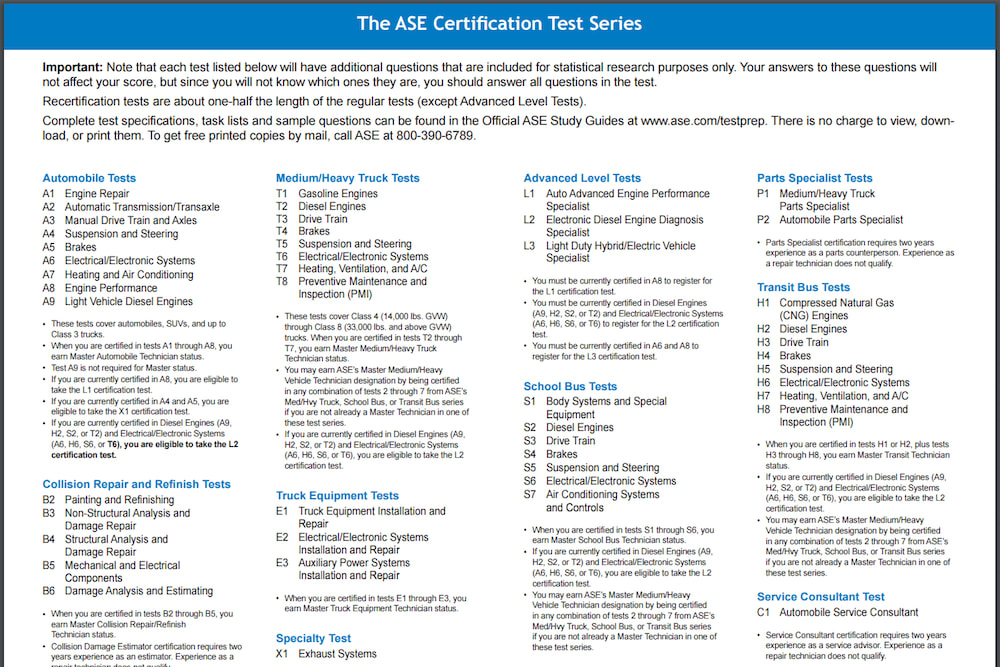
ASE actually has a specific set of tests designed for those stepping into the field. These are often called the entry-level tests. They cover fundamental knowledge. It’s like your mechanic bootcamp in written form. Passing these is a huge first step. It shows a commitment and a baseline understanding that employers value, even without years of paid experience. Check out the official ASE entry-level information; they lay it all out pretty clearly.
Knowledge vs. Time: What Employers Actually Value
Employers are smart. They know that someone with fresh knowledge and a drive to learn can often outperform someone who’s been doing things the wrong way for years. What they really want is competence. Can you diagnose a problem? Do you understand the systems? Can you work safely? ASE certification, even at the entry level, signals these abilities. It’s a powerful differentiator when you’re walking in the door with little to no formal work history.
Building Your Knowledge Base: The Study Grind
Self-Study: Your Most Powerful Weapon
So, you don’t have years of on-the-job training. Big deal. That just means your study game needs to be on point. Think about it: you can hit the books, watch detailed online tutorials, and really immerse yourself in the theory. Resources Are plentiful! From online courses to specialized study guides, you can build a formidable knowledge base. This isn’t about memorizing; it’s about understanding how cars work. That deep dive is Key.
Technical Schools & Community Colleges: A Solid Foundation
If self-study feels a bit too unstructured, look at local technical schools or community colleges. Many offer automotive programs. These aren’t necessarily degree mills; they’re practical, hands-on courses designed to teach you the fundamentals. You’ll get classroom learning and shop time, which is Crucial. Plus, completing a program often provides a good chunk of the “experience” credit some ASE certifications require down the line.
Apprenticeships & Internships: Getting Your Foot in the Door
This is where you bridge the gap between pure study and actual experience. Seek out apprenticeships or internships at reputable repair shops. Many shops are willing to take on motivated individuals who are eager to learn and willing to start at the bottom. You’ll be absorbing practical skills daily. This hands-on experience, combined with your ASE study, is a killer combo. It directly addresses the work experience requirements.
Source : pennfoster.edu
The ASE Testing Process: Handling the Exams
Understanding ASE Test Series: Which Ones to Target?
ASE offers a ton of different tests. For someone without experience, you’ll want to focus on the most relevant ones. The ASE G-series tests (G1, G2, G3, G4, G5, G6, G7, G8) are your primary targets initially. The G1 (Auto Maintenance and Light Repair) is often the most accessible starting point. It covers basic maintenance tasks that nearly every technician performs. Don’t try to tackle the heavy-duty diesel or advanced electrical tests first. Start smart.
Registration and Scheduling: The Nitty-Gritty
Getting registered is straightforward. You’ll typically need to create an account on the ASE website. From there, you can select the tests you want to take and find a testing center near you. Testing is done via computer at designated prometric centers. Scheduling is usually flexible, allowing you to book an appointment that fits your availability. Plan ahead, though; popular times can fill up. It’s a simple process, really.
Test Format and Strategies: How to Actually Pass
These aren’t pop quizzes. ASE tests are multiple-choice, focusing on diagnostics, repair procedures, and underlying principles. The key is understanding why something is done, not just how. Practice questions are your best friend here. Use study guides that offer them. Read carefully. Eliminate wrong answers. Many questions are scenario-based – they’ll describe a problem and ask for the best course of action. Think critically. Don’t rush.
Bridging the Experience Gap: What Counts?
Formal Training as Experience Credit
Remember those technical school programs? Many of them count towards ASE’s experience requirements. ASE recognizes formal training from accredited institutions. A year of schooling might count as a year of experience, for example. Always check the specific requirements for the certification you’re aiming for, but don’t underestimate the value of your classroom and shop time. It’s a legitimate pathway.

Source : wikihow.com
“OJT” – On-the-Job Training: Document Everything
Even if you’re not officially an apprentice, any time you spend working on vehicles counts. If you’re helping a friend with their car, working part-time in a shop, or doing volunteer repair work, try to document it. Keep a log of the types of repairs you perform, the systems you work on, and the dates. This detailed record can be Crucial when you need to prove your practical experience to ASE. It’s all about building that case.
Mentorship: Learning from the Pros
Having a mentor is gold. Find an experienced mechanic willing to guide you. They can offer Crucial insights, demonstrate techniques, and help you understand complex issues. This relationship not only accelerates your learning but also provides a source of validation for your developing skills. A mentor can often vouch for your abilities, which can be a subtle but powerful asset when discussing experience.
The G1 Certification: Your First Big Win
Why Start with G1?
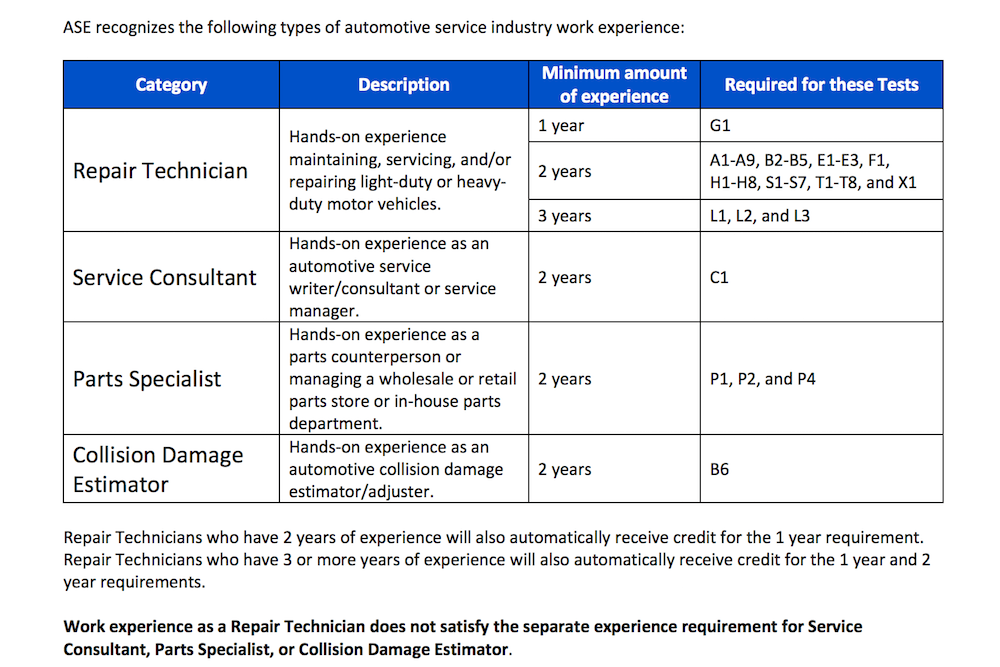
The Auto Maintenance and Light Repair (G1) certification is designed specifically for technicians who perform common maintenance tasks. Think oil changes, tire rotations, filter replacements, and basic brake jobs. It requires one year of experience in the trade OR completion of a qualifying training program. This makes it the perfect target for those starting out. It’s achievable and provides a tangible certification early on.
Meeting the G1 Requirements: The Fine Print
ASE requires either one year of hands-on work experience OR completion of a formal training program (like those from technical schools). If you’ve completed a program, you can often use that to bypass the direct work experience. You’ll need to provide documentation. It’s Needed to review the ASE G1 certification requirements precisely on their official site to Make sure you meet them.
Watch: ASE Certification Experience & Education Requirements
Studying for the G1: What to Expect
The G1 exam covers topics like preventative maintenance, lubrication, inspection, and minor repairs. You’ll need to understand vehicle components, fluids, and common service procedures. Study guides and practice tests specifically for the G1 are readily available. Focus on understanding the ‘why’ behind each maintenance task. Why do we torque lug nuts? Why flush brake fluid? This understanding will serve you well.
Showcasing Your New Credentials
The ASE Decal and Wallet Card
Once you pass, ASE sends you a certificate and a wallet card. These are your official credentials. Display the ASE decal proudly on your toolbox or in your personal workspace. The wallet card is something you’ll carry to show potential employers. It’s tangible proof of your achievement. Having these simple items makes your certification official in the eyes of the industry.
Building Your Resume: Highlight Your ASE Certifications
This is where it all pays off. When you update your resume, make your ASE certifications front and center. Instead of just listing “Mechanic,” you’ll list “ASE Certified Technician” (or specify the tests passed). Detail the specific ASE certifications you hold. This immediately sets you apart from applicants who lack this standardized validation. It’s a powerful resume booster.
Leveraging ASE for Job Opportunities
Many shops actively seek out ASE-certified technicians. Some even offer pay increases or bonuses for holding certifications. Knowing you’re ASE certified without extensive prior experience gives you Use. You can confidently apply for positions you might have previously thought were out of reach. It opens doors to better jobs and career advancement much faster than you might imagine.
Sample Data Table: Entry-Level ASE Certifications vs. Experience Needs
| ASE Test Series | Primary Focus | Minimum Experience Req. (Standard Path) | Can Training Substitute? | Ideal for No/Low Experience? |
|---|---|---|---|---|
| G1 (Auto Maintenance & Light Repair) | Basic maintenance, fluid changes, minor repairs. | 1 year | Yes (e.g., ASE Education Foundation accredited program) | Yes, highly recommended |
| A1-A8 (Core Automobile Series) | Engine Repair, Brakes, Suspension, Electrical, etc. | 2 years (per test) | Yes (training can substitute up to 1 year) | Potentially, with significant dedicated study & training |
| L1 (Advanced Engine Performance) | Advanced diagnostics, engine performance tuning. | 2 years | Yes (training can substitute up to 1 year) | No, typically requires significant prior experience |
Source : yourmechanic.com
Final Thoughts: Just Start!
It’s a Marathon, Not a Sprint
Getting ASE certified without experience isn’t an overnight thing. It takes dedication. It means hitting the books hard. It means potentially taking a step back to learn the ropes in a shop. But is it possible? Absolutely. Don’t let the “experience required” line on some certifications scare you away from the entry-level options. Those are your gateway.
Your Action Plan: Take the First Step Today
So, what’s next? Stop thinking about it and start doing it. Research local training programs. Buy a G1 study guide. Find a shop that might let you learn part-time. The key is momentum. Build on small wins. Every study session, every question answered correctly, every bit of knowledge gained is progress. You’ve got this. Go get that certification!
Frequently Asked Questions
Can I get an ASE certification with no experience?
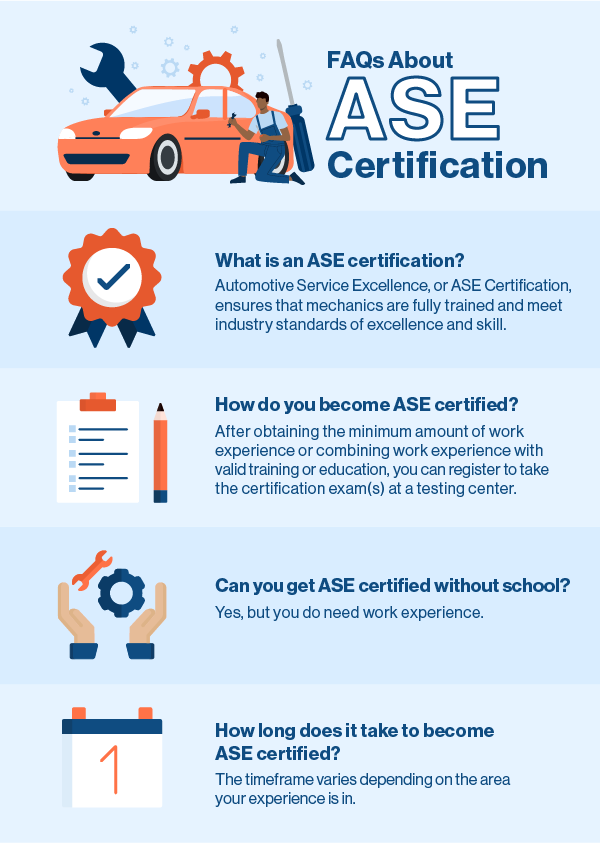
Because ASE certification is all about proving your skills, technically yes, but it’s tough. You usually need about two years of hands-on work experience to even sit for most tests. So, while you can’t just walk in and get certified without experience, you can start the process by working in the field.
How long does it take to become an ASE certified mechanic?
It varies, man. But generally, after you’ve got that two years of experience under your belt, each test you pass gets you certified in that area. Most mechanics aim for the L1 and L2 advanced tests too, which can take more time. So, think at least 2 years for a basic cert, and potentially much longer for master status, depending on how quickly you gain automotive experience.
How difficult is it to get ASE certified?
It’s not a walk in the park, that’s for sure. These tests are legit and cover a ton of technical info. You really gotta know your stuff. But, if you study hard and have some practical mechanic experience, it’s totally doable. Many people find it challenging but rewarding.
Can I take an ASE test without school?
Yeah, you totally can! ASE is all about testing your knowledge and skills, not necessarily where you learned them. So, if you’ve been working as a mechanic’s helper or apprenticing, you can often sit for the tests as long as you meet the experience requirements. No formal mechanic school is strictly required if you’ve got the work history.
What’s the best way to get the required experience for ASE certification?
Honestly, the most common route is to get an entry-level job at a repair shop, maybe as a lube tech or apprentice. This gives you the direct, hands-on automotive repair experience you need. Some vocational schools also offer programs that count towards experience, but working in a real shop is usually the most straightforward path.
