Alright, let’s cut the fluff. You’re probably staring at a screen, maybe drowning in jargon about patient privacy, and wondering, “How the heck do I actually get HIPAA certified?” It’s not some mystical quest, but it does require a clear roadmap. Forget those dry, robotic explanations you’ve been sifting through. We’re going to break this down like you’re explaining it to your buddy at the local pub. So, grab a seat. It’s time to get real about HIPAA certification.
What’s the Big Deal with HIPAA Anyway?
Look, before we even talk about getting certified, you gotta understand why it matters. HIPAA, the Health Insurance Portability and Accountability Act, isn’t just some dusty government regulation. It’s the bedrock of patient trust in the healthcare system. Think of it like the security guard for sensitive medical information. Without it? Chaos. Breaches. Fines that could sink a small practice faster than you can say “data breach.
It’s More Than Just Rules; It’s Trust.
Seriously, this isn’t about ticking boxes. It’s about safeguarding people’s most personal data. Your doctor’s notes, your test results, your medication history – it’s all covered. When a patient shares that with you, they’re putting their faith in your hands. HIPAA compliance is the concrete proof that you take that trust seriously. It shows you’re not just winging it when it comes to privacy and security.
The Stakes Are Higher Than You Think.
Let’s paint a picture. Imagine a small clinic, maybe run by your cousin Brenda, who’s a fantastic nurse but a bit lax on the digital security front. A simple phishing email clicks. Boom. Patient records are exposed. Suddenly, Brenda’s facing massive fines, her reputation is in tatters, and patients are scared to come back. That’s not just a bad Tuesday; it’s a career-ending disaster. Understanding HIPAA prevents this nightmare.
Who Needs to Know This Stuff?
It’s not just doctors and hospitals, folks. Anyone who touches Protected Health Information (PHI) needs to be on the same page. This includes receptionists, billing staff, IT folks managing the systems, even third-party vendors who might access patient data. If your job involves anything related to patient care or administration, guess what? You’re in the HIPAA zone.
So, What Exactly IS HIPAA Certification?
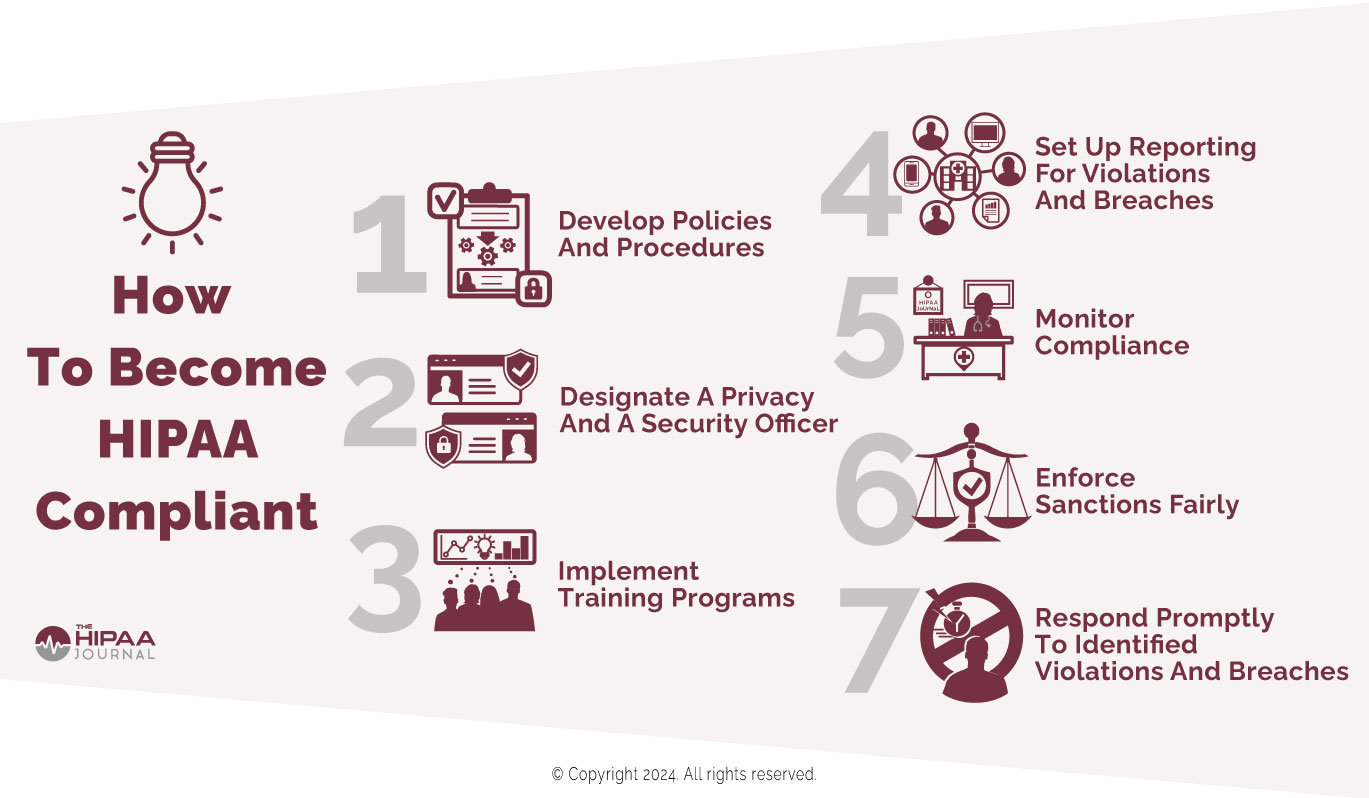
Source : hipaajournal.com
Now, let’s get down to brass tacks. When people talk about “HIPAA certified,” they usually mean one of two things. Either an organization has implemented strong HIPAA compliance measures, or an individual has completed specific HIPAA training and often passed an exam to demonstrate their knowledge. It’s not a single, universal license, but rather a confirmation of competence and adherence to the law.
Organizational vs. Individual Certification.
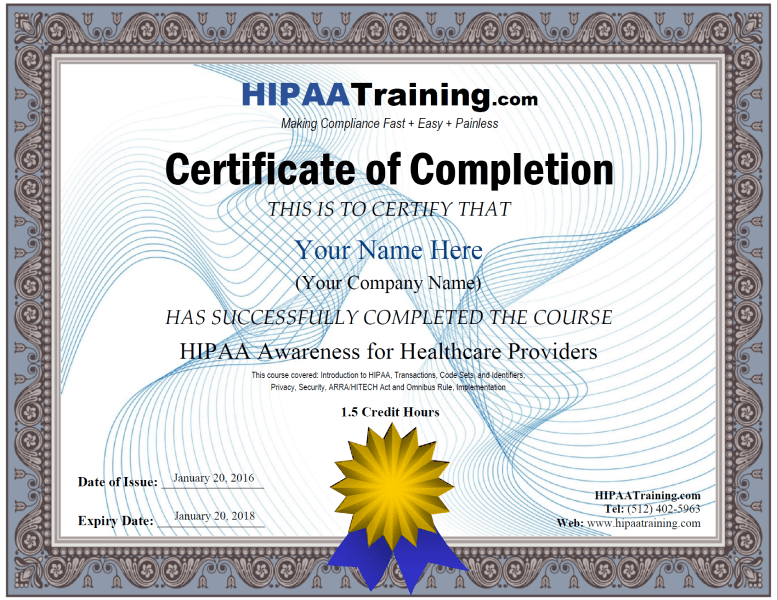
Think of it this way: your company can get “HIPAA certified” by demonstrating they’ve got policies, procedures, and safeguards in place. This is often through audits and risk assessments. On the other hand, you as an individual can get certified by completing specific courses. Many reputable online providers, like HIPAAtraining.com, offer these. It’s about proving you know your stuff.
Is It Legally Required? Sometimes.
Here’s where it gets a bit fuzzy. The government doesn’t mandate a specific HIPAA certification for every single employee. BUT! They do mandate that healthcare organizations protect patient data. And how do you prove you’re doing that? Through training and documented compliance. So, while not always a direct legal requirement for individuals, it’s a critical piece of the puzzle for organizational compliance. It’s the smart move, legally and ethically.
What Does a Certification Actually Cover?
Generally, a good HIPAA certification course will dive deep into the Privacy Rule, the Security Rule, and breach notification rules. You’ll learn what constitutes PHI, how it must be stored and transmitted securely, what your obligations are during a breach, and the penalties for non-compliance. It’s a Full deep dive into protecting patient information.
The Core Components: Privacy vs. Security

Source : training.hipaajournal.com
You can’t talk HIPAA without talking about its two main pillars: Privacy and Security. They sound similar, right? But they’re distinct. Understanding the difference is absolutely fundamental to getting HIPAA compliant.
The Privacy Rule: Who Gets to See What.
This is all about who can access patient information and under what circumstances. It gives patients rights over their health records. It dictates how their PHI can be used and disclosed. Think of it as the gatekeeper. It sets the rules for who gets to look inside the patient’s file cabinet and why.
The Security Rule: Keeping It Safe.
This is the lock on the file cabinet and the alarm system. The Security Rule focuses on the safeguards needed to protect PHI from unauthorized access, whether that’s accidental or intentional. This covers technical safeguards (like encryption and firewalls), physical safeguards (like locked server rooms), and administrative safeguards (like security policies and training). Data security is Top here.
Why Both Matter Equally.
You can have the tightest security in the world, but if you’re giving patient data away freely (violating the Privacy Rule), you’re still in deep trouble. Conversely, you might have great privacy policies, but if your systems are wide open to hackers (failing the Security Rule), you’re equally doomed. They are two sides of the same very important coin. HIPAA training must cover both.
Your Step-by-Step Path to Getting Certified (The Right Way)
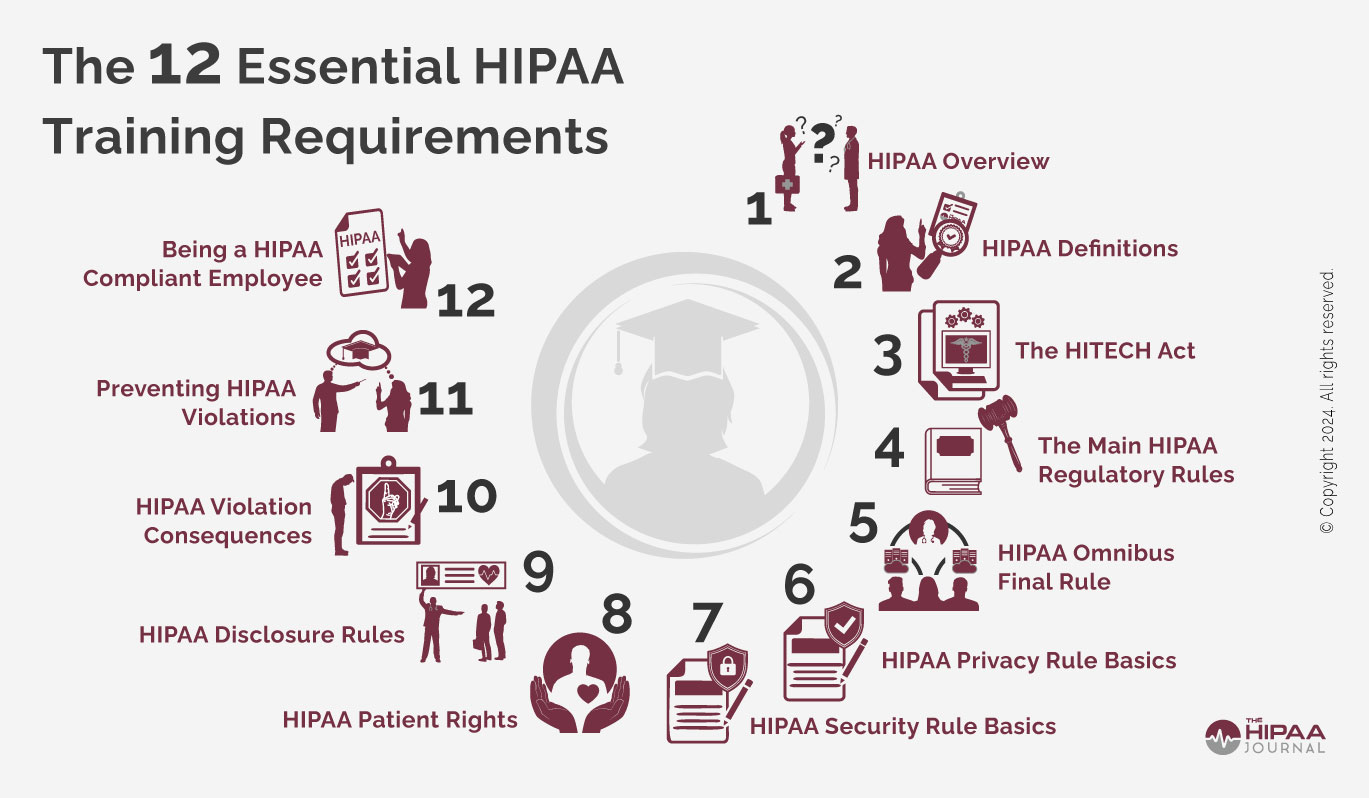
Source : hipaajournal.com
Okay, enough theory. You want the action plan. How do you actually do this? It’s not rocket science, but it requires focus. Here’s the breakdown, no beating around the bush.
Step 1: Assess Your Needs.
First off, what’s your situation? Are you an individual looking to Strengthen your resume? Are you part of a small practice that needs to get its act together? Or are you in a larger organization? Your specific needs will dictate the type and depth of HIPAA certification you pursue. Don’t just jump into the first course you see.
Step 2: Choose Your Training Provider Wisely.
This is Key. Not all training is created equal. Look for providers that offer Full courses covering all aspects of HIPAA. Check reviews. Make sure they offer up-to-date information. As mentioned, places like HIPAAtraining.com are solid options because they focus specifically on this. Avoid generic online training mills if you can.
Step 3: Complete the Training. Seriously.
Yeah, I know. It’s training. But you can’t just skim it. Pay attention. Take notes. Understand the material. This isn’t just about passing a test; it’s about actually learning how to protect sensitive data. Think about the consequences of not knowing this stuff. It’s a big deal for patient data privacy.
Step 4: Pass the Exam (If Applicable).
Most reputable individual certification programs culminate in an exam. These aren’t usually designed to trick you, but they will test your understanding of the core principles. Brush up on the key rules and your responsibilities. Passing this means you’ve earned your credential. HIPAA knowledge is power.
Step 5: Maintain Compliance and Stay Updated.
HIPAA isn’t static. Regulations change. Technology evolves. Your certification isn’t a one-and-done deal. You need to stay informed. This might mean periodic refresher courses or keeping up with industry news. Being HIPAA compliant is an ongoing commitment, not a destination.
Common Pitfalls to Avoid Like the Plague
Source : hipaatraining.com
You’re on the right track, but let’s talk about the landmines. Many organizations and individuals stumble because they overlook a few key things. Avoid these, and you’ll be way ahead of the game.
Pitfall #1: Thinking It’s Just an IT Problem.
So many people wrongly assume HIPAA is solely the IT department’s responsibility. Wrong. While IT handles the technical safeguards, everyone who interacts with PHI has a role. From the front desk to the back office, data protection is a team sport. Ignoring this is a recipe for disaster.
Pitfall #2: Outdated Training Materials.
HIPAA has been around a while, but the threats and the technology? They change constantly. Using training from five years ago is like bringing a flip phone to a cybersecurity conference. Make sure your HIPAA training is current. Laws get updated, and interpretations evolve.
Pitfall #3: Focusing Only on Rules, Not Culture.
Having a binder full of policies means squat if nobody actually follows them. You need to build a culture of privacy and security. That means leadership buy-in, consistent reinforcement, and making it clear that this stuff is non-negotiable. It’s about embedding HIPAA principles into the daily workflow.
Pitfall #4: Ignoring Business Associates.
Who are your ‘Business Associates’? These are third-party vendors who handle PHI on your behalf (think billing services, cloud storage providers, etc.). You absolutely must have Business Associate Agreements (BAAs) in place with them, ensuring they are also compliant. Failure here is a huge liability. Get those BAAs signed!
Let’s be real, wading through the world of HIPAA compliance can feel like Handling a minefield blindfolded. But getting certified? That’s not just a checkbox; it’s a statement. It says you’re serious about protecting patient data. And frankly, in today’s digital-first healthcare world, that’s non-negotiable.
How To Become Hipaa Certified Compliance Officer Online

Source : hipaajournal.com
So, you want to be the go-to person, the guardian of patient privacy? Becoming a HIPAA Compliance Officer online is totally doable. It’s not some secret handshake club; it’s about acquiring specific knowledge and proving you’ve got it. Think of it as leveling up in your career, but with actual legal stakes.
Watch: How to Get HIPAA Certified
Defining the HIPAA Compliance Officer Role
First off, what does this person even do? A HIPAA Compliance Officer is the linchpin for an organization’s adherence to the HIPAA rules. They’re responsible for developing, implementing, and monitoring compliance programs. It’s a big job, requiring a deep understanding of the Privacy Rule, the Security Rule, and the Breach Notification Rule. They’re the ones who catch potential issues before they blow up into a full-blown crisis.
Online Education Pathways for Compliance Officers
The beauty of online learning is its flexibility. You can find HIPAA certification courses designed specifically for aspiring compliance officers. These programs often cover everything from risk assessments to incident response. Many universities and specialized training providers offer these, allowing you to study at your own pace, fitting it around your current job. It’s a smart move for anyone looking to specialize.
Needed Skills Beyond the Certification
Look, a certificate is great. It’s proof. But being a truly effective compliance officer means more than just passing a test. You need strong analytical skills to spot vulnerabilities. Communication is huge; you’ll be talking to everyone from IT staff to the CEO. And, of course, a solid understanding of data security principles is Key. Think of it as building your own internal compliance toolkit.
Choosing the Right Online Program
Not all online courses are created equal. Research is key. Look for programs accredited by reputable organizations. Check out the curriculum – does it cover the latest updates in HIPAA? Read reviews. Does the provider offer ongoing support or resources? A good program will feel like a partner in your learning journey, not just a passive delivery system. Don’t just pick the cheapest option; pick the best value for your professional growth.
Free Hipaa Training And Certification For Healthcare Workers
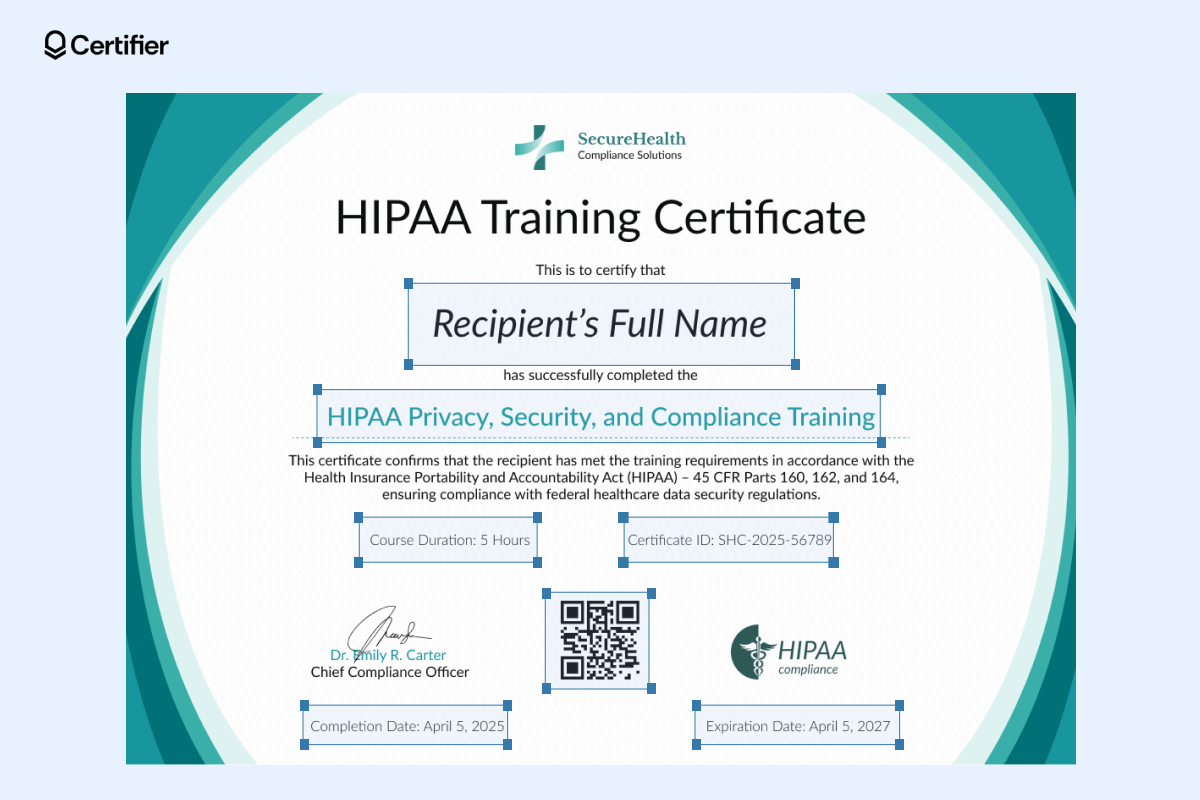
Source : certifier.io
Okay, let’s talk about the cost. Because not everyone has a massive training budget. The good news? There are ways to get valuable HIPAA training without breaking the bank. Seriously, the government actually wants people to be trained, so they offer resources. You just need to know where to look.
Leveraging Government Resources for Training
The Department of Health and Human Services (HHS) is the ultimate authority. They provide a wealth of information, including training materials. While they might not offer a direct “certification” in the formal sense, their resources are Crucial for understanding the regulations. Visiting HHS HIPAA training resources is a solid starting point for anyone in healthcare.
Employer-Provided HIPAA Education
Most healthcare organizations are legally obligated to provide some form of HIPAA training to their employees. This is often part of the onboarding process and usually happens annually. While this might not always result in a formal “certification,” it’s Needed training. If you’re unsure what your employer offers, ask HR or your direct supervisor. Don’t assume you know everything.
Non-Profit Organizations and Industry Associations
Sometimes, non-profits or professional associations offer free or low-cost webinars and educational materials related to HIPAA. These can be excellent for staying updated or getting a foundational understanding. Keep an eye on the newsletters and websites of groups relevant to your specific role within healthcare. It’s about staying informed and proactive.
Self-Study and Foundational Knowledge
You can also build a strong foundation through self-study. Many websites offer free articles, guides, and even short courses explaining HIPAA basics. While this won’t replace a formal certification, it’s a great way to gauge your interest and learn the fundamentals. Understanding the core principles is the first step, no matter how you get there.
How Much Does Hipaa Certification Cost For Employees

Source : hipaajournal.com
Let’s cut to the chase: what’s the damage to your wallet? The cost of HIPAA certification for individual employees can vary wildly. It really depends on the type of certification, the provider, and whether it’s a standalone course or part of a larger program. Don’t just grab the first price tag you see.
Average Costs for Individual Certifications
For a single employee seeking a basic HIPAA certification, you’re often looking at anywhere from $50 to $300. These are typically online courses that take a few hours to complete. They cover the Needed rules and regulations. Think of this as the entry-level ticket. It gets your foot in the door and demonstrates a baseline understanding.
Costs for Full Compliance Programs
If you’re looking for more in-depth training, like becoming a certified compliance officer, the price jumps significantly. These programs can cost anywhere from $500 to $2,000 or even more. They often involve more rigorous coursework, case studies, and sometimes even proctored exams. This is for serious career advancement, not just a quick refresh.
Organizational vs. Individual Pricing
Companies buying in bulk often get a much better deal. Many providers offer organizational HIPAA training packages that are significantly cheaper per employee than individual sign-ups. If you’re an employer, this is the way to go for training your entire team. It ensures consistency and usually comes with reporting features for tracking completion. Smart businesses invest here.
What Factors Influence the Price?
Several things can drive up the cost. Is the course self-paced or instructor-led? Does it include live Q&A sessions? Is it accredited by a recognized body? Does it offer continuing education credits? These bells and whistles add value, but they also add to the price tag. Always weigh the cost against the perceived benefit for your career or organization.
How To Become Hipaa Certified For Medical Billing And Coding
Source : hipaajournal.com
Medical billing and coding professionals are on the front lines of handling sensitive patient information. So, yes, you absolutely need to be HIPAA certified. It’s not just good practice; it’s Key for protecting patient privacy and avoiding hefty fines. Getting certified shows you understand the rules of the road when it comes to Protected Health Information (PHI).
The Importance of HIPAA for Billers and Coders
Your job involves accessing, transmitting, and storing vast amounts of patient data. This data is gold for identity thieves if it falls into the wrong hands. HIPAA compliance ensures you know how to safeguard this information, understand breach protocols, and maintain patient confidentiality. Without it, you’re a potential liability, not an asset.
Specific Training Modules for Billing and Coding Professionals
Many HIPAA certification programs are tailored for specific roles. Look for courses that focus on the unique challenges faced by medical billers and coders. This might include modules on secure data transmission, patient rights regarding their health records, and proper handling of billing statements. Understanding how HIPAA intersects with your daily tasks is key.
Choosing a Certification Relevant to Your Career
While a general HIPAA certification is good, consider one that’s recognized within the medical billing and coding industry. Some certifications might be more Full or have a stronger industry reputation. Research providers that cater specifically to healthcare administrative roles. Your certification should Match with your professional goals and the expectations of employers in your field.
Integrating HIPAA Knowledge into Daily Workflows
Certification isn’t the end goal; it’s the beginning. The real value comes from applying that knowledge daily. This means implementing secure practices for handling patient charts, using encrypted communication methods, and understanding who has authorized access to PHI. It’s about making compliance a habit, not an afterthought. Your certification should Enable you to do this confidently.
Best Online Hipaa Certification Programs For Organizations

Source : americanhealthtraining.com
When you need to get a whole team up to speed on HIPAA, you can’t just send everyone to different random courses. Organizations need structured, trackable, and Full HIPAA certification programs. The goal is consistent understanding and demonstrable compliance across the board. It’s about risk management, plain and simple.
Key Features of Organizational HIPAA Training
What should you look for in a program for your company? Definitely check for features like customizable training modules (to fit your specific industry or department needs), administrator dashboards for tracking employee progress, reporting capabilities for audits, and engaging content that keeps people from zoning out. Multimedia elements and real-world scenarios are a big plus. You want learning, not just clicking through slides.
Comparing Leading Online Providers
There are several reputable companies offering organizational HIPAA training. Some specialize in healthcare, while others offer broader compliance solutions. Consider factors like the depth of the content, the user-friendliness of the platform, customer support availability, and pricing structures (often per-user or tiered). A good provider makes compliance easier, not harder.
Here’s a quick comparison of what you might find:
| Provider Type | Typical Content Focus | Best For | Potential Cost Range (Per Employee/Year) |
|---|---|---|---|
| Healthcare Specific Platforms | Deep dive into HIPAA Privacy & Security Rules, HITECH Act | Hospitals, Clinics, Practices | $20 – $100+ |
| General Compliance Software | Broader compliance topics including HIPAA, GINA, etc. | Mixed industry organizations, compliance departments | $15 – $75+ |
| Specialty Billing/Coding Trainers | HIPAA focus specific to billing, coding, and revenue cycle | Medical Billing Companies, Coding Departments | $30 – $150+ |
Ensuring Ongoing Compliance and Updates
HIPAA isn’t static. The regulations evolve, and so does technology. The best organizational certification programs provide ongoing training and updates. Look for providers that automatically refresh content to reflect the latest legal changes and cybersecurity threats. Staying compliant is a marathon, not a sprint, and your training should reflect that.
ROI of Full HIPAA Training
Cost of a data breach: regulatory fines, legal fees, reputational damage. It’s astronomical. Investing in quality HIPAA certification for your employees is a fraction of that potential cost. It’s not just an expense; it’s a Key investment in protecting your organization, your patients, and your bottom line. The ROI is undeniable when you consider the risks you’re mitigating.
Frequently Asked Questions
Can a person be HIPAA certified?
Absolutely! While there isn’t one single, overarching “HIPAA Certification” for individuals like you might get for project management, you can definitely get certified in HIPAA compliance. Think of it as earning credentials that prove you understand and can implement the rules. Many organizations offer courses and exams that result in a certificate. It shows employers you’re serious about protecting patient data.
What’s the difference between HIPAA compliance and certification for an individual?
Good question. HIPAA compliance is what organizations must achieve to follow the law. It’s about having the right policies, procedures, and security measures in place. For an individual, getting HIPAA certified means you’ve passed a course or exam demonstrating your knowledge of these rules. It’s your personal stamp of approval, not the organization’s legal status. One proves understanding, the other proves adherence.
How long does it take to get HIPAA certified?
It really depends on the specific course and certification you choose. Some online programs are pretty quick – you might finish a basic training in a few hours. Others, especially more in-depth ones focusing on specific roles like a HIPAA Security Officer, could take weeks or even months of study and coursework. It’s all about the depth of knowledge you’re aiming for. A quick HIPAA training is great for general awareness, but a Full certification takes longer.
Are there different types of HIPAA certifications?
Yep, for sure! It’s not a one-size-fits-all deal. You’ve got your general HIPAA awareness training, which is pretty standard for most healthcare workers. Then there are more specialized certifications, like those for HIPAA Security Officers or Privacy Officers. These dive much deeper into the technical and policy aspects. Choosing the right type of HIPAA certification depends on your role and what you want to do within healthcare or related industries.
Is HIPAA certification expensive?
The cost can swing pretty wildly. You can find many basic HIPAA awareness courses online for under $50, sometimes even free as part of an employer’s onboarding. But if you’re looking at a more Full certification program, especially one that includes live training or advanced modules, you could be looking at several hundred dollars, maybe even up to $1,000 or more for advanced roles. It’s an investment, for sure.
