Alright, let’s cut to the chase. You’re looking to snag that coveted Workday Pro certification, huh? It’s not some walk in the park, believe me. But you’re smart for even considering it. This isn’t just another badge for your LinkedIn profile; it’s a serious signal to employers that you know your stuff when it comes to Workday.
Forget those vague articles telling you to “just study hard.” We’re going deep here. We’re talking about what you really need to have in your back pocket before you even think about sitting for the exam. This is the nitty-gritty, the stuff that separates the pretenders from the certified pros.
The Workday Certification Game: Why It Actually Matters
So, why all the fuss about Workday certifications anyway? Is it just another corporate hoop to jump through? Honestly, for a long time, I thought so too. Just another piece of paper. But the market’s shifted, big time.
It’s More Than Just a Certificate
Look, companies are sinking serious cash into Workday. We’re talking about systems that manage payroll, HR, finance – the whole enchilada. When they hire someone, they don’t want a beginner fumbling around. They want someone who’s been vetted, someone who’s proven they can handle the platform. That’s where this certification shines. It’s a shortcut to credibility. You get that Workday Pro credential, and hiring managers sit up and take notice. It’s a clear indicator of competence.
Real-World Impact for Your Career
Guy running a pizza shop on 4th Street. If he wants to hire a new baker, he’s looking for someone who can actually make a decent pizza, right? Not just someone who says they can. Workday certification is like that for the tech and HR world. It tells potential employers, “This person has the skills. They’ve passed the test. They’re likely to hit the ground running.” It can seriously boost your earning potential and open doors you didn’t even know existed.
The Workday Ecosystem is Huge
And let’s not forget, Workday isn’t just one thing. It’s a sprawling ecosystem of modules and functionalities. Getting certified shows you’ve navigated at least a significant chunk of it. It proves you understand the intricacies, the how-tos, and the best practices. It’s not just about passing a test; it’s about demonstrating mastery in a complex, in-demand system. You can learn more about the official offerings directly from Workday’s certification page.
Before You Even Think About the Exam: Laying the Foundation
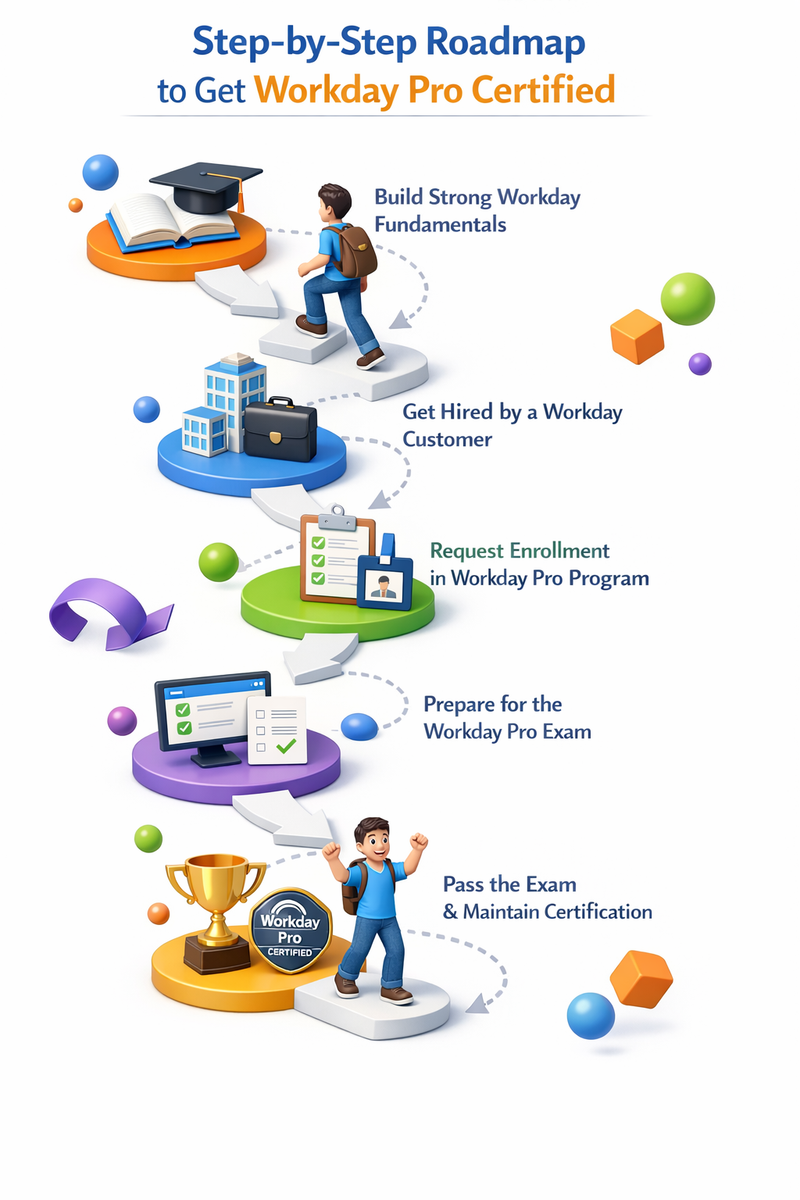
Source : techpratham.com
Okay, deep breath. You’re not showing up to the exam tomorrow. Probably not next week either. There are Key steps you need to take first. Rushing this part is like trying to build a skyscraper on a foundation of sand. It’s just not going to hold.
Workday Experience: The Unspoken Prerequisite
Here’s the kicker: most people who get certified have actually used Workday. Shocking, I know. We’re not talking about clicking around for an hour. We’re talking about hands-on, day-in, day-out experience. Whether you’re implementing it, managing it, or just living in it for your job, that practical exposure is gold. It’s the bedrock upon which your certification knowledge will be built. Without it, you’re just memorizing facts. With it, you’re connecting concepts.
Understanding the Core Workday Modules
Workday is vast. You can’t be an expert in everything (yet!). But you absolutely need to have a solid grasp of the core modules relevant to the certification you’re aiming for. This usually means getting familiar with HCM (Human Capital Management), Payroll, Finance, or a combination, depending on your specialization. It’s not enough to just know the names of these modules; you need to understand their interdependencies and how they function together. This is where deep module understanding becomes critical.
The Importance of Practical Application
Reading the manual is one thing. Doing the thing is another. Can you actually configure a business process? Can you troubleshoot a common payroll issue? Can you generate a specific financial report? These are the kinds of skills that practical experience hones. If you’re not currently in a role that lets you do this, seek out opportunities. Maybe volunteer for a Workday project at your company. Play around in a sandbox environment if you can get access. Real-world application is your best teacher.
Deconstructing the “Workday Pro” Certification Path
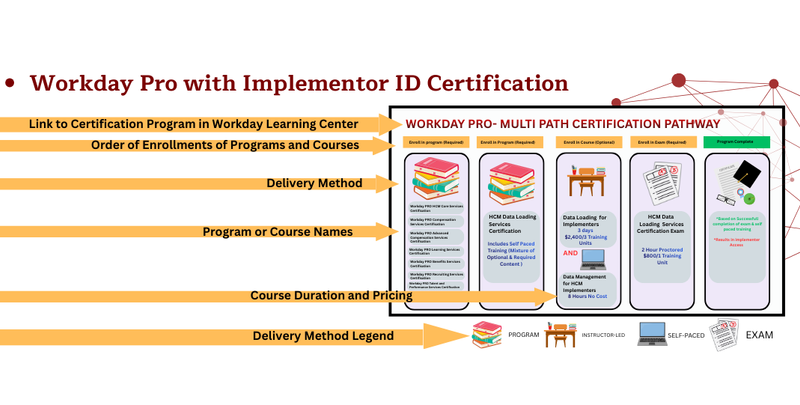
Source : techpratham.com
So, you’ve got some experience under your belt. You’re familiar with the core modules. Now, let’s talk specifics about the “Workday Pro” designation. It’s not a single exam, folks. It’s a journey, and understanding the map is key to not getting lost.
What Does “Workday Pro” Actually Mean?
The “Workday Pro” title typically signifies a higher level of expertise beyond the foundational certifications. It often implies a deeper understanding and practical application of Workday’s more complex functionalities or a specific product suite. Think of it as moving from knowing how to drive to knowing how to race. It’s for those who have moved beyond basic tasks and are ready to tackle advanced configurations and strategic use of the platform. Achieving Workday Pro status is a significant career differentiator.
Handling the Different Certification Levels
Workday offers various certification levels, and “Pro” is usually a step up from an initial, foundational certification. There are often “certified associate” or “certified professional” levels first. The “Pro” level implies you’ve not only passed an exam but likely have demonstrable experience or have completed advanced training. You need to carefully check the specific requirements for the Workday Pro certification you’re targeting, as these can evolve. Don’t assume; verify.
Understanding the Exam Structure and Content
Each Workday certification exam has a defined structure and syllabus. For the Workday Pro level, expect more complex scenarios, case studies, and questions that require you to apply your knowledge in practical, often multi-step, situations. It’s rarely a simple recall of facts. You’ll be tested on your ability to analyze a problem and recommend or implement the correct Workday solution. Knowing the exam blueprint is Key for effective exam preparation.
The Role of Training and Education
While experience is king, formal training is the royal advisor. Workday offers official training courses, and these are often Crucial, especially for advanced certifications. These courses are designed to cover the specific curriculum for each certification and can provide insights and best practices you might not pick up on your own. Missing out on this official training is like trying to climb Everest without a guide. You’re likely to get lost or miss critical points. Investing in official Workday training is a smart move.
Needed Knowledge Areas for Workday Pro Candidates
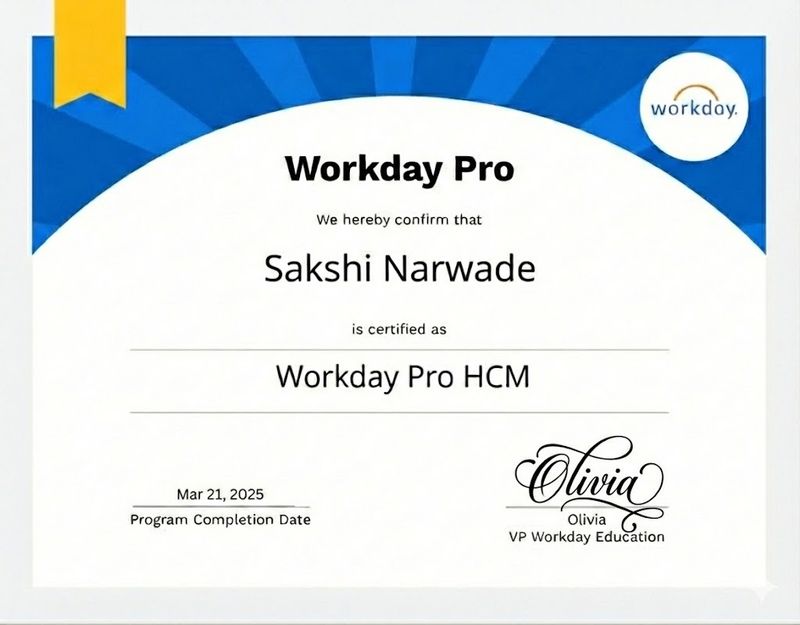
Source : techpratham.com
Alright, let’s get specific. What exactly do you need to know inside and out to pass these Pro exams? This isn’t guesswork; this is based on what the exams typically cover. Nail these areas, and you’re halfway there.
Deep Dive into Core HCM Functionality
For any HR-focused Workday Pro cert, a profound understanding of HCM is non-negotiable. This goes way beyond just setting up an employee record. Think about talent management, performance reviews, compensation structures, time tracking complexities, and workforce planning. You need to understand how these pieces integrate and how to configure them to meet diverse business needs. Understanding the core HCM functions is Top.
Mastering Financial Management Configurations
If your target is finance-related, get ready to dive deep. General Ledger (GL), Accounts Payable (AP), Accounts Receivable (AR), Cash Management, Expenses, Projects – you need to know them all. More importantly, you need to understand how to configure financial structures, reporting, and security within Workday to Make sure accuracy and compliance. This is where your financial configuration skills are put to the test.
Understanding Integrations and APIs
Workday doesn’t live in a vacuum. It needs to talk to other systems. As a Pro, you’re expected to understand the basics of integrations. This involves knowing about Workday’s integration tools, concepts like EIBs (Enterprise Interface Builders) and Studio, and how to approach data mapping and transformation. You don’t necessarily need to be a developer, but you need to understand the principles and common pitfalls. Workday integrations are a complex but Key topic.
Security and Access Controls Expertise
Who can see what? Who can do what? In a system as sensitive as Workday, security is HUGE. You absolutely must understand Workday’s security model: roles, security groups, data sources, business processes, and reporting security. Being able to design and implement secure configurations is a hallmark of a true Workday Pro. Mishandling security can have disastrous consequences. Workday security knowledge is critical.
Practical Study Strategies to Ace Your Workday Pro Exam

Source : acetechnologies.com
Knowing what to study is one thing. Knowing how to study effectively is another beast entirely. Let’s talk about turning that knowledge into exam-passing power. No more passive reading!
Hands-On Practice: The Ultimate Accelerator
I cannot stress this enough: you need to get your hands dirty. If you have access to a Workday sandbox or test environment, use it. Replicate scenarios. Try configurations. Break things (and then figure out how to fix them). This practical application solidifies theoretical knowledge like nothing else. Think of it as muscle memory for your brain. Consistent hands-on practice is key.
Leveraging Workday Community and Documentation
Workday has a Strong online community and extensive documentation. These resources are goldmines of information. You can find answers to obscure questions, learn about new features, and connect with other Workday professionals. Don’t underestimate the power of digging through the official documentation. It’s often the most accurate and up-to-date source of information. Use the Workday community for support.
Watch: How to Get Workday Certified | ZaranTech
Practice Exams and Scenario-Based Questions
Once you feel comfortable with the material, start hitting practice exams. Many training providers offer these, or you might find resources through the Workday community. Focus on scenario-based questions. These mimic the real exam and force you to think critically about how you’d solve a problem in a live Workday environment. Don’t just aim to get the answer right; understand why it’s the right answer. Practice exams are your diagnostic tool.
Developing a Study Schedule (and Sticking to It!)
This isn’t a sprint; it’s a marathon. You need a realistic study schedule. Break down the material into manageable chunks. Allocate specific times each week for studying, practicing, and reviewing. Be disciplined. Consistency beats cramming every single time. Block out time on your calendar for this. Make it a priority. A solid study schedule prevents last-minute panic.
| Certification Aspect | Key Focus Area | Why It’s Key | Pro-Level Emphasis |
|---|---|---|---|
| Core Modules | HCM, Finance, Payroll | Foundation of Workday operations. | Advanced configuration, cross-module impacts. |
| Integrations | EIBs, Studio, APIs | Connecting Workday to other systems. | Troubleshooting complex integrations, data transformation logic. |
| Security | Roles, Security Groups, BPs | Controlling data access and user permissions. | Designing secure and efficient security models. |
| Reporting & Analytics | Custom Reports, Dashboards | Extracting and visualizing data. | Advanced report building, composite reports, data source analysis. |
Alright, let’s cut through the noise and get down to brass tacks. You want to know what it really takes to snag that Workday Pro certification, especially if you’re not swimming in corporate sponsorship. This isn’t some walk in the park; it’s a strategic climb. And frankly, most folks get tripped up before they even start.
How To Become Workday Certified Without An Employer Sponsor

Source : acetechnologies.com
So, you’re an independent agent. A lone wolf. Maybe you’re a consultant itching to add some serious firepower to your resume, or perhaps you’re just someone who sees the writing on the wall and knows Workday skills are gold. Whatever your story, getting certified without a company footing the bill is totally doable, but it demands a different kind of hustle.
Finding Your Own Path to Workday Credentials
Forget waiting for HR to put you on a training list. When you’re going solo, you’re the decision-maker. This means identifying the specific Workday certification track you need. Are you aiming for HCM? Financial Management? Something else entirely? The official Workday site, Workday Training and Certifications, is your starting point. Don’t just skim; dive deep. You need to map out your modules like a general plans a campaign.
Self-Funding Your Certification Journey
Let’s be blunt: this costs money. Course fees, exam vouchers – it all adds up. You’ve got to budget for it. Think of it as an investment, not an expense. I knew a guy, Mark, who was trying to pivot into Workday consulting. He cashed in some old stock options to pay for his initial training. Took him six months, nights and weekends, but that certification was the key that opened doors he couldn’t even see before.
Leveraging Community and Online Resources
You’re not entirely alone, even without a sponsor. There are tons of online forums, LinkedIn groups, and even unofficial study groups out there. People share tips, explain complex concepts, and sometimes even post about discount exam vouchers. It’s not official, sure, but this kind of peer-to-peer learning can be a lifesaver when you’re staring down a tough module.
The Importance of Hands-On Experience
This is a biggie, especially for independent folks. Workday training gets you the knowledge, but real-world application? That’s where the magic happens. If you can’t get it through a job (which you don’t have yet, remember?), you need to create it. Maybe that means working on personal projects, volunteering your skills for a non-profit, or even setting up a sandbox environment to play around in. You absolutely need to get your hands dirty.
Workday Pro Certification Cost And Exam Details
Source : techpratham.com
Okay, let’s talk numbers and structure. Nobody likes surprises, especially when it comes to shelling out cash for a certification. The cost and the exam format are Key pieces of the puzzle. Ignoring them is like walking into a battle without knowing how many bullets you have.
Understanding the Investment: Course Fees and Vouchers
The actual cost can fluctuate, but expect to invest a significant sum. Official Workday training courses aren’t cheap. These can range from a few thousand dollars per course, sometimes more, depending on the specific module and delivery format (instructor-led, virtual, etc.). Then there’s the exam voucher itself. These typically cost several hundred dollars each. So, for a full Workday Pro certification path, you’re looking at thousands of dollars out of pocket.
Exam Format: What to Expect in the Testing Room
Workday exams are generally Full. They’re not multiple-choice quizzes designed to trick you. Think scenario-based questions, configuration tasks, and sometimes even best-practice identification. The goal is to test your ability to apply your knowledge, not just recall it. You’ll likely encounter a mix of question types, and timing is always a factor. You need to be efficient.
Passing Scores and Retake Policies
What constitutes a “pass”? Workday is pretty specific about this, and it varies by exam. Generally, you’ll need a solid score, often in the 80% range or higher. And what if you miss the mark? Don’t panic. There’s usually a retake policy, but it often involves a waiting period and, you guessed it, another exam fee. Plan to pass it the first time if you can. That’s the goal, right?
Breakdown of Costs: A Sample Scenario
Let’s paint a picture. Say you’re going for a Workday HCM Pro certification. You might need two core training courses. Each could be around $4,000. Then, you’ll need exam vouchers for two attempts (just to be safe), maybe $500 each. Add in study materials or a review session, and you’re easily north of $9,000. It’s a serious commitment for a Workday certification cost. This data gives you a rough idea:
| Component | Estimated Cost (USD) | Notes |
|---|---|---|
| Core Training Course 1 | $3,500 – $5,000 | Depends on module and format |
| Core Training Course 2 | $3,500 – $5,000 | Depends on module and format |
| Exam Voucher (per attempt) | $400 – $600 | Required for each certification exam |
| Supplemental Study Materials | $200 – $500 | Optional but recommended |
| Total Estimated Range | $7,600 – $11,600+ | For a single Pro certification track |
What Are The Prerequisites For Workday Hcm Certification
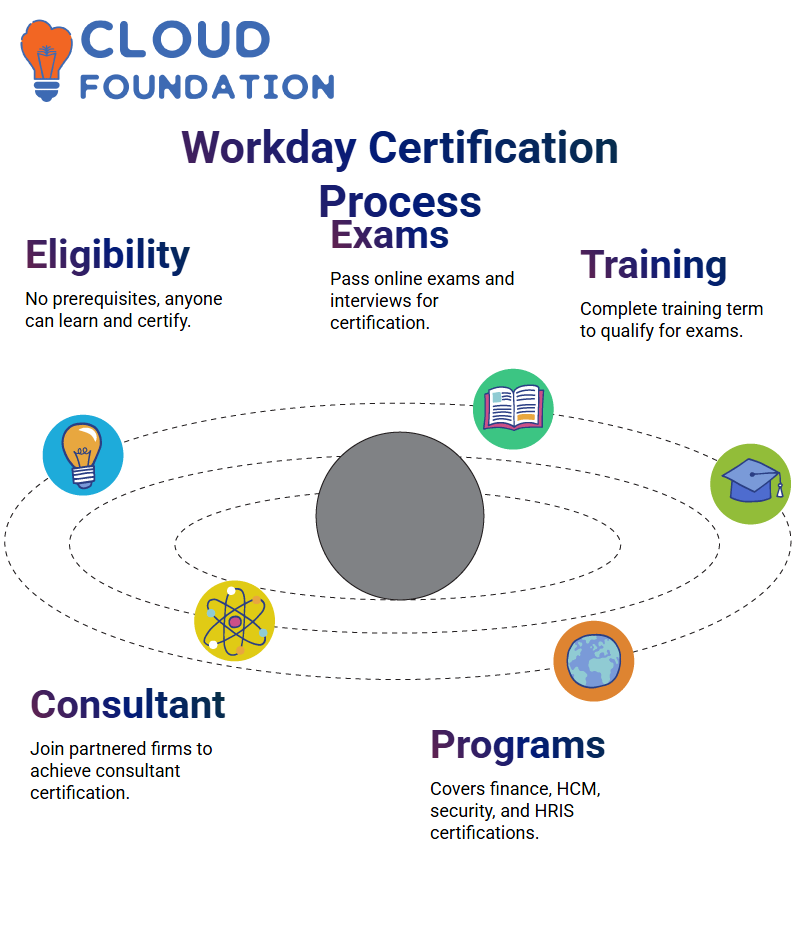
Source : cloudfoundation.com
Before you even think about booking an exam, you need to know the entry requirements. Workday HCM certification isn’t something you just jump into. There’s a ladder, and you need to climb it rung by rung. Skipping steps? That’s a recipe for failure.
Foundational Workday Knowledge is Key
You can’t build a skyscraper on sand. Workday expects you to have a solid grasp of the fundamentals. This usually means completing specific introductory or foundational training courses offered by Workday itself. These courses cover the core architecture, navigation, and basic configuration of the Workday HCM module. Don’t try to wing it; these are designed to give you the necessary base.
Experience Level: The Real-World Factor
Workday isn’t just about theoretical knowledge; it’s about practical application. They often recommend or even require a certain amount of hands-on experience working with Workday HCM. This isn’t just about using the system; it’s about configuring, managing, and troubleshooting it. For the Pro level, they’re looking for people who have practically lived in the system.
Specific Course Completion Requirements
Each certification path has its own set of required courses. For HCM, you’ll likely need to complete modules like “Workday HCM: Core Concepts,” “Configurable Business Processes,” and others relevant to your specific role (e.g., Core Compensation, Absence Management, Talent Acquisition). You’ll receive a certificate of completion for each, which is often a prerequisite for sitting the Pro exam.
The Role of Workday HCM Fundamentals Exam
Often, before you can even attempt the Pro certification, you need to pass a foundational exam. This is the “Workday HCM Fundamentals” exam (or a similar designation). It tests your understanding of the core concepts taught in the initial training. Passing this is non-negotiable. It proves you’ve absorbed the basics before moving on to the more advanced ‘Pro’ material.
How To Get Workday Certified As An Independent Consultant

Source : reddit.com
So you’re a consultant. You’re your own boss. You decide where the work comes from and how you build your skillset. Getting Workday certified as an independent consultant is a power move. It tells clients you’re serious, you’re skilled, and you’re up-to-date with the latest. But how do you actually do it without an employer holding your hand?
Choosing Your Niche: Focus Your Certification Efforts
Workday is huge. Trying to get certified in everything is like trying to drink from a firehose. As an independent consultant, you need to be strategic. Pick a specialty. Are you the go-to person for Workday Payroll? Or maybe Compensation structures? Focus your efforts on getting certified in the areas where you want to build your client base. Specialization is your superpower.
Networking Strategically for Opportunities
As an independent, your network is your business. Attend industry events (virtual or in-person). Join Workday user groups. Connect with recruiters who specialize in Workday placements. Tell everyone you know that you’re pursuing your certifications. You never know where your next big project or referral will come from. A well-placed conversation can lead to gold.
Building a Portfolio of Work
Clients want proof. They don’t just want to see a certificate; they want to see what you’ve done. As an independent, this might mean taking on smaller, pro-bono projects initially to build up a track record. Document your successes. Create case studies (anonymized, of course) highlighting the problems you solved and the results you achieved using Workday. This is your tangible evidence.
Leveraging Certification for Higher Consulting Rates
Let’s talk Use. A Workday Pro certification isn’t just a badge; it’s a justification for charging more. Clients are willing to pay a premium for certified professionals because they trust that you have the validated skills and knowledge. Don’t be afraid to command higher rates once you’ve earned your stripes. Your certification helps justify that independent consultant rate.
Workday Pro Certification Training Timeline And Requirements
Source : credly.com
Getting certified isn’t an overnight thing. It requires a structured approach and a realistic understanding of the time commitment. You need a plan, and that plan needs to account for the training, the practice, and the exams themselves. Rushing it is a mistake.
Mapping Your Learning Path: Duration Estimates
The timeline varies wildly depending on the specific certification you’re pursuing and your starting point. For a single Workday Pro certification (like HCM), you might be looking at anywhere from 3 to 6 months of dedicated study and training. This assumes you’re already familiar with the basics. If you’re starting from scratch, double that. It’s a marathon, not a sprint, especially for Workday Pro certification.
Structured Training vs. Self-Study
Workday offers structured training paths, which are highly recommended, especially for the Pro level. These instructor-led courses provide a clear curriculum and direct access to expertise. Self-study is possible, but it’s much harder to stay on track and Make sure you’re covering all the necessary ground. You’ll need discipline. Lots of it.
The Key Role of Practice and Hands-On Labs
No amount of classroom learning can replace hands-on practice. You must spend time in a Workday tenant environment (often provided during training or accessible through specific programs) actually doing things. Configure a business process. Build a report. Test an integration. This is where the theoretical knowledge solidifies into practical skill. Aim for hours and hours of practice.
Exam Preparation and Retake Strategy
Once you’ve completed your training, you need to prepare specifically for the exam. This involves reviewing your notes, taking practice exams (if available), and understanding the exam format intimately. Remember the retake policy. If you don’t pass on the first try, you’ll need to factor in time and money for a second attempt. A solid Workday training timeline includes buffer time for this.
Frequently Asked Questions
Who is eligible for Workday certification?
Honestly, anyone can go for it! But realistically, you’ll need some Workday experience under your belt. Most folks aiming for Workday Pro have already been using the system, maybe a year or two. It’s not like you can just walk in off the street and ace the advanced stuff without seeing the real deal.
Do I need to take a specific Workday course before getting certified?
Yeah, pretty much. Workday isn’t just going to hand out certifications like candy. You absolutely need to complete their official training courses for the specific area you want to be certified in. Think of it as showing your homework before the test. No shortcuts here, you’ve got to put in the training time.
What’s the difference between Workday Core and Workday Pro?
Okay, so Core is like learning the alphabet and basic sentences. It covers the fundamentals. Workday Pro, though? That’s where you get into the nitty-gritty. It assumes you know the basics and then dives deep into more complex configurations, advanced reporting, and troubleshooting. It’s for people who are actually doing the work, not just dabbling.
How long does the Workday certification exam take?
It varies depending on the specific module or certification you’re going for. Some can be a few hours, others might be a bit longer. But generally, expect to dedicate a solid chunk of your day to it. You don’t want to rush through it, so make sure you’re well-rested and fully prepared.
Can I get Workday certified without direct Workday system administration experience?
Look, it’s technically possible if you ace the training and the exam feels like a walk in the park. But, and this is a big ‘but’, your certification won’t hold much water in the job market. Employers want to see that you’ve actually used Workday. So, while you might pass, real-world experience makes the certification actually mean something.
