Mastering the Maze: Your No-Nonsense Guide to Becoming a NATE Certified HVAC Technician
Alright, let’s cut through the noise. You’re thinking about getting NATE certified, huh? Good for you. It’s not just some dusty piece of paper; it’s a serious badge of honor in the HVAC world. But getting there? It’s a journey. A bit like climbing Everest, maybe. Okay, not quite that extreme, but it requires some grit. So, how do you actually snag that coveted NATE certification? Let’s break it down, no fluff, just the straight dope.
Forget the generic advice you’ll find everywhere else. This is the real deal. We’re talking about the nitty-gritty, the stuff that actually matters when you’re on the ground, tools in hand, trying to make a name for yourself. Because let’s be honest, just knowing how to fix a leaky faucet isn’t going to cut it anymore. You need that recognized expertise. That NATE certification is your ticket to proving it.
The Foundation: Gaining Real-World HVAC Experience

Source : nrs.vegas
Why Experience Trumps Everything Else
Look, you can read all the manuals in the world, but nothing beats getting your hands dirty. That’s the honest truth. You need to be out there, day in and day out, working on actual systems. Think of it like learning to ride a bike. You can watch videos all you want, but you’re gonna fall a few times before you get it right. This is the same, just with potentially higher stakes (and refrigerant lines).
Apprenticeships: Your First Big Step
The best way to get started? Find a solid apprenticeship. This is where you’ll learn from seasoned pros, the guys who have seen it all. They’ll show you the ropes, the tricks of the trade, and crucially, how to troubleshoot like a boss. Many HVAC companies actively seek apprentices, knowing they’re investing in future talent. Don’t be afraid to knock on doors, even if they aren’t actively advertising.
On-the-Job Training Realities
This isn’t just about sweeping floors. Real on-the-job training means being involved in diagnostics, repairs, and installations. You’ll be shadowing technicians, asking a million questions (seriously, never stop asking), and slowly taking on more responsibility. It’s intense, it’s demanding, but it builds a deep, practical understanding that no classroom can replicate. This hands-on work is the bedrock for your NATE certification prep.

Source : stewartheatingandair.com
Documenting Your Journey
Keep a log. Seriously. Jot down the types of systems you’ve worked on, the problems you’ve encountered, and how you (or your mentor) solved them. This isn’t just for your memory; it helps you identify your strengths and weaknesses. Plus, it’s a tangible record of your experience, which is Crucial when you start thinking about which NATE specialty you want to pursue.
Formal Education: Boosting Your Knowledge Base
Trade Schools and Technical Colleges
While experience is king, formal education can significantly accelerate your learning curve. Trade schools and technical colleges offer structured programs specifically designed for aspiring HVAC technicians. These programs cover everything from electrical theory to refrigeration cycles, giving you a strong theoretical foundation to complement your practical skills. Many employers even prefer candidates with this kind of background. It’s a solid investment in your HVAC career.
Specific NATE-Focused Courses
Some institutions offer courses specifically geared towards NATE certification preparation. These programs often Match with the exam objectives, helping you target your studying effectively. They can be particularly useful for understanding the testing format and the types of questions you’ll face. Think of them as a high-intensity boot camp for your brain. Look for programs that Feature high pass rates for NATE exams.
Online Learning Platforms: Flexibility and Accessibility
The digital age offers a wealth of online learning opportunities. Platforms like SkillCat and others provide flexible courses that you can take on your own schedule. This is perfect if you’re already working or have other commitments. These online resources often include practice quizzes and study guides, making them a convenient way to reinforce your learning. It’s all about fitting education into your busy life, making that NATE certification feel more attainable.
The Importance of Continuous Learning
The HVAC industry is constantly evolving. New technologies, refrigerants, and regulations emerge regularly. Formal education isn’t a one-and-done deal. You need to commit to continuous learning, whether through workshops, online courses, or industry publications. Staying updated ensures your skills remain relevant and that you’re prepared for the advanced certifications NATE offers later on. This commitment to lifelong learning is what separates good technicians from great ones, and it’s Key for maintaining your NATE credentials.
Understanding NATE Certification Requirements
The NATE Core Exam: Your Gateway
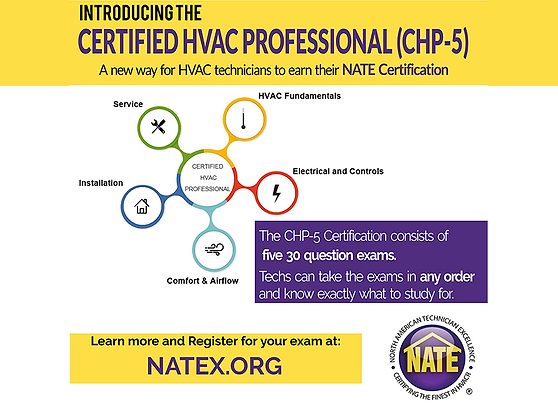
Before you can specialize, you’ve got to pass the NATE Core exam. This is the fundamental test that covers basic HVAC principles. Think of it as the common language everyone in the field needs to speak. It tests your understanding of safety, tools, basic electrical and mechanical concepts, and system components. You can’t skip this one, folks. It’s the first hurdle, and a significant one, on your path to becoming NATE certified.
Specialty Exams: Finding Your Niche
Once you conquer the Core, you get to choose your specialty. NATE offers a wide range of specialty exams, focusing on specific areas like air conditioning, heating, ventilation, oil heating, and more. Some are installation-focused, others are service-focused. Choosing the right specialty depends on your experience and career goals. Are you the guy who loves wrestling with complex cooling systems? Or do you prefer tuning furnaces to peak efficiency? Your choice here defines your expertise and what NATE certification truly represents for you.
Eligibility Criteria: What You Need
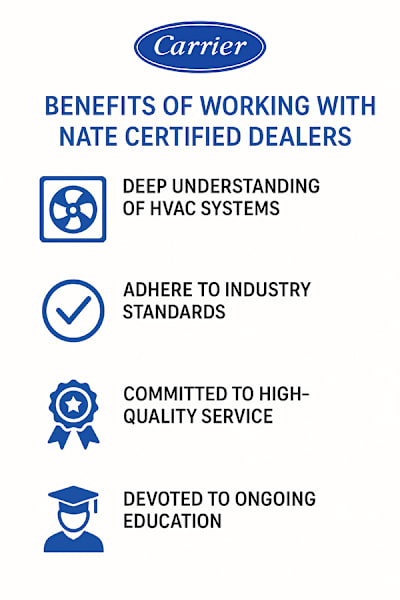
NATE isn’t just handing out certifications. There are specific requirements you need to meet. Generally, you need a certain amount of hands-on experience in the HVAC field. The official NATE website provides the most up-to-date information on these requirements, but it’s usually a minimum of one to two years of experience. You can find detailed information about getting started on their site, specifically at NATE’s official getting started page. They lay it all out clearly.
Source : carrier.com
Maintaining Your Certification: It’s Not Forever
Your NATE certification isn’t a lifetime achievement award. It’s valid for a set period, typically two years. To maintain it, you need to earn continuing education units (CEUs) through approved training programs or by passing specialty recertification tests. This ensures you stay current with industry changes. Think of it as staying sharp. It’s a Key part of keeping your NATE certification active and respected.
Preparing for the NATE Certification Exam
Study Guides and Practice Materials
Don’t walk into the testing center blind. Grab yourself some solid study guides. These materials are specifically designed to Match with the NATE exam content. Many are available from NATE itself or third-party providers. You can often find practice tests that simulate the real exam experience. This helps you get comfortable with the question format and timing. Honestly, good prep materials are your best friend here for NATE certification success.
Online Practice Tests: Your Secret Weapon
Indeed.com has a great resource that breaks down the process, including practice tips. They emphasize the importance of preparing for the specific tests. Online practice tests are fantastic because they give you immediate feedback. You can see where you’re strong and, more importantly, where you’re weak. Identify those problem areas and hit them hard with more focused study. This targeted approach makes your study time much more efficient for passing the NATE certification test.
Hands-On Review Sessions
If you can, participate in hands-on review sessions. Sometimes, even with formal training, there are practical aspects you might need a refresher on. Working with equipment, practicing diagnostic procedures, or even just talking through scenarios with peers can solidify your understanding. This practical reinforcement is Key for those tasks that require more than just theoretical knowledge. It’s about building confidence in your abilities, which is key for any HVAC certification.
Time Management During the Test
The exams are timed. That’s a fact. You can’t afford to get bogged down on one difficult question. Practice pacing yourself. Learn to identify questions you can answer quickly and move on. Save the tougher ones for last. Many test-takers find that simply allocating a set amount of time per question can make a huge difference. A good strategy ensures you attempt every question, maximizing your chances of getting a good score on your NATE exam.
The NATE Certification Exam Experience
Test Center Logistics
When you register for your exam, pay close attention to the test center location and the required arrival time. You’ll usually need a valid photo ID. Standardized testing environments mean strict rules – no phones, no notes, nothing but you and the test. Arrive early, take a few deep breaths, and mentally prepare. It’s just another step, albeit a significant one, in the NATE certification process.
Computer-Based Testing: The Norm
Most NATE exams are administered via computer. This means you’ll be sitting at a terminal, clicking through questions. The interface is generally user-friendly. You can usually review your answers before submitting the entire test. Some systems even allow you to flag questions you want to revisit. Familiarize yourself with this format during practice tests to reduce any potential anxiety on exam day. This modern approach makes taking your NATE certification straightforward.
Types of Exam Questions
Expect a mix of multiple-choice questions. Some might be scenario-based, presenting a problem and asking for the best solution. Others might be more direct, testing your knowledge of technical specifications or safety procedures. They often include diagrams or schematics that you’ll need to interpret. Understanding the different question types is part of the preparation. You’ll see questions covering installation, troubleshooting, and system performance for your chosen NATE specialty.
Source : phcppros.com
Immediate vs. Delayed Results
Depending on the specific exam and testing provider, you might receive your results immediately after completing the test, or you might have to wait a few days or weeks. Don’t stress too much about the wait if it happens. Focus on the fact that you completed the exam. Regardless of the timeline, the moment you see that “pass” notification, you know you’ve achieved a significant milestone in your HVAC technician career.
Leveraging Your NATE Certification
Enhanced Career Opportunities
Okay, you’ve got the certificate. Now what? Big things. NATE certification significantly boosts your resume. Employers actively seek NATE-certified techs because it signals a verified level of competence and professionalism. This often translates to better job offers, higher salaries, and opportunities for advancement within companies. It’s a competitive edge you simply can’t ignore in the HVAC job market.
Increased Earning Potential
Let’s talk money. Certified technicians generally earn more than their non-certified counterparts. NATE certification is a direct indicator of skill and knowledge, and companies are willing to pay a premium for that assurance. This isn’t just a small bump; it can be a Large increase over your career. This makes the investment in studying and testing incredibly worthwhile for your long-term earnings.
Building Customer Trust and Respect
When a customer sees that NATE logo, they know they’re dealing with a qualified professional. It builds instant credibility and trust. People want their expensive HVAC systems serviced by someone who really knows what they’re doing. This can lead to more repeat business for your employer (or your own business) and a greater sense of satisfaction in your work. Being NATE certified directly impacts how clients perceive your expertise.
Opportunities for Advanced Certifications
NATE offers more than just entry-level and specialty certifications. There are senior-level designations as well, like the NATE Senior-level endorsement. These advanced certifications require a higher level of experience and a broader understanding of HVAC systems. Pursuing these demonstrates a commitment to mastery and can open doors to even more specialized and lucrative roles. Your initial NATE certification is just the beginning.
The NATE Certification Pathway: A Visual
Experience Gathering Phase
- Secure an HVAC apprenticeship.
- Engage in extensive on-the-job training.
- Learn various system types and repair techniques.
- Build a practical knowledge base through real-world application.
Educational Enhancement Phase
- Consider attending a trade school or technical college.
- Enroll in NATE-specific preparation courses.
- Use online learning platforms for flexibility.
- Stay updated with industry advancements and new technologies.
Certification Testing Phase
- Meet NATE’s eligibility requirements (experience is key).
- Pass the NATE Core exam.
- Select and prepare for your chosen NATE specialty exam(s).
- Successfully complete the exam(s) at an authorized testing center.
Maintenance and Advancement Phase
- Earn Continuing Education Units (CEUs) every two years.
- Recertify through exams or approved training.
- Consider pursuing advanced NATE certifications (e.g., Senior-level).
- Continuously update skills to remain a top-tier HVAC professional.
Data Deep Dive: NATE Certification Benefits vs. Costs
It’s easy to get lost in the steps, but let’s look at the tangible stuff. Is it worth it? For most, absolutely. But like any significant career move, there are costs involved. Here’s a look at what you might expect:
Source : hvacredu.net
| Aspect | Details | Estimated Cost/Impact |
|---|---|---|
| Core Exam Fee | NATE’s foundational test. | $100 – $200 (Varies) |
| Specialty Exam Fee | Test for specific HVAC areas. | $150 – $300 per exam (Varies) |
| Study Materials | Books, online courses, practice tests. | $100 – $500+ (Depending on resources) |
| Continuing Education | Required CEUs every 2 years. | $100 – $400 every 2 years (Training costs) |
| Increased Earning Potential | Higher salaries compared to non-certified techs. | Potentially 5-15% more per year (Source: Various industry reports) |
| Job Marketability | Preferred by many employers; access to better jobs. | Significantly improved job prospects and career advancement. |
| Customer Credibility | Builds trust and justifies service fees. | Enhanced reputation and client satisfaction. |
The data suggests that while there’s an upfront investment, the long-term financial and career benefits of NATE certification far outweigh the costs. It’s an investment in yourself and your future.
Final Thoughts: Your Path Forward
So, there you have it. Getting NATE certified isn’t a walk in the park, but it’s absolutely achievable with the right mindset and preparation. It demands experience, dedicated learning, and a commitment to proving your skills. Don’t shy away from the challenge. Welcome the process, learn from every step, and soon enough, you’ll be holding that respected NATE certification in your hand.
Remember, this is more than just a credential. It’s a Proof to your dedication and expertise in a critical field. It opens doors, increases your value, and builds lasting trust with customers. If you’re serious about a career in HVAC, making the effort to become NATE certified is one of the smartest moves you can make. Now go get after it!
Frequently Asked Questions
Is NATE certification worth it for HVAC?
Totally. Getting NATE certified shows you really know your stuff. Employers look for it, and it can seriously boost your earning potential. Plus, it’s a great way to prove your commitment to the trade.
Is it hard to get NATE certification?
It can be challenging, yeah. The tests are designed to make sure you’ve got solid knowledge. But, if you put in the work studying and have some hands-on experience, you can definitely nail it. Think of it as a tough exam, but totally doable with preparation.
What are the basic steps to become NATE certified?
First off, you gotta have some experience in the HVAC field, usually at least a year. Then, you pick the specific specialty you want to get tested on, like installation or service for heating or cooling. After that, you study up and book your exam. Pass the test, and boom, you’re certified!
How much does NATE certification cost?
The costs can vary a bit depending on the tests you take. There’s usually a fee for the exam itself, and sometimes a separate fee for the test center. It’s a good idea to check the official NATE website for the most current pricing for each certification level.
Do I need a specific amount of field experience for NATE certification?
Yeah, generally you need some hands-on experience. Most NATE certifications require at least six months to a year of experience in the specific area you’re testing for. This ensures you’re not just book smart, but also know how to apply that knowledge in real-world HVAC jobs.
