Staying Current: The Absolute Essentials for Maintaining Your CPR Instructor Certification
So, you’ve gone through the hoops, proven your mettle, and now you’re a certified CPR instructor. Awesome. But here’s the kicker: that shiny piece of paper isn’t a lifetime pass. Nope. The skills you teach, the guidelines you follow – they’re constantly evolving. And if you’re not keeping up? Well, you’re not just letting yourself down; you’re potentially failing the people who rely on you to be the most up-to-date expert in the room. Maintaining your CPR instructor certification isn’t just paperwork; it’s about staying sharp, relevant, and ready to save lives when it counts the most.
It. When a medical emergency strikes, seconds matter. The techniques and recommendations that were Latest five years ago might be outdated today. Keeping your instructor credentials current ensures you’re teaching the most effective, life-saving protocols. It’s a serious responsibility, and frankly, the organizations that issue these certifications expect you to take it just as seriously.
The Non-Negotiable Reality of Continuing Education
Forget coasting. The world of emergency response is a moving target. New research drops, guidelines get tweaked, and technology advances. To be a credible CPR instructor, you absolutely must stay plugged into these changes. This isn’t optional; it’s fundamental to the integrity of your role and the safety of your students.
Why Your Certification Isn’t a One-and-Done Deal
It’s a common misconception that once you’re certified, you’re set. Big mistake. The organizations like the American Heart Association (AHA) or American Red Cross have renewal cycles for a reason. They want to Make sure a consistent, high standard across all their instructors. If you’re not actively participating in the renewal process, you’re essentially falling behind the curve, and that can have real consequences for your teaching privileges.
The Stakes: What Happens if You Let Your Certification Lapse?
Letting your certification expire isn’t just an inconvenience; it can effectively sideline you. Imagine building a thriving business around teaching CPR, only to find out you can’t legally offer classes anymore because your credentials have run out. That’s a harsh reality for instructors who don’t prioritize maintaining their CPR instructor status. It means scrambling, re-doing courses, and potentially losing students and income.
Handling the Renewal Maze: Key Requirements and Timelines

Source : mycprcertificationonline.com
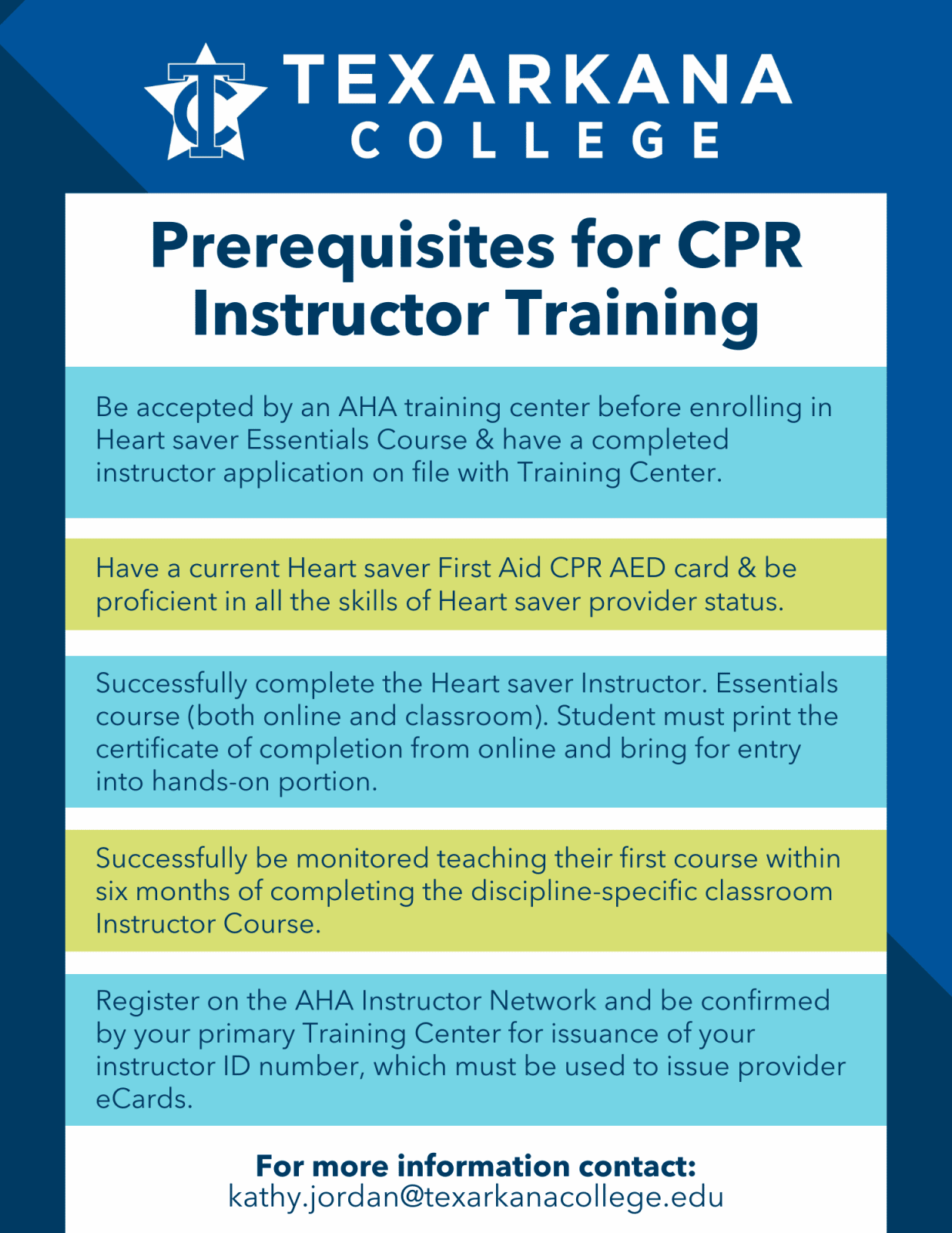
Okay, let’s get down to brass tacks. How do you actually keep that instructor certification valid? It’s not rocket science, but it does require attention to detail. You’ll be looking at specific timeframes, required training hours, and sometimes even performance evaluations. Missing a deadline or skipping a Key step can put you right back at square one. Nobody wants that headache, right?
Source : cbe.texarkanacollege.edu
The exact requirements can vary slightly depending on the certifying body – AHA, Red Cross, ECSI, you name it. But generally, they all revolve around ensuring you’re still competent and current. It’s about more than just passing a test; it’s about demonstrating ongoing commitment to the field.
Understanding Your Specific Certifying Body’s Renewal Window
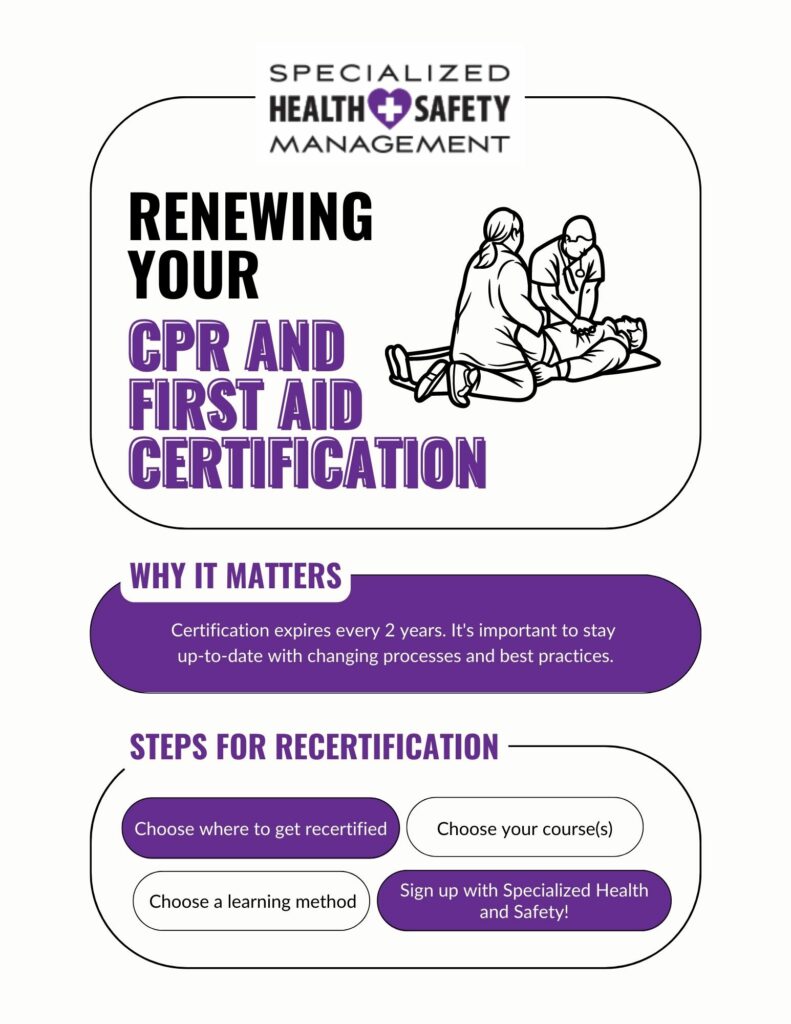
First things first: you need to know when your certification expires. Don’t wait until the last minute. Most organizations have a specific renewal period leading up to the expiration date. For example, the American Heart Association often requires renewal every two years. You can’t just assume; you’ve got to actively check your documentation or log into your instructor portal. This is where knowing your specific program is Key for maintaining your CPR instructor certification.
The Key Role of Provider Status
Here’s a detail many instructors overlook: maintaining your provider status. That means you need to be actively taking CPR courses yourself, not just teaching them. It’s a way to keep your own skills sharp and demonstrate you’re still in the trenches. The frequency required for this can vary, but it’s often tied to your instructor renewal cycle. Think of it as continuous practice for the practitioner.
Mandatory Science and Guideline Updates: Staying on the Forefront
The science behind resuscitation efforts is always evolving. The guidelines aren’t just arbitrary rules; they’re based on the latest research. To renew your instructor certification, you’ll almost certainly need to complete specific modules or courses that cover these updates. These aren’t just fluff pieces; they cover critical changes in techniques, drug protocols, and resuscitation strategies. You can find renewal information, like the American Red Cross’s approach, which details how to renew your certification through various learning options: CPR renewal and recertification.
Instructor Monitoring and Performance: Proving Your Prowess
Some organizations require a certain number of instructor-lead “monitoring” sessions. This is where a Training Center Coordinator or a designated master instructor observes you teaching a class. It’s a critical feedback loop. They’re looking to see if you’re adhering to the curriculum, managing the classroom effectively, and demonstrating proficient skills. This isn’t about catching you out; it’s about ensuring you’re delivering top-notch training and helps you maintain your instructor credentials.
The Continuing Education Component: Beyond Basic Recertification
Maintaining your CPR instructor certification isn’t just about ticking boxes on a renewal form. It’s about genuine professional development. This means diving deeper into the material, understanding the ‘why’ behind the ‘what,’ and continually refining your teaching abilities. Complacency is the enemy here.
You’re not just a card-issuer; you’re an educator. And good educators never stop learning. This ongoing education ensures you’re not only up-to-date on the medical science but also on the best pedagogical methods to transfer that knowledge effectively.
Required Continuing Education Units (CEUs) or Contact Hours
Many certifying bodies require a specific number of continuing education units (CEUs) or contact hours to be completed within a renewal cycle. These are typically earned by attending workshops, completing online modules, or participating in specialized training sessions. It’s a structured way to guarantee you’re putting in the time to stay current. Keeping track of these can feel like a chore, but it’s Needed for renewal of your CPR instructor certification.
Advanced Training Modules and Specializations
Beyond the core CPR curriculum, there are often opportunities for advanced training. Think about certifications in Basic Life Support (BLS), Advanced Cardiovascular Life Support (ACLS), or Pediatric Advanced Life Support (PALS). Instructors who teach these advanced levels have even more rigorous renewal requirements. Pursuing these specializations not only broadens your teaching scope but also demonstrates a higher level of expertise and commitment to the field.
Source : specializedhealthandsafety.com
Workshops Focused on Teaching Methodology
Being a great rescuer doesn’t automatically make you a great teacher. Effective instruction involves communication skills, adult learning principles, and the ability to handle diverse learning styles. Many renewal programs incorporate workshops specifically designed to hone these teaching skills. This is where you learn how to create engaging learning environments and Make sure your students truly absorb the critical information. Your ability to teach CPR effectively is just as important as knowing the steps.
Staying Abreast of Guideline Revisions
The International Liaison Committee on Resuscitation (ILCOR) and other major bodies periodically release updated guidelines. These revisions are based on extensive reviews of scientific literature. Your certifying body will have mandatory components to Make sure you’ve studied and understood these latest guideline changes. For instance, the AHA regularly updates its materials, and instructors must demonstrate comprehension of these updates to maintain their active instructor status. Information regarding renewal specifics can often be found directly from providers, such as guidance on how to renew an instructor certification: renewing an instructor certification.
Demonstrating Proficiency: Skills Checks and Competency Assessments
Paperwork and online courses are only part of the equation. The real test lies in your ability to perform and teach the skills correctly. That’s why hands-on skills checks are a non-negotiable part of maintaining your instructor certification. You need to prove you can still do what you teach.
This isn’t just about remembering the sequence of compressions and breaths. It’s about demonstrating proper technique, effective airway management, and the confidence to act decisively under pressure. Your competence is the bedrock of your credibility as an instructor.
The Hands-On Skills Evaluation
Expect to undergo regular hands-on skills assessments. This usually involves demonstrating the correct techniques for CPR on manikins, using an AED, and possibly choking relief maneuvers. A master instructor or evaluator will be watching closely to Make sure you meet the required performance standards. It’s a direct evaluation of your practical CPR skills.
Scenario-Based Learning and Assessment
Modern CPR training goes beyond rote memorization. You’ll likely participate in or even lead scenarios that simulate real-life emergencies. This tests your ability to assess a situation, apply the appropriate protocols, and manage the victim’s care effectively. How quickly can you recognize cardiac arrest? Can you delegate tasks appropriately in a team setting? These are the critical thinking elements being assessed to maintain your instructor certification.
Teaching Practice and Feedback Sessions
Before, instructor monitoring is key. This isn’t just about assessing your skills but also your teaching ability. Can you explain complex concepts clearly? Can you provide constructive feedback to students? Can you manage a classroom effectively? These sessions provide Crucial feedback to help you refine your approach and Make sure you’re providing the best possible learning experience for your students.
Proficiency in Using Training Manikins and Equipment
Technology in CPR training evolves. Manikins now offer feedback on compression depth, rate, and recoil. AED trainers simulate the device’s voice prompts and pad placement. Maintaining your certification means being proficient with the latest training equipment. You need to know how to use these tools effectively to enhance the learning experience and accurately assess student performance, ensuring you teach CPR accurately.
Administrative Essentials: Documentation and Record-Keeping
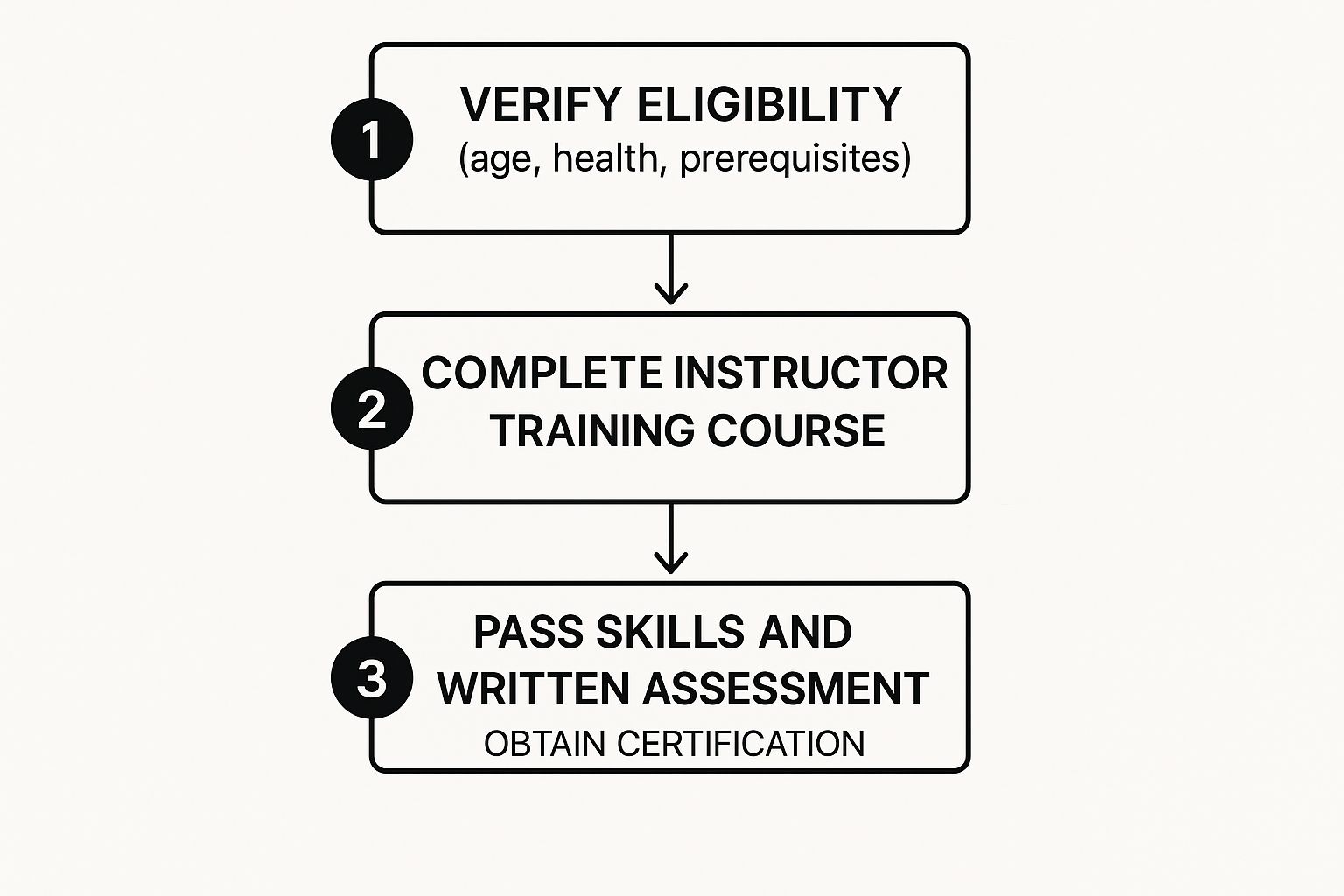
Let’s be honest, the administrative side of things can feel like a drag. But keeping Careful records is absolutely Key for maintaining your CPR instructor certification. Missing deadlines or losing track of completed training can create significant headaches down the line. Think of it as the Key glue holding your certification status together.
Source : readyresponsepa.com
This isn’t just busywork. Proper documentation ensures that you, your students, and the certifying body all have a clear, verifiable record of your credentials and training activities. It protects everyone involved.
Maintaining Your Instructor Certification Records
You need a system for keeping track of your own certifications, renewal dates, completed CEUs, and any monitoring reports. Digital folders, a dedicated binder – whatever works for you. The key is having easy access to all relevant documents when it’s time to renew. This is Key for demonstrating you’ve met all requirements to maintain your instructor certification.
Student Record Management
As an instructor, you’re also responsible for maintaining accurate records of the students you train. This includes course completion cards, test scores, and attendance. Most organizations have specific requirements for how long these records must be kept and how they should be stored securely. This often involves utilizing specific software or online platforms provided by the certifying body.
Keeping Track of Training Center Affiliation
Most CPR instructors are affiliated with a Training Center (TC). This affiliation is often a prerequisite for teaching and renewal. You need to Make sure your affiliation remains active and that you understand the TC’s policies regarding instructor requirements and renewals. If you switch TCs, you’ll need to manage that transition properly to avoid gaps in your credentials, which impacts your ability to teach CPR.
The Importance of Original Documentation
Don’t just rely on digital copies for everything. Keep originals or certified copies of your initial instructor certification, any advanced certifications, and proof of completed renewal training. These might be needed for audits or if digital systems fail. Having a clear paper trail is Crucial when dealing with official bodies; it’s a key part of instructor certification renewal.
Choosing the Right Path: Renewal Options and Training Centers
When it’s time to renew, you’ll find there isn’t just one single path. Different organizations and training centers offer various options, catering to different learning styles and schedules. Understanding these choices can make the renewal process much smoother and more effective. It’s about finding the fit that works best for you.
Your choice of training center and renewal method can significantly impact your experience. Some centers offer more personalized support, while others might provide more flexible online options. Picking the right one ensures you get the training you need without unnecessary hassle.
Aligning with an American Heart Association (AHA) Training Center
For many, the AHA is the go-to. If you’re affiliated with an AHA Training Center, their specific renewal processes will apply. This often involves completing online modules, attending an instructor update course, and passing a skills check. Many find that working with a reputable center simplifies the entire process. For example, CPR Training School provides resources and services tailored for instructors Handling these requirements: CPR instructor certification renewal.
Exploring American Red Cross Instructor Pathways
The American Red Cross also has a Strong instructor network and a defined renewal process. They emphasize continuous learning and often provide various course formats, including blended learning options. Their renewal requirements focus on ensuring instructors are up-to-date with the latest emergency response guidelines and possess strong teaching skills. Staying current with the Red Cross is Top for maintaining your instructor credentials.
Benefits of Blended Learning for Renewal
Blended learning offers a fantastic compromise. It typically combines online self-study modules covering theoretical updates and guideline changes with a shorter, in-person skills session. This format is incredibly efficient, allowing you to complete much of the coursework on your own schedule. It’s a popular choice for busy professionals who need flexibility while still ensuring they meet the requirements for CPR instructor certification renewal.
Watch: How to AHA Instructor Renewal
The Role of a Training Center Coordinator (TCC)
Your Training Center Coordinator is often your primary point of contact for all things related to your instructor status. They manage affiliations, track renewals, provide resources, and Help monitoring sessions. Building a good relationship with your TCC can make Handling the renewal process significantly easier. They are key to ensuring you stay compliant and up-to-date.
Addressing Lapses: Reactivating an Expired Instructor Certification
What happens if you do let your certification slip through the cracks? Don’t panic. While it’s always best to renew on time, most major certifying bodies have procedures for reactivating an expired certification. It’s usually more involved than a simple renewal, but it’s definitely achievable.
The key here is not to ignore the problem. The sooner you address an expired certification, the easier the reactivation process will likely be. Delaying can sometimes mean facing even stricter requirements.
Understanding the Grace Period (If Applicable)
Some organizations might offer a short grace period beyond the official expiration date during which you can renew with slightly less hassle. However, this is not universal, and relying on it is risky. Always aim to complete your renewal before your expiration date to avoid any potential complications with your instructor certification status.
The Process for Reactivation vs. Initial Certification
Reactivating an expired instructor certification is often treated differently than obtaining an initial one. You might need to demonstrate proficiency through more rigorous assessments or complete additional training modules compared to a standard renewal. The exact steps depend heavily on how long the certification has been expired and the policies of your specific certifying body. It’s usually more demanding than simply staying current.
Is a Full Re-certification Course Necessary?
Depending on the lapse duration, you might be required to complete a full instructor certification course again, rather than just a renewal course. This is especially true if your certification has been expired for an extended period (e.g., over a year). This ensures you’re brought fully up to speed with current guidelines and teaching standards before being allowed to teach again, ensuring you can teach CPR effectively.
Working Closely with Your Training Center
If your certification has expired, your best course of action is to contact your Training Center Coordinator immediately. They can provide the most accurate information regarding the reactivation process specific to your situation and certifying body. They can guide you through the necessary steps, whether it’s a specific online module, a skills evaluation, or a full re-certification course, to get you back on track to maintain your CPR instructor certification.
Data Table: CPR Instructor Certification Renewal Comparison (Illustrative)
Here’s a simplified look at how different aspects of instructor renewal might stack up. Remember, specifics can change, so always check with your certifying body.
| Feature | American Heart Association (AHA) | American Red Cross | Other Providers (e.g., ECSI) |
|---|---|---|---|
| Standard Renewal Period | Typically 2 years | Typically 2 years | Varies (check provider) |
| Required Training | Online modules, skills check, instructor update | Online modules, skills check, instructor update (formats vary) | Varies; may include online and in-person components |
| Provider Status Requirement | Must maintain active provider status | Must maintain active provider status | Usually required |
| Instructor Monitoring | Often required, varies by TC | Often required, varies by region/TC | Depends on provider and TC |
| Expired Certification Reactivation | Possible, may require full recertification depending on lapse | Possible, process varies based on lapse duration | Process varies significantly |
| Key Renewal Focus | Guideline updates, skills proficiency | Guideline updates, teaching competency | Core competencies and updates |
The Future of CPR Instruction: Continuous Improvement is Key
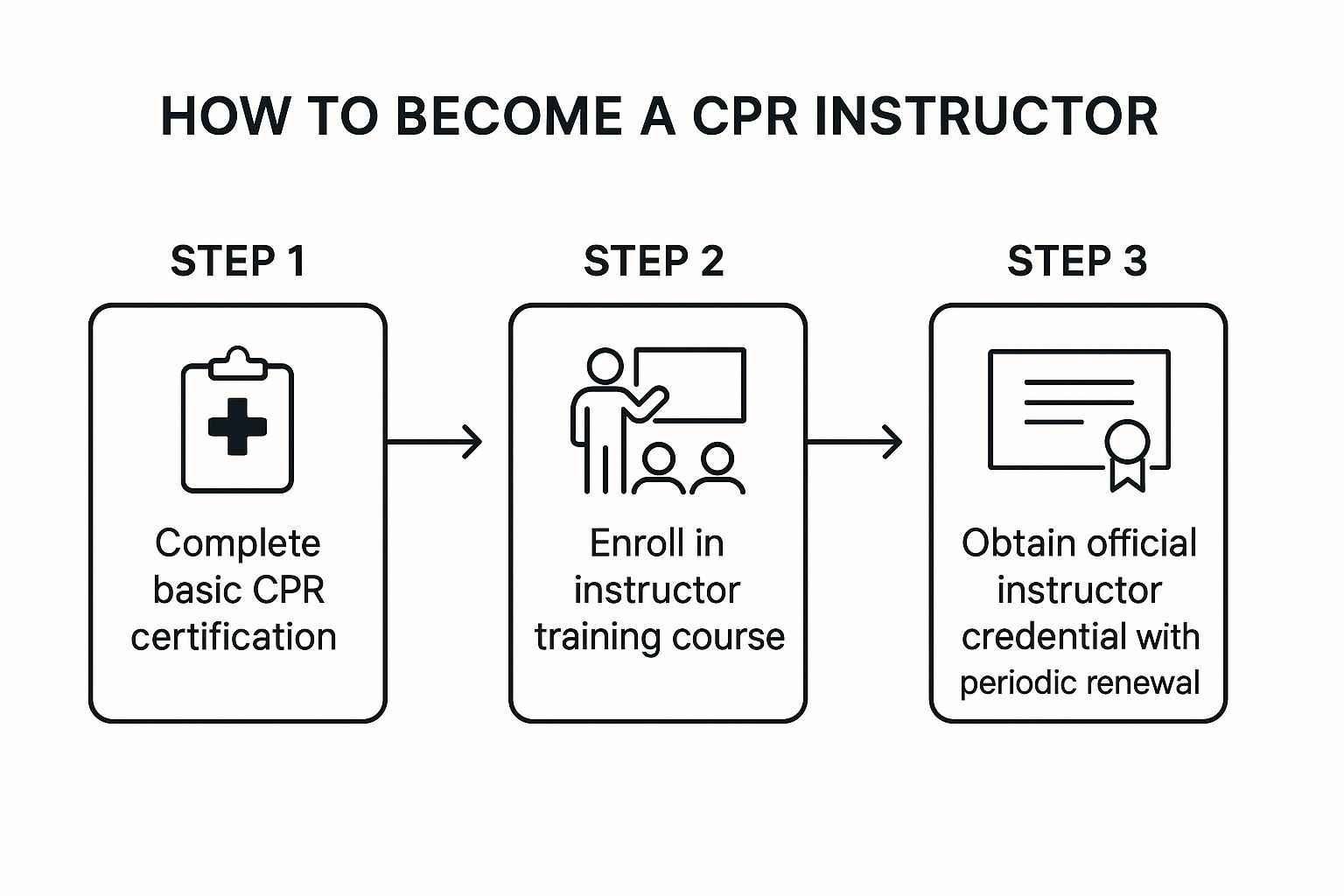
The Field of emergency medical care is always shifting. Technology, research, and even public health crises (hello, pandemic!) force constant adaptation. As a CPR instructor, your role is to be at the forefront of these changes, translating complex information into accessible, life-saving skills for your students. Maintaining your certification is the baseline; true excellence comes from a commitment to continuous learning and improvement.
Source : readyresponsepa.com
Don’t view renewal as a burden. See it as an opportunity. An opportunity to refresh your knowledge, refine your teaching techniques, and reaffirm your dedication to being a top-tier instructor. This commitment ultimately benefits everyone – your students, their potential patients, and your own professional standing.
Embracing New Teaching Technologies
Modern training tools are constantly improving. From sophisticated feedback manikins to virtual reality simulations, the way CPR is taught is evolving. Staying current means familiarizing yourself with these new technologies and incorporating them into your classes where appropriate. This not only enhances student learning but also demonstrates your commitment to providing the most effective training available, helping you maintain your CPR instructor certification.
Adapting to Evolving Public Health Needs
Recent global events have highlighted the critical importance of accessible and up-to-date emergency response training. Instructors need to be prepared to teach skills relevant to current public health challenges, whether it’s related to infectious disease protocols or other emerging health concerns. Your ability to adapt your teaching reflects your value as an instructor.
Building a Community of Practice
Connect with other instructors! Share experiences, discuss challenges, and learn from each other. Many training centers Build communities where instructors can collaborate and support one another. This peer-to-peer learning is Crucial for staying sharp and motivated, and it’s an often-overlooked aspect of professional development to stay certified as an instructor.
The Lifelong Learner Mindset
The most effective way to maintain your CPR instructor certification – and your effectiveness as an instructor – is to adopt a mindset of lifelong learning. Be curious. Seek out new information. Welcome the changes. Because when lives are on the line, “good enough” isn’t good enough. You need to be the best, and that requires constant effort and dedication to professional CPR instruction.
Frequently Asked Questions
How to maintain CPR instructor certification?
Because staying current is key, you’ll usually need to complete a renewal course with your certifying body, often within a specific timeframe before your current cert expires. Think of it like keeping your skills sharp and proving you’re still up to speed on the latest guidelines. Some organizations might also require you to teach a certain number of classes or meet other continuing education requirements. Always check with the specific provider, like the American Heart Association or American Red Cross, for their exact rules.
How often should I renew my CPR instructor certification?
Generally, CPR instructor certifications are valid for about two years. But, this can vary a bit depending on the certifying organization. You’ll want to mark your calendar and start the renewal process well before the expiration date to avoid any lapses. Missing the renewal window means you might have to go through the full initial certification process again, and nobody wants that!
How do I maintain BLS instructor status?
Maintaining your BLS (Basic Life Support) instructor status is pretty similar to keeping your general CPR instructor cert current. You’ll typically need to complete a BLS-specific renewal course, often aually or bieially, depending on the provider. Just like with regular CPR, they want to make sure you’re up-to-date on the latest BLS protocols and teaching methods. Teaching a minimum number of courses and potentially passing a skills check might also be part of it. Always refer to your specific BLS certifying agency’s guidelines.
What if my CPR instructor certification expires?
If your certification expires, you can’t legally teach CPR or BLS classes anymore. It’s a bummer, but understandable because the guidelines change! To get back to teaching, you’ll usually have to go through the full instructor certification process again, not just a simple renewal. This means taking the courses, passing the exams, and meeting all the initial requirements. Best bet? Keep track of your expiration date!
Can I teach CPR for different organizations with my certification?
This is a great question! Generally, your certification is tied to the specific organization that issued it. For example, an American Heart Association (AHA) instructor might not automatically be able to teach American Red Cross (ARC) courses, and vice versa, even though the core skills are similar. They have different curricula and instructor requirements. If you want to teach for multiple organizations, you’ll likely need to get certified or credentialed by each specific organization you plan to instruct for.
