How Long Does It Take To Become A Certified Medical Assistant Online?
So, you’re thinking about becoming a certified medical assistant, huh? Smart move. It’s a solid career, hands-on, and the demand isn’t going anywhere. But here’s the real question gnawing at you: exactly how long is this whole online certification thing going to take? Because let’s be honest, nobody wants to be stuck in virtual classrooms forever. You want in, you want to get that certification, and you want to start helping people (and earning a decent living) ASAP. Forget the fluff; let’s get down to brass tacks.
The truth is, there’s no single, magic number. It’s like asking how long it takes to cook a steak – depends on how you like it! But we can break down the variables, what to expect, and how to speed things up (or slow them down, if that’s your jam). This isn’t your grandpa’s dusty textbook; this is the real deal, laid out plain and simple.
The Burning Question: So, How Long Are We Talking?

Source : franklin.edu
Typical Program Durations: The Sweet Spot
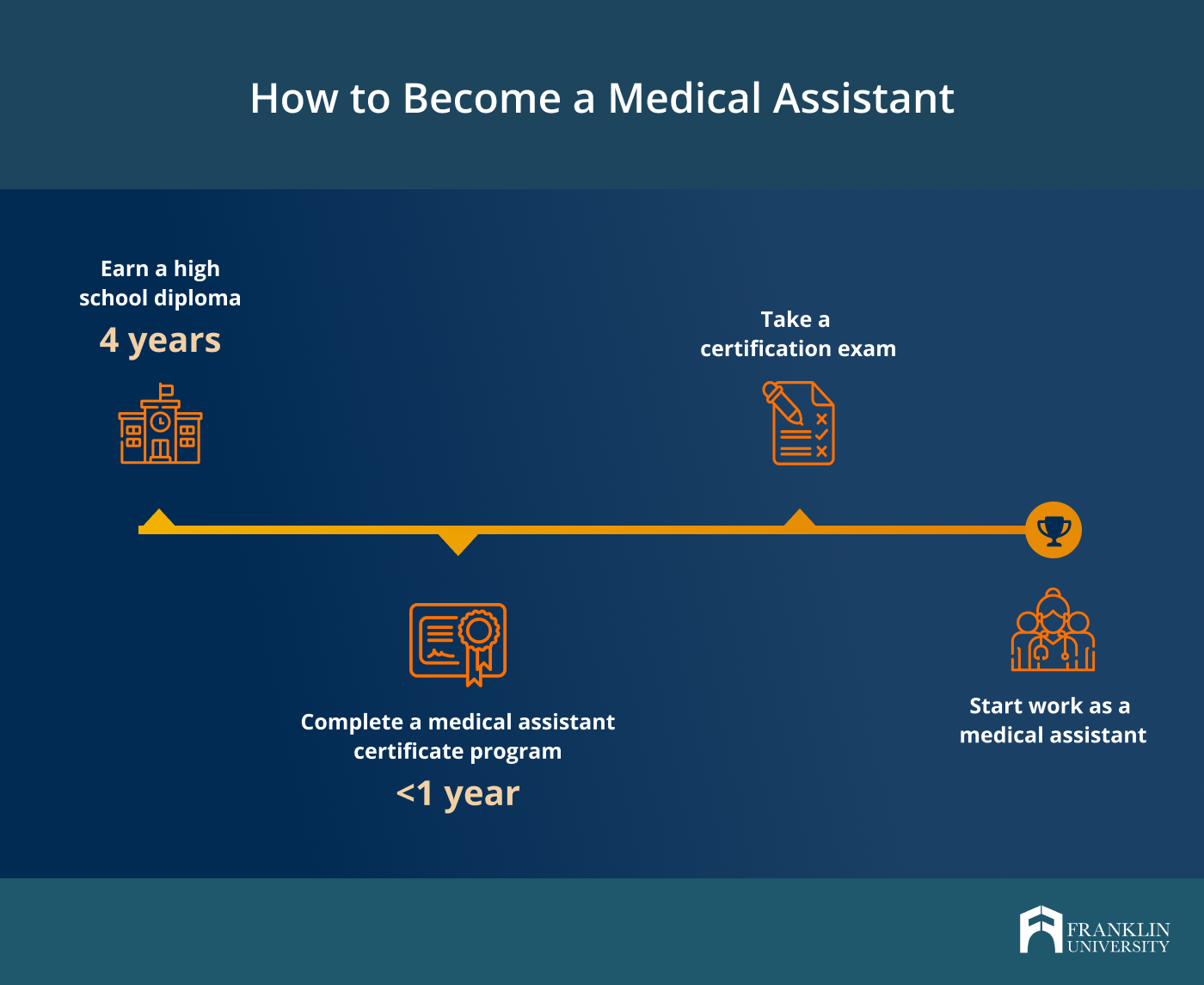
Most folks looking at online medical assistant programs will find themselves in a program that lasts anywhere from 6 months to 2 years. Yeah, that’s a range. But what dictates where you fall in that spectrum? It’s usually tied to the type of certification you’re aiming for and the structure of the program itself. Think of it as picking your adventure path.
Programs designed for the Certified Medical Assistant (CMA) credential, which is often considered more Full, might lean towards the longer end. Shorter programs typically prepare you for other certifications like the Certified Clinical Medical Assistant (CCMA). It’s all about the scope of practice you’re training for. You gotta know what you want to do to know how long you need to learn.
Factors That REALLY Bend the Timeline
Okay, so that 6-month to 2-year window? It’s not set in stone. A ton of things can influence how quickly you finish. The biggest one? Whether you go full-time or part-time. Seems obvious, right? But dig deeper.
If you can dedicate, say, 20-30 hours a week to coursework, labs (yes, even online ones often have practical components!), and studying, you’ll blaze through way faster. Trying to juggle this with a full-time job or family obligations? You’re probably looking at the longer end of that spectrum, and that’s perfectly okay. No need to burn yourself out trying to race the clock.
Online vs. Traditional: Does It Matter for Time?
Generally, online programs offer more flexibility, which can translate to faster completion if you’re motivated. You’re not tied to a specific class schedule. Need to study at 2 AM? Go for it! Learn faster than the average pace? You might be able to test out or move ahead quicker in some modules. This flexibility is a huge draw for busy adults. It’s what makes online learning so attractive.
However, don’t assume online automatically means shorter. Some online programs are designed with the same semester structure as traditional schools. You still have to complete all the required credit hours and clock hours. The main difference is when and where you do the learning, not necessarily the total amount of learning required. It’s about efficient learning, not just fast tracking.
Source : franklin.edu
Understanding Program Types and Their Timelines
Certificate Programs: The Speedy Route
Certificate programs are often the quickest path. These are usually focused, career-specific training that gets straight to the point. Think of it like a specialized workshop rather than a full degree program. For medical assisting, these certificates can often be completed in as little as 9 to 12 months.
These programs are fantastic if you already have some basic healthcare knowledge or if you’re specifically targeting roles that don’t require the most advanced level of certification. They provide the Needed skills and knowledge needed for entry-level positions. You get what you need, when you need it, and then you’re out the door. It’s a very popular option for a reason.
Associate’s Degrees: The More In-Depth Option
If you’re aiming for a broader educational foundation or perhaps considering future advancement, an Associate’s degree in Medical Assisting might be your route. These programs typically take around 2 years to complete, assuming full-time study. They often include more general education courses alongside the core medical assisting curriculum.
An Associate’s degree can open more doors, potentially leading to supervisory roles down the line or making you a more versatile candidate. It’s a longer commitment, yes, but it provides a more Strong educational background. For some, this feels like a more stable foundation for a long-term career. It’s a trade-off between speed and breadth.
Diploma Programs: A Middle Ground?
Sometimes you’ll see “diploma” programs. These can be a bit harder to categorize neatly. They often fall somewhere between a certificate and an Associate’s degree in terms of length and curriculum depth. Think 1 to 1.5 years. They focus heavily on the practical skills needed for the job.
These are still very much career-focused. The curriculum is dense with medical assisting duties. The key differentiator is often the lack of general education credits you’d find in an Associate’s degree. It’s a targeted approach, aiming to get you job-ready efficiently. Many find this a good balance.
The Key Role of Externships
What Exactly Is an Externship?
Alright, let’s talk about the externship. This isn’t just some optional add-on; for most accredited programs, it’s a mandatory part of your training. An externship is basically an internship where you get real-world, hands-on experience in a clinical setting – a doctor’s office, a hospital, a clinic. You’re applying everything you’ve learned. It’s your chance to shine.
You’ll be performing tasks like taking patient histories, Key signs, assisting with examinations, drawing blood (phlebotomy), and potentially even handling basic administrative duties. It’s supervised, of course, but it’s the closest you’ll get to the day-to-day reality of the job before you’re actually hired. For many programs, it’s the final hurdle. It’s where theory meets practice.
Duration and Impact on Your Timeline
Externships can vary in length, typically ranging from 100 to 400 hours or more. Some programs build this time into the core curriculum, meaning it’s factored into the total program length. Others might treat it as a separate phase you complete after finishing your coursework.
How long it takes you to find and complete your externship can absolutely add time to your overall journey. Scheduling can be a beast. You need to find a facility that’s accepting externs, coordinate your availability with theirs, and then put in the required hours. Some programs offer Strong career services to help you secure a placement, which can speed things up considerably. This is a critical part of your medical assistant training.
Finding the Right Externship Fit
The ideal externship is one that aligns with your career goals. If you want to work in pediatrics, try to find an externship in a children’s clinic. Dreaming of working in a fast-paced hospital setting? Seek out opportunities there. The experience you gain is Crucial, and the connections you make could even lead to job offers. Don’t just settle for the first thing offered if you can help it. Think strategically about this part.
Some online programs partner with facilities nationwide, making it easier to find a placement close to home. Others might require you to be more proactive in your search. The key is to treat your externship search like a job hunt. Network, ask questions, and be professional. This practical phase is non-negotiable for many certifications.
Certification Exams: The Final Hurdle
Understanding Different Certification Bodies
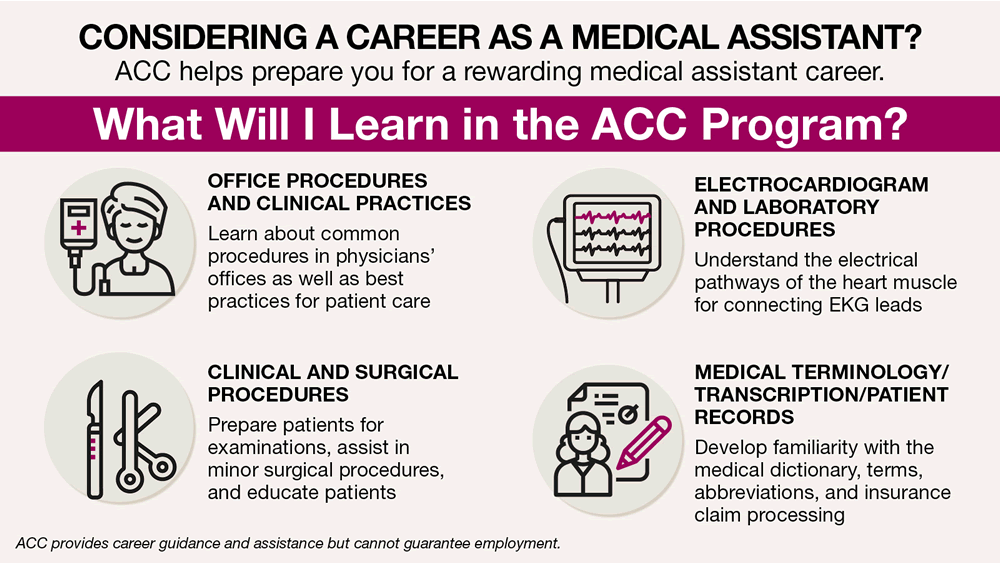
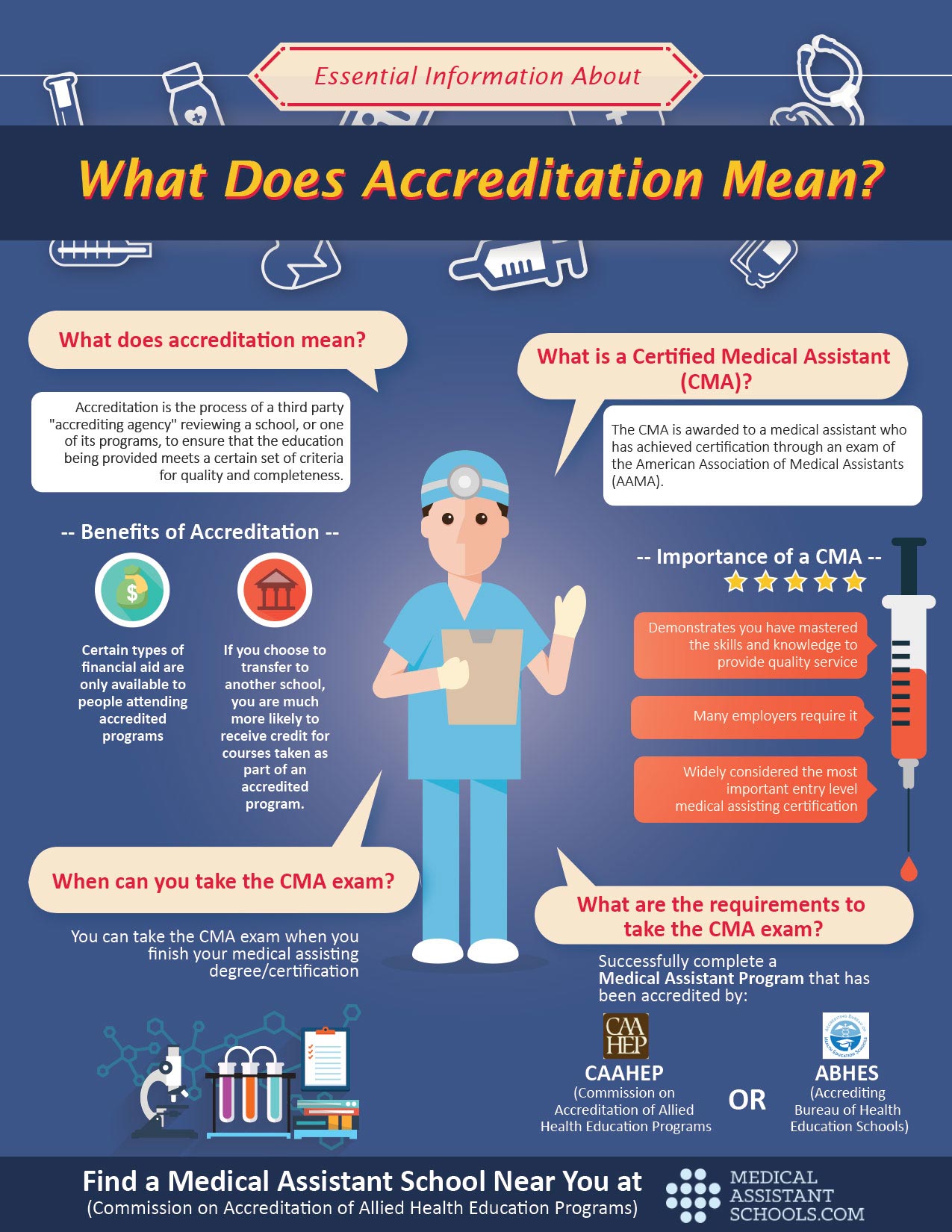
Once you’ve completed your coursework and externship, you’ll likely need to pass a certification exam. There isn’t just one “Medical Assistant” certification. Different organizations offer credentials, and the time it takes to prepare for and pass their specific exam can vary. The most common ones include the CMA (Certified Medical Assistant) from AAMA and the CCMA (Certified Clinical Medical Assistant) from NHA.
Each exam has its own eligibility requirements, testing format, and focus. The CMA exam, for instance, is known for being quite Full, covering a broad range of clinical and administrative tasks. You can find detailed information on requirements and study resources directly from organizations like the American Association of Medical Assistants (AAMA). Understanding these differences is key to planning.
Source : americancareercollege.edu
Preparation Time: It’s Not Just About Passing
How long does it take to prepare for that exam? That depends entirely on you and the quality of your program’s review materials. Some programs build extensive exam prep right into the curriculum during the final weeks or months. Others might offer it as an optional add-on or expect you to source your own study guides.
Be realistic. If your program didn’t have a strong review component, you might need several weeks, or even a couple of months, to diligently study practice questions and review weak areas. Cramming rarely works for high-stakes exams like these. A consistent, focused study schedule is far more effective. This is where disciplined learning pays off. Think about how much you retain.
Scheduling and Taking the Exam
Finally, there’s the actual process of scheduling and taking the exam. Once you meet the eligibility requirements (program completion, sometimes specific GPA, etc.), you apply to the certifying body. After approval, you’ll get instructions on how to schedule your test at an authorized testing center. This scheduling process itself can sometimes take a week or two, depending on availability in your area.
The exam itself is usually taken on a computer. The time allotted varies, but generally, you’ll have a few hours to complete it. Passing the exam means you’re officially certified! This is the culmination of all your hard work. Getting that certification is the major milestone.
Online Program Structures: How They Impact Speed
Self-Paced Programs: The Ultimate Flexibility
Some online medical assistant programs offer a truly self-paced structure. This means you move through the material as fast or as slow as you can manage. If you have a knack for the subject matter and can dedicate significant time, you could theoretically finish the coursework much faster than in a traditional semester-based program. This is the holy grail for some learners.
However, “self-paced” doesn’t always mean “easy.” You still have to master the content and pass all the assessments. Plus, you still have to complete the externship and pass the certification exam. The self-pacing primarily applies to the didactic (classroom) portion. It’s great for maximizing efficiency if you’re a motivated self-starter. This is a major advantage of some online medical assistant courses.
Cohort-Based Programs: Structured Pace
Other online programs operate on a cohort model. This means you start with a specific group of students and progress through the program together, usually following a set schedule of modules or classes. While you’re still learning online, there’s a defined pace set by the program. Think of it like a traditional semester, but you’re all meeting virtually.
This structure can be beneficial because it provides built-in accountability and a sense of community. You know when assignments are due, and you have classmates going through the same thing. It prevents procrastination for many. The timeline is generally fixed, so you know exactly when you’ll finish, typically aligning with the standard program length (e.g., 9 months, 1 year). This predictability is comforting for many students.
Hybrid Models: The Best of Both Worlds?
And then you have hybrid models. These often combine online coursework with required in-person sessions for labs, practical skills training, or exams. The online component provides flexibility for the theoretical learning, but you have scheduled face-to-face time. This can add logistical complexity but ensures you get Key hands-on practice. You can find programs like this advertised – for example, online medical assistant certification programs that might require some on-campus visits.
The timeline for hybrid programs can be similar to fully online or traditional programs, depending on how the in-person components are scheduled. They are designed to offer a balance, leveraging the convenience of online learning while ensuring Needed practical skills are mastered under direct supervision. It’s a popular compromise for those who want flexibility but also value in-person interaction for critical training.
Maximizing Your Efficiency: Finishing Faster
Dedicated Study Habits
The single biggest factor you control? Your dedication. If you treat your online program like a true academic pursuit – attending (virtual) sessions, doing all the readings, completing assignments early, and actively engaging with the material – you’ll naturally progress faster. Don’t let distractions derail you. Create a dedicated study space and schedule. It sounds basic, but it’s incredibly effective for online learning.
Block out specific times each day or week solely for your coursework. Turn off social media notifications. Let family or roommates know when you need uninterrupted study time. Consistency is key. Showing up, even when it’s tough, makes a huge difference in how quickly you absorb information and complete modules. This is about discipline.
Leveraging Program Resources
Don’t be shy about using everything your program offers. This includes instructors’ office hours (virtual, of course), academic advisors, tutoring services, and online forums. If you’re struggling with a concept, get help immediately. Waiting until the last minute to ask for clarification can cost you time and potentially require you to retake a module. Proactive learning is faster learning.
Many programs also provide practice exams, study guides, and other supplemental materials. Use these! They are designed to help you master the content efficiently and prepare you for certification exams. Think of these resources as your toolkit for success. The more tools you use, the better your outcome. And faster completion is a great outcome.

Source : medassisting.org
Choosing the Right Program from the Start
Honestly, one of the best ways to Make sure a timely completion is to select the right program from the outset. Research programs thoroughly. Look at their accreditation, curriculum, program length options, externship support, and student success rates. Does their structure fit your learning style and life circumstances? Does their typical completion time Match with your goals?
For example, if you know you need maximum flexibility, lean towards self-paced or highly modular programs. If you thrive on structure, a cohort model might be better. Visiting program websites, reading reviews, and even speaking to admissions counselors can save you a lot of time and potential frustration down the road. Choosing a program like those found at CALRegional, which often emphasizes shorter, focused training, might be ideal if speed is your priority. A well-chosen program sets you up for success and timely graduation.
Potential Delays and How to Avoid Them
Technical Glitches and Internet Woes
Let’s face it, technology isn’t always perfect. Unreliable internet, computer crashes, or issues with the learning management system can definitely put a wrench in your progress. Make sure you have a stable internet connection and a reliable computer. Have a backup plan if possible – maybe a local library or community center with Wi-Fi if your home connection is spotty.
Report any technical issues to your program’s IT support immediately. Don’t let a technical problem fester and cause you to miss deadlines. Most reputable online programs have dedicated support staff to help you navigate these digital bumps in the road. Quick troubleshooting can save you valuable time and stress.
Personal Life Interruptions
Life happens. Unexpected illnesses, family emergencies, job changes – these things can force you to pause your studies. Most programs understand this and may offer options like deferment or an incomplete grade. However, extended breaks can definitely delay your graduation timeline. It’s important to communicate with your program administrators as soon as you foresee a potential interruption.
Weigh the pros and cons of taking a break versus trying to push through. Sometimes, stepping back briefly allows you to return with renewed focus, ultimately being more efficient in the long run. Just be sure you understand the program’s policies on leaves of absence and how they affect your overall completion date and financial aid. This communication is Key.
Externship Placement Challenges
Earlier, finding and securing an externship placement can sometimes take longer than expected. Facilities might have limited slots, specific scheduling requirements, or require background checks. If your program doesn’t have strong partnerships, you might spend weeks or even months trying to line up your placement. This is a common bottleneck for some students.
Be proactive in your externship search. Start early. Follow up diligently with potential sites and your program’s externship coordinator. Be flexible with your location and schedule if possible. Having a clean background and professional demeanor during interviews can also significantly speed up the process. A smooth externship is Key for on-time graduation.
Cost vs. Time: What’s the Real Trade-Off?
Shorter Programs, Lower Overall Cost?
Generally, shorter certificate programs tend to have a lower overall tuition cost than longer Associate’s degree programs. This makes sense – fewer credit hours, fewer months of tuition payments. If budget is a major concern, a quicker certificate program might be more accessible. You can get certified faster and start earning sooner, which can help offset educational expenses.
However, don’t just look at the sticker price. Consider the value. A longer program might offer more in-depth knowledge, broader career options, or better career services, which could lead to higher earning potential long-term. It’s not always about the cheapest option, but the one that provides the best return on your investment of time and money.
Time is Money: The Opportunity Cost
“opportunity cost” of your education. The longer you’re in school, the longer you’re delaying your entry into the workforce and your ability to earn a full-time salary. If you can complete a quality program in 9 months versus 2 years, that’s an extra year of earning potential you’re gaining. This is a significant factor for many adults returning to school.
This is where efficient, well-structured online programs shine. They allow you to gain the necessary skills and credentials without taking years off your working life. The ability to potentially work part-time while studying online can also help Reduce the financial strain. Balancing study with earning is often the goal.
Investing in a Longer Program for Future Growth
Conversely, sometimes investing more time upfront in a program like an Associate’s degree can pay dividends later. Graduates with degrees may have access to a wider range of job opportunities, including those with higher pay scales or leadership potential. They might also be better positioned for further education if they decide to advance their careers with a Bachelor’s degree down the line.
Consider your long-term career aspirations. Are you content with an entry-level medical assistant role, or do you envision moving into management, specialized roles (like an EKG technician or phlebotomist), or even healthcare administration? Your initial program choice can impact that trajectory. It’s a Key decision impacting your career path.
Source : medicalassistantschools.com
The “Certified Medical Assistant Online” Timeline: A Data Snapshot
To give you a clearer picture, let’s break down some typical timelines based on program type. Remember, these are averages, and your personal experience might vary.
| Program Type | Typical Online Duration (Full-Time) | Key Considerations | Certification Exam Prep Time |
|---|---|---|---|
| Online Certificate Programs | 6 – 12 Months | Focused curriculum, faster entry. May lead to CCMA or similar. | Included in final months or 2-4 weeks dedicated study. |
| Online Diploma Programs | 12 – 18 Months | Strong emphasis on practical skills, often includes externship. | Often integrated, potentially 1 month dedicated review. |
| Online Associate’s Degree Programs | 18 – 24 Months | Broader education, includes general studies. Leads to CMA (AAMA) or others. | Typically integrated review, plus 1-2 months personal prep. |
| Self-Paced Programs | Variable (Potentially faster than stated above) | Requires strong self-discipline. Coursework completion speed is up to student. | Depends on individual study time post-coursework. |
This table should give you a clearer visual of the commitment involved. Remember to factor in the externship hours and certification exam prep on top of the coursework duration. Choosing the right online medical assistant program is the first critical step.
Final Thoughts: Your Path to Certification
So, how long does it really take? As we’ve hammered home, it’s not a one-size-fits-all answer. You’re looking at anywhere from about 6 months for a speedy certificate program to 2 years (or more if part-time) for a Full Associate’s degree. The key is understanding the different program types, the role of externships, and how your own pace and dedication play into the equation.
Don’t get bogged down by the “average” time. Focus on finding a program that fits your life, your learning style, and your career goals. Whether you’re aiming for speed with a certificate or depth with a degree, the path to becoming a certified medical assistant online is absolutely achievable. Do your homework, stay focused, and you’ll be well on your way to a rewarding career in healthcare before you know it. It’s about making an informed choice and committing to the process. Your future self will thank you.
Frequently Asked Questions
How fast can I get my MA certification?
Because it varies so much, there isn’t one answer. But generally, you’re looking at anywhere from a few months to about a year, depending on the program’s length and if you’re going at it full-time or part-time. Some online medical assistant programs are super accelerated, while others are more Full.
Who gets paid more, CMA or MA?
Honestly, the pay difference between a Certified Medical Assistant (CMA) and a Medical Assistant (MA) isn’t usually huge. CMAs often have a slight edge because the ‘C’ implies a specific certification, which some employers value more. But experience and location play way bigger roles in your actual medical assistant salary.
How fast can I get a CMA certification?
To get your CMA, you gotta pass the CMA exam, which you can do after completing an accredited CMA program. The program length itself can be anywhere from 9 months to 2 years, depending on if you’re doing a certificate or an associate’s degree. So, the total time to become a CMA includes the schooling plus passing the exam.
Are online medical assistant programs accredited?
That’s a super important question! You absolutely need to make sure any online MA program you’re considering is accredited by a recognized body like the Commission on Accreditation of Allied Health Education Programs (CAAHEP) or the Accrediting Bureau of Health Education Schools (ABHES). Accreditation means the program meets quality standards, which is usually a requirement for taking certification exams.
What’s the difference between online and in-person medical assistant training?
The main difference is flexibility. Online programs let you study from anywhere, fitting coursework around your life. But, you’ll often still need to complete in-person clinical externships. Traditional programs are more structured with set class times. Both can lead to a great medical assistant career, it just depends on what works best for your learning style and schedule.
