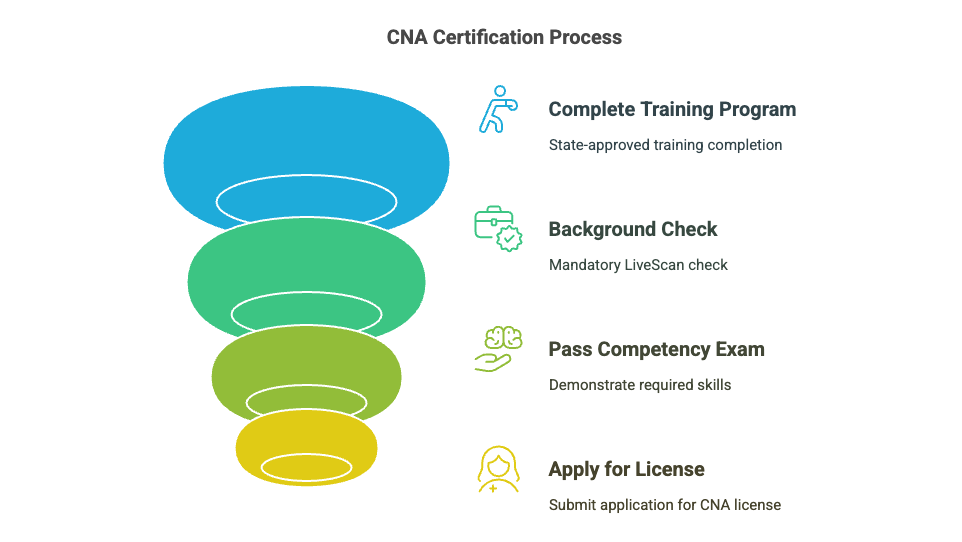
So, you’re thinking about becoming a CNA, huh? Wondering how long this whole training and certification song and dance is going to take? It’s a fair question, and honestly, there’s no single, simple answer. It’s not like buying a loaf of bread; it’s a process, and the average time to complete CNA training can really swing. Let’s break down what actually goes into getting those credentials and getting them earned.
The Real Deal on CNA Program Timelines
It’s Not a One-Size-Fits-All Situation
Forget about expecting every CNA program to wrap up in the exact same number of weeks. It’s a bit more complicated than that. You’ve got different program lengths, different states with their own rules, and even how quickly you personally absorb the material plays a role. So, when we talk about the average CNA training time, know that it’s a ballpark figure, not a hard deadline.
Factors That Actually Stretch or Shrink Your Timeline
What’s the biggest culprit for longer programs? Often, it’s the required hours. Some states mandate a minimum number of classroom hours, and then you’ve got the clinical rotations to clock. More hours mean more time invested, plain and simple. You also can’t forget about how often the classes are scheduled. A program meeting every single day is obviously going to zip by faster than one that only meets twice a week.
State Regulations: The Gatekeepers of Time
This is a huge one. Every state has its own set of rules for what constitutes a valid CNA training program. Some states are pretty laid-back, requiring as little as 50-75 hours. Others, well, they want you to really earn it, sometimes mandating 120 hours or more. These state-specific CNA requirements are non-negotiable and directly impact how long you’ll be in class before you can even think about taking the exam.
Program Format: Classroom vs. Online vs. Hybrid
The way you learn makes a difference too. Traditional brick-and-mortar programs usually have a set schedule. Then you have those newer, online or hybrid options. While they might offer flexibility, the actual hands-on clinical part still needs to happen in person. So, even with online theory, the CNA program duration can still be influenced by when and where you complete your practical training.
Deconstructing the Average CNA Training Time
Source : collegemoneytips.com
The Shorter End of the Spectrum
If you’re looking for speed, some states and programs can get you through the hoops pretty quickly. We’re talking about programs that might only require around 50-75 hours of total instruction. These are often found in states with less stringent requirements, and they can sometimes be completed in as little as two to four weeks. Think of a dedicated student banging out lectures and clinicals non-stop.
The Middle Ground: Most Common Program Lengths
Most programs fall into this category. They typically range from 75 to 120 hours. At this level, you’re looking at programs that might take anywhere from four to eight weeks to complete. This timeframe allows for a decent balance between classroom learning, skills practice, and the Key hands-on clinical experience in a healthcare setting. This is probably where you’ll find the typical CNA course duration.
The Longer, More Full Programs
Then you have programs that go above and beyond the minimum. Some might stretch to 150 hours or more, offering a deeper dive into various aspects of patient care. These programs can take anywhere from eight weeks to a couple of months, sometimes even three, especially if they’re part-time or incorporate more in-depth simulations. These often provide a more Strong foundation for new CNAs.
Source : collegemoneytips.com
Community College vs. Private Schools: Time Differences?
Sometimes, where you choose to get trained can affect the timeline. Community college programs might be tied to semester schedules, potentially extending the overall time if you have to wait for the next cohort. Private vocational schools or training centers often run more frequently, allowing for quicker entry and completion, but at a potentially higher cost. The time commitment for CNA training can definitely vary based on the institution.
The Exam Component: Passing the Test
The CNA Certification Exam: What’s Involved?
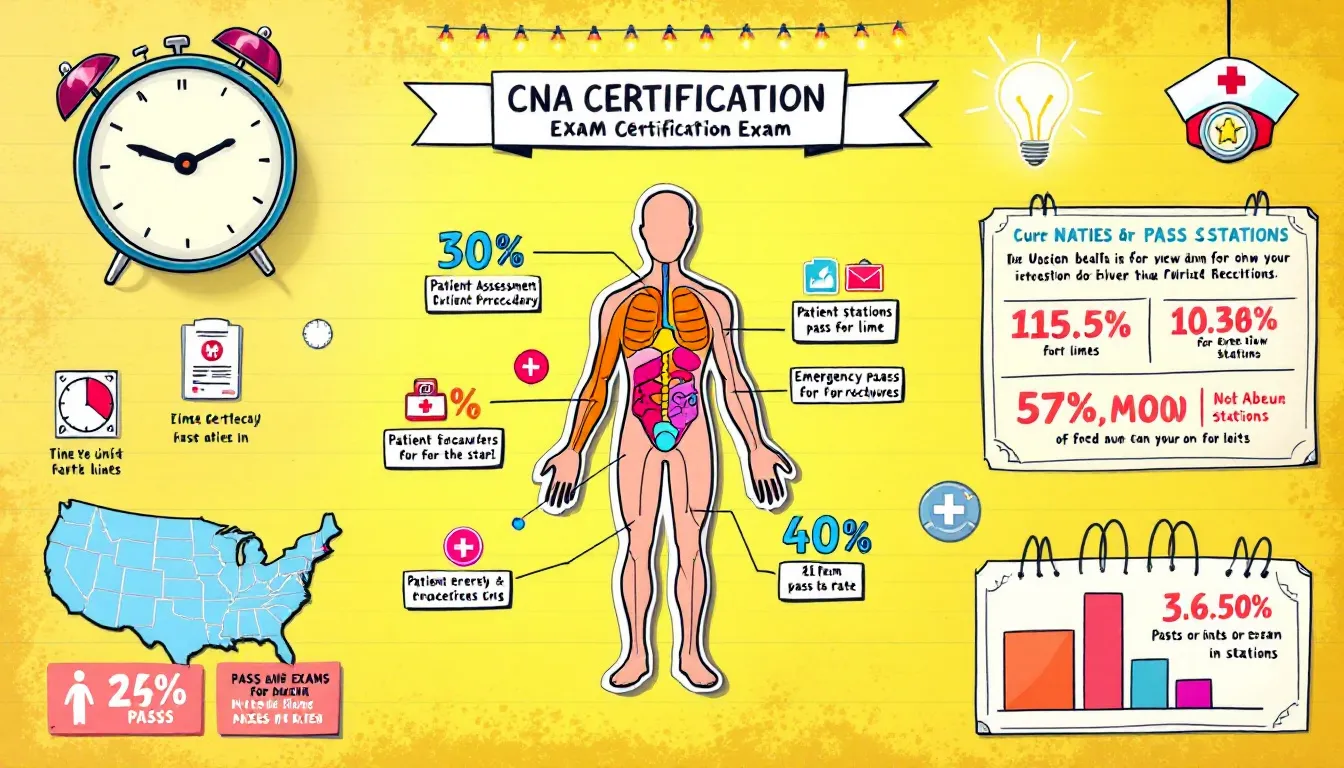
Okay, so you’ve finished the training. Great! But that’s only half the battle. Now you need to pass the CNA certification exam. This isn’t just one big test. It’s usually split into two parts: a written (or computer-based) knowledge test and a practical skills demonstration. You have to pass both sections to get your official certification. The CNA exam success rate can be influenced by how well you prepare.
How Quickly Can You Sit for the Exam?
Once your training program is complete, you’re usually eligible to schedule your exam. Most programs will help you with this process. Depending on the testing center’s availability in your area, you might be able to take it within a week or two of finishing your course. However, in some busy areas, it could take several weeks to secure a testing slot. Don’t assume you can just walk in the next day!
Factors Affecting Your Exam Performance
Your personal readiness is key here. Did you actively study the material? Did you practice the skills until they were second nature? Some people are natural test-takers, while others get performance anxiety. It’s also important to understand the format of the exam. Knowing what to expect can significantly reduce stress and improve your chances of passing on the first try. A solid review of your CNA training curriculum is Needed.
Retaking the Exam: What If You Don’t Pass?
It happens. Not everyone passes the exam on their first attempt. The good news is you can retake it. Most states allow you to retake the exam a certain number of times within a specific period after your initial training. However, there’s usually a waiting period between attempts, and you might have to pay additional fees. This is where the time to get CNA certified can really drag out if you’re not prepared.
Putting It All Together: The Total Journey Time
Scenario 1: The Speed Runner
Someone in a state with low hour requirements (say, 60 hours) who finds a fast-paced, full-time program. They complete the 2-week course, immediately schedule their exam, and pass it within a week of finishing. For this lucky individual, the entire process from starting training to becoming certified could be as short as three to four weeks. It’s intense, but possible.
Scenario 2: The Standard Path
This is probably the most common trajectory. A student enrolls in a 100-hour program that runs for 6 weeks, meeting a few days a week. They finish their training, take a week to review and practice, then schedule their exam. If they pass within the first two weeks of scheduling, the total time from program start to certification is around six to ten weeks. This gives Plenty of time for learning and preparation.
Scenario 3: The Part-Time Plodder (or Repeat Taker)
Now, consider someone juggling training with work or family. They opt for a part-time program that might span 8-10 weeks. After finishing, they might need an extra few weeks to feel fully confident for the exam, and perhaps they don’t pass the first time. Add in a few weeks for a retake. Suddenly, the overall CNA certification timeline could easily push out to three to four months or even longer.
The Official Numbers: What Do the Experts Say?
Job sites and career resources often give estimates. For instance, Indeed.com suggests that many CNA programs can be completed in just a few weeks to a couple of months, with the exam process following shortly after. This aligns with the quicker scenarios we discussed. It highlights that the completion time for CNA training is often quite manageable for many aspiring healthcare professionals.
Key Takeaways on CNA Program Durations
Hour Requirements are King
It boils down to this: the number of mandated training hours dictates the minimum program length. More hours mean a longer program. It’s a foundational aspect of the average time to get CNA certified and isn’t something you can easily shortcut. Always check your state’s specific hour mandates.
Exam Scheduling Can Be a Bottleneck
Don’t underestimate how long it might take to get an actual testing appointment. While the training might be quick, a booked-up testing center can add weeks to your journey. Factor this CNA exam scheduling into your overall timeline expectations. Planning ahead is Key here.

Source : fhcaorlando.com
Personal Pace and Preparation Matter
Your learning speed, study habits, and how well you prepare for the exam are huge variables. Some people thrive under pressure and absorb information quickly. Others need more time to review and practice. Your individual approach significantly impacts the duration of CNA certification process. Don’t compare your journey too closely to others.
“Average” is a Wide Net
Remember that the average time to complete CNA training and pass exam is just that – an average. It spans a wide range, from a few intense weeks to a few months. Understanding the variables involved (state rules, program length, your own pace) will give you a much clearer picture of your personal timeline.
Comparing Different Program Structures
Short-Term Certificate Programs
These are your speed demons. Often found at private vocational schools or community centers, these programs are designed for rapid completion. They focus intensely on the core skills and knowledge needed to pass the exam. Expect these to be packed, full-time affairs that might last anywhere from 4 to 8 weeks. They are perfect for those who can dedicate their full attention.
Community College Associate’s Degree (for related fields)
While not strictly necessary for CNA, some individuals might pursue a longer educational path at a community college, like a certificate or associate’s degree in health sciences, which includes CNA training. These programs are significantly longer, often 1-2 years, and offer a broader educational scope beyond just CNA certification. This isn’t the direct path for just becoming a CNA quickly, but an option for broader career goals.
Hospital-Based Training Programs
Some larger hospitals offer their own CNA training programs, often as a way to recruit and train future staff. These programs can vary greatly in length but are often structured to be efficient, sometimes lasting 6 to 10 weeks. A perk here can be the possibility of employment with the hospital upon successful completion and certification.
Online/Hybrid CNA Programs
The rise of online learning has impacted CNA training. You can often complete the didactic (classroom) portion online, offering great flexibility. However, the clinical hours must be done in person at an approved facility. The total time can be similar to traditional programs, but the scheduling is often more adaptable. The online CNA program duration can still range from 4 weeks to 3 months depending on the structure and clinical placement.
The Key Role of Clinical Experience
What Exactly Are Clinicals?
Clinical rotations are the hands-on portion of your CNA training. This is where you actually go into a healthcare setting – like a nursing home, hospital, or clinic – and practice the skills you’ve learned under the supervision of a registered nurse or instructor. It’s your chance to apply theory to real patients. These CNA clinical hours are usually mandatory.
How Clinicals Impact Total Time
The number of required clinical hours varies by state, typically ranging from 30 to 80 hours. These hours are often spread over several weeks, integrated with your classroom learning. If a program has more extensive clinical requirements, it naturally extends the overall program length. You can’t rush learning practical patient care skills.
Finding the Right Clinical Placement
Sometimes, the length of CNA training can be indirectly affected by the availability of clinical placement sites. If your program struggles to secure enough spots in local facilities, your training might be delayed. Good programs have established relationships to avoid this, but it’s a factor to be aware of.
Skills Learned During Rotations
During clinicals, you’ll practice everything from taking Key signs and assisting with personal hygiene to proper body mechanics and communication with patients and staff. This practical application is Key for building confidence and competence. The real-world CNA practice solidifies the classroom knowledge.
Preparing for and Taking the CNA Exam
Understanding the Exam Structure
The CNA exam, often called the NNAAP (National Nurse Aide Assessment Program) in many states, typically consists of a multiple-choice knowledge test and a skills evaluation. You’ll need to demonstrate proficiency in several randomly selected nursing assistant skills. Familiarizing yourself with the specific CNA exam format for your state is the first step.
Study Strategies for Success
Don’t just passively read your notes. Actively engage with the material. Use flashcards for key terms and procedures. Practice the skills physically, as if you were in the exam. Many programs offer practice exams or skills labs. Your CNA exam preparation should be as rigorous as the training itself.
Source : northeastmedicalinstitute.com
What Happens on Exam Day
On exam day, arrive early. Bring the required identification. For the skills portion, listen carefully to the examiner’s instructions. Perform each step of the skill deliberately and clearly. Remember to greet, explain, do, and check for each task. Confidence comes from thorough CNA exam review.
The Importance of Passing the First Time
Passing the exam on your first try saves you time, money, and stress. It means you can start working as a certified nursing assistant sooner. While retakes are allowed, they add time and cost to the journey to becoming a CNA. Focus on mastering the material during your training to give yourself the best chance.
A Deep Dive into Program Costs and Time Value
Costs Beyond Tuition
While we’re talking time, let’s not forget money. Program costs can range from a few hundred dollars to over a thousand. This often includes tuition, books, uniforms, and background checks. But the cost of CNA certification doesn’t stop there. Factor in exam fees, potential costs for retakes, and maybe even transportation to clinical sites.
Return on Investment: Time and Money
value of CNA training. You’re investing time and money into a skill that leads to a job, often with immediate employment opportunities. The average CNA salary, while not extravagant, provides a stable income. When you weigh the relatively short training period against the potential for steady employment and future career growth (perhaps into LPN or RN roles), it’s a worthwhile investment for many.
Hidden Time Costs
Beyond the scheduled class and clinical hours, consider the “hidden” time costs. This includes studying, commuting, buying uniforms, and completing paperwork. These are all part of the overall time commitment for CNA certification that can add up significantly. Budget your time realistically for these additional tasks.
Comparing Program Costs and Timelines
It’s often true that shorter, more intensive programs offered by private institutions might have higher upfront costs but offer a quicker path to certification. Longer programs at community colleges might have lower tuition but take more calendar time due to semester structures. Your choice depends on your budget, availability, and how quickly you need to enter the workforce.
| Program Type | Typical Hours | Estimated Completion Time (Training Only) | Post-Training Exam Window | Total Estimated Time to Certification |
|---|---|---|---|---|
| Short-Term Certificate (Full-Time) | 50-80 Hours | 2-4 Weeks | 1-2 Weeks | 3-6 Weeks |
| Standard Program (Mixed Schedule) | 75-120 Hours | 4-8 Weeks | 1-4 Weeks | 5-12 Weeks |
| Part-Time / Extended Programs | 100-150+ Hours | 8-12+ Weeks | 2-6 Weeks (or longer if retake needed) | 10 Weeks – 4+ Months |
| Hospital-Based Programs | Varies (often competitive) | 6-10 Weeks | 1-3 Weeks | 7-13 Weeks |
Maximizing Your Efficiency in Training
Choose the Right Program for Your Lifestyle
Seriously, this is step one. If you’ve got a packed schedule, a full-time, 4-week program isn’t going to work. Look for part-time options or programs with flexible scheduling. The most efficient CNA training is the one you can actually stick with and complete successfully. Don’t set yourself up for failure by picking a schedule that’s impossible to maintain.
Stay Engaged and Attentive in Class
This sounds obvious, but distractions are everywhere. Put the phone away. Ask questions. Participate. The more you absorb during the actual training hours, the less you’ll have to cram later. Think of it as maximizing your ROI on the time you’re already spending. Active learning speeds up comprehension and retention.
Practice Skills Relentlessly
The practical skills test can be a stumbling block. Your training program will cover these, but you might need extra practice. Use mannequins if available, practice with a study buddy, or even just mentally walk through the steps. The goal is to make these skills automatic. This really helps in accelerating CNA certification.
Proactive Exam Scheduling and Preparation
As soon as you know your program completion date, start looking into exam scheduling. Identify potential dates and get registered. Simultaneously, ramp up your studying. Knowing the exam date provides a concrete deadline, which can be a great motivator for focused review and ensures you don’t let your hard-earned knowledge fade. This proactive approach is key to a swift CNA exam process.
Common Pitfalls That Extend Timelines
Underestimating Study Time
People often think, “I learned it in class, I’m good.” Big mistake. The exam covers a lot of ground, and retention requires dedicated study time outside of lectures and clinicals. Underestimating this is a fast track to needing a CNA exam retake, which adds weeks or even months.
Source : sisucare.com
Skipping or Rushing Clinicals
The clinical portion is non-negotiable and Key for learning. Trying to rush through it or not taking it seriously means you won’t be adequately prepared for real-world patient care, let alone the practical skills exam. Don’t view clinicals as just a hoop to jump through; they are foundational to your competence and the timeframe for becoming a CNA.
Waiting Too Long to Schedule the Exam
Once you’re done with training, momentum is key. If you wait too long to schedule your exam, you risk forgetting material, losing motivation, and facing longer waits for appointment slots. The longer you procrastinate, the more the average time to complete CNA training gets stretched out.
Not Understanding State-Specific Requirements
Assuming all states have the same rules is a classic error. Different states have different hour requirements, different exam formats, and different rules for eligibility and retakes. Failing to understand your specific state’s regulations can lead to wasted time and effort, impacting the overall CNA certification timeline. Always verify with your state’s board of nursing.
Future Implications: What Happens After Certification?
Entering the Workforce Promptly
The great thing about CNA training is its direct path to employment. Once certified, you can immediately start applying for jobs. This quick entry into the healthcare field is a major draw for many. The relatively short time to get certified as a CNA makes it an attractive entry-level healthcare role.
Career Advancement Opportunities
Becoming a CNA is often just the first step. Many CNAs use their experience and certification as a stepping stone to further education, becoming licensed practical nurses (LPNs) or registered nurses (RNs). The skills and knowledge gained during CNA training are transferable and provide a solid foundation for these advanced roles. Your initial CNA training investment pays dividends.
Specialization Within CNA Roles
While the core CNA role is defined, there can be opportunities to specialize or work in different environments, such as memory care, hospice, or rehabilitation centers. Each setting might offer slightly different experiences and patient populations. This allows for growth and continued learning within the CNA scope, even after the initial CNA certification process is complete.
Continuous Learning and Skill Development
Healthcare is always evolving. Even after certification, CNAs are encouraged (and sometimes required) to participate in continuing education to stay updated on best practices and new procedures. This commitment to lifelong learning ensures you remain a valuable and competent healthcare professional throughout your career. It’s part of maintaining your active CNA status.
Frequently Asked Questions
Is the CNA exam hard to pass?
It’s definitely doable! Most people find the written part manageable if they study, and the skills test is all about practicing those key CNA tasks. You’ll be fine if you pay attention in class and do some practice runs. Focus on the core CNA skills.
Can you make $100,000 as a CNA?
Realistically, making six figures as a direct-care CNA is super rare, like, unicorn status. That kind of salary usually comes with experience, specializations, or moving into management or advanced roles. But as a starting CNA? Probably not. Focus on building your CNA career path.
Why do so many CNAs quit?
Honestly? It’s demanding work. Long hours, emotional toll, physical strain, and often the pay doesn’t quite match the intensity. Burnout is real, and sometimes people seek out less physically or emotionally draining roles. But for many, the reward of helping people makes it worth it, at least for a while. It’s tough, but the caregiving impact is huge.
What is the fastest you can become a CNA?
You can often become a CNA pretty quickly, depending on the program. Some training programs are as short as 4-8 weeks! After you finish the course, you just need to pass the certification exam. So, you could technically be a certified nursing assistant in just a couple of months if you’re dedicated.
How long does CNA training typically take?
Most CNA training programs fall into a few main timeframes. You’ll find shorter ones, often around 4-6 weeks, which are pretty intensive. Then there are longer ones that might stretch over 2-3 months. It really depends on the school and how many hours of classroom and clinical work are required. So, a few weeks to a couple of months is pretty standard for completing the CNA coursework.
