The Real Deal: What Entry-Level Project Management Certifications Actually Get You
Alright, let’s cut the fluff. You’re looking to break into project management, and everyone’s yelling about certifications. But which ones are actually worth your time and money when you’re just starting out? Forget those fancy PMP dreams for now; we’re talking about the real entry-level stuff that won’t make your head spin (or your wallet cry).
It’s a jungle out there for job seekers, and having a piece of paper that says you know your way around a Gantt chart can make a difference. But not all certifications are created equal, especially when you’ve got zero hands-on experience to back them up. We’re diving deep into the best beginner certs that can actually open doors.
Think of it like this: you wouldn’t try to run a marathon without training, right? Getting into project management without some foundational knowledge is similar. These certifications are your training program, giving you the language, the tools, and the credibility to step into those first PM roles.
So, buckle up. We’re going to break down the top contenders, what they cover, who they’re for, and why they might just be your golden ticket to a project management career. No jargon, no nonsense, just the straight facts.
Why Bother With an Entry-Level Certification Anyway?
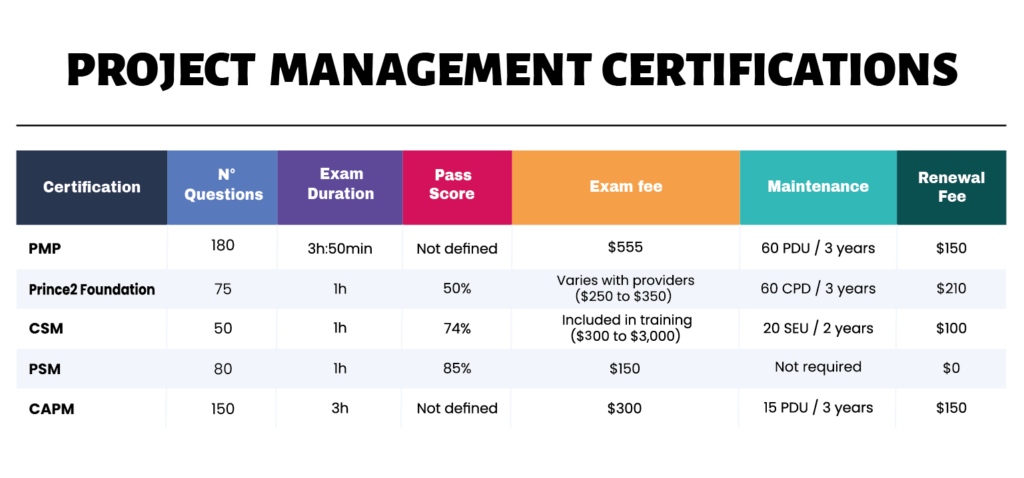
Source : spoclearn.com
Look, I get it. You might be thinking, “Why spend money on a certificate when I have zero experience?” Good question! It’s a valid concern. But here’s the truth: these aren’t just pieces of paper. They’re signals. Signals to employers that you’re serious about this path.
It’s All About Signaling Your Intent
When you slap a certification like the CAPM on your resume, it tells a hiring manager you’ve put in the work. You’ve studied the methodologies. You understand the lingo. It shows initiative, which is huge when you’re competing against candidates who might have a few more years under their belt but no formal training.
It’s your way of saying, “Hey, I might not have managed a multi-million dollar project yet, but I’ve learned the playbook.” This is Crucial for entry-level roles.
Bridging the Experience Gap
Let’s be honest, most project management jobs want experience. Lots of it. It’s a classic catch-22. How do you get experience without a job, and how do you get a job without experience? Entry-level certifications are designed to help you leapfrog that hurdle. They provide a foundational understanding that can substitute, at least partially, for direct experience.
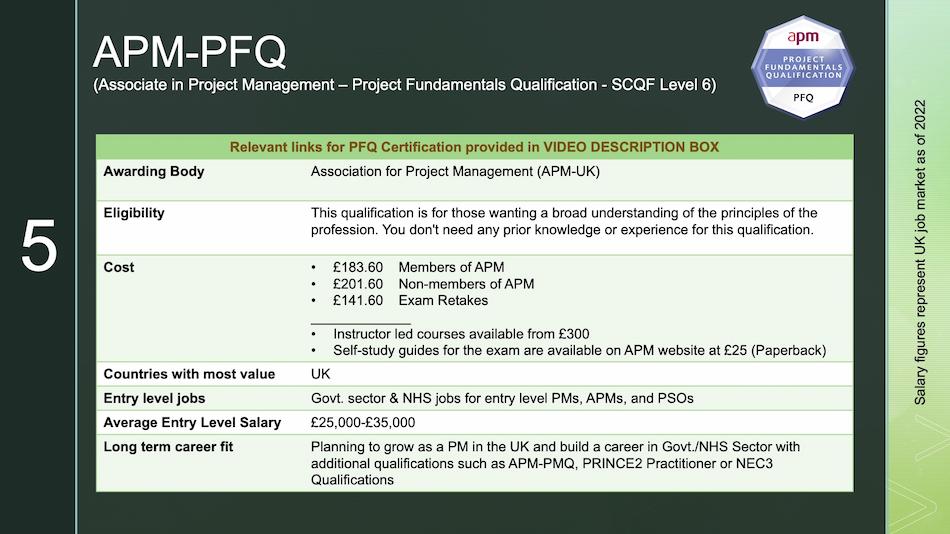
Source : pmpwithray.com
Think of the guy running a small local business who wants to move into a more structured PM role; these certs are his stepping stone. It’s about building a bridge from where you are to where you want to be.
Understanding the Core Principles
Project management isn’t just about assigning tasks. It involves planning, risk management, stakeholder communication, budgeting, and so much more. These certifications force you to learn about the entire project lifecycle. You’ll get a grasp on terms like ‘scope creep,’ ‘critical path,’ and ‘deliverables.’ This knowledge is Key.
Without this understanding, you’re just guessing. A certification means you’ve been taught the fundamental project management concepts.
Building Your Credibility
Let’s face it, the “project manager” title can sound a bit grand when you’re fresh out of school or changing careers. A recognized certification adds instant credibility. It’s an objective measure of your knowledge, vetted by a professional body. It makes people take you more seriously.
It’s not just about looking good on paper; it’s about genuinely knowing your stuff and having proof. This boost in professional credibility is Needed.
The Top Dogs: Certified Associate in Project Management (CAPM)®
Okay, let’s talk about the big one for beginners: the Certified Associate in Project Management, or CAPM, from the Project Management Institute (PMI). If you’re aiming for a career in project management and don’t have a ton of experience yet, this is usually the first certification people recommend. Why? Because it’s designed specifically for you.
What the Heck is the CAPM?
The CAPM is essentially PMI’s way of saying, “You know the basics, kid.” It validates your understanding of project management terminology, principles, and processes. It’s geared towards individuals who are just starting out, are currently in school, or are looking to make a career change into project management. It focuses heavily on the foundational knowledge outlined in PMI’s own PMBOK® Guide.
It’s a stepping stone, a solid foundation upon which you can build your career. Think of it as earning your project management stripes.
Who Should Aim for the CAPM?
This cert is perfect for:
- Individuals with little to no project experience who want to enter the field.
- Students or recent graduates looking to boost their employability.
- Team members who work on projects and want to understand the PM process better.
- Anyone looking for a globally recognized entry-level credential.
If you’re just starting and want a globally recognized certification, the CAPM is likely your best bet.
The nitty-gritty: Requirements and the Exam
To even sit for the CAPM exam, you need either:
- A high school diploma or the global equivalent, PLUS
- Either 23 hours of project management education/training OR 1,500 hours of project experience (this is where it gets tricky for absolute beginners, so the training is key).
The exam itself is a multiple-choice test covering core project management concepts. It’s not a walk in the park, but it’s definitely achievable with dedicated study. You’ll be tested on things like project integration, scope, schedule, cost, quality, resource, communications, risk, procurement, and stakeholder management.
The Project Management Institute (PMI) offers this certification, so you know it’s backed by a serious organization. You can find more details about their certifications at pmi.org/certifications.
Pros and Cons of Going CAPM
Pros:
- Widely recognized and respected globally.
- Excellent stepping stone to more advanced certifications like the PMP.
- Validates foundational knowledge required for many entry-level roles.
- Relatively affordable compared to other credentials.
Cons:
- Requires some level of project management education or experience hours, which can be a barrier for absolute beginners without prior training.
- Doesn’t necessarily guarantee a job offer – it’s a credential, not a magic wand.
- The exam can be challenging and requires dedicated preparation.
For many, the CAPM is the gold standard for entry-level PM knowledge.
CompTIA Project+ (Project+)
Alright, let’s shift gears to another solid contender: CompTIA Project+. If you’re looking for a certification that’s less focused on specific PM methodologies (like PMP’s deep dive) and more on the general concepts and skills needed to manage projects, this one’s worth a look. CompTIA is already known for its IT certifications, so their project management cert carries some weight, especially in tech-adjacent fields.
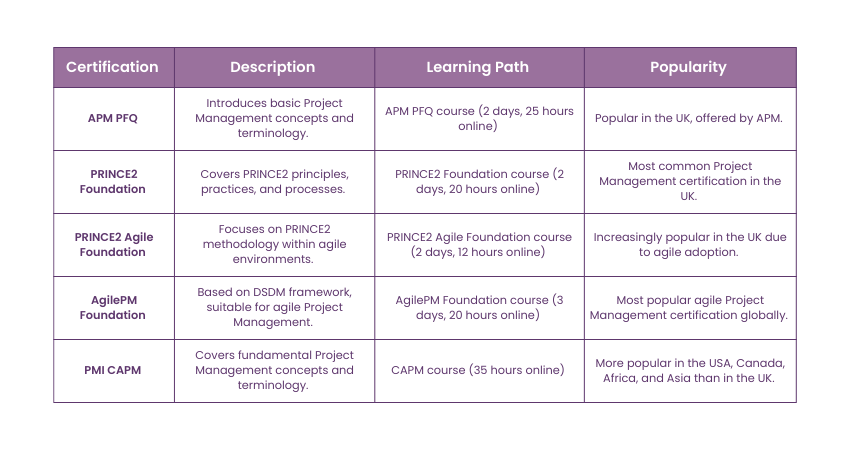
Source : theknowledgeacademy.com
What is CompTIA Project+ All About?
CompTIA Project+ is designed to cover the entire project lifecycle. It focuses on the Needed principles and practices required to successfully manage projects, regardless of the specific industry or methodology. Think agile, waterfall, hybrid – Project+ aims for a broader understanding of what it takes to get a project done.
It’s about proving you understand the project management workflow from start to finish.
Who is Project+ For?
This certification is a great fit for:
- Individuals looking for a foundational project management certification without the strict experience prerequisites of some others.
- IT professionals who want to add project management skills to their resume.
- Anyone who needs to understand project management concepts but doesn’t necessarily plan to be a full-time Project Manager immediately.
- Those who prefer a vendor-neutral certification.
It’s a fantastic way to gain a vendor-neutral credential.
Exam Structure and Requirements
The biggest plus here? Project+ has minimal prerequisites. You generally just need the knowledge and the ability to pass the exam. There are no mandatory training hours or work experience requirements to sit for the test. The exam covers project management concepts, project constraints (like scope, schedule, budget, resources, and risk), project scheduling, business requirements, and change management.
It’s a single exam, making the path pretty straightforward. CompTIA also offers study materials to help you prepare. This direct path is appealing to many beginners in project management.
Project+: The Good and The Not-So-Good
Pros:
- No experience or training prerequisites required.
- Vendor-neutral, making it applicable across various industries and technologies.
- Covers a broad range of project management topics.
- Relatively affordable and accessible.
- A solid choice if you’re in or adjacent to the IT field.
Cons:
- Not as widely recognized globally as the CAPM or PMP, especially outside of North America or IT-focused circles.
- May not be considered as in-depth in specific PM methodologies as PMI certifications.
It’s a pragmatic choice for proving your understanding of core project skills.
Google Project Management Professional Certificate (Coursera)
Now, let’s talk about something a bit different – digital certificates. Google has thrown its hat into the ring with its Project Management Professional Certificate, offered through Coursera. This isn’t a traditional certification in the vein of PMI or CompTIA, but it’s gaining serious traction, especially for those who learn best through online courses and want a direct link to potential job opportunities.
What’s the Deal with the Google PM Certificate?
This program is a series of online courses designed to teach you the fundamentals of project management. It covers everything from organizing a project to managing resources, stakeholders, and agile methodologies. A big selling point is that it’s built by Google employees and is geared towards preparing you for entry-level roles. It’s practical, hands-on, and emphasizes skills employers are actively seeking.
It’s less about passing a single high-stakes exam and more about completing a curriculum. You can learn more about various entry-level project management certifications on Coursera’s resources.
Who Benefits Most from This Certificate?
This is a fantastic option for:
- Absolute beginners who want a Full, guided learning experience.
- Individuals who prefer learning through video lectures, readings, and hands-on assignments.
- People looking to quickly gain job-ready skills for entry-level PM or related roles.
- Those who might not meet the experience requirements for traditional certs like the CAPM.
It offers a clear pathway for individuals seeking an online project management education.
Structure of the Program
The certificate is typically broken down into several courses. You’ll learn about project initiation, planning, execution, and closing. It dives into tools like spreadsheets, presentations, and project management software. A key feature is the emphasis on a capstone project where you apply what you’ve learned to a real-world scenario. Upon completion, you earn a shareable certificate from Google and Coursera.
The structure is designed for maximum learning and application, making it highly effective for practical skill development.
Google PM Certificate: The Upsides and Downsides
Pros:
- No prior experience or education required.
- Very hands-on with practical exercises and a capstone project.
- Developed by Google, lending it significant brand recognition.
- Often highlighted in Coursera’s job connection features, potentially linking you to employers.
- Flexible learning schedule that fits around other commitments.
Cons:
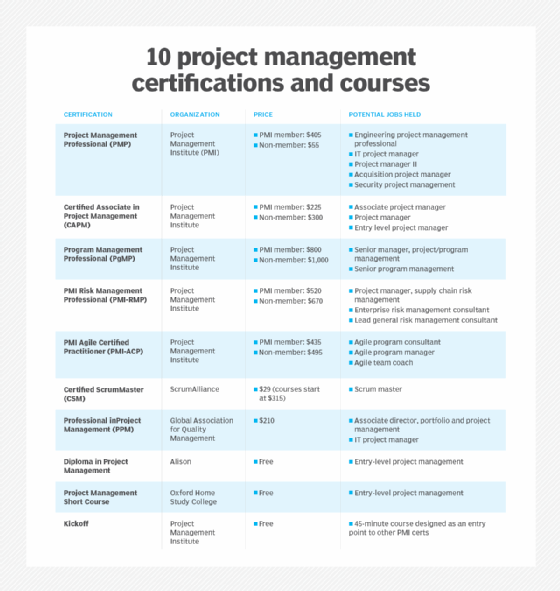
Source : techtarget.com
- It’s a professional certificate, not a formal certification like CAPM or PMP, so its weight might vary depending on the employer.
- Requires a subscription to Coursera (though financial aid is often available).
- Less established than traditional certifications in terms of long-term industry recognition.
It’s a strong contender for those who value a structured online learning path.
IBM Project Manager Professional Certificate (Coursera)
Much like Google, IBM also offers a Strong project management certificate program through Coursera. This one leans into IBM’s extensive experience in managing complex projects across various industries, providing a slightly different flavor but with the same goal: equipping beginners with the skills needed to succeed in project management roles.
What Does the IBM PM Certificate Entail?
The IBM Project Manager Professional Certificate is a Full program covering the entire project management lifecycle. It focuses on foundational principles, tools, and techniques, including Agile and Waterfall methodologies. IBM emphasizes critical thinking, problem-solving, and stakeholder management, skills Key for any aspiring project manager. You’ll explore project planning, execution, monitoring, and closing.
It’s designed to give you a well-rounded understanding of effective project execution.
Who Is the IBM Certificate For?
This program is ideal for:
- Individuals aspiring to become project managers but with limited experience.
- Career changers looking to transition into project management.
- Students and recent graduates aiming to build a strong foundation.
- Anyone wanting to learn project management skills from a tech giant like IBM.
It’s particularly useful if you’re interested in roles within organizations that IBM frequently partners with, offering a relevant industry-specific perspective.
Key Components of the IBM Program
The certificate is usually comprised of multiple courses, each building upon the last. You’ll typically cover topics like project management fundamentals, intro to Agile project management, applying project management tools and techniques, and perhaps even a capstone project. IBM often incorporates case studies and real-world examples to make the learning more tangible. Successful completion earns you a shareable certificate.
The curriculum is structured to Make sure you gain both theoretical knowledge and practical project management application.
IBM PM Certificate: The Pros and Cons
Pros:
- Developed by IBM, a leader in technology and project management.
- Covers both traditional and agile methodologies.
- No prerequisites, making it accessible to complete beginners.
- Includes hands-on assignments and potentially a capstone project.
- Offered on Coursera, providing flexibility and access to a vast learning platform.
Cons:
- Like the Google certificate, it’s a professional certificate, not a formal industry-recognized certification like CAPM.
- Requires a Coursera subscription.
- The depth of coverage might be less intense than traditional, exam-based certifications.
It represents a solid investment for learning foundational project management skills from a reputable source.
Comparing the Entry-Level Contenders: A Quick Glance
So, we’ve looked at a few key players. How do they stack up against each other? It really boils down to what you’re looking for: a formal credential, hands-on learning, or a bit of both. Let’s break it down with a table, because who doesn’t love a good table?
| Feature | CAPM (PMI) | CompTIA Project+ | Google PM Cert (Coursera) | IBM PM Cert (Coursera) |
|---|---|---|---|---|
| Type | Formal Certification | Formal Certification | Professional Certificate | Professional Certificate |
| Prerequisites | High School + 23 hrs training OR 1500 hrs experience | None | None | None |
| Focus | PMBOK® Guide, foundational PM principles | Broad, vendor-neutral project management concepts | Practical skills, job readiness, Google tools | Foundational PM, Agile, IBM tools/methods |
| Learning Style | Self-study/formal training required for exam prep | Self-study/exam prep focused | Online courses, video lectures, hands-on labs | Online courses, video lectures, case studies |
| Recognition | High global recognition, especially PMP pathway | Good recognition, especially in IT | Growing recognition, strong brand name | Growing recognition, strong brand name |
| Cost | Exam fee (~$225-$300) + training | Exam fee (~$300) | Coursera subscription (monthly/annual) | Coursera subscription (monthly/annual) |
| Best For | Aspiring PMs seeking formal credential, PMP pathway | IT pros, those wanting vendor-neutral cert | Absolute beginners, online learners, career changers | Beginners, online learners, those interested in IBM’s approach |
See? It’s not one-size-fits-all. The CAPM offers formal validation, while the Coursera options provide a guided, often more accessible learning journey. CompTIA Project+ sits somewhere in the middle, strong on general knowledge without strict prerequisites.
How to Choose the Right Certification for YOU
Okay, you’ve seen the options. Now what? Choosing the “best” certification isn’t about finding the universally perfect one; it’s about finding the one that aligns with your specific situation, goals, and learning style. Don’t just pick one because it sounds fancy.
Consider Your Career Aspirations
Are you aiming to become a PMP down the line? Then starting with the CAPM makes a lot of sense, as it aligns with PMI’s framework. If you’re more interested in IT project coordination or general business roles, CompTIA Project+ or even the Google/IBM certificates might be more practical. Think about the jobs you want and see what credentials they list.
Source : blog.goldstandardcertifications.com
What industry are you targeting? Some industries lean more heavily on PMI-style certifications, while others might value the broader skills taught in vendor-neutral or tech-company programs.
Factor in Your Learning Style
This is HUGE. Do you thrive in a structured, self-paced online course environment with videos and assignments? The Google or IBM certificates on Coursera are probably your jam. Or do you prefer hitting the books, maybe taking a prep course, and focusing solely on passing a rigorous exam? Then the CAPM or Project+ might be better. Don’t force yourself into a learning style that makes you miserable; you won’t retain the information.
What helps you learn best. For some, interactive online modules are key.
Evaluate the Cost vs. Benefit
Certifications cost money – either in exam fees or course subscriptions. The CAPM and Project+ have upfront exam costs, while the Coursera certificates are usually subscription-based. Consider the total investment required, including any study materials or courses you might need. Then, weigh that against the potential benefits: Does this certification significantly improve your job prospects? Does it open doors that would otherwise be closed?
It’s about getting the most bang for your buck. A certification that costs a bit more but lands you a much higher starting salary is a smart financial move.
Don’t Underestimate Employer Recognition
While a certification adds credibility, its actual impact depends on how employers in your target field view it. A CAPM is almost universally understood. CompTIA Project+ is well-regarded in IT. The Google and IBM certificates are gaining ground rapidly, especially since they come from major tech companies, but some more traditional organizations might still favor PMI credentials. Do a quick search for entry-level project manager job descriptions in your area and see which certifications are frequently mentioned.
Researching what employers actually value is critical.
Making the Leap: Tips for Success
Getting certified is just the first step. The real goal is to use that credential to launch and grow your career. So, how do you make sure your new certification actually works for you? It’s about more than just passing the test.
Create a Study Plan and Stick to It
Whether you’re studying for an exam or completing an online course, consistency is key. Don’t try to cram everything in the week before. Break down the material into manageable chunks. Set aside dedicated study time each day or week. Find practice questions, flashcards, or study groups that work for you. A well-structured study schedule is your best friend.
Treat your study time like a Key project itself – with defined tasks, timelines, and milestones.
Network, Network, Network!
Certifications alone won’t get you the job. You need to connect with people in the field. Join professional organizations (like PMI, even if you only start at the entry level), attend local chapter meetings (virtual or in-person), and engage on professional networking sites like LinkedIn. Let people know you’re pursuing or have achieved your certification. Informational interviews can be incredibly valuable.
Building relationships can open doors you never knew existed. It’s about making genuine connections.
Practice What You Preach (Even Without a Formal PM Title)
Look for opportunities in your current role (or volunteer work) to practice project management skills. Can you help organize a team event? Take the lead on a small departmental initiative? Volunteer to manage a small project for a non-profit? Even if it’s not a formal “Project Manager” title, demonstrating practical application of your newly acquired knowledge is Crucial. Experience, even in small doses, combined with your certification is powerful.
Show them you can apply the theory. It’s about demonstrating real-world application.
Tailor Your Resume and LinkedIn Profile
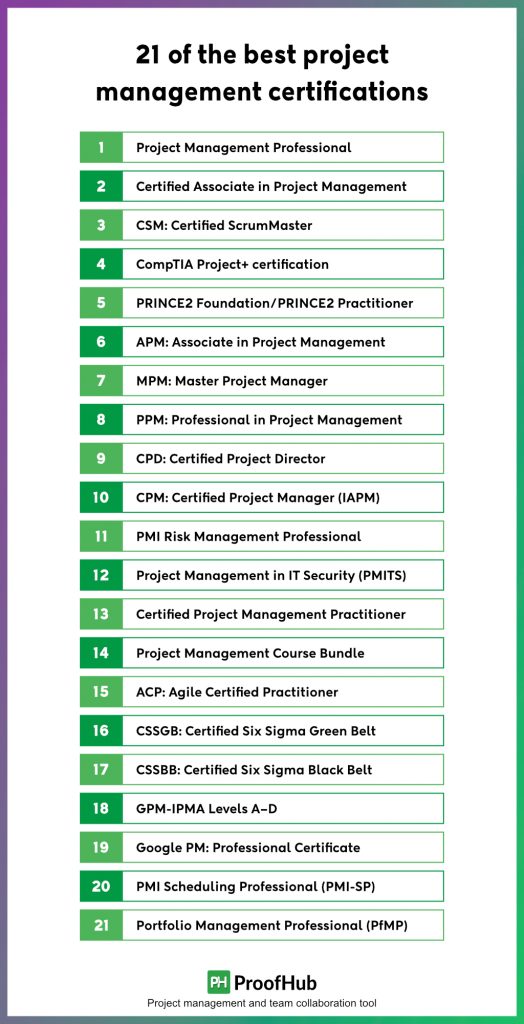
Once you’ve earned your certification, make sure it’s prominently displayed on your resume and LinkedIn profile. Use the full name of the certification and the issuing body. Don’t just list it; consider adding a sentence or two about what it signifies or the key skills you gained. This helps recruiters and hiring managers quickly see your qualifications. Make sure your resume highlights your new skills.
Source : proofhub.com
Improve your online presence to reflect your new status. It’s your digital storefront.
The Future of Project Management Certifications
The world of project management is always evolving, and so are the certifications that validate our skills. We’re seeing a definite trend towards more specialized certifications, but for beginners, the foundational ones we’ve discussed remain critical. Agile and hybrid methodologies continue to grow in importance, so any certification that touches on these is a plus.
Agile and Hybrid are Here to Stay
Traditional Waterfall methods are still relevant, but the speed and adaptability required in today’s business environment mean Agile and hybrid approaches are increasingly the norm. Certifications that incorporate these concepts, like the Google and IBM certificates, or even specialized Agile certifications (though maybe not strictly “entry-level”), are becoming Needed. Understanding how to adapt project plans on the fly is a superpower.
Being comfortable with Agile principles is no longer optional.
The Rise of Digital and Online Learning
As we’ve seen with Coursera offerings, online learning platforms are democratizing access to valuable skills and credentials. This trend is likely to continue. Expect more tech giants and educational institutions to offer Full, practical certificate programs that bridge the gap between learning and employment. These often provide a more engaging and less intimidating entry point than traditional certification exams.
The convenience of online project management courses cannot be overstated.
Continuous Learning is Non-Negotiable
Regardless of the certification you choose, remember that it’s a starting point, not an endpoint. The project management field is Active. New tools, techniques, and challenges emerge constantly. Pursuing ongoing education, whether through advanced certifications (like the PMP), workshops, or simply staying current with industry trends, is Key for long-term career success. Lifelong learning isn’t just a buzzword; it’s a requirement.
Your journey doesn’t end with the certificate; it truly begins. Stay curious, stay adaptable, and keep learning new skills.
Frequently Asked Questions
Can I pass PMP in 3 months?
Yeah, you totally can! But, it’s goa be intense. You’ll need to dedicate serious hours every week to studying. Think of it like cramming for a final exam, but for months. You’ll need to understand the PMBOK Guide inside and out and probably take a prep course. It’s doable, but don’t underestimate the effort needed for the PMP certification.
Is PMP still worth it in 2026?
Absolutely! Even in 2026, the PMP certification is still a major player. Employers look for it because it shows you have a solid understanding of project management principles. It can definitely open doors to higher-paying jobs and more senior roles. It proves you’re serious about your career in project management.
Should I take CAPM or PMP first?
For begiers, the CAPM certification is usually the way to go. It’s designed for people who are just starting out or don’t have the extensive experience required for PMP. Once you’ve got some experience under your belt and feel ready, then you can aim for the PMP. Think of CAPM as the stepping stone to PMP.
What’s the difference between CAPM and PMP?
Big difference! The CAPM (Certified Associate in Project Management) is for those new to project management, requiring less experience. The PMP (Project Management Professional) is the gold standard, requiring significant project experience and demonstrating a higher level of expertise. CAPM is entry-level, PMP is advanced.
How long does it take to get certified for entry-level project management?
It really varies. For something like the CAPM, you might be looking at a few weeks to a couple of months of study, depending on how much time you can put in. For the PMP, it takes longer because you first need to gain the required experience. So, for entry-level, focus on CAPM first; it’s much quicker to achieve.
