So, you’re thinking about becoming a Certified Nursing Assistant (CNA) in California, huh? Good on ya! It’s a fantastic starting point for a healthcare career, but let’s cut to the chase: how long does this whole process actually drag on? Forget those glossy brochures promising instant careers; the reality is a bit more… nuanced. (And by nuanced, I mean it’s not always a lightning-fast sprint.)
Let’s be real, everyone wants to know the timeline. When can you start earning? When do you get that coveted certification? You’re not looking for a textbook answer, you want the nitty-gritty, the stuff you can actually plan your life around. We’re talking about weeks, months, maybe more? Stick with me, and we’ll break down exactly what you’re signing up for.
The Actual Clock: How Many Weeks Does CNA Training Take?
Mandatory Minimum Hours: The Foundation
California law dictates a minimum number of hours for CNA training. This isn’t some casual suggestion; it’s a hard requirement set by the state. You’re looking at at least 60 hours of classroom instruction and a minimum of 100 hours of hands-on clinical experience. That’s a significant chunk of time dedicated to learning the ropes. Don’t skim here; this is the bedrock of your training.
Program Length Variations: Not All Schools Are Equal
Here’s where things get interesting. While the state sets minimums, individual training programs can stretch their curriculum. Some might pack the required hours into a tight, intensive schedule, while others spread it out over a more leisurely pace. Think about a sprint versus a marathon – both get you there, but the experience is wildly different. This is a key factor in the overall training duration.
Full-Time vs. Part-Time Schedules: Your Life Outside the Classroom
Are you going full-time, dedicating your days to becoming a CNA? Or are you juggling this with a job, family, or other commitments, opting for part-time classes? A full-time program might get you certified in as little as 4-6 weeks. A part-time schedule? That could easily push the training phase to 2-3 months, sometimes even longer. Your life dictates the pace here, plain and simple.
The “Standard” Program: What Most People Experience
Most reputable CNA programs in California aim to complete the training within a reasonable timeframe. Generally, you can expect a full-time program to wrap up in about six to eight weeks. This includes both your theoretical learning and the Key practical, hands-on clinical hours. It’s the most common path for those looking to get into the field quickly.
Source : cnaonlinecourse.com

Beyond the Classroom: The Certification Exam Hurdle
Source : cnaonlinecourse.com
The Big Test: California CNA Certification Exam
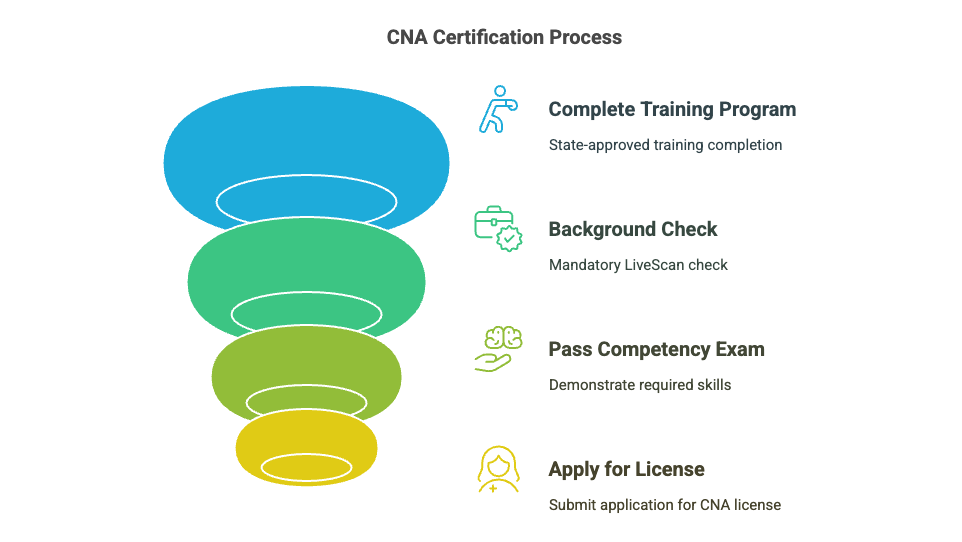
Once you’ve finished your training program, you’re not a CNA yet. Nope. You’ve got to pass the California CNA Certification Exam. This is the gatekeeper, the final hurdle before you’re officially on the registry. It’s a two-part test: a written (or oral) section and a practical skills demonstration. Failing to pass this exam adds significant delays.
Scheduling Your Exam: Wait Times Can Happen
You can’t just walk into the testing center the day after your last class. You need to schedule your exam. Depending on the testing provider and how busy they are, appointment slots can fill up fast. Sometimes, you might have to wait a week or two, or even longer, to get your preferred test date. This waiting period is often overlooked when people ask ‘how long does it take?’
Exam Fees and Retakes: The Financial and Time Cost
There’s a fee for the exam, and if, heaven forbid, you don’t pass one or both sections, you’ll have to pay to retake it. Retaking the exam also means more waiting time to reschedule. Budgeting for this, both time and money, is Key. A failed attempt can easily add another month or more to your journey to becoming a CNA.
The Role of the State: Processing Times Matter
After you pass the exam, your results need to be processed by the California Department of Public Health (CDPH). They are the ones who officially add you to the Nurse Aide Registry. While they strive for efficiency, processing times can fluctuate. You can check the official CDPH processing times for an idea, but factor in a few weeks for this administrative step.
Clinical Experience: More Than Just Hours
Where You’ll Get Your Hands Dirty: Facility Placements
Those 100+ hours of clinical experience aren’t just about sitting around. You’ll be placed in actual healthcare settings – think nursing homes, hospitals, or assisted living facilities. This is where you apply everything you learned in the classroom. You’ll be performing patient care tasks under supervision. It’s the real deal.
Handling Facility Schedules: Real-World Constraints
The schedule for your clinical rotations is often dictated by the facility, not just your school. You might have to work evenings or weekends. Sometimes, getting enough varied experience can take time, especially if certain facilities have specific requirements or limited availability for student placements. Flexibility is key here.

Source : dreambound.com
Building Competence: It’s Not Just About Clocking In
The goal of clinical hours isn’t just to fill a time requirement; it’s to build genuine competence. Instructors and facility supervisors are evaluating your skills, your bedside manner, and your ability to handle real patient situations. Sometimes, it takes a bit longer for students to feel truly confident and ready to demonstrate these skills on the certification exam. Rushing this phase can lead to exam failure.
The Importance of a Good Clinical Supervisor
A great clinical supervisor can make a world of difference. They provide feedback, guide your learning, and help you hone those Needed patient care skills. Conversely, a less-than-ideal placement might slow your progress. The quality of your clinical experience directly impacts how prepared you feel, and So, how quickly you can move towards the exam.
Program Factors That Influence Your Timeline
School Reputation and Resources: Quality Matters
Some CNA programs are better equipped than others. Schools with dedicated labs, up-to-date equipment, and experienced instructors can often move students through the curriculum more efficiently. A well-regarded program usually has a streamlined process from enrollment to graduation. Think about a slick operation versus a disorganized one; the slicker one gets you there faster.
Curriculum Structure: Integrated vs. Staggered
How is the program structured? Some programs integrate clinical hours throughout the course. Others front-load the classroom learning and then dedicate a block of time solely to clinicals. An integrated approach might feel more continuous, while a staggered approach could allow for deeper focus in each phase. Both have their pros and cons regarding perceived speed and actual duration.
Instructor Availability and Student-to-Teacher Ratio
Are the instructors readily available to answer questions and provide individual attention? A high student-to-teacher ratio can sometimes slow things down, as instructors are spread thin. When instructors are more accessible, students can overcome learning obstacles faster, potentially shortening the time needed to master the material. This directly impacts your learning efficiency.
Program Accreditation and Approval: The Official Stamp
Make sure the program you choose is approved by the California Department of Public Health. Unapproved programs won’t qualify you for the state exam. Approved programs adhere to specific standards, which generally means a more predictable and reliable timeline. Stick to the official list; it saves headaches later.
Post-Training Steps: What Happens After You Graduate?

Source : lglcollege.com
The Waiting Game for Your Exam Authorization
After you complete your training, the school will notify the state, and you’ll receive an authorization to schedule your certification exam. This process isn’t instantaneous. It can take a few days to a couple of weeks for this authorization to arrive. It’s another waiting period you need to factor in. You can’t book the test until you get the green light.
Registry and Background Checks: The Bureaucratic Maze
California requires background checks for CNAs. This involves fingerprinting and a criminal record clearance. While typically straightforward, these processes can sometimes encounter delays, especially if there are any complications with your record or the processing system. The state needs to clear you for the registry.
Your First Job Search: Adding More Time
Once certified, you’ll likely want to start working. The time it takes to land your first CNA job varies wildly. It depends on the job market in your area, your resume, your interview skills, and the hiring pace of healthcare facilities. Some folks find jobs within a week; others might take a month or more. This job search is a significant, albeit variable, part of your timeline.
Onboarding and Orientation at Your New Job
Even after getting hired, there’s usually an onboarding and orientation period at your new workplace. This involves paperwork, facility-specific training, and getting introduced to the team and procedures. While not part of your official certification timeline, it’s the final step before you’re fully integrated and working independently as a CNA.
Calculating the Total Time: Putting It All Together
The Fastest Possible Scenario: Blitz Mode
If you find an accelerated, full-time program that runs its course in about 4 weeks, and you can immediately schedule and pass your exam without retakes, and the state processes everything lightning fast, you might be looking at around 2 months from start to certification. This is the absolute best-case, unicorn scenario. It requires perfect timing and zero hiccups.
The More Realistic Average: Standard Pace
For most people opting for a typical 6-8 week program, then factoring in exam scheduling (say, a 2-week wait), passing the exam, and waiting for state processing (another 2-4 weeks), the total time to become a fully certified CNA often lands somewhere between 3 to 4 months. This is a much more common and achievable timeframe.
Extended Timelines: When Things Go Sideways
What if you need to retake the exam? What if your clinical placement is delayed? What if there are administrative holdups with the state? These factors can easily push your timeline out further. It’s not uncommon for the entire process, from day one of training to being on the registry, to stretch to 5 or even 6 months. It happens, so don’t panic if you’re not on the fast track.
Source : registerednursing.org
Factors You Can Control: Your Effort Matters
While some delays are out of your hands (like state processing), much of your timeline depends on you. Your dedication to studying, your performance in clinicals, and your ability to pass the exam on the first try are huge factors. Being proactive about scheduling and following up can also shave off precious time. Your effort directly impacts how quickly you reach your goal.
Comparing California CNA Timelines to Other States
California’s Hour Requirements: A Deeper Dive
California’s mandated hours (minimum 60 classroom, 100 clinical) are on the higher side compared to some other states. For instance, some states might only require around 40-50 hours of combined training. This difference in required training hours is a primary reason why the CNA path in California can take longer.
Exam Differences: Variations in Testing Protocols
The structure and difficulty of the CNA certification exam can also vary by state. California’s two-part exam (written and practical) is fairly standard, but the specific skills tested and the passing criteria might differ. Some states might have simpler exams or different testing providers, potentially leading to quicker certification if you were elsewhere.
State Registry Processing: Bureaucratic Speed Varies
Every state has its own Department of Health that manages the CNA registry. The efficiency of these departments can differ significantly. Some states might have much quicker turnaround times for processing exam results and adding CNAs to their registry. California’s system, while functional, isn’t always the fastest. You can find more details on specific CNA timelines in California from various sources.
Interstate Mobility: Reciprocity Challenges
While this post focuses on California, it’s worth noting that becoming a CNA in another state might be faster. However, if you get certified elsewhere and then want to work in California, you’ll likely need to go through a reciprocity process, which can involve its own set of requirements and timelines to Make sure you meet California’s standards.
Making the Most of Your CNA Training Time
Choosing the Right Program: Research is Key
Don’t just pick the closest or cheapest program. Research schools thoroughly. Look at their pass rates for the state exam, read reviews from past students, and understand their schedule options. Choosing a program that fits your learning style and life commitments can prevent delays down the line. A well-matched program sets you up for success.
Active Participation and Study Habits: Your Role
Once you’re in a program, be present and engaged. Ask questions, participate actively in skills labs, and develop strong study habits for the written portion. The more you absorb during the actual training period, the less time you’ll need to spend cramming later, and the higher your chances of passing the exam on the first try. Maximize your learning efficiency.

Source : cnaonlinecourse.com
Networking During Clinicals: Building Connections
Your clinical rotation is prime time for networking. Get to know the staff, supervisors, and other healthcare professionals. They can offer insights, advice, and sometimes even job leads. Building these relationships during your training can significantly speed up your job search after certification.
Staying Organized: Paperwork and Deadlines
Keep all your training materials, documentation, and scheduling information organized. Know your deadlines for assignments, exam registrations, and any required paperwork. Staying on top of administrative tasks prevents last-minute rushes and potential delays. Good organization is Key.
The Financial Investment: Time is Money (Literally)
Program Tuition and Fees: Upfront Costs
CNA programs vary in cost, but you’re typically looking at anywhere from a few hundred to a couple of thousand dollars for tuition, books, uniforms, and supplies. The longer the program, the higher the potential overall cost, especially if it includes more extensive materials or longer instructor hours. Don’t forget exam fees, which are separate.
Lost Earning Potential: The Opportunity Cost
While you’re in training, you’re likely not earning a full-time wage. The longer your program takes, the longer you’re in this “earning deficit” period. A 6-week program means less lost income than a 3-month program. This opportunity cost is a significant part of the financial equation when considering the total time to become a CNA.
Potential for Faster Job Placement with Shorter Programs
If your goal is to enter the workforce quickly, a shorter, intensive program might seem attractive. Getting certified faster means you can start earning an income sooner. However, Make sure these accelerated programs don’t compromise the quality of education or your readiness for the exam. Speed shouldn’t trump competence.
Long-Term ROI: Worth the Wait?
Despite the time and financial investment, becoming a CNA offers a relatively quick entry into the healthcare field compared to other roles like RNs or LPNs. The return on investment, in terms of career start date and earning potential, is often quite strong. The time spent is an investment in a valuable and rewarding career path.
Sample CNA Program Timelines in California
Source : sisucare.com
Accelerated 4-Week Programs
These are intensive, full-time programs designed to move quickly. They often require students to be available Monday-Friday, potentially with some evening or weekend hours. They cover the state-mandated hours in a compressed timeframe. Passing the exam promptly after completion is critical to achieving certification within this initial 4-week training window.
- Week 1-2: Classroom instruction, basic nursing skills, Key signs, patient rights.
- Week 3-4: Intensive clinical rotations, practicing skills in a real healthcare setting, review for exam.
Standard 6-8 Week Programs
This is the most common format. It balances classroom learning with clinical experience in a slightly less hurried pace than accelerated options. It allows more time for students to absorb information and build confidence. It’s a solid middle-ground for many aspiring CNAs. This is often considered the gold standard timeline.
- Weeks 1-4: Core classroom theory, introduction to medical terminology, safety procedures.
- Weeks 4-7: Consistent clinical practice, skill refinement, patient interaction.
- Week 8: Final skill assessments, exam preparation, and program completion.
Extended Part-Time Programs (10-14 Weeks)
Ideal for those juggling other responsibilities, these programs spread the required hours over a longer period. Classes might be held a few evenings a week or on weekends. Clinical hours are also scheduled flexibly. While longer, they offer greater flexibility and can reduce the daily stress of intensive study.
- Weeks 1-8: Part-time classroom learning, covering curriculum modules gradually.
- Weeks 8-12: Flexible clinical scheduling, often on weekends or select weekdays.
- Weeks 13-14: Final review, program completion, and readiness for exam scheduling.
Post-Program Timeline (Average Add-on Time)
This section details the typical time after program completion until certification.
| Step | Typical Duration | Factors Influencing Time |
|---|---|---|
| Receive Exam Authorization | 1-2 Weeks | School reporting speed, CDPH processing |
| Schedule Certification Exam | 1-3 Weeks | Testing center availability, your flexibility |
| Take & Pass Exam | Immediate (assuming pass) | Your test performance |
| State Processing & Registry Update | 2-4 Weeks | CDPH workload, background check completion |
Total Estimated Time (Program + Post-Program)
Combining a standard 6-week program with the average post-program timeline (let’s say 2 weeks authorization + 2 weeks scheduling + 3 weeks processing = 7 weeks), you’re looking at roughly 13 weeks, or about 3 months total. This is a solid Standard. Remember, this is an estimate; your actual mileage may vary.
Frequently Asked Questions
How long does it take to become a CNA in California?
Because it varies a bit, but typically you’re looking at around 6 to 10 weeks to complete a state-approved CNA program in California. Some schools have faster or slower schedules, and you’ve also got to factor in time for the background check and passing the state exam. So, all in all, a couple of months is a good ballpark.
Can CNAs make $1000 a week?
Because earning $1000 a week as a CNA in California is definitely achievable, especially if you pick up extra shifts or work in higher-paying facilities like hospitals or specialized care centers. Many factors influence pay, including experience, location, and the type of facility. But yeah, it’s not out of the World of possibility with some hustle!
Who gets paid more, CNA or PCT?
But generally, a Patient Care Technician (PCT) tends to earn a bit more than a Certified Nursing Assistant (CNA). PCT roles often involve more advanced skills and responsibilities, like taking Key signs, drawing blood, or assisting with more complex procedures, which usually translates to a higher pay rate. Still, both are Key roles in healthcare!
What are the requirements to become a CNA in California?
Because you need to be at least 16 years old, pass a background check, and complete a state-approved training program. After that, you’ve got to pass the California CNA certification exam. It’s not super complicated, but you do need to put in the work for the training.
How much does CNA training cost in California?
Because the cost for CNA training in California can really swing. You might see programs ranging from a few hundred dollars to over a thousand. It all depends on the school, how long the program is, and what’s included, like books and the exam fee. Always check what’s included in the tuition!
Can I become a CNA without a high school diploma in California?
But yes, you can become a CNA in California even if you don’t have a high school diploma or GED. The state generally allows individuals who are at least 16 years old to enroll in training programs and take the certification exam. You’ll still need to meet the other requirements, of course, but the diploma isn’t always a hard barrier.
