AI Weather Models vs. The Old Guard: Who’s Really Calling the Shots on Tomorrow’s Weather?
Remember when getting a weather forecast meant squinting at a blurry radar map on the evening news? Yeah, me too. For decades, we’ve relied on these massive, complex physics-based models. They crunch numbers, simulate atmospheric chaos, and spit out a prediction. It worked, mostly. But let’s be honest, sometimes those forecasts felt about as accurate as a politician’s promise. Now, there’s a new player in town, and it’s shaking things up: Artificial Intelligence. These AI weather models are starting to show they can do more than just keep up; they might actually be leaving the old guard in the dust. We’re talking about a fundamental shift in how we predict the skies, and it’s more important than you might think.

Source : turnto10.com
The Trouble with Tradition
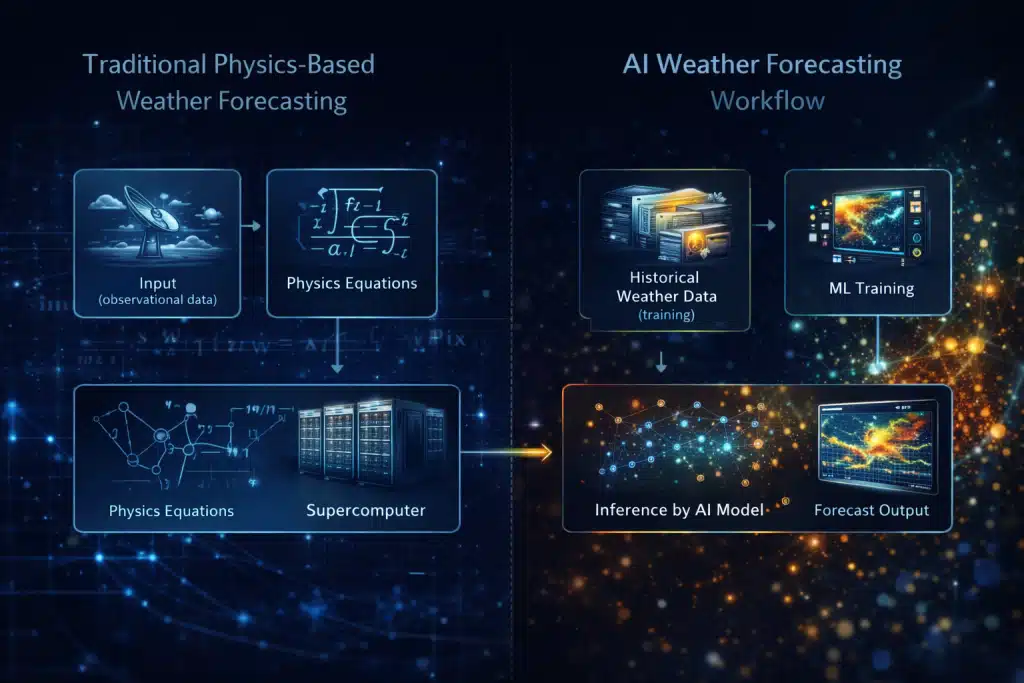
So, what’s the deal with these traditional models? Think of them as incredibly detailed, super-slow video games. They take all the known laws of physics – fluid dynamics, thermodynamics, you name it – and apply them to the atmosphere. We’re talking about supercomputers the size of buildings, churning through data for hours, sometimes days, just to predict what’s happening next week. The sheer computational power required is mind-boggling. But here’s the catch: the atmosphere is messy. It’s chaotic. It’s incredibly complex. Even with all that computing might, these traditional forecasting methods can struggle. Small errors at the start can snowball into massive inaccuracies down the line. Think of it like trying to predict the exact path of a single falling leaf in a hurricane. It’s a tough gig.
These models are also incredibly expensive to run and maintain. We’re talking millions of dollars in supercomputing time and specialized expertise. Plus, they’re often slow to adapt. If a new type of weather event pops up, or if the underlying physics we understand changes (unlikely, but you get the idea), updating these behemoths takes ages. They were built for a different era, and while they’ve gotten better, they’re hitting a wall. The limitations are becoming painfully obvious, especially when you need pinpoint accuracy for things like severe storm warnings or agricultural plaing.
Source : blogs.nvidia.com
Enter the AI Upstarts
Now, let’s talk about the AI revolution in weather. Instead of painstakingly coding every physical law, AI models learn from data. Mountains of it. They analyze decades of past weather patterns, satellite imagery, sensor readings – you name it. They look for correlations and patterns that humans might miss or that are too complex to model explicitly. It’s less about simulating physics and more about recognizing what weather looks like and how it tends to behave based on historical evidence. This approach is surprisingly effective. Researchers are finding that AI weather prediction can often be faster and, in many cases, more accurate, especially for short-term forecasts. It’s a different philosophy, but one that’s proving its worth.
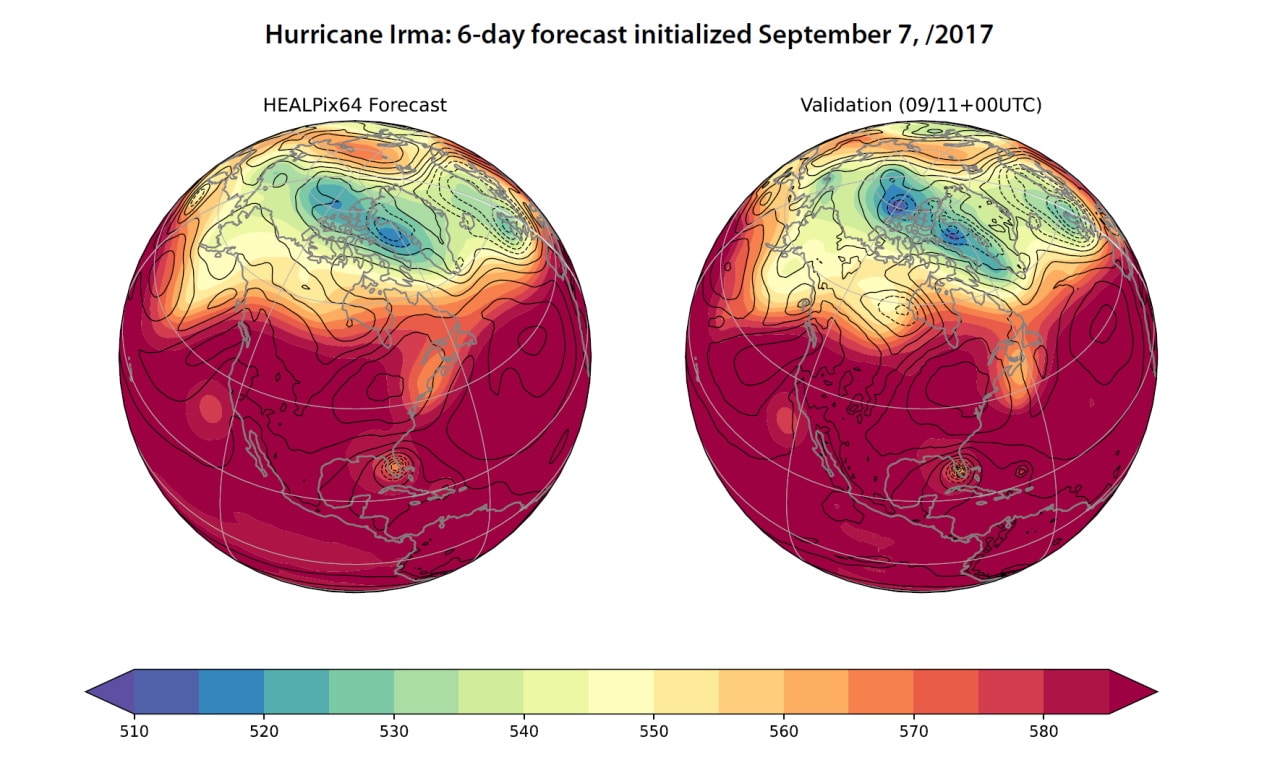
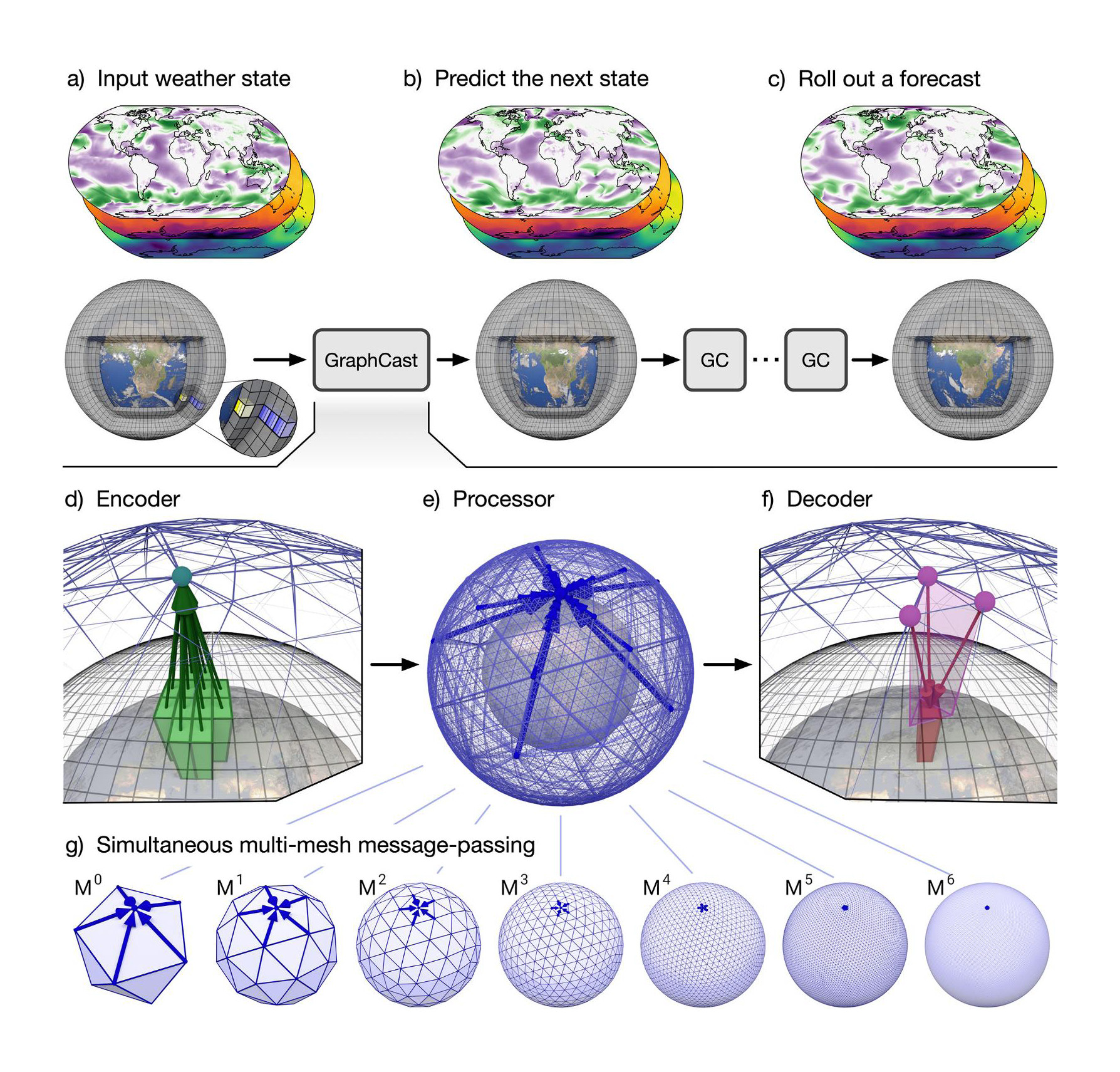
Consider this: while traditional models simulate the physics, AI models are essentially becoming incredibly sophisticated pattern-matching machines. They digest vast datasets and learn the intricate relationships between different atmospheric variables. This allows them to make predictions with remarkable speed. We’re seeing AI models like Google DeepMind’s GraphCast and Nvidia’s FourCastNet start to outperform even the best human-run models. This isn’t just an incremental improvement; it’s a leap forward. The ability of these systems to process information and identify subtle cues is pretty astonishing. It begs the question: are we finally moving beyond the limitations of pure physics simulation?
The Speed Advantage
One of the biggest wins for AI is speed. Traditional models can take hours to generate a forecast. AI models? They can churn out predictions in minutes, sometimes seconds. This is a huge deal when you’re dealing with rapidly developing weather events, like thunderstorms or flash floods. Imagine getting a reliable severe weather warning significantly earlier. That extra time can mean the difference between life and death. For critical infrastructure, logistics, and emergency response, this speedy weather prediction is invaluable. It’s not just about accuracy; it’s about timeliness.
This speed advantage means AI models can be run much more frequently. Instead of one massive forecast per day, you could potentially have dozens. This constant stream of updated information provides a much clearer, more dynamic picture of evolving weather patterns. Think about aviation or shipping – having the most up-to-the-minute forecast can drastically improve safety and efficiency. It’s like going from a static map to a live, constantly updating GPS. This is where AI really starts to shine, offering a level of responsiveness that was previously unimaginable.
Accuracy: The AI Edge?
Source : arstechnica.com
Okay, the big question: are AI models actually better? In many scenarios, the answer is increasingly yes. Studies are showing AI models are matching or even beating the accuracy of leading traditional models, especially for medium-range forecasts (up to 10 days). For instance, Google’s GraphCast, trained on decades of weather data, has shown remarkable skill. It can predict things like wind speed and temperature with impressive precision, often outperforming established systems. This is particularly true for predicting extreme weather events, where pinpoint accuracy is crucial.
A recent study highlighted how AI models are proving their mettle against physics-based systems, particularly when it comes to specific, challenging events. For example, analyzing the accuracy of AI against models like the European Centre for Medium-Range Weather Forecasts (ECMWF) shows that AI is not just a gimmick; it’s a powerful tool. The AI models producing better weather forecasts are rapidly evolving, suggesting a significant shift in the field. This doesn’t mean traditional models are obsolete, but AI is definitely carving out a major role, and in many cases, taking the lead.
The Best of Both Worlds: Hybrid Approaches
Now, before we write off the old guard entirely, let’s talk about hybridization. Many experts believe the future isn’t strictly AI or traditional models, but a smart combination of both. Why? Because AI models, while amazing at pattern recognition, don’t inherently understand the fundamental laws of physics. They might predict something physically impossible if the data isn’t perfectly representative. Traditional models, on the other hand, are built on those physical laws but can be slow and struggle with the sheer complexity of real-world atmospheric interactions. So, what if we used AI to speed up and refine the complex simulations of traditional models? Or used traditional physics to constrain AI predictions, ensuring they remain physically plausible?
This hybrid approach is where things get really interesting. Imagine using AI to quickly identify potential severe weather patterns, and then deploying traditional physics-based models to dive deep into the specifics of how that storm will develop. Or using AI to correct biases and errors in traditional model outputs. This synergy could lead to forecasts that are both incredibly fast and deeply rooted in scientific principles. It’s about combining the pattern-matching prowess of AI with the fundamental understanding of physics. As reported by AI weather forecasting for the climate crisis, this integrated approach is key to tackling bigger environmental challenges too.
The AI Weather Model Revolution
Let’s get one thing straight: AI is not just a buzzword here; it’s a fundamental technological leap. These new AI weather modeling systems are being trained on unimaginable amounts of data, far more than any human team could ever sift through. They’re learning the subtle dance of the atmosphere in ways we’re only begiing to grasp. Think of it like this: traditional models are like engineers meticulously building a bridge based on blueprints and physics equations. AI models are like experienced bridge builders who have seen thousands of bridges built and can instinctively know what works and what doesn’t, spotting potential weaknesses just by looking at the site. It’s a different kind of intelligence.
Source : visualcrossing.com
The potential is enormous. We’re talking about better predictions for everything from your daily commute to major hurricane landfalls. We’re talking about optimizing renewable energy generation (predicting wind and solar output), improving agricultural yields, and enhancing disaster preparedness. The implications for our daily lives and global economies are staggering. As noted in discussions about how AI models outperform traditional forecasting, the benefits extend far beyond just knowing if you need an umbrella.
The Future is Now
So, are AI weather models better? The evidence is mounting. They’re faster, increasingly accurate, and capable of processing information at scales previously impossible. While traditional physics-based models have served us well and still hold value, AI is undeniably the future. The question isn’t if AI will dominate weather forecasting, but how quickly and how completely. We’re already seeing AI outperform established benchmarks. Hybrid approaches will likely refine this further, creating forecasts that are both scientifically grounded and lightning-fast. The era of AI-driven weather prediction is here, and it’s going to change how we understand and interact with our planet’s atmosphere. Get ready for clearer skies – and maybe a few more surprises.
Frequently Asked Questions
Are AI weather models better?
For many tasks, absolutely. They’re often faster and more accurate than traditional models, especially for short-to-medium range forecasts. AI learns from massive datasets, spotting patterns humans might miss. While traditional models are still valuable, AI is quickly becoming the go-to for cutting-edge predictions.
What is the most accurate weather forecast model?
It’s getting tricky to name just one! Leading AI models like Google’s GraphCast and Nvidia’s FourCastNet are showing incredible accuracy, often matching or beating top physics-based models like the ECMWF. The ‘most accurate’ likely depends on the specific weather event and forecast timeframe. Hybrid approaches combining AI and physics are also incredibly promising for the most accurate forecasts.
Can AI predict extreme weather events?
Yes, and it’s one of AI’s strongest areas! Because AI models analyze vast amounts of historical data, they can get very good at recognizing the precursors to events like hurricanes, tornadoes, and severe thunderstorms. This allows for earlier and more precise warnings, potentially saving lives and property.
How much faster are AI weather models?
Significantly faster. Where traditional models might take hours on supercomputers, AI models can often generate predictions in mere minutes or even seconds. This speed is crucial for responding to rapidly changing weather situations and allows for more frequent forecast updates.
Will AI replace human meteorologists?
Not entirely, but it will change their jobs. AI handles the heavy lifting of data processing and prediction generation. Human meteorologists will focus more on interpreting AI outputs, communicating forecasts, understanding local nuances, and managing complex or unprecedented events. It’s more about AI augmenting human expertise than replacing it.
