Can You Become A Certified CPR Instructor Online? The Real Deal
Alright, let’s cut through the noise. You’re probably wondering if you can actually snag a legitimate CPR instructor certification without having to physically drag yourself to some stuffy classroom. It’s a fair question. The internet promises the world, right? But when it comes to something as critical as teaching life-saving skills, you need solid, trustworthy training. So, can it be done online? The short answer is: it’s complicated, but yes, a significant chunk of it can be. Let’s break down exactly what that means and what you absolutely need to know before you sign up for anything.
Forget those shady websites promising instant badges. Becoming a certified CPR instructor isn’t a click-and-go affair. It requires rigor. It demands you prove you have the knowledge and, crucially, the skills to teach others effectively. Think about it: you’ll be responsible for guiding people through potentially life-or-death scenarios. That’s not something you can just wing with a quick online quiz.
The Myth vs. The Reality of Online CPR Instructor Training

Source : mycprcertificationonline.com
There’s a ton of misinformation out there. Many places will tell you you can get your entire certification online, end-to-end. That’s usually not the case if you’re aiming for a certification recognized by major health organizations. They have standards, and those standards typically require hands-on skills practice and evaluation.
Understanding Certification Bodies
Who actually issues these certifications? It’s not just some random outfit. The big players you’ll encounter are the American Heart Association (AHA) and the American Red Cross. These organizations set the curriculum and the standards. Their training programs are Strong, and they generally require a blend of learning.
The “Online” Component: What It Usually Means
When an organization says you can become a CPR instructor “online,” they almost always mean a portion of the training is delivered via digital means. This typically covers the theoretical knowledge – the science behind CPR, the different techniques, how to manage a class, and the administrative stuff. It’s the foundational learning, and it’s super convenient.
The Key Hands-On Portion
Here’s the kicker: you can’t effectively teach CPR without demonstrating the physical skills. This means mastering chest compressions, rescue breaths, and using an AED. These skills must be practiced and evaluated in person. You need a live instructor to watch you, correct your form, and Make sure you can do it right under pressure. You can’t get that critical feedback from a computer screen. So, while theory can be online, practical application usually isn’t.
American Heart Association (AHA) Instructor Path
The AHA is one of the most recognized names in CPR training. If you want to become an AHA instructor, you’ll find their process is structured and requires specific steps. They’ve put a lot of thought into ensuring their instructors are top-notch.
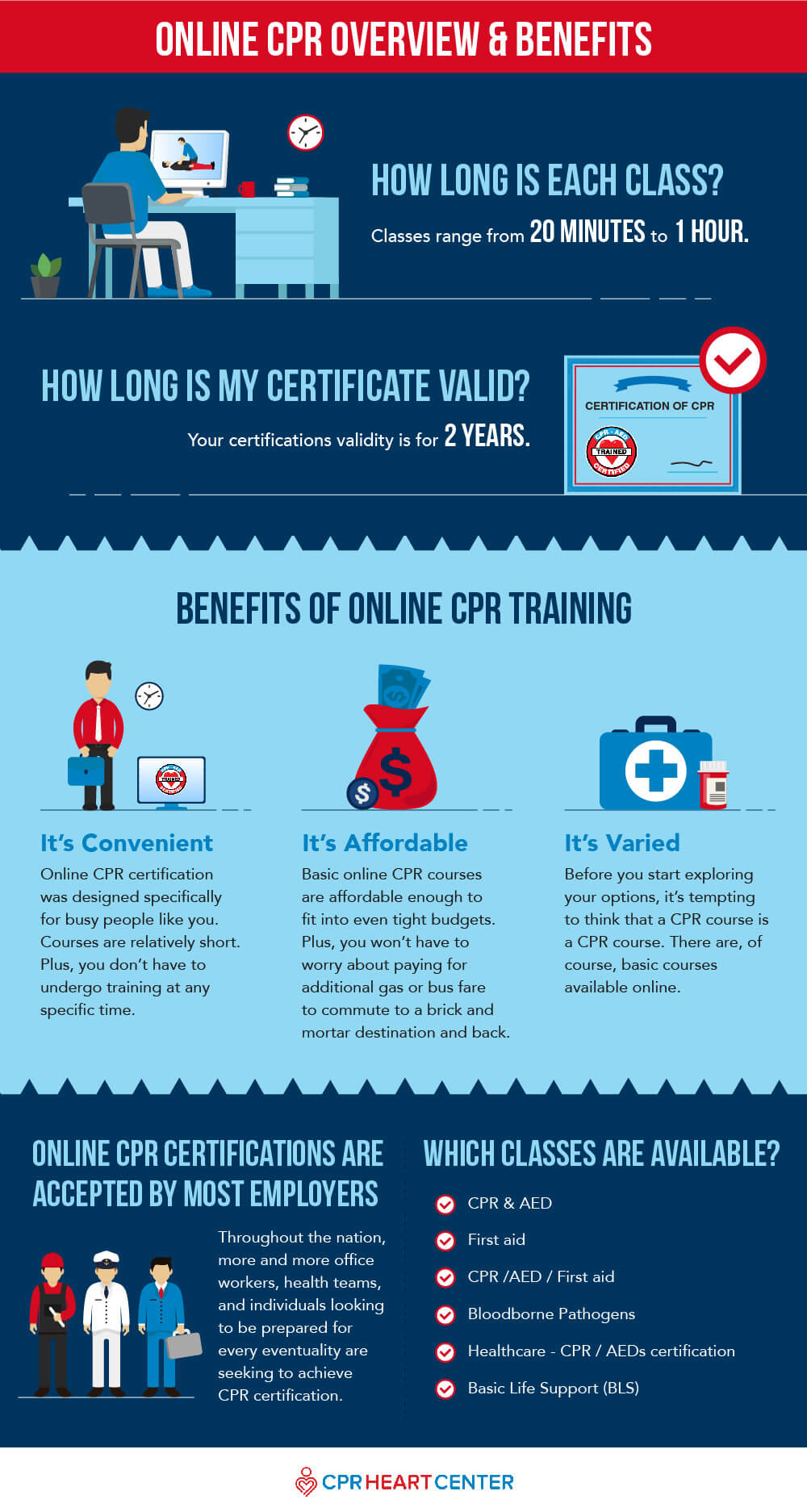
Source : cprheartcenter.com
AHA BLS Instructor Essentials
For Basic Life Support (BLS) instructors, the AHA offers an “Instructor Essentials” course. This is a prime example of the blended learning approach. You’ll complete a significant portion online, covering teaching skills, course administration, and the latest science. This online module gets you ready for the next Key step.
The In-Person Skills Session
After conquering the online portion of the AHA Instructor Essentials, you absolutely must attend a hands-on skills session. This is where you’ll demonstrate your proficiency in performing BLS skills. An AHA Training Center Coordinator or a faculty instructor will oversee this. They’re there to Make sure you can teach these skills correctly. You can find information on this process at AHA’s official instructor resources. They lay out the pathway clearly.
Becoming Faculty or Training Center Faculty
For those aspiring to train other instructors, the AHA has further levels. This involves more advanced coursework and evaluations, often requiring significant experience as a BLS instructor first. It’s a progression, not a starting point for new instructors.
American Red Cross Instructor Training
The American Red Cross is another giant in the first aid and CPR training world. Their instructor certification process mirrors the AHA’s in its blended approach, emphasizing both online learning and in-person skill validation.
Red Cross Instructor Training Formats
The Red Cross offers several formats for their training. You’ll see options like “Online,” “In-Person + Online (Blended),” and “In-Person.” For instructor certification, the “Blended” option is most common and usually the most efficient. This recognizes that you need the flexibility of online learning combined with the necessity of hands-on practice.
The Online Prerequisite
Much like the AHA, the Red Cross requires you to complete an online component first. This module covers the teaching methods, course policies, and the specific content of the courses you intend to teach (like First Aid, CPR, and AED). It’s Full and sets the theoretical groundwork.
Mandatory Skills Check-Off
Following the online coursework, you will need to attend a scheduled in-person skills session. This is non-negotiable. A certified instructor trainer will assess your practical skills and your ability to teach them. The Red Cross offers various instructor training courses, and you can explore these pathways on their site, for instance, through their instructor training programs. They focus heavily on bridging your existing skills into teaching competence.
What Does “Certified CPR Instructor Online” Really Mean?
Let’s be crystal clear about the terminology. When you see “certified CPR instructor online,” it’s usually shorthand for a blended learning program. It means the bulk of the didactic (knowledge-based) learning happens online, but the critical practical (skills-based) component requires in-person attendance.
Online Knowledge Acquisition
The online modules are fantastic for learning the “why” and “what” of CPR and first aid. You can study at your own pace, revisit complex topics, and generally absorb the information without the pressure of a live classroom setting. This is where you gain the deep understanding of physiological responses and emergency protocols.
In-Person Skills Validation
The hands-on session is where you prove you can do it. You’ll practice on manikins, get immediate feedback on your technique, and learn how to manage common issues that arise during training. This is Key for developing the confidence and competence needed to lead your own classes.
Instructor Credentialing
Once you successfully complete both the online and in-person portions, you receive your official instructor credential from the certifying body (AHA, Red Cross, etc.). This credential makes you eligible to teach their specific courses. It’s the real deal, earned through a structured process.
The Process: Step-by-Step to Becoming an Instructor
So, you’re convinced it’s worth the effort. What does the actual journey look like? It’s a fairly standardized process, designed to Make sure quality.
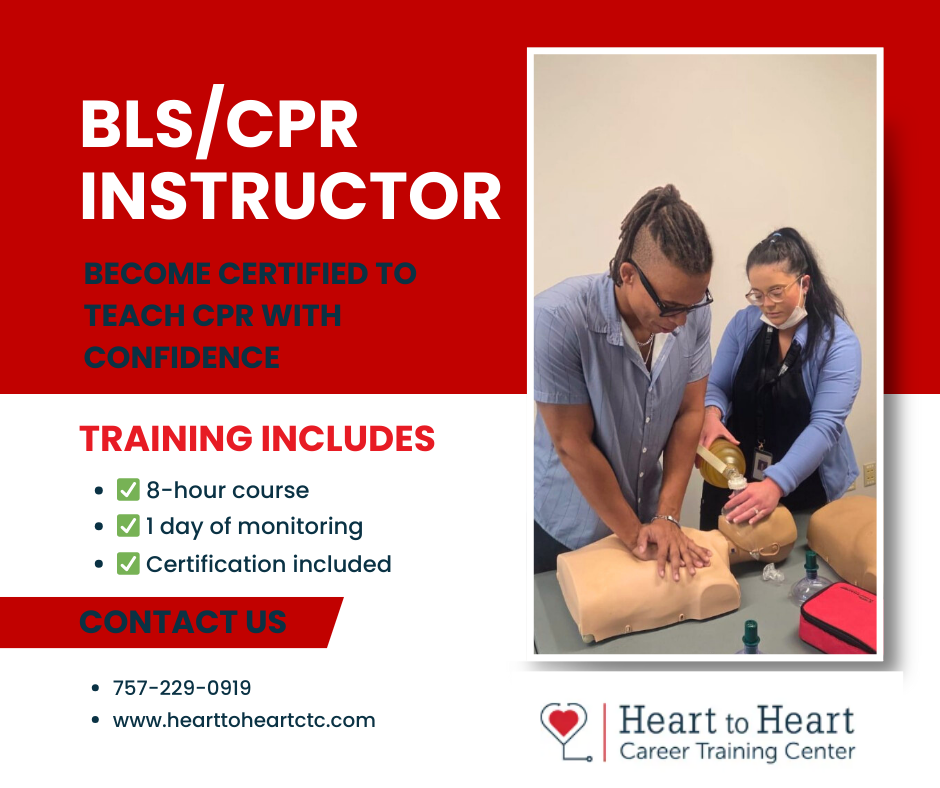
Source : hearttoheartctc.com
Step 1: Choose Your Certifying Body
Decide whether you want to be certified by the American Heart Association or the American Red Cross. Both are highly respected. Consider which organization has more training centers or is more prevalent in your area, as this might affect finding local skills sessions or teaching opportunities.
Step 2: Complete the Online Prerequisites
Enroll in the appropriate online instructor course for your chosen body. This will involve modules, quizzes, and potentially video lessons. You’ll need to dedicate several hours to this, depending on the specific course. Make sure you’re getting the official course from the certifying body or an authorized provider.
Step 3: Attend the In-Person Skills Session
Locate an authorized training center that offers instructor skills sessions. These are scheduled events, so you’ll need to plan ahead. This session is typically shorter than the online portion but is absolutely Key. You’ll be assessed on your practical skills and teaching abilities.
Step 4: Get Your Instructor Card
Upon successful completion of both components, you’ll be issued an instructor card. This is your official proof of certification. It usually has an expiration date, meaning you’ll need to recertify periodically to maintain your status.
Step 5: Affiliate and Teach
To start teaching, you’ll often need to affiliate with a local American Heart Association Training Center or an American Red Cross Training Provider. This affiliation allows you to access their curriculum, materials, and administrative support. Then, you’re ready to schedule and run your own CPR classes!
Who Can Become a CPR Instructor? Prerequisites and Considerations
It’s not just about completing the training. There are some fundamental requirements and personal qualities that make a great CPR instructor.
Current CPR/First Aid Certification
This seems obvious, but you need to hold a current, valid CPR and First Aid certification yourself before you can even think about becoming an instructor. You can’t teach what you haven’t successfully completed and are proficient in. This usually needs to be a certification from the same organization (AHA or Red Cross) whose instructor course you plan to take.
Age and Education
Generally, you need to be at least 18 years old to become a certified instructor. While formal higher education isn’t strictly required, a strong command of the English language (or the language the course is taught in) is Needed for both understanding the material and effectively communicating it to others.
Skills and Aptitude for Teaching
Are you patient? Can you explain complex concepts clearly? Do you have good communication skills and the ability to remain calm under pressure? These are Key. Teaching CPR involves more than just reciting facts; it requires engaging students, providing constructive feedback, and creating a supportive learning environment.
Access to Technology
For the online portion, you’ll need reliable internet access and a computer or tablet capable of running the learning modules. Make sure your technology is up-to-date to avoid any disruptions during your training.
Finding an Authorized Training Center for Skills Sessions
The in-person skills session is the bridge between online learning and real-world teaching. Finding a legitimate place to do this is key.
How to Locate Official Training Centers
Both the AHA and the Red Cross have directories on their websites where you can search for authorized Training Centers or Providers in your area. Use their official site finders to Make sure you’re connecting with a legitimate establishment. Searching for “American Heart Association Training Center locator” or “American Red Cross Provider search” will get you there.
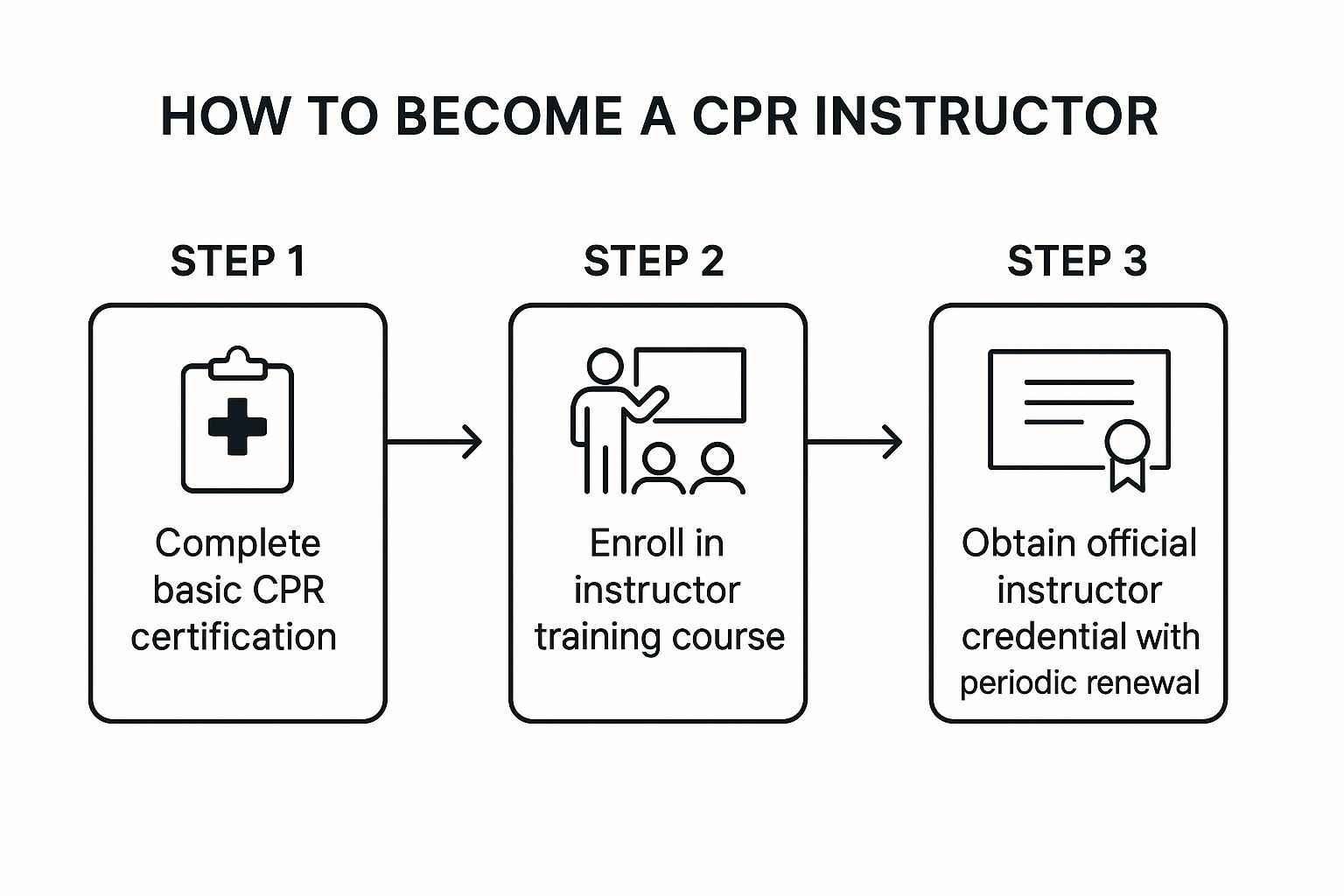
Source : readyresponsepa.com
What to Look For in a Training Center
Beyond just offering the skills session, consider the reputation of the training center. Do they have good reviews? Are their facilities adequate? Do the instructors seem knowledgeable and professional? A good training center will make the experience much more valuable.
Scheduling Your Session
Once you find a suitable training center, check their schedule for upcoming instructor skills sessions. These can fill up, especially during peak seasons, so book your spot in advance. Don’t delay this step after completing your online work.
The Benefits of Becoming a CPR Instructor
Why go through all this? The rewards are pretty significant, both personally and professionally.
Making a Real Difference
This is probably the biggest motivator for most people. By becoming a CPR instructor, you’re directly contributing to a safer community. You’re equipping others with the skills to potentially save a life. That’s incredibly rewarding work.
Career Opportunities and Flexibility
Having CPR instructor certification opens doors. You can work part-time for existing training centers, teach within your own organization (if applicable), or even start your own independent training business. This offers a great deal of flexibility in terms of hours and location.
Expanding Your Skillset
The training itself enhances your own knowledge and confidence in emergency response. Plus, you develop valuable teaching and communication skills that are transferable to many other areas of life and career. It’s professional development with a purpose.
Potential for Good Income
While it varies widely based on location, demand, and how much you teach, CPR instructors can earn a respectable income. Charging per student, or per class, can add up, especially if you’re teaching larger groups or multiple classes a week.
Handling the Costs: Online vs. In-Person Components
Let’s talk money. Becoming an instructor isn’t free, but the investment is usually well worth it. You’ll typically pay for both the online and the in-person parts of the training.
Cost Breakdown
Expect to pay for the online instructor course and the in-person skills session separately. The AHA BLS Instructor Essentials online course, for example, might cost around $100-$200. The in-person skills session and associated materials could add another $150-$300, depending on the training center and location. Red Cross courses will have similar pricing structures.
What Your Money Covers
This fee usually covers access to the official curriculum, the online learning platform, the instructor trainer’s time for the skills session, and the processing of your certification card. It’s an investment in becoming a qualified educator.
Value Proposition
While the upfront cost might seem Large, consider the potential return. The ability to teach multiple classes a year can quickly recoup your initial investment. Plus, you’re gaining a valuable, in-demand skill set that can lead to ongoing income opportunities.
Maintaining Your CPR Instructor Certification
Getting certified is just the first step. To stay an active, recognized instructor, you need to keep your credentials current.

Source : abc13.com
Recertification Requirements
Instructor certifications typically expire every two years. To renew, you’ll usually need to complete a recertification course, which often mirrors the original process but may be slightly condensed. This ensures you stay up-to-date with the latest guidelines and teaching techniques.
Monitoring Guideline Updates
CPR guidelines are updated periodically based on new research. As an instructor, you are responsible for teaching the most current, evidence-based protocols. The certifying bodies provide updates, and your recertification process will cover these changes.
Teaching Requirements
Many organizations require instructors to teach a minimum number of courses within their certification cycle (e.g., teach at least four courses in two years) to maintain their status. This practical teaching requirement ensures you remain actively engaged and proficient.
Can You Teach CPR Entirely Online? A Final Word
Let’s circle back to the original question. Can you become a certified CPR instructor entirely online? No. Not if you want a legitimate, recognized certification from organizations like the American Heart Association or the American Red Cross. They require that hands-on, in-person component for skills validation.
The Blended Learning Model Reigns Supreme
The convenience of online learning is undeniable, and it forms a Key part of instructor training. It allows you to learn the theory at your own pace. But the physical act of performing CPR and learning how to teach it effectively? That absolutely needs a real-world, instructor-led setting.
Prioritize Quality Over Shortcuts
Be wary of any program that promises full certification solely online. It likely won’t be recognized by major health organizations and won’t adequately prepare you to teach life-saving skills. Stick to the established pathways offered by the AHA and the Red Cross.
The Path Forward
So, yes, you can do a significant part of your CPR instructor training online. It’s efficient and effective for the knowledge-based learning. Just remember to factor in the mandatory in-person skills session to complete your journey and earn your official certification. It’s the best way to Make sure you’re truly ready to teach someone how to save a life.
Frequently Asked Questions
Is online CPR instructor certification legit?
Yeah, totally! But you gotta make sure the organization providing the course is accredited. Some are legit, some aren’t. Look for ones affiliated with recognized health and safety organizations. Getting certified online is a real thing, just do your homework on the provider.
How long does it take to become a CPR instructor?
It really depends on the program you choose. Some can be done in a couple of days, especially if you’re already familiar with CPR. Others might take a week or two if they include extensive online modules and practical components. It’s all about the course structure and how quickly you can get through the material.
How much do CPR instructors get paid per class?
Pay can vary a lot, honestly. It depends on where you’re teaching, the organization you’re with, and how many students are in the class. You might see anywhere from $50 to $200 or more per class. Some instructors teach as a side gig, others full-time. So, instructor pay is pretty flexible.
What are the prerequisites to become a CPR instructor online?
Generally, you need to have a current CPR certification yourself, and usually at the healthcare provider level. Some places might require you to be at least 18 years old. You’ll also need reliable internet access and a computer for the online portions. It’s not super complicated to get started if you meet the basic requirements.
Can I teach CPR to healthcare professionals if I get certified online?
For sure, but you’ll likely need to get certified through an organization that’s specifically recognized by healthcare institutions. Many online courses focus on basic or community CPR. If you want to teach healthcare provider CPR, double-check that your online certification program meets those specific standards and is accepted by hospitals or clinics.
