OSHA 10 vs. OSHA 30: What’s the Real Difference?
Look, we’ve all seen it. That little mention on a job application, or maybe your boss just sprung it on you: “You need an OSHA certification.” Suddenly you’re staring at two options, OSHA 10 and OSHA 30, and wondering if they’re just different flavors of the same thing. Spoiler alert: they’re not. Not by a long shot. It’s like asking if a tricycle is the same as a ten-speed bike. Both get you somewhere, but one is clearly built for a more serious ride. Let’s break down what you actually need to know.
This isn’t about just ticking a box; it’s about understanding workplace safety. It’s about going home at the end of the day in one piece. And for some jobs, it’s non-negotiable. So, ditch the confusion. We’re diving deep into the nitty-gritty differences between these two Needed safety training programs.
Why Are We Even Talking About OSHA?
Source : oshatrainingschool.com
The Big Picture: What is OSHA?
First off, what’s this “OSHA” everyone’s jabbering about? It stands for the Occupational Safety and Health Administration. Think of them as the workplace safety cops. They set the rules and standards to make sure your jobsite isn’t a death trap. Their main gig? Preventing work-related injuries, illnesses, and fatalities. They aren’t there to hold your hand, but they sure can fine your employer into oblivion if things go south due to negligence.
It’s a federal agency, part of the Department of Labor. They’re the ones defining what “safe” actually means across countless industries. Without OSHA, the wild west of workplace safety would be even wilder. And trust me, that’s not a place anyone wants to be.
Mandatory Training? Not Always, But Often.
So, does everyone need this training? No, not universally across every single job on the planet. But for many industries, especially those with higher risks like construction and general industry, it’s becoming standard. States like New York and Massachusetts have made specific OSHA courses mandatory for certain trades. Employers also often require it to Make sure they meet their legal responsibilities and, you know, to avoid lawsuits and hefty fines.
It’s a proactive measure. Instead of waiting for an accident to happen, companies are investing in training to prevent them. It shows they care. Or at least, it shows they’re smart enough to follow the rules. That’s the OSHA 10 vs OSHA 30 conversation starter right there.
It’s About More Than Just a Card
This isn’t just about getting a little card in the mail to shove in your wallet. The real value is in the knowledge you gain. You learn about potential hazards, how to avoid them, and what to do if something goes wrong. It’s about building a safety culture, from the ground up. Anyone can memorize safety rules, but truly understanding them is another story entirely. That’s where the depth of the courses comes in.
OSHA 10: The Basics for Entry-Level Workers
Who Needs the OSHA 10-Hour Course?
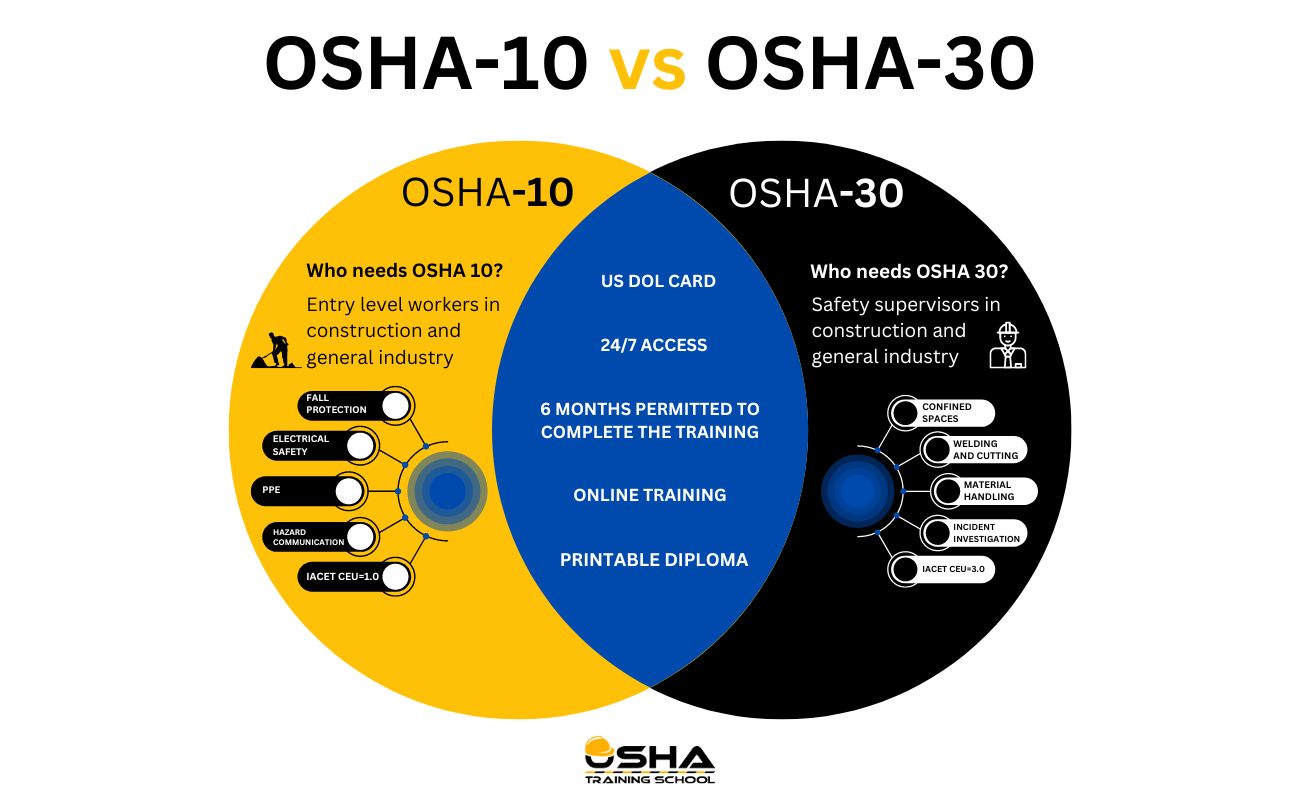
The OSHA 10-hour course is generally geared towards entry-level workers, those just starting out in a hazardous industry. Think of the young apprentice on a construction site, or a new hire in a warehouse. It covers the fundamental safety and health principles. It’s their first introduction to recognizing and avoiding common workplace hazards.
It’s designed to be a foundational understanding. You learn about common risks, your rights as a worker, and the employer’s responsibilities. It’s the minimum safety training recommended for many roles. This is often the baseline requirement, especially in industries where basic safety knowledge is Key.
Source : learntastic.com

What Does the OSHA 10-Hour Curriculum Cover?
The curriculum is focused on awareness. You’ll typically get an overview of OSHA’s role, specific industry hazards (like slip, trip, and fall prevention), personal protective equipment (PPE), and basic emergency procedures. For example, in construction, topics might include scaffolding safety, electrical hazards, and material handling. In general industry, it could be machine guarding, hazard communication, and ergonomic risks.
The key here is “introduction.” It’s not designed to make you a safety expert overnight. It’s about giving you the Needed knowledge to stay safe on the job. You’ll learn about things like chemical hazards and how to read safety data sheets (SDS). It’s practical, foundational stuff.
The Goal: Hazard Recognition
The primary objective of the OSHA 10-hour training is to build hazard recognition skills. It aims to equip workers with the ability to identify potential dangers in their work environment before they lead to an incident. This includes understanding different types of hazards, like physical, chemical, biological, and ergonomic ones. It’s about training your eyes to see what could go wrong.
Think of it as learning the alphabet of safety. You learn to identify the letters, understand their basic meanings, and start putting them together to form simple safety words. It’s the first step toward a safer work experience. This makes it perfect for those new to the workforce.
OSHA 30: The Deeper Dive for Supervisors and Managers
Who Needs the OSHA 30-Hour Course?
Now, the OSHA 30-hour course? That’s a different beast altogether. This one is intended for supervisors, foremen, project managers, and other personnel with some level of responsibility for safety. If you’re in a position where you’re overseeing others or making decisions about work procedures, this is likely the course for you. It goes way beyond basic awareness.
Consider a construction site superintendent. They need to understand not just their own safety, but the safety of their entire crew. This means knowing more about regulations, safety management systems, and enforcement. It’s about leadership in safety. Employers often require this for anyone in a supervisory role.
What Does the OSHA 30-Hour Curriculum Cover?
This course is significantly more detailed. While it covers many of the same topics as the 10-hour course (like hazard identification and PPE), it goes into much greater depth. It includes more on OSHA standards, compliance requirements, safety program management, and specific hazard mitigation strategies. You’ll spend more time on topics like fall protection, confined spaces, and ergonomics.
For example, a 30-hour construction course might dedicate hours to specific standards like OSHA’s Fall Protection standard (1926 Subpart M) or the Cranes and Derricks standard. It’s about understanding the ‘why’ and ‘how’ of safety regulations, not just the ‘what’. This provides a much more Strong understanding of workplace safety management.
The Goal: Safety Management and Compliance
The objective of the OSHA 30-hour training is to provide a Full understanding of safety management principles and OSHA compliance. It aims to equip individuals with the knowledge to implement and manage safety programs effectively. This includes understanding how to conduct site inspections, investigate incidents, and Make sure compliance with complex OSHA standards. You learn how to be a safety Support.
It’s like going from understanding basic grammar to being able to write a complex essay. You’re not just recognizing words; you’re understanding structure, intent, and execution. This is Key for anyone responsible for maintaining a safe work environment and ensuring their company stays on the right side of OSHA.
Key Differences at a Glance
Duration: It’s in the Name!
This one is the most obvious, right? The OSHA 10-hour course, as the name implies, is designed to be completed in approximately 10 hours of training. The OSHA 30-hour course takes about 30 hours. Seems simple enough, but that difference in time is packed with significantly more information and detail in the longer course. It’s not just about spreading the same content thinner; it’s about adding substance.
That 20-hour difference is Large. It allows for deeper dives into specific regulations, more case studies, and interactive exercises. It really underlines the difference in target audience and required depth of knowledge. Don’t underestimate the value of those extra hours for developing a true safety mindset.
Target Audience: Who Is It For?
As we’ve touched upon, the target audiences are distinct. The 10-hour is for the frontline worker – the person doing the hands-on job. The 30-hour is for those overseeing those workers – supervisors, managers, and safety personnel. Think of it as student vs. teacher, or employee vs. supervisor. The OSHA 10 vs. OSHA 30 distinction is heavily based on responsibility level within a company structure.
If you’re an individual contributor just trying to get the job done safely, OSHA 10 is often your ticket. If you’re responsible for ensuring others get the job done safely, then OSHA 30 is usually the way to go. This is a critical point for anyone trying to figure out their next step.
Curriculum Depth: Awareness vs. Management
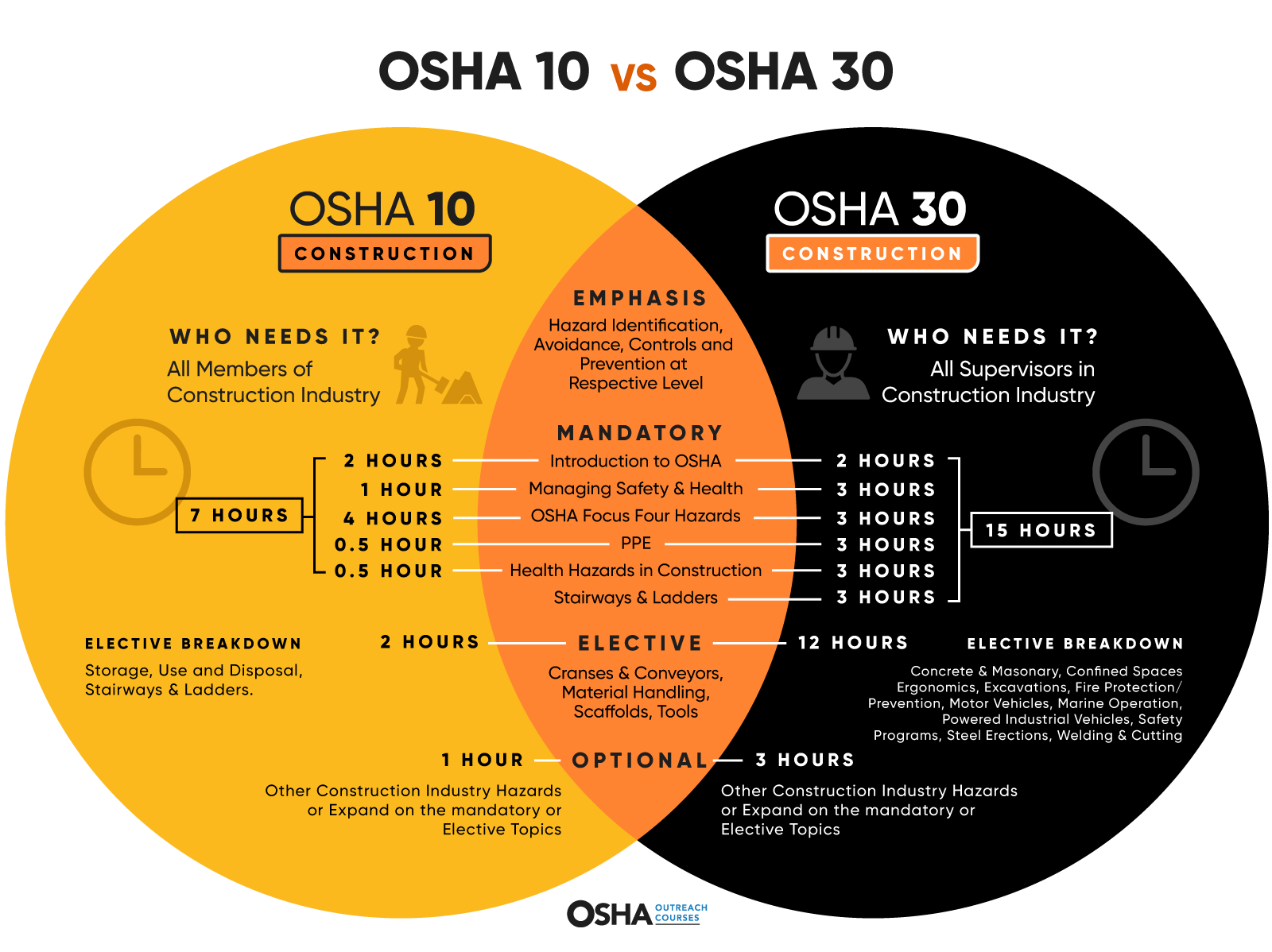
The core difference lies in the depth of the curriculum. OSHA 10 provides a broad overview and awareness of common hazards. OSHA 30 offers a much more in-depth exploration of specific OSHA standards, safety management principles, and compliance strategies. You can find extensive details on what these courses cover at resources like OSHA.com’s blog, which breaks down the specifics.
It’s the difference between knowing a hazard exists and knowing how to develop, implement, and manage a program to prevent it. One gives you knowledge; the other gives you the tools for safety program implementation. This depth is Key for supervisors and safety officers.
Source : oshaoutreachcourses.com
Industry-Specific Training Matters
General Industry vs. Construction
It’s important to know that both OSHA 10 and OSHA 30 training come in different flavors depending on your industry. The most common are General Industry and Construction. The topics covered will vary significantly. A construction course will focus heavily on site-specific hazards like scaffolding, fall protection, and heavy equipment. A general industry course will cover topics more relevant to manufacturing, healthcare, or warehousing, such as machine guarding, hazard communication, and ergonomics.
So, if you’re a welder, you’ll want the construction version. If you work in a factory office designing safety protocols, you might opt for general industry. Getting the wrong version is just a waste of time and money. Always double-check which industry focus is required for your specific role.
Maritime and Other Specialized Fields
While General Industry and Construction are the most common, OSHA also offers specific training standards for other sectors, like Maritime (shipyards, longshoring, and marine terminals) and even Disaster Site Workers. These courses are tailored to the unique hazards and regulatory requirements of those specific environments. They aren’t as widely known as the main two, but they exist for a reason.
If your work falls under one of these specialized categories, you’ll need to seek out the relevant training. Trying to apply general industry safety to a shipyard environment wouldn’t be effective, and vice versa. Always verify the correct training track for your specific job.
Choosing the Right Focus
How do you pick? It boils down to your actual job duties and the industry you operate in. If you work on a building site, get construction. If you’re in a factory, distribution center, or hospital, general industry is likely your path. Your employer should guide you, but understanding the difference yourself is key to advocating for the right training. You don’t want to show up with a general industry card when the site requires construction.
This choice isn’t arbitrary. It ensures the training you receive is relevant and applicable to the hazards you’ll actually encounter. It makes the whole process more effective and directly impacts your daily safety practices.
Can You Get Both? And Do You Need To?
The Relationship Between OSHA 10 and 30
Think of it this way: OSHA 30 training includes much of the foundational knowledge found in OSHA 10, but it expands on it dramatically. You don’t necessarily need to take OSHA 10 before OSHA 30. Many people jump straight into the 30-hour course if their role demands it. However, completing OSHA 10 first can provide a good stepping stone if you’re completely new to workplace safety concepts and want a gentler introduction.
It’s not a strict prerequisite, but some find the gradual learning curve helpful. The content overlap exists, but the depth is the real differentiator. You wouldn’t read chapter 1 of a book and then need to read it again before tackling chapter 5 if the advanced chapter assumes you know the basics. OSHA 30 assumes a higher baseline or provides it within its extensive curriculum.
When Might You Need Both?
Honestly? Most of the time, you probably don’t need both certifications simultaneously unless your employer specifically requires it for different roles or projects. If you have your OSHA 30, it generally covers the requirements for roles that would otherwise need OSHA 10. The 30-hour certification demonstrates a higher level of safety knowledge and responsibility. It’s often seen as fulfilling the requirements of the 10-hour course and then some. This is a common point of confusion we see a lot.
However, some companies might have unique internal policies. Or perhaps you took the 10-hour years ago in one industry (like construction) and now work in another (like general industry) and your new employer wants you to have the relevant 10-hour for that specific field, even if you have a 30-hour from elsewhere. Always clarify expectations with your specific employer.
Validity and Renewal
Both OSHA 10 and OSHA 30 cards typically indicate an issue date. While OSHA doesn’t mandate a specific expiration date for these cards, many employers and states (like New York) require refresher training every few years (often 3-5 years). This is to Make sure workers stay up-to-date with the latest safety standards and practices. Regulations can change, and so can workplace risks.
So, even if you get your card, remember that safety is an ongoing process. Keeping your knowledge fresh is just as important as getting the initial training. Check if your specific job or state requires refresher training periodically. Companies like Simplified Safety often provide resources on renewal requirements.
Choosing the Right Training Provider
Online vs. In-Person: Pros and Cons
You’ve got options when it comes to how you take these courses. Online training is super convenient. You can do it on your own schedule, from anywhere with an internet connection. This is great for busy schedules or remote workers. However, some argue you miss out on the direct interaction and real-time Q&A you get with an in-person instructor. For convenient training, online wins.
In-person classes offer that direct engagement. You can ask questions immediately, participate in group discussions, and get a feel for the instructor’s expertise. But, they require you to be in a specific place at a specific time, which can be a major hurdle. It really depends on your learning style and logistical constraints. Both are valid ways to get certified.
Accreditation and Authorized Providers
This is CRITICAL. Not just anyone can offer OSHA training. Look for “OSHA-authorized” providers. These organizations have been vetted by OSHA. You’ll usually receive an official DOL-OSHA card upon completion. Avoid anyone offering a “certificate” that doesn’t clearly state it’s from an authorized provider and doesn’t lead to the official card. That cheap online course might be worthless.
Verify the provider’s legitimacy. Check the OSHA website or reputable safety training company sites for lists of authorized trainers. Getting trained by an unauthorized entity means your certification is invalid. It’s a waste of your time and money. Don’t fall for scams!

Source : osha-pros.com
Cost Considerations
Prices can vary significantly based on the provider, the training format (online vs. in-person), and whether you’re doing it individually or as a group. Generally, OSHA 10 courses are cheaper than OSHA 30 courses, which makes sense given the difference in hours and depth. Expect to pay anywhere from $30-$100 for an OSHA 10 online course, and $70-$200+ for an OSHA 30 online course. In-person training will likely be more expensive due to facility and instructor costs.
Shop around, but remember that the cheapest option isn’t always the best. Prioritize accredited providers and quality content over just saving a few bucks. Your safety knowledge investment is too important.
OSHA 10 vs. 30: A Quick Comparison Table
To make things crystal clear, here’s a breakdown:
| Feature | OSHA 10-Hour | OSHA 30-Hour |
|---|---|---|
| Duration | Approx. 10 hours | Approx. 30 hours |
| Target Audience | Entry-level workers, laborers | Supervisors, foremen, managers, safety personnel |
| Curriculum Focus | Basic hazard awareness, common risks | In-depth standards, safety management, compliance |
| Primary Goal | Hazard recognition | Safety management & compliance |
| Prerequisite | None | None (but OSHA 10 can be a stepping stone) |
| Industry Options | General Industry, Construction, Maritime, etc. | General Industry, Construction, Maritime, etc. |
| Responsibility Level | Individual safety | Overseeing others’ safety, program management |
| Card Type | DOL-OSHA Temporary/Permanent Card | DOL-OSHA Temporary/Permanent Card |
Making the Right Choice for Your Career
Assess Your Current Role and Future Goals
The biggest factor in deciding between OSHA 10 vs. OSHA 30 is your job. Are you just starting out and need to meet a basic requirement? OSHA 10 is likely your answer. Are you looking to move into a supervisory role, or are you already in one? Then the 30-hour course is almost certainly the better investment for your career development. Think about where you are now and where you want to be in a year or two.
Don’t just pick the shorter, cheaper option if your responsibilities demand more. Conversely, don’t force yourself through the 30-hour if it’s overkill for your current position. Career alignment is key.
Employer Requirements Are King
Your employer’s requirements often dictate which course you need. Many companies have clear policies stating which certification is necessary for which positions. Always check with your HR department or supervisor first. They can tell you exactly what they expect, saving you the guesswork. Following directives here is Top.
Sometimes, an employer might even pay for your training, especially if it’s a requirement for the job. Make sure you understand their expectations clearly before you sign up for any course. It’s a small conversation that can save a lot of trouble.
Investing in Your Safety and Employability
Regardless of which you choose, both OSHA 10 and OSHA 30 training are valuable investments. They enhance your understanding of workplace safety, reduce your risk of injury, and make you a more attractive candidate to employers. Having one of these certifications on your resume signals that you take safety seriously. That’s a big plus in almost any industry.
It’s not just about compliance; it’s about building a safer future for yourself and those around you. A little bit of training can go a very long way in this regard. Be proactive, get informed, and stay safe out there.
Frequently Asked Questions
What is the hardest OSHA certification?
Honestly, neither OSHA 10 nor OSHA 30 are super ‘hard’ in the sense of complex exams. It’s more about the time commitment and absorbing the info. OSHA 30 has more material, so that makes it more demanding. But it’s all about safety principles, not rocket science.
Does OSHA 30 look good on resume?
Totally! Having an OSHA 30 card on your resume shows employers you’re serious about workplace safety. It’s especially valuable in construction and other high-risk industries. It tells them you’ve had more in-depth training than just the basic OSHA 10.
Does OSHA 30 override OSHA 10?
Think of it like this: OSHA 30 is a more advanced version of OSHA 10. If you have your OSHA 30, you definitely meet the requirements of OSHA 10. So yeah, in a way, it supersedes the 10-hour course because it’s more Full.
What is the main difference between OSHA 10 and OSHA 30?
The biggest distinction is the hours of training. OSHA 10 is a 10-hour course focused on basic safety awareness for entry-level workers. OSHA 30 is a 30-hour course that goes much deeper into hazard identification and prevention, aimed at supervisors or those with more safety responsibilities.
Who needs OSHA 10 vs OSHA 30?
Generally, OSHA 10 is for entry-level employees or those who just need a basic understanding of workplace safety. OSHA 30 is typically for supervisors, foremen, safety managers, or anyone who has more direct oversight of job sites and workers, because you’ll be learning more about managing safety protocols.
