CPR Certification: The Real-Time Breakdown
So, you’re looking to get CPR certified in person, huh? Smart move. Knowing how to save a life is huge, no doubt. But let’s cut through the noise. How long does this whole shebang actually take? It’s not some mystical, drawn-out process. You can walk out of a class, ready to roll, often within a single day.
Forget those endless online modules that feel like a punishment. Real, hands-on training is where it’s at. This is about getting your hands dirty, literally, on a mannequin. It’s the difference between reading a cookbook and actually making that five-star meal.
The Clock Starts Now: Average Session Lengths

Source : abc13.com
Quick CPR Courses
Most standard CPR certification classes clock in at around 2 to 4 hours. Yeah, that’s it. Think about it – you can grab a decent lunch and still have time to learn life-saving skills. It’s surprisingly efficient for something so critical. This timeframe covers the essentials: chest compressions, rescue breaths, and what to do if someone’s choking. It’s really the core CPR knowledge you need.
Full BLS Certification
Now, if you’re aiming for something more advanced, like Basic Life Support (BLS) – often required for healthcare professionals – you’re looking at a longer haul. These classes typically run between 4 to 6 hours. They dig deeper, covering multiple rescuer scenarios, AED usage in more detail, and potentially pediatric situations. It’s still doable in a single day, but it’s a more intensive session. This is for those who need a Strong certification.
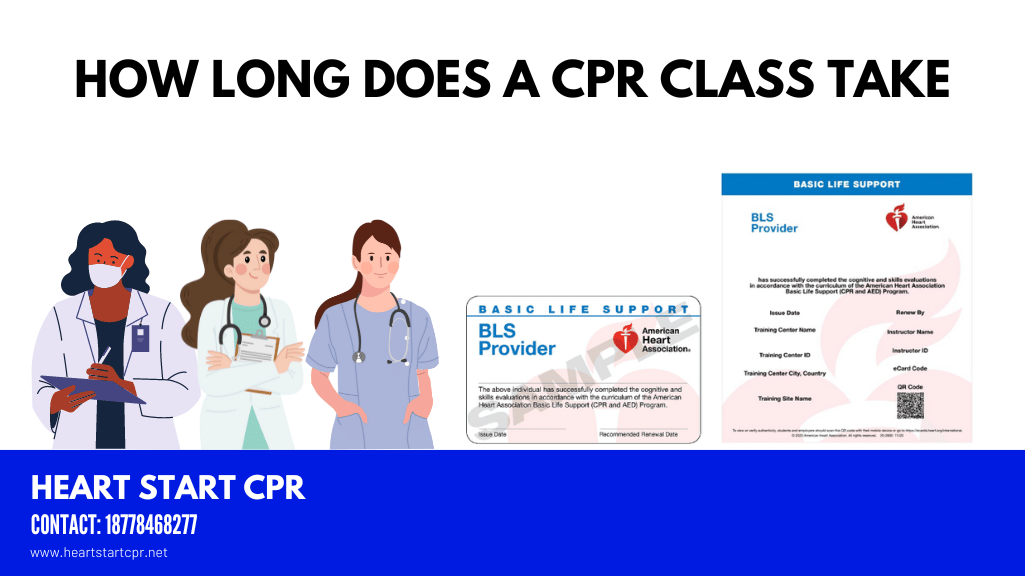
Source : heartstartcpr.net
Combined Courses (CPR & First Aid)
Many people opt for a combined CPR and First Aid course. Smart, right? Get two birds stoned at once. These sessions naturally take longer, usually anywhere from 6 to 8 hours. You’ll cover everything from CPR techniques to treating cuts, burns, sprains, and more. It’s a full day, but you leave feeling seriously prepared for a wide range of emergencies. It’s a Full safety package.
Factors Influencing Class Duration
What makes one class shorter than another? It really boils down to the specific curriculum and the certifying body. Some organizations pack more into their courses. Others focus purely on the bare-minimum life-saving techniques. Also, the number of participants can sometimes influence the pace, though good instructors keep things moving.
What Exactly Happens in an In-Person Class?
Skills Practice: The Hands-On Part
This is the meat and potatoes. You’ll get hands-on practice with CPR manikins. This isn’t just watching a video; it’s about feeling the resistance of chest compressions and practicing the rhythm. Instructors will guide you on proper hand placement and depth. You’ll also practice rescue breaths (using barrier devices, of course). It’s about building muscle memory, which is key for real-life emergencies.
AED Training
You can’t talk CPR without talking about Automated External Defibrillators (AEDs). In an in-person class, you’ll learn how to properly use an AED device. You’ll practice attaching the pads and following the voice prompts. These machines are Key for cardiac arrest, and knowing how to use one can significantly increase survival rates. This AED component is non-negotiable.
Choking Response and Other Scenarios
Classes cover how to help someone who is choking, both adults and potentially infants. You’ll practice the appropriate maneuvers. Instructors might also introduce other common emergency scenarios, depending on the course level. Think about bleeding control or how to handle a person who has collapsed. It’s about building a well-rounded emergency response.
Written and Practical Evaluations
Most courses wrap up with evaluations. There’s usually a written test to check your understanding of the concepts. More importantly, there’s a practical skills test. You’ll have to demonstrate your CPR and AED skills on a manikin to prove you can do it effectively. Passing this is what gets you that official certification card.
Why In-Person Training Beats Online Alone

Source : mycprcertificationonline.com
The Criticality of Hands-On Skills
Look, online courses are fine for brushing up or learning theory. But for CPR? You need the feel of it. You need an instructor watching you, correcting your form in real time. That tactile feedback is irreplaceable. Trying to learn chest compressions solely from a video is like trying to learn to swim by watching YouTube. It just doesn’t build the muscle memory you need.
Immediate Feedback and Correction
An instructor can see if your hand placement is off by an inch, or if your compression depth is too shallow. They can stop you, show you the correct way, and have you try again. This direct, personalized coaching is Key. It builds confidence and competence. Online courses can’t replicate this immediate expert guidance.
Confidence Building in Real Scenarios
There’s a different level of confidence that comes from physically practicing a skill in a safe environment. You’re not just passively absorbing information; you’re actively engaging. This active learning process makes the skills stick better and makes you feel more capable if you ever face a real situation. It’s about feeling truly prepared.
How Long Do Certifications Last?
The Standard Two-Year Validity
Most CPR certification cards, whether from the American Heart Association or the American Red Cross, are valid for two years. This timeframe ensures that you keep your skills relatively current. Think of organizations like the American Red Cross; they require recertification to maintain active status.
Recertification Requirements
When your certification nears its expiration, you’ll need to get recertified. Often, this involves taking a shorter refresher course, which is usually quicker than the initial training. Sometimes, it’s a full course again, especially if the guidelines have changed significantly. Staying current is Top for effective emergency response.
Why Recertification Matters
Medical guidelines and best practices evolve. Recertification ensures you’re trained on the latest techniques and recommendations. For instance, recommendations for compression rates or the use of certain devices might change. Without recertifying, you might be using outdated methods. It’s Needed for providing the best possible care.
Finding and Choosing an In-Person Class

Source : tulsaer.com
Local Training Centers
Many hospitals, community centers, and fire departments offer in-person CPR classes. You can often find these by searching online for “CPR classes near me.” The American Red Cross, for example, has numerous training locations across the country. You’re likely to find a convenient option.
Online Registration and Scheduling
Most reputable organizations allow you to register and schedule your in-person class online. This makes the process incredibly easy. You can browse available dates and times, select the course that fits your schedule, and often pay right then and there. It’s a streamlined sign-up process.
Choosing the Right Certification Level
Consider why you need the certification. Are you a layperson wanting to be prepared? Or a healthcare provider needing BLS? Make sure the class you choose aligns with your needs and any requirements from your employer or professional organization. A standard CPR class might not suffice if you need specific professional training.
What to Expect from Different Certifying Bodies
American Red Cross vs. American Heart Association
The two biggest players are the American Red Cross and the American Heart Association (AHA). Both offer high-quality, recognized training. While their core curriculum is similar, there can be slight differences in their approach and the specific duration of their courses. For example, MedTrainer notes that session lengths can vary. Always check the specific course details.
Other Reputable Organizations
There are other organizations, too, like the National Safety Council or American CPR Care. As long as the organization is recognized and provides hands-on training, it’s generally a good option. The key is ensuring the certification is widely accepted in your area or by your employer. A recognized certification is key.
Cost Comparison
Prices can vary significantly based on location, the specific course, and the training provider. Expect to pay anywhere from $50 to $150 for a standard CPR certification course. Combined courses or BLS might be slightly more. Factor this into your planning. It’s an investment in preparedness.
Time Investment vs. Skill Acquisition: A Fair Trade?

Source : cprvam.com
The Value of a Few Hours
For a commitment of just a few hours – typically 2-8 hours depending on the course – you gain a skill that could literally save a life. When you frame it like that, the time investment feels incredibly small. It’s a powerful exchange of your time for Crucial knowledge.
Rapid Skill Mastery
In-person classes are designed for rapid skill acquisition. The focused curriculum, hands-on practice, and instructor feedback condense the learning process effectively. You’re not expected to become a medical expert, but to master the critical steps needed in an emergency. It’s efficient learning.
Long-Term Preparedness
While the class itself is short, the preparedness it offers is long-term. Your certification lasts two years, but the skills you learn can last a lifetime. It’s about being ready when seconds count. That readiness is a profound personal asset.
In-Person CPR Class Time Breakdown Table
| Course Type | Average Duration | Key Focus Areas | Ideal For |
|---|---|---|---|
| Basic CPR | 2-4 Hours | Adult CPR, Choking | General Public, Workplace Safety |
| CPR + First Aid | 6-8 Hours | Adult/Child/Infant CPR, Bleeding, Burns, Sprains, Choking | Parents, Teachers, Coaches, General Preparedness |
| Basic Life Support (BLS) | 4-6 Hours | Adult/Child/Infant CPR, AED, Choking, Teamwork, Airway Management | Healthcare Providers, EMTs, Nurses, Doctors |
| Pediatric CPR/First Aid | 4-5 Hours | Child/Infant CPR, Choking, Medical Emergencies in Children | Childcare Providers, Teachers, Parents |
Frequently Asked Questions
How long does a CPR certification take to get?
Because it varies a bit depending on the specific course and provider, but generally, you’re looking at anywhere from 2 to 6 hours for a standard in-person CPR certification class. Some might be quicker, others might be a bit longer if they include extra modules.
How fast can you do CPR class?
But you can sometimes find express or abbreviated courses, especially if you’ve been certified before and just need a refresher. For a brand new certification, though, thefastest you’ll typically get is usually a half-day course, around 4 hours.
Can I get CPR certified in just one day?
Totally! Most in-person CPR certification courses are designed to be completed in a single day, often in just a few hours. It’s pretty efficient!
Is there an online option for CPR certification?
Yeah, there are often blended learning options. You might do some of the coursework online and then just a brief in-person skills session to finish it up. This can sometimes speed things along.
What factors influence how long CPR certification takes?
It really depends on the course provider, the specific CPR certification you’re going for (like basic, healthcare provider, pediatric), and whether it’s a full course or just a renewal. More Full courses take longer.
