So, You Wanna Marry People? How Long Does This Gig Actually Take?
Forget the fairy tales. Getting to stand up there, beaming, and legally binding two souls together? It’s not just about picking out a nice suit or a flowing robe. There’s actual paperwork. And depending on where you live, a whole heap of hoops to jump through.
It’s a question I get asked a lot. Usually by folks who just married off their best friend and realized they kinda loved it. Or maybe someone who’s got a knack for public speaking and a deep belief in love. Whatever your reason, you’re wondering: what’s the real timeline here?
Let’s cut through the fluff. This isn’t some mystical ordination that happens overnight. It’s a process. Some parts are quick, others drag. And state laws? They’re the real wild card. So, grab a coffee, settle in, and let’s break down exactly how long does it take.
The Absolute Basics: What Even Is Officiant Certification?
:max_bytes(150000):strip_icc()/wedding-officiant-recirc-calen-rose-6-4-f1e2ee84f9ed48ee85c9f48df00955ef.jpg)
Source : brides.com
First off, let’s be clear. “Certified” isn’t always the right word. In many places, it’s more about being legally recognized or ordained. Think of it less like getting a doctor’s license and more like getting a driver’s permit. You need the basics to be legal, but the real skill comes with practice.
Ordination vs. Legal Authorization
This is where people get tripped up. Many officiants get ordained online through organizations. This is often super fast, sometimes just a day or two. This ordination grants you the authority to perform marriages in many states. However, some states have their own specific requirements beyond just online ordination.
It’s Key to understand that online ordination is often just the first step. It gives you the title and a credential, but doesn’t automatically make you legal everywhere. We’ll dive into those state-specific wrinkles later, because trust me, they matter.
Why “Certification” Can Be Misleading
You won’t find a single, universal “Wedding Officiant Certification Board” that governs everyone. Instead, you’re looking at state laws and the rules of whichever organization you get ordained through. Some officiant training programs might offer their own certificates of completion, which look good and add credibility, but they aren’t the same as legal authorization.
So, when you ask how long does it take to get certified, really ask: how long does it take to be legally allowed to marry people in my desired location? It’s a subtle difference, but a Key one.
The Different Paths to Officiating
Broadly, there are a few ways people become officiants:
- Online Ordination: The quickest route for many. Typically managed by non-denominational religious or interfaith organizations.
- Church-Specific Ordination: If you’re already part of a specific religious denomination, you might go through their established process. This can sometimes take longer.
- Religious Ministry Training: More intensive programs that prepare you for spiritual leadership, often including officiating weddings.
- State-Specific Requirements: In a few places, you might need to register with a court or meet specific local criteria.
Each path has its own timeline, and we’re going to unpack them.
The Speedy Route: Online Ordination Timelines
Let’s start with the fast track. For a huge number of aspiring officiants, especially those marrying friends or family, online ordination is the go-to. And the speed? It’s impressive.
Source : theamm.org
Instantaneous (Almost!) – The Initial Ordination
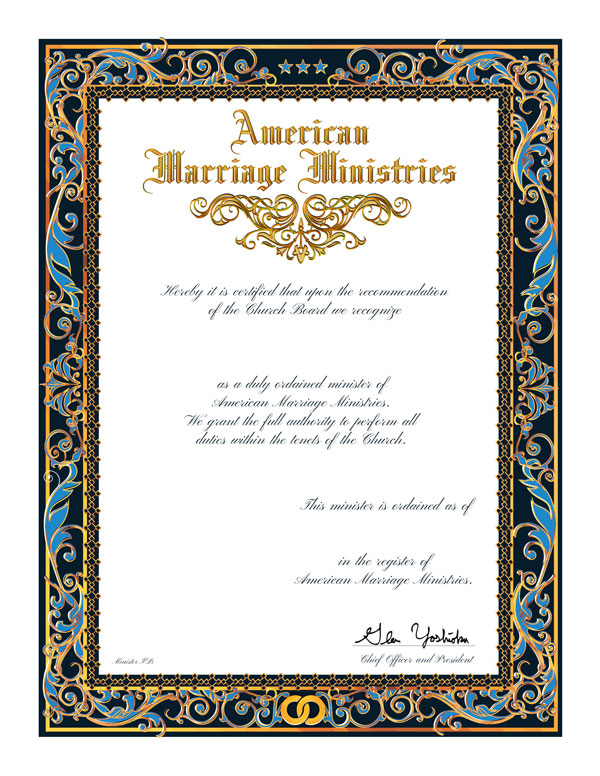
Most reputable online ordination services can get you ordained almost immediately after you fill out their form and pay a small fee. We’re talking minutes, maybe an hour if their server is having a bad day. You’ll get a confirmation email, and often a digital copy of your ordination certificate.
Think of it like signing up for a new streaming service. Fill in your details, click submit, and boom – you’re in. This is the fastest way to get ordained. Many people do this literally the day before the wedding they’re officiating.
Mailing Your Ordination Papers: The Waiting Game
While the ordination itself is instant online, actually getting a physical, signed, and sealed ordination document can take time. These are often mailed out. Depending on the provider and your location, this could take anywhere from a few days to a couple of weeks. Some places offer expedited shipping for an extra fee.
This is where you might hit a snag if the couple wants official proof of your credentials before the wedding day and you haven’t planned ahead. Is it Needed to have the physical document right away? Usually not, but it depends on the couple and the venue.
The Universal Life Church (ULC) Example
Take the Universal Life Church. Their ordination process is famously quick. You can literally be ordained online in minutes. They’ve streamlined it to be incredibly accessible. They aim to make it simple for anyone to officiate a wedding, no extensive training required upfront for the ordination itself.
This speed is a massive draw. It means less waiting and more doing. For many, the ULC ordination is a same-day affair. You complete the online form, and you’re officially a minister. It’s that straightforward for the initial step.
State Laws: The Real Timeline Dictator
Okay, here’s the big reality check. Your online ordination might be instant, but does that mean you can legally marry anyone, anywhere, tomorrow? Nope. State laws are the gatekeepers, and they vary wildly. This is where the timeline can really stretch.
States with No Specific Requirements
The easiest states are those that don’t impose any extra rules beyond having a valid ordination recognized by a religious body. In these cases, your quick online ordination is usually all you need. The time taken is simply the time it takes to get ordained online and perhaps receive your physical credential.
This is the ideal scenario. You do the online thing, maybe wait a week for a card in the mail, and you’re good to go. It’s about as fast as it gets without any major state-imposed delays. You’re looking at maybe a week or two total for everything.
States Requiring Registration or a Fee
Then you have states that require you to register with a county clerk or state office, sometimes paying a fee. This adds a layer of bureaucracy. You might need to submit your ordination certificate, fill out an application, and wait for approval. This could add anywhere from a few days to several weeks to your process.
For example, if you need to register in a specific state, that registration process can take time. It’s not usually months, but you can’t just show up and officiate. You have to get that official stamp of approval first.
States with Specific Minister Requirements
A few states have more detailed requirements. This might include being a registered voter, being over a certain age (usually 18, sometimes 21), or even requiring a specific number of training hours. Maryland used to be one of those places that had nuances, though processes can change. It’s always best to check current regulations. If you’re looking at officiating in a state like Maryland, you’d want to look up specific requirements, as they can be different from just getting a general ordination online. You might find resources detailing how to get ordained in Maryland, and that process might have its own timeline. Remember that state laws dictate the official timeline.
For instance, some jurisdictions might require the officiant to be ordained for a minimum period before they can solemnize a marriage. This is rare but does exist. Always research the specific marriage laws for the state where the wedding will take place. This due diligence can add a few extra weeks if you hit unexpected hurdles.
The Importance of Location-Specific Research
This can’t be stressed enough: ALWAYS check the laws for the specific state where the wedding will occur. A quick Google search like “wedding officiant requirements [State Name]” is your best friend. You might find websites that consolidate this information, helping you understand if there are extra steps beyond your initial ordination.
Don’t assume. Don’t guess. Getting it wrong means the marriage might not be legal, which is a disaster for the couple. So, factor in the time it takes to research and comply with local officiant regulations. This research phase itself might take a few hours, but it saves potentially weeks of delay later.
Beyond Ordination: Training and Preparation
Getting ordained is one thing. Being a good officiant? That’s another. Many people want to add a layer of preparation, which naturally adds to the overall timeline. This isn’t strictly about legal certification, but about competence and confidence.
Formal Officiant Training Courses
There are many courses and workshops available, both online and in-person, that teach you the art of crafting and delivering a wedding ceremony. These can range from a few hours to several weeks of study. They cover everything from writing vows to managing ceremony flow, handling difficult family dynamics, and even basic business practices for professional officiants.
These courses aren’t usually mandatory for legal ordination, but they are Crucial. If you’re aiming to be a professional, investing 4-8 weeks in training is a smart move. It elevates your service and ensures you’re not just reading from a script.
The All Faiths Ministry (AFM) Approach
Organizations like All Faiths Ministry offer resources and guidance that go beyond basic ordination. They often have blog posts and articles detailing the process, including suggested timelines for getting ordained, registering with states, and undertaking necessary training. Their timeline might suggest anywhere from a few days for ordination to several weeks for state registration and preparation.

Source : provenance.co
They emphasize that while ordination can be quick, becoming a fully prepared and confident officiant takes time. This involves learning, practicing, and understanding the legalities. It’s a Overall approach to becoming a wedding officiant.
Practicing Your Delivery
Even with ordination and training, practice makes perfect. Reading your ceremony script aloud, timing yourself, and even doing mock ceremonies can take additional time. This is especially true if you’re naturally nervous or if it’s your first time.
Don’t underestimate the value of rehearsal. You might spend a few hours over a week practicing your lines, your pauses, and your stage presence. It’s part of becoming a polished officiant.
Building Your Officiant Business
If you plan to do this professionally, there’s a whole other layer of time investment. This includes building a website, marketing, networking with other wedding vendors, setting your pricing, and understanding contracts. This isn’t about getting certified, but about building a sustainable business.
This phase can take months. You’re essentially launching a small business. So, while the legal aspect might be quick, becoming a successful professional officiant is a longer journey.
A Practical Timeline Breakdown (The Nitty-Gritty)
Let’s put some numbers to this. Remember, these are estimates and can change based on your specific situation and location.
The “Marrying My Cousin Next Saturday” Scenario
This is the absolute fastest you could possibly do it, assuming minimal hurdles:
- Day 1: Research state laws for the wedding location. Confirm they accept general online ordination.
- Day 1: Complete online ordination application (minutes to an hour). Receive digital confirmation.
- Day 1-3: Order physical ordination documents (optional, but good to have).
- Day 5-7: Wedding Day! Officiate the ceremony with your digital or physical ordination proof (if needed).
Total Time: Roughly 1 Week (if you’re lucky and diligent).
The “Professional Officiant Launch” Scenario
This is a more realistic timeline if you’re serious about this as a profession:
- Week 1: Online ordination and initial paperwork.
- Week 1-4: State registration process (if required). This varies wildly.
- Weeks 2-10: Complete a formal officiant training course.
- Weeks 4-12: Build website, marketing materials, and business infrastructure.
- Ongoing: Networking and client acquisition.
Total Time: 1-3 Months (minimum) to be fully set up and legally authorized.
Factors That Can Add Weeks or Months
What throws a wrench in the works?
- Complex State Requirements: Some states have more hoops than others.
- Backlogs in Mail/Processing: Bureaucracy moves at its own pace.
- Your Own Schedule: Finding time for training or paperwork isn’t always easy.
- Choosing the Right Organization: Some ordination bodies have slower processing for physical documents.
- Specific Religious Requirements: If you’re ordained through a traditional church, their internal process might take longer.
These delays aren’t uncommon and can easily add several extra weeks to your journey.
Data Deep Dive: Comparing Ordination Timelines
Let’s look at some typical timelines you might encounter. This table aims to give you a clearer picture of where time is spent.
| Process Step | Estimated Time (Fastest) | Estimated Time (Standard) | Potential Delays |
|---|---|---|---|
| Online Ordination Application | Minutes – 1 Hour | 1-2 Days | Server issues, verification steps |
| Receiving Physical Ordination Credential (Mail) | 3-5 Business Days (Expedited) | 1-3 Weeks | Postal delays, processing volume |
| State/County Registration/License | 1-2 Weeks (Simple online process) | 2-6 Weeks | Application review, background checks (rare), incomplete forms |
| Formal Officiant Training Course | /A (Self-paced modules) | 2-8 Weeks (Part-time study) | Difficulty scheduling, course availability |
| Business Setup (Website, etc.) | /A (Focus on legal first) | 4-12 Weeks (Concurrent with other steps) | Technical skills, marketing strategy development |
As you can see, the biggest variable is often the state registration process. Some are a breeze, others are a slog. Always budget more time than you think you’ll need.
Common Pitfalls: What Slows Down the Process?
Ever tried to get a simple permit and ended up in a bureaucratic maze? Officiant certification can feel like that sometimes. Here are the common traps that add time.
Assuming All States Are the Same
This is the number one mistake. Thinking that because your ordination was instant, you’re good to go everywhere. Big error. Each state, and sometimes even each county within a state, can have its own rules. What’s legal in California might be completely invalid in Texas.
Don’t get caught flat-footed. The time spent confirming state-specific officiant laws upfront saves you from having to scramble later, potentially missing a wedding date.
Using Unreputable Online Services
The internet is full of ordination mills. Some are legitimate non-denominational churches, others are less so. If a service promises ordination in minutes for $10 with absolutely no questions asked, be skeptical. While fast, they might not be recognized in all jurisdictions. This can lead to needing to get re-ordained through a more credible source, doubling your time.
Stick to well-known organizations like the Universal Life Church or similar established interfaith ministries. The credibility of your ordination source matters.
Not Reading the Fine Print
Did you check if your ordination is valid for civil ceremonies only? Or does it cover religious ones too? Are there any restrictions based on the couple’s beliefs? Some services might have fine print about geographical limitations or specific types of ceremonies they authorize. It’s boring, but Key.
Reading the terms of service or FAQ on the ordination website can save you a lot of headaches. It’s about understanding the scope of your newly acquired officiant authority.
Source : theamm.org
Procrastination and Lack of Planning
This is human nature, right? You’ve got plenty of time. Then suddenly, the wedding is next month, and you haven’t even started. Last-minute rushes often lead to mistakes, paying extra for expedited shipping or services, and unnecessary stress.
Getting ordained and prepared should be a proactive step. Treat it like any other important task. Give yourself Plenty of lead time, especially if you’re aiming for a professional path. That proactive approach saves time and sanity.
Is There a “Standard” Timeframe? The Middle Ground
If we had to pick a “typical” timeframe for someone who wants to be a legit, prepared officiant, what would it look like? It’s not the lightning-fast “marry your friend tomorrow” scenario, nor the months-long business launch.
The “Ready-to-Go” Officiant
For someone who wants to be legally authorized and feel reasonably prepared, without necessarily launching a full-time business immediately, a realistic timeframe might be:
- 2-4 Weeks: Complete online ordination, receive physical documents, and navigate any state registration requirements. This assumes a relatively straightforward state process.
- + 2-4 Weeks: Engage in focused self-study or a short online course on ceremony crafting and delivery.
So, you’re looking at a total of 4-8 weeks from deciding to become an officiant to feeling ready and legally authorized for your first few ceremonies.
Why This Middle Ground Works
This timeframe balances speed with thoroughness. You’re not rushing the legalities, and you’re giving yourself enough time to gain confidence in your ability to perform a meaningful ceremony. It avoids the panic of last-minute ordination while not requiring the extensive time investment of a full business launch.
It allows for the common delays, like waiting for mail or state approvals, without causing major stress. It’s the sweet spot for many who want to officiate weddings without it becoming an overwhelming project.
Final Thoughts: Time is Relative, Preparation is Key
So, how long does it take? It truly depends. It can be as little as a few days if you’re marrying your brother next weekend and living in a state with zero extra requirements. Or it can stretch into months if you’re building a professional practice and Handling complex state laws.
The Key takeaway isn’t just the number of days or weeks. It’s about understanding the different components: ordination, legal compliance, and personal preparation. Each adds time. Prioritize what you need based on your goal.
Don’t rush the legalities. Do your homework on state laws. And if you’re serious about this, invest a little time in learning the craft. The couples you marry deserve a officiant who is both legally authorized and genuinely prepared to make their day special. That preparation? That’s where the real value lies, regardless of how quickly you get ordained.
Frequently Asked Questions
What’s the difference between being licensed and ordained?
So, it’s a little different depending on where you are. Some states require you to be licensed by the county or state, which means you’ve met their specific legal requirements. Ordination, on the other hand, is usually granted by a religious institution or an online ministry. Often, online ordination is all you need to legally officiate in many places, but you gotta check your local laws!
How much does an officiant get paid for a wedding?
Because pay reallyvaries! For a friend or family member officiating as a favor, often nothing, maybe a thoughtful gift. For professional officiants, prices can range from a few hundred bucks to over a thousand, depending on experience, location, and how elaborate the ceremony is. Some charge extra for things like pre-marital counseling.
Can I get ordained online quickly?
But yeah, you totally can! Many online ordination services are super fast. You basically fill out a form, and sometimes you can be ordained in minutes. It’s pretty straightforward for most of these platforms. Just remember this might not cover all legal requirements everywhere, so always double-check.
Is there a waiting period after getting ordained to officiate?
Generally, no. Because once you’re ordained or get your officiant license, you can usually perform ceremonies right away. There’s no mandatory waiting period like you might have for, say, getting a marriage license yourself. The key is being legally recognized in the specific jurisdiction where the wedding takes place.
Do I need to renew my ordination or license?
It depends! Some online ordinations are for life, while others might require a renewal fee every year or two. State licenses, if you need one, will definitely have renewal requirements and fees. It’s Key to know the specifics for wherever you plan to officiate to stay on the right side of the law.
