How Much Does A Personal Trainer Certification Cost?
So, you’re thinking about becoming a personal trainer, huh? That’s awesome. It’s a rewarding gig, helping people smash their fitness goals. But before you start dreaming of clients and killer workouts, there’s a big question looming: how much does a personal trainer certification cost? It’s not a one-size-fits-all answer, and frankly, some of the sticker shock might surprise you. Let’s break it down, shall we? Because slapping a certification on your wall without understanding the investment? That’s a rookie mistake you don’t want to make.
Think of it like buying a car. You could get a clunker for next to nothing, or you could drop a serious chunk of change on a luxury model. Both get you from A to B, but the experience, reliability, and what you can do with it are vastly different. Your certification is the same. You need to know what you’re getting for your money, and if it’s actually going to help you build a real career.
The Real Price Tag: What Drives Certification Costs?

Source : prnewswire.com
It’s Not Just the Exam Fee
People often think the cost is just the final exam. Nope. That’s rarely the case. Most reputable certifications bundle study materials, practice exams, and even access to support staff. Some go further, offering video lectures, anatomy diagrams, and client management tools. The more Full the package, the higher the price, naturally. It’s all about what you need to actually pass and succeed.
Reputation and Accreditation Matter
You’ll notice that certifications from bodies like the National Commission for Certifying Agencies (NCCA) tend to cost more. Why? Because they’re the gold standard. They have rigorous testing procedures and require continuing education units (CEUs) to keep your certification current. Think of it like getting a degree from a well-respected university versus a diploma mill. The value and recognition are worlds apart. Accredited certs carry weight with employers and clients.
Study Materials: From Basic PDFs to Premium Courses
The cost can also hinge on the quality and type of study materials provided. Are you getting a stack of PDFs you have to slog through? Or is it an interactive online course with engaging videos, quizzes, and even live Q&A sessions? Some top-tier programs even throw in business development modules. Honestly, if the materials are too basic, you might end up buying extra resources anyway. That adds to the overall cost.
Bundles, Packages, and Upsells
Be aware of different package levels. Many organizations offer tiered options: a basic exam-only package, a standard package with study guides, and a premium package that might include extra specialized certifications (like nutrition or corrective exercise) or even business coaching. They’re designed to entice you to spend more, often by highlighting benefits you might not initially think you need. Weigh whether those extras are worth it for your specific goals.
Deconstructing Popular Personal Trainer Certifications by Price
The Big Players: NASM, ACE, ISSA, ACSM, NSCA
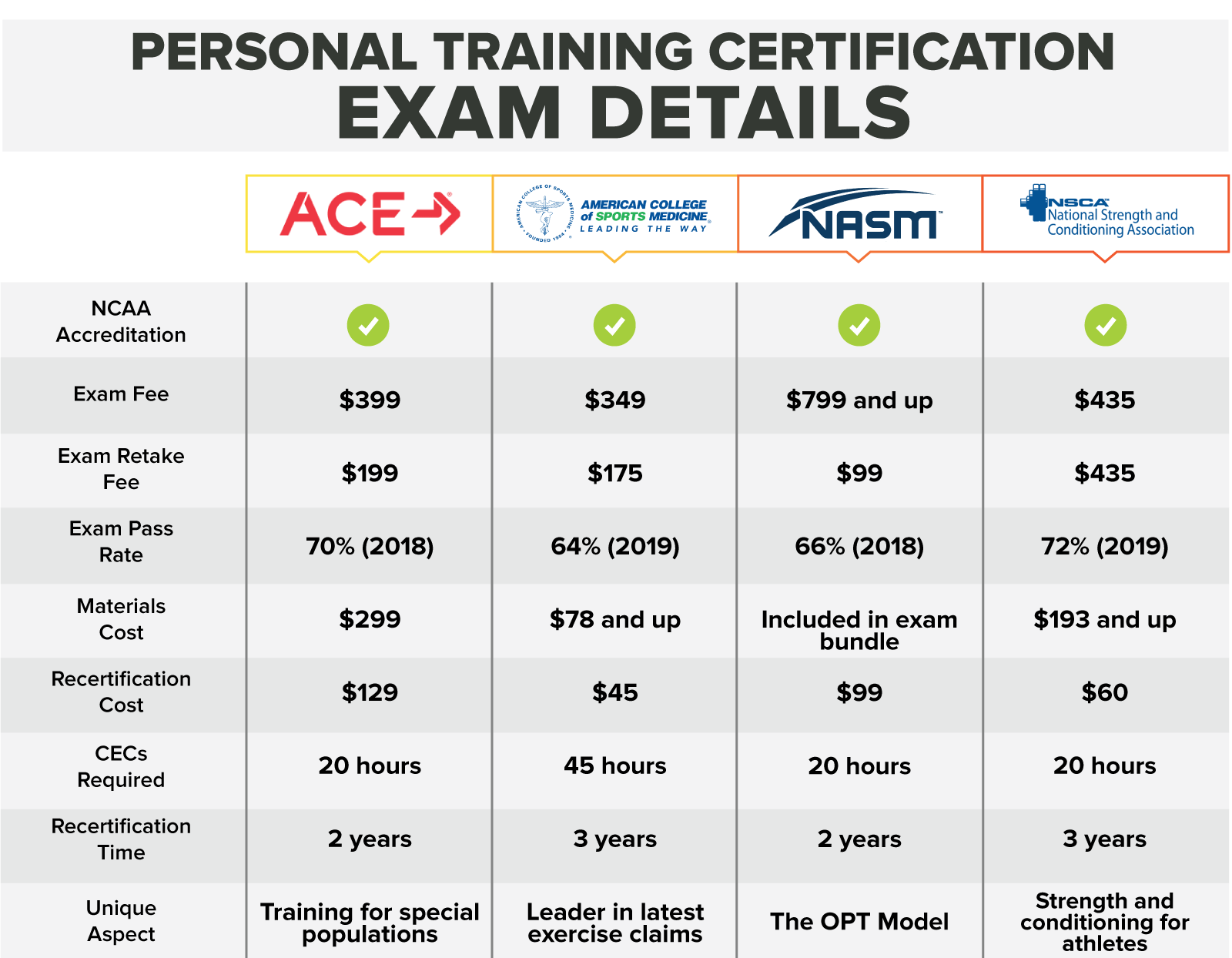
Let’s get down to brass tacks. You’ve probably heard of the major players: NASM, ACE, ISSA, ACSM, and NSCA. Their prices can vary significantly, not just between organizations, but within them depending on the package you choose. For instance, the National Academy of Sports Medicine (NASM) often has several different study bundles, ranging from around $700 to well over $1,000. It pays to shop around their websites.
Source : ptpioneer.com
Budget-Friendly Options and Their Trade-offs
On the lower end, you might find certifications for a few hundred dollars. Organizations like the American College of Sports Medicine (ACSM) can sometimes offer just the exam for a lower price if you’re already a student or member. But here’s the catch: often, these lower-cost options come with fewer study materials or might not be as widely recognized by gyms and fitness facilities. You really need to ask yourself if saving a couple hundred bucks now is worth potentially hindering your job prospects later.
What About Exam-Only Prices?
Some certifications allow you to purchase just the exam voucher. This is typically the cheapest route if you feel confident in your existing knowledge or if you plan to self-study extensively using external resources. However, it’s a gamble. If you fail, you’ll likely have to repurchase the exam, which negates any initial savings. It’s a path for the very confident or those with a strong academic background.
International vs. National Recognition
Are you planning to work solely in your home country, or do you have aspirations to train clients internationally? Some certifications have broader global recognition than others. While the core knowledge is similar, the name and reputation can matter more in certain markets. This isn’t directly a cost factor, but it influences which certification you should choose, and So, which price point you’ll encounter.
Cost Breakdown: What Exactly Are You Paying For?
Study Materials and Textbooks
This is usually the biggest chunk of the cost. You’re paying for Full study guides, often thick textbooks covering anatomy, physiology, kinesiology, exercise science, program design, nutrition basics, and client assessment. Some programs also include practice quizzes and flashcards to help you reinforce key concepts.
Practice Exams and Quizzes
Feeling prepared is Key. Reputable certifications will offer practice exams that mimic the real test’s format and difficulty. These are Crucial for identifying your weak spots and getting comfortable with the exam structure. It’s like a dress rehearsal for your certification test, and that peace of mind has a price.
The Actual Exam Fee
This is the non-negotiable part. Once you’ve studied and feel ready, you pay to take the official certification exam. This fee covers the administration of the test, grading, and issuing your certificate upon successful completion. Don’t underestimate the anxiety this fee can cause; passing on the first try is definitely the goal.
Renewal Fees and Continuing Education Units (CEUs)
Here’s a hidden cost many forget: certifications aren’t a one-and-done deal. Most require renewal every two to three years. This renewal typically involves a fee and proof that you’ve completed a certain number of Continuing Education Units (CEUs). These CEUs are earned by attending workshops, taking advanced courses, or reading industry publications. So, factor in recurring costs for staying certified long-term.
Hidden Costs That Sneak Up On You
Specialty Certifications
Want to specialize in areas like corrective exercise, sports performance, pre/postnatal fitness, or senior fitness? Most organizations offer additional specialty certifications. These often come with their own price tags, ranging from a couple hundred to over a thousand dollars, depending on the depth of the material and the issuing body. It’s how you differentiate yourself in a crowded market.
Membership Fees
Some certification bodies, like the NSCA, have tiered membership options. Being a member might give you a discount on the certification exam and access to exclusive resources, journals, and networking opportunities. However, these memberships usually require annual or monthly fees. You need to calculate if the savings on the certification and the value of the member benefits outweigh the recurring cost.
Study Materials Beyond the Provided Package
Let’s be honest, sometimes the provided study materials just aren’t enough. You might want to buy additional textbooks, online courses from different providers, or attend live workshops to get a different perspective. This is especially true if you’re a visual or auditory learner and the core material is text-heavy. These supplementary resources can add up quickly.
Travel and Accommodation for Exams
While most exams are now online or available at testing centers, some may still require you to travel. If the nearest testing center is hours away, you’ll incur costs for gas, maybe a hotel stay, and meals. This is less common now but still a possibility depending on the certification and your location. Always check the testing logistics.
Comparing Top Certifications: A Price and Value Snapshot
National Academy of Sports Medicine (NASM)
NASM is a big name, and their pricing reflects that. Their Certified Personal Trainer (CPT) program often starts around $948 for their premium package, which includes extensive study materials, practice exams, and business tools. Cheaper options exist, but they typically offer less support. It’s a solid, widely recognized certification, so many feel the investment is justified.
American Council on Exercise (ACE)
ACE is another highly respected certification. Their ACE Personal Trainer study program generally falls in the $700-$900 range, depending on the current sales and package selected. They focus heavily on evidence-based practices and client-centered approaches. ACE is known for its Full study guides and is a strong choice for credibility.
Source : fpti.edu
International Sports Sciences Association (ISSA)
ISSA often positions itself as a more accessible option, with prices that can start around $868 but frequently have sales that bring it down significantly. They offer a lifetime certification (no renewal fees!) and a free business coaching program. This “lifetime” aspect is a major draw for many, potentially saving money down the road.
American College of Sports Medicine (ACSM)
ACSM is highly regarded, especially for its scientific rigor. Their certification exam alone can be around $310, but this often excludes Full study materials. If you opt for their full package with study aids, the price jumps considerably, often placing it in a similar bracket to NASM or ACE. It’s a fantastic choice if you want a deep scientific foundation.
National Strength and Conditioning Association (NSCA)
The NSCA’s Certified Strength and Conditioning Specialist (CSCS) is often seen as a higher-level certification, geared more towards athletes and performance. The exam fee alone can be around $300-$400, but this often requires NSCA membership. Bundled packages with study materials will push the price much higher. This is the certification for those aiming for high-performance coaching.
National Council on Strength & Fitness (NCSF)
NCSF offers certifications that can start around $899. They aim for a balance between Full study and a reasonable price point. They emphasize practical application and evidence-based training principles. It’s a solid mid-range option that provides good value for money.
The Value Proposition: Is a Certification Worth the Cost?
Employer Recognition and Job Opportunities
Let’s face it, most gyms and fitness facilities want to see a recognized certification before they’ll hire you. A certification from a reputable organization like NASM, ACE, or ACSM signals to employers that you have a baseline level of knowledge and competency. This can directly translate into getting more job interviews and potentially higher starting pay.
Building Client Trust and Credibility
When a potential client is looking for a trainer, they’re often comparing multiple options. Having a certification from a well-known and accredited body instantly builds trust. It shows you’ve invested in your education and are serious about your profession. This credibility is Crucial for attracting and retaining clients, especially if you plan to work independently.
Developing Needed Knowledge and Skills
The cost of a certification is an investment in your education. The study materials and exam itself force you to learn about human anatomy, physiology, biomechanics, exercise programming, client assessment, and safety protocols. This knowledge isn’t just for passing the test; it’s the foundation upon which you’ll build effective, safe, and results-driven training programs for your clients. You can’t effectively help people without this.
Long-Term Career Growth and Specialization
Your initial certification is just the starting point. The knowledge gained opens doors to advanced specializations and higher-level certifications. Investing in a good foundational certification makes it easier and often cheaper to pursue these further credentials down the line, allowing you to increase your expertise, command higher rates, and advance your career.
Investing Wisely: Choosing the Right Certification for Your Budget
Define Your Career Goals First
Are you aiming to work at a high-end gym, train elite athletes, or start your own online coaching business? Your goals should dictate which certification is most valuable. A CSCS might be perfect for an athlete-focused trainer, while an ACE certification might be better for someone focused on general population fitness. Choosing the right one upfront saves money in the long run.
Take Advantage of Sales and Discounts
Many certification organizations run sales throughout the year, especially around holidays or during specific seasons. Keep an eye on their websites and sign up for their newsletters. You can often save a few hundred dollars by timing your purchase correctly. Patience can truly pay off financially.
Consider Payment Plans
If the upfront cost is a hurdle, look for organizations that offer payment plans. Many allow you to spread the cost of the certification over several months, making it more manageable for your budget. This allows you to start your education without draining your savings. Just be sure to understand the total cost with interest, if any.
Evaluate the “Bang for Your Buck”
Don’t just look at the price tag; look at what’s included. A slightly more expensive certification that comes with Full study materials, excellent customer support, and practice exams might be a better value than a cheaper option that leaves you scrambling for resources. Read reviews and compare course outlines. A comparison of personal trainer certifications is Needed here. You want the best educational foundation for your money, not just the cheapest piece of paper. This is about building a sustainable career.
Beyond the Certification: Other Costs to Consider

Source : hevycoach.com
CPR/AED Certification
Virtually all employers and certification bodies require you to have current CPR and AED certification. This is usually a separate course that costs around $50-$100 and needs to be renewed periodically, typically every two years. It’s a small but Key cost for ensuring client safety.
Liability Insurance
If you plan to train clients independently, whether in a gym or on your own, liability insurance is non-negotiable. This protects you financially if a client gets injured while training with you. Premiums vary based on coverage, but expect to pay anywhere from $100 to $500 per year. It’s a Key part of protecting your business.
Training Equipment and Apparel
While some gyms provide equipment, you might need your own basic gear, especially if you plan to do in-home training or outdoor sessions. This could include resistance bands, a jump rope, and comfortable, professional-looking workout attire. Don’t go overboard initially, but factor in a small budget for Needed gear.
Continuing Education for Specialization
Your initial certification is just the start. To stay current and grow your expertise, you’ll want to pursue specialized certifications or workshops. These ongoing educational costs can range from hundreds to thousands of dollars over your career, but they are key to long-term success and higher earning potential.
The Bottom Line: Certifications Are an Investment, Not Just an Expense
Prioritize Value Over Price
While budget is certainly a factor, remember that your certification is the Foundation of your career. Choosing the cheapest option available might seem appealing, but it could mean compromising on the quality of education, employer recognition, or client trust. Look for the certification that offers the best overall value and aligns with your professional aspirations.
Budget for the Total Picture
Don’t just look at the certification price. Factor in the costs of CPR/AED, liability insurance, potential CEUs, and any specialized training you envision. Planning for these additional expenses will give you a more realistic understanding of the total financial commitment required to launch and sustain your career as a personal trainer. This Overall view is Key for financial preparedness.
The ROI is Significant
The cost of a personal trainer certification, when chosen wisely, is an investment that pays dividends. The knowledge you gain, the credibility it affords you, and the job opportunities it opens up can lead to a fulfilling and financially rewarding career. Think about how much it costs to become a personal trainer in the grand scheme of things – it’s often a small price for a career you’ll love. The return on investment is, for many, immeasurable.
| Certification Body | Estimated Base Cost (USD) | Typical Package Inclusions | Accreditation | Renewal Frequency |
|---|---|---|---|---|
| NASM | $948+ | Study guides, video lectures, practice exams, business tools | NCCA | 2 years |
| ACE | $700 – $900 | Textbooks, study guides, practice exams, exercise science focus | NCCA | 2 years |
| ISSA | $868+ (often discounted) | Online study, lifetime cert (no renewal fee), business coaching | DEAC | None (Lifetime) |
| ACSM | $310 (exam only) / Higher for packages | Scientific focus, exam voucher, optional study materials | NCCA | 3 years |
| NSCA (CSCS) | $300 – $400 (exam + membership) / Higher for packages | Performance focus, exam voucher, requires membership | NCCA | 3 years |
| NCSF | $899+ | Study materials, practice exams, practical application focus | NCCA | 2 years |
Frequently Asked Questions
How much does a personal training certification cost?
Because it really varies! You’re looking at anywhere from about $300 to $1,000, give or take. Some personal trainer certifications are super basic and cheap, while others are more Full and include study materials, practice exams, and even business coaching. Gotta figure out what’s best for your budget and goals.
Is 40 too old to become a personal trainer?
No way! Seriously, age is just a number in this biz. Lots of people get into personal training later in life, bringing a ton of real-world experience and maturity that clients actually love. Plus, you probably have a better understanding of what it’s like to stay fit as you get older. It’s a great career change option.
What’s the cheapest way to get certified?
But honestly, the cheapest options often come from organizations that aren’t as widely recognized. You can find certifications for under $200, but make sure they’re actually accredited. Sometimes, it’s worth spending a little more for a reputable cert that employers will respect. Look out for sales and package deals too!
Are there ongoing costs after getting certified?
Yeah, there are. Most certifications require you to renew them every couple of years, and that usually has a fee. Plus, you might want to invest in continuing education courses to keep your skills sharp and fulfill renewal requirements. Don’t forget about costs for things like liability insurance and maybe even gym memberships if you’re not working for a facility.
Which personal trainer certification is the best?
That’s the million-dollar question! ‘Best’ really depends on what you want. Some are super respected, like ACE, NASM, and ACSM. Think about what specialties you’re interested in, like corrective exercise or strength and conditioning. Researching the accreditation and what each program covers is key to finding the right fit for your career path.
