Forget everything you think you know about getting certified. This isn’t some stuffy textbook chapter; it’s your roadmap to becoming an automotive rockstar. You want to stand out? You want customers to trust you implicitly with their prized vehicles? Then listen up. Getting that ASE certification is your ticket.
Seriously, it’s the gold standard. Think about it. You’re not just turning a wrench; you’re a diagnostician, a problem-solver, a magician with a toolkit. And the world needs to know it. That’s where ASE comes in.
So, how do you actually get there? It’s a process, sure, but it’s totally doable. We’re going to break it all down, no fluff, just the facts you need to get that sweet, sweet certification.
The Real Deal Behind ASE Certification
Alright, let’s cut to the chase. What is ASE, anyway? It’s the National Institute for Automotive Service Excellence. Catchy, right? But it’s way more than just a fancy name.
It’s a group that sets the bar. They create tests that prove you know your stuff. And when you pass, you get a certificate. Simple as that. But the impact? Huge.
It’s not just about bragging rights. Shops actively look for ASE certified technicians. It tells them you’re reliable, you’re skilled, and you’re serious about this career. They know you won’t be guessing; you’ll be fixing it right the first time.
Why Your Boss (and Your Wallet) Cares
Let’s be blunt. Businesses aren’t charities. They want competent people who can do the job efficiently. An ASE certification is a flashing neon sign saying, “Hire me!” or “Promote me!” It directly translates to better job prospects and, let’s not forget, better pay.
Guy running the local garage, the one with the loyal customer base. Chances are, he’s got the ASE badges plastered on his wall. It builds instant credibility. Customers feel safer leaving their cars there.
It’s a competitive edge. In a sea of mechanics, being ASE certified makes you a captain. You’re the one they trust when the check engine light comes on and the stakes feel high.
The Credibility Factor: It’s All About Trust
We’ve all heard horror stories about shoddy car repairs, right? People getting ripped off. ASE certification helps combat that. It’s a promise to the consumer that you’ve passed rigorous tests.
It’s not some easy online quiz you can cheat on. These are real exams designed to test your knowledge and practical skills. Passing them means you’ve earned the trust of the industry, and that’s massive.
This trust is Crucial. It means repeat business for your shop and a stellar reputation for you. People recommend shops with certified mechanics. It’s a virtuous cycle.
Getting Your Hands Dirty: The Experience Requirement
Source : uti.edu

Okay, so you can’t just walk in off the street and ace these tests. There’s a catch, and it’s a big one. You need experience. Real, hands-on, greasy-knuckle experience.
ASE isn’t handing out badges for reading manuals. They want to see you in action. They want proof that you can actually do the things the tests say you can do.
This isn’t a bad thing, mind you. It’s actually Needed. How else are you supposed to learn the nuances of a tricky transmission or the electrical gremlins in a modern hybrid?
How Much Time Do You Really Need?
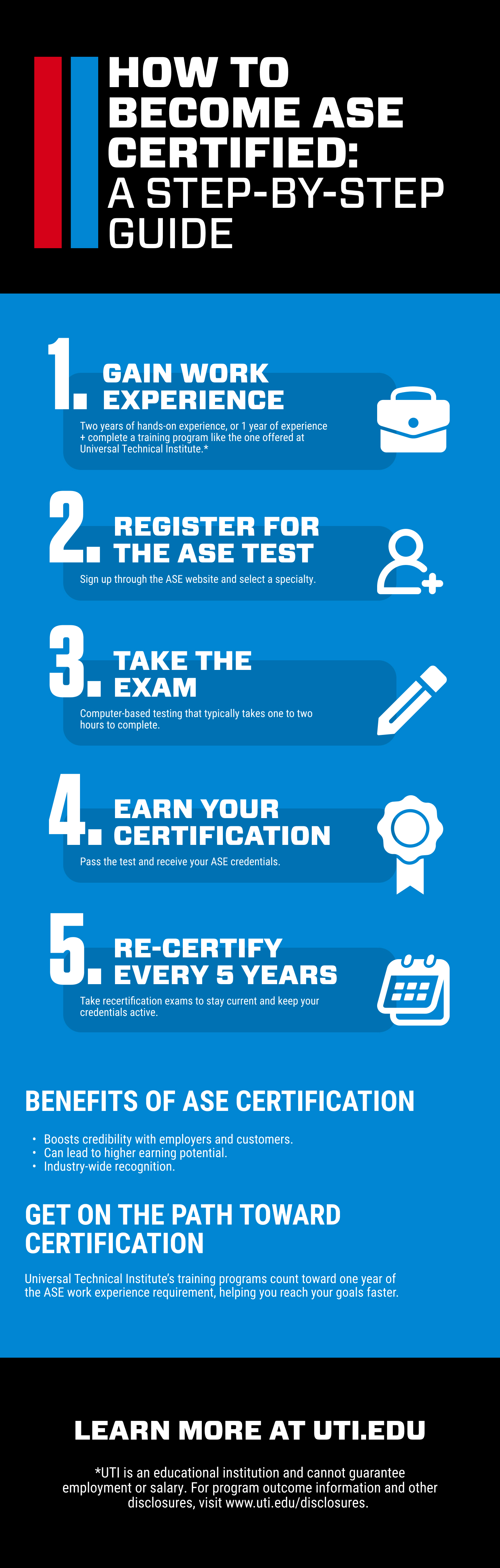
The magic number. ASE requires a specific amount of practical work experience. Generally, it’s two years of full-time experience in the specific repair area you want to get certified in.
But here’s a little secret: Education can count. If you’ve completed a relevant post-secondary automotive program (think community college or a vocational school), that can often substitute for up to one year of the required work experience. It’s a nice little shortcut if you’ve been hitting the books.
So, if you’re fresh out of school with a year of good training, you might only need one more year on the job. Check the official ASE work experience guidelines to get the exact details for your situation. Don’t guess on this stuff.
What Counts as “Qualified” Experience?
This is where people get tripped up. Not every wrench-turning job is created equal in ASE’s eyes. They’re looking for experience in the actual repair and diagnostic aspects of automotive service.
Working as a lube tech is great for getting your foot in the door, but it might not count as highly as diagnosing a complex electrical issue. Think about jobs where you’re actively solving problems, not just performing routine maintenance.
And yes, the experience needs to be recent. You can’t pull experience from 20 years ago and expect it to fly. Generally, the experience needs to be within the last five years. So, keep that logbook updated!
Building Your Experience Resume
So, you’re still in school or just starting out. How do you build this resume? Simple: Seek out opportunities. Don’t be afraid to ask for more responsibility at your current job.
Volunteer for the tougher jobs. Learn from the experienced techs around you. Ask questions. A lot of questions. The more exposure you get to different systems and repair types, the better.
Even part-time work can add up over time. Keep track of your hours and the types of work you’re doing. Documenting everything is key. You’ll thank yourself later when you’re filling out that application.
The Different ASE Certifications: Which Path is Yours?

Source : brightshiftinc.com
ASE doesn’t just have one giant test for “car repair.” They’ve broken it down into specific areas. This is awesome because it lets you specialize and become a true expert in a particular field.
You’ve got tests for light trucks, heavy trucks, school buses, collision repair, even advanced engine performance. You name it, there’s probably a certification for it.
Picking the right one is Key. It needs to Match with your current job and your career aspirations. Don’t just randomly pick a test because the name sounds cool. Be strategic.
The Core Light Vehicle Certifications (Tiers)
This is the big one for most folks working on everyday cars. We’re talking about the A Series tests. There are eight of them, covering everything from engine repair to heating and air conditioning.
Passing all eight of these gets you the title of “ASE Master Certified Technician.” That’s a big deal. It shows you have a broad, solid understanding of light vehicle systems.
Think of it like earning your stripes. Each ‘A’ test is a challenge, and mastering them all sets you apart significantly. It’s the Standard for many dealerships and independent shops.
Specialized Certifications: Going Deeper
Beyond the A Series, things get more specialized. You might have the P Series for Parts Specialists, the L Series forверотехники, or the G Series for Exhaust Systems Specialists. (Okay, I made up the last one, but you get the idea.)
There are also the advanced-level tests, like the L1 (Advanced Engine Performance Specialist) and the L3 (Light Duty Hybrid/Electric Vehicle Specialist). These are tough nuts to crack and prove you’re at the cutting edge of automotive technology.
These specialized certs are killer for career advancement. If you want to be the go-to person for electrical diagnostics or hybrid repair, these are your targets. They show you’ve gone the extra mile.
The ASE Medium-Heavy Duty Truck Certifications (700 Series)
Not everyone works on sedans and SUVs. If you’re wrenching on eighteen-wheelers or massive buses, you need the truck certifications. This is the 700 Series.
It covers everything from diesel engines and brakes to suspension and steering for these behemoths. These vehicles are complex and require a different kind of expertise.
Getting certified in heavy-duty truck repair opens up a whole different job market. Think fleet maintenance, large repair facilities, and specialized truck dealerships. It’s a lucrative niche if you’ve got the inclination.
The ASE Test Itself: What to Expect
Source : uti.edu
So, you’ve got the experience, you’ve picked your test. Now comes the main event: the actual exam. Let’s talk about what you’re walking into. It’s computer-based now, which is a good thing.
No more paper tests getting smudged with grease. You book your appointment at a local testing center, head in, and take the test on a computer. Pretty standard stuff for professional certifications these days.
Watch: ASE Certification Experience & Education Requirements
The key is to be prepared. These aren’t multiple-choice questions designed to trick you. They’re designed to test your genuine knowledge and problem-solving abilities.
Format and Question Style
Expect a mix of question types, but mostly multiple-choice. However, they’re not simple recall questions. They often present a scenario—a customer complaint, a diagnostic reading—and ask you to identify the most likely cause or the correct procedure.
Some questions might even include diagrams or pictures to help illustrate the problem. You’ll need to be able to interpret technical information accurately. It requires more than just memorizing facts; it demands understanding.
For the advanced tests, you might even encounter practical, hands-on simulation questions. Think about being asked to interpret scanner data or identify faulty components based on technical specifications. It’s designed to mirror real-world diagnostics.
Scoring and Passing Criteria
How do you know if you passed? ASE uses a scaled scoring system. You need to reach a certain scaled score to pass each test. The exact number can vary slightly, but it’s generally in the ballpark of 70% correct answers.
The important thing is that they don’t just publish the raw percentage. They use a psychometric scaling method to Make sure fairness across different test versions and administrations. What this means for you? Just focus on knowing the material cold.
You’ll usually get your results relatively quickly, often available online within a few weeks after your test date. Keep an eye on your account on the ASE website. That’s where the good news (or the “try again” notification) will appear.
Strategies for Test Day Success
Okay, test day is looming. First rule: get a good night’s sleep. Seriously. You can’t think straight when you’re running on fumes.
Arrive early. Know where the testing center is, how long it takes to get there, and factor in time for traffic or unexpected delays. You don’t need that added stress.
During the test, read each question carefully. Twice if you need to. Don’t rush. If a question stumps you, flag it and come back to it later. Better to answer the ones you know first and save the tough ones for last.
Alright, let’s dive deeper. You’ve got the itch to get that ASE certification, but maybe the whole “experience required” thing feels like a closed door. Don’t sweat it. We’re gonna bust that door down.
How To Become Ase Certified Mechanic Without Experience
Source : pennfoster.edu
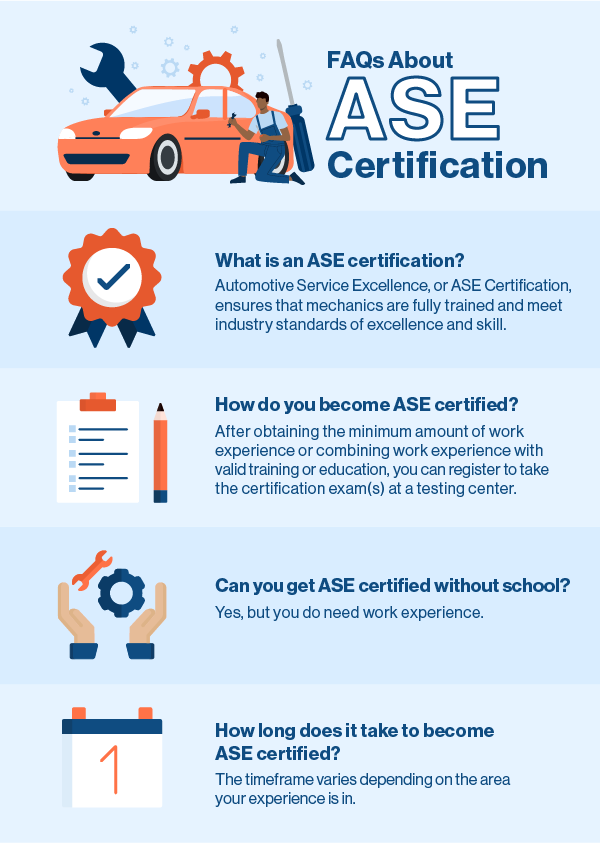
So, you’re staring at the ASE requirements, and it feels like you need to have been wrenching on cars since you were in diapers. The truth? It’s not quite that extreme, but you absolutely need a plan if you’re starting from zero.
Building Foundational Knowledge
Look, nobody expects you to know everything on day one. But you gotta start somewhere. Think about heading to a local community college for some basic automotive classes. Get your hands dirty, learn the lingo. It’s all about laying that groundwork.
The Power of Entry-Level Positions
Here’s the real kicker for those without experience: get an entry-level job. Seriously. Find a shop that’s willing to train. You might be starting out as a lube tech or a general service helper. It’s not glamorous, but it’s your ticket to clocking those hours. This is how you gain practical skills.
Apprenticeships and Mentorship
Don’t underestimate the value of a good apprenticeship. Some shops will literally pay you to learn and work. You get a mentor, someone who’s been there, done that. They’ll show you the ropes, correct your mistakes before they become bad habits. It’s Crucial for building your confidence.
Strategic Study Before Testing
Even without direct experience, you can ace these tests with smart studying. Focus on the specific areas you’ll be tested on. There are tons of resources out there. Knowing the theory is half the battle, especially when you’re first getting started. Make sure you understand the concepts.
What Are The Different Types Of Ase Certifications Available

Source : mightyautoparts.com
ASE isn’t just one big test; it’s a whole suite of specialized certifications. Think of it like getting different colored belts in martial arts, but for fixing cars. You gotta know which ones are out there to pick your path.
Core Passenger Car and Light Truck Certifications
These are your bread and butter if you’re working on everyday vehicles. We’re talking about the A1-A8 series. The A1 is Engine Repair, A2 is Automatic Transmission, A3 is Manual Drivetrain. Then you’ve got brakes, suspension, steering, electrical systems, HVAC, and engine performance. Each one is a specific skill set tested.
Truck and Diesel Engine Certifications
Got a love for the big rigs? ASE has you covered. The A S series focuses on Medium-Heavy Duty Truck. You’ll find certifications for Engine Repair, Drivetrain, Brakes, Suspension and Steering, Electrical Systems, and more. These are Key if you’re eyeing a career in the trucking industry. They’re demanding tests, for sure.
Collision Repair and Refinishing Certifications
For those who prefer making things look good as much as making them run right, there are the L series certifications. L1 is Electronic Diesel Engine Diagnosis, L2 is Electronic Gasoline Engine Diagnosis. Then there are the collision repair ones like A6 (Electrical/Electronic Systems), A9 (Hybrid/Electric Vehicle Specialist), and the A4 (Suspension and Steering) which are highly relevant.
Specialty and Master Certifications
And then you have the specialists. Think hybrids, alternative fuels, and advanced diagnostics. The M series certifications are for the true gurus. Passing a set of specific tests can earn you the coveted ASE Master Technician status. It’s a big deal, showing you’ve mastered a broad range of skills.
How Much Does It Cost To Take The Ase Certification Tests
Source : asetestprep.com
Let’s talk brass tacks. Getting certified isn’t free, and costs can add up if you’re aiming for multiple certs. You gotta budget for this, plain and simple.
Exam Registration Fees
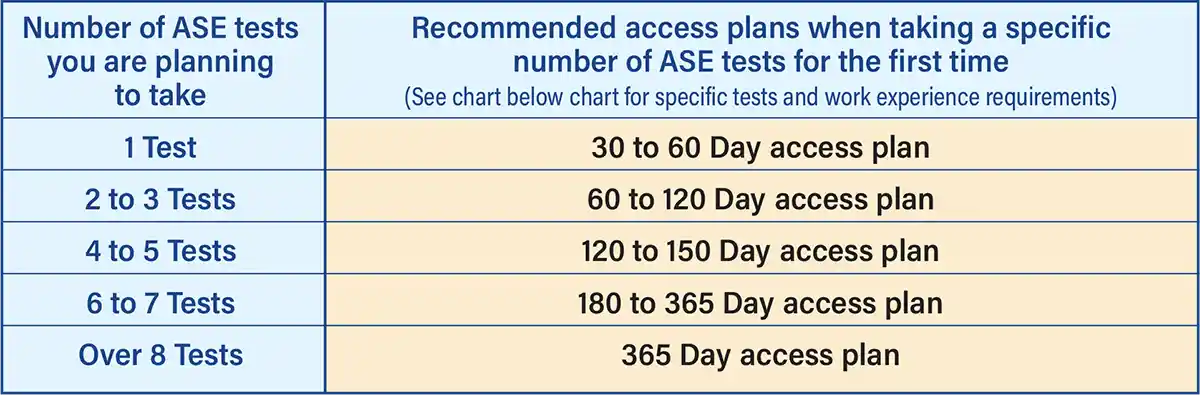
The basic registration fee is what gets your foot in the door for each test series. It’s a set amount you pay to ASE to even schedule your appointment. This fee typically covers a window of time during which you can take your chosen tests. It’s the initial investment you’ll make.
Test Center Fees
On top of the registration fee, you’ll often have a fee for the actual testing center. These are the places where you sit down at a computer and take the exam. The cost can vary slightly depending on the testing provider and location. Think of it as the price of admission to the testing facility.
Recertification Costs
Remember, certifications aren’t forever. You’ll need to recertify periodically. This means taking and passing another test, and yes, there are fees associated with that too. It’s an ongoing cost of maintaining your professional credentials.
Study Material Expenses
While not a direct ASE fee, don’t forget about the cost of study materials. Books, online courses, practice tests – these all add up. Investing in good study resources can significantly boost your chances of passing, making the overall expense more worthwhile. It’s a Key part of your preparation.
| Fee Type | Estimated Cost Range (USD) | Notes |
|---|---|---|
| Initial Test Registration Fee (per series) | $30 – $40 | Covers a block of tests during a testing window. |
| Test Center Administration Fee | $10 – $20 | Paid directly to the testing facility, often per test session. |
| Recertification Fee (per test) | $30 – $40 | Similar to initial registration, required every few years. |
| Study Guides/Practice Tests | $50 – $200+ | Varies greatly depending on the resource and number of tests studied. |
| Official ASE Master Technician Certification | Varies based on tests passed | Achieved by passing a specific set of tests. |
Free Ase Certification Practice Tests And Study Guides
Source : freeasestudyguides.com
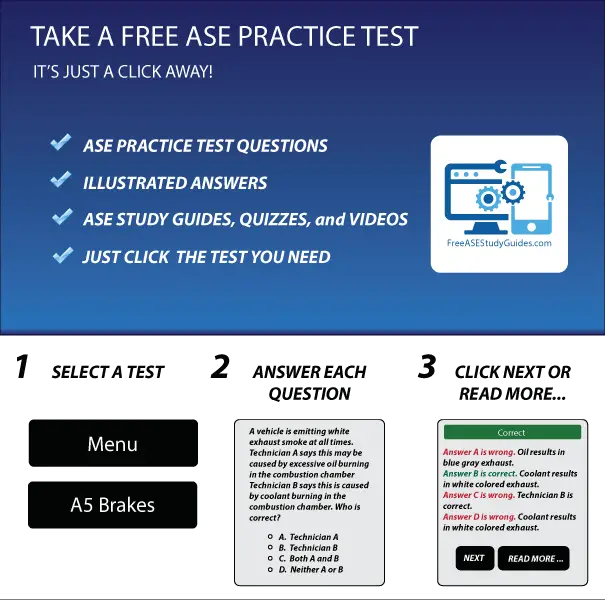
Okay, nobody likes paying for everything. The good news? You can absolutely find solid study resources without emptying your wallet. It just takes a bit of digging.
Official ASE Practice Resources
Start with the source. ASE itself offers some practice materials. They know what’s on the tests better than anyone, right? Check out their official website; sometimes they have sample questions or even full practice tests available for purchase. While not always free, they are highly relevant.
Online Automotive Forums and Communities
The internet is a goldmine. Jump into online forums where mechanics hang out. You’ll find guys sharing tips, advice, and sometimes even links to study guides or practice questions they’ve found helpful. These communities are gold for getting insider info. Just be sure to vet the information you find.
YouTube Channels and Educational Videos
Seriously, YouTube is your friend. There are countless channels dedicated to automotive repair. Many of these creators walk through common problems, explain diagnostic procedures, and even offer test-taking strategies. It’s a visual way to learn that can really stick. Search for specific ASE test numbers, like ‘ASE A4 practice test’.
Library and Public Resources
Don’t forget about your local library! They often have automotive repair manuals and study guides that you can borrow for free. It’s a bit old-school, but these resources are often packed with the technical information you need. Plus, who doesn’t love a free book?
How Long Does Ase Certification Last Before Recertification
Source : easy-prep.org
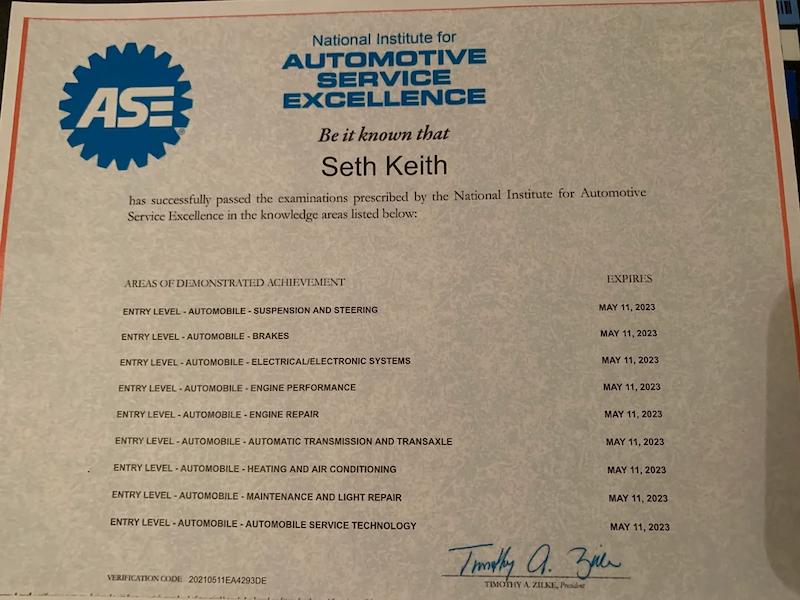
Getting that ASE certification is awesome, but it’s not a lifetime achievement award. You’ve gotta keep it current. Think of it like a driver’s license – it expires.
The Standard Five-Year Renewal Period
For most certifications, the clock starts ticking for five years. After that, you’re technically no longer certified for that specific test unless you recertify. This five-year window is pretty standard across the board for most of the tests. It’s designed to keep technicians up-to-date.
Master Technician Recertification Rules
If you’ve achieved Master Technician status, things might be a little different, but generally, the five-year rule still applies to the individual certifications that make up your Master status. You still need to keep those core competencies sharp. It’s a commitment to ongoing learning.
Recertification Testing Process
How do you recertify? You guessed it – you take another test. It’s usually the same or a very similar test to the one you originally passed. You’ll need to register, pay the fees, and pass the exam again to keep your certification active. The actual testing process is identical to the initial one. You can find more details on the official ASE website.
Importance of Staying Current
Why bother with recertification? Simple: technology in the automotive world changes fast. Cars are more complex than ever. ASE wants to Make sure that certified technicians have current knowledge. Plus, many employers and customers look for valid, up-to-date certifications. It shows you’re serious about your trade and staying current with automotive advancements.
Frequently Asked Questions
What does ASE stand for?
ASE stands for the National Institute for Automotive Service Excellence. It’s basically the big name in certifying auto mechanics and technicians. Think of them as the guys who really make sure you know your stuff before you’re working on my car.
How much does it cost to get ASE certified?
Okay, so the costs can pile up, but it’s an investment, right? You’re looking at around $40-$50 per test, and you’ll need to take quite a few. Plus, there are renewal fees and study materials. Budget a few hundred bucks to be safe. It’s definitely not cheap.
Do I need a degree to get ASE certified?
Nope, no fancy degree needed here. What they do require is hands-on experience. Typically, you need about two years of work experience in the specific area you want to get certified in. So, get your hands dirty first, then worry about the certs. Experience trumps degrees in this game.
How long is ASE certification valid?
Your ASE certification isn’t forever, buddy. It’s good for five years. After that, you’ve got to get re-certified to keep those credentials current. They want to make sure you’re staying up-to-date with all the new tech. It’s a smart way to Make sure quality.
Is ASE certification worth it?
Absolutely! Look, it might cost a bit and take some effort, but an ASE certification opens doors. It proves you’ve got the skills, and shops notice. You’ll likely earn more money and have better job prospects. It’s a no-brainer for career mechanics.
