So, you wanna be Epic Certified? Let’s get real for a second. It’s not some walk in the park, folks. This is about diving deep into the guts of a system that runs hospitals, shapes patient care, and honestly, can make or break a healthcare organization. It’s tough. It’s Key. And yeah, it’s totally achievable if you’ve got the grit.
Forget those fluffy online quizzes. This is the real deal. We’re talking about becoming a bona fide expert in a technology that’s literally changing lives. Think about the sheer impact. When you’re Epic Certified, you’re not just another cog in the machine; you’re a linchpin. You’re the person they call when things go sideways, the one who can navigate the labyrinthine workflows and make sure patients get the best possible care. It’s a serious responsibility, and a serious career move.
The Unvarnished Truth About Epic Certification
Look, nobody handed out Epic certifications like candy. It demands a commitment. A deep understanding. And frankly, a willingness to put in the hours. This isn’t just about memorizing screen layouts; it’s about understanding the ‘why’ behind every click, every integration, every patient record. It’s about becoming fluent in a language that, when spoken correctly, can streamline operations, reduce errors, and ultimately, save lives.
Why Bother With Epic? Seriously.
Why would you invest your precious time and energy into becoming Epic certified? Let’s cut to the chase. The healthcare industry is drowning in data. Hospitals are running on complex software. And Epic Systems? They’re the undisputed heavyweight champion of Electronic Health Records (EHRs). If you want a future-proof career in healthcare IT, you’re looking at the right place. It’s a massive market, and skilled Epic professionals are gold. Pure gold.
It like this: You wouldn’t hire a contractor to build your house who only half-understood blueprints, right? Same goes for healthcare. When you’re dealing with patient lives, you need absolute certainty. Epic certification signals that you have that certainty. You’ve passed the tests. You’ve proven your mettle. You know the system inside and out.
The High Stakes of EHR Expertise
Healthcare isn’t a forgiving industry. A misplaced decimal point, a wrongly entered allergy, a delayed notification – these aren’t minor glitches. They can have catastrophic consequences. That’s where the rigorous nature of Epic certification comes into play. It ensures that those managing and utilizing the system have a deep-seated understanding of its critical functions and potential pitfalls. It’s about patient safety. Period.
This isn’t just about looking good on a resume, though it certainly does that. It’s about competence. It’s about building trust. When a hospital invests millions in an EHR system like Epic, they need people who can actually use it effectively. People who understand the intricate dependencies and the downstream effects of their actions. That’s the promise of being Epic certified.
Peeling Back the Layers: What “Epic Certified” Actually Means

Source : blog.thehcigroup.com
So, what’s the big deal about this Epic certification? It’s not a single badge you get and you’re done. Oh no. It’s a designation that says you’ve completed specialized training and passed a rigorous exam for a specific Epic module or role. Think of it like getting your pilot’s license – you don’t just get one license for all planes. You get certified for specific aircraft types, right? Same principle here.
Module Mastery: The Core of Certification
Epic has a whole suite of interconnected applications. You’ve got your clinicals (like EpicCare, Radiant, Cupid), your financials (like Resolute), and your reporting tools. Becoming Epic certified usually means you’ve aced the exam for one or more of these. Maybe you’re a wizard with Ambulatory for physician practices, or maybe you’re the go-to person for Epic’s Cogito reporting.
The specific certification you pursue will depend heavily on your career path and the needs of the organization you’re working with. Are you aiming to be a frontline trainer? A builder who configures the system? Or perhaps a clinician who needs to maximize its efficiency? Each path requires a distinct flavor of Epic certification.
Beyond the Exam: Practical Application Matters
Here’s the thing they don’t always shout from the rooftops: just passing the exam isn’t the whole story. While the official certification requires that, real-world success in the Epic ecosystem hinges on applying that knowledge. Think of a chef who knows all the recipes but can’t cook. The certification proves you know the recipe book; your job performance proves you can actually cook.
Many employers, especially those hiring for roles like Epic trainers, look for a blend of the official certification and hands-on experience. They want to see that you’ve not only passed the test but have wrestled with the system, troubleshooted issues, and helped others navigate its complexities. The official credential is your ticket in, but your practical skills are what keep you there.
The Differentiator: Why It’s Worth It
In a crowded job market, how do you stand out? Especially in the high-demand field of healthcare IT? Being Epic certified is a massive differentiator. It tells potential employers you’ve made a significant investment in your skills and have the validated expertise they desperately need. It’s a concrete signal of your value.
Consider the sheer volume of healthcare systems that rely on Epic. Companies are constantly searching for professionals who can implement, support, and Improve these complex platforms. If you’re looking for roles like a Certified Epic Analyst or a Certified Epic Trainer, that certification isn’t just a nice-to-have; it’s often a non-negotiable requirement. It’s your professional handshake.
Who Needs to Be Epic Certified?

Source : blog.thehcigroup.com
Let’s be clear: not every single person who touches an Epic system needs the official certification. Your average nurse might not need to be a Certified Epic Radiant Analyst. But if you’re involved in the configuration, implementation, support, or training of the Epic system, then yes, you absolutely should be.
The Implementer’s Edge
If your job involves setting up Epic for a new hospital or rolling out new features, then Epic certification is your bread and butter. You’re building the very foundation that doctors and nurses will use. You need to know the options, the best practices, and how to avoid common pitfalls. This is where certifications for modules like EpicCare Inpatient or EpicCare Ambulatory become absolutely critical.
It like building a skyscraper. You wouldn’t let just anyone design the structural support beams. You need certified engineers. The same applies to implementing a system as complex and Key as Epic. Your certification validates your ability to design and build with precision.
The Trainer’s Necessity
This one’s a no-brainer. If you’re going to be teaching others how to use Epic, you must be certified. How can you possibly train someone on a system you don’t fully grasp yourself? Employers specifically look for individuals with official credentials from Epic themselves. If you aspire to be an Epic trainer, this is your first hurdle. There are dedicated career paths for this, like the roles listed on Epic’s own career pages.
Flight attendant trying to teach you how to land a plane. It just doesn’t compute. An Epic trainer needs authoritative knowledge, which the certification guarantees. It provides credibility and ensures consistency in training delivery across different organizations.
The Analyst’s Advantage
Analysts are the backbone of any IT system’s support structure. Whether you’re a clinical analyst, a reporting analyst, or a technical analyst, understanding the intricacies of Epic is Top. Being Epic certified as an analyst means you can troubleshoot issues more effectively, understand user requests better, and contribute more meaningfully to system optimization. It streamlines the entire support process.
For an analyst, the certification isn’t just about passing a test; it’s about developing a deeper problem-solving capability within the Epic environment. It Provides you to tackle complex issues that others might shy away from, making you an Crucial asset.
Handling the Epic Certification Maze

Source : movember.store
Okay, you’re convinced. You want that Epic certification. But where do you even start? It’s not like walking into a bookstore and grabbing a study guide. The path is usually laid out by your employer, or it requires careful planning if you’re looking to get certified independently.
Employer-Sponsored Paths: The Most Common Route
For most people, the journey to Epic certification begins with a job. Healthcare organizations that use Epic are constantly hiring people to work with their system. They often have structured training programs where they’ll hire you, put you through their internal Epic training (which is geared towards the certification exam), and then have you take the test.
This is usually the most practical route. You get paid while you learn, and the organization bears the cost and provides the structured curriculum. They have a vested interest in you passing because they need certified staff. It’s a win-win.
Independent Certification: The Road Less Traveled
Can you just decide one day to become Epic certified on your own? It’s significantly harder and less common. Epic Systems tightly controls its certification process, typically requiring candidates to be sponsored by an Epic customer or an Epic-certified consulting partner. Without that sponsorship, getting direct access to the official training and exams is nearly impossible.
So, while the idea of independent study is appealing, the reality is that industry connections and employment with an Epic-using entity are usually the gateways. You might find third-party courses that prepare you for certification, but the official designation itself typically requires that formal link.
Choosing Your Module Wisely
This is HUGE. Don’t just pick a module at random. Think about your current role, your desired career trajectory, and what your employer needs. Are you focused on patient scheduling? Billing? Pharmacy? Diagnostics? Each of these functions has its own dedicated Epic module (like Cadence, Resolute Hospital Billing, or Willow).
A well-chosen module aligns with market demand and your personal interests. Being Epic certified in a high-demand area like EpicCare Ambulatory or Resolute can open significantly more doors than a niche module you have no practical application for. Do your research! Talk to people in the field. Find out which certifications are most sought-after.
| Certification Path | Typical Sponsor | Common Roles | Pros | Cons |
|---|---|---|---|---|
| Direct Hire Training Program | Healthcare Organization (Hospital/Clinic) | Analyst, Builder, Trainer, Informatics | Paid training, guaranteed role post-certification, structured learning | Requires job offer, commitment to specific employer, less flexibility initially |
| Consulting Firm Engagement | Epic Implementation Partner/Consulting Firm | Implementation Specialist, Project Manager, Senior Analyst | Exposure to diverse projects, potentially higher earning potential, travel opportunities | Often requires prior Epic experience, demanding travel schedules, contract-based roles |
| Internal Advancement | Current Employer (if they use Epic) | Senior Clinician, IT Support Specialist moving into dedicated Epic role | Leverages existing knowledge of the organization, smoother transition | Dependent on employer’s training budget and needs, might require proving value first |
Alright, so you’re ready to dive deeper into this whole “Epic Certified” thing, huh? You’ve probably skimmed the surface, maybe even read a few of those dry, robotic articles out there. But this? This is where we get real. This is the nitty-gritty. We’re talking about how to actually do this, not just talk about it.
How To Get Epic Certified Without Hospital Sponsorship

Source : youtube.com
Watch: How to Get EPIC Certified with No Prior Experience
Let’s cut to the chase. Not everyone has a hospital lining up to pay for their Epic training. That’s just the reality for a lot of folks trying to break into this field. But does that mean you’re out of luck? Absolutely not.
The Freelance & Consulting Route
It. You can go the independent route. Become a freelance Epic consultant. Many smaller clinics or even departments within larger hospitals need specialized help, and they don’t always have the budget or the need for a full-time hire. This is where you step in.
You’d be hustling, sure, but the flexibility is incredible. You can pick your projects, set your rates, and build a reputation based on your skills, not just your employer. It’s a grind, but it’s yours.
Networking Your Way In
You know that saying, “it’s not what you know, it’s who you know”? Well, in the tech and healthcare world, it holds a surprising amount of water. Seriously, start talking to people. Attend industry events, join LinkedIn groups dedicated to Epic professionals. You never know who might have an inside track or a lead on a training opportunity.
I remember talking to a guy at a conference who was completely self-taught and landed a gig simply because he’d built a rapport with a hiring manager months earlier. They remembered his enthusiasm and his willingness to learn.
Online Training & Self-Study Options
While official Epic training is often tied to partnerships, the ecosystem around it is massive. There are countless online courses and certifications that can get you familiar with EHR systems in general, and sometimes even specific Epic modules. These might not get you “Epic Certified” directly, but they build a formidable foundation.
You can learn the basics of healthcare IT, database management, and even specific clinical workflows. This knowledge makes you a much more attractive candidate when you do find an opportunity for formal Epic certification. It shows initiative.
What Is The Cost Of Epic EHR Certification Training
Source : osplabs.com
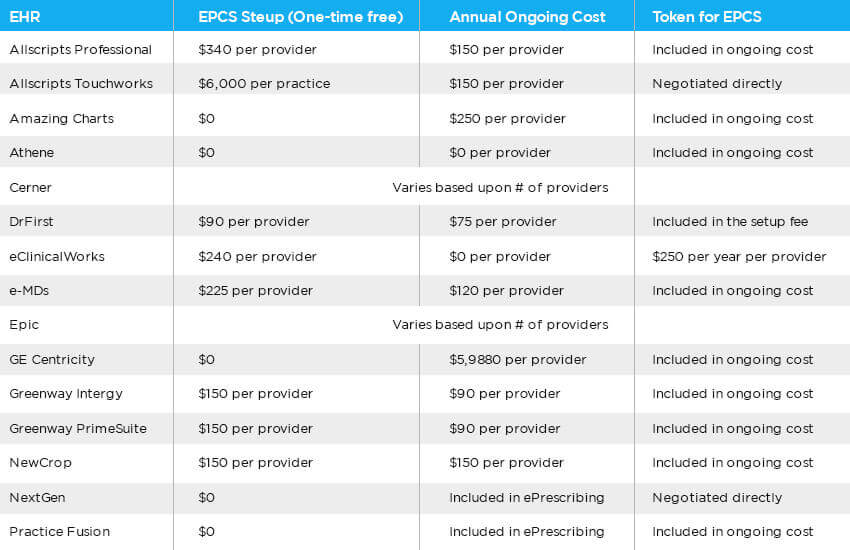
Okay, let’s talk money. Because, let’s be honest, nobody wants to spend a fortune without a solid ROI. The cost of Epic EHR certification training can vary wildly, and it’s not always a straightforward number.
Employer-Sponsored Costs (Or Lack Thereof)
The ideal scenario? Your employer foots the bill. Many large healthcare systems that are heavily invested in Epic will sponsor their employees through the certification process. For them, it’s an investment in their own infrastructure and personnel.
They see the value. They need skilled people to manage and Improve their systems. If you’re already working for one of these giants, definitely explore this avenue first. It could mean zero out-of-pocket expense for you.
Independent Training Costs
This is where things get pricier. If you’re going it alone, you’re looking at a significant investment. Official Epic training programs, when not sponsored, can range anywhere from a few thousand dollars to upwards of $10,000 or more, depending on the module and the training provider.
And that’s just the training itself! Don’t forget potential costs for study materials, travel (if it’s in-person), and the lost income while you’re dedicating your time to learning instead of earning.
Associated Training Expenses
It’s not just the tuition fee. Think about the peripheral costs. You might need specific software, updated hardware, or even access to specialized testing environments. These are often overlooked but can add up quickly. A Strong IT certification often comes with ancillary costs.
Plus, there are usually exam fees. These are separate from the training costs and can be another few hundred dollars each. It’s Needed to get a full breakdown before you commit.
| Expense Category | Estimated Range (USD) | Notes |
|---|---|---|
| Formal Training Course Fees | $3,000 – $12,000+ | Varies significantly by module and provider. |
| Certification Exam Fees | $200 – $600 per exam | Often tiered based on certification level. |
| Study Materials & Books | $100 – $500 | Optional but often recommended. |
| Travel & Accommodation (if applicable) | $500 – $3,000+ | For in-person training or exams. |
| Lost Income (Opportunity Cost) | Variable | Consider if you need to take time off work. |
How Long Does Epic Certification Training Program Take
Source : virtelligence.com
So, how much of your life are we talking about here? Because time is money, right? The duration of an Epic certification training program is not a one-size-fits-all answer. It really depends on what you’re aiming for.
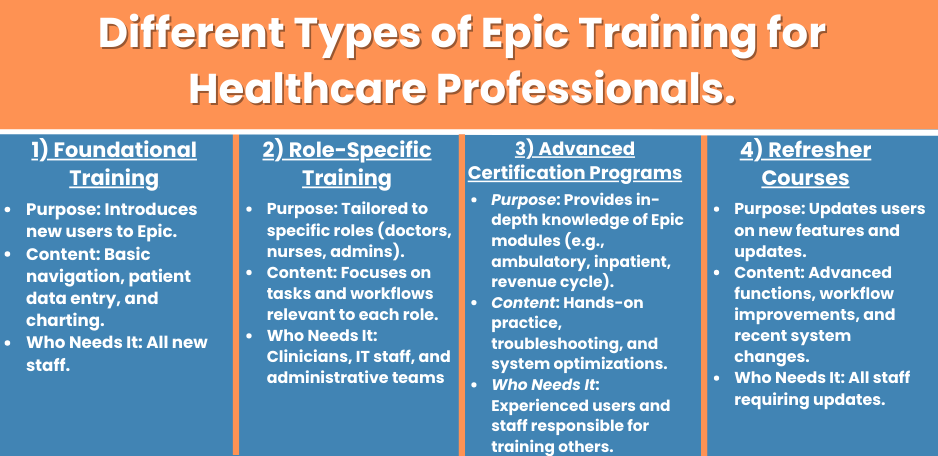
Basic Certification Tracks
For many of the core roles, like an Epic certified analyst for a specific application (think Cadence, Prelude, etc.), the formal training program is usually quite intensive but relatively short. We’re often looking at a period of 4 to 8 weeks of full-time, dedicated study.
This is usually a deep dive. You’re in class, you’re practicing in a sandbox environment, you’re learning the ins and outs. It’s compressed, focused learning.
Advanced & Specialized Certifications
Now, if you’re going for something more advanced, like a proficiency certification or a master certification, or perhaps juggling multiple certifications, that timeline stretches. This might involve more self-study, project work, and on-the-job application.
These aren’t just quick courses; they often require you to demonstrate deep understanding and practical application within a live environment. So, you could be looking at several months, even up to a year, to achieve a high level of proficiency and certification in complex areas.
Self-Study vs. Formal Programs
And let’s not forget the self-study component. Even with formal training, there’s a significant amount of personal time you’ll need to dedicate to truly master the material. You can’t just passively absorb it. You have to actively engage.
If you’re attempting to self-certify or learn independently through available resources (which is harder to get the official credential for, mind you), the timeline is entirely up to you and your learning pace. It could take months or even years of consistent effort to reach a level of expertise comparable to a formally trained professional.
Which Epic Certification Module Is Best For Nurses

Source : clindcast.com
Ah, the million-dollar question for all you healthcare heroes out there. If you’re a nurse looking to Use your skills with an Epic certification, which path makes the most sense? It’s not just about getting a certification; it’s about getting the right one for your career.
Clinical Documentation Modules (CliaDoc, DocFlow)
For the vast majority of bedside nurses, the clinical documentation modules are your bread and butter. These are the systems that manage patient charts, physician orders, medication administration (eMAR), and progress notes. Think of modules like Epic Cadence for scheduling or Epic Radiant for radiology, but more focused on the nursing workflow.
Getting certified in these areas makes you Crucial. You understand how nurses interact with the system daily, can troubleshoot common issues, and help train other nurses. It directly enhances your current role.
Specialty-Specific Certifications
However, nursing isn’t monolithic. You might work in a specific specialty like Oncology, Pediatrics, Labor & Delivery, or the Emergency Department. Epic often has specialized workflows and modules tailored to these areas.
For example, if you’re an NICU nurse, a certification in the Epic Neonatal Intensive Care Unit workflow could be incredibly beneficial. It shows a deep understanding of the unique documentation and care delivery processes for your patient population.
Ambulatory & Physician Workflow Modules
Even if you’re a nurse, you might be interested in roles that bridge clinical and administrative functions. Modules focused on ambulatory clinics or physician workflows can also be relevant. These often deal with patient scheduling, referrals, and the overall patient flow outside of the inpatient setting.
Consider your long-term goals. Do you want to stay at the bedside, move into informatics, training, or IT support? Your answer will guide you toward the most impactful Epic certification module.
Steps To Become An Epic Certified Analyst From Scratch

Source : youtube.com
So, you’re starting from zero. No healthcare IT background, just a burning desire to become an Epic Certified Analyst. Is it possible? Absolutely. But it requires a strategic approach. You can’t just wing this.
Step 1: Build Foundational Knowledge
Before you even think about Epic specifically, get a handle on the basics. What is an EHR? What are common healthcare workflows? What are the regulatory requirements like HIPAA? Understanding the context is Key. Online courses on healthcare IT fundamentals or introductory informatics programs can be a great start.
Seriously, learn the language. You don’t want to be the person in training meetings who has no idea what HL7 or CPOE even means. That’s a quick way to get lost.
Step 2: Identify Target Epic Applications
Epic is huge. It’s not one single piece of software. It’s a suite of applications. You need to figure out which ones Match with your interests and potential career paths. Are you drawn to billing and scheduling (like Epic Resolute or Cadence), clinical workflows (like EpicCare Inpatient or EpicCare Ambulatory), or something more technical like reporting (Epic Caboodle)?
Do some research. Look at job postings for Epic Analysts. See which applications are in demand. This will help you focus your efforts and your eventual training.
Step 3: Gain Experience (Even Indirectly)
This is where it gets tricky without sponsorship. How do you get experience with a system you’re not certified in yet? Look for roles that put you near the system. This could be a super-user role at a hospital that uses Epic, an IT help desk position supporting a healthcare system, or even volunteering for a healthcare-related non-profit that uses technology.
Any exposure helps. It shows initiative and gives you talking points. You can talk about understanding user challenges, even if you haven’t configured the system yourself. It’s about demonstrating potential.
Step 4: Seek Formal Training & Certification
This is the big one. Once you have some foundational knowledge and ideally some relevant exposure, you need to get into a formal training program. As we’ve discussed, this often requires sponsorship from a healthcare organization that uses Epic. Keep applying, keep networking, and highlight your foundational knowledge and any indirect experience you’ve gained.
Alternatively, explore third-party training providers if available, but be aware of the costs and Make sure they lead to a recognized credential. The goal is that official Epic certification credential.
Frequently Asked Questions
What exactly is Epic certification?
Basically, Epic certification means you’ve proven you know your way around a specific module or function within the Epic electronic health record system. It’s like getting a special badge that says, “Yep, I can handle this part of the software.” Think of it as specialized training for healthcare IT pros.
Do I need to be currently employed in healthcare to get certified?
Not necessarily, but it helps. While some Epic certifications are designed for people already working with the system, others are open to anyone. However, having some experience in a healthcare setting usually makes understanding the concepts way easier. It’s tough to get certified on something you’ve never seen in action.
How long does Epic certification typically take?
It really depends on the specific certification you’re going for. Some can be knocked out in a few weeks of intense study, while others might take months, especially if they involve hands-on practice or classroom training. The official Epic training is pretty rigorous, so don’t expect it to be a walk in the park. Budget your time wisely.
Is Epic certification expensive?
Yeah, there can be costs involved. You might have training fees, exam fees, and potentially travel or lodging if you have to attend in-person sessions. It’s not cheap, but you’ve got to weigh that against the potential salary bump and career opportunities that come with being certified in Epic. For many, it’s a solid investment.
What kind of career opportunities open up after becoming Epic certified?
Oh, tons! Having an Epic certification on your resume makes you a hot commodity. Hospitals and healthcare systems are always looking for people who can Improve their Epic system. You could be looking at roles like Epic Analyst, Application Coordinator, Project Manager, or even specialize in areas like clinical informatics. It definitely opens doors to higher-paying, specialized IT jobs in healthcare.
