So, you’re thinking about getting a personal trainer certification? Good for you. It’s a path that can be incredibly rewarding, but let’s be real, it’s also a bit of a minefield if you don’t know what you’re doing.
Forget those glossy brochures promising instant success. This gig takes grit, a genuine passion for helping people, and yes, the right credentials.
But where do you even start? There are so many acronyms flying around, it’s enough to make your head spin. NASM, ACE, ACSM, NSCA… it’s enough to make you want to just go back to binge-watching Netflix.
Don’t panic. I’ve been in the trenches, and I’ve seen it all. I’m going to break down exactly what you need to know to get that official trainer certification without wasting your time or money.
The “Why Bother?” Section: Is This Really for You?
Before you even think about filling out an application, let’s have an honest chat. Being a physical trainer isn’t just about looking ripped yourself or barking orders at people on treadmills. It’s a real profession.
More Than Just Lifting Weights
Seriously, it’s way deeper than that. You’re talking about understanding human anatomy, biomechanics, nutrition basics, and even a bit of psychology. You’ll be helping people reach goals they might have struggled with for years.
Sarah, who came to me after trying every fad diet known to man. She was ready to throw in the towel. But with a solid plan, encouragement, and a clear understanding of her body’s needs, she finally saw results. That’s the stuff that makes this job incredible. It’s not just about the certification itself.
The Grind is Real
And it’s not always glamorous. Early mornings, late nights, dealing with clients who are having a bad day (and might take it out on you). You need a thick skin and a genuine desire to show up, even when you don’t feel like it.
Are you ready to be that person? The one who’s a constant source of motivation and expertise? If the answer is a resounding “heck yeah,” then let’s move on.
Making a Decent Living (Maybe!)
Let’s talk brass tacks. Can you actually earn a living as a certified trainer? Absolutely. But it’s rarely an overnight success story. You need to build a client base, market yourself, and constantly prove your value.
Don’t expect to be driving a Ferrari on day one. However, with dedication and smart business sense, a personal trainer career can be very financially rewarding. And way more fulfilling than pushing paper, right?
Decoding the Certification Maze
Source : totalcoaching.com
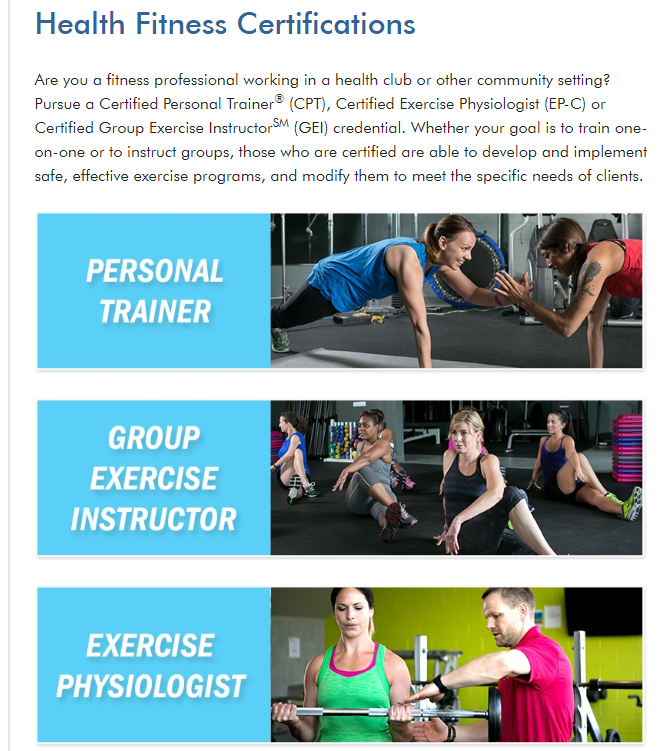
Okay, you’re in. You’ve decided this is your path. Now comes the fun part: figuring out which certification actually matters. Trust me, not all certs are created equal. Some are legit gold standards; others are… well, less so.
This is where most people get lost. They see a cheap online course and think, “Boom, done!” Nope. Big mistake. You need a certification that’s recognized, respected, and backed by science.
The Big Players in the Game
When you’re looking at different options, you’ll see a few names that pop up constantly. These are usually the ones that have been around forever and have serious credibility. We’re talking about organizations that invest in research and have strict testing protocols.
For example, the National Academy of Sports Medicine (NASM) is a huge one. Their programs are thorough and widely respected. Getting a NASM certification is a solid move for many.
Then there’s the National Strength and Conditioning Association (NSCA). They’re known for being pretty rigorous. A NSCA-CPT certification is another fantastic option if you want to prove you’ve got the scientific chops.
ACCREDITATION: The Secret Sauce
This is HUGE. You need to make sure whatever certification you choose is accredited by a recognized body. The big one to look for is the National Commission for Certifying Agencies (NCCA). If a cert isn’t NCCA-accredited, you might as well be printing your own certificate at home.
Why does it matter? Because it means the certification meets high standards for content, testing, and ethical practices. Gyms, clients, and even other trainers will respect an NCCA-accredited cert way more. It’s a mark of quality.
Understanding the Different Paths
Not all certifications are created equal. Some focus more on general fitness, while others might specialize in areas like corrective exercise, sports performance, or senior fitness. Think about the type of clients you want to work with.
Are you drawn to helping athletes shave seconds off their race times? Or are you more passionate about helping older adults maintain their independence? Your choice of certification body should reflect that. You don’t want to get certified in something you have zero interest in.
DIY vs. Structured Courses
Some organizations offer just the exam, expecting you to self-study using their materials (or your own). Others provide Full courses that include textbooks, video lectures, and practice exams. The latter is often better for beginners.
It’s about finding the learning style that suits you. If you’re a disciplined self-starter, maybe just the exam is fine. But if you thrive with structure and guidance, invest in a full course. This is a big investment of your time and money.
The Needed Knowledge You’ll Need
Source : ecampusontario.pressbooks.pub
Okay, so you’ve picked your certification. Great! Now what? You actually have to learn this stuff. And trust me, there’s a lot.
It’s not just memorizing exercises. You’re building a foundation of knowledge that will keep your clients safe and help them achieve real results. Get this wrong, and you’re not just ineffective; you could be dangerous.
Anatomy & Physiology: The Building Blocks
You absolutely must have a solid grasp of the human body. How do muscles contract? What are the different joint actions? What happens when someone breathes improperly during a lift? These aren’t trivia questions; they’re Needed for designing safe and effective programs.
Knowing your way around the skeletal system and major muscle groups is non-negotiable. It’s the difference between a trainer who knows their stuff and one who’s just guessing. A good anatomy course is your best friend here.
Exercise Science Principles
This is where you learn why certain training methods work. Concepts like progressive overload, specificity, recovery, and periodization are the bedrock of effective training. Without understanding these, you’re just winging it.
Trying to build a house without knowing about load-bearing walls or foundations. That’s what training without understanding exercise science is like. You need the scientific principles.
Kinesiology and Biomechanics
How does the body move? What are the forces at play during an exercise? Understanding kinesiology helps you analyze movements, identify potential issues, and correct form. Biomechanics looks at the mechanics of those movements.
This knowledge allows you to spot faulty movement patterns before they lead to injury. It’s proactive training. Think of a basketball player’s jump shot – understanding the physics behind it is key to optimizing it.
Nutrition Basics (Don’t Go Overboard!)
While you won’t be prescribing meal plans like a registered dietitian (unless you have separate qualifications, of course), you do need to understand the basics of how nutrition impacts performance and health. Macronutrients, micronutrients, hydration – it’s all part of the puzzle.
You need to be able to guide clients on making healthier food choices and understand how their diet plays a role in their fitness goals. Just know your lane and don’t pretend to be a doctor or dietitian. Basic nutrition knowledge is Key.
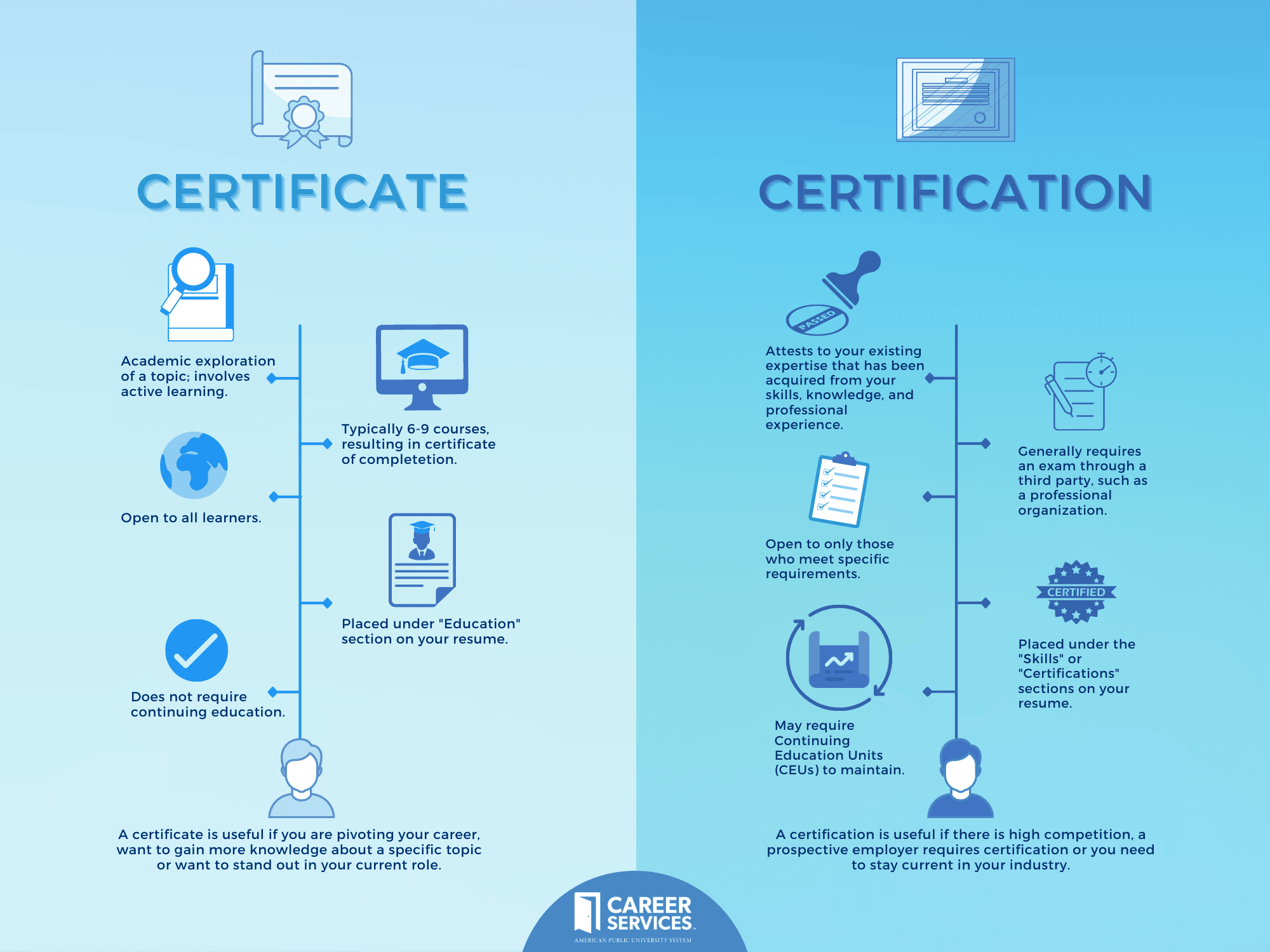
Choosing Your Certification: A Quick Guide
Source : apuedge.com
Alright, let’s boil it down. You need a certification that’s:
- Accredited (NCCA is the gold standard).
- Respected by the industry.
- Full in its curriculum.
- Aligned with your career interests.
Don’t just grab the cheapest, fastest option. That’s a shortcut that usually leads to a dead end. Invest wisely. Think of it as your first real client – you’re investing in yourself.
NASM: The Popular Choice
NASM is a big name. Their Certified Personal Trainer (CPT) program is incredibly popular and covers a broad range of topics. They use a system called the Optimum Performance Training (OPT) model, which is quite structured.
It’s a great all-around certification for general fitness professionals. Many gyms actively seek out trainers with this credential. It opens a lot of doors.
NSCA: The Science-Focused Option
If you’re serious about the science and want a certification that signals a deep understanding of strength and conditioning, the NSCA-CPT is a fantastic route. Their exams are known for being challenging but incredibly thorough.
They emphasize evidence-based practices, which is Key in a field where fads can run rampant. This is for the trainer who wants to be seen as a true expert.
ACE: Another Solid Contender
The American Council on Exercise (ACE) also offers a highly respected personal trainer certification. They focus a lot on behavior change and making fitness accessible. Their exam is also NCCA-accredited.
ACE certifications are well-regarded and provide a strong foundation for a career in personal training. They often have good resources for continuing education, too.
Watch: How to Become: A Personal Trainer
ACSM: The Gold Standard for Exercise Science
The American College of Sports Medicine (ACSM) is practically synonymous with exercise science research. Their certifications are some of the most rigorous available, especially if you’re looking at clinical exercise physiology or more specialized roles.
For a general personal trainer certification, ACSM is still top-tier, focusing heavily on the scientific underpinnings of fitness. It’s a commitment, but a highly valuable one.
Other Reputable Organizations
Beyond these giants, there are other reputable organizations like ISSA (International Sports Sciences Association) and CanFitPro (in Canada) that offer solid training and certification options. Always check their accreditation status!
The key is research. Don’t just pick the first one you see. Read reviews, compare curricula, and see which organization’s philosophy aligns best with your own vision for your fitness career.
Alright, let’s cut to the chase. You want to be a physical trainer, right? Not just some weekend warrior with good intentions, but the real deal. Someone clients trust, someone who actually knows what they’re doing. We’re talking about getting that official stamp of approval. This isn’t just a hobby; it’s a career, and the first step is getting properly certified as a trainer.
Forget the fluff. We’re diving deep into what it really takes. If you’re thinking about this seriously, you need the nitty-gritty. So, buckle up. We’re going to break down the Needed certifications, the costs, the time commitment, and how to make sure you pick the right path for you. No more guesswork. Just solid advice to get you from zero to a certified pro.
Best Online Personal Trainer Certification For Beginners
Source : fpti.edu
Why Online Certifications Are a Lifesaver
Look, not everyone can pack up and head to a campus for months on end. Life’s busy. Juggling work, family, and trying to squeeze in studying? It’s a real challenge. That’s where online personal trainer certifications really shine. They offer a flexibility that traditional schooling just can’t match. You can study on your lunch break, late at night, whenever you can steal a moment.
Plus, let’s be honest, the internet has made learning so much more accessible. You get access to updated materials, video lectures, and often, online communities of other students and instructors. It’s like having a whole support network at your fingertips, all without leaving your couch. This is huge for someone just starting out and feeling a bit overwhelmed by the sheer volume of information.
Top Tier Certifications for Newbies
When you’re just starting, you don’t want to be drowning in overly complex jargon or advanced physiology right out of the gate. You need a program that builds a strong foundation. Some of the most respected names out there offer beginner-friendly tracks. Think about organizations that focus on practical application and clear, concise learning modules. They’re designed to take someone with little to no prior experience and get them up to speed efficiently.
These programs typically cover the absolute essentials: basic anatomy, exercise principles, client assessment, program design basics, and legal/ethical considerations. It’s all about getting you ready to safely and effectively train your first few clients. You want a certification that prioritizes foundational knowledge and practical skills over esoteric theories.
What to Look For in a Beginner Program
First off, make sure the certification is accredited by a recognized body. This is non-negotiable. Without accreditation, your fancy certificate is pretty much worthless. Then, check the curriculum. Does it cover what you actually need to know to train people? Look for modules on:
- Human anatomy and physiology (the basics, people!)
- Kinesiology and biomechanics
- Cardiovascular and resistance training principles
- Flexibility and recovery techniques
- Client assessment and goal setting
- Nutrition basics (what you can advise on)
- Behavior change strategies
- Legal and ethical responsibilities
And don’t forget about the exam. Is it a reasonable test of what you learned, or is it designed to trip you up? A good beginner certification will have a clear, pass-or-fail exam that directly relates to the course material. It should feel challenging but achievable. You’re aiming to prove competence, not to weed out the weak.
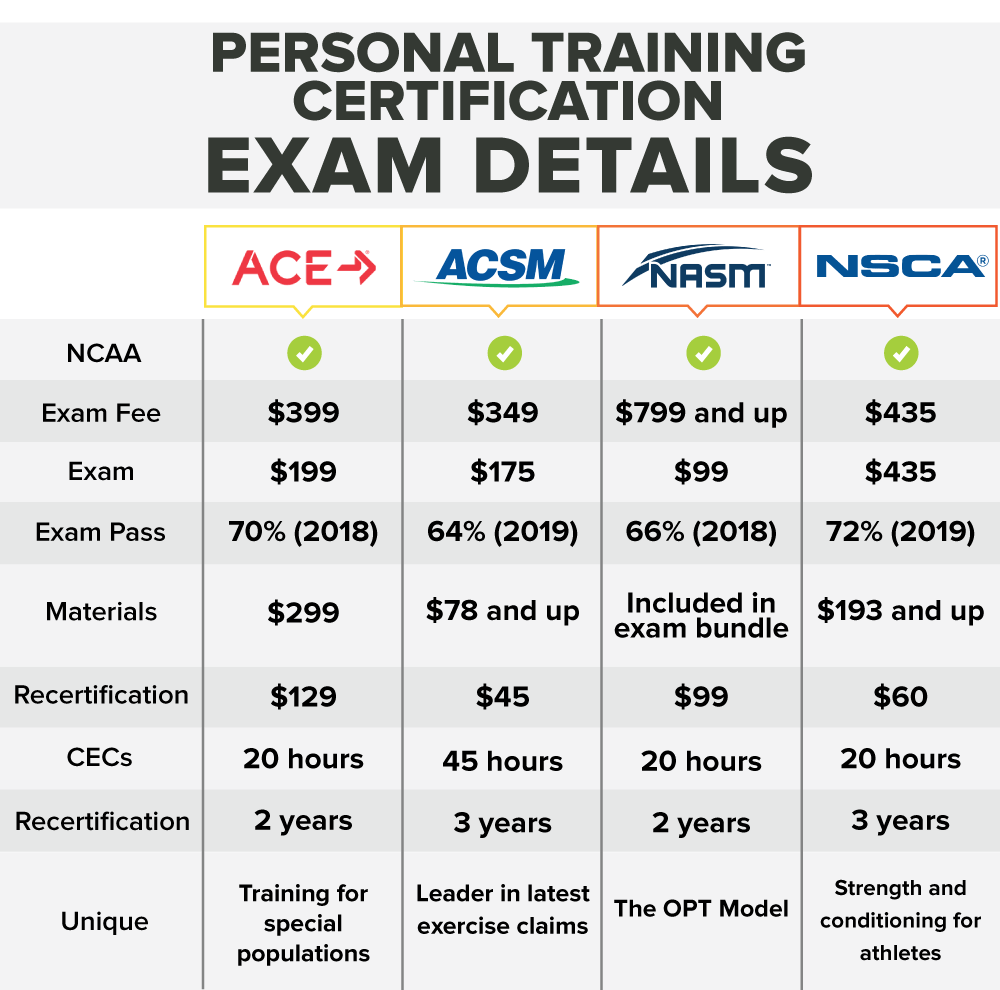
How Much Does A Personal Trainer Certification Cost

Source : prnewswire.com
The Sticker Shock (and Why It’s Worth It)
Okay, let’s talk money. Nobody likes this part, but it’s Key. The cost of a personal trainer certification can vary wildly. You might see some suspiciously cheap options online, and then you’ve got the big-name ones that can run into the hundreds, or even over a thousand dollars. So, what’s the deal? Why the big difference?
Generally, you get what you pay for. Those super-cheap options? They might lack depth, accreditation, or Key support. Investing a bit more upfront often means getting a more Full curriculum, better study materials, and a certification that’s actually respected in the industry. Think of it as your initial investment in your career. It’s not just a piece of paper; it’s the key that unlocks doors to paying clients and a stable income.
Breaking Down the Costs
The price tag usually includes a few things:
- The study materials (books, online modules, videos)
- The exam fee
- Sometimes, access to practice exams or study groups
Some programs offer tiered packages. You might have a basic study package, or you could opt for a premium one that includes one-on-one coaching or advanced modules. Always check what’s included. Does it come with practice quizzes? Is there a dedicated helpline? These extras can make a huge difference in your learning experience and ultimately, your success rate on the exam. Make sure the certification cost is all-inclusive for what you need.
Hidden Fees and Ongoing Costs
Don’t forget about potential hidden costs. Some certifications require renewal fees every couple of years. You’ll also likely need to earn continuing education credits (CECs) to maintain your certification. These CECs often involve taking workshops, attending seminars, or completing additional online courses, which can also cost money. Factor these ongoing expenses into your budget from the start. It’s not a one-and-done deal; it’s about staying current in a constantly evolving field. Keeping your trainer credentials up-to-date is part of the job.
Here’s a quick rundown of what you might expect. Keep in mind these are general ranges and can fluctuate:
| Certification Provider | Approximate Cost Range (USD) | Includes | Renewal Frequency |
|---|---|---|---|
| ACE (American Council on Exercise) | $400 – $700 | Study materials, exam, practice tests | 2 years |
| NASM (National Academy of Sports Medicine) | $500 – $1000+ | Varies by package; often includes extensive digital resources | 2 years |
| NSCA (National Strength and Conditioning Association) – CSCS | $300 – $500 (for exam + membership) | Varies; often requires additional study materials | 3 years |
| ISSA (International Sports Sciences Association) | $100 – $600 (often on sale) | Varies greatly; some offer bundled courses | 2 years |
How To Become A Certified Physical Trainer Without A Degree
Source : issaonline.com
The Degree Myth: Debunked!
Let’s clear the air right now. Do you need a fancy four-year degree in exercise science to become a personal trainer? Absolutely not. Seriously. While a degree can certainly provide a deeper theoretical understanding, it is not a prerequisite for most reputable personal trainer certifications. Many successful trainers started exactly where you are now: ready to learn and eager to help people.
The industry has really democratized itself. The focus is on practical knowledge and the ability to effectively train clients. Most certification bodies understand this. They’ve designed their exams and study materials to assess your competency in applying exercise science principles, not on your ability to write a research paper. This opens the door for so many people who might not have the time, money, or inclination for a traditional degree program. You can absolutely become a certified trainer without one.
Focus on the Certification, Not Just the Diploma
Your primary goal should be obtaining a respected certification. These certifications are specifically designed to equip you with the skills and knowledge needed to pass the credentialing exam. They cover the Needed topics we’ve already touched on: anatomy, program design, client assessment, and safety.
Think of it this way: a degree gives you a broad education; a certification gives you specific, job-ready skills. For personal training, the specific skills are far more important than the broad academic background. Employers and clients are looking for someone who can help them achieve results, not someone who aced a biology class five years ago. A strong personal trainer certification is your golden ticket.
Choosing the Right Path (Without the Degree Burden)
So, how do you navigate this Field without the degree? Easy. Pick a certification body known for its rigor and industry recognition. Organizations like NASM, ACE, and NSCA are highly regarded. When you’re choosing, again, look at the curriculum. Does it feel Full? Does it cover the practical aspects of training?
Consider online programs that offer flexible learning schedules. Many of them provide excellent resources, practice exams, and support systems that rival traditional education. You can learn at your own pace, absorb the information thoroughly, and then prepare yourself to crush the certification exam. It’s all about smart studying and focusing on the skills that matter. You’re building a practical skillset, and that’s what truly counts in this profession. This is how you get certified without a degree.
Nasm Vs Ace Personal Trainer Certification Comparison
Source : traineracademy.org
The Big Two: NASM and ACE
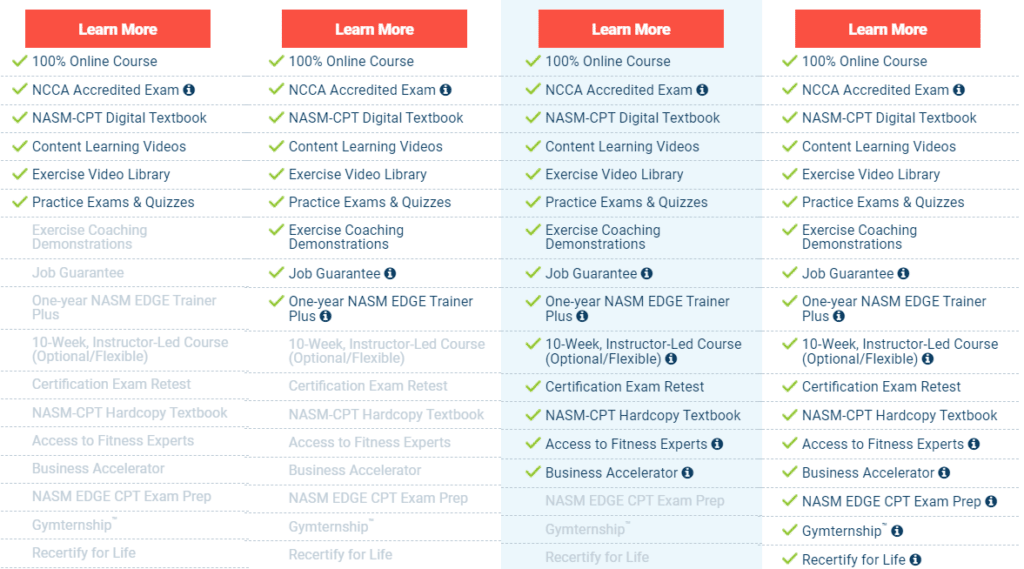
When people start looking into getting certified, two names almost always pop up: NASM (National Academy of Sports Medicine) and ACE (American Council on Exercise). It’s like asking if you want an iPhone or a Samsung – both are great, but they have their own philosophies and approaches. Deciding between NASM vs ACE certification can feel like a big deal, and honestly, it’s a good problem to have because both are highly respected.
The good news? You really can’t go wrong with either. Both will give you a solid foundation and a credential that employers will recognize. The choice often comes down to personal preference, learning style, and which program’s methodology resonates more with you. Let’s break down how they stack up against each other so you can make an informed decision.
NASM’s Approach: OPT Model
NASM is pretty famous for its Optimum Performance Training (OPT) model. It’s a structured, phase-based approach to training that emphasizes a systematic progression from stabilization to strength and power. Think of it as a very organized roadmap for client development. NASM’s materials are often praised for their detailed explanations of biomechanics and exercise technique.
- Strengths: Excellent for understanding program design and periodization, strong emphasis on corrective exercise, widely recognized for its Full approach.
- Focus: Often seen as geared towards trainers who want to specialize in corrective exercise or performance enhancement.
- Study Materials: Can be quite dense and detailed, which is great if you love deep dives into the science.
If you’re someone who likes a very systematic, phased approach to training and wants to be an expert in correcting movement imbalances, NASM certification might be your jam.
ACE’s Philosophy: Integrated Fitness Training (IFT)
ACE, on the other hand, uses the Integrated Fitness Training (IFT) model. Their approach is a bit more client-centered and emphasizes a Overall view of fitness. It focuses on assessing the client’s current fitness level and then designing programs that address their specific needs and goals, while also considering their overall well-being.
- Strengths: Strong focus on client-behavior change, communication, and building rapport. Excellent for general fitness trainers and those working with diverse populations.
- Focus: More generalized approach, emphasizing creating sustainable fitness habits and improving overall health.
- Study Materials: Generally considered a bit more accessible and easier to digest for beginners compared to NASM.
ACE often gets props for its focus on the “whole person” and its emphasis on building long-term client relationships. If you’re passionate about helping people make lasting lifestyle changes, ACE certification could be the better fit.
Key Differences and Which is ‘Better’
So, which one is better? Honestly, neither is definitively superior. It depends on your goals and how you learn best. NASM often appeals to those interested in the more technical aspects of exercise science and corrective training. ACE is fantastic for trainers who want to excel at client motivation, communication, and general health improvement.
The exam difficulty is comparable, and both require ongoing education to maintain. Ultimately, the best certification for you is the one you’ll study diligently for and pass. Both will open doors. For general personal training, both are excellent choices. You can explore more about ACE’s offerings at ACE Fitness.
How Long Does It Take To Become A Certified Physical Trainer

Source : hevycoach.com
The Speedy Track vs. The Deep Dive
This is the million-dollar question for many: how quickly can I get this done? The truth is, it varies. You can technically get certified as a physical trainer pretty fast if you put your nose to the grindstone. We’re talking a matter of weeks for some of the more condensed online programs.
However, rushing through the material might mean you miss Key details. A deeper understanding is always better. Taking your time allows the information to really sink in, helping you connect the dots between different concepts. You want to build a solid foundation, not just cram for a test. So, while the minimum time can be short, a more thorough approach is often more beneficial long-term. Think about building a house; you wouldn’t rush the foundation, right?
Factors Affecting Your Timeline
Several things can speed up or slow down your journey:
- Your Study Habits: Are you disciplined? Can you carve out consistent study time each day or week? This is probably the biggest factor.
- Program Structure: Some programs are self-paced, while others have set start and end dates. Online courses offer the most flexibility here.
- Prior Knowledge: If you have a background in fitness or a related field, you might grasp certain concepts more quickly.
- Learning Style: Some people absorb information faster through reading, others through videos or practice. Choose a program that aligns with how you learn best.
- Work and Life Commitments: Juggling a full-time job, family responsibilities, or other personal commitments will naturally extend the time it takes.
The average person, studying diligently for a few hours a week, might take anywhere from two to six months to feel fully prepared for the exam. Some might do it faster, some slower. It’s a marathon, not a sprint, but you can certainly pick up the pace.
Typical Timeframes for Top Certifications
Let’s put some numbers on it. Most major certification bodies (like NASM, ACE, NSCA) provide study materials that can be consumed in roughly 100-200 hours of study time. If you dedicate:
- 10 hours per week: You could be ready in 2-4 months.
- 5 hours per week: It might take 4-8 months.
- 2-3 hours per week: Expect it to be closer to 6-12 months.
Remember, this is just for the study and exam preparation phase. Then you have to schedule and pass the actual exam. So, while you could theoretically complete the coursework in a month or two, realistically, aiming for a 3-6 month timeframe to get fully certified is a sensible goal for most people balancing other life commitments.
Frequently Asked Questions
How long does it take to get a physical trainer certificate?
Honestly? It really depends on the certification and how much time you can actually dedicate. Some folks cram for it in like, a month. Others take a few months, balancing it with a job or school. You’re looking at anywhere from a few weeks to six months, generally speaking. It’s not some marathon, but don’t expect to just wing it.
Is CSCS harder than CPT?
Oh yeah, definitely. The CSCS (Certified Strength and Conditioning Specialist) is way more rigorous. It’s geared towards athletes and requires a deeper dive into science-based stuff like biomechanics and exercise physiology. A CPT (like NASM or ACE) is more for general fitness. Think of CSCS as a specialized degree, and CPT as a solid undergrad intro. You need a bachelor’s degree to even sit for the CSCS exam, for crying out loud!
What is the quickest way to become a certified trainer?
Look, if you’re in a ripping hurry, some programs are designed for speed. You can often find online courses that let you blast through the material at your own pace. Just make sure the certification is actually recognized by gyms and clients. The fastest route isn’t always the best route, you know? Don’t sacrifice actual knowledge for speed.
Do I need a degree to be a personal trainer?
For most entry-level personal training gigs, nope, not usually. A reputable personal trainer certification is your golden ticket. However, if you’re eyeing more specialized roles, like working with pro athletes or advanced conditioning, then yeah, a degree in kinesiology or exercise science becomes pretty darn important. Always check the specific requirements for the job or niche you want.
How much do certified personal trainers actually make?
This is the million-dollar question, right? It’s all over the map. You could be making minimum wage at a big box gym, or you could be raking in six figures as a sought-after independent trainer. Your income potential depends heavily on your clientele, your ability to market yourself, your location, and how you structure your business. Don’t expect to get rich overnight, but the ceiling is definitely high if you work your tail off.
