Ever thought about what it takes to be the one folks call when things go sideways? When a hiker vanishes into thin air or a storm washes out a bridge? It’s not for the faint of heart, that’s for sure.
Becoming a search and rescue expert means more than just a cool vest and a knack for navigation. It’s a commitment. A serious one.
You’re signing up to be a lifeline. To push boundaries. To face the unthinkable.
So, you’re curious, huh? Wondering how to actually do this life-saving gig? Let’s break it down. This isn’t your typical “how-to” guide found on some sterile government website.
This is the real deal. The gritty, boots-on-the-ground info you need to know before you even think about signing up.
So, What Exactly IS Search and Rescue?
Forget what you see in the movies. It’s rarely about dramatic rescues from collapsing buildings, though that happens.
Mostly, it’s about methodical searching. Painstakingly combing through dense forests, treacherous canyons, or unforgiving wilderness. Looking for that one small clue.
It’s about teamwork. Relying on your buddies when you’re exhausted and your brain feels like mush.
The Heart of the Matter: What SAR Teams Do
At its core, search and rescue (often shortened to SAR) is about locating and providing aid to people who are lost, injured, or otherwise in distress, usually in remote or challenging environments.
Sarah, the experienced hiker who took a bad fall on a trail hours from anywhere. Her friends called 911. Now, a SAR team is mobilized.
They’ll use everything from basic grid searches and tracking skills to advanced GPS technology and K-9 units, depending on the situation.
It’s a race against time, often against the elements too. Every minute counts when someone’s life hangs in the balance.
Who Needs Rescuing? More Than You Think.
We’re not just talking about lost hikers. The scope is huge.
Lost children who wander off from a campsite. Elderly individuals with dementia who wander away from home. People caught in natural disasters like floods or avalanches.
Even folks who get themselves into trouble during recreational activities – boating accidents, climbing mishaps, off-road vehicle crashes.
The common thread? They’re all in a bad spot, and they need skilled professionals to find them.
It’s Not Just About Finding Them
The “rescue” part is critical. Once found, the job often involves assessing injuries, providing immediate medical care (sometimes advanced), and safely extracting the person.
This could mean carrying someone out on a stretcher for miles, coordinating a helicopter hoist, or Handling difficult terrain to get medical help to them.
It’s physically demanding. Mentally draining. And absolutely, undeniably rewarding.
Why Become a Search and Rescue Volunteer?

Source : nasar.org
Let’s be blunt: you’re not getting rich doing this. Most SAR teams are made up of volunteers.
So, why do people dedicate their weekends, evenings, and sometimes vacation days to this intense work? It’s a powerful calling.
It’s about giving back. About making a tangible difference when it matters most.
The Intrinsic Rewards of Service
There’s a profound satisfaction that comes from knowing you helped bring a lost child home safely to their parents. Or that your quick actions saved someone’s life.
It’s a feeling that money can’t buy. A sense of purpose that seeps into every aspect of your life.
You become part of a tight-knit community, bound by shared experiences and a common mission. That camaraderie is Crucial.
Pushing Your Own Limits
SAR work forces you to confront your own fears and limitations. You learn resilience.
You’ll discover strengths you never knew you had. Whether it’s physical endurance, problem-solving under pressure, or emotional fortitude.
It builds character. It makes you a more capable, more confident person, both in and out of the field.
Constant Learning and Skill Development
You think you know how to use a compass? Think again. SAR training is rigorous.
You’ll become proficient in first aid, navigation, communication, rope rescue, wilderness survival, incident command systems, and so much more.
The learning never stops. And that keeps things exciting, frankly.
The Commitment: What’s Required?

Source : drgurner.substack.com
Okay, so you’re still with me. You’re not scared off. Good. Because this is where it gets real.
Becoming search and rescue certified isn’t a weekend course. It’s a significant undertaking.
It demands time, dedication, and a willingness to learn. A LOT.
Time Investment: Training and Calls
Expect to dedicate considerable time to initial training. This can range from a few intensive weekends to several months, depending on the program and specialty.
But the training doesn’t stop there. Many teams require ongoing monthly training sessions. Plus, you need to stay current with certifications.
And then there are the actual call-outs. These can happen at any time, day or night, and can last for hours or even days.
You need to be ready to drop everything when the pager goes off. It’s a big ask, I know.
Physical and Mental Demands
Let’s not sugarcoat it. SAR is physically grueling. You’ll be hiking long distances over rough terrain, often carrying heavy gear.
You might be rappelling down cliffs, wading through icy water, or digging through debris.
Mentally? It’s just as tough. You’ll face stressful situations, high stakes, and sometimes, tragic outcomes. You need a strong emotional constitution and the ability to remain calm under immense pressure.
Basic Requirements and Prerequisites
Most SAR organizations have a few non-negotiables.
You’ll typically need to be at least 18 years old (some agencies may allow younger members with specific parental consent and program limitations).
A clean criminal background check is standard. Many agencies also require a baseline fitness assessment to Make sure you can handle the physical demands.
Holding certain certifications, like a standard CPR and First Aid card, is usually a must before you can even begin specialized SAR training.
Getting Started: Your First Steps

Source : medium.com
So, you’re ready to jump in. Where do you begin this adventure?
It’s not as simple as walking into a recruitment office. You need to do a little homework.
Finding the right team is key. Not all SAR units are the same, and their needs can vary wildly.
Research Local SAR Organizations
Your first move? Find out who operates SAR in your area. Is it county sheriff’s office, a state agency, or a private non-profit?
A great starting point is the National Association for Search and Rescue (NASAR). They offer a wealth of information and resources on their website, including details about different types of SAR and how to get involved: Learn about GSAR through NASAR.
Look for local teams online. Check their websites for “join us” or “volunteer” sections. See what their requirements are and if they are actively recruiting.
Attend an Informational Meeting
Most active SAR teams hold regular informational meetings for potential recruits. This is gold!
It’s your chance to meet current members, ask direct questions, and get a feel for the team’s culture and operational focus.
They’ll often lay out the entire recruitment process, including the training schedule and any associated costs. Don’t be shy – this is your opportunity to gather Key intel.
The Application and Selection Process
Once you’ve found a team and attended a meeting, it’s time to apply. The application itself might be straightforward, but the selection process can be thorough.
Expect interviews. They want to gauge your motivation, commitment level, and suitability for the demanding work.
Some teams might have a probationary or “provisional” membership period. This allows both you and the team to Make sure it’s a good fit before you fully commit.
Watch: Search & Rescue Training: The Foundation of Excellence
It’s a vetting process. They need to know they can count on you when the chips are down.
Needed Gear and Costs

Source : reddit.com
Think you can just show up with your hiking boots? Not quite. SAR requires specialized gear.
And yes, this often comes with a price tag. Be prepared for an initial investment.
It’s a Key part of being ready for any mission.
The SAR “Get-Home” Bag: More Than Just a Backpack
Your personal gear is Key. You’ll need a Strong backpack, sturdy hiking boots (broken in!), weather-appropriate clothing layers (think the “no cotton” rule), a reliable headlamp with extra batteries, a first-aid kit, navigation tools (map, compass, GPS device), food, and water.
Many agencies provide some core equipment, like specialized harnesses or radios. But your personal “get-home” bag needs to be self-sufficient.
You can find excellent resources on Needed gear. For instance, checking out places like More Prepared can give you a good idea of what’s needed.
Team-Specific Equipment and Costs
Beyond your personal kit, teams often have specific requirements. This might include communication devices, specialized rope systems, medical bags, or technical rescue gear.
Some teams provide this gear. Others expect members to Get it over time, often through team-approved vendors or bulk purchases.
Be prepared for potential costs associated with training courses, certifications, and annual membership dues. It varies significantly from one organization to another.
Budgeting for Your SAR Journey
It’s wise to create a realistic budget. Initial gear costs can range from a few hundred to over a thousand dollars, depending on what you already own and what the team provides or requires.
Factor in ongoing costs for training, renewals, and potential travel to training events.
While many find ways to manage these costs, it’s an important consideration before you commit. Some teams might offer equipment loan programs or have grant funding to help offset expenses for new members.
Common SAR Certifications to Aim For
Source : team-solutions.us
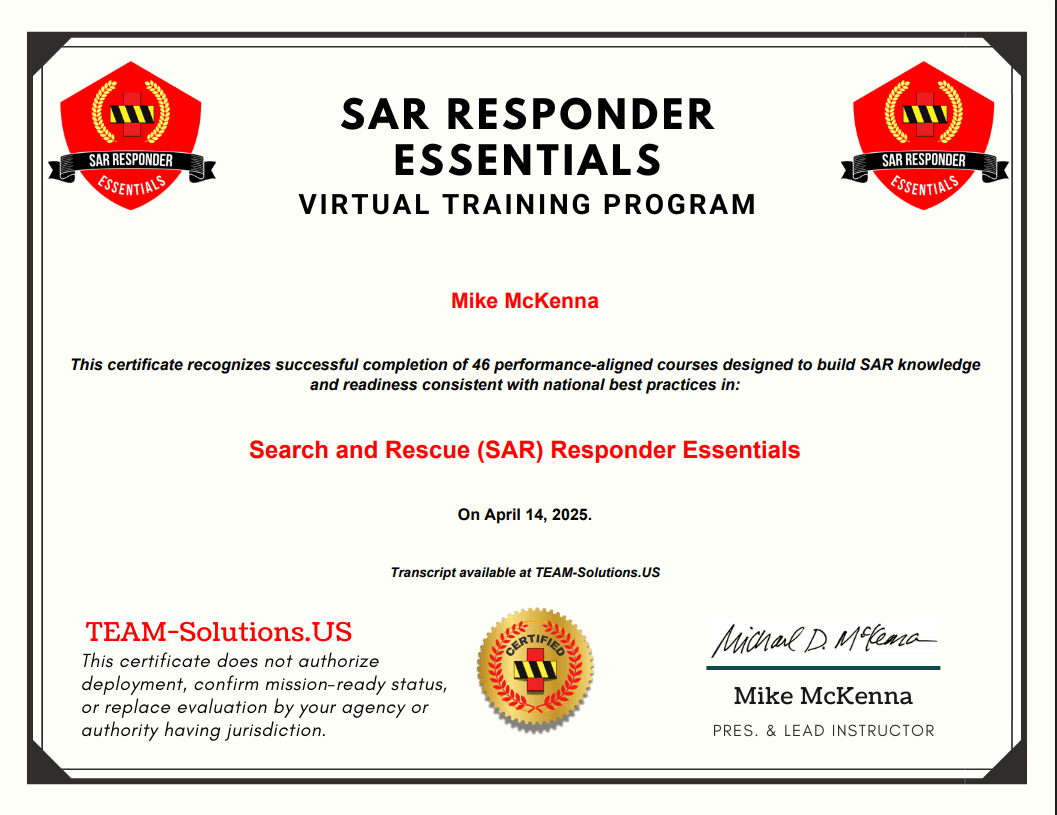
While specific team training is Top, having certain recognized certifications can make you a more attractive candidate and demonstrate a foundational skill set.
These are the badges that tell others you know your stuff.
Think of them as building blocks for your SAR career.
Foundational Certifications
Basic Search and Rescue Training (BSAR): This is often the first step. Many organizations, like NASAR, offer foundational courses that cover the absolute essentials of search operations, safety, and field skills.
First Aid/CPR/AED Certification: This is non-negotiable. You need to be proficient in immediate life-saving care. Look for courses like Wilderness First Aid (WFA) or Wilderness First Responder (WFR) for more advanced training relevant to remote environments.
Incident Command System (ICS) Training: Understanding how emergency incidents are managed is Key for effective teamwork. FEMA offers free online ICS courses (like ICS-100, ICS-200, ICS-700, ICS-800) that are widely recognized.
Specialized Skill Certifications
Depending on the team’s focus, you might pursue certifications in:
- Rope Rescue: Needed for teams operating in mountainous or steep terrain.
- Swiftwater Rescue: Critical for teams responding to flood or water-related incidents.
- Medical Certifications: Beyond basic first aid, EMT or Paramedic certifications are highly valued.
- K-9 Handling: If you have a suitable dog and the dedication, becoming a handler is a specialized but Key role.
- Tracking and Trailing: Advanced techniques for locating subjects in challenging environments.
Maintaining Your Certifications
Certifications aren’t “set it and forget it.” Most require periodic renewal, often through continuing education hours or re-testing.
Your team will likely mandate specific renewals to Make sure everyone stays current and proficient. This commitment to ongoing learning is part of what makes SAR professionals so reliable.
Alright, let’s get down and dirty. You’ve decided you want to be one of those heroes, right? The ones who drop everything to go find someone lost in the woods or a city buried by disaster. It’s not a walk in the park, though. Becoming certified for search and rescue is a serious commitment. We’re talking about rigorous training, demanding physical and mental fortitude, and a dedication that goes way beyond a hobby. This isn’t about getting a cool patch for your jacket; it’s about being ready when things go south, and lives are on the line. Let’s break down exactly what it takes to get that certification.
How To Become A Volunteer Search And Rescue Certified Member
Source : sheriff.bentoncountyor.gov
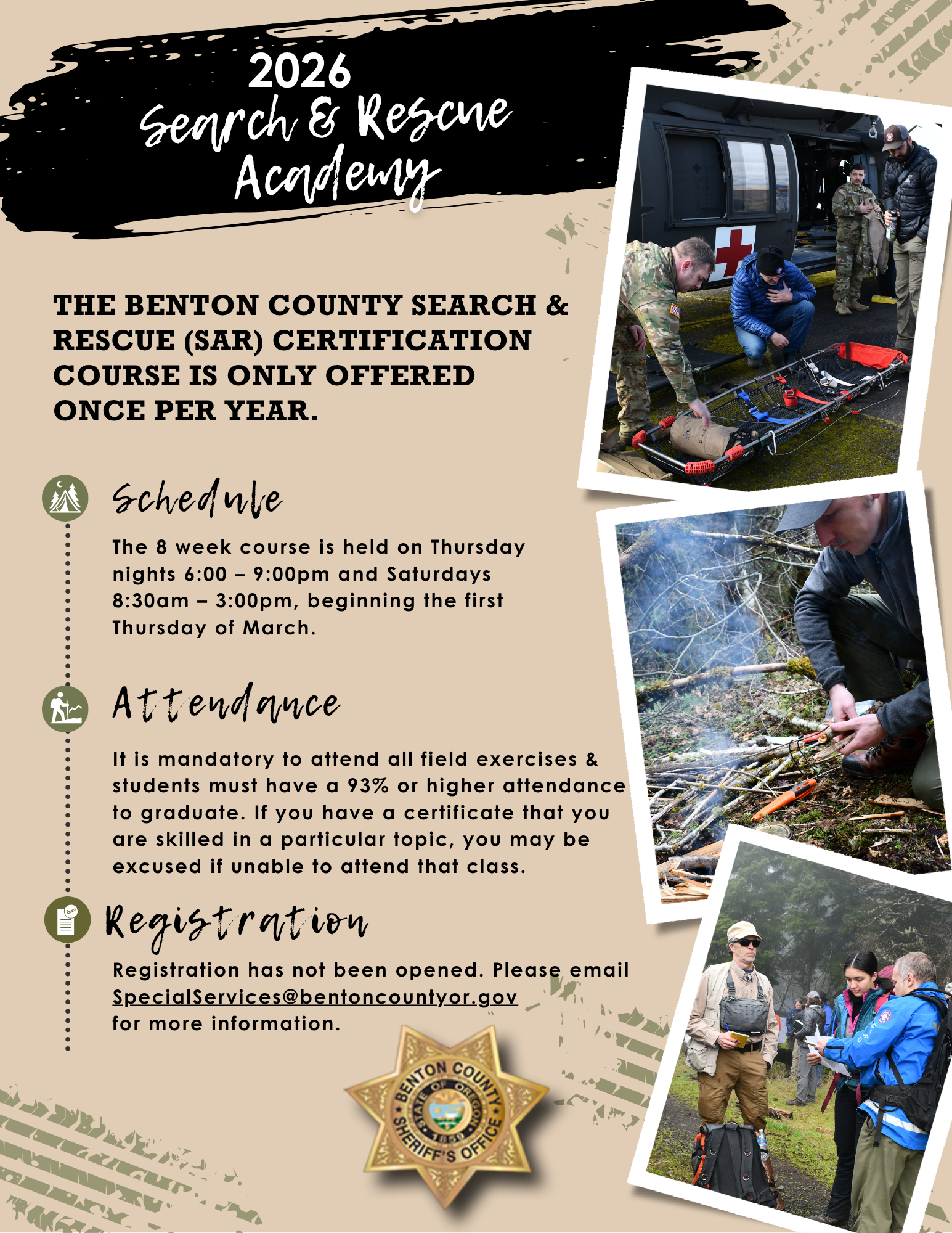
So, you’re not looking to make this a full-time gig, but you’ve got the heart and the time to help out. Fantastic! Becoming a volunteer is where most people start, and frankly, it’s the backbone of many SAR operations. It’s not just about showing up; it’s about being a reliable, trained asset.
Finding Your Local SAR Team
First things first, you gotta find your people. Search for local SAR teams in your county or city. Many agencies will have websites, or you can check with your local emergency management office. Don’t be shy about reaching out and asking about their recruitment process. They’re usually eager to find dedicated folks.
The Application and Interview Process
Once you’ve identified a team, expect an application. It’s not usually complicated, but they want to see your background. After that, there’s often an interview. This is where they gauge your commitment, your availability, and frankly, if you’re a good fit for a high-stress team environment. Can you handle pressure? Do you play well with others? These are Key questions.
Initial Training and Probationary Period
Most teams have an introductory training phase. Think of it as your SAR 101. You’ll learn the basics – map and compass, radio procedures, first aid, and team protocols. This is often followed by a probationary period. During this time, you’ll be expected to attend training, participate in drills, and prove you’re ready for the real deal. It’s your chance to shine and show them you’re serious about search and rescue.
Fema Search And Rescue Certification Requirements And Training

Source : audible.com
When disasters strike on a large scale, you’re going to hear about FEMA. They’re the big players, coordinating national response efforts. Getting certified through FEMA means you’re qualified for some of the most demanding SAR operations in the country. It’s a big step up from your local volunteer gig, but incredibly rewarding.
Understanding FEMA’s Role in SAR
FEMA doesn’t run local SAR teams directly. Instead, they provide standards, resources, and coordinate large-scale deployments. Their focus is often on urban search and rescue (USAR) teams, which are highly specialized units. Think collapsed buildings, major infrastructure failures – that’s FEMA territory.
FEMA Basic and Advanced Training Programs
FEMA offers a range of training courses. For basic involvement, you might look at courses like “IS-100.c: Introduction to the Incident Command System” or “IS-200.c: Basic Incident Command System for Incident Responders.” These are foundational. For actual operational roles within a FEMA-affiliated team, you’re talking about much more intense, hands-on training in areas like structural collapse assessment, technical rescue, and hazardous materials. You can explore courses on the FEMA Emergency Management Institute (EMI) website.
How to Join a FEMA USAR Task Force
Joining a FEMA USAR Task Force isn’t typically an individual application process. These task forces are usually comprised of experienced emergency responders from existing state and local agencies – fire departments, EMS, law enforcement, and specialized SAR units. If you want to be part of a USAR team, you generally need to be a member of one of these core disciplines and then be selected and trained by your local or state task force. It’s a higher bar, requiring significant experience and specialized skills. A great resource for understanding these structures is NASAR, which outlines various certification pathways.
The Importance of Incident Command System (ICS)
No matter where you are in the SAR world, understanding the Incident Command System is non-negotiable. FEMA emphasizes this heavily. It’s the standardized approach to the command, control, and coordination of emergency response. Without it, chaos reigns. Getting comfortable with ICS is a critical early step for anyone serious about SAR.
What Physical Requirements Are Needed For Search And Rescue Certification

Source : tommithetrainer.com
Let’s cut to the chase: search and rescue is physically demanding. You’re not just sitting at a desk. You’ll be hiking for hours, sometimes days, over rough terrain. You’ll be carrying gear, potentially dragging victims, and working in all sorts of weather. If you’re not in shape, you’re a liability, not an asset.
Cardiovascular Endurance is Key
Can you hike for miles with a 30-pound pack and not want to collapse? That’s the baseline. You need excellent cardiovascular fitness. Think running, swimming, cycling, and, of course, lots of hiking. Your ability to keep going when you’re exhausted is often what makes the difference in a prolonged search.
Strength and Stamina for Technical Operations
Beyond just endurance, you need functional strength. Lifting, carrying, and maneuvering are part of the job. This means working on your overall strength, focusing on compound movements like squats, deadlifts, and overhead presses. For technical rescue, like rope work or confined space, specific strength is absolutely Needed. Don’t underestimate the power of a good workout routine.
Mental Fortitude and Stress Management
This is often overlooked, but equally important. SAR operations can be incredibly stressful. You’ll see difficult situations, deal with anxious family members, and face challenging environmental conditions. Your ability to remain calm, focused, and make sound decisions under pressure is Top. This mental toughness often comes from experience and specific training in stress management techniques.
Medical Fitness and Injury Prevention
You need to be medically cleared to participate. Pre-existing conditions that could put you or others at risk during an operation are a no-go. Beyond that, focusing on flexibility, proper stretching, and injury prevention is Key. You don’t want to be the one who gets hurt on a mission. A solid understanding of basic first aid for yourself is also a must.
Urban Search And Rescue Certification Courses Near Me

Source : fire.lacounty.gov
Source : cityofkeywest-fl.gov
Okay, so you’re thinking about those intense, collapsed-building scenarios. Urban Search and Rescue (USAR) is a specialized field. It’s not about finding a lost hiker in the woods; it’s about Handling rubble, working in dangerous, confined spaces, and dealing with the aftermath of major urban disasters like earthquakes or bombings. Finding courses requires a bit more digging.
Specialized Training Facilities
Unlike basic SAR, USAR training often happens at dedicated facilities designed to simulate disaster environments. Think purpose-built training centers with collapsed structures, simulated hazardous materials zones, and high-angle rescue props. These aren’t usually advertised like your local community college courses. You’ll likely find them associated with larger fire departments or emergency management agencies.
Identifying USAR Certification Pathways
Becoming USAR certified typically means you’re already a part of an established emergency service. Many USAR courses are for existing members of fire departments, specialized rescue teams, or FEMA USAR Task Forces. You’ll need to inquire through your agency or look for courses offered by organizations like the National Fire Protection Association (NFPA) or FEMA itself, often through their accredited training partners. Some advanced volunteer SAR groups might offer components, but full USAR certification is usually a professional track.
Course Content and Prerequisites
Expect courses covering technical rescue disciplines: shoring (stabilizing collapsed structures), search (using specialized tools like cameras and listening devices), lifting and moving heavy debris, confined space rescue, rope rescue, and hazardous materials awareness. Prerequisites are usually stringent, often requiring advanced first aid/medical certifications, basic technical rescue skills, and proven experience in emergency response. Don’t expect to walk into a USAR course without a solid foundation.
How to Find Local USAR Training
Your best bet for finding urban search and rescue courses near you is to network within your local emergency services. Contact your local fire department’s training division or your county’s Emergency Management Agency. They can often point you towards accredited regional training centers or inform you about upcoming opportunities. If you’re a civilian volunteer, you might be looking at foundational SAR training first, and then potentially specialized modules offered by organizations like NASAR that touch on some USAR principles.
How To Get K9 Search And Rescue Dog Handler Certified
Source : flecak9.com
Ah, the K9 teams! Man’s best friend turned hero. This is a whole different ballgame, requiring not just your own certification but also the certification of your canine partner. It’s an incredibly rewarding, but intensely demanding, partnership. You and your dog become a single, highly effective search unit.
Choosing the Right Breed and Temperament
Not every dog is cut out for SAR work. You’re looking for specific traits: high drive, intelligence, trainability, confidence, and a stable temperament. Breeds like German Shepherds, Belgian Malinois, Labrador Retrievers, and Border Collies often excel, but it’s more about the individual dog. That eager-to-please attitude mixed with a relentless work ethic? That’s your golden ticket.
Basic Obedience and Socialization for SAR Dogs
Before you even think about scent training, your dog needs impeccable basic obedience. Off-leash reliability is non-negotiable. They need to respond instantly to commands, even with distractions. Socialization is equally Key. Your dog must be comfortable and non-reactive around unfamiliar people, other animals, loud noises, and strange environments. A nervous or aggressive dog is a liability.
Specialized SAR Dog Training Disciplines
There are several specialties for SAR dogs. You’ve got wilderness air scent dogs (finding a lost person’s scent carried on the wind), trailing/tracking dogs (following a specific person’s scent on the ground), human remains detection (HRD) dogs (finding deceased individuals), and disaster/rubble dogs (working in collapsed structures). Each requires a unique training approach and certification.
Handler Certification and Team Training
Both you and your dog must be certified. This involves rigorous testing of the dog’s ability to locate subjects and your ability to manage the dog, read their signals, and operate within a SAR team. Expect hundreds of hours of training. Organizations like NASAR, the National Search Dog Alliance (NSDA), and FEMA offer certification standards. You’ll train with a team, participate in drills, and go through evaluation processes. It’s a true partnership, requiring dedication from both ends of the leash.
Finding K9 SAR Training Groups
Look for local or regional K9 SAR training groups. These are often where you’ll get hands-on experience, mentorship, and prepare for certification. Searching online for “search and rescue dog training [your state]” is a good start. Be prepared for a significant time and financial commitment; it’s not a cheap or quick process.
Here’s a quick look at some common SAR dog disciplines and their focus:
| Discipline | Primary Focus | Key Skills | Handler Role |
|---|---|---|---|
| Wilderness Air Scent | Locating a missing person’s scent carried on the wind over a large area. | Extensive search patterns, scent discrimination, endurance. | Handling terrain, directing dog, reading dog’s alerts. |
| Trailing/Tracking | Following a specific person’s scent trail along the ground. | Following specific scent paths, working through urban/suburban environments. | Managing the lead, interpreting ground sign, handler’s keen observation. |
| Human Remains Detection (HRD) | Detecting the scent of decomposition. | Precision scent work, often in difficult or buried conditions. | Systematic search, precise indication of source. |
| Disaster/Rubble Search | Locating live victims within collapsed structures. | Handling unstable environments, high-angle movement, working with heavy equipment. | Team coordination, communication in noisy environments, safety assessment. |
Urban Search And Rescue Certification Courses Near Me
Okay, let’s circle back to Urban Search and Rescue (USAR). This isn’t your weekend warrior stuff. This is about operating in the most dangerous, chaotic environments imaginable. Think collapsed skyscrapers, bombed-out buildings, or major earthquake devastation. It’s high-stakes, requiring immense skill and courage.
The Rigor of USAR Training Programs
Forget casual weekend workshops. USAR certification means undergoing incredibly intensive training. We’re talking about simulating extreme scenarios, practicing complex techniques under immense pressure, and being tested to your absolute limits. This isn’t just physical; it’s mental endurance on a whole new level.
Finding Specialized USAR Training Centers
Most genuinely specialized USAR training happens at dedicated centers, often run by large metropolitan fire departments or FEMA’s own training facilities. These places are equipped with realistic props – actual collapsed structures, simulated hazardous material zones, and advanced technical rescue apparatus. You won’t find these advertised on local community bulletin boards. It’s about being part of a structured, professional emergency response system.
Understanding Different Levels of USAR Certification
USAR isn’t a single certification. There are various specializations and levels. You’ll find training for structural collapse specialists, search technicians, medical specialists within USAR teams, hazardous materials technicians, and more. The core requirement for most serious USAR roles is often experience within an established firefighting or specialized rescue discipline. Civilian volunteers might engage with foundational SAR skills, but full USAR operational roles typically require a professional emergency services background.
What Prerequisites to Expect for USAR Courses
Before you even think about applying for an advanced USAR course, you need a solid foundation. This typically includes advanced first aid or EMT certification, proven experience in technical rescue (like high-angle rope rescue or confined space rescue), and often a background in structural firefighting. They’re looking for experienced professionals who can integrate into a high-functioning team. Think of it as a graduate degree in emergency response.
Frequently Asked Questions
What qualifications do you need for search and rescue?
Honestly, it varies a lot depending on the specific team or agency. But generally, you’ll need to be in good physical shape – think ready to hike for miles with gear. A solid understanding of first aid is usually a must, and sometimes even advanced medical training. Plus, you’ve got to be mentally tough. This isn’t for the faint of heart.
How long is SARS training?
The training for Search and Rescue (SAR) can really stretch out. The basic stuff might take a few weekends or a couple of weeks intensive. But to get really proficient and certified for specialized roles? We’re talking months, sometimes even a year or more of ongoing training and drills. It’s a significant time commitment.
How long is SAR tech training?
SAR Tech training, particularly at the higher levels like SAR Tech II or I in Canada, is no joke. This is a full-on, often residential program. Think several months, typically 6 to 9 months, of rigorous, hands-on training covering everything from technical rope rescue to wilderness survival. It’s highly specialized training that requires dedication.
How hard is it to become search and rescue?
It’s challenging, no sugar-coating it. You’re facing demanding physical tests, complex problem-solving under pressure, and potentially dangerous situations. The training itself is intense. But is it impossible? Absolutely not. If you’ve got the drive, the grit, and the willingness to learn, you can definitely make it happen.
What kind of physical fitness is required for SAR?
You gotta be tough. Really tough. Imagine carrying a 50-pound pack over uneven terrain for hours, sometimes days, in any weather. We’re talking about serious cardio endurance, good upper body strength for climbing and hauling, and the ability to move quickly and efficiently on difficult ground. Think peak physical condition is the baseline.
