Is OSHA Certification Mandatory For All Construction Workers? Let’s Cut Through the Noise.
Look, I’ve been in the trenches, both literally and figuratively, and this question about OSHA certification pops up more often than a poorly secured scaffolding plank. Everyone wants to know: do I have to get this card? The short answer, as with most things involving regulations, is… it’s complicated. But don’t let that scare you. It’s not some mythical beast; it’s about keeping yourself and your buddies safe.
For years, there’s been this persistent buzz, this half-truth floating around that every single construction worker, from the apprentice holding the plumb bob to the foreman with the cigar, needs a shiny OSHA card. It sounds official, right? And in some ways, it’s based on reality, but the devil, as always, is in the details. So, let’s ditch the jargon and talk straight about who really needs what.
The Big Picture: OSHA’s Role in Construction Safety

Source : constructionjunkie.com
Understanding the Occupational Safety and Health Administration (OSHA)
First off, OSHA. What is it? Basically, it’s the government agency tasked with making sure your workplace doesn’t try to kill you. They set standards, conduct inspections, and generally try to prevent those horrific accidents we all hear about. They’re not there to be your buddy, but they are there to enforce the rules that keep you breathing.
Their mission is pretty straightforward: to Make sure safe and healthful working conditions for working men and women by setting and enforcing standards and by providing training, outreach, education, and assistance. It’s a big job, especially in an industry as inherently dangerous as construction.
Why Construction is a Special Focus for OSHA
Construction is, let’s face it, a high-risk game. You’ve got heights, heavy machinery, electricity, hazardous materials – the whole chaotic shebang. Falls, electrocutions, being struck by objects, and getting caught in something are the notorious “Fatal Four.” OSHA knows this, and that’s why construction sites get a lot of their attention. It’s not about nitpicking; it’s about preventing tragedies.
The sheer number of potential hazards on any given day means that a proactive approach is Key. Ignoring safety isn’t just risky; it’s downright foolish. Think of the guy running a small carpentry business – he’s just as exposed as someone on a massive high-rise project, even if the scale differs.
The Foundation: General Duty Clause
Even if there isn’t a super-specific rule for every single tiny risk, OSHA operates under something called the “General Duty Clause.” This basically says employers have a responsibility to provide a workplace free from recognized hazards that are causing or are likely to cause death or serious physical harm. It’s the catch-all, the ultimate safety net, ensuring accountability.
This clause means that even without a specific OSHA standard mandating a particular training, an employer can still be cited if a worker gets hurt due to a hazard they should have reasonably known about and protected against. It’s a powerful tool for worker protection.
The OSHA 10-Hour and 30-Hour Training: What’s the Deal?
Decoding OSHA 10-Hour Construction Training
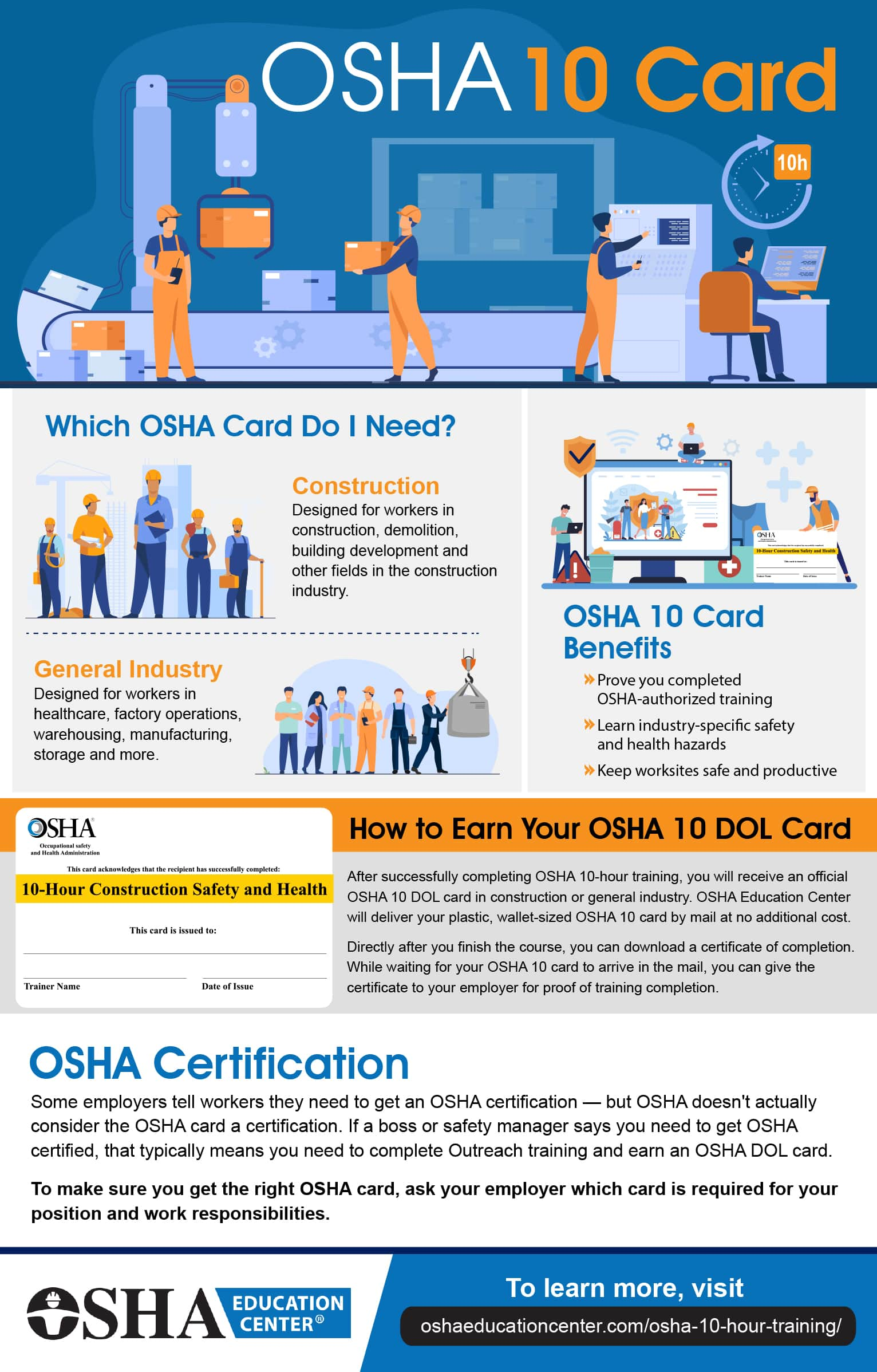
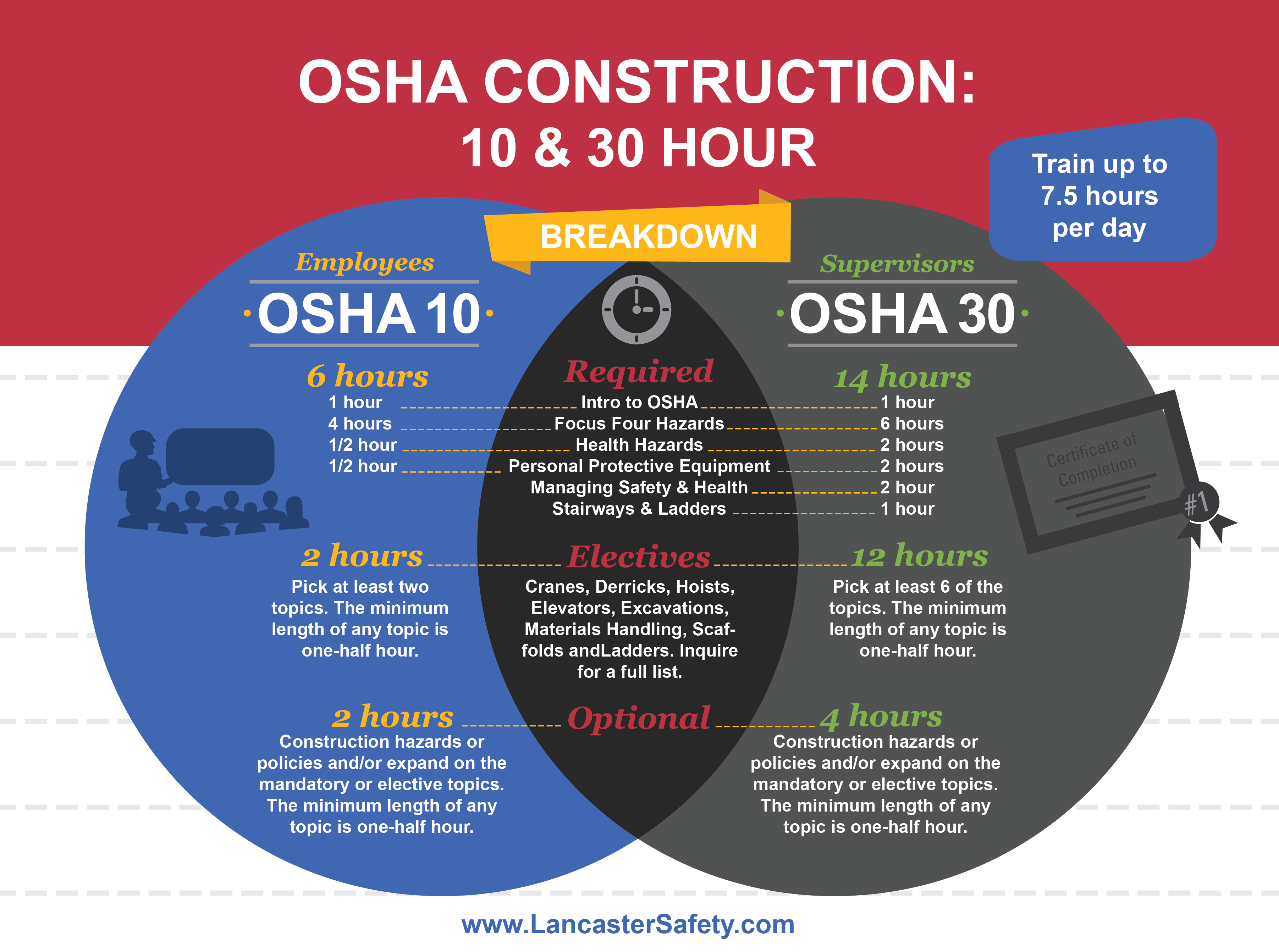
Alright, let’s talk about the famous OSHA 10-Hour Construction course. This is usually what people mean when they ask about mandatory certification. It’s an introductory-level training designed to give workers awareness on the construction industry’s common hazards and help them recognize and avoid them. It covers topics like fall protection, electrical safety, personal protective equipment (PPE), and material handling.
It’s a foundational course, perfect for entry-level workers or those who just need a basic understanding of safety protocols. It’s designed to be informative without overwhelming someone new to the job site. Many employers see this as a baseline requirement to Make sure their team has at least some safety awareness.
Source : oshaeducationcenter.com
The More Advanced OSHA 30-Hour Construction Training
Then you have the OSHA 30-Hour Construction course. This is more in-depth. It’s geared towards supervisors, foremen, and those with some safety responsibility. It covers the same topics as the 10-hour course but goes into much greater detail, often including hazard identification, risk assessment, and employer responsibilities.
If you’re managing a crew or overseeing specific operations, the 30-hour training provides a more Full understanding of how to implement and manage safety programs effectively. It’s about having the knowledge to not only protect yourself but also to guide others towards safer practices.
Are These Courses Federally Mandated for Everyone?
Here’s the crux of the matter: Does Uncle Sam, via OSHA, actually force every single construction worker to have these cards? The official federal stance, and this is Key, is no, not universally. OSHA does not mandate that every construction worker nationwide must complete either the 10-hour or 30-hour training. This is a common point of confusion.
While OSHA doesn’t have a blanket federal requirement, their website clarifies that many employers, industries, and even specific job sites do implement their own mandatory training policies. This is where the “mandatory” aspect often comes from. It’s less about federal law and more about company or site-specific rules.
What is the Official OSHA Stance on Mandates?
According to information readily available, OSHA itself doesn’t impose a universal mandate. However, they strongly recommend training. As noted in discussions about OSHA construction industry training becoming mandatory, the reality on the ground often differs from the strict federal interpretation. Many states and local jurisdictions have adopted their own safety and training requirements that Match with or exceed federal guidelines.
It’s Key to understand that the federal government sets the minimum, but states and individual companies can and do set higher bars. This flexibility allows for tailoring safety programs to specific regional needs or industry demands.
When Does OSHA Certification Actually Become Mandatory?
State and Local Regulations: The Game Changer
This is where things get really specific. Several states, like New York, Massachusetts, and California, have their own laws requiring construction workers to have specific OSHA training, often the 10-hour or 30-hour courses. If you’re working in these states, then yes, for all intents and purposes, that OSHA certification is mandatory for you on most construction sites.
For instance, New York requires all workers on public works projects to have completed at least the OSHA 10-hour construction safety course. Failure to comply can result in significant penalties for contractors. These state-level mandates are just as binding as federal ones for workers within those states.
Employer Requirements: The Most Common Driver
Even if your state doesn’t mandate it, your employer absolutely can. Many construction companies, especially larger ones or those working on government contracts, require their employees to have OSHA 10 or 30-hour cards as a condition of employment. It’s often part of their commitment to safety and a way to demonstrate due diligence.
Think of it like this: a general contractor on a major building project wants to Make sure zero liability and maximum safety. Requiring all subcontractors and their workers to have that 10-hour card is a simple, effective way to meet that goal. It shifts some of the responsibility upwards and inwards.
Specific Project or Union Agreements
Sometimes, the mandate comes not from the state or the individual employer, but from the specific project you’re working on. Large commercial or industrial projects might have stricter safety requirements outlined in the contract. Similarly, if you’re part of a union, collective bargaining agreements might stipulate mandatory safety training for all members.
These project-specific requirements are often driven by the client’s demands or the general contractor’s own stringent safety policies. Being aware of the contract specifics for the job site you’re on is Top.
The “Why”: Mitigating Risk and Ensuring Competency
Why do all these entities mandate the training? It boils down to risk mitigation. Accidents cost money – lost time, equipment damage, lawsuits, insurance premium hikes, and most importantly, human suffering. Requiring training helps Make sure workers have a baseline understanding of how to avoid common accidents. It’s a proactive measure.
It helps verify a basic level of safety competency. When a client sees that a contractor’s workforce is OSHA-trained, it provides a level of assurance that safety is taken seriously.
Debunking Common Myths Around OSHA Certification
Myth 1: “OSHA 10 is Mandatory for ALL Construction Workers Everywhere.”
We’ve hit this one hard, but it bears repeating. As mentioned, OSHA itself doesn’t have a universal federal mandate. While many employers and some states require it, it’s not a blanket law covering every single worker across the entire United States. This is perhaps the biggest misconception out there.
Many workers are confused by this, and you can see why. It’s easy to assume a federal agency’s training would be required everywhere. However, the reality is far more fragmented, as discussed in articles like Debunking Myths About OSHA 10-Hour Construction Training.
Myth 2: “The OSHA Card Never Expires.”
This one trips people up. While there isn’t a strict federal expiration date mandated by OSHA for the 10-hour or 30-hour cards themselves, many employers and states do require refresher training every few years. Think of it like a driver’s license – the plastic card doesn’t expire, but the knowledge might become outdated, or specific regulations might change.
Some states, like Pennsylvania, might require refresher training within a certain timeframe for certain types of work. It’s always best to check with your employer or local regulations to see if ongoing training is expected or required. Relying solely on a card you got years ago might not cut it anymore.
Myth 3: “Only New Workers Need OSHA 10.”
While the 10-hour course is foundational and great for new hires, it’s not just for rookies. Experienced workers can also benefit from a refresher, especially if they’ve been working under outdated practices or haven’t encountered specific hazards recently. Plus, experienced workers might need the 30-hour course for supervisory roles.
Sometimes, even the most seasoned pros can learn new tricks or be reminded of critical safety protocols they might have let slide over the years. Complacency is a huge killer on job sites.
Source : oshaeducationcenter.com
Myth 4: “You Can Only Take OSHA Training In Person.”
Thank goodness this isn’t true anymore! While classroom training is still common, OSHA has authorized online courses for both the 10-hour and 30-hour training programs. This offers incredible flexibility, especially for workers who have demanding schedules or live far from training centers. You can often complete the training at your own pace.
Online options make accessibility a non-issue for many. Someone working in a remote area of Alaska can get their OSHA 10 training just as easily as someone in downtown Chicago. It democratizes safety education.
Understanding the OSHA Card Itself
What is an “OSHA Card”?
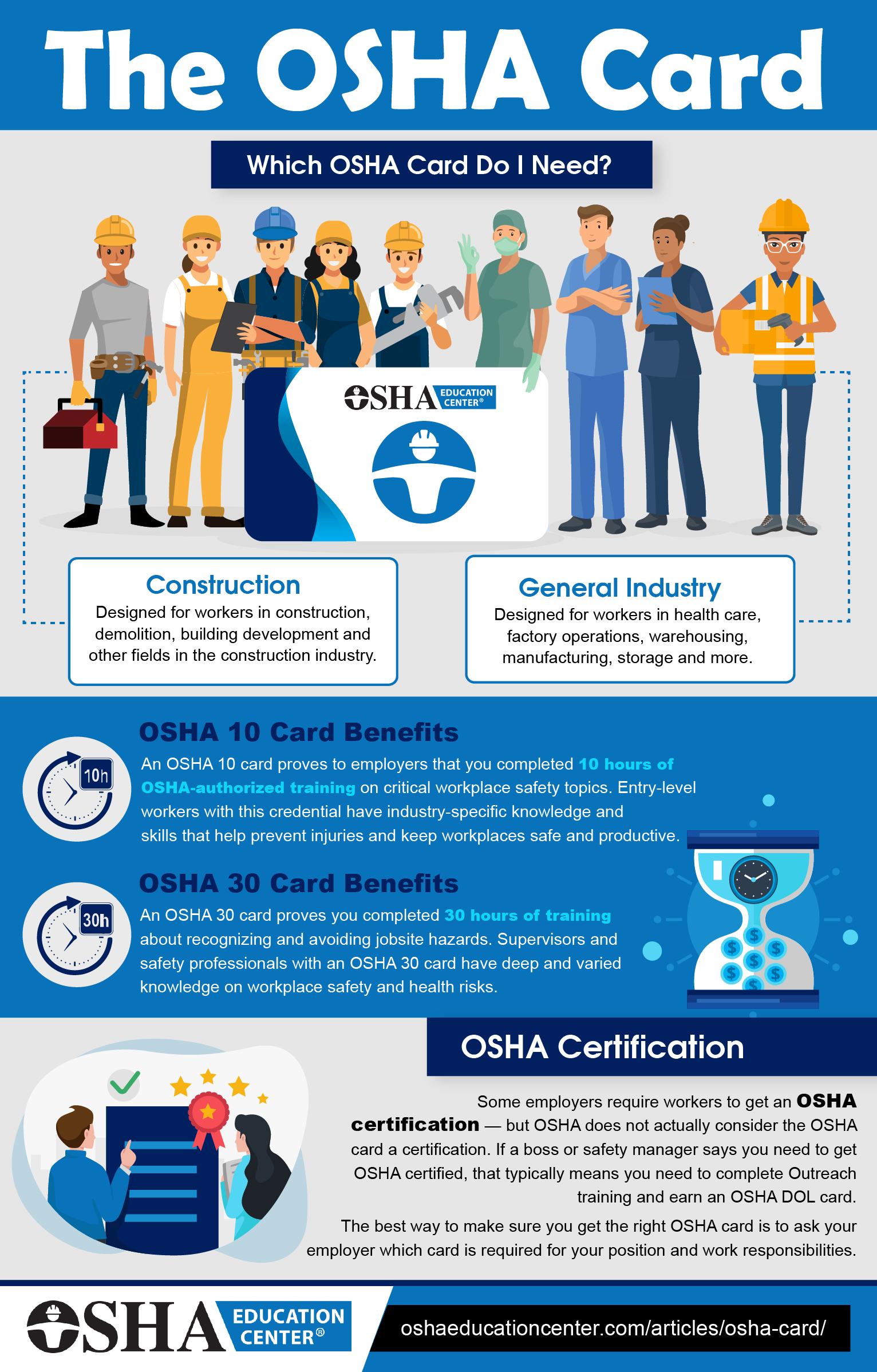
When people talk about an “OSHA card,” they’re usually referring to an official DOL (Department of Labor) OSHA completion card. This card is issued after successfully completing an OSHA-authorized 10-hour or 30-hour training course. It serves as proof that you’ve undergone the training.
There are different types of cards, often distinguishing between the 10-hour and 30-hour courses, and sometimes even indicating the industry (construction vs. general industry). The most common for construction workers are the DOL OSHA 10-Hour Construction card and the DOL OSHA 30-Hour Construction card.
Who Issues the Card?
It’s important to know that OSHA itself doesn’t directly train workers or issue these cards. Instead, they authorize “OSHA Outreach Trainers” and training organizations to conduct the courses and issue the cards. These authorized trainers must adhere to OSHA’s curriculum standards. The card you receive will typically have the Department of Labor (DOL) and OSHA logos on it.
Always Make sure you are taking a course from an authorized provider. Taking a course from an unapproved source won’t get you a legitimate DOL card, and therefore won’t satisfy any requirements. You can usually verify authorized providers through OSHA’s website or by asking the training company directly for their authorization number.
Do I Get a Card Immediately After Training?
Typically, no. After you complete an authorized course (whether online or in-person), the training provider will process your completion. They then submit the necessary information to the Department of Labor, which prints and mails the official DOL OSHA card. This process can take several weeks.
Some training providers might offer a temporary certificate of completion that you can use immediately while you wait for your official card to arrive. This temporary document often suffices for employers who need immediate proof of training. Check with your specific training provider about their process for issuing completion documents.
The Facts About Obtaining an OSHA Card
The process is straightforward: find an authorized training provider, complete the required hours of training (10 or 30), pass any assessments, and then wait for your official card to be mailed. The U.S. Department of Labor’s Occupational Safety and Health Administration website provides resources detailing the facts about obtaining an OSHA card. It’s all about verifying your participation and successful completion of the approved curriculum.
Remember, the card is just a piece of plastic. The real value comes from the knowledge and awareness you gain from the training itself. The card is merely proof of that acquired safety education.
The Benefits of OSHA Training (Even When Not Mandatory)
Enhanced Safety Awareness
Let’s be real: construction is dangerous. Even if you’ve been doing it for 20 years, there’s always something new to learn or a hazard you might have overlooked. OSHA training reinforces safe work practices, teaches you to identify potential dangers, and encourages you to speak up if something seems off. It’s about building a safety-first mindset.
This heightened awareness can literally save your life or prevent a serious injury. It’s not just about following rules; it’s about developing a critical eye for risk in your daily work. You start seeing potential problems before they become actual incidents.
Improved Job Performance and Employability
Having that OSHA card can make you a more attractive candidate for employers. It signals that you’re safety-conscious and potentially less of a liability. For some jobs, it’s a non-negotiable prerequisite. Plus, understanding safety procedures can make you more efficient; safe jobs often run smoother.
In a competitive job market, any edge helps. A certificate showing you’ve completed safety training demonstrates professionalism and commitment to the job beyond just showing up and swinging a hammer. It shows you’re invested in your career and the well-being of your team.
Compliance and Reduced Liability for Employers
For businesses, requiring and providing OSHA training helps Make sure compliance with state and federal regulations. It also significantly reduces their liability in case of an accident. When an employer can show they’ve invested in training their workers, it weighs heavily in their favor should an incident occur.
It’s a win-win. Workers get safer, and employers protect themselves legally and financially. This is why even when not federally required, many forward-thinking companies make it a standard practice.
Creating a Stronger Safety Culture
When everyone on a crew, from the top boss down, has undergone safety training, it fosters a stronger overall safety culture. It signals that safety isn’t just an afterthought; it’s a core value of the company. This collective commitment makes everyone more accountable and vigilant.
A strong safety culture means workers are more likely to look out for each other, report hazards without fear, and actively participate in making the workplace safer. It moves beyond individual compliance to a shared responsibility.
Who Needs Which Training? A Quick Guide
Source : lancastersafety.com
Entry-Level Workers and Apprentices
For those just starting out in construction, or apprentices learning the ropes, the OSHA 10-hour Construction course is generally the most appropriate. It provides the fundamental safety knowledge needed to recognize and avoid common hazards on the job site.
This training is designed to be accessible and provide a solid foundation for a safe career. It covers the essentials without getting bogged down in management-level strategies.
Supervisors, Foremen, and Site Managers
Anyone in a supervisory role, responsible for overseeing workers or managing specific operations, should consider the OSHA 30-hour Construction course. This program offers a more Full understanding of hazard identification, control measures, and employer responsibilities.
The additional hours allow for a deeper dive into safety management, equipping leaders with the knowledge to implement effective safety programs and protocols on site.
Specialty Trades and Experienced Workers
Even experienced workers in specialty trades (electricians, plumbers, masons) can benefit from either the 10-hour or 30-hour course, depending on their role. If state or employer requirements exist, they must be met. Beyond that, a refresher or more advanced training can always be valuable.
It’s not about how long you’ve been doing the job, but about staying current with safety best practices and specific hazards relevant to your trade. Specialized training might even exist within certain trades that complement OSHA standards.
Workers in States with Mandates
If you work in a state like New York, Massachusetts, or New Jersey, you absolutely need to comply with their specific OSHA training requirements. This is non-negotiable for working on most construction projects in those jurisdictions.
Ignoring these state-level mandates is a direct route to being unable to work on job sites. Always verify the requirements for the state where you are performing construction work.
Handling Training Options and Providers
Choosing Between Online and In-Person Training
Online training offers Best convenience and flexibility. You can learn at your own pace, often fitting it around your work schedule. In-person classes offer direct interaction with instructors and peers, which some learners find more engaging and beneficial for asking specific questions.
The best choice depends on your learning style, schedule, and access to training facilities. Both formats, when provided by authorized trainers, result in the same official DOL card.
How to Verify an Authorized Training Provider
This is critical. Don’t get caught with a fake certificate! You can usually find a list of authorized OSHA Outreach trainers or organizations on the OSHA website. Alternatively, authorized providers will readily share their authorization number or details. Be wary of suspiciously low prices or guarantees that seem too good to be true.
Reputable providers will be transparent about their authorization status. Always ask if you’re unsure. A quick check can save you a lot of headaches down the line.
Cost Considerations for OSHA Training
The cost can vary significantly depending on the provider, the format (online vs. in-person), and whether it’s a group or individual registration. Online courses are often more affordable, ranging from $50 to $150. In-person classes might be higher, anywhere from $100 to $500 or more, especially for the 30-hour course.
Factor this into your decision-making. If your employer isn’t paying for it, you’ll need to budget accordingly. Remember, the cost of the training is often minuscule compared to the cost of an accident.
What to Expect During Training
The training covers key safety and health topics relevant to construction. You’ll learn about hazard communication, fall protection, electrical safety, scaffolding, PPE, and more. Expect lectures, discussions, and possibly videos. For the 10-hour course, topics are covered more broadly; the 30-hour course delves deeper into each subject.
Quizzes or a final exam are usually part of the process to Make sure comprehension. The goal is active learning, not just passive attendance.
The Bottom Line: Is It Mandatory for YOU?
Check Your State Laws First
The absolute first step is to research the specific laws in the state where you work. As we’ve seen, states like New York, Massachusetts, and others have explicit requirements for construction workers. Ignoring state mandates is a major risk.
Don’t just assume. Do a quick online search for “[Your State] OSHA training requirements construction.” It could save your career.
Ask Your Employer Directly
This is the most straightforward approach. Your employer or potential employer can tell you exactly what training they require. This applies whether you’re seeking a new job or already employed. They are the ones who will likely enforce the requirement.
Don’t be shy about asking. It shows you’re proactive about safety and understanding job requirements. It’s better to know upfront than to be turned away from a job site.
Source : usfosha.com
Understand Project-Specific Rules
Large projects, government contracts, or unionized sites often have unique training stipulations. These are usually clearly outlined in bid documents, contracts, or union agreements. Make sure you’re aware of any additional requirements beyond general state or employer mandates.
These rules are in place to protect everyone involved and Make sure the project meets the highest safety standards. Being compliant is part of being a professional on the job.
When in Doubt, Get the Training
Honestly? If there’s any ambiguity at all, just get the OSHA 10-hour card. It’s relatively inexpensive, widely recognized, and universally beneficial. It provides valuable safety knowledge that can prevent accidents, improve your job prospects, and make you a safer, more valuable worker. It’s a small investment for a huge return in safety and career potential.
Think of it as an investment in yourself. The knowledge gained is Crucial, regardless of whether it’s strictly “mandatory” for your specific situation. Better safe than sidelined.
Key Takeaways: OSHA Training Essentials
Federal vs. State vs. Employer Requirements
Remember:
- Federal OSHA: No universal mandate for all construction workers.
- State/Local: Several states do mandate specific OSHA training (e.g., NY, MA).
- Employer: Many companies require it as a condition of employment or for specific projects.
The Field is complex, requiring you to check multiple layers of regulation.
The Value of the Training Itself
Beyond the card, the training provides:
- Hazard recognition skills.
- Knowledge of safety best practices.
- Understanding of worker rights and employer responsibilities.
- A foundation for a safer work environment.
The education is the real prize, not just the piece of plastic.
Always Verify Training Providers
Stick to authorized OSHA Outreach trainers. Check their credentials. Don’t risk getting an invalid certification that won’t meet requirements. Legitimacy matters in safety.
Err on the Side of Caution
If you’re unsure about requirements, getting the OSHA 10-hour certification is almost always a good idea. It’s a widely respected credential that enhances your safety knowledge and employability. It’s a smart move for any construction professional.
| Feature | OSHA 10-Hour Construction | OSHA 30-Hour Construction |
|---|---|---|
| Target Audience | Entry-level workers, laborers, apprentices | Supervisors, foremen, site managers, safety officers |
| Minimum Training Hours | 10 hours | 30 hours |
| Focus | Introduction to common construction hazards and prevention | In-depth coverage of hazard identification, control, and safety management |
| Federal Mandate? | No universal federal mandate | No universal federal mandate |
| State/Employer Mandates? | Often required by states (e.g., NY) and employers | Often required for supervisory roles by states and employers |
| Common Topics | Fall protection, electrical safety, PPE, material handling, scaffolding basics | All 10-hour topics plus detailed hazard analysis, emergency planning, regulatory compliance, safety program management |
| Typical Cost (Approx.) | $50 – $150 (online); $100 – $300 (in-person) | $150 – $300 (online); $250 – $500+ (in-person) |
| Card Issued | DOL OSHA 10-Hour Construction Card | DOL OSHA 30-Hour Construction Card |
| Expiration/Refresher | No federal expiration, but employers/states may require refreshers (often every 3-5 years) | No federal expiration, but employers/states may require refreshers (often every 3-5 years) |
So, is OSHA certification mandatory for all construction workers? The straightforward answer is still “it depends.” But hopefully, by now, you understand the nuances. Always check your local regulations and your employer’s policies. And if you’re ever in doubt, getting that OSHA 10-hour card is a smart bet for your career and your safety.
Frequently Asked Questions
Who needs an OSHA certification?
Generally, anyone working in a construction or industrial setting where safety hazards exist might need it. It’s not always a blanket ‘certification’ for everyone, but awareness and specific training are key. Think supervisors, safety officers, and sometimes even workers on certain projects.
Does OSHA apply to all workers?
Well, OSHA’s general duty clause applies to most employers and their workers. But ‘mandatory certification’ for every single worker? Not always. Depends on the industry, the specific job, and state or local rules. Some jobs require more specialized OSHA training than others.
What training is not mandated by OSHA?
OSHA doesn’t typically mandate specific certifications for entry-level roles or general administrative tasks that don’t involve physical hazards. Things like basic office software training or general ‘how to use a copier’ aren’t usually OSHA’s domain. They focus on preventing workplace deaths and injuries, so it’s all about the safety aspect.
Are there different types of OSHA training?
Oh yeah, tons! You’ve got the popular 10-hour and 30-hour outreach training for general industry and construction. Then there are specific courses for things like confined spaces, fall protection, or hazard communication. It really depends on the risks associated with your specific job.
What happens if a company doesn’t follow OSHA rules?
Basically, fines. Big ones, sometimes. OSHA inspectors can issue citations for violations, and these come with penalties. It can really hurt a company’s bottom line, not to mention the risk to workers. It’s way cheaper to just do the training properly.
