RBT vs ABA Certification: Handling Your Path in Behavior Analysis
So, you’re looking to break into the rewarding field of Applied Behavior Analysis (ABA), huh? Smart move. It’s a space where you genuinely make a difference in people’s lives, especially kids. But here’s where things can get a little muddy: the jargon. You’ve probably heard terms like RBT and BCBA thrown around, and maybe even “ABA certification” as a catch-all. Let’s clear the air. It’s not just about getting a certification; it’s about getting the right one for where you want your career to go. Think of it like this: you wouldn’t use a screwdriver to hammer a nail, right? Same principle applies here. Understanding the distinction between a Registered Behavior Technician (RBT) and the broader umbrella of ABA certifications, especially the coveted BCBA, is Key. It’s the difference between being a Key team member on the ground and leading the charge. Let’s dive in, shall we?
What’s the Big Deal with ABA Certifications Anyway?

Source : abcachieve.com
Alright, let’s talk brass tacks. Why all the fuss about certifications in Applied Behavior Analysis? It’s not just some bureaucratic hoop to jump through. These certifications are the gatekeepers, the quality control, the very backbone that ensures you’re providing effective, ethical care. Without them, it’s a free-for-all, and that’s dangerous for the clients who depend on us. Think about the vulnerable populations we often serve – children with autism, individuals with developmental disabilities. They deserve the best, and that means professionals who have proven their mettle through rigorous training and standardized exams. It’s about accountability, competence, and ultimately, client safety and well-being. Getting certified means you’re not just winging it; you’re part of a respected, evidence-based profession.
Ensuring Competence and Ethical Practice
Look, nobody wants a quack practicing medicine, right? The same goes for ABA. ABA certifications are designed to weed out the unqualified and to guarantee a baseline level of knowledge and skill. They Make sure that practitioners understand the science behind behavior, how to implement interventions effectively, and, crucially, how to do it ethically. This isn’t just about following a checklist; it’s about deeply understanding the principles and applying them with integrity. It protects clients from harm and builds trust in the field itself. It’s a non-negotiable part of professional conduct.
Professional Recognition and Career Advancement
Let’s be real: certifications open doors. Having a recognized credential, whether it’s RBT or a higher-level BCBA, immediately signals to employers that you’ve met specific standards. It differentiates you from candidates who haven’t put in the work. For many positions, it’s not just a “nice-to-have”; it’s a mandatory requirement. Beyond just landing a job, these certifications often Set up for promotions, increased responsibilities, and higher earning potential. Think of it as an investment in your future. A solid credential shows you’re serious.
The Foundation of Evidence-Based Practice
The whole point of ABA is to use scientifically validated methods to bring about meaningful behavior change. Certifications Make sure that practitioners are trained in and adhere to these evidence-based practices. It’s about using techniques that have been studied, tested, and proven to work. This isn’t about fads or personal opinions; it’s about applying a science. Without certification standards, it would be far too easy for individuals to peddle unproven or even harmful methods. Certification upholds the integrity of ABA as a science and a profession.
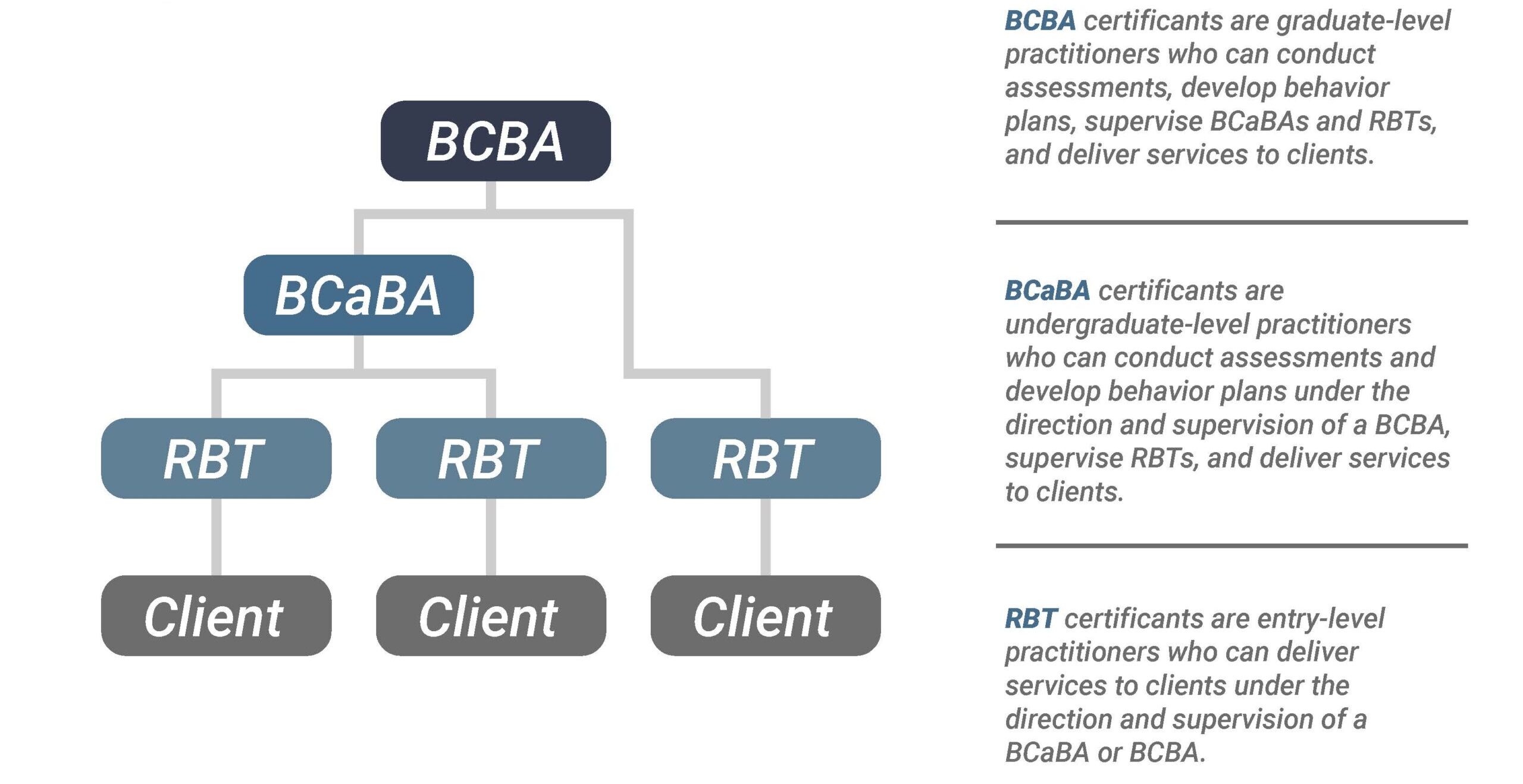
Source : bacb.com
Understanding the Registered Behavior Technician (RBT) Role
Okay, let’s zoom in on the RBT. This is often the entry point for many into the ABA world. Think of the RBT as the frontline hero. They’re the ones working directly with clients, day in and day out, implementing the behavior plans designed by supervisors. They’re not designing the plans, mind you, but they are absolutely critical in executing them. If you like hands-on work and seeing direct progress, this might be your jam. It’s about collecting data, running discrete trial training, and generally being the boots on the ground. It’s a Key role, no question about it.
What an RBT Actually Does: Day-to-Day Realities
This: you’re working with a young child diagnosed with autism. Your day might involve discrete trial teaching to build language skills. You’re probably using reinforcement – maybe a favorite toy or a verbal praise – to encourage desired behaviors. You’re meticulously tracking progress, noting down every “yes” and “no” on your data sheets. You’re also managing challenging behaviors, using the strategies outlined by your supervising BCBA to keep the child safe and on track. It’s direct, impactful work. An RBT’s daily tasks are varied but always focused on client needs.
The RBT Certification Requirements: Getting Your Foot in the Door
So, how do you become this frontline hero? It’s less daunting than some other certifications. You’ll need a high school diploma or equivalent, and you must complete a 40-hour training course covering specific ABA principles and ethical guidelines. After that, you’ll need to pass a competency assessment, where someone evaluates your skills in real-time. Finally, you have to pass the official RBT exam administered by the Behavior Analyst Certification Board (BACB). It’s designed to be accessible, making it a great starting point. Meeting RBT certification requirements is the first big step.
Supervision: The RBT’s Needed Lifeline
Here’s the kicker: an RBT never works alone. You are always under the supervision of a qualified BCBA or BCaBA. This supervision is non-negotiable. It’s where you get guidance on implementing the behavior intervention plan, discuss challenging cases, and receive feedback to improve your skills. Think of your supervisor as your coach, mentor, and quality check, all rolled into one. They Make sure you’re on the right track and that the interventions are being implemented correctly and ethically. Supervision is key for RBTs.
Exploring the World of ABA Certifications (Beyond RBT)
Now, let’s broaden the lens. “ABA certification” is a bigger umbrella than just RBT. While the RBT is Key for direct implementation, other certifications prepare you for designing interventions, managing cases, and leading teams. These advanced certifications often require more education, extensive supervised experience, and a much more challenging exam. They signify a higher level of expertise and responsibility. If you see yourself as a strategist or a leader in the ABA field, you’ll likely be looking at these higher-tier credentials. It’s about taking your career to the next level. These advanced ABA certifications are what drive the field forward.
The Board Certified Behavior Analyst (BCBA): The Lead Strategist
The BCBA is often considered the gold standard in ABA. These are the folks who analyze behavior, develop Full behavior plans, train RBTs and parents, and oversee the entire treatment process. They need a Master’s degree in a relevant field and have to complete a significant amount of supervised experience before they can even sit for the notoriously difficult BCBA exam. If you want to be the architect of behavior change, the problem-solver, the ultimate authority on ABA for a client, then the BCBA certification is likely your goal. You can find out more about the difference between RBTs and BCBAs here: RBT vs BCBA differences.
Board Certified Assistant Behavior Analyst (BCaBA): A Step Towards Leadership
Think of the BCaBA as a middle ground. They typically hold a Bachelor’s degree and have completed specific coursework and supervised experience. A BCaBA can design behavior plans and supervise RBTs, but usually under the oversight of a BCBA. It’s a great option for those who want to move beyond direct implementation but aren’t ready or don’t have the educational background for a BCBA. It offers more responsibility than an RBT role. It’s a stepping stone, really, but a significant one. Many pursue BCaBA certification as a career enhancer.
Other Specialized ABA Credentials
The world of ABA certifications doesn’t stop neatly at BCBA. There are also doctoral-level credentials, like the BCBA-D (Doctoral), for those with a doctorate in behavior analysis. These individuals often engage in research, academia, and highly specialized clinical work. Depending on your career aspirations, you might encounter other, more niche certifications related to specific populations or areas of practice within ABA. The field is constantly evolving, and so are the credentials. Staying informed about various ABA credentials is part of staying current.
RBT vs. BCBA: A Direct Comparison

Source : learnbehavioral.com
Let’s lay it all out on the table. What are the fundamental differences? It boils down to education, scope of practice, and responsibility. An RBT is focused on direct implementation and data collection under supervision. A BCBA is focused on assessment, plan development, and overall case management, often supervising others. It’s not about one being “better” than the other; they are different roles on the same team, each Key. Think of a construction project: the RBT is like the skilled tradesperson on-site, executing the blueprints, while the BCBA is the architect and site supervisor, ensuring the whole structure is sound and built according to plan. Understanding these RBT vs BCBA roles is Key.
Educational Requirements: The Great Divide
This is a major differentiator. RBTs need a high school diploma. That’s it. For a BCBA, you need at least a Master’s degree in behavior analysis or a related field from an accredited institution. This significant educational gap dictates the level of theoretical knowledge and critical thinking expected from each role. The coursework for a BCBA is extensive, covering advanced behavioral concepts, research methodologies, and ethical decision-making. It’s a Large academic commitment, unlike the training required for an RBT’s foundational knowledge.
Scope of Practice: What Can You Legally Do?
An RBT’s scope is primarily defined by the behavior intervention plan created by their supervisor. They implement specific procedures, collect data, and communicate observations. They do not conduct assessments, develop treatment plans, or make clinical judgments independently. A BCBA, on the other hand, has a broad scope. They assess clients, diagnose needs (within the scope of ABA), design individualized treatment plans, interpret data, make clinical decisions, and supervise other professionals. The scope of practice for BCBAs is far wider.
Responsibility and Autonomy Levels
With great power comes great responsibility, right? The BCBA holds significant responsibility for the client’s progress and the ethical application of ABA services. They have a high degree of autonomy in their decision-making. RBTs have responsibility for accurately implementing plans and collecting data, but their autonomy is limited. They rely heavily on their supervisor’s direction. This difference in autonomy and responsibility is a core distinction.
Supervisory Relationships: Who Oversees Whom?
This is crystal clear. RBTs are always supervised. They report to a BCBA or BCaBA. BCaBAs might be supervised by a BCBA. BCBAs supervise RBTs and often BCaBAs. They might also supervise individuals pursuing BCBA certification. This hierarchical structure ensures quality control and adherence to professional standards across all levels of practice. It’s a system built on mentorship and oversight. The supervisory hierarchy in ABA is well-defined.
Choosing Your Certification Path: A Strategic Decision
So, where do you go from here? The choice between pursuing an RBT certification or aiming for a higher-level ABA certification like the BCBA isn’t just a matter of preference; it’s a strategic career decision. It depends entirely on your background, your educational goals, your financial situation, and, most importantly, your long-term aspirations. Don’t just pick one because it seems easier. Think about where you want to be in 5, 10, or even 20 years. Your choice now sets the trajectory. Let’s break down how to make this choice strategically. Consider your career trajectory carefully.
Assessing Your Educational Background and Goals
Do you already have a Master’s degree, or are you planning to pursue one? If yes, then the BCBA path is certainly viable and likely the ultimate goal. If you’re just starting out or looking for a quicker entry into the field, the RBT is an excellent place to begin. Maybe you have a Bachelor’s and want to stay at that level while still having a supervisory role? The BCaBA could be your target. Be honest about your current educational standing and what you’re willing and able to commit to in terms of future study. Educational assessment is step one.
Considering Time and Financial Investment
Let’s talk practicalities. Becoming an RBT requires a relatively small investment of time (40-hour training) and money. Becoming a BCBA, however, is a significant undertaking. It involves years of graduate study, extensive (and often costly) supervised fieldwork hours, and fees for exams and continuing education. You need to weigh the return on investment. While the earning potential for a BCBA is higher, the upfront cost is substantially greater. Think about your budget and how much time you can realistically dedicate. Investment in ABA certification varies wildly.
Your Aspiration: Direct Practice vs. Clinical Oversight
What kind of work truly excites you? Do you love the direct, hands-on interaction with clients, implementing strategies and seeing immediate results? Then the RBT path, or perhaps staying as an RBT long-term, might be perfect. Or do you envision yourself analyzing complex behaviors, designing interventions, managing cases, and leading a team of therapists? That points firmly towards the BCBA or BCaBA route. There’s no right or wrong answer, only what’s right for you. Understand the difference between direct practice and oversight.

Source : abtaba.com
The Role of Experience and Mentorship
Gaining experience is Key, no matter which path you choose. Sometimes, starting as an RBT provides Crucial firsthand experience that informs your understanding when you eventually pursue higher credentials. You learn the realities of the job, the challenges clients face, and the practical application of principles. This experience can make your graduate studies and supervised fieldwork for the BCBA much richer. Seek out mentors who can guide you. Gaining ABA experience is Top.
The Training and Education Field for ABA Professionals
The path to becoming a certified professional in ABA is paved with specific training and educational milestones. It’s not a one-size-fits-all journey. The requirements are meticulously laid out by the BACB, and institutions offering relevant programs are accredited to Make sure quality. Whether you’re aiming for the foundational RBT or the advanced BCBA, understanding the educational Field is key to charting your course. You need to know what kind of academic rigor to expect. Let’s explore the different educational avenues available. Here’s a look at ABA training programs.
RBT Training: Focused and Foundational
The RBT training is focused and relatively brief. It’s typically a 40-hour training program, often delivered online or in a hybrid format. These programs cover Needed knowledge areas like basic behavior principles, ethical considerations, client safety, and data collection methods. The goal isn’t to make you an expert analyst, but to equip you with the necessary skills to function effectively as part of an ABA team under supervision. Look for programs that are registered with the BACB. This RBT training focus is specific.
BCBA Education: Graduate-Level Rigor
The BCBA requires a significant educational commitment: a Master’s degree in Applied Behavior Analysis or a closely related field, from a BACB-accredited program. These programs Look deep into the science of behavior, advanced intervention strategies, research methods, ethics, and professional conduct. Coursework is intensive, often including fieldwork components designed to meet the experience requirements. Universities offering these programs are setting you up for complex clinical work. This BCBA graduate education is Large.
Supervised Fieldwork: The Practical Component
Both RBTs and BCBAs (and BCaBAs) require supervised fieldwork. For RBTs, it’s a competency assessment to Make sure skills are demonstrated correctly. For BCBAs, it’s a more extensive supervised experience requirement (typically 1,500-2,000 hours, depending on the pathway) that must be completed before you can sit for the exam. This supervised practice is where you apply your academic knowledge in real-world settings, under the guidance of experienced professionals. It’s arguably the most critical part of the training. Supervised fieldwork in ABA is Needed.
Finding Accredited Programs and Providers
It’s Key to Make sure that any training program or university degree program you choose is accredited by the BACB or an equivalent recognized body. This accreditation guarantees that the program meets the rigorous standards set by the profession. You can usually find lists of accredited providers on the BACB website. Don’t cut corners here; choosing an unaccredited program will render your efforts useless when it comes time to apply for certification. Always verify program credentials. This ensures accredited ABA programs.
Handling the Certification Exams and Requirements
Let’s talk about the hurdles you need to clear. Once you’ve completed the necessary training and experience, there are exams to pass and ongoing requirements to maintain your credentials. The exams themselves are designed to test your knowledge and skills comprehensively. Think of them as the final gatekeepers, ensuring you’re ready to practice. And it doesn’t stop once you pass; maintaining certification involves ongoing professional development. It’s a commitment to lifelong learning. This is where the rubber meets the road. Let’s look at the ABA certification exams.
The RBT Competency Assessment and Exam
For the RBT, the process involves two main parts after the 40-hour training: the competency assessment and the exam. The competency assessment is observed by a qualified supervisor and involves demonstrating specific skills (like prompting, reinforcement, and data collection) in a practical setting. The final step is passing the RBT exam, which is a standardized, multiple-choice test covering the knowledge outlined in the RBT Task List. It’s challenging but very achievable with proper preparation. Passing the RBT competency assessment is key.
The BCBA Exam: A formidable Challenge
The BCBA exam is notoriously difficult. It’s a rigorous, lengthy test (around 4 hours, 180 questions) that covers a vast range of advanced behavioral concepts, research, ethics, and practical application. Candidates must have a strong grasp of the science and be able to apply it to complex clinical scenarios. Preparation often involves intensive study groups, practice exams, and sometimes dedicated BCBA exam prep courses. Many candidates take multiple attempts to pass. It’s a true test of mastery. The BCBA exam difficulty is significant.

Source : apexaba.com
Maintaining Your Certification: Continuing Education
Once you’re certified, you’re not done. All BACB certifications (RBT, BCaBA, BCBA) require ongoing continuing education (CEUs) to maintain them. This ensures that certificants stay up-to-date with the latest research, ethical standards, and best practices in ABA. Typically, you’ll need a certain number of CEUs every two years, with specific requirements for ethics training. Failure to meet these requirements can result in the lapse or revocation of your certification. It’s about staying current. Continuing education for ABA is mandatory.
Ethical Considerations in Certification and Practice
Ethics are Top in ABA. Certification bodies have strict codes of conduct that all certificants must adhere to. This includes maintaining client confidentiality, avoiding conflicts of interest, providing only competent services, and ensuring client welfare is always the top priority. Any ethical violations can lead to disciplinary action, including the loss of certification. Understanding and upholding these ethical standards is as important as passing the exams. It’s the foundation of trust. Ethical practice is central to ABA certification standards.
Career Pathways and Earning Potential: RBT vs. BCBA Salaries
Let’s talk money and career trajectory. Where can these different certifications take you, and what kind of income can you expect? It’s a question many consider when deciding on their professional path. While both roles are Needed to the field, the BCBA, with its advanced education and responsibilities, generally commands a higher salary and opens doors to more senior positions. However, the RBT role is a fantastic and necessary starting point with steady demand. Understanding the earning potential in ABA is important.
RBT Salary Expectations
RBTs are typically paid hourly, and their wages can vary significantly based on geographic location, experience, and the specific agency they work for. Entry-level RBTs might start in the range of $15-$25 per hour, with experienced RBTs potentially earning more. While it’s an entry-level wage compared to some other fields, it provides a stable income and Crucial experience. Many RBTs use this role as a stepping stone towards higher education and certification. Demand for qualified RBTs remains high.
BCBA Salary Expectations
BCBAs, due to their extensive education and responsibilities, generally earn significantly more. Salaries can range widely, from $60,000 to $90,000+ annually, with potential for higher earnings in leadership roles, private practice, or in high-cost-of-living areas. Factors like years of experience, specialization, and supervisory duties heavily influence a BCBA’s salary. The BCBA salary range reflects their expertise.
Career Growth Opportunities for RBTs
An RBT certification is a springboard. Many RBTs go on to pursue Bachelor’s or Master’s degrees to become BCaBAs or BCBAs. Others might specialize in specific areas of ABA therapy or move into administrative roles within an ABA agency. Some RBTs find fulfilling careers working directly with clients for many years, becoming highly skilled and valued members of the therapy team. The experience gained is universally beneficial. Growth from RBT experience is common.
Career Growth Opportunities for BCBAs
For BCBAs, career paths can include clinical director roles, program development, research positions, university faculty, private practice ownership, and consulting. They can lead teams, manage large-scale programs, and contribute to the advancement of the field through research and publications. The leadership and analytical skills developed make them highly sought after in various settings, including schools, hospitals, and mental health clinics. The BCBA career ladder is extensive.
Data Table: RBT vs. BCBA Key Differences
To really nail down the distinctions, let’s visualize them. This table breaks down the core differences in a clear, comparative format. It highlights the Key points we’ve discussed regarding education, responsibility, and typical roles. Having this side-by-side comparison can make the decision-making process much clearer for aspiring professionals. It’s a snapshot of the core requirements and functions. Here’s a quick look at the ABA certification comparison.
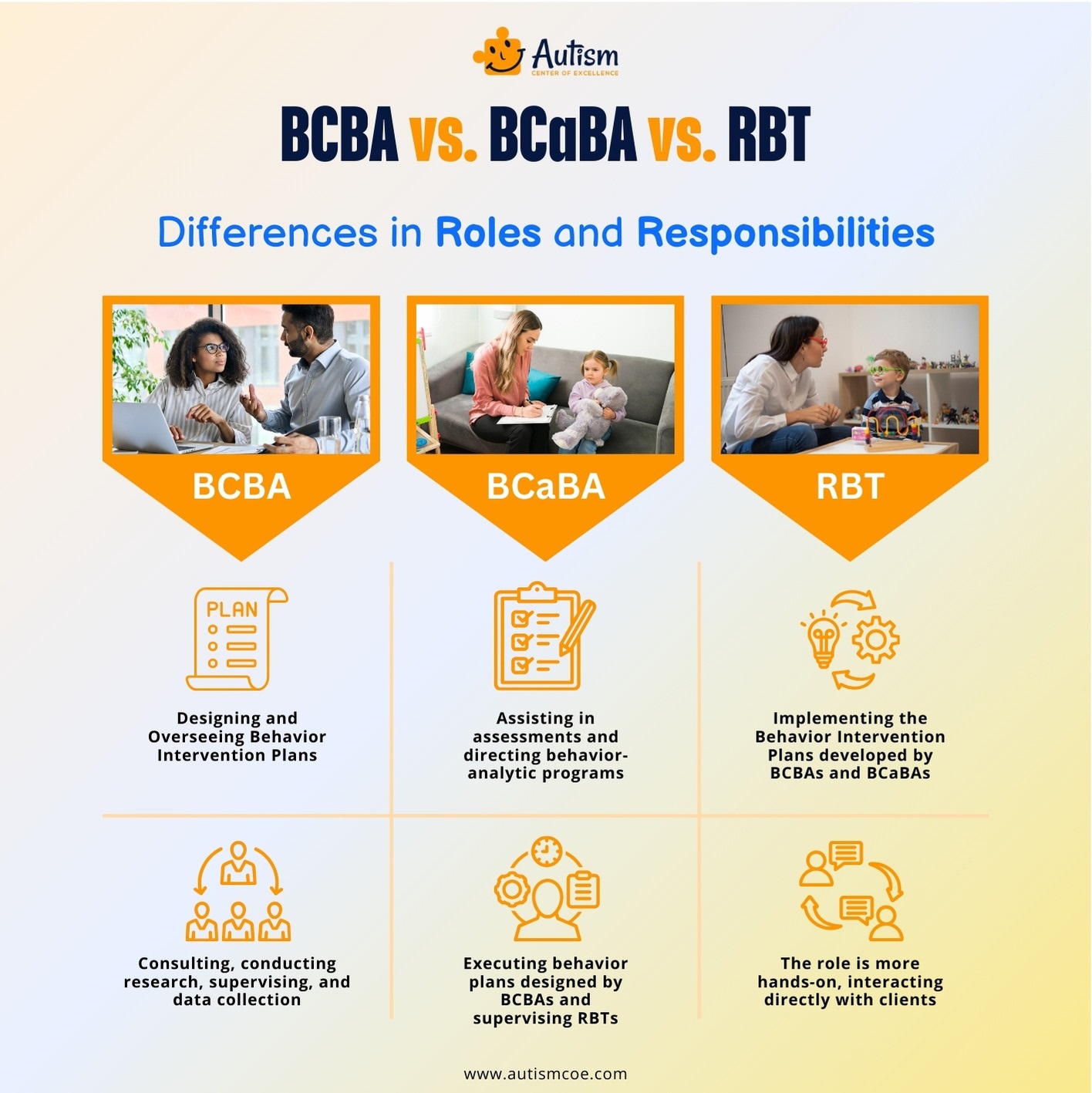
Source : autismcoe.com
| Feature | Registered Behavior Technician (RBT) | Board Certified Behavior Analyst (BCBA) |
|---|---|---|
| Primary Role | Direct implementation of behavior plans, data collection | Assessment, intervention design, clinical oversight, supervision |
| Education Requirement | High School Diploma/Equivalent | Master’s Degree in ABA or related field (BACB-accredited program) |
| Training Required | 40-hour RBT training course, competency assessment | Graduate coursework, supervised fieldwork (1500-2000+ hours) |
| Supervision Requirement | Must be supervised by a BCBA or BCaBA | Supervises RBTs and BCaBAs; requires own supervision for initial certification |
| Autonomy Level | Limited; follows supervisor’s plan | High; makes independent clinical decisions |
| Typical Salary Range (Annual) | $30,000 – $50,000 | $60,000 – $90,000+ |
| Primary Focus | Implementation & Data | Analysis & Strategy |
Choosing the Right Certification for You: Final Thoughts
Deciding between becoming an RBT and pursuing a higher-level ABA certification like the BCBA is a significant fork in the road. There’s no single “correct” answer; the best path is the one that aligns with your personal goals, educational background, and career aspirations. If you’re passionate about direct client interaction and want a relatively quick entry into the field, the RBT is an excellent choice. It provides hands-on experience and a solid foundation. For those aiming for clinical leadership, program design, and independent practice, the demanding but rewarding journey towards BCBA certification is the way to go. You can explore more about ABA certification options to guide your decision.
When the RBT Certification Makes the Most Sense
The RBT certification is ideal for individuals who are eager to start working directly with clients immediately, perhaps while they pursue further education. It’s perfect for those who thrive on hands-on application of techniques and enjoy the immediate feedback of seeing progress. If you’re unsure about committing to extensive graduate studies right away, becoming an RBT offers a way to gain Key experience and see if the field is truly a good fit. It’s also a critical role that is always in demand, making RBT jobs readily available.
When to Aim for BCBA or BCaBA Certification
If your sights are set on designing treatment plans, conducting assessments, supervising staff, and having the ultimate responsibility for client outcomes, then aiming for BCBA or BCaBA certification is the logical progression. This path requires a greater commitment to education and supervised experience but offers greater autonomy, responsibility, and earning potential. It’s for those who want to be leaders and expert diagnosticians in the field of behavior analysis. Consider the information on ABA certification explained to fully grasp the spectrum.
The Teamwork Between RBTs and BCBAs
It’s Key to remember that the field of ABA relies on the effective collaboration between RBTs and BCBAs. One cannot function optimally without the other. BCBAs design the plans, and RBTs are the skilled professionals who implement them with fidelity. Recognizing the importance of both roles fosters a stronger, more effective service delivery system. The relationship is symbiotic. Understanding this RBT and BCBA Teamwork is key to appreciating the ABA team structure.
Making an Informed Decision for Your Future
The decision rests on a clear understanding of what each certification entails and where you see yourself contributing most effectively. Research thoroughly, speak with professionals in the field (both RBTs and BCBAs), and reflect on your own strengths and interests. Your journey in ABA will be incredibly rewarding, no matter which certification you choose as your starting point or ultimate goal. Choose wisely, and prepare for an impactful career. Making an informed career choice is Top.
Frequently Asked Questions
What pays more, ABA or RBT?
Generally, ABA certifications, especially at the BCBA level, tend to pay more than RBT roles. This is because BCBAs have more responsibility, require more education and supervision hours, and can provide clinical oversight. RBTs are Key members of the team but operate under the direct supervision of a BCBA or BCaBA.
Can an RBT work without a BCBA?
No, an RBT caot work without a BCBA or other qualified supervisor. RBTs are trained to implement behavior plans developed by a BCBA. They need ongoing supervision and oversight from a BCBA to Make sure the treatment is effective and ethical. It’s a team effort, really.
Which is higher, ABA or BCBA?
BCBA (Board Certified Behavior Analyst) is a higher certification than an RBT. BCBA is the highest credential in ABA, requiring a master’s degree, extensive supervised experience, and passing a rigorous exam. RBT is an entry-level certification focused on direct implementation of behavior-analytic services.
What are the typical duties of an RBT?
An RBT, or Registered Behavior Technician, primarily focuses on direct client care. This includes implementing behavior-change programs designed by a BCBA, collecting data on client progress, assisting with behavior management, and communicating with supervisors and parents. They’re the hands-on heroes making ABA interventions happen.
How do you become an RBT?
To become an RBT, you typically need to complete a 40-hour training course, pass a competency assessment demonstrating your skills, and then pass the RBT certification exam administered by the BACB. It’s a pathway into the field of Applied Behavior Analysis without needing a master’s degree right away.
