What Calendar Year Is The Same As 2026
What Calendar Year Is The Same As 2026? Let’s Find Out.
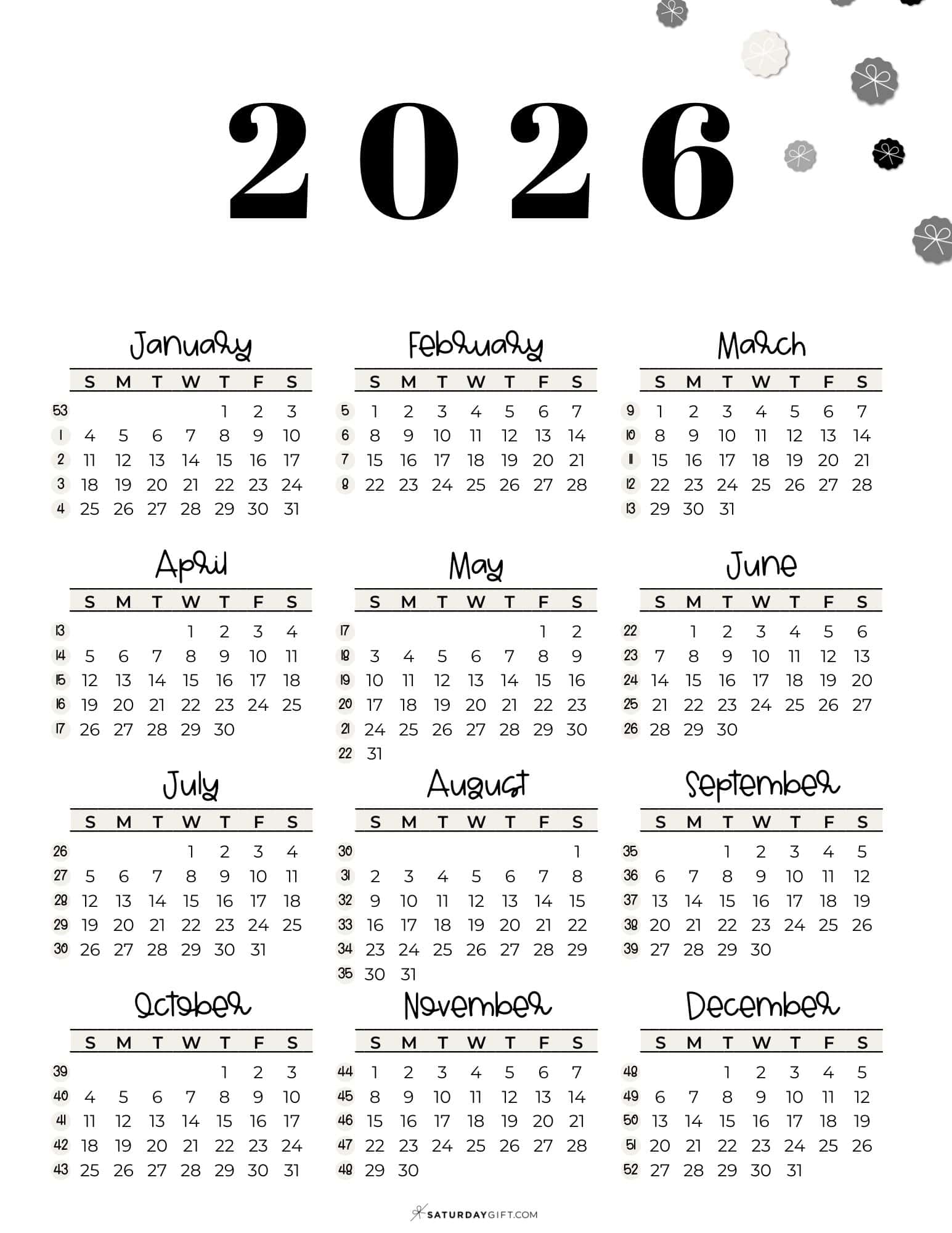
So, you’re staring down the barrel of 2026 and wondering if you can pull that old calendar off the shelf. Smart move. Why reinvent the wheel, right? We’ve all been there, frantically searching for a printable calendar that matches the year we’re stuck in. It’s a genuine pain. But here’s the kicker: not all calendars line up perfectly. Some years are identical, others are close enough for government work, and some are just… different. We’re talking about the days of the week, when holidays fall, and those pesky leap years. It’s a whole thing.

Source : saturdaygift.com
You waa know if your 2015 calendar works for 2026? Or maybe that dusty 2017 one? It’s not as simple as just swapping the year. We need to dive into the nitty-gritty of how our Gregorian calendar actually functions. Think about it. Every year has 365 days, except for leap years with their extra 24 hours on February 29th. That single day shifts everything. It’s like a domino effect, but with days of the week.
So, what’s the magic formula? When can you actually reuse a calendar? It all boils down to a repeating pattern. And that pattern? It’s not as straightforward as you might think. We’re looking for years where January 1st falls on the same day of the week, and crucially, whether or not a leap day (February 29th) falls between them. If those two conditions are met, BAM! You’ve got yourself a reusable calendar. Easy peasy, right? Well, almost.
The Big Reveal: Years That Match 2026

Source : saturdaygift.com
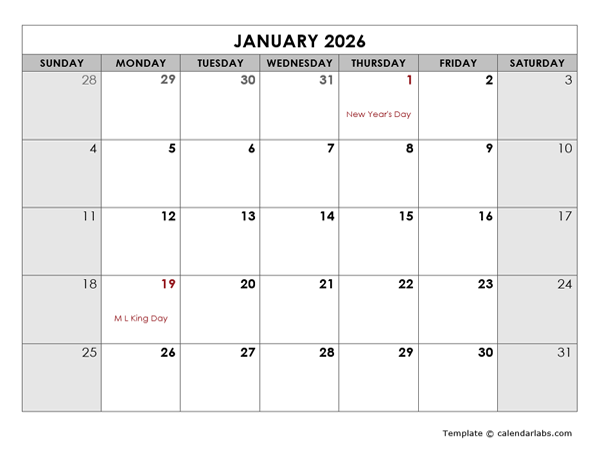
Okay, let’s get to the good stuff. Which years are exactly the same as 2026? You can pull out that 2015 calendar and use it. Yep, that’s right. 2015 and 2026 share the exact same calendar layout. January 1st, 2015 was a Thursday, just like January 1st, 2026. And neither 2015 nor 2026 are leap years, meaning they both have 365 days and February only has 28 days. So, if you need a printable calendar for 2026, and you happen to have saved one from 2015, you’re golden.
But wait, there’s more! It’s not just 2015. If you’re looking further back or ahead, you’ll find other years that line up. After 2026, you’ll need to wait until 2037 for another identical calendar. See, the pattern repeats. It usually takes about 6 to 11 years for a calendar to repeat. Why the range? It’s all thanks to those pesky leap years messing with the cycle. A normal year shifts the days forward by one; a leap year pushes it forward by two.
Think of it like this: If 2026 starts on a Thursday, the next year (2027) will start on a Friday (if 2026 wasn’t a leap year). If 2028 is a leap year, then 2029 will start on a Sunday, not a Saturday. You can see how things get shuffled around. The goal is to find a year that not only starts on the same day of the week but also doesn’t have a February 29th in between, or both have it in the same position relative to the start of the year.
Why Does This Happen? Leap Years Are the Culprits
The core reason calendars repeat is the 365-day year. A normal year has 52 weeks and 1 day. That extra day is what makes the whole thing shift. January 1st moves forward one day each year. So, if Jan 1st is on a Monday this year, it’ll be on a Tuesday next year (assuming no leap day in between). It’s a simple, predictable progression. Until, of course, you hit a leap year.
Leap years, with their extra day on February 29th, throw a wrench in the works. They add an extra day, meaning the calendar shifts by two days instead of one after February 29th. This is why a calendar can’t just repeat every 7 years like clockwork. The leap year cycle (an extra day every four years, with exceptions for century years not divisible by 400) complicates the pattern. It creates these 6-11 year gaps between identical calendars.

Source : reddit.com
So, for 2026, which is not a leap year, we’re looking for another non-leap year that starts on a Thursday. 2015 fits the bill perfectly. Looking ahead, 2037 also starts on a Thursday and isn’t a leap year. The sequence goes: 2015, 2026, 2037, 2048 (leap year), 2059, 2065, 2071, 2077, 2082 (leap year)… you get the idea. It’s a bit of a puzzle, but definitely solvable!
Not Exact? Close Enough Calendars
What if you can’t find an exact match? Don’t panic. Sometimes, a calendar is almost the same. This usually happens with leap years. For example, a calendar from a leap year might align perfectly with another leap year, but not a non-leap year. Or vice-versa.
Take 2024. It was a leap year. If you look at 2028 (another leap year), they share many similarities. The dates from March 1st onwards will fall on the same days of the week. But January and February will be different because of that Feb 29th in 2024. So, while not identical, you could potentially salvage parts of a leap year calendar if you’re in a pinch.
For 2026, which is a standard 365-day year, you’re best off looking for other 365-day years that start on a Thursday. This avoids the complexity that leap years introduce. Trying to use a leap year calendar for a non-leap year (or vice versa) will throw off all your dates after February 28th. It’s just not worth the headache unless you’re meticulously adjusting every single date.
Source : saturdaygift.com
How to Find Your Perfect Calendar Match (The Easy Way)
Okay, I get it. All this talk of leap years and day-shifting can make your head spin. Luckily, you don’t need to be a mathematician to figure this out. There are some seriously cool online tools that do the heavy lifting for you. You can check out calendar repeating tools that will tell you exactly which years match.
These sites are lifesavers. You just plug in the year you need (in this case, 2026), and they spit out a list of past and future years with identical calendars. No complex calculations, no scribbling on notebooks. Just pure, unadulterated calendar-matching convenience. Seriously, bookmark these sites. They’ll save you time and sanity down the line.
It’s also worth noting that different regions might have slightly different calendar conventions, though for the most part, the Gregorian calendar is pretty standard globally. These tools usually account for major variations, but it’s always good to keep in mind. For 99% of us, the standard repeating calendar rules apply.
Common Calendar Questions Answered
Is 2026 a leap year?
Nope, 2026 is not a leap year. It’s a standard 365-day year. That means February will only have 28 days, and there won’t be a February 29th to throw off the calendar cycle compared to other non-leap years. This is key to understanding why 2015 is an exact match.
Source : bigthink.com
Can I reuse my 2015 calendar for 2026?
Yes, absolutely! 2015 and 2026 have identical calendars. Both are non-leap years, and January 1st falls on the same day of the week (a Thursday). So, any 2015 calendar will work perfectly for 2026. Save yourself some paper!
When is the next year with the same calendar as 2026?
Mark your calendars: the next year after 2026 to feature the exact same calendar layout will be 2037. After that, you’re looking at 2048 (which is a leap year, so it’s a different kind of match, more on that later), and then 2059.
What about leap years? Do they repeat differently?
They sure do. A leap year calendar won’t perfectly match a non-leap year. However, a leap year calendar will match another leap year calendar. For instance, 2024 (a leap year) has the same calendar as 2052 (another leap year). The key is that the leap day, Feb 29th, must align correctly in the cycle. These typically repeat every 28 years, but sometimes it’s shorter or longer due to the century rule exceptions.
Are there any months that repeat their days of the week within 2026?
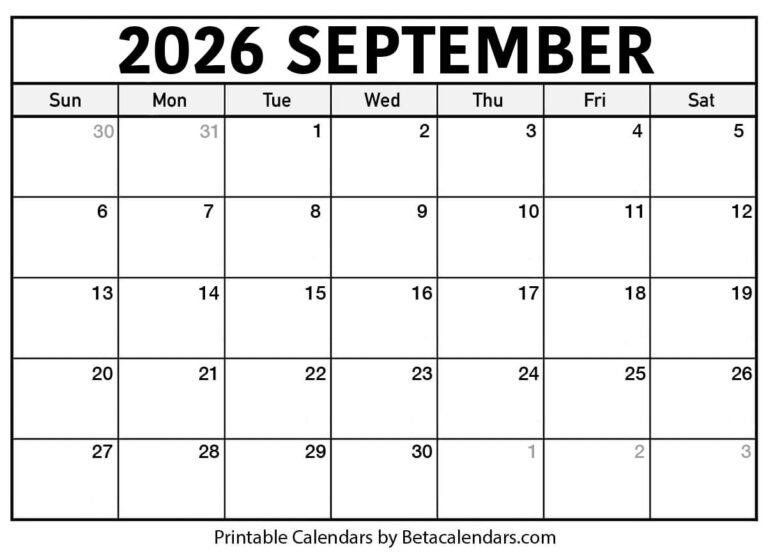
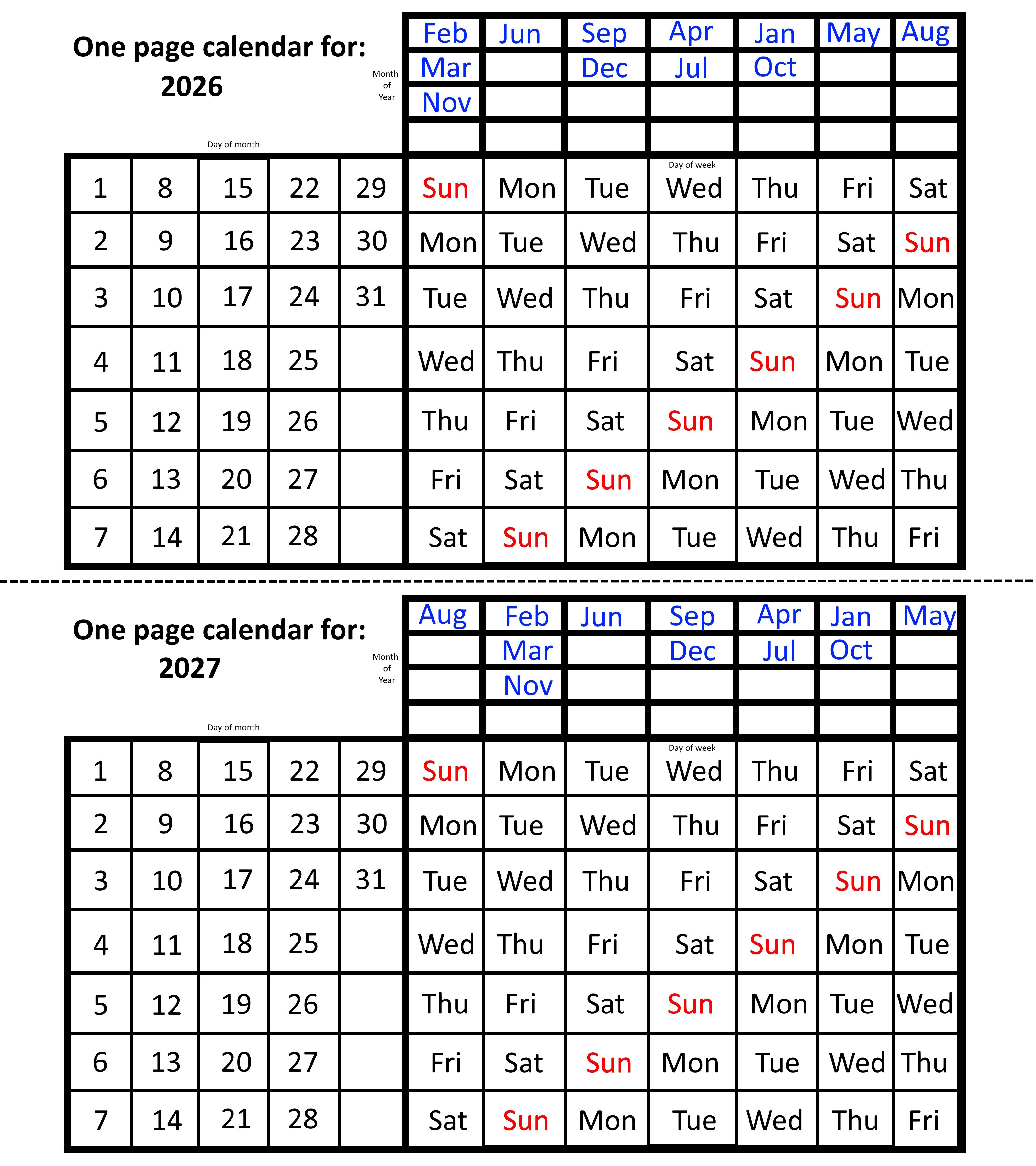
Yes! Within any given year, including 2026, certain months will share the same day-of-the-week pattern. For 2026, these month pairings are: January and October. April and July. September and December. This means if January 1st is a Thursday, October 1st will also be a Thursday. It’s a neat little calendar quirk.
Frequently Asked Questions
-
Is 2026 a leap year?
Nope, 2026 is not a leap year. It’s a standard 365-day year. That means February will only have 28 days, and there won’t be a February 29th to throw off the calendar cycle compared to other non-leap years. This is key to understanding why 2015 is an exact match.
-
Can I reuse my 2015 calendar for 2026?
Yes, absolutely! 2015 and 2026 have identical calendars. Both are non-leap years, and January 1st falls on the same day of the week (a Thursday). So, any 2015 calendar will work perfectly for 2026. Save yourself some paper!
-
When is the next year with the same calendar as 2026?
Mark your calendars: the next year after 2026 to feature the exact same calendar layout will be 2037. After that, you’re looking at 2048 (which is a leap year, so it’s a different kind of match, more on that later), and then 2059.
-
What about leap years? Do they repeat differently?
They sure do. A leap year calendar won’t perfectly match a non-leap year. However, a leap year calendar will match another leap year calendar. For instance, 2024 (a leap year) has the same calendar as 2052 (another leap year). The key is that the leap day, Feb 29th, must align correctly in the cycle. These typically repeat every 28 years, but sometimes it’s shorter or longer due to the century rule exceptions.
-
Are there any months that repeat their days of the week within 2026?
Yes! Within any given year, including 2026, certain months will share the same day-of-the-week pattern. For 2026, these month pairings are: January and October. April and July. September and December. This means if January 1st is a Thursday, October 1st will also be a Thursday. It’s a neat little calendar quirk.