CPR vs. BLS Certification: What’s the Real Deal?
Alright, let’s cut through the noise. You’ve probably heard the terms CPR and BLS thrown around, maybe when looking at healthcare jobs or even just basic first aid. They sound similar, right? Like two peas in a pod? Well, buckle up, because they’re not. Not even close.
Thinking they’re interchangeable is a rookie mistake, and frankly, one that could have serious consequences. This isn’t just about ticking a box for your resume; it’s about knowing exactly what you’re equipped to do when seconds count.
So, what’s the actual beef? Why the different acronyms? Let’s dive into what separates basic life support from simple cardiopulmonary resuscitation, and why it matters whether you’re aiming for a nursing gig or just want to be a prepared human.
The Core of CPR: What It Really Means

Source : promedcert.com
Understanding Basic CPR Principles
At its heart, CPR is the foundational technique. It’s about chest compressions and rescue breaths. The goal is straightforward: keep blood moving and get some oxygen into the lungs when someone’s heart has stopped beating or they’ve stopped breathing.
It’s the stuff you learn in those weekend workshops, the kind that makes you feel empowered to do something. And honestly, doing something is a hell of a lot better than freezing up.
Who Is CPR Certification For? The Everyday Hero
Average person. Your neighbor, your coworker who isn’t in the medical field, a teacher, a parent. These are the folks who typically get CPR certified. It’s designed for the general public.
It Provides you to handle common emergencies like choking or cardiac arrest outside of a clinical setting. You become that person who can jump in at a restaurant, a park, or at home.
Hands-On Skills: Compressions and Breaths
The training involves learning the correct hand placement for compressions, how deep to push, and how fast. You’ll practice on manikins, getting a feel for the rhythm.
Then there are the rescue breaths. Learning how to give them, how to seal the airway, and when to deliver them. It’s a two-part punch, designed to be the first line of defense.
Source : beaconlive.com
Introducing BLS: Beyond the Basics
What Exactly Does BLS Stand For?
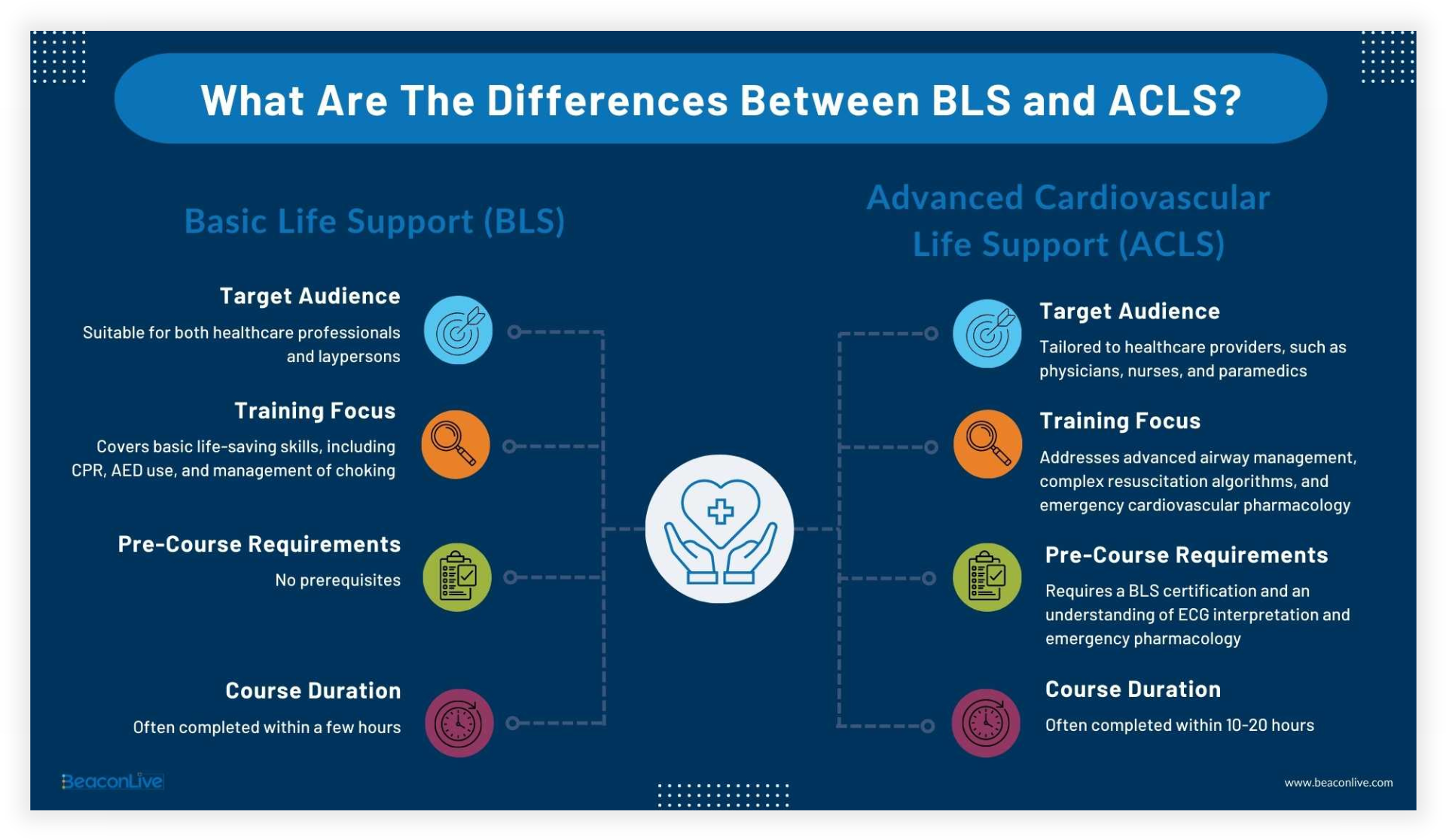
BLS is an acronym that stands for Basic Life Support. But here’s the kicker: it’s not just a slightly fancier name for CPR. It’s a broader, more Full set of skills specifically geared towards healthcare professionals.
It includes CPR, yes, but it goes way beyond that. Think of it as CPR on steroids, with a medical dictionary attached.
The Healthcare Professional’s Toolkit
This isn’t for your average Joe. BLS certification is a requirement for almost anyone working in a healthcare capacity. Doctors, nurses, paramedics, dentists, respiratory therapists, medical assistants, CNAs – the list goes on.
Why? Because they’re the ones on the front lines, constantly interacting with patients who might be vulnerable or experience sudden medical emergencies. They need more than just the basics.
Key Components of BLS Training
BLS training definitely covers CPR for adults, children, and infants. But it doesn’t stop there. It also incorporates things like:
- Teamwork and Communication: How to work effectively with other responders during a crisis. This is huge in a hospital setting.
- Airway Management: Beyond just breaths, BLS often includes using adjuncts like bag-valve-masks (BVMs).
- AED Usage: Proper and rapid deployment of an automated external defibrillator.
- Choking Interventions: Advanced techniques for different age groups.
- Cardiac Arrest Recognition: Quickly identifying the signs and initiating the appropriate protocol.
It’s a much more involved curriculum, reflecting the complex environments these professionals work in. You can find more details on the extensive training required at resources like American Red Cross.
Digging Deeper: The Key Differences Unpacked
Scope of Practice: Who Can Do What?
This is the biggest differentiator. CPR certification is for the layperson. It empowers you to act in an emergency until professional help arrives.
BLS certification, on the other hand, is for trained healthcare providers. They are expected to initiate and manage more advanced interventions as part of their job function. It’s a professional standard.
Training Content and Complexity
While both cover CPR, BLS training is significantly more in-depth. It assumes a baseline medical knowledge and builds upon it.
You’ll see more complex scenarios, learn about different types of cardiac emergencies, and practice with advanced equipment. The algorithms they teach are often more detailed, reflecting current medical guidelines for professionals.
Certification Bodies and Standards
Different organizations issue these certifications. For CPR, you might see the American Heart Association (AHA) or the American Red Cross. For BLS, it’s almost exclusively the AHA or organizations that follow their specific protocols.
The AHA’s BLS course, for instance, is the gold standard for healthcare providers. It’s rigorously updated and widely recognized. Getting certified through the wrong body could mean your qualification isn’t accepted.
Recertification Requirements
Recertification cycles are usually similar – typically every two years for both. However, the content of the recertification course for BLS will reflect the latest medical advancements and guidelines in greater detail than a standard CPR refresher.
Healthcare employers are very strict about maintaining active BLS credentials. Failure to recertify on time can mean being taken off the schedule or even facing disciplinary action.
CPR vs. BLS: A Direct Comparison Table
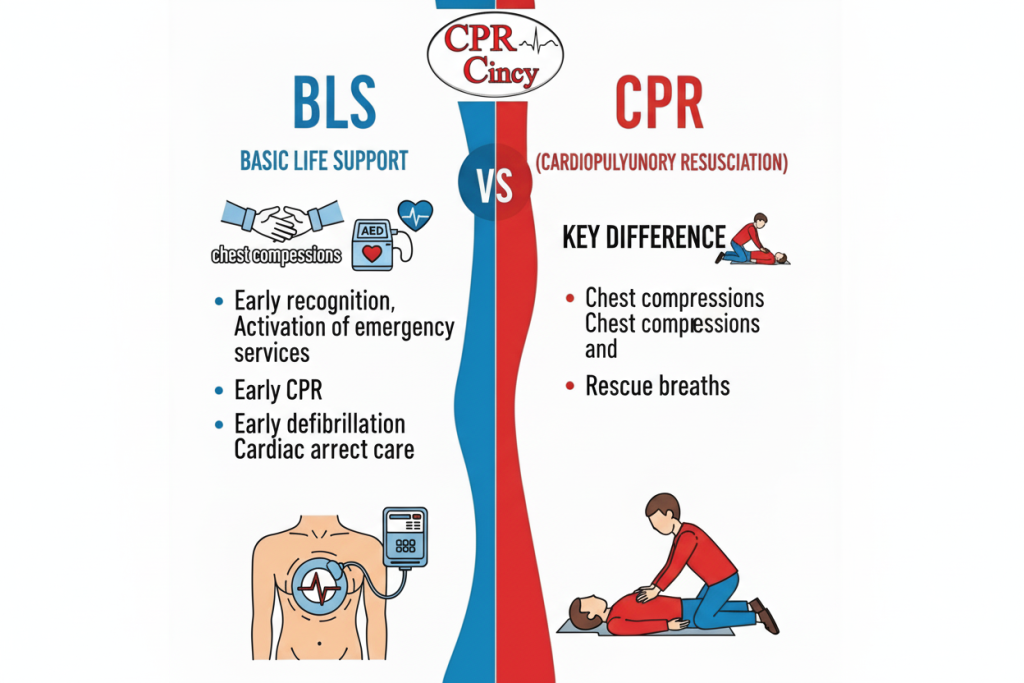
To make things crystal clear, let’s break it down side-by-side. This isn’t just about semantics; it’s about the real-world application and expectations.
Source : acls-bls-cincinnati.com
| Feature | CPR Certification | BLS Certification |
|---|---|---|
| Target Audience | General Public, Lay Responders, Teachers, Coaches | Healthcare Professionals (Nurses, Doctors, EMTs, etc.) |
| Primary Goal | Provide immediate assistance until EMS arrives. | Perform advanced life support skills as part of a healthcare team. |
| Content Focus | Basic CPR techniques, AED use, choking relief. | Full CPR, AED, BVM use, team dynamics, airway management, choking in various patient types. |
| Complexity | Fundamental, easier to grasp for non-medical individuals. | Advanced, requires understanding of medical concepts and protocols. |
| Issuing Bodies | AHA, Red Cross, HSI, etc. | Primarily AHA (e.g., BLS for Healthcare Providers), ECC/ILCOR-adherent training centers. |
| Required For | Often voluntary, some workplaces/volunteer roles may require it. | Mandatory for most clinical healthcare roles. |
| Use of Adjuncts | Minimal, focuses on hands-only or basic pocket mask. | Includes Bag-Valve-Mask (BVM), suction, and other airway adjuncts. |
| Team Response Training | Basic awareness of calling for help. | Detailed training on coordinated team efforts during resuscitation. |
When Do You Actually Need BLS? The Healthcare Context
Mandatory for Clinical Roles
If you’re pursuing a career in healthcare, there’s no getting around it. Hospitals, clinics, doctor’s offices – they all require proof of a current BLS certification. It’s as Needed as your scrubs or your stethoscope.
Without it, you simply won’t be allowed to practice. Your license or employment could be on the line. This is non-negotiable for patient safety and professional standards.
Beyond the Obvious: Allied Health Professionals
It’s not just doctors and nurses. Think about physical therapists, occupational therapists, medical lab technicians, pharmacists, and even some administrative staff who might be the first on scene in a facility. They all typically need BLS.
The logic is simple: if you’re in a place where medical emergencies are more likely to occur, and you’re part of the facility’s staff, you need to be prepared. This ensures a rapid, coordinated response.
Volunteer Work and Medical Settings
Even if you’re volunteering at a hospital or a clinic, you’ll likely need to show proof of BLS certification. It’s about ensuring that everyone present in a medical environment has a baseline competency in life support.
This applies to roles like hospital volunteers, externs, and interns. The training ensures you can act effectively and safely if a situation arises, without hindering the professional medical team.
Can You Perform CPR Without BLS Certification? Yes, But…
The Layperson’s Right to Act
Absolutely. The whole point of basic CPR training is to enable laypeople – those without formal medical training – to intervene. You don’t need a BLS card to perform chest compressions if someone is unresponsive and not breathing.
In fact, Good Samaritan laws in most places are designed to protect individuals who offer reasonable assistance in an emergency. Your intervention could literally be the difference between life and death before paramedics arrive.
Limitations of Basic CPR
However, basic CPR is just that: basic. It doesn’t cover the advanced skills, the team coordination, or the specific equipment that BLS-certified professionals use. You’re performing the core techniques.
You won’t be using a bag-valve-mask or managing an airway with adjuncts. You’re providing the Key initial steps. The difference is significant when you’re talking about sustained resuscitation efforts.
The Professional Expectation Gap
The Key point is that while a layperson can perform CPR, a healthcare professional is expected to perform BLS. Employers won’t accept a basic CPR card for a nursing position, for example. They need the Full skillset.
So yes, you can do CPR without BLS. But if your job requires BLS, then basic CPR certification simply won’t cut it. It’s about meeting the professional standard of care. Check out Avive for more on this distinction.
Choosing the Right Certification for You
Assess Your Career Goals
This is the number one factor. Are you looking to work in a hospital, clinic, or any patient-facing healthcare role? Then you need BLS certification. No question.
Are you a concerned citizen, a parent, a teacher, a coach, or someone who just wants to be prepared for emergencies in your community? Then a standard CPR/AED/First Aid course is likely what you need.

Source : cprandfirstaid.org
Understand Employer Requirements
If you have a specific job in mind, check the requirements. Most healthcare job descriptions will explicitly state “BLS certification required.” Some non-healthcare jobs might ask for CPR.
Don’t guess. Always verify. Getting the wrong certification means you’ll have to take another course later, wasting time and money.
Consider the Training Level
BLS courses are typically longer and more rigorous than basic CPR courses. They often involve more in-depth theoretical components alongside practical skills testing. It demands a higher level of engagement.
Time commitment and the learning curve. If you’re just aiming for community preparedness, a simpler CPR course might be more practical and less intimidating.
The Nuances of CPR and BLS Training Formats
In-Person Classes: The Traditional Route
This is the classic way to get certified. You attend a physical class, learn from an instructor, practice skills on manikins, and take a written test. It’s highly interactive.
For BLS, this is often the preferred or even mandatory format, especially for the skills practice and assessment components. Hands-on training is critical for competency.
Online-Only Courses: A Modern Convenience?
You’ll find many online courses for basic CPR certification. These can be convenient for learning the theory at your own pace. However, a purely online certification is generally not sufficient for BLS.
Because CPR and BLS are hands-on skills, most reputable organizations require a practical skills session, even if you complete the knowledge-based portion online. Watch out for certificates that are entirely online for BLS – they’re likely not valid.
Blended Learning: The Best of Both Worlds
This is a popular option that combines online learning with an in-person skills check. You complete the didactic (knowledge) part of the course online, at your convenience.
Then, you attend a shorter, in-person session where an instructor assesses your practical skills. This is a common format for both CPR and BLS, offering flexibility while ensuring hands-on competency. It strikes a good balance for busy professionals.
Recertification: Staying Current Matters
The Two-Year Cycle
Both CPR and BLS certifications typically expire every two years. This isn’t just an arbitrary number; it ensures that providers stay updated with the latest guidelines and techniques.
Medical science evolves. Recommendations change based on new research. Regular recertification guarantees that your skills are current and effective.
BLS Recertification: A Deeper Dive
While the cycle is the same, the BLS recertification course will cover updated algorithms and potentially new information on resuscitation. It’s not just a quick review; it’s a proper refresh for professionals.
Healthcare providers are expected to maintain a high level of proficiency. The recertification process reinforces this expectation and ensures ongoing competence in critical situations.
Choosing Your Recertification Path
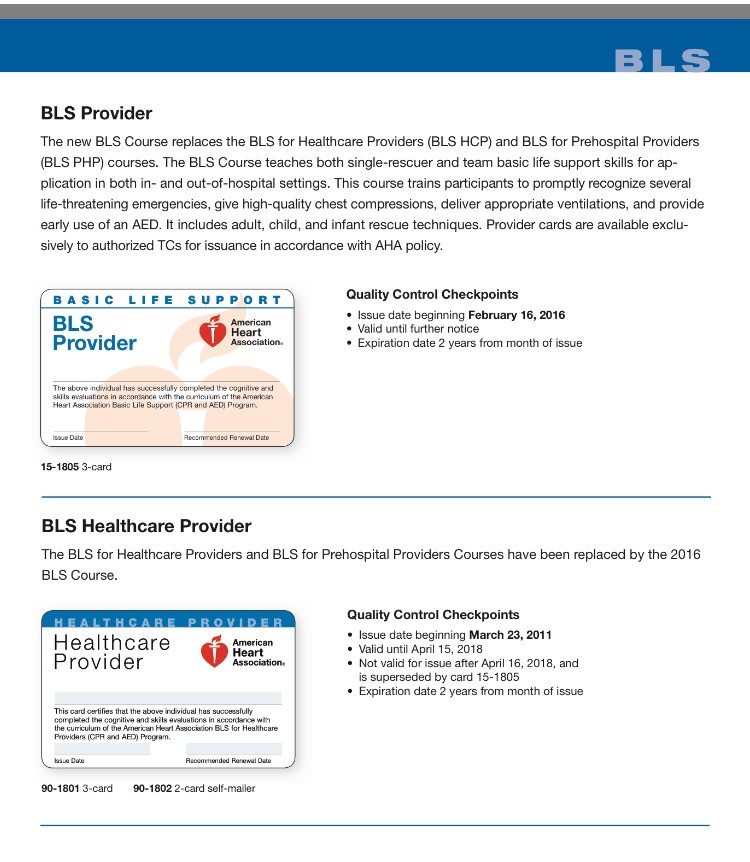
You can usually recertify through the same channels you got your initial certification – AHA, Red Cross, etc. Often, there are specific “renewal” or “recertification” courses available.
Source : startcpr1st.com
For BLS, Make sure the course you choose is specifically for healthcare providers and meets the standards required by your employer or licensing board. It’s worth double-checking the course code or name.
Why Does This Distinction Even Exist? Patient Safety First!
Standardizing Care for Professionals
The existence of BLS as a distinct certification is all about standardizing the level of care expected from healthcare professionals. It sets a clear Standard.
When a team works together, they need to be on the same page, using the same protocols and equipment. BLS provides that common language and skill set.
Ensuring Competency in Critical Environments
Hospitals and emergency medical services are high-stakes environments. Mistakes can have dire consequences. BLS training ensures that the individuals present are competent to handle cardiac emergencies effectively.
It’s a critical part of the safety net for patients. Knowing that the people around you are trained to a specific, high standard provides a layer of reassurance.
Protecting Both Patients and Providers
Proper certification protects patients by ensuring they receive appropriate care. It also protects providers by giving them the confidence and skills to act, and by ensuring they are meeting professional standards.
This framework is Needed for the healthcare system to function safely and effectively. It’s why these distinctions are so rigidly enforced.
Frequently Asked Questions
Does BLS cover anaphylaxis?
Yeah, BLS definitely covers anaphylaxis. It’s all about recognizing the signs and symptoms of a severe allergic reaction and knowing how to respond, including using an epinephrine auto-injector. It’s a Key part of basic life support training for healthcare providers.
Do you need both BLS and CPR?
Well, it depends on your situation. If you’re a healthcare professional, you’ll almost always need BLS certification because it’s more Full and designed for medical settings. For the general public, a standard CPR certification might be sufficient. Think of BLS as CPR for the pros.
What’s the main difference between CPR and BLS certification?
The main difference? Think of BLS as CPR’s older, more experienced sibling. BLS (Basic Life Support) is specifically geared towards healthcare professionals and covers a wider range of emergency scenarios, including advanced airway management and how to handle cardiac arrest in a medical environment. Standard CPR is more for the layperson, focusing on chest compressions and rescue breaths for adults, children, and infants. So, BLS is basically a more advanced version of CPR for medical persoel.
How often do I need to renew my BLS certification?
Generally, you’ll need to renew your BLS certification every two years. It’s important to keep your skills sharp and stay up-to-date with the latest guidelines. Missing a renewal means your certification expires, and you’ll have to take the full course again. Don’t let that happen to your life-saving skills!
Are there different types of BLS certifications?
Yep, there are a few variations depending on the certifying body and the specific audience. You’ll commonly see BLS for Healthcare Providers, which is the most recognized for medical professionals. Sometimes there are specialized BLS courses too, but the core principles of managing respiratory and cardiac emergencies remain the same across most. Always check with your employer to see which specific certification they require.
