How to Become CPR and First Aid Certified for Daycare Providers
Look, you’re running a daycare. It’s not just about snacks and nap times, right? It’s about keeping a gaggle of tiny humans safe. And when something goes sideways – because, let’s face it, kids are unpredictable – you absolutely need to know what to do. That means getting CPR and First Aid certified. It’s not optional; it’s critical.
Seriously, think about it. A scraped knee is one thing. But a choking incident? A sudden allergic reaction? These are the moments that can turn a normal day into a nightmare if you’re not prepared. Getting certified isn’t just a box to tick; it’s a Key skill set.
Why Certification is Non-Negotiable for Daycares

Source : samedaycpr.com
Protecting the Little Ones: Your Primary Duty
This is your bread and butter. Ensuring the safety of children under your care is Top. Accidental injuries and medical emergencies happen, no matter how vigilant you are. Having the right training means you can act fast and effectively, potentially saving a life or preventing a minor issue from becoming a major one.
It’s not just about following rules; it’s about instilling confidence in parents. They trust you with their most precious possessions. Showing them you’ve gone the extra mile to get certified says volumes about your commitment.
Legal and Licensing Requirements
Most states and local authorities have pretty strict rules about this. You simply can’t operate a licensed daycare without at least one staff member, usually more, holding current CPR and First Aid certification. These aren’t suggestions; they’re legal mandates.
Failing to meet these requirements can lead to fines, temporary shutdowns, or even the permanent loss of your license. Imagine the chaos that could cause – not just for you, but for the families who rely on your service. It’s worth investigating the specific rules for your area, but don’t assume you’re covered without checking.
Peace of Mind for Everyone Involved
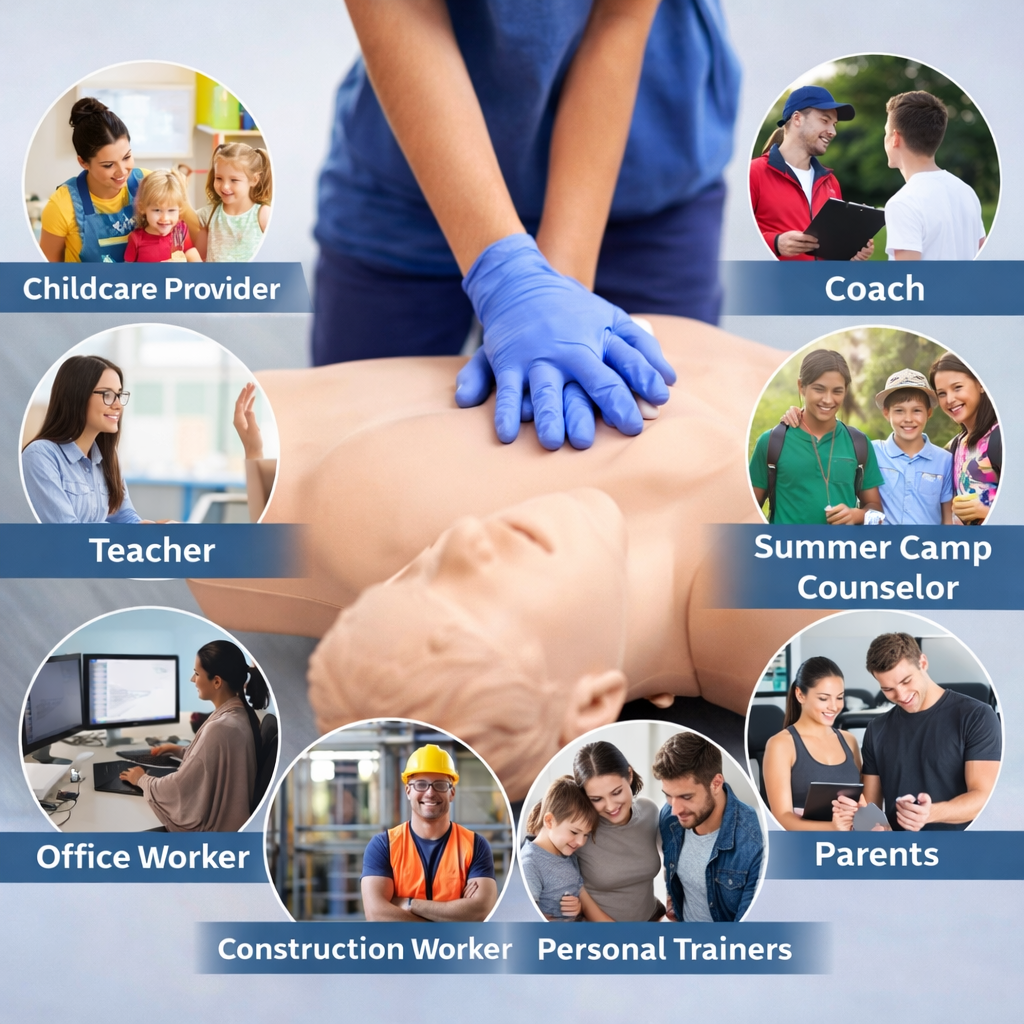
Beyond the legalities, there’s the personal aspect. Knowing you can handle an emergency provides immense peace of mind. For you, it means less anxiety about the ‘what ifs.’ For the parents, it means they can drop their kids off with confidence, knowing trained professionals are on duty.
Source : safetytrainingseminars.com
This training empowers you. It transforms you from a caregiver into a capable responder. That’s a huge psychological benefit for everyone connected to the daycare.
Understanding the Core Certifications: CPR vs. First Aid
Cardiopulmonary Resuscitation (CPR) Explained
CPR is all about keeping blood and oxygen flowing when someone’s heart stops or they stop breathing. For daycare providers, the focus is usually on pediatric CPR, which is specifically tailored for infants and children. It involves different techniques than adult CPR, which is Key knowledge.
The training covers chest compressions, rescue breaths, and how to use an automated external defibrillator (AED) if one is available. It’s a hands-on skill that requires practice to perform correctly under pressure.
First Aid Fundamentals
First Aid is the immediate care given to an injured or suddenly ill person before professional medical help arrives. Think cuts, burns, sprains, nosebleeds, allergic reactions, and managing fevers.
A good First Aid course will equip you to assess a situation, provide appropriate care for various injuries and illnesses, and know when to call for emergency services. It covers everything from bandaging a wound to recognizing the signs of a serious medical condition.
Why You Need BOTH
You can’t just get one and call it a day. These certifications are almost always bundled together for childcare providers because emergencies rarely involve just one issue. You might need to perform CPR and manage a subsequent injury or reaction.
Bundled courses Make sure you have a Full understanding of emergency response. The combined certification is the industry standard for a reason. It makes you a more versatile and prepared responder.
Choosing the Right Certification Course Provider
Reputable Organizations to Consider
Not all certifications are created equal. You want to go with well-recognized organizations that are trusted by emergency services and regulatory bodies. Think the American Heart Association (AHA) or the American Red Cross. These are often the gold standard.
The American Red Cross, for example, offers specific courses designed for babysitters and child care providers. They are widely recognized and accepted for licensing purposes.
Key Course Content and Differences
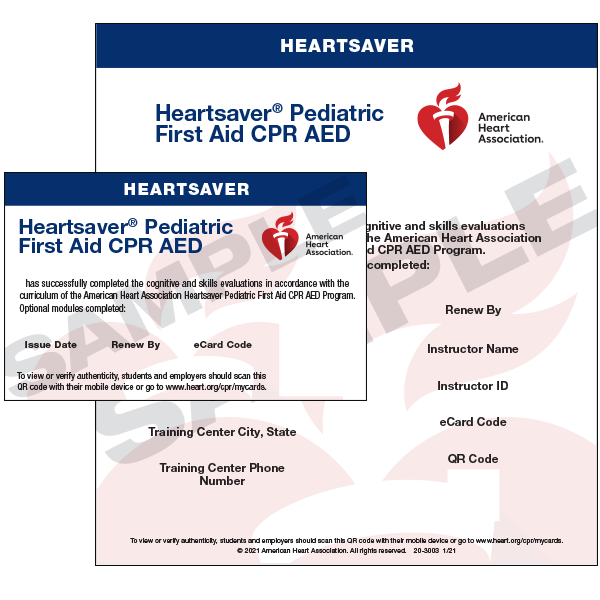
Look for courses that specifically mention pediatric CPR and First Aid for children and infants. The curriculum should cover common childhood emergencies like choking, allergic reactions (including anaphylaxis), severe bleeding, burns, poisoning, and febrile seizures.
Source : cprtraining-center.com
Some courses might be more in-depth than others. Consider the time commitment versus the comprehensiveness. A basic course might meet the minimum requirement, but an advanced one could offer more practical skills and confidence.
Online vs. In-Person vs. Blended Learning
You’ll find different formats. Purely online courses might seem convenient, but for skills like CPR, hands-on practice is Key. Blended learning is often the sweet spot: you complete the theory online at your own pace, then attend a shorter in-person session for skills practice and the final assessment.
In-person classes offer direct interaction with instructors and other learners, which can be beneficial. However, scheduling can be a challenge for busy daycare providers. Always verify if your chosen format meets your local licensing board’s requirements.
The Certification Process: Step-by-Step
Finding a Local or Online Course
Start by checking the websites of major providers like the AHA and Red Cross. They have course locators to find classes near you or details on their online and blended options. Your local health department or fire department might also offer or recommend courses.
Don’t forget to double-check with your specific state’s child care licensing agency. They often have a list of approved providers or specific certification requirements.
Course Registration and Fees
Registration is usually straightforward, done online or over the phone. Be prepared for a fee. Prices can vary depending on the provider, the course length, and the format, typically ranging from $50 to $150. Factor this certification cost into your operating budget.
Some employers might cover the cost, or you might find grants available for professional development. It’s worth asking around or doing some research.
Attending the Training and Skill Assessment
If you’re doing an in-person or blended course, show up ready to learn. Pay close attention, ask questions, and participate in the hands-on drills. This is where you build muscle memory for critical actions.
The assessment typically involves a written test to check your understanding of concepts and a practical skills test where an instructor observes you performing techniques like chest compressions and bandaging. Passing this is key to earning your certification.
Maintaining Your Certification: What Happens Next?
Understanding Expiration Dates
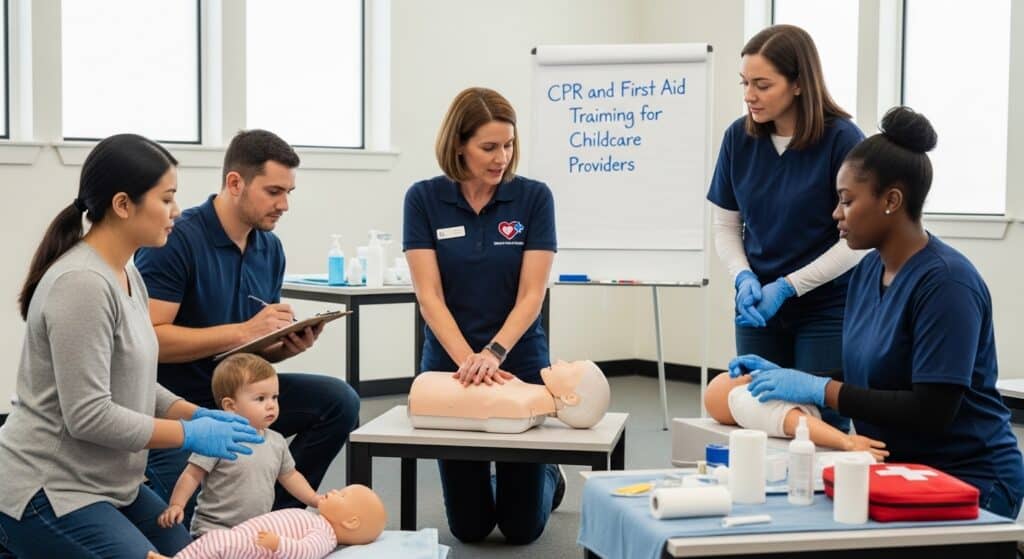
Certifications aren’t forever. For CPR and First Aid, they generally expire every two years. This isn’t just a bureaucratic hurdle; it ensures you stay up-to-date with the latest guidelines and techniques, which can change.
Mark your calendar! Missing the renewal date means your certification lapses, and you’ll need to retake the full course, not just a refresher.
Source : surefirecpr.com
Renewal Courses and Refresher Training
Most providers offer shorter renewal or refresher courses. These are designed to quickly update your knowledge and re-test your skills. They are usually less expensive and take less time than the initial certification course.
Don’t skip the renewal! It’s Key for maintaining your daycare provider status and, more importantly, your ability to respond effectively in an emergency.
Keeping Records and Staying Informed
Keep copies of your certifications in a safe place. You’ll need to provide proof to your licensing agency and potentially to parents. Also, stay informed about any major changes in CPR or First Aid protocols. Sometimes, quick updates are released between full renewals.
Being proactive about your training and documentation is part of being a professional daycare provider. It shows responsibility.
Making the Business Case for Certification
Reduced Liability and Risk Management
Having certified staff significantly reduces your daycare’s liability. If an incident occurs and your staff are properly trained, it demonstrates that you’ve taken reasonable steps to Make sure safety. This can be a Key defense in legal situations.
It’s a proactive risk management strategy. Better to invest in training now than to face potentially devastating consequences later.
Enhanced Reputation and Parent Trust
A daycare with certified staff stands out. It signals a higher level of professionalism and commitment to safety. This can be a powerful marketing tool, attracting more parents who prioritize their child’s well-being above all else.
Happy, confident parents lead to a stable client base. Your reputation is everything in this business.
Improved Staff Confidence and Preparedness
When your staff feel competent and prepared, they perform better. They’re less likely to panic in a crisis and more likely to act decisively. This boosts morale and creates a more positive work environment.
Empowered staff are a daycare’s greatest asset. Investing in their skills is investing in the overall quality of care.
Common Daycare Emergencies and How Certification Helps
Choking Incidents
This is a terrifying but common emergency with young children. Your CPR and First Aid training will teach you the specific back blows and chest thrusts for infants and abdominal thrusts for older children. Knowing the correct procedure instantly is Key.
Watch: How to get CPR and First Aid Certification?
Early intervention is key. The seconds count when a child is choking, and your training prepares you to act without hesitation.
Allergic Reactions and Anaphylaxis
Food allergies are rampant. Recognizing the signs of a severe allergic reaction (anaphylaxis) – hives, swelling, difficulty breathing – and knowing how to administer an epinephrine auto-injector (like an EpiPen) is critical. This is a core part of advanced First Aid certification.
The ability to administer emergency medication can literally be a lifesaver. It buys precious time until paramedics arrive.
Cuts, Burns, and Falls
These are everyday occurrences in a daycare setting. Proper wound care, burn treatment (knowing when it’s serious enough to seek medical attention), and managing suspected fractures or head injuries are all covered. Your first aid skills Make sure these are handled correctly.
Applying the right pressure to a bleeding wound or cooling a burn properly can make a significant difference in healing and preventing infection.
Handling State-Specific Requirements
The Role of Licensing Agencies
Every state has its own child care licensing agency. These bodies set the specific rules for certifications. What’s accepted in one state might not be in another, so checking local regulations is Needed.
You can usually find this information on your state’s Department of Health or Department of Human Services website. Look for sections on child care licensing or provider requirements.
Finding Official Guidelines
Don’t rely on hearsay. Go directly to the source. Search for “[Your State] child care licensing CPR requirements.” The official guidelines will clearly state which organizations’ certifications are accepted, the required duration of certification (e.g., 2 years), and whether specific courses (like pediatric-focused ones) are mandated.
For instance, organizations like the American Red Cross offer courses tailored for child care settings, and they often work to Make sure their training aligns with regulatory needs. You can check their site for state-specific approvals; for example, the American Red Cross provides resources that often meet these needs.
Record Keeping for Compliance
Once certified, you need to maintain copies of your cards and certificates. Your licensing agency will likely require you to submit these upon application, renewal, and potentially during unannounced inspections. Make sure you keep them organized and accessible.
Accurate record keeping is non-negotiable for maintaining compliance and avoiding unnecessary headaches with authorities.

Source : simplecpr.com
Investing in Your Daycare’s Future
Certification as a Foundational Investment
Think of CPR and First Aid certification not as an expense, but as a foundational investment. It underpins everything else you do in ensuring a safe environment. It’s like the foundation of a house – without it, everything else is unstable.
This investment pays dividends in safety, trust, and operational stability. It’s one of the smartest moves you can make for your daycare business.
Empowering Your Team Through Training
Don’t just get certified yourself; Make sure your staff are too. A team that is confident in handling emergencies creates a safer, more reliable environment for children. It fosters a culture of responsibility and preparedness.
Regular training keeps everyone’s skills sharp and builds collective confidence. It transforms your staff into a cohesive, capable unit ready for anything.
Long-Term Benefits Beyond Compliance
While meeting requirements is Needed, the true value lies beyond compliance. It’s about genuinely enhancing the safety and quality of care you provide. It builds a reputation that attracts and retains families.
Being prepared for emergencies is about providing the best possible care. That’s the real goal, isn’t it? A safe daycare is a successful daycare.
Frequently Asked Questions
Why is CPR and First Aid certification Needed for daycare providers?
Because kids can get hurt, like, all the time. Accidents happen, and having CPR and First Aid certification means you’re ready to jump in and help if a child chokes, falls, or has a medical emergency. It’s like being a mini-superhero for little ones!
What are the typical requirements for CPR and First Aid certification for daycare settings?
Usually, you gotta complete a certified CPR and First Aid course. Most places want you to pass a hands-on skills test and a written exam. Some states might have specific training requirements for daycare providers, so always check with your local licensing agency.
How long does CPR and First Aid certification usually last, and when do I need to renew it?
Generally, certifications are good for about two years. Then, you’ll need to take a refresher course to keep your CPR and First Aid skills up-to-date. It’s important to renew on time so you’re always covered.
Where can I find accredited CPR and First Aid training courses suitable for daycare providers?
Good spots include the American Heart Association, the American Red Cross, and other organizations recognized by your state’s childcare licensing board. Always make sure the course is nationally recognized and covers pediatric emergencies specifically.
Does the certification process for daycare providers differ from general first aid training?
Sometimes, yes. Daycare-specific training often emphasizes pediatric CPR and first aid, covering things like choking in infants and children, allergic reactions, and playground injuries. General first aid is broader, but for daycare, the focus on kids is key.
