Look, let’s be real. Nobody wakes up in the morning thinking, “Gosh, I can’t wait to get HIPAA certified.” It’s not exactly the most thrilling part of a healthcare career. But here’s the kicker: it’s absolutely non-negotiable. And if you’re scratching your head, wondering how to get this done without draining your bank account or your will to live, you’ve landed in the right spot. We’re talking about free HIPAA training, the stuff that actually counts, and how to snag that certification without selling a kidney.
This isn’t just some bureaucratic hoop to jump through. Understanding HIPAA protects patients, sure, but it also protects YOU. Think about the fines. Ouch. So, while we’re aiming for free, we’re also aiming for thorough. Let’s break down how to get your HIPAA training sorted, the legit way, and keep some cash in your pocket.
Why Bother With HIPAA Training Anyway?
Protecting Patient Privacy Isn’t Optional
This is the bedrock, folks. The Health Insurance Portability and Accountability Act (HIPAA) is all about safeguarding sensitive patient information. We’re talking medical histories, billing details, anything that can identify an individual and their health status. Getting proper HIPAA training means you understand exactly what constitutes protected health information (PHI) and how to handle it. It’s your first line of defense against accidental breaches.
Avoiding Costly Penalties and Lawsuits
Let’s talk brass tacks: money. HIPAA violations can land you or your organization in hot water, facing massive fines. We’re talking hundreds of thousands, even millions, of dollars. Plus, think about the lawsuits. Nobody wants that headache. Proper training is a tiny investment (ideally, a free one!) that saves you from potentially ruinous financial and legal entanglements down the line. It’s risk management 101.
Building Patient Trust and Confidence
When patients know their information is handled with the utmost care, they trust you more. It’s that simple. Demonstrating a commitment to HIPAA compliance through training shows your dedication to patient privacy. This builds a stronger relationship, encouraging patients to be more open about their health, which ultimately leads to better care. Trust is currency in healthcare.
Meeting Employer and Regulatory Requirements
Most healthcare employers require HIPAA training. It’s often part of onboarding. Beyond that, regulatory bodies expect healthcare professionals to be knowledgeable. Proving you’ve undergone certified training isn’t just good practice; it’s often a mandatory checkbox. Failing to meet these basic obligations can be grounds for disciplinary action or even job loss. So, it’s practical, too.
Where to Find Free HIPAA Training Resources
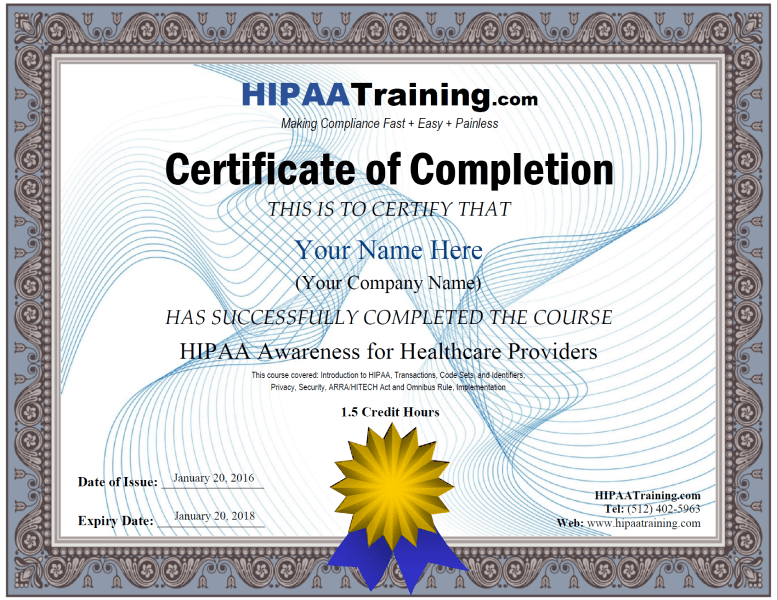
Source : hipaatraining.com
Government and Official Sources (Your First Stop!)
Uncle Sam often provides a goldmine of free resources, and HIPAA is no exception. The Department of Health and Human Services (HHS) website is A wealth of information. They offer guidance, regulations, and sometimes even training modules. These are usually very Full, though sometimes a bit dry. You won’t find a fancy certificate here, but the knowledge is solid gold. Always check HHS.gov first for the official word.
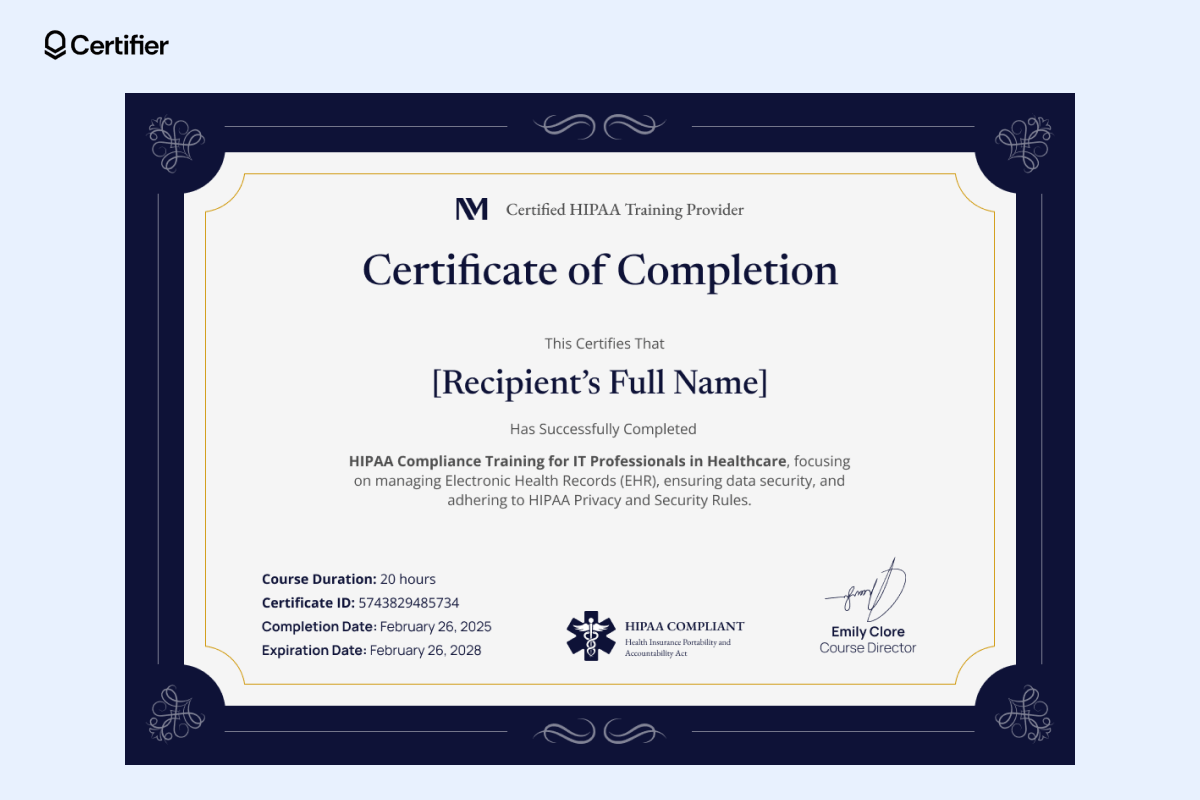
Source : certifier.io
Non-Profit Organizations and Professional Associations
Many professional medical associations offer free or low-cost training materials to their members. Think organizations for nurses, doctors, administrators, etc. Some non-profits focused on healthcare advocacy or patient safety also provide excellent, free resources. These can be more practical and engaging than government documents. It’s worth checking if your specific professional group has partnered with any training providers.
Online Learning Platforms with Free Tiers
Platforms like Coursera, edX, and even LinkedIn Learning sometimes offer free introductory courses on HIPAA. While full certifications might cost money, you can often access valuable learning modules for free. Keep an eye out for “audit” options on these platforms where you can take courses without paying for the graded assignments or certificate. It’s a great way to get the core knowledge.
Employer-Provided Training Programs
Don’t underestimate what your current employer might offer! Many healthcare facilities provide HIPAA training as part of their compliance program. This is often free and tailored to your specific role within the organization. Make sure you’re taking full advantage of any in-house training sessions or online modules provided by your workplace. It’s usually the most relevant training you’ll get.
Understanding Different Types of HIPAA Training
General Awareness Training
This is the foundational stuff. General awareness training covers the basics: what HIPAA is, why it’s important, what constitutes PHI, and the main rules (Privacy Rule, Security Rule, Breach Notification Rule). It’s usually a broad overview designed for everyone who might come into contact with patient data. Think of it as the “don’t-get-in-trouble” primer. This is often the focus of free HIPAA training.
Role-Specific Training
Your job dictates the specific HIPAA knowledge you need. A billing specialist needs to know different things than a bedside nurse or an IT administrator. Role-specific training dives deeper into the particular risks and responsibilities associated with your position. For example, IT staff need detailed security training, while front-desk staff need training on patient intake and physical security of records. It’s about relevance.
Security Rule Focused Training
This zeroes in on protecting electronic PHI (ePHI). It covers things like access controls, encryption, audit trails, and disaster recovery. With the rise of electronic health records (EHRs) and telehealth, understanding the Security Rule is Top. Breaches often happen due to lax security protocols, so this training is critical for anyone handling digital patient data. Stronger security training is key.
Breach Notification Training
What happens when things go wrong? This training covers the procedures for identifying, reporting, and mitigating a data breach. It outlines who needs to be notified (patients, HHS), when, and how. Understanding the Breach Notification Rule is Key for minimizing damage and demonstrating a responsible response if an incident occurs. It’s the “oops” plan.
How to Get Certified (Even When It’s Free!)
Look for Reputable Training Providers
Just because training is free doesn’t mean it’s worthless. Seek out providers that are well-respected in the healthcare industry. Look for organizations that clearly state their training aligns with current HHS regulations. Check reviews if possible. A certificate from a fly-by-night operation won’t hold much water, even if it was free. Quality matters, always.
Understand Certification Requirements
What does “certified” actually mean in this context? Some “certifications” are just completion certificates. Others might require passing a formal exam. Free training often provides a completion certificate. If you need a more formal, exam-based certification, you might have to look at paid options or see if your employer covers it. Understand what you’re getting and if it meets your needs. HIPAA certification can mean different things.
Completing Training Modules and Assessments
Most training programs, free or paid, involve completing a series of modules or lessons. You’ll likely need to pass quizzes or a final assessment to demonstrate your understanding. Pay attention, take notes, and actually learn the material. Simply clicking through to get a certificate without absorbing the information defeats the purpose. Don’t just go through the motions.
Documenting Your Training
Keep records! Save copies of your certificates, completion records, or any documentation proving you’ve undergone the training. This is your proof of compliance. Store it safely. You might need it for your current employer, a future job application, or if you ever face an audit. Your HIPAA training record is important.
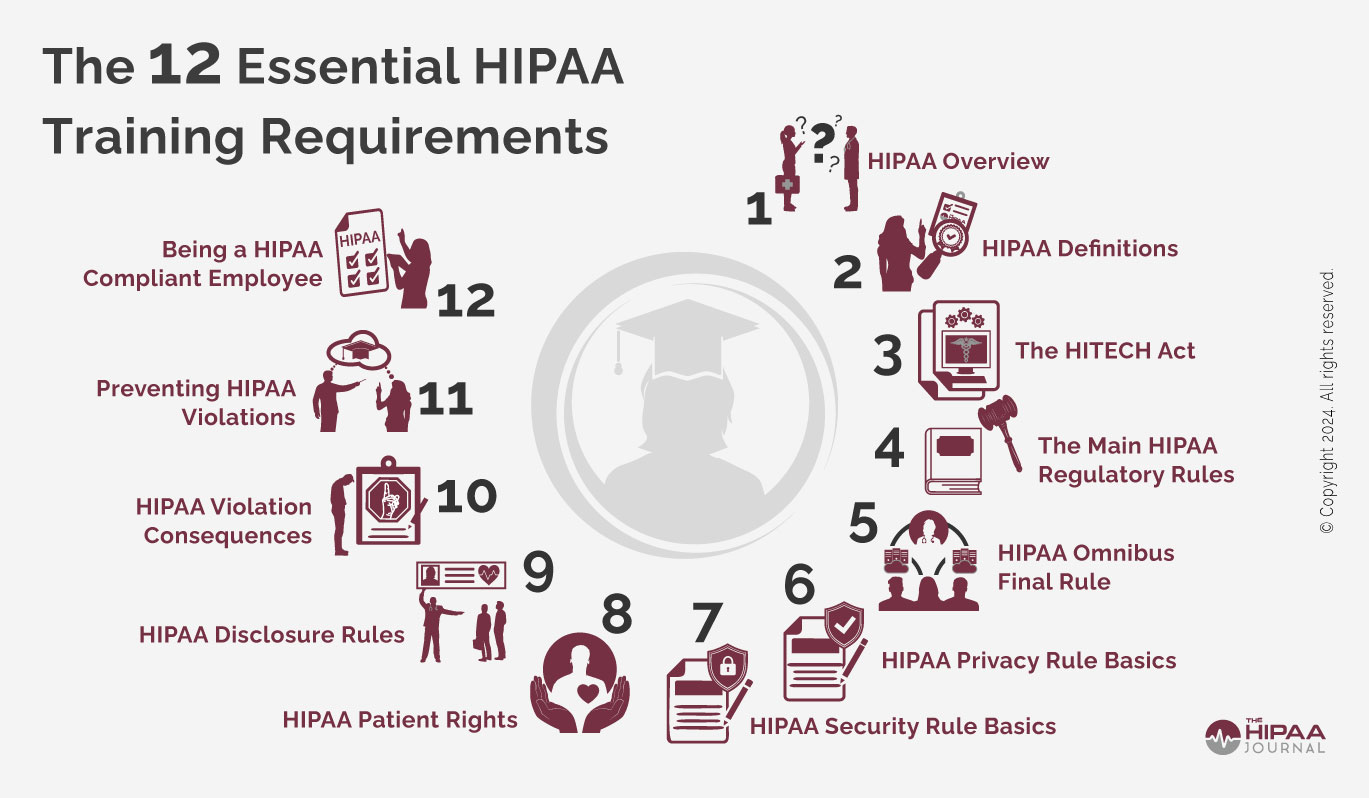
Source : hipaajournal.com
Evaluating Free HIPAA Training Programs
Content Accuracy and Up-to-Date Information
HIPAA regulations can evolve. Make sure the training you’re considering is current. Look for mentions of recent updates or guidance from HHS. Outdated information is almost as bad as no information. A good program will clearly state when its content was last reviewed or updated. Check the source material if you can.
Clarity and Engagement of Materials
Is the training presented in a way that’s easy to understand? Are the materials engaging, or are they just dense legal text? Look for programs that use real-world examples, scenarios, and perhaps even videos. If it’s boring and confusing, you’re less likely to retain the Key information. Good training makes complex topics accessible. Clear training materials are a must.
Provider Reputation and Credibility
Before, who is providing the training? Are they a recognized entity in healthcare compliance? A quick search can reveal a lot. Look for testimonials, affiliations, or any accreditations. A reputable provider gives you confidence that the training is accurate and valuable. Don’t just trust any random website.
Accessibility and User Experience
Is the training easy to access? Does it work on different devices (desktop, mobile)? Is the platform user-friendly? A clunky interface or difficult access can be a major barrier. Free training should still be a smooth experience. If you’re struggling to even start the course, it’s a bad sign. Test the platform before diving deep.
The Data: Comparing Free HIPAA Training Options
Finding true, free certified training can be tricky. Many offer free modules or awareness courses. Here’s a look at common sources and what they typically offer:
| Provider Type | Typical Offering | Cost | Certification Potential | Notes |
|---|---|---|---|---|
| HHS.gov | Information, guidance, regulations, some educational materials | Free | None (completion documentation only) | Authoritative source, but not formal certification. Needed for understanding rules. |
| Online Learning Platforms (Coursera, edX Audit) | Introductory courses, specific modules | Free (Audit Mode) | Possible (Certificate of Completion, often paid for graded work) | Varies greatly by course. Good for foundational knowledge. |
| Employer-Provided Training | Full, role-specific | Free | Usually Yes (Internal certification/completion record) | Most practical and relevant if available. Check HR. |
| Non-Profits/Associations | Varies; could be webinars, guides, short courses | Free (Sometimes member-exclusive) | Sometimes (Certificate of attendance/completion) | Search for your specific professional association. |
Tips for Maximizing Free HIPAA Training
Be Proactive in Your Search
Don’t wait for training to fall into your lap. Actively seek out these free resources. Set aside dedicated time each week to research and explore different options. Bookmark promising websites. The more proactive you are, the more likely you are to find quality free HIPAA training that fits your needs.
Combine Resources for Full Knowledge
No single free resource might cover everything perfectly. Mix and match! Use HHS for the official rules, an online platform for a clear overview, and your employer’s training for specific workplace policies. Creating your own Full learning path ensures you get a well-rounded understanding. Don’t rely on just one source if you can help it.
Focus on Understanding, Not Just Completion
Seriously, this is Key. The goal isn’t a piece of paper; it’s understanding how to protect patient data and comply with the law. Engage with the material. Ask questions (even if it’s just to yourself). Think about how the rules apply to your daily tasks. True understanding is your best defense against breaches and penalties. Understanding HIPAA is the real win.
Stay Informed About Updates
HIPAA compliance isn’t a one-and-done thing. Laws change, technology evolves, and new threats emerge. Make it a habit to periodically check for updates from reputable sources like HHS. Consider revisiting training modules annually or when significant regulatory changes occur. Continuous learning is key in healthcare.
Common Pitfalls to Avoid
Ignoring Training Entirely
This is the biggest mistake. Thinking HIPAA doesn’t apply to you, or that you’ll “figure it out later,” is a recipe for disaster. Complacency is dangerous in healthcare. Get the training, understand the basics, and make it a priority. It’s a fundamental aspect of professional responsibility. Don’t be that person.
Relying Solely on Outdated Information
Regulations change. Using training materials from five years ago might mean you’re missing critical updates on things like data encryption standards or breach notification timelines. Always verify the recency of your training materials. Outdated knowledge can lead to non-compliance. Always check the date.
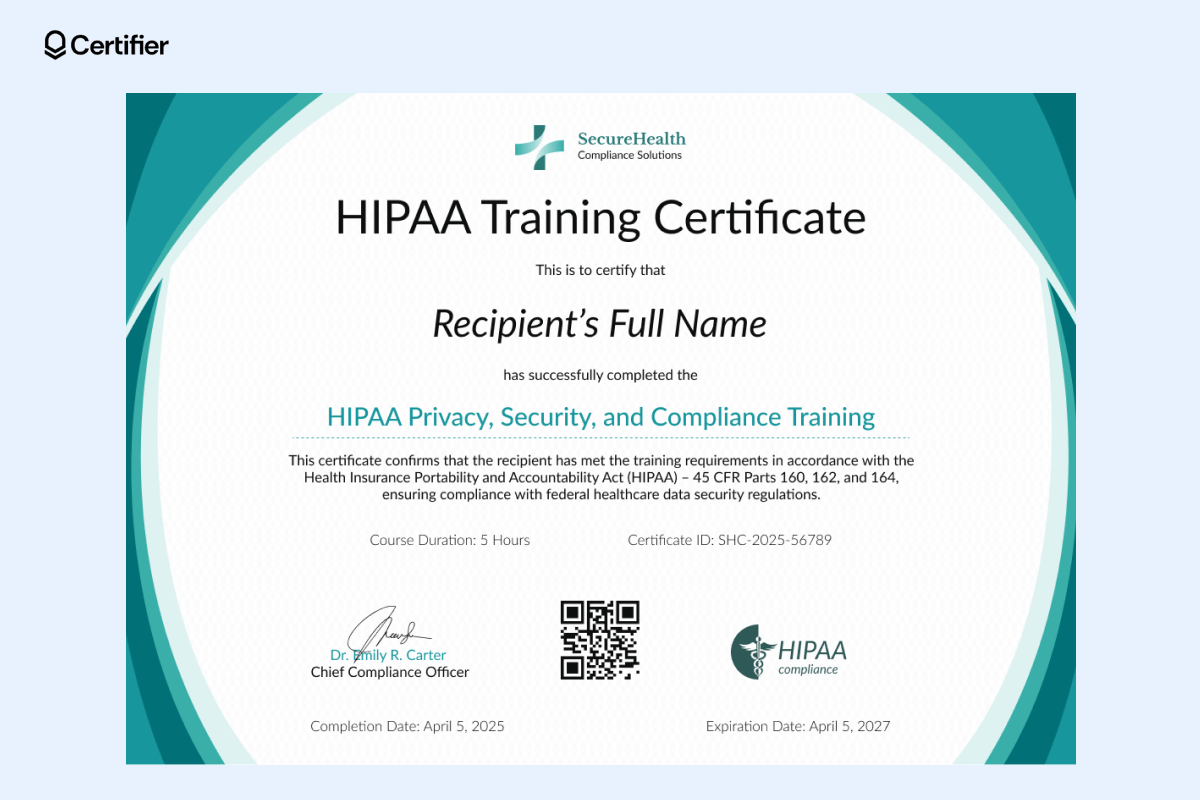
Source : certifier.io
Choosing “Certification” Over Actual Knowledge
Some low-quality programs focus heavily on the certificate, with minimal actual learning. A fancy certificate is useless if you don’t understand the underlying principles. Focus on providers that emphasize learning and comprehension, not just passing a simple test. Your actions matter more than a piece of paper. Knowledge is power.
Not Understanding Your Specific Role’s Requirements
A general HIPAA overview is good, but it might not cover the specific nuances of your job. Are you handling billing? Clinical records? IT security? Make sure your training addresses the areas most relevant to your daily tasks. Role-specific training is often more valuable than generic overviews for practical application. Tailor your learning.
The Future of Free HIPAA Compliance Education
Increased Availability of Online Modules
The trend is clear: more and more reputable organizations are offering accessible online training. Expect to see a continued growth in free or low-cost modules covering various aspects of HIPAA. Technology makes it easier to distribute high-quality educational content to a wider audience. This is good news for everyone.
Gamification and Interactive Learning
To combat boredom and improve retention, training providers are increasingly using gamification techniques. Think interactive scenarios, quizzes embedded within modules, and even leaderboards. This makes learning more engaging and helps solidify knowledge. Expect more Active and fun ways to learn about HIPAA compliance.
Micro-learning and Just-in-Time Training
Short, focused “micro-learning” modules are becoming popular. Need a quick refresher on breach notification rules? There might soon be a 5-minute video for that. This “just-in-time” approach allows professionals to access specific information precisely when they need it, enhancing practical application. It fits busy schedules.
AI-Driven Personalized Training Paths
Artificial intelligence could play a role in tailoring training. AI might assess your current knowledge gaps and recommend specific modules or learning paths, making your training more efficient and effective. Imagine a system that knows exactly what you need to learn next. Personalized HIPAA education is on the horizon.
Frequently Asked Questions
What is HIPAA training?
It’s basically training on the Health Insurance Portability and Accountability Act, which lays down the rules for protecting sensitive patient health information. Needed for anyone in healthcare, really. Knowing this stuff helps you avoid big fines and keeps patient data safe. So, it’s super important for healthcare workers.
Where can I find free HIPAA training and certification?
Lots of places offer it online, sometimes from government sites like HHS, or through professional organizations. Some healthcare software providers might even offer it free as part of their service. You just gotta search around a bit. Look for programs that offer actual HIPAA certification.
Is free HIPAA training really legitimate?
Yeah, for the most part. While some fancy, in-depth courses cost money, there are definitely solid, reputable sources for free training. It might not be as Full as a paid course, but it’ll cover the essentials and get you that HIPAA compliance knowledge. Just make sure the source is trustworthy.
Who needs HIPAA training?
Pretty much anyone who handles patient information. Doctors, nurses, administrative staff, IT folks who manage health records, even billing departments. If you can see or access Protected Health Information (PHI), you need it. It’s all about protecting that patient data.
What are the benefits of HIPAA training for healthcare workers?
Besides keeping you out of trouble with fines, it builds trust with patients because they know you’re serious about their privacy. Plus, it makes your workplace safer and more secure. Understanding HIPAA regulations is just good practice for everyone in the medical field.
