Ditching the Scrubs: Your Path to Becoming a Certified Diabetes Educator (Even Without a Nursing Degree!)
So, you’re passionate about helping folks navigate the choppy waters of diabetes management, but the whole “nursing degree” thing feels like a roadblock. Good news! It doesn’t have to be. Forget the idea that only nurses can be diabetes educators. That’s a load of hooey. There’s a very real, very achievable pathway for folks from all sorts of backgrounds to earn that coveted CDCES credential. Let’s talk turkey.
It: diabetes education isn’t just about injections and insulin pumps. It’s about nutrition, exercise, mental well-being, understanding technology, and just plain old empathy. These are skills you can hone from any professional corner. We’re talking about real people, real challenges, and real victories. And you, yes YOU, can be a part of that, no matter your initial degree.
Debunking the Myth: You DON’T Need to Be a Nurse
Source : diabetesed.net
Let’s get this straight from the jump. The biggest hurdle most people imagine is the requirement for a specific clinical background. Many assume you must have a nursing license. This couldn’t be further from the truth and frankly, it shuts down a lot of amazing talent who could be making a huge difference.
The Real Gatekeepers: Who Sets the Standards?
The Certified Diabetes Care and Education Specialist (CDCES) credential is the gold standard. It’s overseen by the National Certification Board for Diabetes Educators (NCBDE), now known as the Certification Board for Diabetes Care and Education (CBDCE). They are the ones who dictate the requirements, and crucially, they define a broad range of recognized professional backgrounds. They’re not just looking for nurses; they’re looking for qualified health professionals.
What “Health Professionals” Actually Means
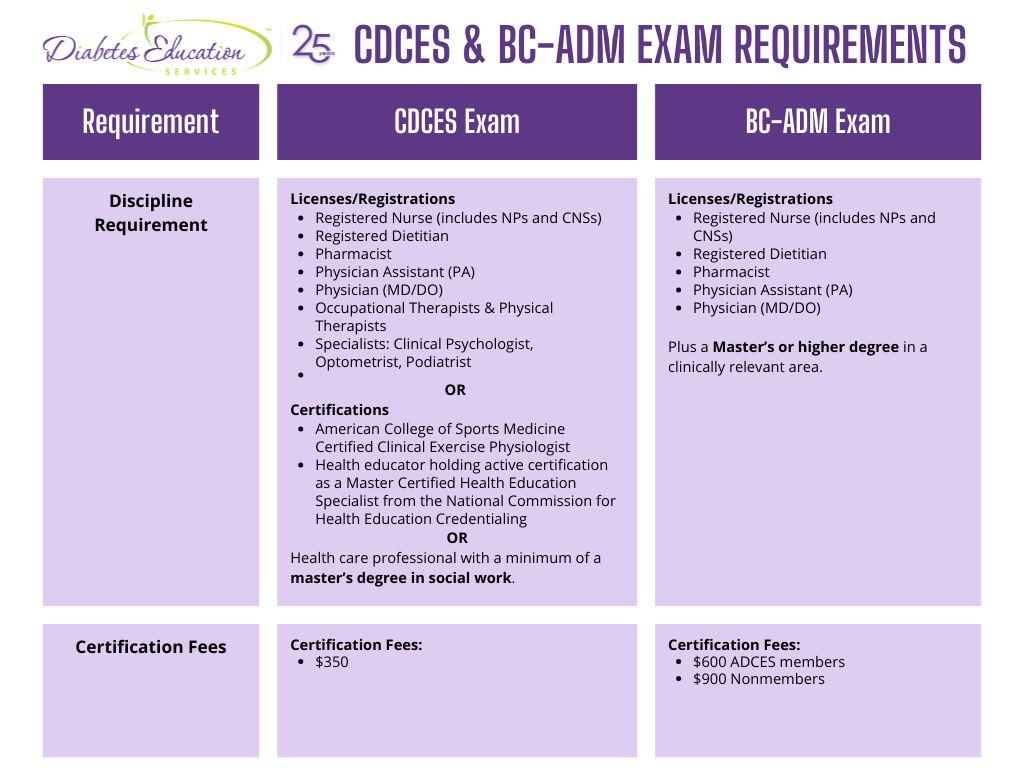
The CBDCE recognizes a diverse array of professions. We’re talking about registered dietitians, pharmacists, social workers, physician assistants, and even people with advanced degrees in public health or health education. The key isn’t the specific title of your degree, but rather your knowledge base and professional experience in a related health field. They want folks who understand health principles. It’s about your ability to teach and support patients.
Why the Broad Scope Matters
Diabetes is a complex, Complex condition. It touches on diet (hello, dietitians!), medication management (pharmacists, anyone?), mental health (social workers, step right up!), and overall lifestyle. A single profession can’t possibly cover all these bases adequately. By allowing a wider range of professionals to become CDCES, the CBDCE ensures a more Overall approach to patient care. It’s a smart move, really. It brings fresh perspectives.
The Core Requirements: Beyond the Degree Type
Alright, so we’ve established that your specific degree title isn’t the be-all and end-all. But that doesn’t mean there aren’t Needed requirements. The CBDCE has a clear set of criteria designed to Make sure that anyone seeking certification is genuinely equipped to provide high-quality diabetes education. These are the non-negotiables.
Professional Practice Experience: The Practical Hammer
This is HUGE. The CBDCE requires a significant amount of documented professional practice experience. This isn’t just clocking in and out; it’s about hands-on work where you’ve been actively involved in diabetes education or management. They want to see that you’ve spent time directly impacting patients’ lives and helping them manage their condition. This is where real-world skills are proven.
- You need to accrue a specific number of hours over a defined period.
- These hours must be spent in roles directly related to diabetes education.
- Think counseling, teaching, program development, or direct patient care related to diabetes.
- Documentation is key here – keep Careful records of your activities and responsibilities.
Watch: How to Become a Certified Diabetes Care and Education …
Knowledge Base: What You Actually Know
Beyond just doing the work, you need to know the stuff. The CDCES exam covers a vast range of topics related to diabetes. This includes the pathophysiology of diabetes, its various types, acute and chronic complications, pharmacological and non-pharmacological treatments, behavior change strategies, psychosocial aspects, and health promotion. You need to demonstrate a Full understanding. It’s not enough to just know about blood sugar; you need the whole picture.
The Application Process: Getting Your Foot in the Door
Once you’ve got your experience and knowledge base ready, you’ll need to submit a formal application to the CBDCE. This application is where you’ll detail your educational background, professional experience, and any other relevant qualifications. It’s your chance to showcase why you’re a perfect candidate. Be thorough. Be honest. Make sure every box is ticked.
Recognized Professional Disciplines: Your Specific Entry Points
Now for the nitty-gritty. What specific professional backgrounds does the CBDCE actually recognize? This is where you can see yourself fitting in. They’ve laid out a list of eligible disciplines, and it’s more expansive than you might think. Don’t see your exact title? Don’t sweat it yet; look at the core responsibilities of your role.
Dietitians and Nutritionists: The Food Experts
If you’re a Registered Dietitian (RD) or a Registered Dietitian Nutritionist (RDN), you’re already in a fantastic position. Your expertise in food, metabolism, and dietary planning is directly applicable to diabetes management. Many RDs naturally transition into diabetes education because nutrition is such a Foundation of the condition. You’ll likely meet many of the criteria with ease, particularly the knowledge base.
Pharmacists: Masters of Medication
Pharmacists play a critical role in diabetes care, managing complex medication regimens, educating patients on insulin use, and monitoring for side effects. Their deep understanding of pharmacology makes them excellent candidates for the CDCES. They often have extensive patient interaction time, fulfilling the professional practice hours requirement effectively. It’s a natural fit for many.
Social Workers: The Human Connection
Diabetes doesn’t just affect the body; it affects the mind and the entire social fabric of a person’s life. Licensed Clinical Social Workers (LCSWs) and other qualified social work professionals bring Crucial skills in counseling, understanding psychosocial barriers, and helping patients cope with the emotional toll of chronic illness. Their ability to connect with and support individuals on a deeper level is Key for successful long-term management.
Other Health Professionals: Think Outside the Box
This is where it gets exciting for those without the “usual” suspects. The CBDCE also recognizes:
- Physician Assistants (PAs): With their broad medical training and patient care experience.
- Advanced Practice Registered Nurses (APRNs): Even if you don’t have a traditional RN background, many APRN roles qualify.
- Doctors of Medicine (MDs) or Osteopathy (DOs): Obvious medical expertise.
- Doctors of Podiatric Medicine (DPMs): Foot care is Key in diabetes.
- Doctors of Optometry (ODs): Vision complications are common.
- Public Health Professionals: With relevant experience in health education or chronic disease management.
- Health Educators: Especially those with a focus on chronic conditions.
The key is always demonstrating that your professional role involves significant patient education and management within a health-related field.
Handling the Education and Experience Maze
Okay, let’s dive deeper into how you actually get the required education and experience if your current role doesn’t scream “diabetes educator” just yet. It’s about strategic planning and sometimes, a bit of extra effort. But it’s totally doable.
Meeting the Professional Practice Hour Requirements
This is often the biggest hurdle for non-traditional candidates. The CBDCE requires a specific number of hours of professional practice experience. As of recent guidelines, this typically means 1,000 hours within the last four years or 1,500 hours within the last five years. These hours must be spent directly providing diabetes self-management education and support (DSMES) or medical nutrition therapy (MNT) if applicable to your profession.
- Document Everything: Keep a detailed log of your activities, the dates, the number of hours, and a description of your role. Supervisors can often attest to these hours.
- Seek Relevant Roles: If your current job doesn’t offer enough diabetes-focused work, look for opportunities to take on those responsibilities. Volunteer work can also count, provided it meets the criteria.
- Continuing Education Counts: Certain accredited continuing education courses related to diabetes care can sometimes be applied towards meeting a portion of the requirements, but this varies and is usually capped.
Acquiring the Necessary Knowledge Base
Even if you have practical experience, the CDCES exam is rigorous. You need a solid theoretical foundation. The CBDCE outlines specific content areas they test. You can meet these requirements through several avenues:
- Formal Education: Your degree in a recognized health profession likely covers foundational aspects.
- Continuing Education Units (CEUs): This is your best friend! Numerous organizations offer CEUs specifically focused on diabetes. Look for courses covering:
- Diabetes Pathophysiology
- Nutrition Therapy
- Pharmacotherapy
- Behavioral Change
- Psychosocial Aspects
- Technology (CGM, pumps)
- Complications Management
- Workshops and Conferences: Attending specialized diabetes workshops and national conferences can provide in-depth knowledge and networking opportunities.
Example Scenario: The Social Worker’s Journey
Let’s picture Sarah, an LCSW working in a community mental health center. She sees many clients struggling with the emotional impact of diabetes, but her role doesn’t involve direct DSMES. To become a CDCES, Sarah might:
- Seek Supervision: Partner with a CDCES to co-lead support groups or provide focused counseling on diabetes-related distress, documenting these hours meticulously.
- Take Targeted CEUs: Enroll in online courses covering diabetes pharmacology, nutrition basics, and glucose monitoring technology.
- Volunteer: Offer her counseling services at a local diabetes support organization or clinic on weekends to gain direct education hours.
- Focus Her Practice: Gradually shift her caseload to include more clients specifically seeking help with managing the psychological aspects of diabetes, documenting this as specialized experience.
This shows how strategic effort can bridge the gap between her current role and the CDCES requirements.
The CDCES Exam: What to Expect
Passing the CDCES exam is the final hurdle. It’s a Full test designed to validate your knowledge and competence. It’s not a walk in the park, but with the right preparation, it’s absolutely conquerable, even for those coming from non-nursing backgrounds.
Exam Format and Content Breakdown
The exam is typically administered via computer at testing centers. It consists of multiple-choice questions covering the core knowledge domains Needed for effective diabetes education. The CBDCE provides a detailed examination blueprint, which is your roadmap for studying. Expect questions across these broad categories:
- Assessment: Understanding patient needs, readiness to learn, and health status.
- Diagnosis: Identifying patient problems related to diabetes management.
- Planning: Developing individualized education and self-management plans.
- Implementation: Providing education and support using various strategies.
- Evaluation: Assessing the effectiveness of interventions and making adjustments.
- Professional Issues: Including ethical considerations, scope of practice, and cultural competence.
Study Strategies for Success
You wouldn’t cram for a final exam in college and expect to ace it, right? The CDCES exam requires dedicated preparation. Here are some tried-and-true strategies:
- Use the Official Resources: The CBDCE website (`Read Cbdce.org Source`) is your primary source. They offer study guides, reference lists, and information about the exam content.
- Take Practice Tests: Simulate the exam experience. Many review courses and books include practice questions. Identify your weak areas and focus your study efforts there.
- Form a Study Group: Discussing concepts with peers can solidify your understanding and expose you to different perspectives.
- Focus on Application: Don’t just memorize facts. Understand how the knowledge applies to real-world patient scenarios. This is Key for the exam’s clinical judgment questions.
- Time Management: Practice answering questions under timed conditions. You need to be efficient during the actual exam.
The Importance of Ongoing Certification
Once you pass, congratulations! You’re a CDCES. But the journey doesn’t end there. Certification is valid for a set period (usually five years), after which you’ll need to renew. Renewal typically involves meeting continuing education requirements and paying a fee. This ensures that CDCES professionals stay up-to-date with the rapidly evolving field of diabetes care. It keeps your skills sharp.
Source : nerdygrad.org
Leveraging Your Unique Background: Strength, Not Weakness
Many people think not having a nursing background is a disadvantage. I’m here to tell you it’s often the opposite. Your unique perspective can be a massive asset in connecting with a wider range of patients and understanding diverse challenges. Don’t shy away from your previous professional identity; lean into it!
Bringing Diverse Skills to the Table
Consider a social worker. They excel at addressing the psychosocial barriers that often hinder diabetes management – depression, anxiety, financial stress, family dynamics. A dietitian brings Best expertise in nutrition and meal planning, making complex dietary advice accessible. A pharmacist understands the intricate web of medications and potential interactions. Each background brings a specialized lens that can enhance patient care in ways a single discipline might miss.
Building Rapport with a Broader Patient Population
Patients come from all walks of life, with varying concerns and levels of health literacy. Having educators with diverse professional backgrounds can help patients find someone they can connect with more easily. Someone who speaks their “language,” understands their specific concerns (whether financial, emotional, or dietary), and can offer tailored advice based on a relatable professional framework. It’s about meeting people where they are.
Collaboration is Key
Being a CDCES doesn’t mean you work in isolation. In fact, effective diabetes management often requires a collaborative team approach. Your unique background allows you to contribute effectively to interdisciplinary teams. You understand your colleagues’ expertise and can Help better communication and coordinated care for the patient. Your non-nursing perspective can help bridge gaps between different healthcare professionals.
Post-Certification Career Paths and Opportunities
Earning your CDCES credential opens up a world of exciting career possibilities, far beyond the traditional clinic setting. It signals a high level of expertise and commitment to diabetes care, making you a valuable asset in various environments.
Clinical Settings: The Traditional Route
Of course, many CDCES professionals work directly with patients in hospitals, clinics, and private practices. Here, you’ll conduct one-on-one education sessions, lead group classes, develop educational materials, and work closely with physicians and other healthcare providers to manage patient care plans. This is the heartland of diabetes education.
Community Health and Public Programs
There’s a growing need for diabetes education in community settings. Think public health departments, community centers, and non-profit organizations focused on chronic disease prevention and management. These roles often involve outreach, program development, and addressing health disparities within specific populations. It’s about making a broad impact.
Industry Roles: Pharma and Device Companies
Pharmaceutical and medical device companies often hire CDCES professionals for roles in clinical education, medical science liaison positions, product training, and research and development. Your expertise is Key for educating healthcare providers about new medications, insulin pumps, continuous glucose monitors (CGMs), and other diabetes technologies. These roles can be quite lucrative.
Writing, Consulting, and Education Technology
Your expertise is valuable in creating educational content. This could include writing books, articles, or online courses; developing curriculum for training programs; or consulting for healthcare organizations looking to improve their diabetes education services. The rise of telehealth and digital health platforms also creates opportunities for CDCES professionals to contribute to app development and online patient support.
Making the Leap: Practical Steps to Get Started
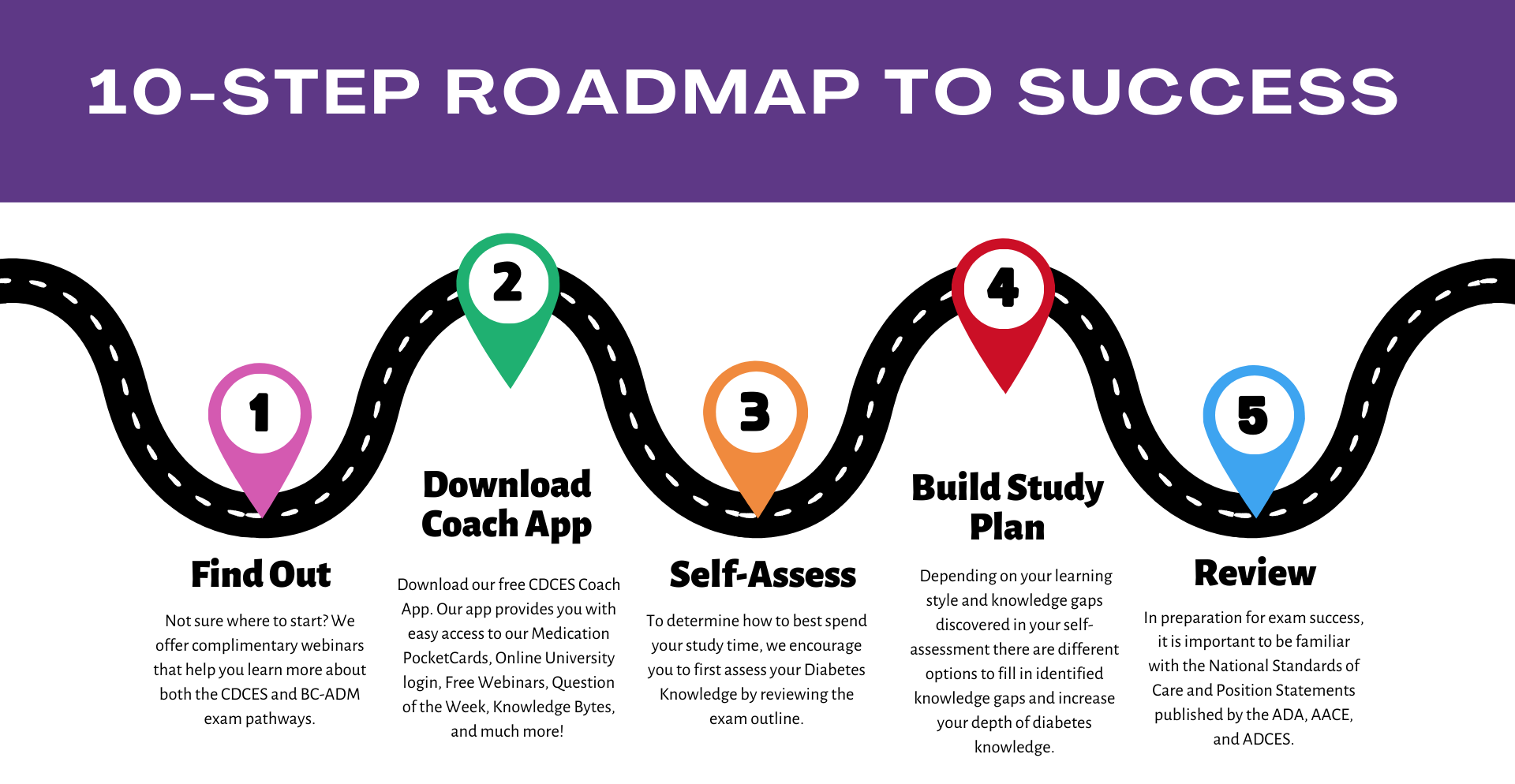
Feeling inspired? Ready to take the plunge? Here’s a straightforward action plan to get you on the path to becoming a CDCES, even without that nursing degree.
Step 1: Assess Your Eligibility
First things first. Review the official requirements on the CBDCE website. Honestly evaluate your current education and professional experience. Do you have a degree in a recognized health profession? How many hours of relevant diabetes education experience do you think you have, or could realistically gain?
Step 2: Identify Your Knowledge Gaps
Based on the CDCES exam blueprint, where do you feel least confident? Is it pharmacology? Nutrition nuances? Technology? Be honest with yourself. This will guide your study plan.
Step 3: Plan Your Experience Gain (If Needed)
If you’re short on the required professional practice hours, start strategizing now. Talk to your supervisor about opportunities. Look for volunteer positions. Consider roles in organizations that actively provide DSMES. This might take time, so plan accordingly.
Step 4: Enroll in Targeted Education
Sign up for CEUs or courses that directly address your knowledge gaps. Focus on accredited programs that Match with the CDCES domains. Look for reputable providers known for quality diabetes education content.
Source : cdecb.ca
Step 5: Study Diligently and Apply
Once you feel confident in your eligibility, gather your documentation and submit your application. Then, dive deep into your study plan. Use practice exams, review materials, and perhaps join a study group. Treat it like the important professional milestone it is.
The Future is Bright for Non-Nurse Diabetes Educators
The Field of diabetes care is constantly evolving, and the need for skilled, compassionate educators has never been greater. By broadening the eligibility criteria for the CDCES credential, the CBDCE acknowledges that expertise and dedication come in many forms. Your unique background isn’t a limitation; it’s a launching pad.
Welcome the Opportunity
Don’t let outdated notions hold you back. If you have a passion for helping individuals manage diabetes and a background in a related health profession, the CDCES path is well within your reach. It requires effort, dedication, and strategic planning, but the rewards—both personal and professional—are immense.
A Rewarding Career Awaits
Empowering someone to take control of their health, reduce their risks, and live a fuller life. That’s the impact you can have as a Certified Diabetes Care and Education Specialist. It’s more than a job; it’s a calling. And you can answer it, no nursing degree required.
Understanding the Nuances: Who Qualifies for CDCES?
Let’s be crystal clear: the journey to becoming a Certified Diabetes Care and Education Specialist (CDCES) isn’t a one-size-fits-all deal, especially if you’re not coming from the nursing world. The Certification Board for Diabetes Care and Education (CBDCE) has specific criteria, and understanding these is your first mission. Forget the hearsay; get the facts straight from the source.
It’s not just about having a degree; it’s about having the right kind of degree and, crucially, the relevant experience. This board wants to Make sure that anyone carrying the CDCES title is genuinely competent and prepared to handle the complexities of diabetes management support. They’ve opened doors, but you still need to walk through them correctly.
Eligible Professional Disciplines: The Official List
The CBDCE explicitly lists the professional disciplines they recognize. This isn’t some vague guideline; it’s a concrete roster. Knowing where you fit—or could fit—is Top. It’s about aligning your qualifications with their defined categories.
Core Health Professions Recognized
The most common and widely accepted professional backgrounds include:
- Registered Nurses (RNs): Often the default assumption, but not the only path.
- Registered Dietitians (RDs) / Registered Dietitian Nutritionists (RDNs): Expertise in nutrition is fundamental.
- Pharmacists (RPh, PharmD): Key for medication management and patient counseling.
- Physician Assistants (PAs): Broad medical knowledge and patient care experience.
- Advanced Practice Registered Nurses (APRNs): Including Nurse Practitioners (NPs) and Clinical Nurse Specialists (CNSs).
- Doctors of Medicine (MDs) and Doctors of Osteopathy (DOs): Physicians with extensive clinical experience.
These are the pillars, the ones you see most often in diabetes education roles. But the list doesn’t stop there, which is precisely where opportunities for non-nurses open up.
Expanding the Scope: Other Recognized Roles
The CBDCE recognizes that diabetes care is multidisciplinary. Hence, they also include:
- Licensed Clinical Social Workers (LCSWs): Needed for addressing psychosocial aspects of diabetes management.
- Doctors of Podiatric Medicine (DPMs): Foot care is a critical component of diabetes management.
- Doctors of Optometry (ODs): Managing and preventing diabetes-related vision complications.
- Credentialed Health and Fitness Professionals: With specific qualifications and experience in chronic disease management.
- Other Health Professionals: This is a broader category, often encompassing individuals with advanced degrees (Master’s or Doctorate) in fields like public health, health education, or clinical psychology, provided they meet the experience and knowledge requirements.
The key takeaway here is that the CBDCE looks at your professional role and its relevance to diabetes self-management education and support (DSMES). It’s not just the title, but the function.
What If My Title Isn’t Listed?
Don’t panic if your exact job title isn’t on the list. The Key factors are your scope of practice and the nature of your professional experience. If your role involves patient assessment, education, counseling, and support related to chronic disease management, particularly diabetes, you might still qualify. You’ll need to meticulously document how your work aligns with the core competencies of a CDCES. It’s about demonstrating competence, not just holding a specific badge.
The Pillars of Eligibility: Experience and Education Breakdown
Beyond having a qualifying professional discipline, two main pillars support your application: documented professional practice experience and a Strong knowledge base. These are non-negotiable and where most candidates need to focus their efforts.
Professional Practice Hours: The “Doing” Requirement
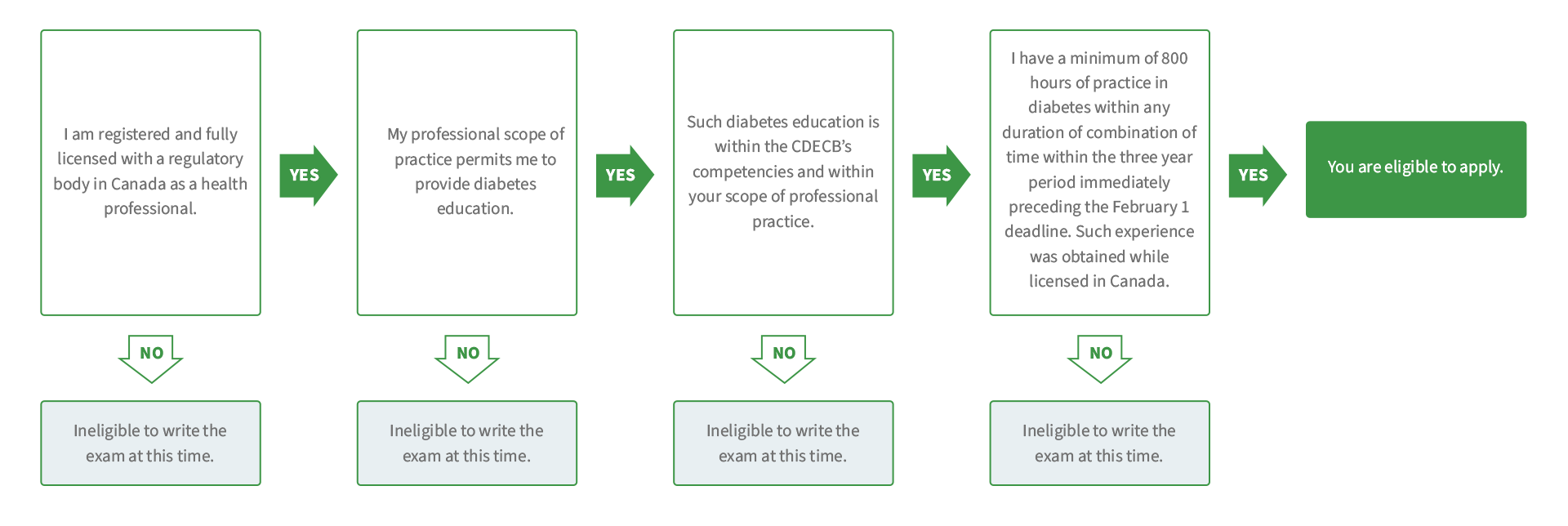
This is arguably the most significant requirement for many. The CBDCE mandates a certain number of hours spent in direct practice providing DSMES or Medical Nutrition Therapy (MNT), depending on your profession. Typically, this translates to:
- At least 1,000 hours within the past four years, OR
- At least 1,500 hours within the past five years.
These hours aren’t just about being present; they must involve active engagement in educating and supporting individuals with diabetes. This could include counseling, curriculum development, program delivery, and patient follow-up. Careful record-keeping is your best friend here. Your employer or supervisor will likely need to verify these hours.
Source : cbdce.org
Knowledge Base Requirements: The “Knowing” Component
You can’t educate effectively if you don’t know your stuff. The CDCES exam covers a broad spectrum of knowledge. You need to demonstrate proficiency in areas like:
- Diabetes Pathophysiology: Understanding the disease process.
- Nutrition Therapy: Macronutrients, micronutrients, meal planning strategies.
- Pharmacotherapy: Oral agents, injectables, insulin therapy.
- Monitoring: Blood glucose monitoring, continuous glucose monitoring (CGM), A1C.
- Psychosocial Issues: Coping, stress, mental health impacts.
- Behavior Change Theories: Motivational interviewing, goal setting.
- Complications: Preventing and managing acute and chronic complications.
- Technology: Insulin pumps, smart pens, data management.
Meeting this knowledge requirement can be achieved through your foundational degree, specialized continuing education, workshops, and relevant professional experience.
The Application: Your Formal Pitch
Submitting the application is your formal introduction to the CBDCE. It’s a detailed document where you’ll outline your:
- Educational background (degrees, institutions, dates).
- Professional licensure information.
- Detailed breakdown of your diabetes-related professional practice hours, including descriptions of your responsibilities and verification.
- Any relevant continuing education or certifications.
Accuracy and honesty are critical. Any discrepancies or falsified information can lead to disqualification. Think of it as presenting your case – make it strong, clear, and well-supported.
Bridging the Gap: Gaining Experience and Knowledge
What if you have a qualifying degree but lack the specific diabetes experience or feel your knowledge needs a boost? This is where proactive planning comes in. It’s about strategically filling those gaps to meet the CBDCE’s standards.
Targeted Professional Development
Look for opportunities within your current role or organization to gain relevant experience. Can you shadow a CDCES? Can you volunteer for diabetes-related projects or patient education initiatives? Can you take on more responsibility in patient counseling related to chronic conditions?
Sometimes, a slight shift in focus or a willingness to take on new tasks can significantly boost your documented hours. Even taking on a leadership role in a wellness program that includes diabetes management components can count, provided you can clearly articulate the DSMES aspects.
Leveraging Continuing Education (CEs)
Continuing education is your secret weapon. The CBDCE often allows a certain number of CEs to count towards eligibility, particularly if they cover the core knowledge domains. Seek out high-quality courses, workshops, and webinars focused on diabetes management.
Consider pursuing specialized certificates in diabetes education. Many universities and professional organizations offer these, providing a structured way to gain both knowledge and sometimes, practical experience hours or documentation support. These programs often cover exam preparation extensively.
The Role of Mentorship
Finding a mentor who is already a CDCES can be Crucial. They can offer guidance on Handling the requirements, understanding the nuances of the exam, and identifying opportunities to gain experience. A mentor can provide insight into the day-to-day realities of diabetes education and help you tailor your development plan.
They can also be a Key resource for verifying your professional practice hours, understanding what documentation is most persuasive for the CBDCE application. Don’t underestimate the power of connecting with experienced professionals in the field.
Data Snapshot: CDCES Eligibility Requirements Overview
To visualize the core requirements, here’s a simplified breakdown. Remember to always consult the official CBDCE guidelines for the most current and detailed information.
| Requirement Category | Details | Notes |
|---|---|---|
| Professional Discipline | Recognized health profession (e.g., RD, RPh, LCSW, PA, MD/DO, etc.) | Must hold current, valid licensure/registration if applicable. |
| Professional Practice Experience | 1,000 hours (last 4 yrs) OR 1,500 hours (last 5 yrs) | Must be in direct provision of DSMES or MNT. Verified by supervisor. |
| Knowledge Base | Demonstrated proficiency across core diabetes care domains | Assessed via exam; gained through degree, CEs, experience. |
| Application Fee | Non-refundable fee | Required upon submission of application. |
| Examination | Pass the CDCES certification exam | Computer-based, multiple-choice test. |
This table provides a quick reference, but the fine print matters. For instance, what constitutes “direct provision” of DSMES can have specific interpretations that the CBDCE clarifies in their detailed handbooks. Always refer to their official documentation for the most accurate picture.
Specific Examples of Qualifying Experience
Let’s break down what “qualifying experience” might look like for different professions:
- For an RD: Counseling patients on carbohydrate counting, developing personalized meal plans for blood glucose control, educating on label reading for diabetes management.
- For a Pharmacist: Reviewing medication adherence, demonstrating insulin pen technique, explaining oral diabetes medication mechanisms and side effects, counseling on hypoglycemia management.
- For an LCSW: Providing counseling on coping strategies for diabetes distress, addressing barriers to self-care related to mental health or socioeconomic factors, facilitating support groups.
- For a Health Educator: Developing and delivering community workshops on healthy eating for diabetes prevention, creating educational materials on physical activity guidelines, leading smoking cessation programs for individuals with diabetes.
The common thread is direct patient interaction focused on empowering them to manage their diabetes effectively. It’s about education, support, and behavior change.
The Application Process: Step-by-Step
Handling the application itself is a critical phase. Treat it with the seriousness it deserves. A poorly prepared application can lead to delays or rejection, even if you meet all the underlying requirements.
Gathering Your Documentation
This is the legwork. You’ll need:
- Proof of your degree (diploma or transcript).
- Copies of your professional license(s) or certifications.
- Detailed verification of your professional practice hours, signed by your supervisor(s). This should clearly state the hours, dates, and your specific responsibilities related to diabetes education.
- Payment for the application fee.
Start collecting these items well in advance. Tracking down old supervisors or obtaining official transcripts can take time.
Source : diabetesed.net
Completing the Application Form
The CBDCE provides application forms, often accessible online. Fill it out completely and accurately. Pay close attention to sections requiring detailed descriptions of your experience. Use clear, concise language that directly reflects the CBDCE’s terminology regarding DSMES.
Don’t just list duties; explain the impact and educational component of your work. Quantify where possible (e.g., “Educated an average of 15 patients per month on…”)
Submission and Review Timeline
Submit your application by the specified deadline for your desired exam window. The CBDCE will review your application for completeness and eligibility. This process can take several weeks to a couple of months.
If your application is approved, you’ll receive authorization to schedule your exam. If it’s denied, they will typically provide reasons, which might give you a chance to rectify the issues and reapply for a future exam cycle. Understanding the review process is key.
Common Pitfalls and How to Avoid Them
Many aspiring CDCES candidates stumble on a few common issues. Being aware of these can save you time, frustration, and potential heartache.
Pitfall 1: Underestimating Experience Requirements
Folks often think any patient interaction counts. It doesn’t. It must be specific to diabetes self-management education and support. Generic health counseling isn’t enough. Make sure your documented hours clearly Match with DSMES.
Pitfall 2: Incomplete or Vague Documentation
Vague descriptions of job duties won’t cut it. The CBDCE needs to see clear evidence that you were actively educating and supporting patients with diabetes. Make sure your supervisor’s verification is detailed and specific to the required tasks.
Pitfall 3: Missing Deadlines
The CBDCE has firm application and exam scheduling deadlines. Missing these means waiting for the next cycle. Mark your calendar and plan backward from the deadlines.
Pitfall 4: Assuming Your Degree is Enough
While your degree opens the door to a recognized profession, it doesn’t automatically qualify you. The experience and knowledge components are equally, if not more, important. You must prove you’ve applied your education effectively in the context of diabetes care.
How to Steer Clear
The best defense is diligence. Read the official CBDCE eligibility guide thoroughly. Contact their office with specific questions before you submit. Seek guidance from current CDCES professionals. Double-check all your documentation before sending it in.
Frequently Asked Questions
Do you have to be a nurse to become a diabetes educator?
Nope! That is a common misconception. While many diabetes educators do have nursing backgrounds, it is absolutely not a requirement. Lots of folks from different health professions get certified.
What do you need to be a certified diabetes educator?
To get certified, you typically need a degree in a health-related field, some work experience in diabetes education, and you have to pass a pretty Full exam. The specific requirements can vary a bit depending on the certifying body, but those are the main pillars. It’s all about proving you have the knowledge and skills to do the job. Get yourself some solid diabetes education experience!
What qualifications do you need to be a diabetes educator?
You’ll generally need a bachelor’s degree in a healthcare field like dietetics, public health, or psychology, plus a certain number of hours of diabetes education experience. Then, you gotta pass the Certified Diabetes Care and Education Specialist (CDCES) exam. It proves you know your stuff when it comes to managing diabetes. Think of it as your stamp of approval to be a qualified diabetes educator.
Is there a shortage of diabetes educators?
Yes, there absolutely is. With the rising rates of diabetes, there’s a growing need for knowledgeable professionals to help people manage the condition. So, becoming a diabetes educator, even without a nursing degree, is a fantastic way to enter a field with high demand and make a real difference.
Can I become a diabetes educator with a background in nutrition?
Absolutely! If you’ve got a background in nutrition, like being a Registered Dietitian (RD) or even just a nutrition science degree, you’re in a great spot to become a diabetes educator. Your understanding of food and its impact on blood sugar is super valuable. You’ll just need to meet the experience and exam requirements, but your nutrition qualifications are a huge asset.
