How Long Does It Take To Become RBT Certified In Florida?
Alright, so you’re looking to get RBT certified in Florida, huh? It’s a fantastic career path, especially if you’ve got a knack for working with kids and making a real difference. But let’s cut to the chase: How long is this whole process really going to take? Forget those vague timelines you might have seen elsewhere. This is the nitty-gritty, the real deal, what you can actually expect from start to finish down here in the Sunshine State.
It’s not just a simple checkbox exercise. There are steps, requirements, and a bit of waiting involved. But don’t let that scare you off! Understanding the timeline upfront is key to planning your career move effectively. We’re talking about becoming a Key part of someone’s development, and that takes a structured approach. So, grab a coffee, and let’s break down the journey to getting your Registered Behavior Technician credentials.
The Initial Hurdles: Eligibility and Prerequisites

Source : onlinerbttraining.com
Before you even think about sitting for the exam, you’ve got to meet some basic criteria. This isn’t rocket science, but missing these initial steps will definitely stall your progress. It’s all about making sure you’re even eligible to start the formal training process.
High School Diploma or Equivalent
First off, you need a high school diploma or its equivalent, like a GED. No ifs, ands, or buts. This is a foundational requirement set by the BACB (Behavior Analyst Certification Board). If you don’t have this yet, well, that’s your first mission. You can’t move forward until this is sorted.
Background Check Essentials
Next up is the background check. It’s pretty standard for roles involving care and development. Florida, like many states, takes this seriously. You’ll need to submit to a fingerprint-based criminal history record check. This is to Make sure the safety and well-being of the individuals you’ll be working with.
- Expect this to take a few days to a couple of weeks, depending on processing times.
- Make sure you know how to get your fingerprints taken properly – usually at a sheriff’s office or a designated provider.
BACB Account Creation
You can’t do anything official without an account with the BACB. This is your central hub for everything RBT. You’ll use it to apply for eligibility, track your progress, and eventually, find out if you passed. Setting this up is straightforward but Key. It’s the first official step in the system.
The Core Training: The 40-Hour RBT Course
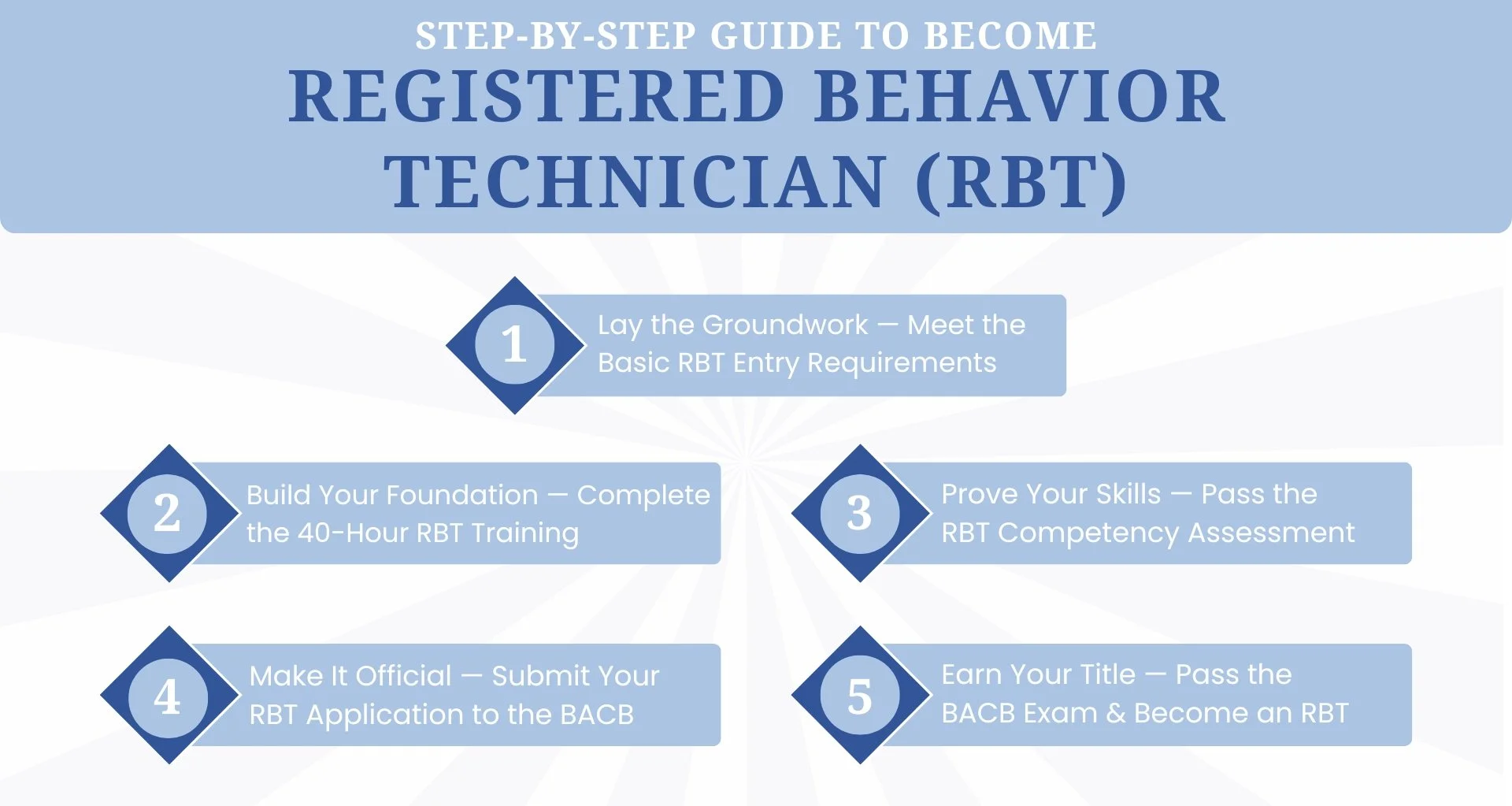
This is where the bulk of your learning happens. The 40-hour RBT training is non-negotiable. It covers all the Needed skills and knowledge you’ll need to function as an RBT in the field. Think of it as your foundational education in applied behavior analysis (ABA) techniques.
Source : mypieces.org
Finding an Authorized RBT Training Provider
You can’t just take any old course. It has to be delivered by a BACB-approved provider. These providers Make sure the curriculum meets the stringent standards set by the board. Do your homework here! Look for providers with good reviews and flexible scheduling options, especially if you’re juggling other commitments.
Course Delivery Formats
These 40-hour courses come in a few flavors. You might find them online (which is super common and flexible), in person, or even a blended approach. Online courses are often the quickest way to get through the material if you’re self-disciplined. You can often complete the 40-hour training at your own pace within a set timeframe.
Time Commitment for the 40 Hours
So, how long does the 40 hours actually take? If you dedicate yourself to it full-time, you could knock it out in a single week. Seriously. Many people spread it out over two to four weeks, fitting it in around work or family. It really depends on your personal pace and how much time you can realistically carve out. Some platforms allow you to access the materials for a set period, say 30 or 60 days, giving you flexibility.
Content Breakdown of the Training
The course itself covers a lot. You’ll dive into things like measurement and data recording, skill acquisition, behavior reduction, client dignity, and ethical considerations. It’s Full and designed to give you a solid understanding of ABA principles and their practical application. This part is Key for your future success as an RBT.
The Competency Assessment: Proving Your Skills
This is a big one, and it’s where many people realize that just learning the material isn’t enough. You have to show you can do it. The competency assessment is hands-on and practical. Your supervisor, or someone qualified, will observe you performing specific RBT tasks.
Who Conducts the Assessment?
The competency assessment must be conducted by a Qualified Practicum Supervisor, a BCBA (Board Certified Behavior Analyst), or a BCaBA (Board Certified Assistant Behavior Analyst). This is typically the same supervisor who will oversee your fieldwork hours. They’re the ones checking if you can actually implement what you learned in the 40-hour course.
The Practical Components
This assessment isn’t just a quiz. It involves observing you in simulated or real-client scenarios performing tasks like:
- Implementing discrete trial teaching.
- Using prompting and reinforcement strategies.
- Managing challenging behaviors effectively.
- Collecting accurate data.
It’s broken down into two parts: skills acquisition tasks and behavior reduction tasks. You need to demonstrate proficiency in both. This is a critical step before the exam.
Timeline for Competency Assessment
The assessment itself usually takes a few hours to complete, spread across multiple observation sessions. It’s typically done after you’ve completed your 40-hour training. The scheduling depends entirely on your supervisor’s availability and your own. Some supervisors might do it all in one day; others might spread it over a week or two. Be proactive in scheduling this!
Feedback and Retakes
If you don’t nail it the first time (which is totally okay!), your supervisor will provide feedback. You’ll then have opportunities to practice and be reassessed. Don’t get discouraged if you need a second try. It shows you’re committed to mastering the RBT skills.
Supervised Fieldwork: Getting Hands-On Experience
This is another major time commitment. The BACB requires you to accrue at least 40 hours of supervised fieldwork within the 90-day period after you complete your 40-hour training. This isn’t just about clocking hours; it’s about getting real-world experience under the guidance of a qualified supervisor.
What Counts as Supervised Fieldwork?
Actively working with clients, applying the ABA principles you’ve learned. Crucially, a significant portion of this time must be spent with your supervisor observing you directly (at least 5% of the total fieldwork hours, which works out to at least 2 hours per 40 hours of fieldwork). You’ll also have sessions where your supervisor observes you and provides feedback.
The 90-Day Window
Remember that 90-day window? It starts after your 40-hour training is complete. This means you need to plan carefully. You can’t do this fieldwork before finishing the course. This period is Key for solidifying your learning and preparing for the actual RBT certification exam. It’s a structured learning period.

Source : doublecareaba.com
Supervisor Availability is Key
Just like the competency assessment, the timeline here heavily depends on finding a supervisor and scheduling those observation hours. In Florida, many ABA centers hire Registered Behavior Technicians and provide their own supervisors. If you’re working for a company, they’ll likely have a system in place. If you’re working independently, you’ll need to contract with a BCBA/BCaBA. Availability can be a bottleneck, so start looking early!
Documentation is Non-Negotiable
You and your supervisor must meticulously document these hours. This includes dates, times, activities performed, and supervisor signatures. The BACB requires this documentation when you apply to sit for the exam. Accurate record-keeping is Top.
The RBT Certification Exam: The Final Hurdle
Once you’ve completed your training, passed your competency assessment, and finished your supervised fieldwork, you’re eligible to apply for the RBT exam. This is the final gatekeeper. It’s a standardized test administered by a third-party testing company, usually Pearson VUE.
Applying to Sit for the Exam
After you’ve submitted all your documentation (training, assessment, fieldwork) and it’s been approved by the BACB, you’ll receive an ‘eligibility email’. This email contains an Authorization to Test (ATT) and instructions on how to schedule your exam appointment. This approval process itself can take some time, so don’t expect to schedule it the day after you finish fieldwork.
Scheduling the Exam
Once you have your ATT, you contact Pearson VUE to schedule your exam. You can usually book it within a few weeks, depending on the testing center’s availability in your area. Popular locations can fill up, so if you want a specific date or time, book it as soon as you get your ATT. Scheduling is up to you now.
The Exam Itself
The exam is typically a computer-based test with multiple-choice questions. It covers the same core domains as your training: Measurement, Assessment, Skill Acquisition, Behavior Reduction, and Professionalism & Ethics. You’ll need to answer a certain number of questions correctly to pass. The exact number can vary, but it’s designed to assess your Full understanding.
Waiting for Results
You usually get your preliminary score right after you finish the exam at the testing center. A ‘pass’ or ‘fail’ will be indicated. However, the official confirmation and score report will be sent to you and the BACB later. This process confirms your eligibility and officially grants you the Registered Behavior Technician credential.
Putting It All Together: Realistic Timelines in Florida
Okay, let’s get real about the total time it takes. This isn’t a set number because everyone’s pace is different. But we can map out a typical scenario. Let’s assume you’re motivated and can dedicate consistent time.
Scenario 1: The Accelerated Path
You dive into the 40-hour training and complete it in 1-2 weeks. You have a supervisor readily available and knock out the competency assessment and the 40 hours of fieldwork within the 90-day window. Application approval takes about 2-4 weeks. Scheduling the exam is quick. You could potentially be fully certified in as little as 2-3 months.
Scenario 2: The Balanced Approach
You spread the 40-hour training over 3-4 weeks. Finding a supervisor and scheduling observations takes a bit longer, maybe a month or so to get rolling. You complete the fieldwork over the full 90 days. With application processing and exam scheduling, you’re looking at around 4-6 months from start to finish.
Scenario 3: The Slower Pace
Life happens! Maybe you’re working another job, have family obligations, or face challenges finding supervisor availability. The 40-hour training might take 6-8 weeks. The fieldwork could stretch towards the end of the 90-day period. Add in processing and scheduling delays, and you might be looking at 6-9 months, or even a bit longer. This is perfectly fine, as long as you’re progressing!
Key Factors Influencing Your Timeline
- Supervisor Availability: This is HUGE. A readily available, organized supervisor can drastically speed things up.
- Your Pace of Learning: How quickly can you absorb and apply the information?
- Scheduling Flexibility: Can you dedicate blocks of time for training and fieldwork?
- BACB Processing Times: While generally consistent, these can fluctuate.
- Pearson VUE Availability: Testing center locations and appointment slots matter.
Understanding these variables is Key for setting realistic expectations. For many, the process hovers around the 4-6 month mark. It’s a significant commitment, but the reward of a fulfilling career in ABA is well worth it.

Source : onlinerbttraining.com
Can You Speed Up The RBT Certification Process?
Yes, you absolutely can! If you’re eager to get started and want to shorten the time it takes to become an RBT, there are several strategies you can employ. It’s all about being proactive and organized.
Be Proactive with Your Supervisor Search
Don’t wait until you finish your 40-hour training to look for a supervisor. Start networking and identifying potential supervisors in Florida now. Companies often hire RBTs and provide supervision, so explore those options first if possible. Having a supervisor lined up can shave weeks off your timeline. This is perhaps the single biggest time-saver.
Choose an Accelerated Training Format
Opt for online RBT training programs that allow you to move at your own pace. If you can dedicate full days or significant chunks of time, you can complete the 40 hours in a week or two. Look for courses that offer immediate access and aren’t capped by weekly modules. Many platforms, like those offering Full ABA resources, focus on efficient learning pathways. Check out resources on RBT certification timelines for more insights.
Schedule Everything As Soon As Possible
Once you get your ATT for the exam, book your test date immediately. Don’t delay. Similarly, schedule your competency assessment sessions and fieldwork observations as far in advance as you can with your supervisor. Leaving gaps allows time to slip away. Be the driver of your schedule.
Stay Organized and Prepared
Keep all your documentation in order from day one. Have copies of your training certificates, assessment records, and fieldwork logs readily available. When it’s time to apply to the BACB, having everything organized will prevent delays. This level of preparation ensures a smoother application process.
Consider Intensive Fieldwork Schedules
If your job allows, try to arrange for more intensive fieldwork observation sessions with your supervisor. Instead of spreading them out thinly, see if you can condense them. This requires good communication and coordination but can significantly shorten the time spent accumulating those required hours. It’s about maximizing your supervised experience.
Maintaining Your RBT Certification in Florida
Getting certified is just the first step. To keep your RBT credentials active, you need to adhere to ongoing requirements. This isn’t part of the initial time to get certified, but it’s Key for staying in the field.
RBT Renewal Cycle
Your RBT certification is valid for two years. Before it expires, you’ll need to renew it. This involves a renewal application and typically requires ongoing supervision and a renewal competency assessment.
Ongoing Supervision Requirements
You must continue to receive supervision from a qualified BCBA or BCaBA. The BACB mandates a certain amount of supervision over the two-year certification period. This ensures you’re staying up-to-date with best practices and ethical standards. This is not optional for maintaining your RBT status.
Competency Assessment Renewal
Part of the renewal process involves completing another competency assessment. This is usually done once per certification period. It’s similar to the initial assessment, ensuring you’re still proficient in the required skills. It’s a way to guarantee continued competence.
Adhering to the RBT Ethics Code
All RBTs must adhere to the BACB’s RBT Ethics Code. Violations can lead to disciplinary actions, including suspension or revocation of your certification. Staying informed about ethical guidelines is a continuous responsibility for any certified professional in ABA.
Comparing RBT Certification Timelines: A Snapshot

Source : milestoneachievements.com
Let’s look at a general breakdown of the time commitment for each major phase. Keep in mind these are estimates and can vary widely based on individual circumstances and supervisor availability in Florida.
| Stage of Certification | Estimated Time Commitment | Key Activities | Notes for Florida Candidates |
|---|---|---|---|
| Eligibility & Prerequisites | 1-3 Weeks | High school diploma verification, background check processing, BACB account setup. | Background check times can vary. Make sure all documentation is correct to avoid delays. |
| 40-Hour RBT Training | 1-4 Weeks (Self-Paced) | Completing the BACB-approved online or in-person course. | Many Florida-based providers offer flexible online options. Choose one that fits your schedule. |
| Competency Assessment | 1-2 Weeks (Scheduling dependent) | Scheduling and completing practical skills observation with a supervisor. | Key to have supervisor availability locked in. This can be a bottleneck. |
| 40 Hours Supervised Fieldwork | 4-12 Weeks (Within 90-day window) | Accumulating hands-on experience and receiving direct supervision. Must be completed within 90 days post-training. | Plan this phase carefully to fit within the strict 90-day timeframe. Use resources like CentralReach for RBT timeline insights. |
| BACB Application Review | 2-6 Weeks | Submitting all documentation and waiting for BACB approval to test. | Processing times can fluctuate. Be patient but follow up if delays seem excessive. |
| Exam Scheduling & Testing | 1-4 Weeks | Booking your Pearson VUE test date and taking the certification exam. | Florida has multiple Pearson VUE centers; check locations and availability early. |
| Total Estimated Time | ~2.5 to 9 Months | Overall journey from starting requirements to passing the exam. | The average candidate often falls within the 4-6 month range. |
Handling Challenges in the RBT Certification Journey
While the path to RBT certification is well-defined, it’s not always a perfectly smooth ride. Several challenges can pop up, potentially extending your timeline or adding stress. Being aware of them can help you navigate more effectively.
Finding Qualified Supervisors
This is consistently one of the biggest hurdles. In many areas, there’s a high demand for BCBAs and BCaBAs who can provide the required supervision. If you’re not working for an agency that provides supervisors, you might spend a significant amount of time searching. This can be a major delay in your certification process.
Scheduling Conflicts
Coordinating schedules for training, competency assessments, and supervised fieldwork can be a nightmare. You have your schedule, your supervisor has theirs, and clients often have unpredictable needs. Finding mutually agreeable times requires flexibility and persistence. It’s a logistical puzzle you need to solve.
Financial Investment
While not directly a time factor, the cost associated with training, background checks, and exam fees can influence your pace. Some individuals might need to save up or work part-time while pursuing certification, naturally extending the overall timeline. It’s an investment in your future career in behavior analysis.
Understanding BACB Requirements
The BACB’s requirements can sometimes seem complex or bureaucratic. Missing a small detail in your application or documentation can lead to significant delays as you’re asked to resubmit or clarify. It pays to read all instructions carefully and double-check everything before submitting. Precision is key.
Maintaining Motivation
The RBT certification process requires sustained effort over several months. It’s easy to lose steam, especially if you encounter setbacks. Staying motivated means remembering why you started and celebrating small victories along the way. Keep your eye on the prize: making a difference in people’s lives.
Frequently Asked Questions
How fast can I get an RBT certification?
Because you’re looking to speed things up, you can sometimes get certified pretty quickly, like in a few weeks to a couple of months, if you find an intensive training program and nail the exam right away. It really depends on how fast you can get through the required 40 hours of training and then pass the competency assessment and the exam. Keep those RBT training hours in mind!
What is the highest salary for an RBT?
Honestly, the highest salaries can vary a lot based on experience, location within Florida, and the specific employer. But you could be looking at anywhere from $40,000 to potentially over $50,000 aually if you get into a supervisory role or work for a high-paying agency. It’s all about building that RBT experience and seeking out those better-paying opportunities.
Can I get a free RBT certification?
Getting a completely free certification is tough, but some employers might offer to pay for your training and exam costs as part of their hiring process, which is pretty awesome. Otherwise, you’re usually looking at out-of-pocket expenses for the training and exam fees. Keep an eye out for employer-sponsored RBT training – that’s your best bet for a free ride.
What are the main requirements to become an RBT in Florida?
You’ve gotta meet a few key things. First, be at least 18 years old. Then, you need a high school diploma or GED. You’ll also need to complete a 40-hour supervised training course that covers specific ABA tasks. After that, you have to pass a competency assessment and then the official RBT exam. Don’t forget about the background check, that’s a biggie for RBT certification requirements.
How much does RBT training cost in Florida?
The cost can really swing depending on the provider. Some online courses might be on the cheaper end, maybe a few hundred bucks, while in-person or more Full programs can go up to $1000 or even more. It’s worth shopping around to find a program that fits your budget and offers good value for your RBT certification cost.
