Forget The Slow Lane: Your No-Nonsense Guide To Becoming A Texas Electrician FAST
So, you’re looking to get into the electrical game in Texas? Good move. It’s a solid career, pays decent, and let’s be honest, there’s a real satisfaction in making things work. But nobody wants to spend half a decade slogging through red tape and slow apprenticeships, right? You want the fastest way. Period. This isn’t your grandpa’s apprenticeship manual; this is the straight dope on how to get your license and start earning, Texas-style, and we’re cutting to the chase.
Forget those dusty textbooks for a second. We’re talking about a strategic, no-fluff approach. Think of it like this: you wouldn’t try to build a house without a blueprint, and you sure as heck wouldn’t wire it up without knowing the code. Same deal here. You need a roadmap, and not just any roadmap – the express route.
This is about getting you from zero to licensed electrician with maximum speed and minimum wasted effort. We’ll cover the Needed steps, the Key decisions, and where to focus your energy because, let’s face it, time is money. Especially when you’re itching to get your hands on some real work and start building your career.
Understanding The Texas Electrician Licensing Maze

Source : fsg.com
The TDLR: Your Gatekeeper (Like It Or Not)
First things first, you need to know who’s in charge. In Texas, that’s the Texas Department of Licensing and Regulation (TDLR). These folks hold the keys to the kingdom. They set the rules, they issue the licenses, and they’re the ones you need to impress. Ignoring them is like trying to skip a toll booth – you’ll just get a nasty surprise later.
Getting licensed means playing by their book. It’s not about being the smartest guy in the room; it’s about meeting the specific, sometimes quirky, requirements they’ve laid out. Understanding their process is the absolute first step toward speed. Don’t guess; know.
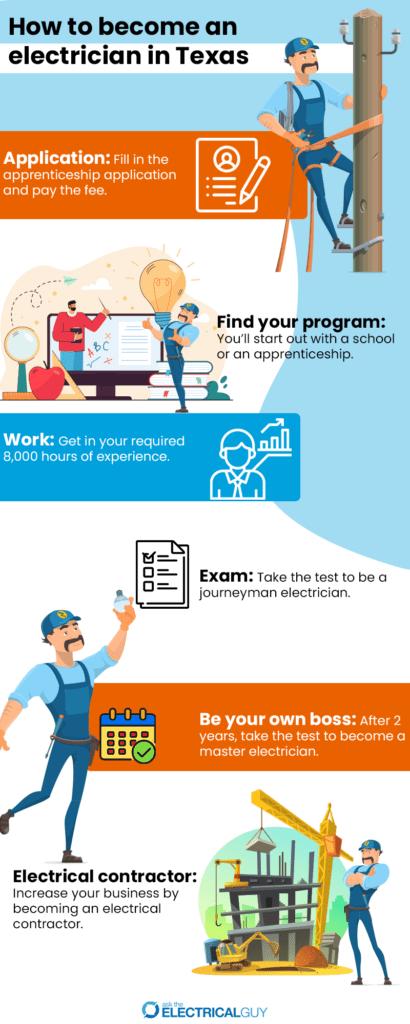
Source : asktheelectricalguy.com
The Four Horsemen of Licensing: Apprentice, Residential, Journeyman, Master
Texas has a tiered system. You don’t just become an electrician. You start as an apprentice, usually. Then, if you want to go faster, you aim for specific tracks. You’ve got the Residential Wireman, which is a good starting point for home construction.
But the real goal for most is the Journeyman Electrician license. This is the workhorse license. It means you can perform electrical work unsupervised, under the general direction of a Master Electrician. It’s the Standard for being a qualified, independent electrician. Beyond that, there’s the Master Electrician, but Journeyman is usually the immediate target for most folks aiming for quick entry.
Why Speed Matters: More Than Just Ego
Look, nobody’s in a race to get a license just for bragging rights. The speed comes from earning potential. The sooner you get that Journeyman card, the sooner you can command better pay, take on more complex jobs, and essentially, stop being the guy fetching tools and start being the guy doing the work. It’s about career momentum. A faster start means a faster climb up the ladder. It means getting your skills recognized and compensated accordingly.
The Accelerated Path: Cracking The Code (Literally)
Apprenticeship: The Necessary Evil?
Okay, let’s talk apprenticeships. Most people think this is the only way. And yeah, for many, it’s a traditional route. You clock hours, you learn on the job, you get your experience. It’s tried and true. But is it the fastest? Often, no.
The problem with some traditional apprenticeships is they can be slow-moving. You might be stuck doing basic tasks for longer than you’d like. The pace is dictated by the company, not necessarily your individual drive. However, some union or IBEW apprenticeships offer structured, Full training that can be very valuable. It’s a trade-off you need to weigh carefully.
Technical School & Certificate Programs: The Turbo Boost
This is where the “fastest way” really starts to take shape. Forget spending years waiting for an apprenticeship to ramp up. You can enroll in a reputable trade school or community college that offers an electrical technology program. These programs are designed to give you a solid foundation in electrical theory, code, and practical skills much faster than a typical on-the-job training setup.
It: a good program will immerse you. You’re learning code, wiring techniques, safety, and troubleshooting full-time. Many programs are designed to get you ready for the licensing exam in a matter of months, not years. This provides a concentrated learning experience that’s hard to beat for pure speed.
The On-the-Job Training (OJT) Advantage (When Done Right)
Even with trade school, you still need that documented work experience. Here’s the trick for speed: find a company that specifically understands the licensing requirements and is willing to let you gain the right kind of experience. Some smaller, owner-operated businesses might be more flexible. They know you’re hungry and might give you more exposure to different types of work sooner.
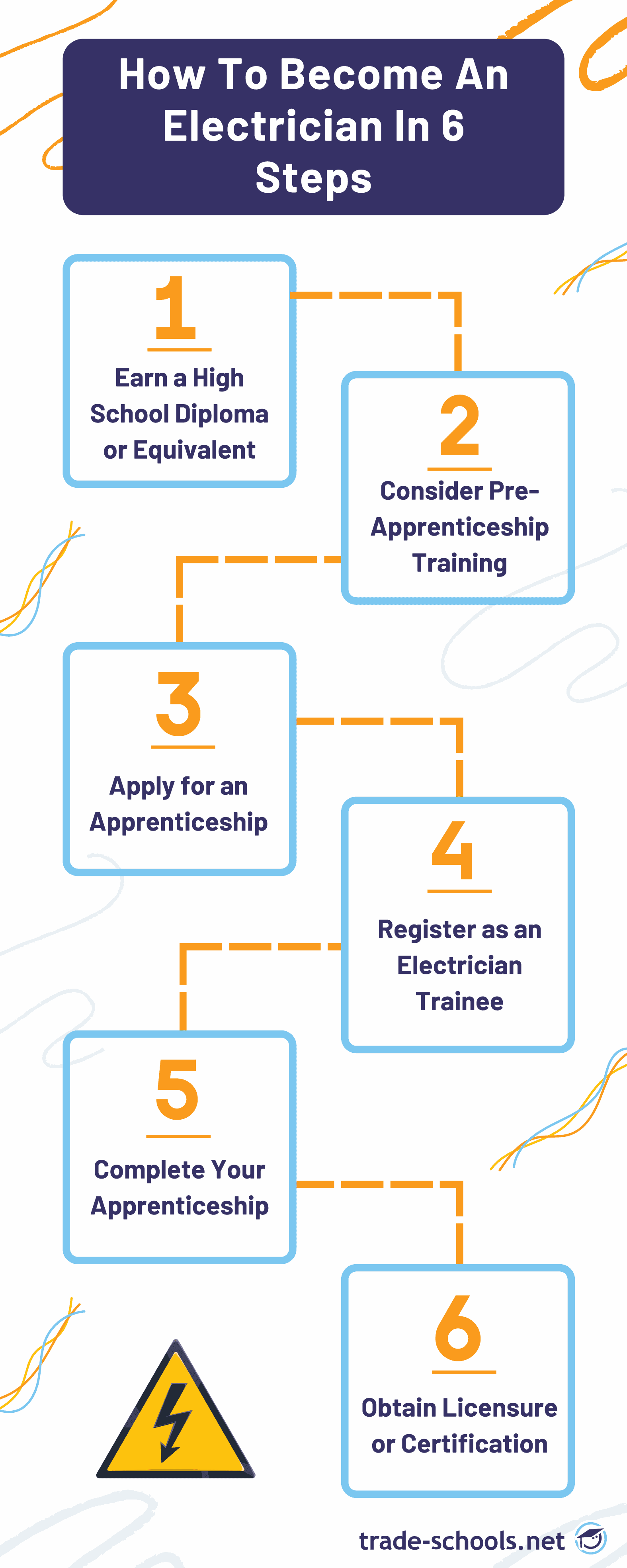
Source : trade-schools.net
The key here is intentionality. Don’t just show up. Ask questions. Express your desire to learn different aspects of the trade. Let your employer know you’re aiming for your Journeyman license and need the experience to back it up. A good mentor can make a world of difference. Don’t be afraid to be upfront about your goals. They might appreciate the drive.
The Key Four Thousand Hours: Making Every Minute Count
Understanding the Experience Requirement
Texas requires a specific amount of on-the-job training hours before you can even sit for the Journeyman exam. For Journeyman Electrician, it’s typically 8,000 hours of credited training and experience. Yes, you read that right. This is the big hurdle. This isn’t playtime; it’s serious, documented work experience under the supervision of a licensed electrician.
This experience needs to be broad, covering various aspects of electrical installation and maintenance. The TDLR wants to see that you’ve been exposed to residential, commercial, and industrial settings if possible. Documenting these hours meticulously is non-negotiable. Keep records. Get signed off. Don’t leave anything to chance.
How Trade School Counts (And How It Doesn’t)
This is where many get confused. Trade school is fantastic for learning the theory and getting hands-on practice, and it significantly reduces the amount of on-the-job training required. Specifically, completing an approved two-year electrical training program from a technical school can often substitute for 4,000 hours of the required experience. Boom! That’s a massive shortcut right there.
So, instead of needing 8,000 hours of raw OJT, you might only need 4,000 hours after completing a qualifying two-year program. That’s cutting your experience time in half. This is the core of the “fastest way.” It combines structured learning with practical application, significantly accelerating your path to eligibility.
Maximizing Your OJT Hours for Speed
Once you’ve got your trade school foundation, those remaining 4,000 OJT hours become your primary focus. How do you speed this up? Seek out employers who offer diverse work. A company doing large commercial projects will expose you to different challenges than one focused solely on residential remodels. Ask to be put on different types of jobs if possible.
Also, be proactive in your learning. Don’t wait to be told. If you see a task you haven’t done before, ask if you can shadow or assist. Show genuine interest. This not only speeds up your learning curve but also makes you a more valuable employee, which can lead to more opportunities. Remember, 4,000 hours still takes time, but it’s a much more manageable chunk when you’re focused and strategic.
The Exam: Your Final Gauntlet
The Journeyman Electrician Exam: What to Expect
So you’ve got the schooling, you’ve got the hours logged. Now comes the big test: the Journeyman Electrician exam. This isn’t a walk in the park. It’s designed to Make sure you know your stuff when it comes to electrical theory, the National Electrical Code (NEC), and practical application. Texas uses its own variations and specific requirements, so you can’t just wing it based on general knowledge.

Source : stateapproved.com
The exam is typically multiple-choice and covers a wide range of topics. Think calculations, wiring methods, grounding and bonding, hazardous locations, emergency systems, and safety. It’s Full. You’ll need to be comfortable Handling the codebook itself, as many questions require you to reference specific sections.
Study Smarter, Not Harder: Ace the Test
This is not the time for cramming the night before. You need a structured study plan. Many trade schools offer exam prep courses, which are highly recommended. They’ll help you focus on the most commonly tested areas and teach you test-taking strategies.
Invest in good study materials. Practice exams are your best friend. They simulate the real test environment and help you identify weak spots. Look for resources that are specific to the Texas Journeyman exam. Don’t rely on generic electrician exam prep if you can help it. Focus on understanding the why behind the code, not just memorizing rules. That’s how you truly internalize the knowledge needed to pass.
Handling the TDLR Application Process
While you’re studying, don’t forget the paperwork! You need to submit a formal application to the TDLR. This includes proof of your education and experience. Get this done early. Delays in processing applications can hold up your ability to even schedule the exam.
Make sure every box is ticked. Double-check your forms. Make sure your experience is signed off correctly by your supervising electrician(s). The TDLR website is your bible here. Look for the specific application forms and instructions for Journeyman Electrician applicants. Getting the application right the first time saves you time and headaches.
The Fastest Route: A Sample Timeline (Aggressive!)
Year 1: Foundations & Initial Hours
Okay, let’s map out an aggressive timeline.
Month 1-9: Full-time enrollment in an accredited two-year electrical technology program at a community college or trade school. This covers the bulk of your theoretical knowledge and hands-on training, equivalent to 4,000 hours. You’re learning safety, code, theory, and practical skills like conduit bending, wiring, and panel work. This is intensive. You live and breathe electricity.
Month 10-12: Secure a position as an electrical apprentice or helper. Focus intensely on getting your remaining 4,000 hours of OJT. You’re now applying what you learned in school to real-world jobs. You’re likely assisting a Journeyman or Master, learning site-specific procedures and gaining practical speed.
Year 2: Compressing OJT and Exam Prep
Month 13-20: Continue accumulating your 4,000 OJT hours. Work diligently. Seek out diverse job sites. Push yourself to learn new skills. Maintain Careful records of your hours and tasks performed. This phase is about practical application and building confidence under supervision.
Month 21-24: As you near your 4,000 OJT hour completion, shift focus heavily towards exam preparation. Enroll in a dedicated Journeyman exam prep course. Take practice exams religiously. Review the NEC and any relevant Texas-specific amendments. Make sure your TDLR application is finalized and submitted.

Source : wikihow.life
The Finish Line: License in Hand
Month 24+: You should be eligible to schedule your exam. Pass the exam! Once approved by the TDLR, you receive your Journeyman Electrician license. Congratulations! You’ve just become a certified electrician in Texas in roughly two years. This is significantly faster than many traditional paths, which can take 3-5 years or even longer.
This timeline is demanding. It requires dedication, discipline, and a strategic choice of educational and employment opportunities. It’s not for the faint of heart, but it is achievable for those serious about getting into the trade quickly and effectively.
Needed Tools for Your Speedy Success
The Codebook: Your Most Important Tool
Seriously, the National Electrical Code (NEC) book is your new best friend. You need the current version, obviously. Texas adopts and sometimes amends the NEC, so make sure you’re studying the right edition. You need to know how to navigate it quickly – page numbers, index, tables. Most exam questions require you to find the answer within the codebook.
Get a copy you can write in (if allowed for the exam – check rules!). Highlight key sections. Make notes. The more familiar you are with its layout and content, the faster you’ll be during both your studies and the actual exam. It’s the law, and it’s your cheat sheet, all rolled into one.
Study Guides and Practice Exams
Generic study won’t cut it. You need materials tailored for the Texas Journeyman exam. Look for books and online courses that offer:
- Full review of NEC topics.
- Practice questions mirroring the exam format.
- Simulated timed exams.
- Explanation of answers, especially for calculations.
- Information on Texas-specific requirements or amendments.
Finding these resources can make the difference between passing and failing, and ultimately, speed. Don’t skimp here.
A Supportive Employer and Mentor
This is Crucial. The fastest path isn’t just about you; it’s about who you’re working with. Find an employer who is willing to train you, provide diverse experiences, and sign off on your hours without hassle. A good mentor – a seasoned Journeyman or Master – can answer your questions, offer guidance, and help you avoid common pitfalls. They’ve been there, done that, and can accelerate your learning curve dramatically.
What NOT To Do If You Want Speed
Don’t Skip Formal Education
While some people might claim they learned everything on the job, skipping a structured technical program is usually a mistake if speed is your goal. Trade school compresses learning. It ensures you cover all the Needed theoretical bases that might take years to encounter randomly on job sites. It’s the foundation that makes your OJT more efficient.

Source : wikihow.life
Don’t Underestimate the NEC
Thinking you can just “wing it” on the code is a recipe for disaster and a massive time-waster. The NEC is dense. It’s detailed. It’s the standard. You must learn it. Relying on hearsay or incomplete knowledge will lead to errors, failed exams, and ultimately, a slower journey. Treat the codebook with the respect it deserves.
Don’t Neglect Documentation
Those hours need to be documented. Perfectly. If your employer doesn’t have a system, create one. Keep a log. Get signatures. The TDLR will scrutinize this. A missing signature or an incomplete record can set you back months, potentially forcing you to re-do hours. This is the opposite of speed. Get organized from day one.
The Finish Line Is Just the Beginning
Becoming a certified electrician in Texas is a goal worth pursuing. And aiming for the fastest way is smart. By combining a solid technical education with strategic on-the-job training and diligent exam preparation, you can significantly shorten the time it takes to earn your Journeyman license.
Remember, this aggressive path requires commitment. It’s about working smarter, focusing your efforts, and leveraging the educational shortcuts available. It’s your career, and taking control of its trajectory from the start is the best move you can make. Now, go get that license!
| Factor | Fastest Track (with Trade School) | Traditional Path (No Trade School) | Notes |
|---|---|---|---|
| Formal Education | Approved 2-Year Program (e.g., 4000 hrs equivalent) | Minimal/None (On-the-job learning only) | Trade school significantly reduces required OJT. |
| On-the-Job Training (OJT) Hours | 4,000 documented hours | 8,000 documented hours | Formal education can halve the OJT requirement. |
| Total Time to Eligibility (Estimate) | Approx. 2 Years | Approx. 4-5 Years | Assumes full-time study/work. |
| Exam Preparation | Intensive, focused prep in final months | Ongoing learning on the job, less structured exam focus | Dedicated prep is Key for passing quickly. |
| Initial Investment | Tuition for trade school + OJT wages | Lower initial cost, but longer time to higher wages | Trade school is an investment in faster earning potential. |
| Career Start | Eligible for Journeyman at ~2 years | Eligible for Journeyman at ~4-5 years | Faster start means quicker salary increases. |
Frequently Asked Questions
How long does it take to get electrician certified in Texas?
Because Texas has specific training requirements, the fastest way to get certified usually involves a combination of on-the-job training and classroom instruction. Typically, you’re looking at around 4,000 hours of on-the-job experience, which usually shakes out to about 2 years, plus your classroom time. Some accelerated programs can shave off time, but you still need that experience.
How much does a 2 year electrician apprentice make in Texas?
Pay for apprentices really varies, dude. Depends on the company, if you’re union or not, and where in Texas you are. But, for a 2-year apprentice, you might see anywhere from $15 to $25 an hour, maybe more if you’re really killing it. It’s a solid way to earn while you learn the electrician trade.
What are the minimum requirements to start an electrician apprenticeship in Texas?
Usually, you gotta be at least 18, have a high school diploma or GED. Then, you’ll likely need to pass a background check and a drug test. Some employers might also want you to have a valid Texas driver’s license. Gotta be ready to put in the work!
Are there trade schools that offer faster electrician training in Texas?
Yeah, absolutely! Trade schools and some union programs offer structured apprentice programs that can be more efficient. They combine classroom learning with required on-the-job hours, helping you meet the state’s requirements. It’s often seen as a more direct route than just finding random jobs.
What’s the difference between a residential and commercial electrician in Texas?
Good question! Residential electricians mostly deal with homes – wiring, lighting, outlets in houses. Commercial electricians handle bigger jobs, like in office buildings, factories, or schools. More complex systems, higher voltages, you know? Both need to be certified, but the work environment and types of projects are different.
