The Real Timeline: From Apprentice to Journeyman Electrician
So, you’re thinking about becoming an electrician, huh? Maybe you’re tired of the grind, looking for a trade that’s always in demand, or just love figuring out how things work. Whatever your reason, the path to becoming a journeyman electrician isn’t some overnight miracle. It’s a journey, and it takes time, grit, and a solid plan.
Forget those quick-fix promises. This is about building a real career, a skill set that pays the bills and earns respect. We’re talking about the nitty-gritty, the hours, the schooling, the exams – the whole shebang. It’s not just about getting a license; it’s about becoming a damn good electrician.
Let’s break down what it really takes, step by agonizing, rewarding step. This isn’t your typical dry, academic breakdown. This is the straight dope, from someone who’s seen it, done it, and maybe even tripped over a few extension cords along the way.
The Starting Line: What You Need Before You Even Begin
Source : trade-schools.net
Basic Eligibility Requirements: Not Just Anyone Can Walk In
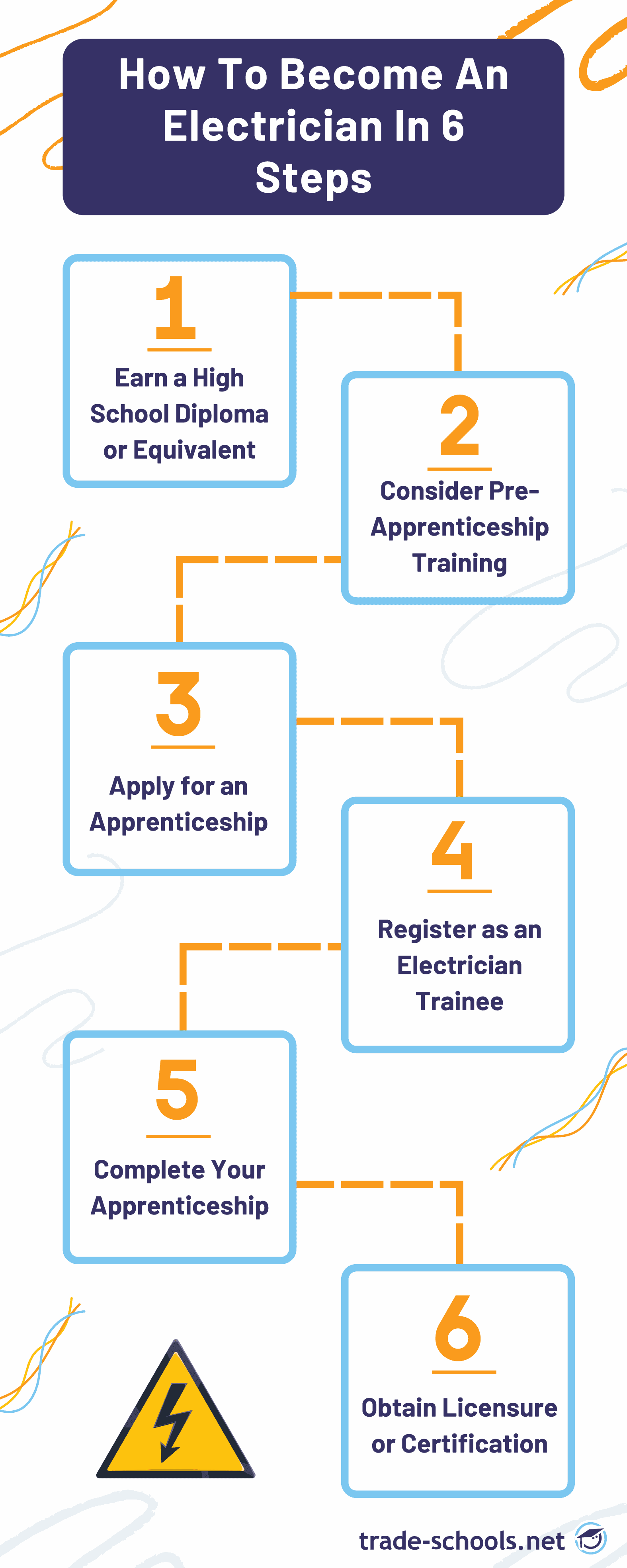
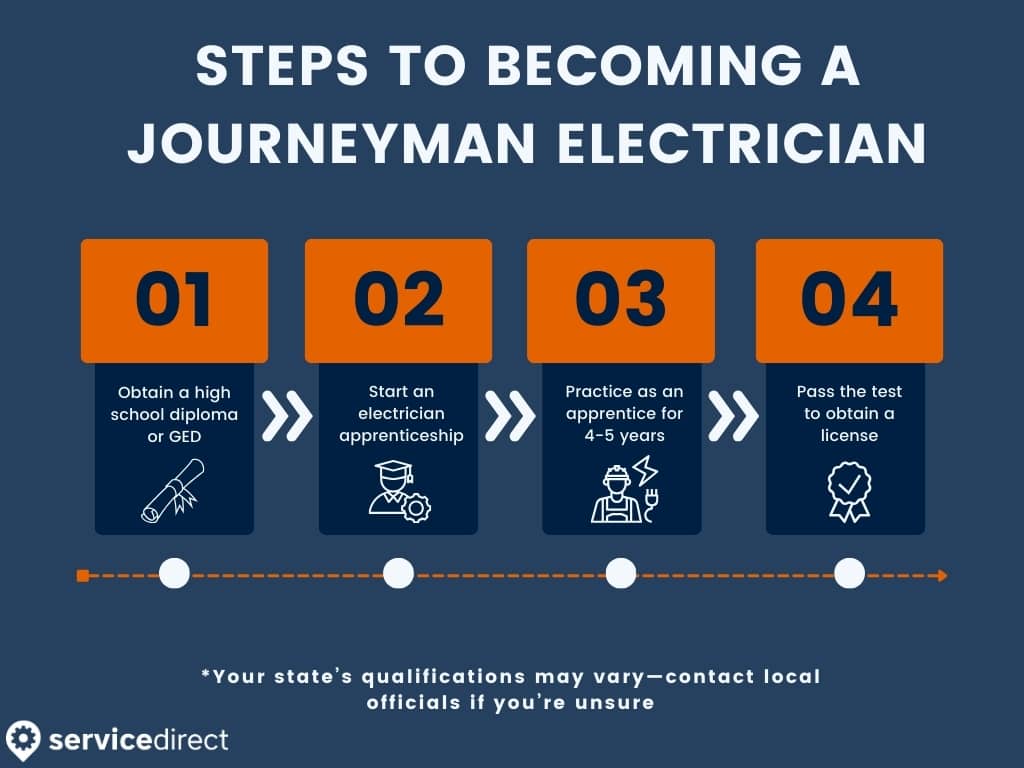
First things first, you can’t just show up with a toolbox and declare yourself ready. There are prerequisites. Most places want you to have a high school diploma or a GED. Seriously. It’s not about advanced calculus, but it shows you can follow instructions and commit to something.
You also need to be at least 18. No child labor here, folks. And let’s be blunt: you gotta be physically capable. This job isn’t for the faint of heart or the easily winded. We’re talking about climbing ladders, crawling in tight spaces, and hauling equipment. A solid physical foundation is non-negotiable.
Minimum Age and Education: The Gatekeepers
Again, 18 is the magic number for most apprenticeship programs and state licenses. Some programs might even push it to 19. Think of it as a rite of passage. You need to be a legal adult to sign contracts and take on the responsibilities that come with this trade.
Source : asktheelectricalguy.com
The education piece is Key. While you won’t be writing dissertations, a good grasp of basic math is Needed. You’ll be dealing with circuits, load calculations, and voltage drops. If you flunked algebra, you might want to brush up. Some programs even require specific vocational courses from high school, like shop classes or technical drawing.
Background Checks and Drug Screens: Keeping It Clean
This might come as a surprise, but many employers and unions want to see a clean record. They’re trusting you with people’s safety and expensive equipment. A criminal background check is pretty standard. Same goes for drug tests. If you’re planning on a career in the trades, especially one involving safety protocols, you need to be on your best behavior.
It’s not about being perfect, but certain offenses can be deal-breakers. Think about it: would you want an electrician working in your house if they had a history of theft or serious drug offenses? Probably not. So, yeah, expect to get vetted. It’s part of the deal for becoming a trusted professional.
The Apprenticeship Gauntlet: Where the Real Work Begins
Finding an Apprenticeship: The Hunt is On
Okay, you meet the basic criteria. Now what? You gotta find an apprenticeship. This is your golden ticket. There are a few main avenues: local unions (like the IBEW), non-union contractor associations, or sometimes even direct hire by a large company. Each has its own process.
Unions often have rigorous application periods, written tests, and interviews. Non-union programs might be more straightforward but can vary wildly in quality. Do your homework! Research the programs in your area. Talk to electricians. Ask about their experiences. The goal is to find a program that offers Full training and a clear path to earning while you learn.
Apprenticeship Structure: On-the-Job Training Meets Classroom
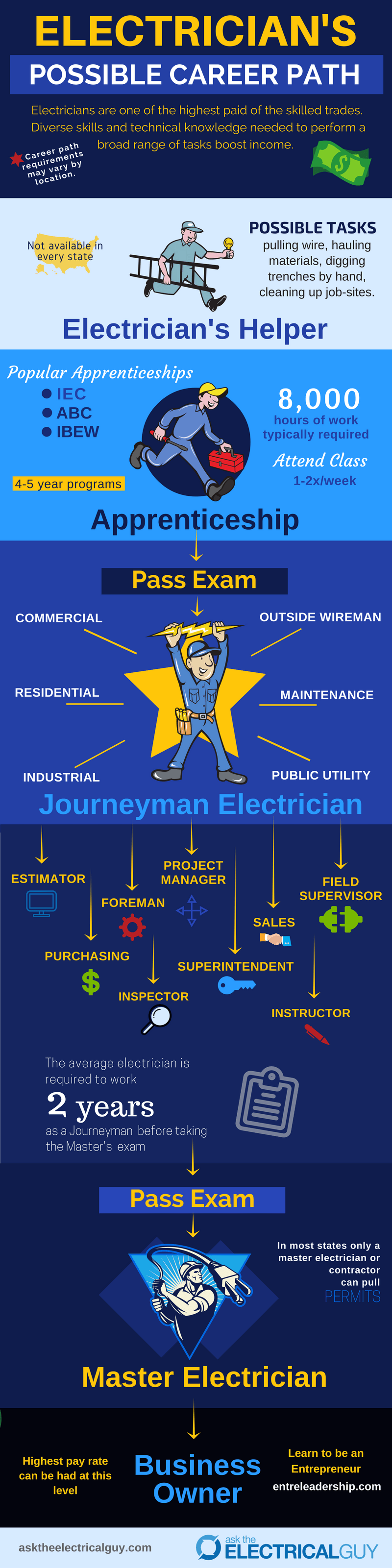
Apprenticeships are the backbone of electrician training. They’re designed to give you real-world experience while you’re still under supervision. You’ll spend most of your time on job sites, working alongside experienced journeymen and masters. You’ll learn by doing: pulling wire, installing conduit, making terminations, troubleshooting.
But it’s not all physical labor. You’ll also have required classroom hours. This is where you learn the theory: electrical codes (the NEC is your bible), blueprint reading, safety regulations, motor controls, and all that good stuff. Think of it as the ‘why’ behind the ‘how’ you’re doing on the job. This blend is Key for developing well-rounded electrical skills.
Duration of Apprenticeship: Patience, Young Padawan
This is the million-dollar question, right? How long does it take? Generally, most apprenticeship programs last between four to five years. That’s not a suggestion; it’s a requirement. You’ll typically need to log a minimum number of on-the-job hours (often around 8,000) and complete a set number of classroom hours (usually 500-1000).
Some programs might be slightly shorter, especially specialized ones, but the four-to-five-year mark is the industry standard for a reason. It ensures you get enough diverse experience to be truly competent. Rushing this process is a recipe for disaster. You need to see a variety of projects – residential, commercial, industrial – to truly understand the scope of the trade. This is a commitment, folks, not a sprint. Check out resources like DeltaWye’s guide for more on typical timelines.

Source : fieldpromax.com
The Educational Component: More Than Just Swinging a Hammer
Trade School vs. Apprenticeship Classroom Time
Let’s clear up a common confusion. Sometimes people go to trade school instead of an apprenticeship. Others do trade school as part of their apprenticeship. It depends on the program and the state. Many union apprenticeships include required classroom instruction as part of the program, often at their own training centers.
Non-union apprenticeships might contract with local community colleges or private trade schools for the required coursework. Some individuals might even opt for a pre-apprenticeship program at a trade school to get a head start, though this doesn’t replace the formal apprenticeship hours. Understanding the distinction is key to planning your educational pathway.
Curriculum: What You’ll Actually Learn
What’s in those classroom hours? A lot. You’ll dive deep into the National Electrical Code (NEC). This is the rulebook for electrical installations in the US. It’s dense, complex, and absolutely Key. You’ll learn how to interpret it, apply it, and use it to Make sure safe installations.
Blueprint reading is another big one. You need to understand architectural and electrical drawings to know where everything goes. You’ll also cover electrical theory – AC/DC, Ohm’s Law, power formulas. Safety training is Top: lockout/tagout procedures, working with energized circuits, hazard recognition. Depending on the program, you might also learn about motor controls, lighting systems, fire alarm systems, and even basic plumbing and carpentry for context. It’s a surprisingly broad education designed to make you a competent problem-solver.
Hours and Intensity: It’s Not a Vacation
Those classroom hours aren’t just a few evenings here and there. Typically, you’re looking at around 500-1000 hours spread over your apprenticeship. This often translates to one or two evenings a week, or sometimes a full day every couple of weeks. It demands dedication.
It: you’re working a full-time (or near full-time) job on the tools, and then you have to go to school. It’s exhausting. You’ll be tired. You’ll have homework. You’ll have tests. It requires discipline and a genuine commitment to mastering the trade. This is where you build the theoretical knowledge base.
State Licensing: The Official Stamp of Approval
Why Licensing Matters: It’s Not Optional
Once you’ve completed your apprenticeship – clocked those thousands of hours and passed all your coursework – you’re eligible to test for your license. In most states, you can’t legally call yourself a journeyman electrician and pull permits or work independently without one. It’s the government’s way of saying, “Yep, this person knows their stuff and won’t burn your house down.
The specific requirements vary significantly by state. Some states have reciprocal agreements, meaning your license is valid elsewhere, but many don’t. You need to know the rules for the specific jurisdiction where you plan to work. This is a critical step for career advancement and legal compliance.
The Journeyman Exam: Prepare for Battle
This isn’t your high school final. The journeyman exam is tough. It’s designed to test your practical knowledge, your understanding of the NEC, and your ability to apply that knowledge to real-world scenarios. You’ll be answering questions about conduit bending, load calculations, circuit protection, grounding, and a whole lot more.
Source : blog.servicedirect.com
Many states use the International Code Council (ICC) exam, or something very similar. You’ll be given a copy of the NEC book (sometimes an annotated version, sometimes just the raw code) and allowed to use it during the test. The trick is knowing how to find the information quickly and efficiently. Practice tests are your best friend here. Many folks spend months studying specifically for this exam. Passing it is a massive accomplishment and a key milestone in your career.
Variations by State: A Patchwork Quilt
Here’s where it gets messy. Every state does its own thing. Some states, like California, have very rigorous licensing requirements and multiple tiers. Others, like Texas, are more localized, with city or county licensing being more common than state-level. Florida, for instance, has specific requirements that differ from its neighbors; you can learn more about Florida’s process.
Some states might require more on-the-job hours than others, or different combinations of schooling and experience. Some might not even require a state license at all, leaving it up to local jurisdictions or individual employers. This variability means you absolutely must research the specific regulations where you live and plan to work. Don’t assume the rules are the same everywhere. It impacts your entire timeline and requirements.
Beyond the Basics: Different Paths and Timelines
The Accelerated Path: Trade School First
Some individuals opt for a more accelerated route by attending a dedicated trade school before seeking an apprenticeship or entry-level position. These programs can be intensive, often running full-time for several months to a year or two. They aim to provide a solid foundation in electrical theory, code, and basic hands-on skills.
While this can sometimes shorten the overall time to becoming a journeyman (by potentially making you a more attractive candidate for apprenticeships or allowing you to test out of certain classroom requirements), it doesn’t eliminate the need for significant on-the-job experience. You still need those 8,000 hours. Think of trade school as a head start, not a shortcut past the core requirements. It’s a way to build a strong foundational knowledge.
Military Training: A Structured Route
The military offers extensive training in electrical systems, often highly specialized and practical. Many service members gain valuable experience in fields like avionics, power production, or communications electronics. Upon honorable discharge, this experience can often be leveraged to shorten the apprenticeship period or count towards the required hours.
Transitioning veterans can find that their military training provides a significant advantage. Many apprenticeship programs actively recruit veterans. However, you’ll still likely need to bridge any gaps in specific code knowledge (like the NEC) or satisfy state-specific requirements. It’s a structured path that can offer a unique set of skills.
Residential vs. Commercial/Industrial: Different Tracks
It’s worth noting that apprenticeships can sometimes be specialized. Some focus heavily on residential wiring (think houses, apartments), while others concentrate on commercial (office buildings, retail spaces) or industrial settings (factories, power plants). The skills and knowledge base, while overlapping, can diverge.
Industrial apprenticeships, for example, might involve more complex systems, higher voltages, and more specialized equipment. Commercial work often requires a deep understanding of large distribution systems, lighting controls, and low-voltage systems. Choosing a path can influence your experience and, to some extent, your future career trajectory. It’s about finding the right fit for your interests.
The Cost and Earning Potential: Investing in Your Future

Source : careersidekick.com
Costs Involved: More Than Just Sweat Equity
Let’s talk money. While apprenticeships are often structured as “earn while you learn,” there are still costs. You might have tuition fees for classroom instruction, especially in non-union programs or if you choose to attend trade school beforehand. Tool costs can add up quickly – you’ll need a quality set, and they aren’t cheap.
There are also exam fees for licensing, application fees for programs, and potentially the cost of study materials. Safety gear, work boots, and specialized clothing add to the expense. While you’re earning an income, these upfront and ongoing costs are real. Budgeting is key. Consider it an investment in your earning power.
Wages During Apprenticeship: Earning as You Learn
The beauty of a structured apprenticeship is that you’re not just working for free. You start earning from day one, though at a lower rate than a journeyman. Your pay increases incrementally as you progress through the program and gain more skills and experience. Union apprenticeships often have very clear, standardized pay scales.
Non-union programs can vary more, but the principle is the same: you earn progressively more as you move towards journeyman status. It’s a significant advantage over unpaid internships or purely academic programs. This steady income makes the training financially viable for many.
Journeyman Wages and Beyond: The Payoff
Once you pass that journeyman exam and get licensed, your earning potential jumps significantly. Journeymen electricians are skilled tradespeople with a sought-after skillset. Wages vary by location, industry sector (residential, commercial, industrial, prevailing wage/union jobs often pay more), and experience level.
But it doesn’t stop at journeyman. Many electricians continue to work as journeymen for years, gaining specialized skills. Others pursue further training and experience to become master electricians, supervisors, project managers, or even start their own businesses. The ceiling for earnings can be quite high for those who continue to develop their expertise. The Auto.edu guide touches on the earning potential that comes with this career.
A Sample Timeline Breakdown: Putting It All Together
Year 1-2: The Foundations
In the first couple of years, you’re the grunt. You’re learning the basics: safety, tool identification, basic conduit bending, wire pulling, and assisting journeymen. You’re absorbing information like a sponge on job sites and attending your initial classroom sessions. You’re likely earning apprentice wages, maybe in the $15-$25/hour range depending on your location and program.
You’ll be introduced to the NEC and basic blueprint reading. The focus is on getting comfortable with the tools, the environment, and the fundamental safety protocols. This phase is Key for building a solid understanding of core tasks.
Year 3-4: Building Proficiency
Now you’re starting to handle more responsibility. You can probably run conduit, pull larger wires, make basic terminations, and troubleshoot simpler issues under supervision. You’re becoming more familiar with different types of installations (residential, commercial). Your classroom work delves deeper into more complex code requirements, motor controls, and specialized systems.
Your pay rate increases as you progress. You’re starting to feel like a valuable member of the team, not just the new kid. You’re developing a feel for the work, an intuition that comes from experience. This is where the practical skills really solidify.

Source : esfi.org
Year 4-5: The Final Push and Licensing Prep
In the last year or two, you’re expected to work with greater independence. You might be running small jobsites or leading a small crew of newer apprentices. You’re handling complex installations and troubleshooting difficult problems. Your classroom curriculum is focusing heavily on exam preparation, code updates, and advanced topics.
You’ll be eligible to apply for your journeyman license exam. You’ll spend significant time studying, taking practice tests, and preparing mentally for the challenge. This is the culmination of your apprenticeship – the moment you prove you’re ready to be a licensed professional. Successfully Handling this final stage is about demonstrating mastery.
Data Table: Comparing Apprenticeship Pathways
| Factor | Union Apprenticeship (e.g., IBEW) | Non-Union Independent Training | Private Trade School (Pre-Apprenticeship) |
|---|---|---|---|
| Duration | 4-5 years (typical) | Varies widely (3-5 years often) | 6 months – 2 years (for initial training) |
| OJT Hours Required | ~8,000 hours (standardized) | ~8,000 hours (varies by program/state) | Does not typically include OJT; supplements it |
| Classroom Hours Required | ~500-1000 hours (integrated) | ~500-1000 hours (often contracted out) | Variable; counts towards some requirements |
| Cost to Apprentice | Minimal to none (often employer-funded) | Can involve tuition fees or program costs | Significant tuition fees |
| Starting Wage | Structured, progressive pay scale | Can vary; potentially lower starting point | No wages during training; may require funding |
| Benefit Package | Often includes health insurance, pension | Varies greatly by employer | Typically none |
| Job Placement Assistance | Strong placement support within the union | Varies; employer-dependent | Often available, but independent job search required |
| Curriculum Rigor | Highly standardized, code-focused | Can vary; research program quality | Intensive initial training; may lack full code depth |
| Union Membership | Required | Not required | Not required |
Is It Worth It? The Long Game
Let’s be real. The timeline to become a journeyman electrician is Large. We’re talking a minimum of four years, often five, of hard work, schooling, and on-the-job training. Add to that the prerequisite education and the hurdle of the licensing exam, and you’ve got a significant commitment.
But consider the payoff. You’re entering a trade that is consistently in demand. Electricians are Needed in construction, maintenance, and technological advancement. You gain a skill that’s difficult to automate and provides a stable, often well-compensated career. It’s a path to becoming a respected, skilled professional with tangible contributions.
It’s not just a job; it’s a craft. It requires problem-solving, critical thinking, and continuous learning. If you’re willing to put in the time and effort, the journey from apprentice to journeyman electrician is one of the most rewarding paths you can take in the skilled trades. The long-term career prospects are excellent.
Frequently Asked Questions
How long from apprentice to journeyman electrician?
Because it varies by state and program, but generally, you’re looking at around 4 to 5 years to go from an apprentice to a journeyman electrician. Some programs might be a bit shorter, others a bit longer, depending on the schooling and on-the-job training involved.
How many hours does an apprentice need to become a journeyman?
But the magic number for hours is usually somewhere around 8,000 hours of on-the-job training. Add to that a few hundred hours of classroom instruction, and you’re golden. It’s a lot of time on your feet, learning the ropes!
How to make $100,000 as an electrician?
To crack the $100k mark, you’ll likely need to move beyond basic journeyman work. Think about specializing in high-demand areas like industrial or commercial projects, becoming a master electrician, starting your own business, or taking on specialized roles like project management or even high-voltage work. Experience and skills really pay off.
What are the typical requirements to become a journeyman electrician?
Besides racking up those 8,000 hours of on-the-job training, you’ll need to complete a certain amount of technical instruction, usually a few hundred hours. Then, you gotta pass a pretty tough licensing exam. Each state has its own specific rules, so check with your local licensing board.
Can I become a journeyman electrician faster through an apprenticeship program?
Yeah, for sure! Structured apprenticeship programs are designed to get you there efficiently. They combine the necessary on-the-job hours with classroom learning, often making the path more direct and predictable than trying to piece it together yourself. Plus, you get paid while you learn!
