So, you’re eyeing that career path, the one that sits at the quiet, profound crossroads of life and death. Becoming a hospice nurse – specifically, getting that certification under your belt – isn’t just about adding letters to your name. It’s about dedication, sure, but also about time. How long does it really take to get certified as a hospice RN? Let’s cut through the fluff and get down to brass tacks. Forget the generic timelines; this is the nitty-gritty.
The Road to RN: Foundational Education
Associate Degree in Nursing (ADN) – The Quickest Route
Look, if you’re eager to get moving, an ADN is your fast track. We’re talking about a two-year program here. It gets you licensed and ready to hit the ground running, or at least walking briskly, towards that RN title. It’s dense, it’s demanding, but it’s achievable if time is your biggest constraint right now.
Bachelor of Science in Nursing (BSN) – The Gold Standard
Now, the BSN. This is usually a four-year commitment. While some might see it as longer, many employers and definitely hospice organizations often prefer candidates with a BSN. It signifies a deeper dive into theory, leadership, and critical thinking – skills that are, frankly, non-negotiable in hospice care. You get a broader nursing education here.
The NCLEX-RN Exam: Your Gatekeeper
Once you’ve got your degree, diploma in hand, you absolutely have to pass the NCLEX-RN. This isn’t some pop quiz. It’s a rigorous national exam designed to test your competency. Failing it means hitting the brakes hard. Passing it means you’re officially a Registered Nurse and can start building that Key experience.
Accreditation Matters (Don’t Skip This!)
Before you even sign up for a program, check its accreditation. Is it recognized? Will your credits transfer? Nobody wants to waste years in a program that doesn’t hold water in the real nursing world. A legitimate nursing program is the bedrock of your entire journey.
Gaining the Needed RN Experience

Source : allnursingschools.com

Source : carerev.com
Entry-Level RN Positions: Where Do You Start?
Most hospice certification pathways require you to have worked as an RN first. You can’t just jump into specialized hospice training straight out of school. You’ll need to find a job as a licensed RN. This could be in a hospital, a clinic, or a long-term care facility. It’s where you hone your core nursing skills.
Building Your Clinical Toolkit
In these early RN years, you’re not just clocking hours; you’re building your practical experience. Think about managing complex cases, administering medications (especially pain management, which is huge in hospice), wound care, and Key sign monitoring. These are the foundational nursing skills that hospice care builds upon.
The Minimum Experience Hurdle for Certification
Here’s a key point for certification: most require a certain amount of hands-on nursing experience. Often, this is at least one to two years of experience as a practicing RN. Some specialized certifications might even want more, especially if you’re aiming for advanced credentials.
Handling Different Healthcare Settings
Don’t limit yourself to just one type of setting during these initial years. Experiencing different environments – acute care, sub-acute, skilled nursing facilities – gives you a broader perspective. This exposure helps you understand various patient conditions and develop versatile nursing skills.
The Specialized Hospice Training Pathway
What is Hospice Care, Really?
Hospice isn’t just about making patients comfortable; it’s a Overall approach. It involves managing pain and symptoms, but also providing emotional, spiritual, and psychological support to patients and their families. Understanding this philosophy is critical. It’s more than just medical care.
Direct Hospice Experience: The Real Deal
To become hospice certified, you’ll likely need direct experience within a hospice setting. This means working with patients who have a terminal prognosis. You’ll be learning the ins and outs of palliative care, end-of-life symptom management, and family support. You can get this through various roles: home health hospice, inpatient hospice units, or nursing facilities with dedicated hospice programs. This is where you learn hospice specifics.
Internal Training and Mentorship
Many hospice agencies offer their own internal training programs for new hires. These programs are Crucial. They often cover specific protocols, ethical considerations, and the emotional aspects of hospice care. Mentorship from experienced hospice nurses is also a huge part of this. You can’t underestimate the power of learning from seasoned pros.
Understanding the Certification Requirements
The exact requirements for certification vary. For instance, the Certified Hospice and Palliative Nurse (CHPN) credential, offered by the Hospice and Palliative Credentialing Center (HPCC), has specific prerequisites. This includes a certain number of hours of hospice and palliative nursing practice. You’ll need to meet specific eligibility criteria.
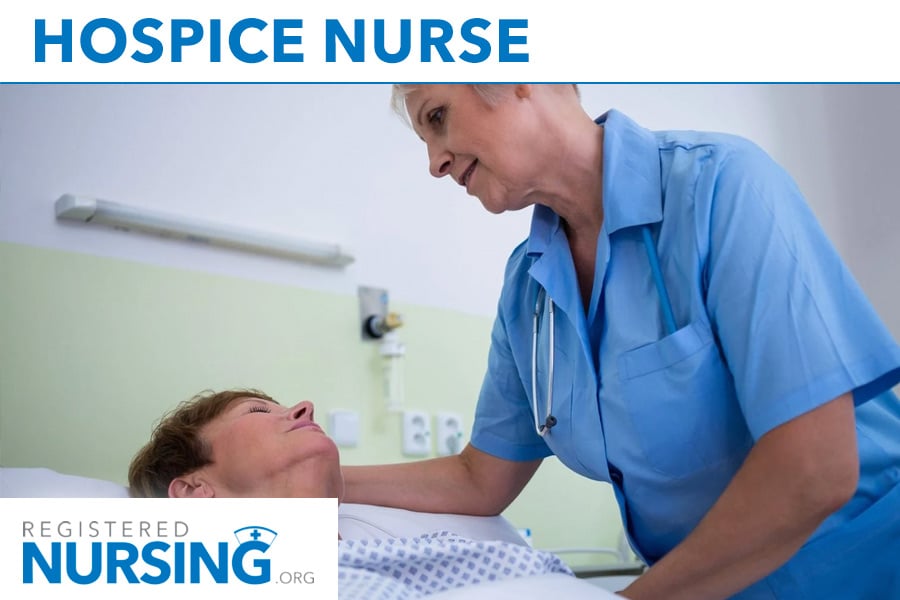
Source : registerednursing.org
The Big Kahuna: Hospice Nurse Certifications
Certified Hospice and Palliative Nurse (CHPN)
This is arguably the most recognized and respected hospice nursing certification. To even be eligible for the CHPN exam, you typically need:
- A current, unencumbered RN license.
- At least 500 hours of direct patient care experience in hospice and palliative nursing within the last 12 months, OR 1,000 hours within the 24 months preceding the application.
- This is a serious commitment to specialized hospice knowledge.
Certified Hospice and Palliative Pediatric Nurse (CHPPN)
If your passion lies with children, this is the certification for you. The CHPPN has similar experience requirements but focuses specifically on pediatric end-of-life care. It’s a niche, but incredibly important, area. You need that specific pediatric focus.
The Exam Itself: What to Expect
The certification exams are not a walk in the park. They are Full, testing your knowledge across a wide range of hospice and palliative care topics. You’ll need to study diligently. Think pathophysiology, pain and symptom management, ethical issues, communication strategies, and psychosocial support. Success hinges on thorough preparation.
Time Investment for the Certification Process
So, how long does the certification part take? After meeting the experience requirements (which, remember, takes 1-2 years post-RN licensure minimum), the application and study process can add several more months. Preparing for and passing the exam might take another 3-6 months of dedicated study and application processing time.
Calculating the Total Time Commitment
Scenario 1: The Speedy Route (ADN + Experience + Certification)
Let’s say you go for the ADN. That’s 2 years. Add another 1-2 years of RN experience. Now, factor in the time to meet the hospice experience hours and study for the CHPN exam – let’s budget 6 months to be safe. Total: Roughly 3.5 to 4.5 years from starting nursing school to getting your CHPN.
Scenario 2: The Full Route (BSN + Experience + Certification)
With a BSN, you’re looking at 4 years of education. Add that 1-2 years of RN experience. Again, add the 6 months for hospice-specific experience accumulation and CHPN prep. Total: Around 5.5 to 6.5 years from starting nursing school to achieving your CHPN certification.
Factors That Can Speed Things Up (or Slow Them Down)
Your pace depends heavily on a few things. Are you working full-time while getting your degree? Are you able to find a hospice role immediately after getting your RN license? Do you have prior healthcare experience (like as an LPN or CNA) that might be relevant? Life happens, too – unexpected job changes or personal commitments can extend the timeline.
It’s Not Just About the Clock
Honestly, focusing solely on the time can be misleading. It’s more about acquiring the right skills, experience, and knowledge base. Some people naturally gravitate towards hospice care and gain the necessary insights faster. Others might need more time to develop the emotional resilience and clinical expertise required. This is a career that rewards depth over speed.

Source : research.com
Post-Certification: Continuous Learning
Maintaining Your Certification
Getting certified isn’t a one-and-done deal. Most certifications require renewal, typically every 3-4 years. This usually involves accumulating continuing education units (CEUs) relevant to hospice and palliative care. You’ll need to stay current with best practices and evolving standards. It’s about lifelong learning.
Advanced Certifications and Degrees
Once you have your CHPN, you might look towards even higher levels. Advanced certifications exist for nurse practitioners (like the Advanced Certified Hospice and Palliative Nurse – ACHPN) or clinical nurse specialists. You could also pursue a Master’s (MSN) or Doctoral (DNP) degree with a focus on palliative or hospice care. These paths take additional time, often 2-4 years for an MSN.
Staying Current in a Changing Field
Hospice and palliative care are Active fields. New research emerges, treatment protocols change, and healthcare policies evolve. Attending conferences, participating in professional organizations (like the National Hospice and Palliative Care Organization), and reading industry publications are Needed. Staying engaged ensures you’re providing the best possible patient care.
The Value Beyond the Title
The time invested translates into a profound ability to impact lives during their most vulnerable moments. The skills and knowledge gained through the rigorous process of becoming a hospice-certified RN are Crucial. It’s not just a job; it’s a calling. And answering that call requires a significant but rewarding time commitment.
The Financial Investment: Time is Money
Cost of Nursing Education
Let’s talk numbers for a second, because time costs money. ADN programs can range from $5,000 to $25,000+, while BSN programs can easily run $20,000 to over $100,000 depending on the institution. These are significant investments before you even start earning a nursing salary. Factor in books, supplies, and living expenses, and the total educational cost adds up.
Certification Exam Fees and Study Materials
The certification exams themselves aren’t free. The CHPN exam fee, for example, is several hundred dollars. Add to that the cost of study guides, practice exams, and potentially review courses. If you’re aiming for multiple certifications or advanced degrees, these costs multiply. Budget for these specialized training expenses.
Lost Earning Potential During Education
This is a big one often overlooked. The years spent in nursing school (2-4 years) are often years where you’re not earning a full-time RN salary, or perhaps any salary at all if you’re a full-time student. While some nursing programs allow part-time work, it’s challenging. This opportunity cost is a real part of the time calculation.

Source : nursingstudy.org
Continuing Education Costs
Remember those CEUs for recertification? They often come with a cost, whether it’s paying for courses, conferences, or professional memberships. While necessary for maintaining your credentials and staying sharp, these add ongoing expenses throughout your career. It’s a small price for staying competent and certified.
Is It Worth the Time Investment? Absolutely.
The Profound Impact of Hospice Nursing
Let’s be blunt. Hospice nursing is emotionally taxing. It requires immense compassion, resilience, and a unique skill set. But the reward? It’s Best. You are present for people at one of the most critical junctures of their lives. You provide comfort, dignity, and peace. The impact on families is profound and lasting.
Career Growth and Specialization Opportunities
Becoming hospice certified opens doors. It signals a commitment to a specialized field that is in high demand. This can lead to better job prospects, higher earning potential, and opportunities for leadership roles or specialized practice. The `Hospice and Palliative Nurses Foundation` offers resources for career advancement. This path offers significant professional development.
Personal Fulfillment and Meaning
For many, hospice nursing isn’t just a job; it’s a calling. The sense of purpose derived from providing compassionate end-of-life care is deeply fulfilling. It’s about making a tangible difference when it matters most. If you’re drawn to this work, the time invested will feel less like a burden and more like a necessary preparation.
A Demanding, Yet Highly Rewarding Career
So, how long does it take? It varies, but a realistic estimate for a fully certified hospice RN with a BSN and CHPN is 5.5 to 6.5 years post-high school. If you opt for an ADN, it might be closer to 3.5 to 4.5 years. But remember, it’s not just about checking boxes or counting the clock. It’s about becoming the best, most compassionate, and most skilled hospice nurse you can be. The journey is challenging, but the destination is incredibly meaningful.
| Phase | Typical Duration | Key Activities & Requirements | Notes |
|---|---|---|---|
| 1. Nursing Education | 2-4 Years | ADN or BSN program completion, passing NCLEX-RN | Foundation for all RN roles. BSN often preferred by employers. |
| 2. General RN Experience | 1-2 Years (Minimum) | Working as a licensed RN in various settings | Develops core clinical skills and professional maturity. |
| 3. Hospice-Specific Experience | Variable (Often overlaps with #2 or follows) | Accumulating required direct patient care hours in hospice/palliative setting (e.g., 500-1000 hours) | Key prerequisite for most hospice certifications like CHPN. |
| 4. Certification Preparation | 3-6 Months (Estimate) | Studying for certification exam, application processing | Includes review courses, practice exams, and submission. |
| 5. Certification Exam | 1 Day (Exam) | Passing the credentialing exam (e.g., CHPN) | The final step to becoming officially hospice certified. |
| Total Estimated Time | 3.5 – 6.5+ Years | From start of nursing school to certified RN | Dependent on educational path (ADN vs BSN) and experience acquisition speed. |
Frequently Asked Questions
How hard is it to become a hospice nurse?
Honestly, it’s not necessarily about difficulty, but more about having the right personality. You need to be super empathetic, patient, and have a knack for comforting people during really tough times. Experience in medical-surgical or oncology nursing can definitely help ease the transition, but the emotional strength is key. It’s more about emotional resilience than academic challenge.
Where do hospice nurses get paid the most?
Generally, you’ll see higher salaries in areas with a high cost of living, like major metropolitan areas on the coasts. Also, larger healthcare systems or hospitals that have dedicated hospice programs might offer more competitive pay than smaller, independent agencies. Doing some digging into salary surveys for your specific region is always a good move.
Is being a hospice nurse worth it?
For a lot of nurses, absolutely! It’s incredibly rewarding to provide comfort and dignity to patients and their families at the end of life. You build really deep coections and make a profound difference. Yes, it can be emotionally taxing, but the personal fulfillment and the unique skills you develop are often seen as priceless. It’s a calling for many.
Can you be a hospice nurse without a degree?
Typically, to be a Registered Nurse (RN) in hospice, you need at least an Associate’s Degree in Nursing (ADN) or a Bachelor of Science in Nursing (BSN). Some roles, especially those requiring more autonomy or leadership, might prefer or require a BSN. While an ADN can get you in the door, higher education often opens up more opportunities and may be a prerequisite for certain hospice certifications.
What are the requirements for hospice certification?
To get certified as a hospice nurse, you generally need to be a licensed RN first. Many certifications require a certain amount of experience, often around 1-2 years, working in hospice or palliative care. Then, you’ll typically need to pass a certification exam offered by a recognized organization like the Hospice and Palliative Nurses Credentialing Center (HPNCC). Some programs also require specific continuing education hours in hospice and palliative care. It’s all about demonstrating your specialized knowledge and commitment to end-of-life care.
