How Long Does It Take To Get A Project Management Certificate? Let’s Get Real.
So, you’re eyeing that project management certificate, huh? Wondering if it’s a weekend sprint or a marathon that’ll drain your savings and your will to live? Honestly, the answer’s not as simple as you’d think. It’s less about a magic number and more about your specific situation, the cert you choose, and how much effort you’re willing to pour in. Forget those cookie-cutter timelines you see plastered everywhere.
Let’s cut through the noise. Getting a solid project management certificate isn’t just about clocking hours; it’s about actually learning and demonstrating competence. It’s about making sure you can actually lead a project from a drunken idea to a successful launch, not just shuffle papers. We’re talking about real skills here, folks.
The Big Picture: What Really Drives the Timeline?
Source : icertglobal.com
Your Starting Point: Experience Matters, Big Time.
Where are you coming from? Are you a seasoned pro with years of managing projects under your belt, or are you fresh out of school and hoping this certificate is your golden ticket? If you’ve got the experience, you might be able to breeze through some requirements much faster. Think of the guy running a construction site for a decade – he probably knows more than some textbooks can teach.
That hands-on experience often means you’ll need less time hitting the books for foundational concepts. You’re not starting from zero. You’ve already lived some of this stuff. It’s more about formalizing your knowledge and learning the recognized frameworks.
Choosing Your Weapon: Not All Certificates Are Created Equal.
This is HUGE. Are you aiming for the PMP (Project Management Professional)? That’s the big leagues, and it demands a significant commitment. Or are you looking at something like a CAPM (Certified Associate in Project Management) for entry-level folks, or maybe a specialty cert in Agile or Scrum? Each has its own hoops to jump through.
The PMP certification, for example, has stringent eligibility requirements regarding education and project experience. This immediately adds a layer of complexity and time compared to a certificate course you can just sign up for online tomorrow. It’s like comparing a black belt in karate to a participation trophy.
The Learning Curve: How Deep Do You Dive?
Are you going for a quick online course with a few videos and a multiple-choice test? Or are you enrolling in a Full program that involves lectures, case studies, group projects, and perhaps even a mentorship component? The depth of your chosen program will absolutely dictate how long you spend.
Source : novelvista.com
Some folks just want the paper. Others want to genuinely absorb the material. If you’re in the latter camp, expect to dedicate more time, and frankly, get more value. Don’t just skim; really understand the principles.
Deconstructing the PMP®: The Gold Standard and Its Time Commitment
Eligibility Requirements: The Gatekeepers.
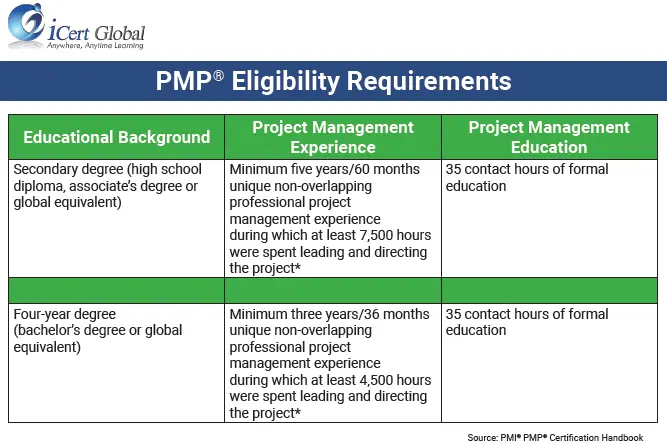
Before you even think about studying, you’ve got to meet PMI’s (Project Management Institute) criteria for the PMP. This isn’t just a suggestion; it’s a hard requirement. You’ll need either a four-year degree plus at least 36 months leading projects, OR a high school diploma (or equivalent) plus at least 60 months leading projects in the last eight years. That’s significant project experience.
And it’s not just “managing.” PMI wants documented evidence of leading project planning, execution, and closing. So, dig out those old project plans and performance reports. You’ll need to detail your responsibilities and the project outcomes. This step alone can take time to compile accurately.
Formal Education/Training: The 35 Contact Hours.
Here’s a big one: you absolutely need proof of 35 hours of formal project management education or training. This can be achieved through courses offered by PMI Authorized Training Partners (ATPs), community colleges, universities, or even reputable online providers. Many sources suggest this is a Key step.
These courses vary wildly in length. Some are intensive weekend bootcamps (that’s 35 hours crammed in!), while others are spread over several weeks. You can’t just say you read a book; you need a certificate of completion from an approved source. This is a non-negotiable part of the puzzle.
The Application Gauntlet: Filling Out the Forms.
Once you’ve got your experience and education squared away, you submit the PMP application. And here’s a kicker: PMI might audit your application. This isn’t common, but it happens. If you’re chosen for an audit, you’ll need to provide supporting documentation from your supervisors or clients verifying your project experience. This can add weeks, if not months, to the process if you’re scrambling for signatures.
Even without an audit, the application itself requires Careful detail. You’re not just ticking boxes; you’re describing your project roles. Getting all this documented and submitted correctly takes focused effort. It’s a bureaucratic hurdle, plain and simple.
PMP Exam Preparation: The Real Grind.
Self-Study vs. Guided Courses.
Okay, you’ve submitted the application and it’s been approved. Now for the beast: the exam itself. How long does prep take? It depends. Some people swear by self-study using the PMBOK® Guide and other resources. Others need the structure of a dedicated exam prep course.
A good prep course, often running for several weeks, can give you a structured path. Self-study can be faster if you’re incredibly disciplined, but you risk missing key areas or misinterpreting concepts. There’s no shame in needing a structured approach here.
How Many Hours? Let’s Be Honest.
Most folks find they need anywhere from 50 to over 200 hours of dedicated study time. Seriously. That’s a massive range, right? It depends on your learning style, your existing knowledge, and how much you can absorb in one sitting. Cramming isn’t ideal for this.
Daily life. Can you carve out an hour each evening? Or do you need to dedicate entire weekends? Breaking it down is key. Trying to cram 100 hours into two weeks is a recipe for burnout and failure. Consistent study is your friend.
Practice Exams: Your Reality Check.
You absolutely MUST take practice exams. And not just one or two. Use them to identify weak spots. Are you struggling with Agile concepts? Is risk management a blur? These tests are your diagnostic tools. Don’t just aim to pass them; aim to understand why you got questions wrong.

Source : pmexperto.com
Most Full prep materials will include several full-length practice exams. Budgeting time to take these, review the results thoroughly, and revisit weak areas can easily add another 10-20 hours to your preparation timeline. It’s a critical part of ensuring you’re truly ready.
The Exam Itself and What Happens Next.
Scheduling the Exam: When Can You Actually Do It?
Once approved, you have a specific window (usually a year) to schedule your exam. You book it through a testing center or online proctored service. Depending on your location and the time of year, popular testing centers can book up weeks or even months in advance. Don’t assume you can just walk in tomorrow.
Procrastination here is dangerous. Give yourself Plenty of time to find a slot that works for your schedule and location. Rushing this step can lead to unnecessary stress or having to delay your attempt.
The Exam Duration: How Long Are You Stuck in the Chair?
The PMP exam is a beast. It’s 180 questions long, and you get 230 minutes (that’s almost four hours!) to complete it. You also get two 10-minute breaks. So, block out a solid chunk of your day – easily half a day when you factor in check-in and wrap-up.
It’s a marathon, not a sprint. You need stamina. Thinking through each question, applying concepts, and avoiding careless errors requires mental fortitude. Pacing yourself during the exam is as important as your preparation.
Post-Exam: The Waiting Game (and Beyond).
The good news? You usually find out your results immediately after finishing the exam on screen (Pass or Not Pass). However, official confirmation and your certificate might take a bit longer to process. It’s generally a few days to a couple of weeks.
Then, you’re certified! But remember, the PMP is valid for three years. You’ll need to earn 60 Professional Development Units (PDUs) to maintain it. So, the learning never truly stops. It’s an ongoing commitment.
Other Project Management Certificates: Faster, Simpler Paths?
Certified Associate in Project Management (CAPM)®
This is PMI’s entry-level certification. It’s designed for those who have less project experience. The requirements are significantly less demanding than the PMP. You’ll need a secondary degree (high school diploma or equivalent) and 23 hours of project management education OR 1,500 hours of project experience. Much more accessible.
The preparation time is also generally shorter. Many people can prepare for the CAPM exam in a matter of weeks to a couple of months, depending on their study habits and prior exposure to project management concepts. It’s a great stepping stone.
Scrum Master Certifications (CSM, PSM)
Certifications like the Certified ScrumMaster (CSM) from Scrum Alliance or Professional Scrum Master (PSM) from Scrum.org are popular, especially in software development. The process is typically much faster.
For CSM, it usually involves a mandatory two-day (16-hour) in-person or live online course. After that, you can take the exam. PSM I just requires you to pass a challenging online exam, often taken shortly after dedicated self-study. Total time commitment? Maybe a few weeks from deciding to get certified to holding the credential.
Agile Certified Practitioner (PMI-ACP)®
This certification from PMI focuses specifically on Agile principles and practices. It requires a bit more experience than CAPM but less than PMP. You’ll need 21 hours of training in Agile project management, 12 months of general project management experience (can be concurrent with Agile experience), and 8 months of Agile project experience.

Source : projectmanagementacademy.net
The training requirement is similar to PMP’s contact hours but specific to Agile. Study time for the exam itself typically ranges from a few weeks to a couple of months. It’s a focused path for those deep in the Agile world.
Factors That Speed Up or Slow Down Your Certification Journey
Your Learning Style and Discipline.
Are you a quick study? Can you retain information after reading it once? Or do you need repetition, practice, and hands-on application? Be brutally honest with yourself. If you know you struggle to focus or tend to procrastinate, you’ll need to build more time into your plan, perhaps choosing a structured course over pure self-study.
Some people thrive in self-directed learning environments. Others crumble without external accountability. Recognize your own tendencies; it’s Key for setting a realistic timeline. Don’t just copy someone else’s estimate.
The Type of Training Program You Choose.
A weekend bootcamp is fast but intense. A part-time evening course spread over two months offers more breathing room. Online, self-paced courses offer flexibility but demand strong self-discipline. There’s no single “best” way; it’s about what fits your life and learning needs.
Consider the flexibility offered. Do you need to learn on weekends? During lunch breaks? Or can you dedicate a few solid hours every evening? Match the program’s delivery method to your lifestyle for maximum efficiency.
External Life Factors: Work, Family, and Everything Else.
Let’s not forget reality. You have a job, maybe kids, a social life (or you want one back!). These things take time and energy. Trying to prep for a rigorous exam like the PMP while juggling a demanding project at work and family commitments is asking a lot. Be realistic about the bandwidth you actually have available.
Don’t underestimate the impact of stress. If your life is already maxed out, adding intensive study might lead to diminishing returns. Sometimes, it’s smarter to extend the timeline slightly to maintain your sanity and actually absorb the material effectively. Balancing priorities is key.
Putting It All Together: Realistic Timelines.
The “Quick” Route (2-4 Months).
Who is this for? Someone with a degree, meeting the PMP experience requirements already, who can dedicate 10-15 hours per week to studying, perhaps takes an intensive prep course, and has a knack for standardized tests. Or, someone aiming for a less demanding cert like the CSM/PSM.
This timeline is aggressive. It requires focus and minimal distractions. You’re essentially moving through the eligibility, education, application, and study phases in rapid succession. It’s doable, but it’s not for the faint of heart or the easily distracted.
The “Average” Pace (4-8 Months).
This is probably the sweet spot for many aspiring PMP holders. It allows time to gather experience documentation comfortably, complete a 35-hour course without rushing, study diligently (maybe 5-10 hours/week), take practice exams, and schedule the test without undue pressure. It also allows for life’s little interruptions.
This timeframe acknowledges that genuine learning and retention take time. It balances dedicated study with real-world responsibilities. It’s a sustainable pace for most working professionals. You get the knowledge and the credential.
The “Leisurely” Approach (9+ Months).
This might be someone still accumulating the required project experience for PMP, or someone taking a part-time course over a longer period, or simply someone with very limited time to dedicate each week due to other major life commitments. There’s absolutely nothing wrong with this!
Source : knowledgehut.com
The goal is to get certified, not to set a speed record. Taking longer can sometimes lead to deeper understanding and better retention, especially if you’re applying concepts as you learn them in your daily work. Patience pays off in the long run.
A Quick Comparison: Time vs. Certificate Type
| Certificate Type | Typical Eligibility Time | Training Hours | Estimated Study Time | Total Estimated Time (Decision to Certification) |
|---|---|---|---|---|
| CSM/PSM | /A (Focus on course attendance) | ~16 hours (Mandatory course for CSM) | 5-15 hours | 1-4 weeks (after course) |
| CAPM | /A (Needs secondary degree + education/experience) | 23 hours recommended | 20-50 hours | 1-3 months |
| PMI-ACP | 12 months PM exp + 8 months Agile exp | 21 hours (Agile specific) | 30-60 hours | 2-5 months (after meeting exp & training) |
| PMP | 36-60 months PM exp (based on degree) | 35 hours | 50-200+ hours | 4-9+ months (often longer if accumulating experience) |
Note: Timelines are estimates and can vary significantly based on individual factors. The “Total Estimated Time” assumes eligibility criteria are already met unless otherwise specified.
Final Thoughts: It’s Your Journey.
Don’t Compare Apples and Oranges.
Seriously, stop looking at generic timelines and wondering why you don’t fit. Your path is unique. The PMP is a different beast entirely from a Scrum Master cert. Know what you’re aiming for and the requirements it entails.
Focus on understanding the material deeply, not just passing a test. The real value comes from what you learn and how you apply it. A certificate is great, but actual competence is better. Competence over credentialism, always.
Invest Wisely: Time is Money.
The time you spend is an investment. Whether it’s 2 months or a year, make it count. Choose reputable training providers. Be disciplined in your study. Don’t cut corners on practice exams.
The question isn’t just “how long does it take?” It’s “how long will it take me, and how can I make that time as effective as possible?” Plan accordingly, stay focused, and you’ll get there. Good luck.
Frequently Asked Questions
How fast can I get a PMP certificate?
Because it’s a serious certification, you can’t just whip through the PMP exam overnight. It usually takes a good chunk of time, often several months, to prepare properly. This includes getting the required education and experience hours, studying the material, and then actually scheduling and taking the test. Some people cram, but for most, it’s a dedicated process.
What is a PMP salary?
A PMP salary? Man, it’s pretty sweet. Project managers with the PMP certification tend to earn way more than their non-certified counterparts. We’re talking a significant bump, like an extra $15,000 to $20,000 a year on average, though it really depends on your location, industry, and experience level. It’s definitely a good investment.
Is PMP still worth it in 2026?
Absolutely, PMP is still a boss move for 2026. As projects get more complex, organizations are going to keep valuing that structured approach and validated skill set. It shows you know your stuff, can handle risk, and deliver results. So yeah, worth it? Totally.
Can I pass PMP in 3 months?
Can you pass the PMP in 3 months? It’s a tight squeeze, but yeah, it’s possible if you’re super disciplined. You’d need to dedicate serious hours each week to studying, possibly take a bootcamp, and have your experience hours lined up. But remember, rushing can lead to burnout and maybe not the best score, so really think if 3 months is enough for you.
What are the prerequisites for PMP?
Before you can even think about taking the PMP exam, you gotta meet some requirements. Basically, you need a bachelor’s degree and at least three years of experience leading projects, totaling around 4,500 hours. If you don’t have a degree, it’s a bit more experience, like 7,500 hours. Plus, you need to complete 35 hours of project management education. No skipping these steps for your PMP certification!
