Unpacking the Mystery: How Many Clinical Hours Are REALLY Needed for CNA Certification?
Let’s cut to the chase. You’re probably wondering, “Just how many hours do I need to clock in at the bedside before I can officially call myself a Certified Nursing Assistant?” It’s a question that gets tossed around a lot, and honestly, the answer isn’t a simple, single number you can tattoo on your arm. It’s more like a range, a guideline, and it depends on where you’re getting your training.
Think of it like this: you wouldn’t expect a chef to make a gourmet meal with just a recipe book, right? They need hands-on experience, chopping, sautéing, and, yes, maybe even burning a few things along the way. Nursing assistance is no different. Those clinical hours are your culinary school for patient care.
So, before you get bogged down in the bureaucratic weeds, let’s break down what you really need to know about the clinical component of your CNA journey. This isn’t just about checking a box; it’s about building the skills and confidence to provide compassionate care.
The Grand Overview: What’s the Magic Number (or Range)?
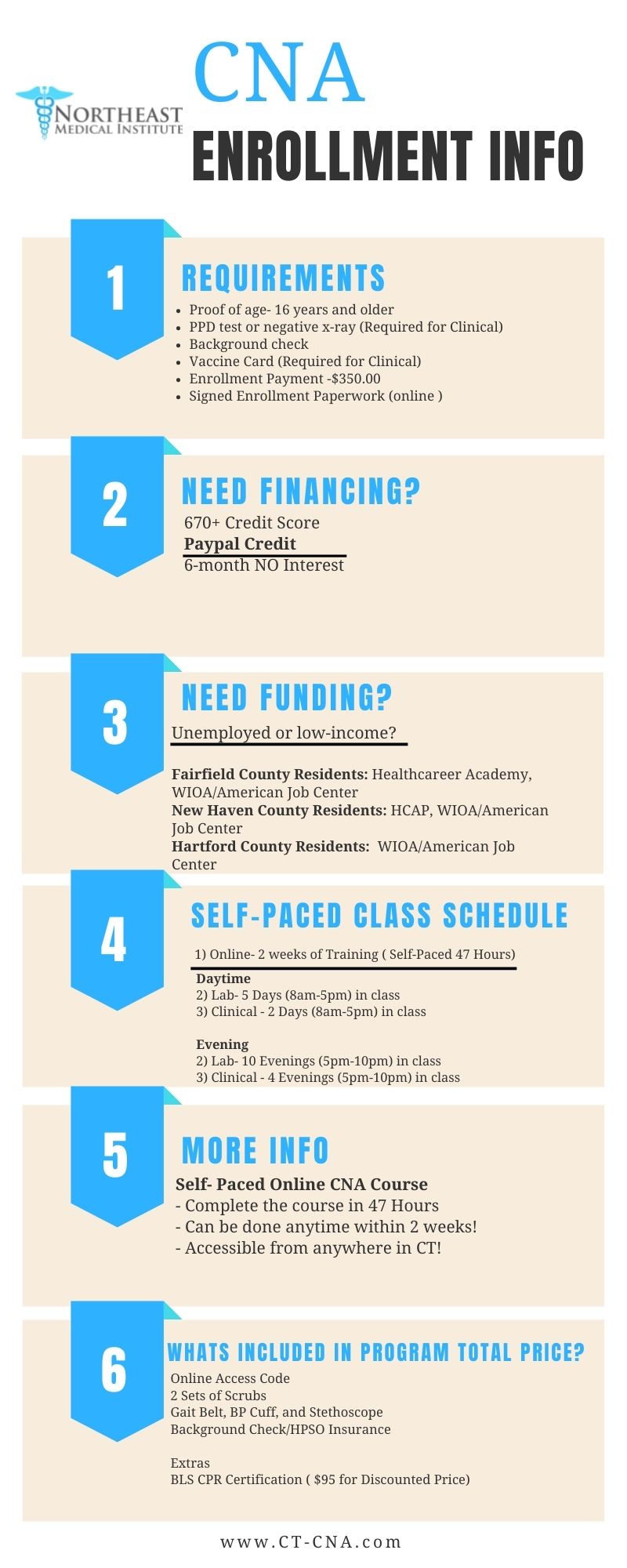
Source : northeastmedicalinstitute.com
Understanding State Board Requirements
Every state in the US has its own set of rules. It’s not a free-for-all, but it’s also not a one-size-fits-all situation. The state board of nursing is your ultimate authority here. They set the minimum number of hours for both the classroom/lab portion and the actual clinical practice.
Some states are more stringent than others, demanding a higher number of direct patient care hours. This is usually to Make sure that graduates are truly prepared for the demands of the job. It’s all about ensuring public safety and quality care.
The Typical Clinical Hour Range
While numbers fluctuate, a common Standard you’ll see across many states is somewhere between 30 to 100 clinical hours. Yes, that’s a pretty wide spread! Some programs might even push a bit higher to give their students a real edge. These hours are non-negotiable for most CNA certification paths.
This isn’t just “shadowing” either. These are hours where you’re actively participating under the watchful eye of a clinical instructor. You’re doing the actual work, learning by doing.
Why the Variation? It’s All About Context
The reason for this variation boils down to the philosophy of each state’s regulatory body. Some prioritize extensive hands-on experience before allowing someone to sit for the certification exam. Others might have a slightly shorter minimum, trusting that their approved training programs adequately prepare students.
It’s also influenced by how Full the rest of the CNA training program is. If a program has a very Strong classroom and lab component, they might feel less pressure to require an astronomical number of clinical hours. It’s a balancing act, really.
Diving Deep into Clinical Training: What It Actually Looks Like
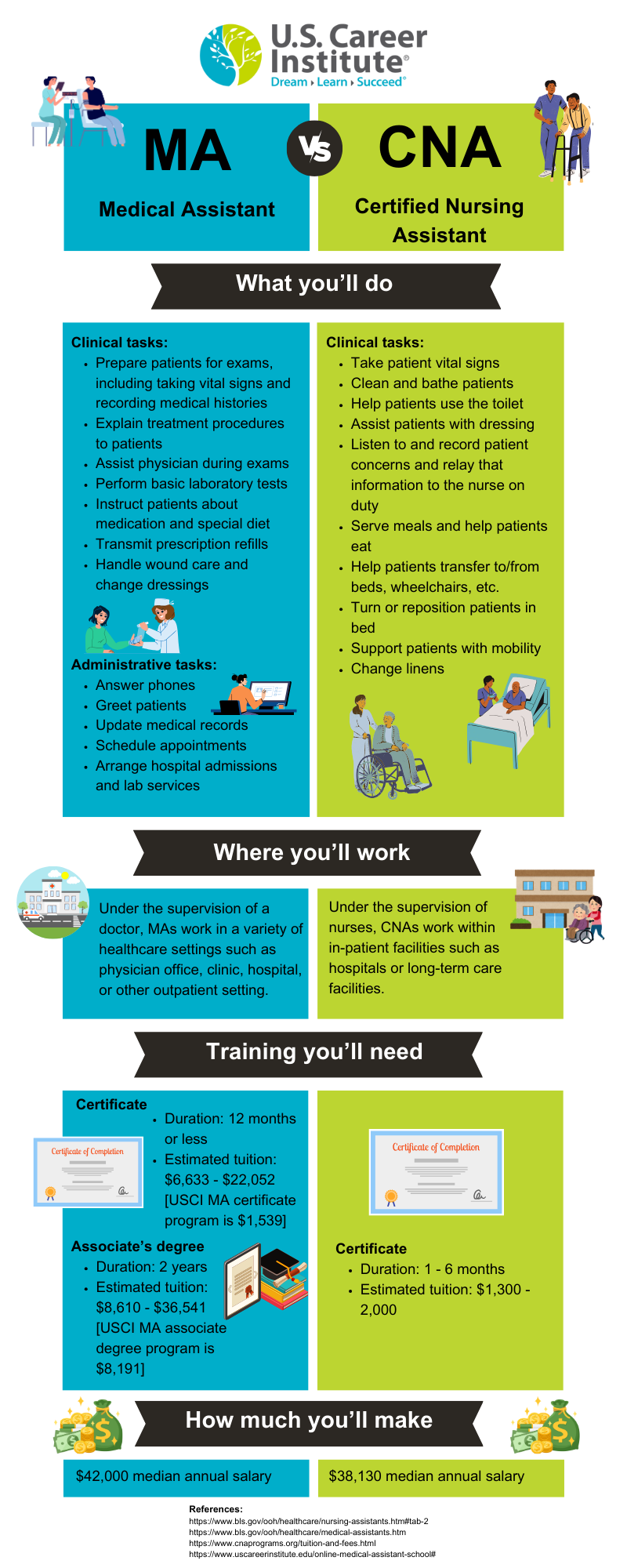
Source : uscareerinstitute.edu
Beyond the Classroom: The Real World of Patient Care
So, what happens during these Key clinical hours? This is where the rubber meets the road. You’re not just memorizing procedures; you’re performing them. We’re talking about helping patients with their activities of daily living (ADLs), taking Key signs, assisting with mobility, and basic personal hygiene. It’s the nitty-gritty stuff.
These experiences are Crucial. You learn to adapt to different patient needs, communicate effectively with both patients and the healthcare team, and handle unexpected situations. It builds a foundation that textbooks simply can’t replicate.
The Role of the Clinical Instructor
Your clinical instructor is your guide, your mentor, and your evaluator during this phase. They are there to Make sure you’re performing skills correctly, safely, and compassionately. They provide immediate feedback, correct mistakes, and sign off on your competency for various tasks. Think of them as your first boss on the job.
They’ll be watching you closely during everything from making a bed with a patient in it to responding to a call light. Their assessment is critical for your progression and ultimately, your certification. Don’t be afraid to ask questions; that’s what they’re there for!
Where Does This Training Happen?
Clinical hours are almost always conducted in approved healthcare settings. This typically means nursing homes or long-term care facilities. Occasionally, depending on the program and state regulations, you might get some experience in a hospital setting or even a rehabilitation center. The key is that it’s a supervised environment providing real patient care.
This exposure is Key. You get to see firsthand the diverse needs of residents and patients. You learn the routines of a facility, how to navigate its dynamics, and how to work as part of a larger care team. For example, understanding the specific needs of residents in a long-term care facility differs significantly from acute hospital care.
State-Specific Snapshots: How the Numbers Stack Up
California’s Requirements: A Closer Look
In California, for example, the state mandates a minimum of 50 hours of in-facility clinical training. This is on top of the required classroom and lab instruction. They want to Make sure you’ve got practical experience under your belt before you’re unleashed on patients.
This requirement is designed to give students a solid foundation in direct patient care within a supervised setting. It’s a Large chunk of time focused purely on practical application.
Texas: A Different Flavor
Texas often requires a bit more, typically around 75 to 100 hours of clinical practice. The total program hours are also higher, reflecting a commitment to thorough preparation. They often aim for a more Full learning experience.
More time spent in actual healthcare facilities, observing and participating in patient care under supervision. It’s about maximizing your exposure to real-world scenarios. You can find more details on programs like the one at Career Options Center, which gives a glimpse into the type of practical training involved, even if specific state hours differ.
New York and Beyond
New York typically requires around 75 hours of clinical practice, integrated into a program that covers extensive theoretical knowledge. Some programs may offer more than the minimum to better prepare their graduates. The focus is on ensuring competency across a wide range of skills.
It’s always best to check the specific regulations for the state where you intend to get certified. Don’t rely on hearsay; go straight to the source. You can often find this information on the New York State Department of Health website.
The Anatomy of a CNA Training Program: More Than Just Clinicals
Classroom Instruction: The Theoretical Backbone
Clinical hours don’t exist in a vacuum. They are built upon a foundation of classroom learning. This is where you’ll learn the “why” behind the “what.” Topics include anatomy and physiology, basic nursing skills, patient rights, infection control, safety procedures, and emergency response.
This theoretical knowledge is Key. Understanding how the body works, the principles of infection control, or the importance of patient dignity makes your clinical practice far more effective and meaningful. It’s the science behind the care you’ll provide.
Skills Lab: Practicing Without Pressure
Before you step onto a real nursing floor, most programs include a skills lab. This is your safe space to practice those Needed CNA skills repeatedly. Think Key signs, bed making, transferring patients, and feeding techniques. You get hands-on practice without the high stakes of patient care.
Instructors guide you, demonstrate techniques, and offer constructive criticism. This is where you build muscle memory and confidence. You’ll practice these skills until they become second nature, ensuring you’re ready for the real thing. Many reputable training centers, like ICI Training, detail the Full nature of their programs, including these Key lab components.
The Curriculum’s Breadth
A well-rounded CNA curriculum covers a lot of ground. You’ll learn about medical terminology, communication techniques, documentation, and ethical considerations. These elements are just as important as the physical tasks you’ll perform. For instance, understanding patient rights is Top in every interaction.
The curriculum prepares you for the diverse challenges of the role. It Provides you not just to perform tasks, but to understand the context, the patient’s perspective, and the legal and ethical boundaries of your profession. It’s about becoming a competent and compassionate caregiver.
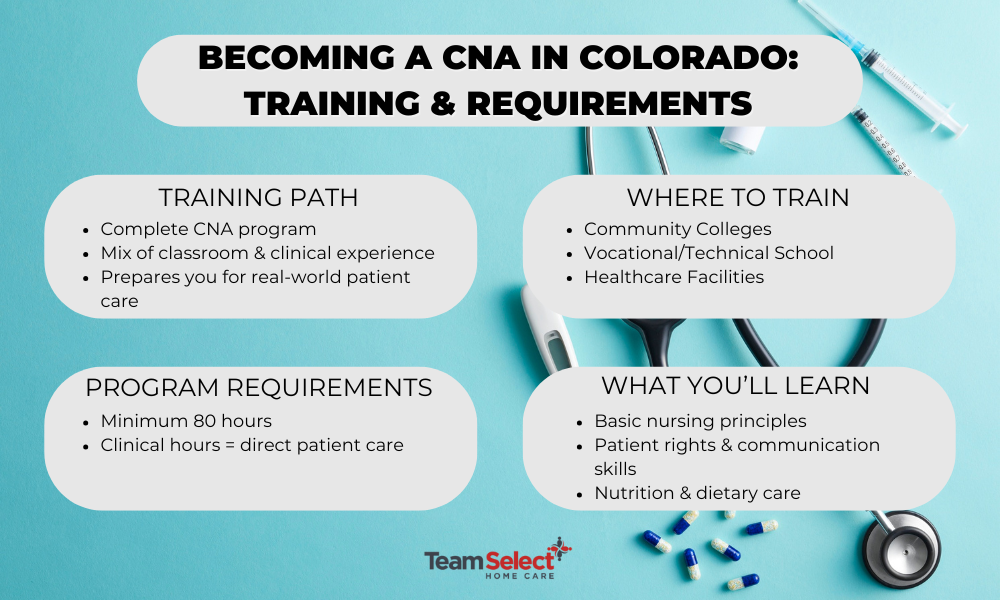
Source : tshc.com
Handling Your Clinical Experience: Tips for Success
Be Prepared, Every Single Day
Arrive on time, dressed professionally (follow the facility’s dress code!), and with a positive attitude. Make sure you’ve reviewed the skills you’ll be practicing that day. Being prepared shows respect for your instructors, the facility, and most importantly, the patients.
Bring a notebook and pen to jot down important points or questions. Active engagement is key. You’re not just there to clock hours; you’re there to learn and absorb as much as possible. Showing initiative goes a long way.
Ask Questions, Ask More Questions!
Never, ever be afraid to ask questions. If you’re unsure about a procedure, a patient’s condition, or anything at all, speak up. It’s far better to ask for clarification than to make a mistake. Your clinical instructor and the facility staff are there to help you learn.
Ask “why” something is done a certain way. Understand the reasoning behind each action. This deepens your understanding and makes you a more thoughtful caregiver. Good questions demonstrate your engagement and desire to learn.
Welcome Feedback (Even When It Stings)
Constructive criticism is a gift, even if it doesn’t always feel like it at the moment. Your instructors will point out areas where you can improve. Listen carefully, accept the feedback without getting defensive, and make a conscious effort to apply it. This is how you grow.
See feedback not as a personal attack, but as a roadmap to becoming a better CNA. Every piece of advice helps refine your skills and build your confidence. The goal is improvement, not perfection on day one.
The Value Proposition: Why Those Clinical Hours Matter So Much
Building Confidence and Competence
The primary benefit of mandated clinical hours is building your confidence. Theory is one thing; actually performing a task on a real person who depends on you is another. Successfully completing these tasks under supervision fosters a sense of capability that’s hard to achieve otherwise. It proves to yourself that you can do this job.
This growing confidence is Needed for a role that requires constant interaction and responsibility. You learn to trust your training and your own abilities, which is Key for providing quality care and reducing stress.
Developing Needed Soft Skills
Beyond the technical skills, your clinical experience is a crucible for developing Key soft skills. You learn empathy by connecting with patients on a human level. You hone communication skills by interacting with diverse personalities and sometimes, distressed individuals. Patience becomes a practiced virtue, not just an abstract concept.
These interpersonal skills are often what differentiate a good CNA from a great one. They impact patient satisfaction, team dynamics, and your overall job effectiveness. You learn to read non-verbal cues and respond appropriately.
Real-World Problem-Solving
No textbook can fully prepare you for the unpredictable nature of patient care. Clinical hours expose you to real-world challenges – a patient who refuses care, an unexpected fall, or a change in condition. You learn to think on your feet, assess situations, and respond effectively, often under the guidance of your instructor.
This ability to problem-solve in real-time is Crucial. It’s a skill honed through practice and experience, turning potential crises into learning opportunities and demonstrating your readiness for the demands of the profession.
Making the Most of Your CNA Program Investment
Choosing the Right Program Matters
Not all CNA programs are created equal. Look for programs that are approved by your state’s board of nursing. Research their pass rates for the certification exam and their reputation within the local healthcare community. A program with a strong clinical component and experienced instructors will provide a much better return on your investment.
Consider the facilities where the clinical training takes place. Are they well-regarded facilities known for quality care? This can also impact the quality of your learning experience. A good program makes the path to certification smoother and more effective.
Understanding Program Costs and Time Commitments
Be clear about the total cost of the program, including tuition, books, supplies, and any potential fees for exams or background checks. Also, understand the time commitment. How many hours per week are required for both classroom and clinical components? Factor this into your personal schedule.
Some programs are intensive, requiring full-time attendance, while others offer part-time or evening/weekend options. Choose a program that realistically fits your life circumstances. Don’t underestimate the time needed for studying and clinicals.
Beyond Certification: Continuous Learning
Getting certified is just the beginning. The healthcare field is constantly evolving. Commit to lifelong learning by staying updated on best practices, seeking opportunities for continuing education, and being open to learning new skills throughout your career. Your initial clinical hours are a strong foundation, but growth doesn’t stop there.
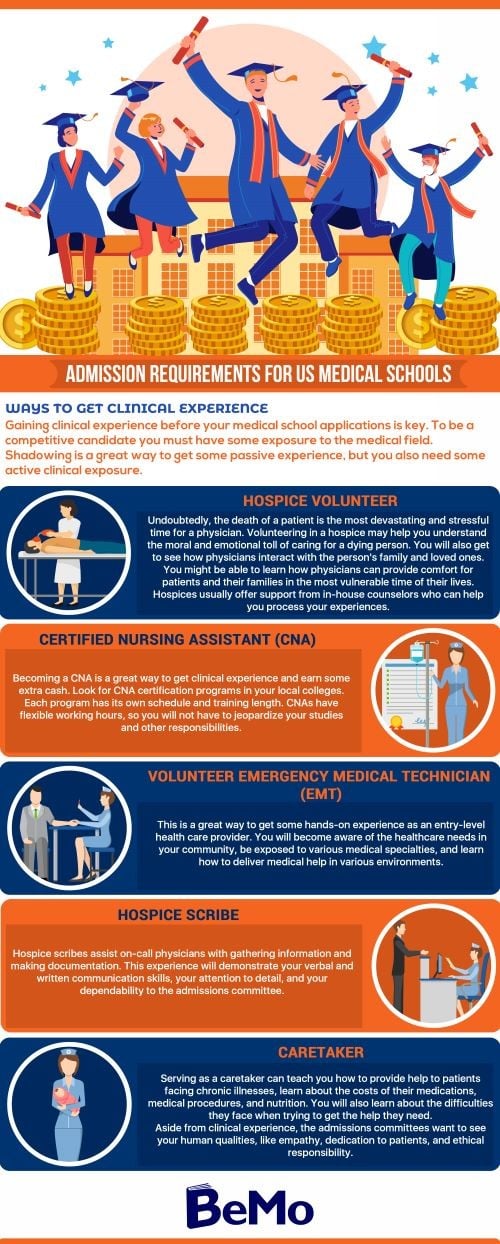
Source : bemoacademicconsulting.com
The skills you learn during your initial CNA training are just the starting point. Many CNAs go on to pursue further education and certifications to advance their careers in healthcare. Embracing a mindset of continuous learning is key to long-term success.
The Clinical Hour Data: A Comparative Look
To give you a clearer picture, let’s look at a simplified comparison. Remember, these are general figures and specific program requirements can vary. Always verify with your state’s official sources.
| State/Region | Minimum Classroom/Lab Hours (Approx.) | Minimum Clinical Practice Hours (Approx.) | Total Program Hours (Approx.) |
|---|---|---|---|
| California | ~60-70 hours | 50 hours | ~110-120 hours |
| Texas | ~75-100 hours | 75-100 hours | ~150-200 hours |
| New York | ~60-80 hours | 75 hours | ~135-155 hours |
| Illinois (Varies by Provider) | ~60-90 hours | 40-80 hours | ~100-170 hours |
| Florida | ~70-80 hours | 40 hours | ~110-120 hours |
Final Thoughts: It’s About Quality, Not Just Quantity
Don’t Just Count the Hours, Experience Them
The number of clinical hours required is a baseline. What truly matters is the quality of that experience. Are you actively participating? Are you learning Needed skills? Are you developing the compassion and critical thinking needed for this Key role? That’s the real goal.
Focus on absorbing everything you can during your clinical rotations. Engage with patients, ask questions, and seek opportunities to practice. The hours will pass, but the skills and confidence you gain will last a lifetime.
The CNA Role: Rewarding and Needed
Being a CNA is a demanding but incredibly rewarding career. You are often the eyes and ears of the nursing staff, providing direct care and comfort to those who need it most. The clinical hours are your Needed training ground for this important responsibility.
Never underestimate the impact you can have on a patient’s day. Your role is critical in the healthcare system, and the investment you make in your training, particularly those hands-on clinical hours, prepares you to make a genuine difference.
Your Path Forward
So, how many clinical hours? Check your state’s requirements, choose a reputable program, and then dive in with the intention to learn, grow, and become the best CNA you can be. The number is just a number; your competence and compassion are what truly count.
Your journey to becoming a CNA starts with understanding these requirements. Make informed choices, dedicate yourself to the learning process, and you’ll be well on your way to a fulfilling career in healthcare. Good luck out there!
Frequently Asked Questions
How many clinical hours are required for CNA certification?
Because the requirements can vary slightly by state, it’s best to check with your specific state’s board of nursing. But generally, you’re looking at around 40 to 100 clinical hours as part of your training program. These are hands-on hours where you’ll be working directly with patients under supervision.
What is the typical duration of a CNA training program?
But generally, a CNA program can range from a few weeks to a few months. It depends on the school and the state’s requirements, but most programs are designed to be completed relatively quickly to get you into the workforce. You’ll cover both classroom learning and those Key clinical hours.
Are there any prerequisites for enrolling in a CNA program?
Because some programs might have them, you should always check! Common prerequisites can include things like a high school diploma or GED, a background check, and maybe even certain immunizations. It’s not usually anything too crazy, but knowing them upfront saves hassle.
What kind of duties does a CNA perform?
But as a CNA, you’ll be providing direct patient care. Think things like helping patients with bathing, dressing, eating, and moving around. You’ll also take Key signs, document patient information, and report any changes to nurses. It’s all about making the patient’s day-to-day life more comfortable and safe. It’s a really important patient care role.
How long does it take to become a certified CNA?
Because the training programs themselves vary in length, the total time can differ. Most programs take anywhere from 4 to 12 weeks to complete. After finishing your program, you’ll need to pass a certification exam, which usually happens pretty quickly after graduation. So, you can often get certified within a few months.
