Alright, let’s cut through the jargon and get down to brass tacks: you want to know how much a CE certification costs for your product. It’s not a simple number, is it? Anyone who tells you differently is probably trying to sell you something. This whole process can feel like Handling a maze blindfolded, especially when you’re staring at pages of technical documents and wondering where to even begin. But don’t sweat it. We’re going to break it all down, from the sneaky hidden fees to the big-ticket items, so you can get a real handle on what you’re actually going to spend. Forget those generic cost calculators; we’re digging deep here.
The Real Deal on CE Certification Costs
Why CE Certification Isn’t a One-Size-Fits-All Price Tag
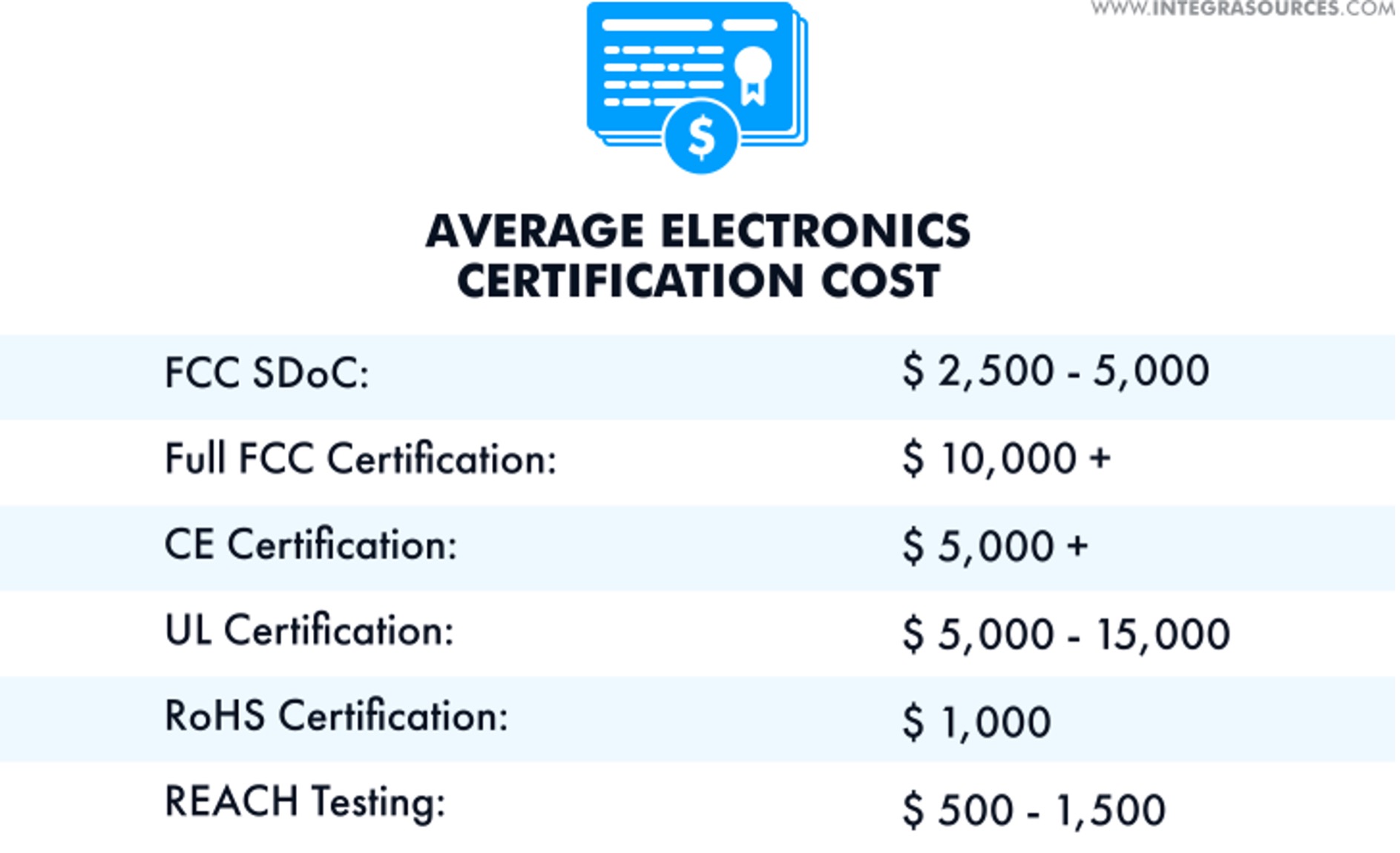
Source : electronics-sourcing.com
The Ever-Shifting Sands of Product Directives
First off, you’ve got to understand that your product isn’t just some generic ‘thing’. It falls under specific EU directives. Think of these like different sets of rules for different types of toys. A simple wooden block? Different rules than a battery-operated remote-control car. Each directive has its own set of requirements, testing protocols, and potential costs associated with it. So, the cost of CE marking varies wildly depending on which directives apply to your specific gadget or gizmo.
Risk Assessment: The Big Kahuna
This is probably the single biggest factor. The higher the risk your product poses to users or the environment, the more scrutiny it gets. A medical device that’s implanted in your body? That’s going to be way more expensive than a USB cable. Manufacturers have to conduct thorough risk assessments, and this analysis directly influences the testing and documentation required. It’s all about ensuring safety, and that safety assurance comes with a price tag.
Self-Declaration vs. Notified Body: The Cost Divide
Here’s a Key fork in the road. Some products, generally those with lower risk, allow for self-declaration. This means you, the manufacturer, can essentially declare compliance based on your own testing and documentation. Way cheaper, obviously. But for higher-risk products? You’ll need a Notified Body – an independent third party authorized by the EU – to get involved. Their stamp of approval costs money. And not just a little bit of money, mind you.
The Global Footprint: Where Your Product is Made and Sold
Where you manufacture your product and where you intend to sell it can also play a role. Different countries might have slightly different interpretations or additional requirements, even within the EU framework. Plus, if your components are sourced from all over the globe, ensuring each one meets the standards adds layers of complexity and potential cost. It’s a global supply chain, and it all needs to Match.
Deconstructing the Costs: What You’re Actually Paying For
Testing, Testing, and More Testing
This is where a significant chunk of your budget goes. Depending on the product and applicable directives, you might need testing for things like electromagnetic compatibility (EMC), electrical safety, radio frequency (RF) emissions, environmental resistance (like heat or water), and hazardous substances (like RoHS). The more tests required, the higher the bill. You’re paying for the labs, the equipment, the engineers’ time, and the actual test reports that form part of your Technical Documentation.

Source : ecocomply.ai
Documentation: The Paperwork Mountain
Don’t underestimate the cost of documentation! You’ll need a Technical File or Technical Construction File (TCF). This is a Full dossier proving your product meets all relevant Needed requirements. It includes design drawings, circuit diagrams, bill of materials, risk assessments, test reports, user manuals, and declarations of conformity. Compiling this requires time, expertise, and often, external consultants. It’s not just about having the data; it’s about organizing it correctly. That’s a hidden documentation cost many overlook.
The Notified Body’s Cut: A Significant Expense
If your product requires a Notified Body, prepare for a Large invoice. These organizations are highly specialized and their involvement is rigorous. They perform audits, review your technical documentation, and may even require sample testing. The fees vary wildly based on the complexity of the product, the specific directive, and the Notified Body itself. We’re talking thousands, often tens of thousands, of Euros. You can find more details on what these costs entail on sites like i3cglobal.com which breaks down some of the nuances.
Translation Costs: Speaking the EU’s Language
Your product documentation, manuals, and safety information need to be available in the official languages of the EU member states where you plan to sell. If you’re selling across multiple countries, this means professional translation services. While it might seem minor compared to testing or Notified Body fees, these costs add up quickly, especially for extensive technical manuals. It’s a necessary step for market access.
Comparing Costs: Self-Declaration vs. Notified Body Involvement
The DIY Route: Self-Declaration Savings
For lower-risk products, like simple electronic accessories or basic mechanical items, self-declaration is the most cost-effective path. You might incur costs for in-house testing or hiring a lab for specific tests, perhaps a few hundred to a few thousand dollars depending on the complexity. The main ‘cost’ here is your own time and internal resources dedicated to understanding the directives and compiling the necessary evidence. It’s all about internal compliance management.
The Notified Body Premium: When It’s Non-Negotiable
For higher-risk categories – think medical devices, certain machinery, or pressure equipment – a Notified Body is mandatory. This isn’t a choice; it’s a requirement. The cost here jumps significantly. You’re looking at fees for the initial assessment, ongoing surveillance audits (yes, they often check up on you regularly), and any specific certifications they issue. This can easily range from €5,000 to €50,000+, sometimes much more for extremely complex or high-risk items. Sites like Sunfire Testing often discuss these higher-end costs.
The Hybrid Approach: A Mix of Both Worlds
Some products might fall into a grey area. You might be able to self-declare for certain directives (like EMC or LVD – Low Voltage Directive) but require a Notified Body for others (like Radio Equipment Directive – RED, if it involves radio frequencies). This means you’ll have a mixed bag of costs – some internal effort and basic testing, plus the fees for the Notified Body’s specific involvement. It’s about identifying which requirements you can handle and which need external validation.
Ongoing Costs: It’s Not a One-Time Fee
Don’t forget that CE marking isn’t a static certification. Regulations change, standards are updated, and if you significantly modify your product, you might need to re-evaluate or re-test. For products requiring Notified Body surveillance, there are annual or periodic fees to maintain certification. It’s a commitment to ongoing product compliance.
Factors Influencing the Testing and Certification Fees
Product Complexity: The More Bells and Whistles, The Higher the Price
A simple LED light bulb versus a complex industrial robot. Which one do you think requires more testing and scrutiny? The more sophisticated your product, the more potential failure points, the more directives it likely falls under, and So, the higher the testing costs. Intricate designs mean more intricate tests. It’s a simple equation, really.
Number of Applicable Directives
Your product might need to comply with several EU directives simultaneously. For example, a piece of machinery might need to meet directives for Machinery Safety, EMC, and Low Voltage Electrical Safety. Each directive has its own set of tests and documentation requirements, adding to the overall cost. You’re not just getting one certification; you’re getting compliance across multiple fronts. That’s the cost accumulation for multiple standards.
Source : sunfiretesting.com
Testing Standards and Specific Requirements
Within each directive, there are specific harmonized standards. Some standards are more rigorous and time-consuming to test against than others. For instance, basic electrical safety tests might be relatively quick, while extensive environmental stress testing or compatibility testing can take weeks. The specific testing standards chosen directly impact the lab time and cost.
The Chosen Test Lab or Notified Body
Just like any service provider, different test labs and Notified Bodies have different pricing structures. Some might offer package deals, while others charge hourly rates. Location can also play a role, with labs in certain regions being more expensive. It pays to shop around (within reason – Make sure they are accredited and reputable!) and get quotes from a few different organizations. This is where researching accredited laboratories becomes key.
Case Studies: Illustrating the Cost Spectrum
Case Study 1: The Simple Gadget (Low Risk)
Company making a basic USB-powered desk lamp. This product likely falls under the Low Voltage Directive (LVD) and the Electromagnetic Compatibility (EMC) Directive. It’s a relatively low-risk item. The manufacturer might perform some internal testing or send it to a lab for basic safety and EMC tests. The total cost here might be in the range of $1,000 – $5,000. This includes lab fees and the creation of the Technical File and Declaration of Conformity. No Notified Body needed here, making it quite affordable.
Case Study 2: The Connected Device (Medium Risk)
Now, consider a smart home thermostat. This product needs to comply with LVD, EMC, and crucially, the Radio Equipment Directive (RED) because it uses Wi-Fi or Bluetooth. RED often requires Notified Body involvement, especially for the RF aspects, or at least rigorous testing against specific harmonized standards. Costs could jump significantly. We’re talking $8,000 – $25,000, possibly more, depending on the specific RF testing and if a Notified Body’s assessment is required. Documentation and translation costs also start to climb.
Case Study 3: The Medical Device (High Risk)
Let’s look at a non-invasive medical device, like a blood pressure monitor. These fall under specific Medical Device Directives (now Regulations – MDR). Compliance here is extremely stringent and always requires a Notified Body. The testing is extensive, covering safety, performance, and biocompatibility. The documentation is massive. Add in the Notified Body’s fees for audits and assessments, and the CE certification cost can easily soar into the $30,000 – $100,000+ range. This doesn’t even include the cost of potential clinical evaluations.
The Hidden Costs You Might Not Expect
Time Delays and Market Launch Setbacks
This is a big one. Delays in testing, documentation errors, or issues flagged by a Notified Body can push your product launch back. Every week your product isn’t on the market is lost revenue. The cost of these delays can far outweigh the direct certification fees. Rushing the process often leads to more expensive mistakes down the line. Factor in project management time diligently.
Product Modifications and Redesign
What happens if your prototype fails a critical safety test? You’ll have to redesign or modify it. This means more engineering time, potentially new components, and then re-testing. These iterative cycles can significantly inflate the original budget. It’s Key to build some contingency into your product development budget for potential rework.
Consultant Fees: When You Need an Expert’s Eye
Many companies, especially smaller ones, don’t have in-house expertise to navigate CE marking. Hiring a CE marking consultant is common. While they can save you time and prevent costly mistakes, their fees can add thousands to your overall expense. Good consultants are worth their weight in gold, but they aren’t cheap. Look for specialists who understand your specific product category.
Certification Maintenance and Surveillance
CE marking isn’t a one-and-done deal. If a Notified Body is involved, they often conduct periodic surveillance audits to Make sure you’re still compliant. There are fees associated with these audits. Also, if you make significant changes to your product design or manufacturing process, you might need to update your technical documentation or even undergo new testing. Budgeting for ongoing compliance is Needed.
Strategies for Managing CE Certification Costs

Source : cemarkingexperts.wordpress.com
Early Planning is Key
The best way to control costs? Start early! Integrate CE marking requirements into your product design phase. Understanding the necessary standards and directives from the outset allows you to design a compliant product from the ground up, avoiding expensive late-stage modifications. Get design for compliance right from the start.
Choose the Right Product Category and Directives
Be absolutely sure about which directives apply. Sometimes, a slight design tweak can move your product into a lower-risk category, potentially allowing for self-declaration instead of requiring a Notified Body. This requires careful analysis, but the savings can be immense. Double-check the scope of each relevant directive.
Compare Test Labs and Notified Bodies
Don’t just go with the first lab you find. Get multiple quotes. Compare their pricing structures, turnaround times, and accreditations. Ask about package deals or discounts for multiple tests. While cheapest isn’t always best (Make sure they are accredited!), getting competitive bids is smart. Researching options like those found at Sunfire Testing can give you a good baseline.
Use Internal Expertise and Resources
If you have engineers or technical staff with relevant knowledge, Use them! They can help prepare technical documentation, conduct pre-compliance testing, and manage the overall process, reducing the need for expensive external consultants. Invest in training if needed. That internal technical knowledge is Crucial.
Understand the Documentation Requirements Thoroughly
A complete and accurate technical file is Key. Incomplete or incorrect documentation is a common reason for delays and added costs. Make sure you understand exactly what needs to be included and how it should be organized. Having a template or checklist can be very helpful. This avoids expensive back-and-forth with authorities or labs.
The Future of CE Marking Costs
Increasing Complexity of Products
As technology advances, products become more complex, often integrating multiple functions and wireless technologies. This inherently means more directives to comply with and more rigorous testing. Expect the complexity of testing to only increase.
Stricter Enforcement and Scrutiny
European authorities are getting better at monitoring the market for non-compliant products. This means increased surveillance and potential penalties for non-compliance. Companies are being held more accountable, which might drive up the perceived value (and cost) of getting it right the first time. It’s not just about passing; it’s about staying compliant.
Harmonization Efforts
While there are many directives, there are ongoing efforts to harmonize standards and processes across the EU. This could potentially simplify things and, in the long run, lead to more predictable costs, although the initial implementation can be complex. This is a slow burn, however.
Focus on Sustainability and Circular Economy
New directives are emerging, focusing on aspects like eco-design, repairability, and material safety (e.g., REACH, RoHS extensions). These add new layers of testing and documentation requirements, increasing the overall cost of compliance for manufacturers wanting to bring products to the EU market.
Decoding the Price: A Look at the Numbers
Let’s try and nail down some numbers, acknowledging they’re rough estimates. A basic CE marking process for a simple, low-risk product that allows self-declaration might cost as little as $1,000 – $5,000. This covers basic lab testing and documentation prep. Moving up, a moderately complex product requiring some third-party testing or partial Notified Body input could range from $5,000 – $25,000. And for high-risk items like medical devices or complex machinery demanding full Notified Body involvement, you’re looking at $25,000 to well over $100,000. These figures are highly dependent on the specifics, and you can find more detailed cost breakdowns available online, such as on pages discussing CE certification costs like this one.
Source : certifycomply.com
Needed Documents Checklist for CE Compliance
- Technical Documentation File (TDF) / Technical Construction File (TCF): The core evidence binder.
- Risk Assessment: Identifying and mitigating potential hazards.
- Test Reports: From accredited laboratories confirming compliance with standards.
- Component Information: Bill of Materials (BOM), specifications for key parts.
- Design Drawings and Schematics: Visual proof of the product’s construction.
- User Manuals and Instructions: In the required languages.
- EC Declaration of Conformity (DoC): The formal self-declaration statement.
- Notified Body Certificate (if applicable): Issued by the authorized third party.
- Labeling Requirements: Ensuring the CE mark and other required info are present.
Key Directives and Their Cost Implications
Different directives target different risks, and So, have varying cost implications:
- Low Voltage Directive (LVD): Focuses on electrical safety. Generally less expensive testing.
- Electromagnetic Compatibility (EMC) Directive: Deals with electromagnetic emissions and immunity. Testing can be moderately costly.
- Radio Equipment Directive (RED): Pertains to devices using radio spectrum (Wi-Fi, Bluetooth, etc.). Often requires specific RF testing and sometimes Notified Body involvement, making it pricier.
- Machinery Directive: For machinery. Safety-critical and often involves Notified Body assessment for higher-risk machinery categories. Significant cost.
- Medical Device Regulation (MDR): Extremely rigorous for medical products. Always requires Notified Body involvement. Very high costs.
- Restriction of Hazardous Substances (RoHS): Limits specific harmful substances. Requires material analysis or supplier declarations. Adds moderate cost.
Making Informed Decisions About Your Budget
So, how much does it really cost? It depends. It’s a question that demands a deep dive into your specific product. You need to consider the directives, the risk class, whether a Notified Body is Needed, and the scope of testing required. Don’t guess. Do your homework, get multiple quotes, and budget realistically. Understanding the breakdown helps you plan effectively and avoid nasty surprises. This Full guide should give you a much clearer picture of the financial commitment involved in getting your product CE certified for the European market.
| Product Risk Level | Typical Directives Involved | Need for Notified Body? | Estimated Cost Range (USD) | Key Cost Drivers |
|---|---|---|---|---|
| Low Risk (e.g., basic electronics, simple tools) | LVD, EMC | Generally No | $1,000 – $5,000 | Basic Lab Testing, Documentation |
| Medium Risk (e.g., smart devices, appliances) | LVD, EMC, RED, RoHS | Sometimes (esp. for RED) | $5,000 – $25,000 | RF Testing, Specific Standards, Potential NB Fees |
| High Risk (e.g., medical devices, complex machinery) | MDR, Machinery Directive, others | Almost Always Yes | $25,000 – $100,000+ | Rigorous NB Audits, Extensive Testing, Complex Documentation |
The cost of CE certification is an investment in accessing the lucrative European market. It’s not just a stamp; it’s proof your product is safe and meets stringent European standards. Get the process right, and it opens doors. Skimp on it, and you risk fines, recalls, and a damaged reputation. Make sure you consult resources detailing CE marking costs to get the most accurate picture for your specific situation.
Frequently Asked Questions
What factors influence the cost of CE certification?
It really depends on a few things. The complexity of your product, the type of product it is (like electronics versus machinery), and which specific CE directives apply. Testing requirements vary wildly, and that’s a big part of the CE certification cost.
Are there different types of CE certification costs?
Yeah, you’ve got your self-declaration route where you do most of the work, and then there are notified bodies involved for higher-risk products. The notified body route is definitely more expensive because they’re the ones doing the official testing and assessment. So, it’s either DIY testing or paying an expert.
How much does CE testing typically cost?
For basic products, testing might run a few hundred bucks. But for more complex stuff, especially electronics needing EMC and safety testing, you could be looking at thousands, sometimes tens of thousands. It all comes down to the specific standards your product needs to meet for product safety testing.
Can I get a CE certificate without paying a lot?
Sometimes, yes! If your product is low-risk and you can confidently demonstrate compliance with the relevant directives yourself, you can go the self-declaration route. This means you’re responsible for the technical documentation and ensuring it meets standards, saving on notified body fees.
What are the ongoing costs associated with CE certification?
For most products, once you have the CE mark, there aren’t really ongoing certification costs unless you significantly change the product or new directives come into play. However, you might need periodic re-testing or updates to your technical documentation, especially if standards evolve. Think of it more as maintaining compliance than recurring fees for the CE mark itself.
