So, you’re thinking about becoming a Certified Medical Assistant, huh? It’s a solid career choice, no doubt about it. But before you start picturing yourself in scrubs, let’s talk brass tacks. Getting that certification isn’t just a formality; it’s a whole process, and knowing the requirements and time involved upfront can save you a ton of headaches down the road. Forget those sterile, generic guides; I’m talking about the real deal, the stuff that matters when you’re actually trying to get in the door.
What does it really take? It’s more than just showing up. It’s about ticking boxes, hitting milestones, and frankly, putting in the work. This isn’t a race, but there’s definitely a timeline you need to be aware of. Let’s break it down, the way you’d explain it to a buddy over a couple of beers.
The Core Requirements: What You Absolutely MUST Have
Alright, let’s cut to the chase. You can’t just wake up one day and decide you’re a CMA. There are some fundamental hoops you’ve got to jump through. These are the non-negotiables, the absolute foundation for getting certified.
Graduating from an Accredited Program
This is usually the first big hurdle. You need to have completed a medical assisting program that’s been accredited by either CAAHEP (Commission on Accreditation of Allied Health Education Programs) or ABHES (Accrediting Bureau of Health Education Schools). Why does this matter? Because it means the program meets a certain standard of quality. Employers and certification bodies want to know you got your training from a reputable place.
Think of it like this: you wouldn’t want a mechanic who learned their trade from watching YouTube videos, right? Same idea here. An accredited program ensures you’ve covered all the Needed clinical and administrative skills. If your program isn’t accredited by one of these two bodies, you’re likely out of luck when it comes to sitting for the big exam. Always check accreditation status before enrolling.
Passing the Certification Exam
Once you’ve got the education piece squared away, the next big step is passing the actual certification exam. For the Certified Medical Assistant (CMA) credential, this means passing the CMA (AAMA) exam. This test is no joke. It covers a broad range of medical knowledge, from patient care and anatomy to medical law and ethics.
It’s designed to test your competency and Make sure you’re ready to practice safely and effectively. You’ll face questions on clinical procedures, patient communication, laboratory techniques, and even billing and coding. Passing this exam is the ultimate gatekeeper to using that coveted CMA title.
Application and Fees

Source : careersidekick.com
It’s not all brains and no paperwork, unfortunately. You have to formally apply to take the exam. This involves submitting documentation that proves you meet the eligibility criteria (like your program completion). And, surprise, surprise, there’s a fee involved. You can’t just walk in and take the test for free. These fees cover the administrative costs of processing your application, developing and administering the exam, and issuing your certification.
Make sure you have all your ducks in a row before you submit. Missing information can lead to delays, and trust me, you want to get this done as efficiently as possible. Double-check deadlines, too; they’re usually pretty strict. It’s a necessary evil, but getting these administrative tasks done right is Key for your certification journey.
Handling the Time Factor: How Long Will This Take?
Source : franklin.edu
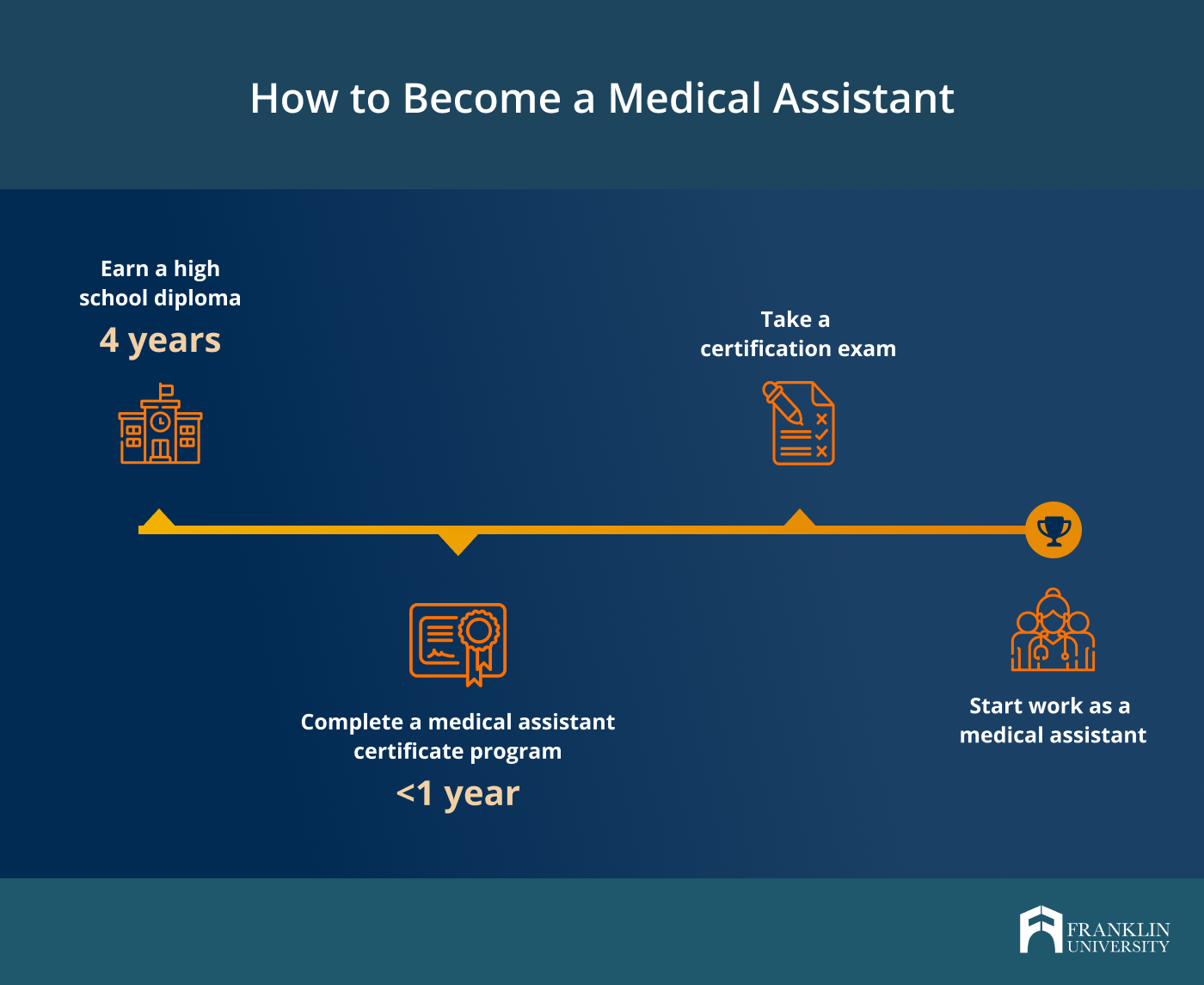
Okay, so you know what you need. But when can you expect to have that shiny certification in hand? The timeline can be a bit fluid, depending on your path, but let’s map it out.
Educational Program Duration
The bulk of your time commitment will be the educational program itself. Most accredited medical assisting programs are designed to be relatively short compared to other healthcare professions. Typically, you’re looking at somewhere between nine months to two years. Certificate programs might be on the shorter end, while associate’s degrees will take longer.
A standard diploma or certificate program, often found at community colleges or vocational schools, usually takes about a year. An associate’s degree program will extend this to two years. This timeframe includes classroom instruction, lab work, and often, a mandatory clinical externship. So, factor in this core educational commitment first.
The Externship Period
Most accredited programs include a clinical externship. This is where you get hands-on experience in a real healthcare setting – a clinic, hospital, or doctor’s office. It’s usually unpaid, but it’s Crucial. The length of the externship can vary, but it’s typically a few hundred hours, often spanning several weeks to a couple of months.
This isn’t just busy work. It’s your chance to apply what you’ve learned, build confidence, and make professional connections. Some programs integrate this more smoothly than others, but it’s a critical component of your training and contributes directly to your readiness for the certification exam. Don’t underestimate the importance of this practical experience.
Exam Application and Scheduling
After you graduate, there’s a waiting period before you can officially schedule your exam. You need to submit your application and supporting documents to the certifying body (like the AAMA). Once your application is approved, you’ll receive an Authorization to Test (ATT). Then, you can schedule your exam appointment at a testing center.
This process can take anywhere from a few weeks to over a month, depending on how quickly you get your paperwork in and how busy the testing centers are. You generally have a specific window of time (often 60-90 days) from when your ATT is issued to actually take the exam. Planning and prompt submission are key here to avoid unnecessary delays. This part of the certification timeline requires attention to detail.
Waiting for Results and Receiving Your Certificate
Once you’ve conquered the exam, you’ll be eager for the results. Many testing centers provide preliminary results immediately after you finish. However, the official confirmation and your certification credentials usually take a bit longer to process and mail out. This could be anywhere from a few days to a few weeks.
Source : northwestcareercollege.edu
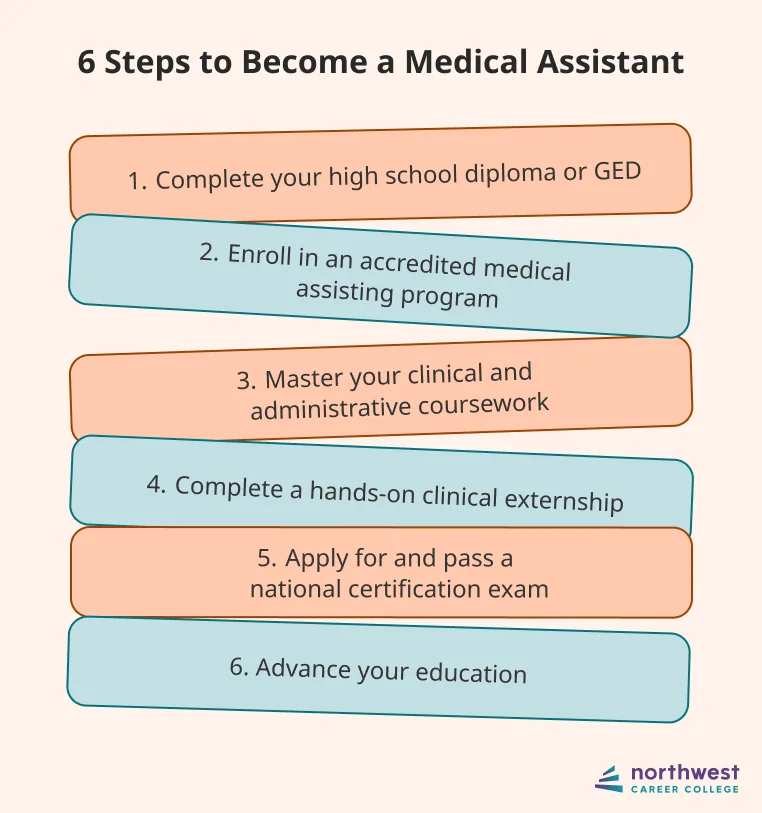
So, from the moment you graduate to the moment you officially hold your certification, you’re looking at a timeline that includes your program length, externship, application processing, and waiting for results. It’s a marathon, not a sprint, but the end goal is well worth it. This final waiting period is often the most antsy part of the whole certification process.
Understanding Eligibility Pathways: More Than One Route?
The AAMA lays out specific pathways for eligibility. It’s not just a one-size-fits-all deal. Knowing these can be Key, especially if you’re not a fresh-out-of-school graduate.
The Standard Graduate Path
This is the most common route. You graduate from a medical assisting program that is accredited by CAAHEP or ABHES. This is generally straightforward. You’ve completed your coursework and practicum, and you’re ready to move on to the certification exam. For many, this is the clear and direct way to achieve CMA status.
The key here is that the program must be accredited. If you completed a program years ago, double-check its accreditation status at the time of your graduation. The American Association of Medical Assistants (AAMA) website provides detailed information on these requirements. You can find the specifics on their certification eligibility page.
Graduates Over 12 Months Post-Program
What if you graduated a while back? Say, more than a year ago? You might still be eligible, but the requirements can be a bit different. The AAMA has provisions for individuals who have been out of an accredited program for longer than 12 months. Often, this involves additional documentation or potentially further education or experience verification.
This pathway acknowledges that experience counts, even if it wasn’t in a formal externship. However, you still need to Make sure your original program meets the accreditation standards. It’s Needed to review the specific criteria for this scenario on the AAMA website to Make sure you qualify.
Military Medical Personnel and Medical/Allied Health Educators
The AAMA also recognizes the valuable training obtained through military medical education and by experienced medical assisting educators. Specific requirements apply for these groups, often involving verification of service or teaching experience. These pathways allow individuals with significant, relevant experience to demonstrate their competency even if they didn’t follow the traditional educational route.
For example, individuals who have completed certain military medical specialist training programs might qualify. Similarly, experienced educators who have taught in medical assisting programs may also be eligible. These are specialized routes, so again, checking the official AAMA eligibility guidelines is Top.
Preparing for the CMA Exam: Beyond the Basics
Just showing up to the exam isn’t enough. You need to prepare. This isn’t your high school final; it’s a professional certification test.
Study Materials and Resources
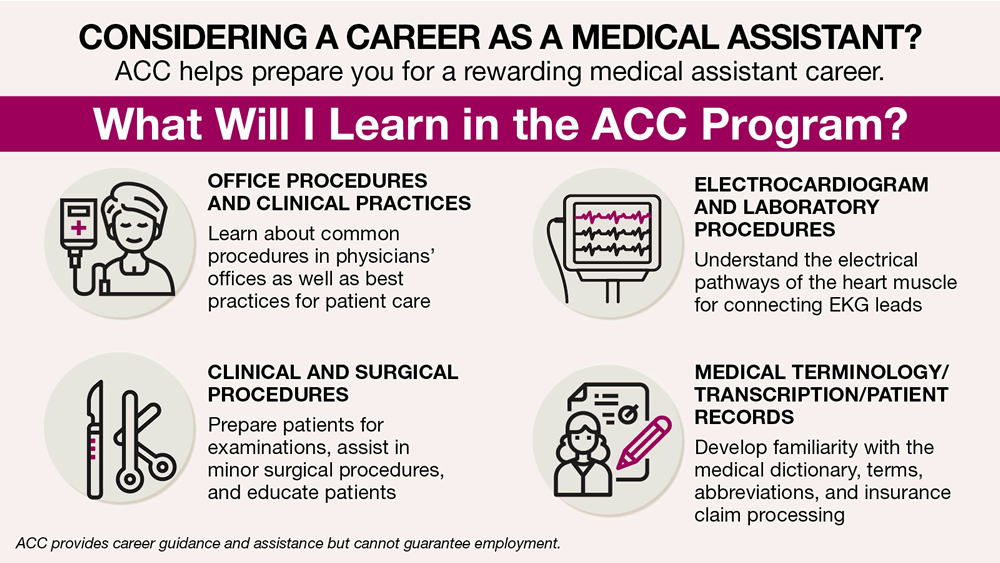
There are tons of resources available to help you prep. The AAMA offers official study guides and practice exams, which are probably your best bet for understanding the format and content areas. Beyond that, many textbooks used in accredited programs have review sections. You might also find online courses or tutoring services dedicated to CMA exam prep.
Source : americancareercollege.edu
Don’t just passively read. Actively engage with the material. Use flashcards, take practice quizzes, and identify your weak areas. The goal is to build confidence and solidify your knowledge across all the domains tested. Investing time in quality study materials is non-negotiable.
Practice Exams are Your Best Friend
Seriously, take as many practice exams as you can. These are Crucial for simulating the real test experience. They help you get comfortable with the time constraints, the question types, and the overall pressure. More importantly, they highlight where you need to focus your study efforts.
After you finish a practice test, don’t just look at your score. Review every single question, especially the ones you got wrong. Understand why the correct answer is correct. This detailed review is often more beneficial than simply taking another practice test blindly. It’s about targeted exam preparation.
Understanding the Exam Blueprint
The AAMA provides an “Exam Content Outline” or blueprint. This document details the specific knowledge areas and skills covered on the CMA exam, along with the percentage of questions dedicated to each area. Understanding this blueprint is Key for structuring your study plan effectively. You know exactly what topics are weighted more heavily.
For instance, you’ll see categories like Clinical Patient Care, Administrative
The Actual Time Commitment: A Realistic Breakdown
Let’s put some numbers on this. How much time are we really talking about from start to finish?
Program Length Example (Diploma):
- 9-12 Months: Full-time, accredited diploma program. This typically includes coursework and a mandatory externship.
Program Length Example (Associate’s Degree):
- 2 Years: Full-time, accredited associate’s degree program. This offers a more Full education and may fulfill general education requirements.
Post-Graduation Timeline:
- 1-2 Months: Time to gather documents, submit application for the CMA (AAMA) exam, and await approval (Authorization to Test – ATT).
- 1-3 Months: Time to schedule and take the exam after receiving ATT, considering testing center availability.
- 1-4 Weeks: Waiting for official results and certificate mailing after passing the exam.
So, realistically, from starting an educational program to holding your certification, you’re looking at anywhere from just under a year to over two years, plus a few extra months for the administrative and testing phases. This doesn’t even include any prerequisite courses you might need or time taken to retake the exam if, heaven forbid, you don’t pass on the first try. It’s a significant, but manageable, time investment.
Post-Certification: What Happens Next?
You got the certificate! Congrats! But your journey isn’t over. There are ongoing requirements.
Maintaining Your Certification
Certification isn’t usually a lifetime pass. You typically need to maintain it by earning continuing education units (CEUs) or by retaking the exam periodically. The AAMA requires CMAs to complete continuing education requirements. Check their specific guidelines for how many CEUs you need and within what timeframe. This ensures you stay up-to-date in the ever-evolving field of healthcare.

Source : franklin.edu
Failure to meet these requirements can lead to the expiration of your certification. So, keep track of your CEUs and plan ahead. It’s Needed for maintaining your professional standing and ensuring you can continue working as a certified medical assistant. Keeping your certification active requires ongoing effort.
Career Opportunities
With your CMA credential, doors open! You’re qualified for a wide range of roles in various healthcare settings – doctor’s offices, hospitals, specialty clinics, outpatient care centers, and more. You can perform both clinical duties (like taking Key signs, administering medications, drawing blood) and administrative tasks (like scheduling appointments, managing patient records, billing).
This certification makes you a more attractive candidate to employers. It signifies a standardized level of competence and professionalism. It’s a solid foundation for a rewarding career in healthcare. Don’t underestimate the power of that CMA credential on your resume.
Data Table: CMA Certification Requirements vs. Time
| Factor | Key Requirements | Estimated Time Commitment | Notes |
|---|---|---|---|
| Education | Completion of CAAHEP or ABHES accredited program | 9 months – 2 years (full-time) | Program type (certificate vs. degree) affects duration. |
| Clinical Experience | Mandatory externship integrated into most programs | Several weeks to a few months (part of educational time) | Key for practical skill development. |
| Exam Application | Submit eligibility documentation, pay fees | 2 weeks – 1.5 months (after graduation) | Depends on prompt submission and processing time. |
| Exam Scheduling & Taking | Receive ATT, book exam slot, pass exam | 1 – 3 months (after ATT issuance) | Availability of testing centers can impact scheduling. |
| Certification Issuance | Receive official certificate | 1 week – 1 month (after passing exam) | Official confirmation process. |
Final Thoughts: Is It Worth the Effort?
Look, becoming a Certified Medical Assistant takes time, dedication, and a willingness to meet specific requirements. You’ve got to get through an accredited program, pass a rigorous exam, and handle the administrative bits. It’s a multi-stage process.
But is it worth it? Absolutely. For those passionate about helping people and working in a Active healthcare environment, the CMA certification provides a clear pathway. It validates your skills, enhances your employability, and opens doors to a stable and fulfilling career. It’s a concrete step towards making a real difference. Don’t let the requirements scare you; see them as the roadmap to a rewarding medical career.
Frequently Asked Questions
How fast can I become a certified medical assistant?
Because programs vary, you can sometimes finish an MA program in as little as 9 months to a year. Some take a bit longer, like 18 months. It really depends on the program length and whether you go full-time or part-time.
Who gets paid more, MA or PCT?
Generally, a Patient Care Technician (PCT) might earn a bit more than a Medical Assistant (MA), but it’s not always a huge difference. PCTs often have a slightly broader scope of duties, which can sometimes translate to a higher pay rate.
What pays more, EMT or MA?
Typically, an Emergency Medical Technician (EMT) might see a higher starting salary compared to a Medical Assistant (MA). EMTs often work in more critical, fast-paced environments which can influence their pay, but MA salaries can catch up and sometimes surpass them with experience and specialization.
How much do MA get paid in CA?
California is known for having some of the highest pay for MAs in the country. While it varies by city and experience, you’re looking at an average that can range from $40,000 to $50,000+ aually, with some making much more. Definitely a higher paying state for the profession.
What are the typical requirements to become a CMA?
To become a Certified Medical Assistant (CMA), you’ll usually need to graduate from an accredited MA program. Then, you have to pass a national certification exam. Some employers might also prefer or require specific clinical experience or certifications in areas like CPR.
