So You Want to Be a Certified Diabetes Educator RN? Let’s Cut Through the Noise.
Look, if you’re a registered nurse and you’re thinking about diving into the world of diabetes education, you’ve probably hit a bunch of websites that all sound the same. Dry, bureaucratic, full of jargon. It’s enough to make anyone want to just stick to rounding. But here’s the real deal: becoming a Certified Diabetes Care and Education Specialist (CDCES) isn’t some impossible mountain to climb. It’s a structured path, and as an RN, you’ve already got a massive head start. We’re talking about making a tangible difference in people’s lives, helping them navigate this complex condition. So, let’s break down exactly what you need to do, no fluff, just the straight talk.
Forget the generic advice. This is for the RNs who are serious about this specialty. You’ve got the clinical background; now you need the credentials and the know-how. It’s about more than just knowing the medical facts; it’s about translating them into practical, everyday advice that actually sticks. This journey requires dedication, sure, but it’s entirely achievable for nurses ready to step up their game. Let’s get into the nitty-gritty of the requirements to become a Certified Diabetes Educator as an RN.
The Foundation: Your RN License and Education
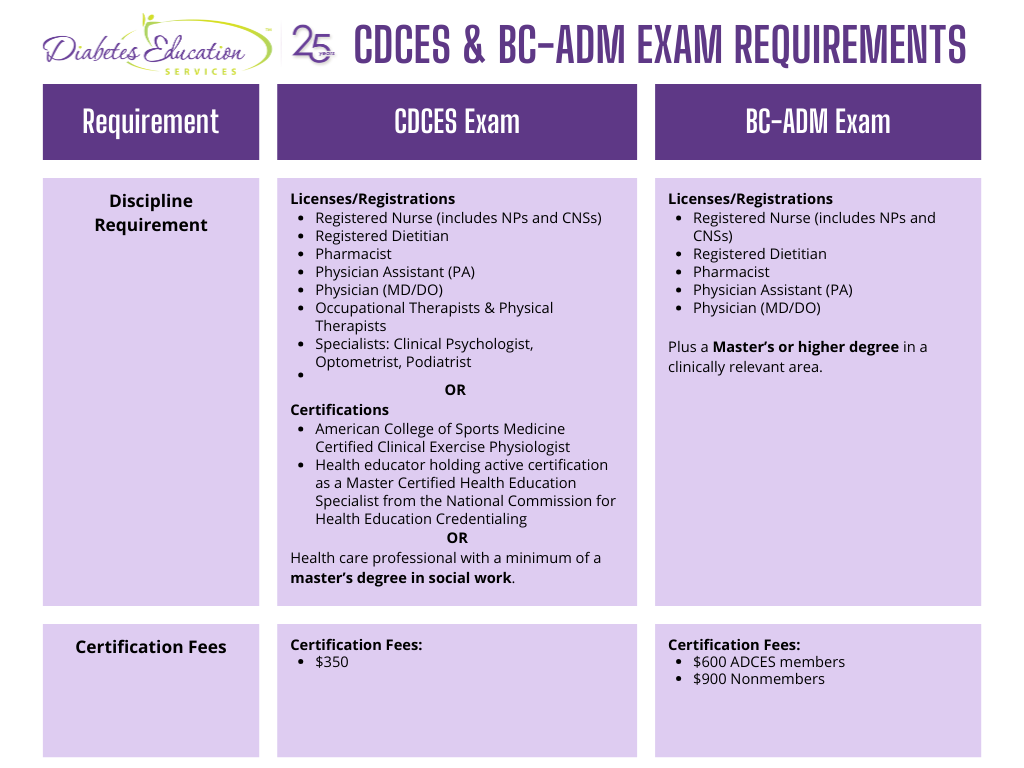
Source : diabetesed.net
It Starts With That RN Degree. Obviously.
First things first. You absolutely must hold a current, active, unrestricted Registered Nurse (RN) license. This isn’t a suggestion; it’s the non-negotiable bedrock of your application. Without it, you’re not even in the running. Make sure yours is up-to-date and valid in the state where you plan to practice or apply. A lapsed license or any disciplinary action can throw a serious wrench into your plans. It’s the entry ticket, plain and simple.
If your license is currently suspended or under review for any reason, you’ll need to get that sorted before you can even think about certification. The certifying bodies are rigorous about verifying your credentials. They need to know you’re a legitimate, practicing nurse in good standing. It’s about protecting patients and upholding the integrity of the profession. So, double-check that expiry date and any stipulations attached to your license.
Where Did You Go to School? The Official Degree Matters.
Beyond just being an RN, the type of nursing education you completed is also a factor. Most certification pathways require a specific nursing degree. Typically, this means an Associate’s Degree in Nursing (ADN) from an accredited program is the minimum. However, many nurses aiming for advanced roles or feeling more competitive will have pursued a Bachelor of Science in Nursing (BSN). Some might even hold a Master’s or Doctorate. All are generally acceptable, provided they come from an accredited institution. What matters is that foundational nursing education. It ensures you have a standardized base of knowledge. Check the specific requirements of the certifying body you’re targeting, as they might have slight variations. But generally, an accredited ADN or higher is your starting point.
It: the certifying bodies need a baseline. They need to know you’ve passed through a recognized educational system. This isn’t about prestige; it’s about consistent standards. An accredited program means the curriculum has met certain quality benchmarks. This is Key because your future patients depend on the skills and knowledge you’ve acquired. It’s a key part of the requirements to become a Certified Diabetes Educator as an RN.
Continuing Education: Never Stop Learning.
Once you’re an RN, the learning doesn’t stop. The field of diabetes care evolves at lightning speed. New technologies, medications, and research emerge constantly. Therefore, a commitment to ongoing education is Top. This isn’t just for your RN license renewal; it’s specifically Key for diabetes education certification. You’ll need to demonstrate that you’ve kept your knowledge current. This often involves completing specific continuing education units (CEUs) that are relevant to diabetes management and education. These can come from workshops, conferences, online courses, and formal academic programs. The certifying board will have a list of approved topics and providers. Make sure you’re tracking these activities diligently. It’s easy to let them slide, but Key for your application.
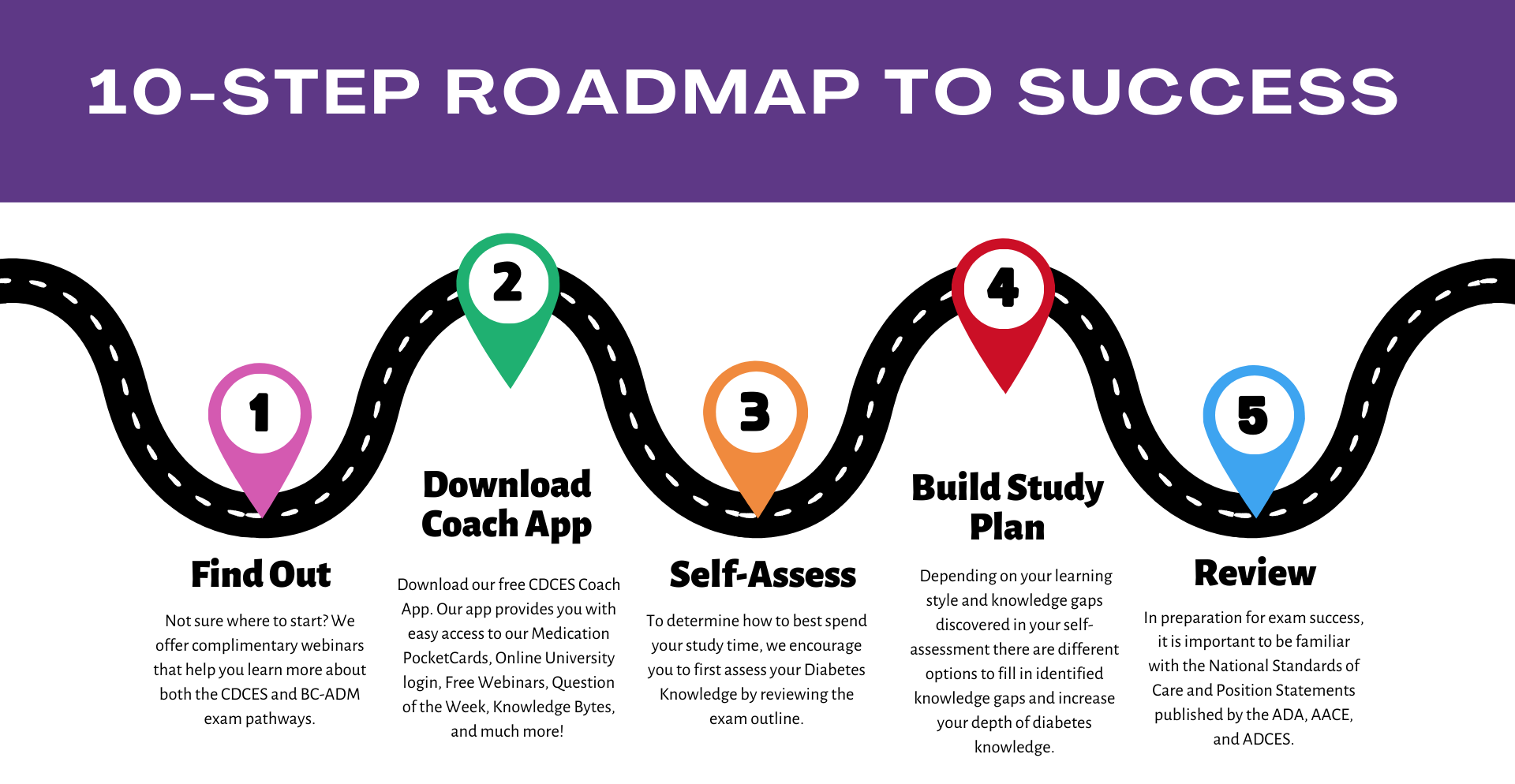
Source : diabetesed.net
Seriously, if you haven’t been tracking your CEUs, start now. Keep records. Get certificates. Organize them. The last thing you want is to be ready to apply and realize you’re missing the specific diabetes-focused CEUs required. It’s a common pitfall. Planning ahead makes this a smooth part of the process, rather than a frantic scramble. Plus, you’ll actually learn new things, which is the whole point, right?
The Key Experience Factor
Clocking Those Hours: Direct Diabetes Care Experience.
This is where many RNs shine, but it’s also a major hurdle. You can’t just want to be a diabetes educator; you need proven experience. The certifying bodies require a significant number of hours spent providing direct diabetes self-management education and support. What counts as “direct”? It means you’re actively counseling patients, developing care plans, teaching skills (like glucose monitoring or insulin administration), and assessing their needs related to diabetes. This isn’t about passively observing or just managing their general medical care. It needs to be focused. Check the specific requirements – they usually spell out exactly what kind of activities qualify. Aim to accumulate more than the minimum if possible; it just strengthens your application.
Nurses who spend their days educating patients on new insulin pumps, helping them understand carb counting, or discussing the emotional impact of living with diabetes. That’s the kind of work that counts. If you’re unsure whether your current role provides enough of this specific experience, talk to your supervisor or explore opportunities within your healthcare system. It’s a critical component, and you need to be able to document it accurately. Don’t guess; get the details. This is a major part of the requirements to become a Certified Diabetes Educator as an RN.
Calculating Your Hours: The Nitty-Gritty Details.
So, how many hours are we talking about? It varies slightly depending on the certifying body (like the National Institute for Diabetes Educator Certification – NIDEC, or the Certification Board for Diabetes Care and Education Specialists – CBDCE), but generally, you’re looking at a Large amount. For example, some require thousands of hours of practice experience within a specific timeframe, like the last two to four years. It’s not just about total years as an RN; it’s about the quality and focus of those years. You need documented proof of your work. This might involve detailed logs, employer verification, or specific project descriptions. Be prepared to provide this information meticulously. Start tracking this early if you’re even considering this path. Accurate record-keeping is your best friend here.
Trying to recall every patient interaction from three years ago. Impossible, right? That’s why you need a system. Whether it’s a dedicated spreadsheet, notes in your EMR (if permissible), or a physical logbook, keep tabs on your diabetes education activities. Note the dates, the patient scenarios, the education provided, and the outcomes. This detailed documentation will be Crucial when you fill out your application. It’s the evidence that backs up your claim of providing direct diabetes education. Don’t underestimate the importance of this step.
Professional Practice: Beyond Just Patient Time.
It’s not all about direct patient contact, though that’s the lion’s share. Some certification pathways also consider related professional activities. This could include developing educational materials, participating in curriculum development for diabetes programs, or even teaching other healthcare professionals about diabetes care. Activities that contribute to the broader field of diabetes education might get you some credit. However, these usually supplement, rather than replace, the core requirement of direct patient education. Always refer to the official guidelines of the specific certification you are pursuing. They will outline exactly which activities count towards your required hours and in what proportion. Make sure your experience aligns directly with their definitions. Generic nursing experience won’t cut it here; it needs that specific diabetes education focus.
This is where you can get creative, if you’re strategic. Maybe you helped design a new patient brochure on healthy eating with diabetes? Or perhaps you presented a lunch-and-learn session for your colleagues on managing hypoglycemia? These types of activities, when properly documented, can Strengthen your application. They show a commitment to the discipline that goes beyond the one-on-one clinical encounter. It demonstrates a broader engagement with the practice of diabetes education. So, think about all the ways you contribute, formally or informally.
The Certification Exam: Proving Your Expertise
Choosing Your Certification Board: A Critical Decision.
Okay, so you’re an RN with solid experience. Now, which certification do you pursue? The most widely recognized credential in the United States is the Certified Diabetes Care and Education Specialist (CDCES). This certification is administered by the Certification Board for Diabetes Care and Education Specialists (CBDCE). Their requirements are quite specific and are the Standard many employers look for. Understanding their specific criteria is key. You can find detailed information on their official website regarding eligibility, application processes, and exam content. Make sure you’re looking at the current requirements, as these can be updated periodically. Handling to the right page on their site, like checking out the eligibility criteria, is your first practical step.
There might be other, more specialized certifications out there, perhaps related to specific types of diabetes or patient populations. However, for broad recognition and career advancement, the CDCES is generally the gold standard. Think of it like getting your basic RN license versus a specialized certification in cardiology. The CDCES opens the most doors for diabetes educators. Don’t get sidetracked by less common credentials unless you have a very specific career goal in mind that necessitates it. Focus on the one that offers the most Full validation of your skills.
The Exam Blueprint: What to Expect?
The CDCES exam isn’t a walk in the park. It’s designed to test your Full knowledge across a wide spectrum of diabetes care and education. The exam covers several key domains. These typically include assessment of the learning needs of the person with diabetes, implementation of the education plan, and evaluation of the outcomes. You’ll also be tested on the continuum of diabetes care, including nutrition, physical activity, medication management, monitoring, psychosocial issues, and preventing/detecting/treating complications. It covers everything from type 1 to type 2 to gestational diabetes, and all the various tools and strategies used in management. You need a solid grasp of the biological, psychological, and social aspects of living with diabetes. Reviewing the official exam content outline is absolutely Needed. It tells you exactly what topics are covered and their relative weight on the test. This is your study guide, essentially. You can find extensive resources on the ADCES website that guide you through this process.
The exam is often multiple-choice, and the questions are scenario-based. They want to see how you’d apply your knowledge in real-life situations, not just if you can memorize facts. So, studying shouldn’t just be about reading textbooks. It should involve practice questions, case studies, and perhaps joining a study group. Think critically about patient scenarios. How would you approach this patient? What education is most critical right now? What are the potential barriers? That kind of thinking is what the exam probes. You’re not just a nurse; you’re a diabetes educator. The exam reflects that.
Studying Smart: Resources and Strategies.
Passing the CDCES exam requires a strategic approach to studying. Don’t just wing it. The ADCES (Association of Diabetes Care & Education Specialists) and CBDCE offer recommended study materials. These can include study guides, practice exams, and online learning modules. Many candidates also find success using third-party review courses or textbooks specifically designed for CDCES preparation. Consider forming a study group with other RNs or healthcare professionals who are also pursuing the certification. Discussing concepts and quizzing each other can be incredibly effective. Remember, the goal is deep understanding, not just rote memorization. You need to integrate all the different aspects of diabetes care and education. It’s a Overall approach.
Allocate sufficient time for studying. Cramming a few days before the exam is a recipe for disaster. Break down the material into manageable chunks and create a study schedule. Focus on areas where you feel less confident. Use practice exams to identify your weak spots and get comfortable with the exam format. Many people find that understanding the underlying pathophysiology and the psychosocial impact of diabetes is as important as knowing the latest medications. It’s a Full knowledge base you need to build. This is a major part of the requirements to become a Certified Diabetes Educator as an RN.
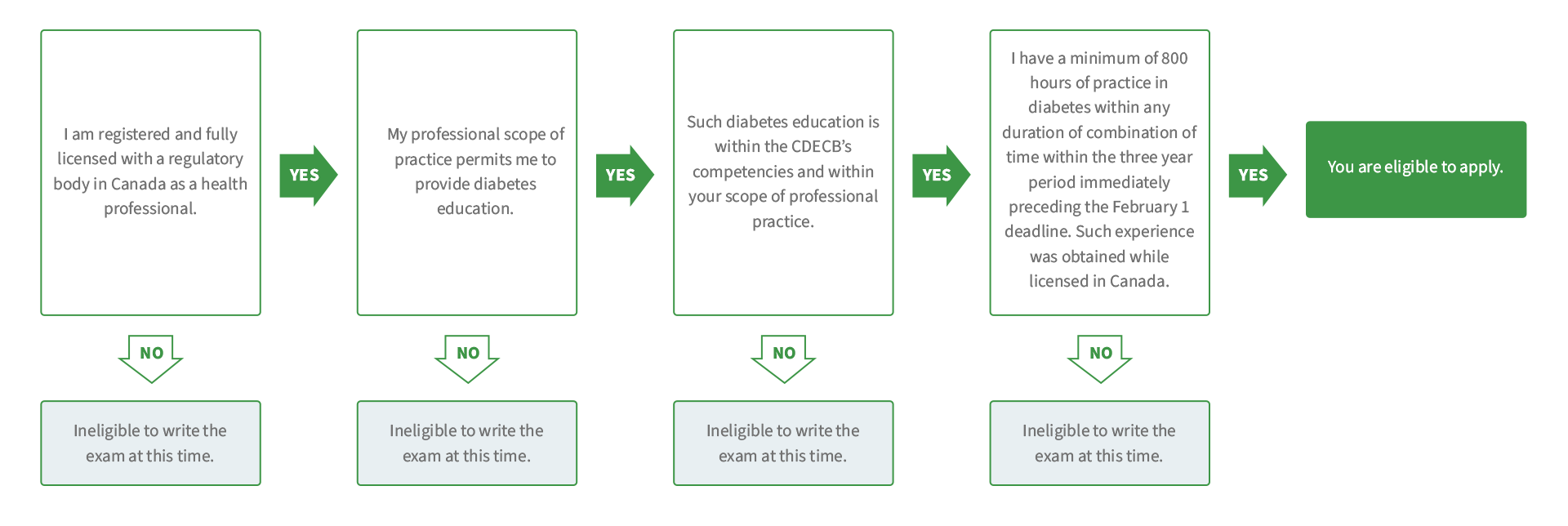
Source : cdecb.ca
Handling the Application and Beyond
The Application Process: Don’t Skimp on Details.
Submitting your application is a significant step. It requires careful attention to detail. You’ll need to accurately report your educational background, your RN licensure information, and critically, document all your qualifying diabetes education experience hours. Provide names, dates, and specific details of your work. Make sure all information is truthful and verifiable. False information can lead to disqualification, and potentially, future bars from certification. Many platforms, like Indeed, offer career advice that touches upon these roles, giving you a broader perspective on how your experience fits into the job market. Check out resources like Indeed’s guide for general insights, but always defer to the official CBDCE requirements for the application itself.
Double-check, triple-check, and then have someone else check your application before you submit it. Missing dates, incorrect license numbers, or vague descriptions of your experience can cause delays or outright rejection. The certifying bodies are thorough. They need clear, concise, and accurate information to approve your eligibility to sit for the exam. Think of this as your first professional task for this certification – demonstrating meticulousness. It sets the tone for your application.
Fees and Deadlines: Stay Organized.
Yes, there are fees involved. Applying for certification and taking the exam costs money. Be prepared for these costs. There’s usually an application fee and a separate exam fee. Failing to pay the correct fees on time can cause your application to be rejected or delayed. Keep track of application deadlines and exam scheduling windows. Missing a deadline means waiting for the next cycle, which could be months away. Mark your calendar and set reminders. Staying organized is Key to avoid unnecessary stress and setbacks. The CBDCE website will clearly outline all fees and relevant dates. Don’t miss them!
These costs can add up. Factor them into your professional development budget. Some employers may offer reimbursement or financial assistance for certification fees, especially if it’s a role they need filled. It’s worth inquiring about this. But ultimately, the responsibility lies with you to Make sure payment is made on time. Planning financially is just as important as planning your study schedule. It’s all part of the professional pathway.
Maintaining Your Credential: It’s an Ongoing Commitment.
Congratulations, you passed! But guess what? Your work isn’t done. The CDCES credential is not for life. You need to maintain it. This involves accumulating continuing education credits specifically related to diabetes care and education over a defined period (usually four years). The number of CEUs required will be specified by the CBDCE. You also need to reapply and pay renewal fees. This ensures that CDCESs remain knowledgeable and up-to-date in the ever-evolving field of diabetes management. It’s a commitment to lifelong learning and patient advocacy. Keep track of your CEUs throughout the four-year cycle, don’t wait until the last minute. Regular professional development is key.
Think of it as staying sharp. Diabetes care isn’t static. New research, new technologies, new treatment guidelines – they all emerge constantly. The recertification process ensures that you, as a Certified Diabetes Educator, are providing the most current and effective care possible. It’s a cycle of learning, application, and validation. Welcome it as part of being a top-tier professional in this field. It’s what separates the good from the great.
The Value Proposition: Why Bother?
Career Advancement and Opportunities.
Let’s be blunt: getting certified opens doors. As an RN, you’re already valuable. But adding the CDCES credential significantly boosts your resume. It signifies a specialized level of expertise and commitment that many employers actively seek. You’ll be qualified for roles in diabetes centers, hospitals, clinics, public health organizations, and even pharmaceutical companies or medical device manufacturers. The demand for qualified diabetes educators is high and continues to grow. Having this certification can lead to better job prospects, higher salaries, and more specialized, rewarding career paths. It’s a tangible way to differentiate yourself in a competitive job market.
Consider the types of roles: Diabetes Program Coordinator, Clinical Nurse Specialist in Endocrinology, Educator for a specific device company, or a community health educator focusing on chronic disease management. These are often roles with greater autonomy and responsibility. Your RN skills combined with diabetes expertise make you a powerful candidate. It’s a strategic career move.
Enhanced Patient Care and Impact.
Beyond the career benefits, the most profound reason to become a CDCES is the impact you can have on patients’ lives. Diabetes is a chronic condition that requires constant self-management. Effective education empowers individuals to take control of their health, make informed decisions, prevent complications, and improve their quality of life. As a CDCES, you’ll be at the forefront of this Key work. You’ll build relationships with patients, understand their challenges, and provide the support and education they need to thrive. This is incredibly rewarding work. Seeing a patient successfully manage their blood sugar or confidently use a new device because of your guidance? That’s powerful. You’re not just treating a disease; you’re changing lives.
The level of skill involved goes beyond basic nursing. It requires communication expertise, motivational interviewing techniques, cultural sensitivity, and a deep understanding of the psychological aspects of chronic illness. Becoming certified validates that you possess these advanced skills. It assures patients and employers that you are equipped to provide high-quality, Full diabetes education. Your impact on patient outcomes can be immense.
Professional Recognition and Credibility.
Earning the CDCES credential lends significant credibility to your professional practice. It’s a mark of distinction recognized by peers, healthcare organizations, and patients alike. It demonstrates that you have met rigorous standards of knowledge and experience in diabetes self-management education and support. This recognition can lead to increased respect from colleagues, greater autonomy in your practice, and opportunities to serve in leadership or mentorship roles. It solidifies your position as an expert in the field. It’s a badge of honor, earned through hard work and dedication.
When you introduce yourself as a CDCES, people understand immediately that you have specialized knowledge. This can build trust with patients from the outset. It also positions you as a go-to resource within your healthcare team. You become the person colleagues turn to with complex diabetes-related questions. This professional standing is Crucial. It reflects years of learning and hands-on experience, validated by a respected credentialing body.
A Quick Look at Requirements: Side-by-Side
It can be confusing with different bodies and slight variations. Here’s a simplified look, keeping in mind the CDCES is the most common.

Source : velvetjobs.com
| Requirement Area | Description | Typical RN Needs |
|---|---|---|
| Professional License | Active, unrestricted RN license. | Must possess and maintain. |
| Education | Associate’s Degree in Nursing (ADN) or higher from an accredited program. | Minimum ADN required; BSN often preferred. |
| Diabetes Education Practice Hours | Minimum hours (e.g., 1000-3000+) of direct diabetes self-management education and support within the last 2-4 years. Specific activities defined by certifying body. | Must actively document significant time in focused diabetes education role. |
| Continuing Education Units (CEUs) | Specific number of CEUs in diabetes-related topics, often required for application and recertification. | Track and complete relevant CEUs regularly. |
| Application & Fees | Completed application form, supporting documentation, and payment of fees. | Meticulously complete application; budget for fees. |
| Certification Exam | Pass a standardized exam (e.g., CDCES exam) covering various domains of diabetes care and education. | Dedicated study and successful exam completion required. |
| Recertification | Accumulate CEUs and pay fees every 4 years to maintain the credential. | Ongoing commitment to learning and renewal. |
This table gives you a snapshot. Remember, always check the official website of the certifying board—like the CBDCE—for the most accurate and up-to-date information specific to your situation. Requirements can and do change.
Final Thoughts: Your Path Forward
Is It Worth the Effort? Absolutely.
Embarking on the journey to become a Certified Diabetes Educator as an RN is a significant undertaking. It demands time, effort, and a serious commitment to professional development. You’ll be Handling educational requirements, logging Key experience hours, studying diligently for a challenging exam, and managing application processes. It’s not for the faint of heart. But the rewards? They are immense. The ability to profoundly impact individuals managing diabetes, the career advancement opportunities, and the professional respect you gain make it unequivocally worthwhile. It elevates your nursing practice to a specialized, highly sought-after level.
Satisfaction. Helping someone navigate the complexities of insulin therapy, understand lifestyle changes, or simply feel less alone in their journey with diabetes is incredibly fulfilling. It’s a chance to be a true agent of change and empowerment in a patient’s life. This certification isn’t just a piece of paper; it’s a Proof to your dedication and expertise in a field that desperately needs skilled professionals. It is a critical step for any RN passionate about diabetes care.
Actionable Steps: What To Do Now.
Ready to take the plunge? Here’s your immediate action plan. First, confirm your RN license is active and in good standing. Second, thoroughly review the eligibility criteria on the CBDCE website. Seriously, read it all. Third, start meticulously documenting your current diabetes education activities. If your current role doesn’t provide enough, start exploring opportunities within your organization or network. Talk to current CDCESs; learn from their experiences. Consider enrolling in a CEU course related to diabetes education to start building your knowledge base and fulfilling credit requirements. Don’t delay; the sooner you start planning and documenting, the smoother the process will be. Taking these concrete steps now will set you up for success.
Don’t let the perceived complexity paralyze you. Break it down into smaller, manageable goals. Focus on one requirement at a time. Celebrate small victories along the way—like finding a great study resource or logging your 500th hour of experience. This journey is a marathon, not a sprint. Your commitment to this path will not only benefit your career but, more importantly, the countless lives you’ll touch through expert diabetes education. You’ve got this.
Frequently Asked Questions
Can an RN be a Diabetes Educator?
Absolutely! Being a Registered Nurse (RN) is a fantastic starting point. Many diabetes educators have a nursing background because you already have a solid understanding of patient care and medical concepts. You’ll just need to meet the other specific certification requirements.
What qualifications are necessary to become a certified diabetes educator?
So, you want to be a Certified Diabetes Educator (CDE)? You’ll need a current, unrestricted license as a healthcare professional, like an RN. Then, there’s a bunch of education and experience you gotta rack up. Think about accumulating at least 1000 hours of diabetes education practice within a specific timeframe and completing a certain number of continuing education hours in diabetes-related topics. It’s all about proving you know your stuff and have hands-on experience.
Are Diabetes Educator credentials make more money?
While it’s not always a massive jump, yes, having a Diabetes Educator certification can definitely lead to a higher salary. It shows specialized knowledge and skills, making you a more valuable asset to employers. Plus, you’re often taking on more responsibility, which usually comes with better pay. It’s an investment in your career for sure.
What qualifications do you need to be a Diabetes Educator?
To be a Diabetes Educator, you typically need to be a licensed healthcare professional first, like an RN, dietitian, or pharmacist. Then, you’ll need to demonstrate a certain amount of experience specifically in diabetes education, usually measured in hours. Plus, you’ll need to complete continuing education courses focused on diabetes management and care to stay sharp.
What is the most common pathway to becoming a certified diabetes educator?
Honestly, the most common route is through nursing. Many RNs find that their existing skills and the readily available educational pathways Match perfectly with the requirements for certification. It’s a well-trodden path because the foundational knowledge is already there, and the additional steps are manageable.
