Cracking the Code: Your No-Nonsense Guide to RBT Certification for ABA Therapy
So, you’re looking to dive into the world of Applied Behavior Analysis (ABA) therapy and want to become a Registered Behavior Technician (RBT). Great move. It’s a field that genuinely changes lives, but let’s be honest, the path to getting there can feel like Handling a maze blindfolded if you don’t have a clear roadmap. Forget the jargon-filled, dusty manuals for a second. I’m going to break down exactly what you need to do, step-by-step, no fluff, just the straight talk you need to get that RBT certification.
This isn’t some dry academic lecture. We’re talking about real steps, real requirements, and how to actually get this done so you can start making a difference. Think of it like building IKEA furniture – you need the instructions, the right tools, and a bit of patience. Except, in this case, the end result is way more rewarding than a wonky bookshelf.
It All Starts with Understanding the RBT Role

Source : onlinerbttraining.com
Before you even think about forms and training, let’s get crystal clear on what an RBT actually does. It’s not just a fancy title; it’s a Key position within the ABA therapy team. They’re the frontline heroes, directly implementing behavior-analytic interventions under the supervision of a BCBA (Board Certified Behavior Analyst) or BCaBA (Board Certified Assistant Behavior Analyst).
The Day-to-Day Grind (The Good Kind!)
What does this mean in practice? You’re working directly with clients, often children with autism spectrum disorder, but not exclusively. Your tasks might include running discrete trial training (DTT), implementing behavior reduction plans, collecting data like it’s your job (because it is!), and communicating progress with your supervisor. It’s hands-on work. You’re not just observing; you’re actively participating in the therapeutic process.
Why RBT is Your ABA Launchpad
Getting certified as an RBT is often the first significant step for many aspiring ABA professionals. It provides a solid foundation in ABA principles and practical skills. Plus, it’s a recognized credential, meaning employers know exactly what skills you bring to the table. It’s a stepping stone, sure, but a really important one.
Supervision: The Lifeline of Your RBT Journey
Crucially, an RBT cannot operate in a vacuum. You’ll always be working under supervision. This is non-negotiable. Your supervisor guides your training, helps you refine your techniques, and ensures you’re following ethical guidelines and the BACB’s stringent standards. Think of them as your mentor and your quality control all rolled into one. You can find out more about the role directly from the source at the BACB RBT page.
Requirement #1: You Need a High School Diploma (Duh!)
Okay, this one’s pretty straightforward, but we have to cover it. To even be considered for RBT certification, you absolutely must have a high school diploma or a GED. No exceptions here. It’s a baseline requirement, just like needing a driver’s license to drive a car.
Source : mypieces.org
The Diploma: Your Golden Ticket (Sort Of)
Seriously, if you don’t have this, stop reading and go get it. Or your GED. It’s that fundamental. The Behavior Analyst Certification Board (BACB) needs to know you’ve completed your basic education before you can even think about advanced training in ABA.
What If My Diploma Isn’t From the US?
No worries if your education happened elsewhere. The BACB accepts equivalent qualifications. So, if you have a high school certificate or diploma from another country that’s recognized as equivalent, you’re good to go. You might need to provide documentation, so be prepared for that.
Don’t Try to Skirt the Rules
Look, people have tried. They’ve tried to fudge records, claim they have one when they don’t. It’s a bad idea. The BACB has verification processes. Getting caught means you won’t just be denied; you’ll likely be flagged and unable to apply again. Stick to the straight and narrow.
Requirement #2: The Magic 40 Hours of Training
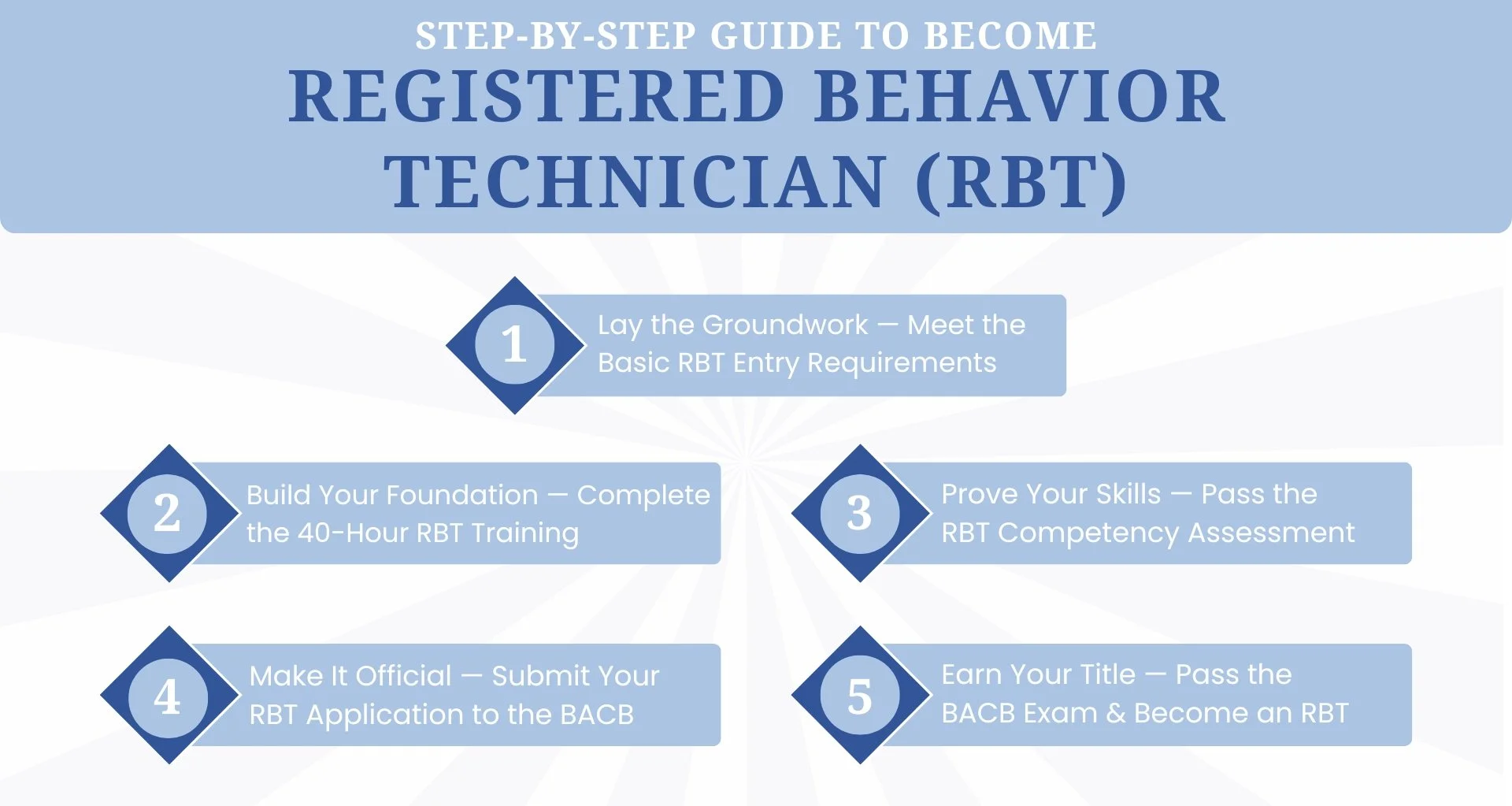
This is where the real learning begins. You’ve got to complete a specific 40-hour training course focused on the RBT task list. This isn’t just any course; it has to be an RBT training program that covers all the necessary competencies. Think of it as your intensive bootcamp into ABA practices.
Finding the Right 40-Hour Training Provider
There are tons of providers out there, both online and in-person. Some are better than others. Look for programs that are reputable, aligned with the current BACB RBT task list, and offer practical examples. Online courses are super convenient, allowing you to learn at your own pace, which is a huge plus for busy people. Many companies offer Strong online programs designed specifically for this. A good starting point for understanding how to get certified is often found on the BACB’s certification pathway page.
What Exactly Will This Training Cover?
The 40-hour course is designed to equip you with the foundational knowledge and skills needed for the job. It dives deep into areas like:
- Measurement and data collection techniques.
- Behavioral definitions and identification.
- Implementing skill acquisition programs (like DTT, naturalistic teaching).
- Implementing behavior reduction strategies.
- Professional and ethical compliance codes.
- Understanding the role of the RBT within the supervision structure.
Competency Demonstration: It’s Not Just About Watching Videos
Here’s a Key part: much of this training involves demonstrating your competency in specific ABA procedures. This means you’ll likely need to show a qualified individual (usually your supervisor or a designated trainer) that you can actually do the things you’re learning. It’s not enough to just pass a quiz; you have to prove you can apply the principles effectively and safely. This hands-on component is Key for real-world application.
Requirement #3: Supervised Fieldwork – Learning by Doing
Okay, so you’ve got the 40-hour training under your belt. Great! But that’s just the theory. Now comes the practical application, and the BACB requires you to get supervised fieldwork experience. This is where you actually work with clients under the watchful eye of a qualified supervisor.
Minimum Hours and Frequency
You need a minimum of 40 hours of supervised fieldwork. This isn’t 40 hours of just being there; it’s 40 hours of actual experience implementing ABA procedures. Critically, this fieldwork must occur within a 12-month period. Your supervisor must observe you implementing ABA procedures at least 5% of the hours you work each month. So, if you work 20 hours in a month, that’s a minimum of 1 hour of direct observation. They also need to provide at least two feedback sessions per month.
Who Counts as a Supervisor?
This is key. The supervisor must be a BCBA or a BCaBA who has current, valid certification and has completed the RBT training and an RBT Supervision training course. They need to be qualified to teach and assess your skills. You can’t just have your cousin who’s “good with kids” sign off on this!
Documentation is Your Best Friend
Keep Careful records of your fieldwork hours and supervision sessions. Your supervisor will also be documenting your progress. This documentation is Needed for your application to the BACB. Without proper, signed-off documentation, your application will hit a brick wall. Imagine trying to prove you went to college without transcripts – it’s that important.
Requirement #4: The Competency Assessment – Proving Your Skills

Source : rori.care
Remember that competency part from the training? Well, it gets a formal nod here too. Before you can even sit for the RBT exam, you need to pass a formal competency assessment. This is a separate assessment that directly measures your ability to perform specific ABA tasks.
The Practical Exam (Kind Of)
This assessment is conducted by a qualified supervisor (again, a BCBA or BCaBA). They will observe you performing a variety of ABA procedures outlined in the RBT task list. It’s designed to see if you can translate your training into real-world skills, safely and effectively. This usually involves role-playing scenarios or direct observation during client sessions.
What Skills Are Assessed?
The assessment covers the core competencies every RBT needs. This typically includes things like:
- Implementing DTT and other skill acquisition procedures.
- Implementing behavior reduction plans.
- Data collection and graph analysis.
- Professionalism and ethical conduct.
- Communication with supervisors and stakeholders.
It’s Full. Your supervisor will use a standardized form to document your performance. You need to demonstrate proficiency in these areas to move forward. Failing this assessment means you need more practice and supervision before you can apply for the exam.
Requirement #5: The BACB RBT Competency Assessment and Supervision Training
This one is a bit more specific and often trips people up. Not only do you need to complete the 40-hour training and pass a competency assessment, but there’s also a requirement related to supervision training itself. Specifically, the supervisor who assesses your competency must have completed specific RBT training themselves, including a supervision training component. This ensures they are equipped to assess you properly.
Supervisor Qualification is Key
It’s on you, the applicant, to Make sure your supervisor meets these specific requirements. They need to have completed the RBT training themselves, AND they need to have completed a separate training course focused on supervising RBT candidates. This isn’t just a suggestion; it’s a hard rule laid out by the BACB.
Why This Matters for Your Competency Check
The idea here is quality control. The BACB wants to Make sure that the people assessing your skills are themselves well-trained and understand the RBT role and how to evaluate it effectively. This prevents candidates from being assessed by someone who doesn’t fully grasp the requirements or standards.
Ask the Right Questions Upfront
When you’re looking for a supervisor or an agency to work with, don’t be shy. Ask them directly: “Have you completed the RBT training, and have you completed specific RBT supervision training?” Their answer, and their ability to prove it if necessary, will tell you a lot. This avoids a major roadblock later on.
Requirement #6: Passing the RBT Certification Exam
Alright, you’ve done the training, you’ve got the supervised hours, and you’ve aced the competency assessment. The final hurdle before you’re officially an RBT? The big one: the RBT certification exam. This is a standardized test administered by the BACB.
What Kind of Test Is It?
The exam is a multiple-choice test covering the various domains of the RBT task list. It’s designed to assess your knowledge and understanding of ABA principles and your ability to apply them in practical situations. It’s computer-based and typically taken at a testing center. You’ll need to apply to the BACB first, get approved, and then they’ll provide you with instructions on how to schedule your exam.
Preparing for the Exam
Don’t wing this. Seriously. Use your training materials, review your notes, and consider taking practice exams. Many training providers offer practice tests, which are Crucial. Focus on understanding the why behind the procedures, not just memorizing steps. Think about scenarios: “If a client does X, what’s the best RBT response?” Familiarize yourself with the BACB’s ethical code, as ethical dilemmas are often part of the exam.
The Application Process (It’s Involved!)
Submitting your application to the BACB is a significant step. You’ll need to provide proof of your diploma, your 40-hour training completion, your supervised fieldwork documentation, and your completed competency assessment form. Everything needs to be accurate and complete. Any mistakes can cause delays or rejection. This is where having a good supervisor is gold, as they can guide you through this paperwork maze.
Requirement #7: Maintaining Your RBT Certification

Source : abcachieve.com
So, you passed! Hooray! But wait, there’s more. Getting certified is just the beginning. Your RBT certification isn’t a lifetime achievement award; it needs to be maintained. The BACB requires ongoing efforts to keep your credentials active.
Recertification Every Year
Your RBT certification needs to be renewed annually. This involves a few key things. Firstly, you must continue to be supervised. This means ongoing supervision activities with a qualified supervisor. The specifics can vary slightly, but continuous oversight is Top.
The Annual Competency Assessment
Each year, you must complete another competency assessment. This assessment is conducted by your supervisor and verifies that you are still proficient in the Needed RBT skills. It’s a way to Make sure that RBTs aren’t letting their skills get rusty and are keeping up with best practices.
Adhering to Ethical Standards
You must also continually adhere to the BACB’s professional and ethical compliance code. This includes reporting any disciplinary actions against you and ensuring you are practicing within the scope of your role. Any violations can jeopardize your certification.
The Fees (Don’t Forget!)
There are fees associated with initial certification and annual renewal. Make sure you budget for these. Keeping track of renewal deadlines is critical. Missing a deadline can mean lapsing your certification, which requires you to go through a more rigorous process to get it back, or even reapply from scratch.
Handling the 2026 RBT Requirements Changes
The world of ABA and RBT certification isn’t static. The BACB periodically updates its requirements to Make sure the field stays current and effective. There are significant changes coming, particularly with the implementation of the 2026 RBT requirements. It’s Key to be aware of these shifts.
What’s Changing? (The Big Picture)
The upcoming changes, often referred to as the 2026 RBT requirements, involve adjustments to the training, supervision, and assessment components. While the exact details continue to be refined, the core aim is generally to enhance the quality and depth of RBT training and ongoing competency.
Key Areas of Potential Impact
Expect potential shifts in the structure of the 40-hour training, possibly with more emphasis on specific skill areas. Supervision requirements might also evolve, perhaps requiring more direct observation or specific types of feedback. The competency assessment process could also see modifications to Make sure it’s even more Strong in evaluating practical skills. Staying updated on the official announcements from the BACB website is your best bet.
How to Prepare Now
Even before the official 2026 date, you can prepare. Focus on building a strong foundational understanding of ABA principles. Seek out high-quality training programs that are known for their rigor. Build a strong relationship with a supervisor who is committed to providing thorough, ongoing training and mentorship. The better you are prepared for the current requirements, the smoother the transition to the new ones will likely be.
Don’t Panic, Just Adapt
Change can be unsettling, but remember that these updates are designed to strengthen the profession and better serve clients. Think of it as an opportunity to deepen your skills and knowledge. Being proactive and informed is the best strategy. The field of ABA is constantly evolving, and staying current is part of being a great RBT.
Data Snapshot: RBT Certification vs. Other Entry-Level Roles
To really put the RBT certification into perspective, let’s look at how it stacks up against other roles you might consider when starting in the human services field. The RBT credential offers a specific, recognized pathway with clear requirements and benefits.
| Feature | Registered Behavior Technician (RBT) | Behavioral Aide (General) | Direct Support Professional (DSP) | Early Childhood Educator Assistant |
|---|---|---|---|---|
| Governing Body | BACB (Behavior Analyst Certification Board) | Varies by agency/state | Varies by agency/state | Varies by agency/state/accreditation |
| Formal Training Req. | Mandatory 40-hour RBT-specific course | Often informal or agency-specific | Often agency-specific, sometimes certifications available | May require specific ECE coursework or CDA |
| Supervision Req. | Mandatory, frequent, structured supervision by BCBA/BCaBA | Varies, may be less structured | Varies, often supervisor-dependent | Varies, often site supervisor |
| Certification Exam | Yes, BACB RBT exam | Generally no formal exam | Generally no formal exam | May require state/program specific exams (e.g., CDA) |
| Scope of Practice | Clearly defined by BACB, focuses on ABA intervention implementation | Can be broad, depends heavily on employer | Focuses on support for individuals with disabilities in daily living | Focuses on early childhood education and care |
| Career Pathway | Clear path towards BCaBA/BCBA, other ABA roles | Less defined, may require additional training for advancement | Opportunities for specialized roles or management | Pathway to lead teacher roles or ECE administration |
| Ethical Code Adherence | Strict BACB ethics code | Agency policies, may be less standardized | Agency policies, may be less standardized | Agency policies, state licensing rules |
As you can see, the RBT certification offers a structured, standardized approach. This is incredibly valuable for both the technician and the clients they serve. It ensures a baseline level of competence and ethical practice that isn’t always guaranteed with less formalized roles. It’s a significant step up in terms of professionalization within the ABA field.

Source : abcachieve.com
Tips and Tricks for a Smoother Certification Process
Look, getting certified isn’t rocket science, but it does require attention to detail. You want to make this process as smooth as possible, right? Here are a few hard-won tips from folks who’ve been there, done that.
Choose Your Training Provider Wisely
Not all 40-hour courses are created equal. Some are bare-bones, just enough to check the box. Others are Full and engaging. Read reviews, ask for recommendations, and look for providers who emphasize practical application and ethical considerations. A good training program will make studying for the exam feel less like a chore.
Find a Great Supervisor Early On
Your supervisor is your guide, mentor, and gatekeeper for much of this process. Don’t pick the first one you find. Look for someone experienced, ethical, and willing to invest time in your development. A supportive supervisor can make all the difference in your learning and your eventual success on the exam. Agencies that employ RBTs often have preferred supervisors or can help connect you.
Document Everything (Seriously, Everything!)
Keep copies of all your certificates, training records, supervision logs, and any communication with the BACB. Create a physical or digital binder for your RBT application materials. Missing a single signature or date can cause major headaches. Better to have too much documentation than too little.
Practice, Practice, Practice!
For the competency assessment and the final exam, practice is key. Use flashcards for terminology, role-play scenarios with peers or your supervisor, and take as many practice tests as you can. Understand the rationale behind interventions, don’t just memorize them. Think critically about how you would handle different client behaviors.
Understand the BACB Ethics Code
This is non-negotiable. The BACB has a strict code of ethics that all RBTs must follow. Familiarize yourself with it thoroughly. Ethical questions are common on the exam and are fundamental to practicing responsibly. Know your boundaries, confidentiality rules, and reporting requirements.
Give Yourself Time
Don’t rush the process. Allow Plenty of time for your training, fieldwork, and studying. Trying to cram everything in can lead to burnout and mistakes. Break it down into manageable steps and celebrate small victories along the way. Getting certified is a marathon, not a sprint.
Frequently Asked Questions
How to become an ABA RBT?
So, you waa be an ABA RBT? Awesome! First up, you gotta be at least 18, have a high school diploma or GED. Then, you need to finish 40 hours of ABA training that covers specific competencies. After that, you’ll probably need some supervised fieldwork, and then you gotta pass the RBT exam. Boom! Certified!
What is the highest RBT salary?
The highest RBT salary can really vary, but you’re looking at potentially topping out around $60,000 to $70,000 a year, sometimes more if you’re in a high-demand area or have a ton of experience. It’s not unheard of to see rates above $20/hour, especially with specialized skills. Think RBT salary potential.
How long does it take to be RBT certified?
Because everyone’s pace is different, it can take anywhere from a few weeks to a couple of months. The 40-hour training can be done pretty quickly, but the tricky part is getting your supervised fieldwork hours, which usually takes longer. So, budget for about 1-3 months, generally.
Can an RBT work without a BCBA?
Technically, yes, an RBT can work without direct supervision from a BCBA constantly hovering, but they always must be overseen by one. An RBT’s role is to implement behavior plans designed by a BCBA or BCaBA. You can’t just go rogue; there’s always a BCBA supervision requirement.
What are the Needed skills for an RBT?
You’ll need to be patient, have good communication skills, be able to follow instructions precisely, and really understand the principles of Applied Behavior Analysis. Being organized and detail-oriented helps a ton too, especially when you’re tracking progress and taking notes. Think Needed RBT skills.
