So, you’re thinking about diving into the world of EMDR therapy, huh? And the burning question on your mind? How long does EMDR certification really take? Let’s cut through the fluff. It’s not a weekend workshop, that’s for sure. It’s a commitment. A serious one. But totally worth it if you want to truly master this powerful therapeutic technique.
Forget those quick-fix promises you see online. Real EMDR certification is a journey. It involves structured training, hands-on practice, and a whole lot of learning. We’re talking about becoming proficient in a therapy that can genuinely transform lives. So, buckle up. We’re going to break down exactly what’s involved, the timelines, and what you can expect. No beating around the bush here.
The Initial EMDR Training: The Foundation You Can’t Skip
What Exactly IS Basic EMDR Training?
Okay, first things first. You can’t just decide you’re EMDR certified. You have to go through a specific, approved basic training program. This isn’t just about learning the protocols. It’s about understanding the underlying theory, the neurobiology, and the ethical considerations. Think of it as building the solid foundation for a skyscraper. Without it? Everything crumbles.
These programs are typically extensive. They’re designed to give you a Full understanding of EMDR’s eight phases. You’ll learn how to assess clients, how to guide them through the reprocessing, and how to handle different situations. It’s intense, hands-on work. You’re not just passively listening; you’re actively learning and practicing.
EMDR Institute’s Approach to Basic Training
The EMDR Institute, founded by Francine Shapiro herself, offers a well-respected training. Their approach emphasizes fidelity to the original protocols. They’ve been doing this for decades, and their faculty? Top-notch. International speakers, published authors – you name it. They know their stuff inside and out.
When you attend an EMDR Institute training, you’re getting the real deal. It’s not diluted or altered. This is Key for effective EMDR. Their materials are updated constantly by experts, ensuring you get the most current and effective training. It’s a big part of why many therapists seek out their programs for EMDR therapy training.
EMDRIA Approved Training: The Official Stamp of Approval
Here’s a key point: for true certification later on, your initial training must be approved by the EMDR International Association (EMDRIA). Not just any workshop will do. You need to Make sure the program you choose meets their rigorous standards. This ensures a consistent level of quality across the board.
Think of EMDRIA approval as your first major checkpoint. It signifies that the training covers all the Needed components needed to practice EMDR safely and effectively. Without this specific type of training, you’re basically spinning your wheels when it comes to formal certification pathways. It’s a non-negotiable step.
The Time Commitment for Basic Training
Let’s talk numbers. A standard EMDR basic training program is usually spread out. It’s not all crammed into one week. You’ll typically see it broken down into multiple modules or parts. This often happens over several weekends or a few weeks. It’s common to see the total training clock in at around 20-40 hours of instruction.
But that’s just the classroom/virtual time! Add to that the required practice sessions, consultations, and readings. It’s a significant chunk of time dedicated purely to learning EMDR. You’re looking at a minimum of several weeks, often a few months, to get through the entire basic training package. It’s a marathon, not a sprint.
Beyond the Basics: The Practicum and Application Phase
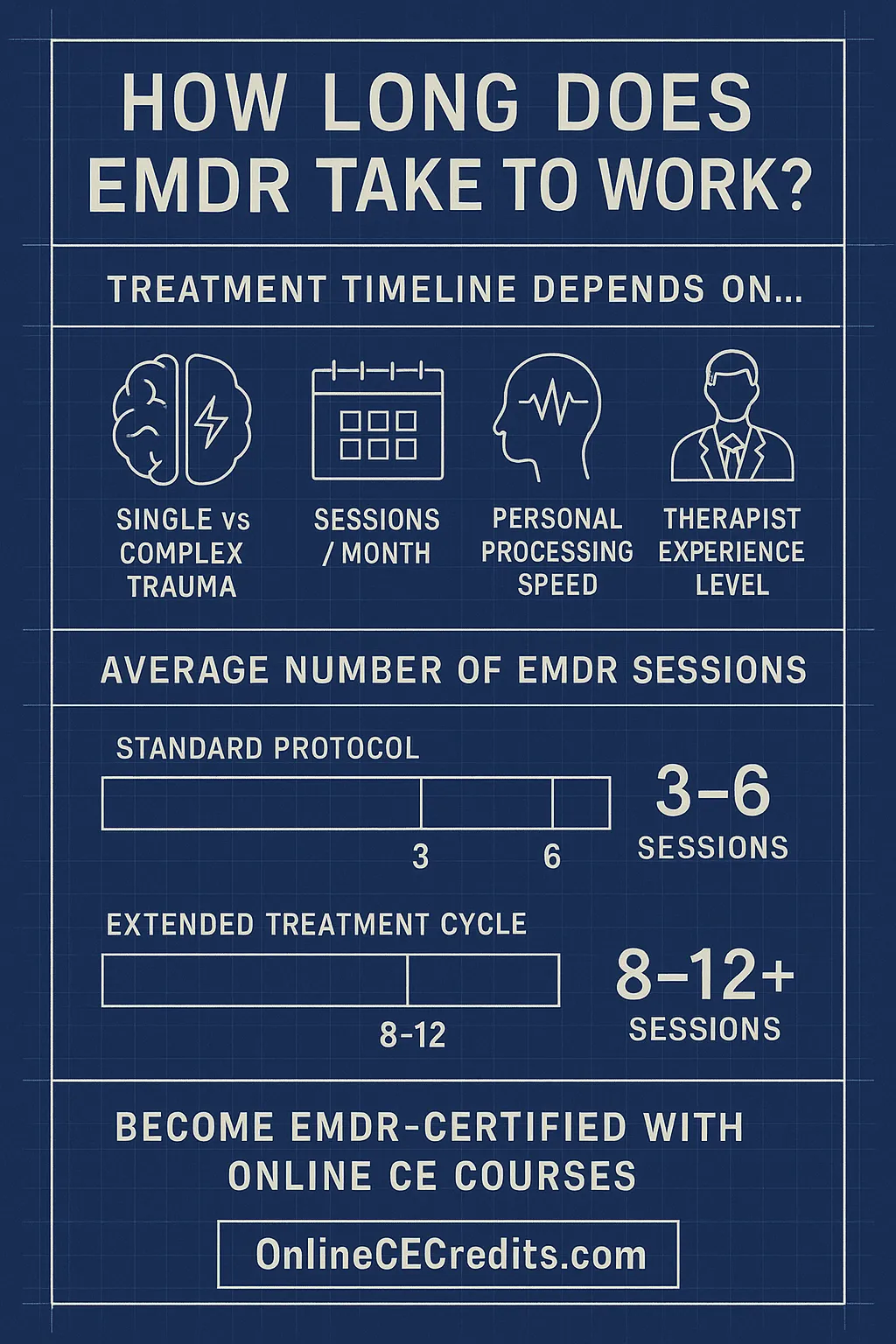
Source : onlinececredits.com
Source : emdria.org
Putting Theory into Practice: The Practicum
Once you’ve finished the didactic portion of the basic training, the real work begins. You have to actually do EMDR. This is where the practicum component comes in. You’ll be practicing the skills you learned under supervision. This is Key. Absolutely Key.
Supervised practice allows you to integrate the material. You get feedback. You learn to adapt the protocols to real clients. This phase is where you start building confidence. It’s where the theoretical knowledge starts clicking into place through practical application. Supervised practice is where the magic really starts to happen.
Consultation Hours: Getting Guidance
A huge part of EMDR certification involves consultation hours. What are those? Basically, you meet with an experienced EMDR-approved consultant. You discuss your cases. You get expert guidance on how you’re applying the therapy. This isn’t optional; it’s a core requirement for certification.
These consultations are Crucial. They help you refine your technique, troubleshoot tricky situations, and deepen your understanding. The number of required consultation hours varies depending on the specific certification pathway you’re pursuing, but it’s always a Large amount. Expect to dedicate significant time to these sessions. They are non-negotiable for EMDR certification hours.
Case Studies and Application Examples
During your training and consultation, you’ll work with various cases. Let’s say you’re working with a client dealing with childhood trauma. You’ve learned the eight phases. Now, you’re applying them. You’re guiding them through identifying the target memory, the negative cognition, the positive cognition, and the subjective units of distress (SUDs).
Or consider a veteran struggling with PTSD from combat. You’ll use specific EMDR protocols tailored for trauma. You’ll be facilitating the bilateral stimulation, helping their brain reprocess the traumatic memories. This hands-on application, followed by discussion in consultation, is key. It’s about seeing EMDR work and learning how to make it work best for each unique individual. This direct application of EMDR is Needed.
The Importance of Experiential Learning
EMDR isn’t something you can just read about and master. It’s inherently experiential. You need to feel what it’s like to be a client in the process, and you need to practice delivering the interventions. That’s why the training is structured the way it is, with role-playing and supervised client work.
Think of it like learning to swim. You can read all the books you want, but until you get in the water and practice, you won’t be a proficient swimmer. EMDR is the same. The experiential component solidifies your skills and builds your therapeutic presence. It’s about internalizing the process, not just reciting steps. This deep dive is what separates mere knowledge from true competence.
Certification Requirements: What EMDRIA Looks For
EMDRIA Certification vs. Basic Training
It’s Key to understand the difference: basic training is the prerequisite, but it’s not the same as certification. Completing an approved basic training program makes you trained in EMDR. EMDRIA certification, however, is a higher level of credentialing. It signifies advanced proficiency and a commitment to the field.
Certification shows that you’ve not only completed the initial training but have also gained significant experience, received extensive consultation, and demonstrated a mastery of EMDR protocols. It’s a mark of distinction. Think of it like a lawyer passing the bar exam versus just graduating law school. Certification is the next level.
The Specific Hours Required by EMDRIA
EMDRIA has clear benchmarks. To even apply for certification, you need to have completed a minimum number of hours of EMDRIA-approved basic training. But that’s just the start. You also need a significant number of hours providing EMDR therapy to clients. We’re talking about a Large caseload where EMDR was the primary modality.
On top of that, you need a specific number of hours of EMDR-focused consultation. These hours must be with an EMDRIA Approved Consultant. It’s all about demonstrating consistent, quality application of the therapy over time. The exact numbers are detailed on the EMDRIA website, but they are Large. This isn’t a quick tick-box exercise; it’s a Full demonstration of skill. You can find a detailed overview of the training requirements at EMDR.com’s Basic Training Overview.
Submission of Application and Documentation
Once you’ve met all the hour requirements (training, client work, consultation), you can submit your application for certification. This involves more than just saying you did the hours. You’ll need to provide documentation. Proof of your training, logs of your client hours, and reports from your consultants.
It’s a formal process. They want to see evidence. Evidence that you’ve met all the criteria. This application is your chance to showcase your journey and your dedication to EMDR. It’s the culmination of all the hard work you’ve put in. Proper documentation is key here.
The Role of Continuing Education
Even after you’re certified, the learning doesn’t stop. To maintain your EMDRIA certification, you’ll need to engage in ongoing continuing education. This means attending workshops, taking advanced trainings, and staying current with developments in the field. It keeps your skills sharp and ensures you’re providing the best possible care.
This commitment to lifelong learning is what keeps EMDR therapy at the forefront. It ensures practitioners are always growing and adapting. Think of it as staying current with medical research or legal precedents. It’s Needed for maintaining a high standard of practice. This ensures you remain a competent EMDR practitioner.

Source : wellspringchildandfamily.com
Factors Influencing the Timeline for EMDR Certification
Your Current Professional Status
Are you already a licensed mental health professional? That’s usually a prerequisite for the basic EMDR training itself. If you’re still in school or working towards licensure, that adds time before you can even begin the EMDR training process. If you’re fully licensed and in practice, you can likely jump in sooner.
Your existing professional standing dictates when you can start the journey. A practicing psychologist or social worker has a different timeline than someone still completing their supervised hours for licensure. It’s about having the foundational credentials in place first. This is a big factor in the overall timeline.
Pacing of Your Chosen Training Program
Basic trainings vary in structure. Some are intensive, condensed programs. Others are spread out over many months. Some training providers offer hybrid models (online components plus in-person). Your choice of program directly impacts how quickly you complete the initial training phase. Consider what fits your schedule best.
Don’t just pick the shortest one. Pick the one that allows you to learn effectively. A program that’s too rushed might leave gaps in your understanding. A well-paced program ensures you absorb the material properly. Think quality over speed for this initial EMDR certification step.
Availability of Consultation and Supervision
This is a BIG one. Finding an EMDRIA-approved consultant and scheduling regular consultation sessions can sometimes be a bottleneck. Consultants are in demand! Their availability can significantly influence how quickly you accumulate your required consultation hours. Plan ahead and network.
Sometimes you might need to wait for a spot to open up with a consultant. Or perhaps scheduling weekly sessions is tricky with your client load. These logistical hurdles can add weeks or even months to your timeline. Start looking for consultants early in your training process. Don’t underestimate the importance of consultation.
Your Personal Schedule and Client Load
Let’s be real: life happens. You have other clients, personal commitments, maybe family obligations. How much time can you realistically dedicate to EMDR training, practice, and consultation each week? If you’re seeing a full caseload, fitting in extra EMDR work requires careful planning and time management.
Some therapists might choose to reduce their client load temporarily to focus more on EMDR training. Others might integrate it slowly over a longer period. Your personal capacity and priorities will shape the timeline. There’s no one-size-fits-all answer here. It’s a very individual timeline.
A Realistic Timeline Breakdown: From Start to Certified
Phase 1: Basic EMDR Training (Approx. 2-6 Months)
Completing the EMDRIA-approved basic training is the first major hurdle. This includes the didactic hours (lectures, demonstrations) and the initial practicum components. Depending on how the training is structured (e.g., weekend intensives versus spread-out modules), this phase can take anywhere from a couple of months to half a year.
During this time, you’re absorbing a ton of new information and starting to practice the core skills. You’ll likely be juggling this with your existing work. It’s an exciting but demanding period. This is where you get your foundational EMDR knowledge.
Phase 2: Post-Training Practice & Consultation (Approx. 6-18+ Months)
This is where the bulk of the time commitment lies for certification. After basic training, you need to accrue a significant number of hours providing EMDR therapy to clients. Simultaneously, you must attend EMDR-focused consultation sessions with an approved consultant. EMDRIA typically requires a minimum of 20 hours of consultation, but often therapists do more.
This phase can be lengthy because you need to see enough clients and get enough supervised feedback to demonstrate competence. The exact duration depends heavily on consultant availability and your client caseload. Some people might achieve this in six months, but it often takes a year or more. This is the core of your EMDR certification journey.
Phase 3: Application and Review (Approx. 1-3 Months)
Once you’ve met all the hour requirements for training, client work, and consultation, you can submit your application for EMDR certification to EMDRIA. The association then reviews your application packet. This review process takes time. They need to verify all your documentation and Make sure you meet their standards.
This final stage involves paperwork and waiting. It’s the home stretch! But don’t underestimate the review period. It can take a few months to hear back. Be patient. You’ve done the work; now it’s in their hands. This application review is the final hurdle.
Overall Estimated Timeframe: 1 Year to 2.5 Years
So, putting it all together, a realistic estimate for completing EMDR certification from the start of basic training to official certification is typically between 1 to 2.5 years. Some might do it slightly faster, especially if they can dedicate significant time and have good consultant access. Others might take longer, particularly if they’re balancing it with a demanding practice or other life events.
This isn’t a quick process. It’s designed to Make sure that certified EMDR therapists are highly skilled and experienced. The extended timeline reflects the depth of training and practice required. It’s a commitment that pays off in the quality of care you can provide. Trust the process; it’s thorough for a reason.

Source : wellspringchildandfamily.com
Advanced EMDR Trainings and Specializations
Beyond the Core: Advanced Topics
Once you’re certified (or even during the process), there are tons of advanced trainings available. These Look into specific areas like complex trauma, dissociation, phobias, couples therapy, or even working with specific populations like children or veterans. Basic training gives you the foundation; advanced trainings allow you to specialize.
Think of these as building specialized tools onto your core EMDR toolkit. You might take a workshop on EMDR for performance enhancement for athletes, or another focusing on grief and loss. These allow you to tailor your skills to specific client needs. It’s about expanding your capabilities. Always learning, always growing in EMDR expertise.
Specialty Populations and Issues
EMDR therapy is incredibly versatile. You can adapt it for a vast range of issues. Many therapists focus on treating severe trauma like combat PTSD or sexual assault. Others might specialize in anxiety disorders, depression, or even chronic pain. The certification process provides the groundwork, but specializations refine your focus.
For example, someone working extensively with children might seek out specific training on adapting EMDR protocols for younger clients. The principles remain the same, but the delivery and application change significantly. This focused approach is what leads to becoming a true expert in a niche.
Continuing Education Units (CEUs) for EMDR Specialists
Continuing education is Key. Many of these advanced trainings also count towards your CEUs needed to maintain your primary licensure and your EMDR certification. It’s a win-win. You enhance your skills and fulfill your professional requirements simultaneously. It keeps you sharp and compliant.
Providers like the EMDR International Association offer numerous workshops and conferences dedicated to these advanced topics. Staying involved ensures you’re up-to-date with the latest research and best practices in the field. It’s an investment in your professional development and your clients’ well-being. This commitment to ongoing EMDR learning is non-negotiable.
The Value of Specialization in Your Practice
Why specialize? Simple: you become known for something. Clients seeking help for specific issues, like complex trauma or phobias, will actively look for therapists with specialized training and experience. Specialization can help you stand out in a crowded field. It also often allows for higher fee structures.
When potential clients see that you have specific advanced training in an area they need help with, it builds trust and confidence. It signals that you have dedicated extra time and effort to mastering that particular aspect of EMDR therapy. It’s a powerful differentiator for your private practice success.
Comparing Different EMDR Training and Certification Pathways
EMDRIA Certification: The Gold Standard
As we’ve discussed, EMDRIA certification is the most widely recognized credential in the United States. It involves meeting stringent requirements for training, supervised experience, and consultation. This pathway ensures a high level of competence and adherence to established protocols. It’s the Standard for many.
While it takes time and effort, EMDRIA certification provides significant credibility. It tells clients, colleagues, and potential employers that you’ve met a rigorous standard. It’s the most common goal for therapists aiming for formal recognition in EMDR. Achieving this requires dedication to the full EMDR certification process.
The EMDR Institute Pathway
The EMDR Institute, founded by Dr. Shapiro, offers its own Full training. While completing their basic training is a Key step, their internal “certification” or recognition might differ slightly from EMDRIA’s. Many therapists complete the EMDR Institute training and then pursue EMDRIA certification separately. It’s important to understand the specific requirements of each.
Their training is highly regarded for its fidelity to the original protocols. Many therapists feel it’s the most authentic way to learn EMDR directly from the source. The key is to Match the training you choose with your ultimate certification goals. Understanding these different organizations is key to Handling the EMDR training Field.
Other Training Organizations
Beyond EMDRIA and the EMDR Institute, other organizations offer EMDR training. Some are regional, some focus on specific applications. It’s Needed to verify if these trainings meet EMDRIA’s standards if formal EMDRIA certification is your ultimate goal. Not all “EMDR training” is created equal when it comes to certification requirements.
Do your homework! Check the training provider’s accreditation. Make sure the curriculum covers all the necessary components. Look for programs that emphasize supervised practice and consultation. A little research upfront can save you a lot of trouble down the road. Always verify the credibility of training providers.
Factors to Consider When Choosing a Pathway
When deciding which training and certification pathway is right for you, consider a few things. What are your career goals? Do you want the broad recognition of EMDRIA certification? Are you interested in a specific specialization offered by a particular institute? What’s your budget and timeline?
Format of the training too. Do you prefer intensive, in-person workshops, or are you comfortable with online modules and virtual consultations? Weigh the pros and cons of each option. Your choice should Match with your learning style and professional aspirations. Making an informed choice impacts your EMDR certification success.

Source : wellspringchildandfamily.com
Is EMDR Certification Worth the Time and Effort?
Enhanced Therapeutic Effectiveness
Let’s be blunt: EMDR is incredibly effective for trauma and other issues. But certified EMDR therapists are trained to use it optimally. This means better outcomes for clients. You’re not just going through the motions; you’re skillfully applying a powerful therapeutic modality. Clients notice the difference.
When you’re confident and competent in EMDR, you can help clients make profound shifts. It’s deeply rewarding to witness that transformation. This enhanced effectiveness is perhaps the biggest reason to pursue certification. It’s about being the best therapist you can be. The impact on client healing is profound.
Increased Professional Credibility and Opportunities
Holding EMDR certification lends significant weight to your professional profile. It signals to potential clients, referring physicians, and other professionals that you have achieved a high level of expertise. This can open doors to new opportunities, including specialized roles, better referrals, and potentially higher earning potential.
Pplying for a position at a trauma center. Having “EMDR Certified” on your resume is a major plus. It immediately sets you apart. It shows a commitment beyond basic licensure. This credential can be a real career booster. It’s a tangible marker of professional achievement.
Personal and Professional Fulfillment
There’s a deep sense of accomplishment that comes with mastering a complex therapeutic skill like EMDR. The process is challenging, yes, but seeing the positive impact on your clients’ lives is incredibly fulfilling. It revitalizes your passion for therapy.
Knowing you have the tools to help people process deep-seated trauma and move forward is immensely satisfying. It’s not just about the hours or the paperwork; it’s about the profound difference you can make. This is the heart of why many therapists pursue advanced EMDR training.
The Bottom Line: Yes, It’s Worth It!
So, to circle back to the original question: How long does it take to complete EMDR certification? Realistically, plan for 1 to 2.5 years. Is it a significant time investment? Absolutely. Does it require dedication, effort, and financial resources? You bet. But is it worth it? Overwhelmingly, yes.
The skills you gain, the clients you help, and the professional growth you experience make the journey incredibly worthwhile. It’s an investment in yourself, your practice, and the well-being of the people you serve. Don’t shy away from the commitment; Welcome the opportunity to become a highly skilled EMDR therapist. The rewards far outweigh the initial hurdles. You’ll be glad you made the choice to pursue this valuable certification.
| Component | Estimated Time Range | Key Activities | Notes |
|---|---|---|---|
| Basic EMDR Training | 2 – 6 Months | Didactic Instruction, Initial Practicum, Role-playing | Must be EMDRIA-approved. Structure varies (intensive vs. spread out). |
| Post-Training Practice & Consultation | 6 – 18+ Months | Providing EMDR to Clients, EMDR Consultation Hours | Requires significant client hours and consultation with approved consultant. This is the longest phase. |
| Application Submission & Review | 1 – 3 Months | Compiling Documentation, Submitting Application, Waiting for Approval | Formal process by EMDRIA. Thorough review of all submitted materials. |
Frequently Asked Questions
What is the typical duration for EMDR certification?
Because it varies, but most folks find it takes around 6 months to a year. You’ve got to get through the basic training, then a bunch of supervised practice hours, and finally, the certification application. So, not a weekend thing, but definitely doable!
Can I speed up the EMDR certification process?
But you can sometimes condense it if you’re really motivated. Some training programs offer intensive schedules. The key is consistent practice and getting those supervision hours in without delay. It’s a marathon, not a sprint, but a fast sprint is possible!
What are the main components that affect the timeline for EMDR certification?
Because you’ve got the formal training, which is usually a few days or weekends. Then comes the tricky part: racking up the required client hours and getting them signed off by a consultant. That’s where most of the time is spent. Plus, you need to complete case consultations.
How many supervised hours are needed for EMDR certification, and how long do they usually take to complete?
Generally, you’re looking at about 20-50 hours of EMDR supervision, depending on the certifying body. How long that takes really depends on your caseload. If you’re seeing a lot of clients, you can get through them faster. Some people knock it out in 3-4 months, others take longer.
Are there different levels of EMDR certification that impact the time commitment?
Yeah, there are! You’ve got your basic training and then the full EMDR certification. The basic training gets you started, but the certification is the gold standard. It requires more supervised hours and a deeper dive, so it naturally takes longer to achieve that full credential.
