Forget the gurus telling you it’s a quick hop, skip, and a jump to becoming a certified electrician. It’s a grind. A real, honest-to-goodness commitment that takes time, sweat, and a whole lot of learning the hard way.
So, how long are we actually talking? Because the answer isn’t just a number. It’s a journey with different paths, all leading to that sweet, sweet certification.
We’re going to break down what it really takes. Not the fluff. The nitty-gritty. The stuff that matters when you’re deciding if this career is for you.
The Real Deal: Why Certification Matters
It’s Not Just a Fancy Title
Look, anyone can call themselves an electrician. But certified? That’s different. That means you’ve proven you know your stuff. You’re safe. You’re skilled.
This isn’t just about hanging a certificate on the wall. It’s about trust. Clients need to know you won’t burn their house down. Or electrocute their dog. Big stuff.
Safety First, Always
Electricity is no joke. It’s powerful. It’s dangerous. And becoming certified means you understand those risks. You’ve learned the protocols. The safety measures. Everything.
It’s the difference between a cowboy with a screwdriver and a professional who respects the power they’re working with. Huge difference.
Building Your Reputation
It. When you need someone to fix a leaky pipe, you want a licensed plumber, right? Same goes for electrical work. Electrician certification builds that immediate credibility.
It tells potential employers and clients that you’ve passed a rigorous standard. You’re not just some yahoo off the street. You’re the real deal.
The Foundational Steps: Getting Your Foot in the Door
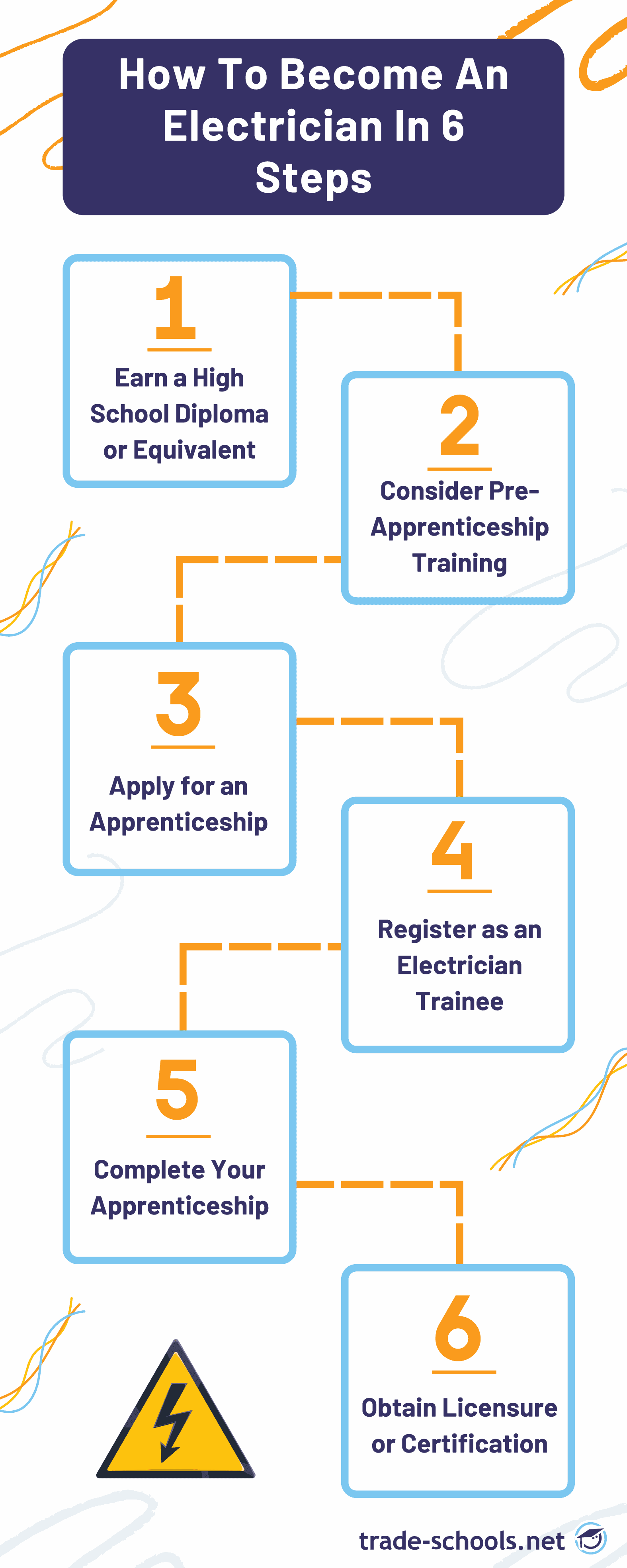
Source : trade-schools.net
High School: The Unsung Hero
Yeah, high school. Seems obvious, but it’s where the groundwork is laid. Strong grades in math and science? Key. Seriously. Algebra. Physics. They’re your best friends here.
Don’t blow off that shop class either. Learning to work with your hands, understanding blueprints – it all adds up. It’s the building blocks for everything that comes later.
Understanding the Basics
Before you even think about touching a wire, you need a solid understanding of electrical theory. What’s Ohm’s Law? How do circuits work? You need to get it.
This isn’t rocket science, but it requires focus. It’s the language of electricity. You wouldn’t try to speak French without learning the alphabet, would you?
Apprenticeship: The Long Haul
This is where the real time commitment kicks in. An electrician apprenticeship is typically four to five years. It’s not just watching someone else work; it’s hands-on training under experienced professionals.
You’ll be doing everything from pulling wire to installing panels. You’ll learn the trade inside and out. It’s demanding. It’s long. But it’s how you truly learn to be an electrician.
Decoding the Certification Maze: What’s Required?

Source : esfi.org
State vs. National Standards
Here’s where it gets a little messy. Certification requirements can vary wildly from state to state. Some have stricter rules than others. Some have their own specific exams.
You’ve got to check your local governing body. What’s accepted in California might not cut it in Florida. It’s your first hurdle.
Journeyman vs. Master Electrician
Most paths involve becoming a journeyman electrician first. This means you’ve completed your apprenticeship and passed the required exams. You can work independently, but usually under the general supervision of a master.
The master electrician? That’s the pinnacle. It requires more years of experience (often another two to four after journeyman) and passing an even tougher exam. It signifies the highest level of skill and knowledge.
The Exam Itself
Get ready to hit the books again. The certification exam is no joke. It tests your knowledge of the National Electrical Code (NEC), electrical theory, safety practices, and more.
Think of it as the final boss battle. You need to demonstrate you’ve absorbed all that apprenticeship training. It’s Full. And you’ve gotta pass it to get that certified electrician license.
The Time Breakdown: A Realistic Look

Source : research.com
Apprenticeship: The Core Years
The apprenticeship is the biggest chunk. Expect 4-5 years of dedicated training. This includes both on-the-job experience and classroom instruction. It’s a package deal.
This is where you earn while you learn. But don’t expect a huge paycheck initially. You’re still in training, after all. It’s an investment.
Experience Hours: The Often-Overlooked Factor
Beyond the formal apprenticeship, many states require a certain number of documented work hours. These are hours where you were actively performing electrical work. They’re proving your practical application.
These hours can sometimes be accumulated alongside or after your apprenticeship, depending on the state’s specific rules. It’s about showing you’ve done the work, not just learned about it.
Exam Prep and Testing Time
Don’t forget the time it takes to actually study for and pass the certification exam. Some folks breeze through it. Others need months of dedicated study.
Then there’s the waiting game for test dates and results. It all adds up. Small delays can tack on weeks or even months to your timeline.
Handling Different Training Paths
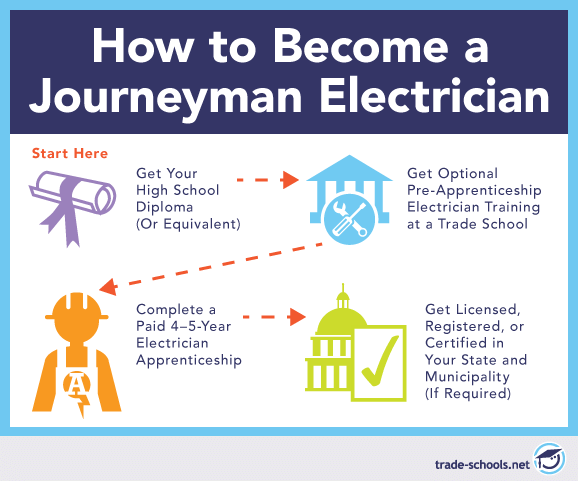
Source : trade-schools.net
Union vs. Non-Union Apprenticeships
There are generally two main apprenticeship routes: union and non-union. Union programs (like through the IEC or NJATC) are often highly structured, offering great benefits and clear career progression. They can be competitive to get into.
Non-union programs might be offered directly by electrical contractors or through vocational schools. They can offer more flexibility but might have fewer built-in benefits. Both lead to certification, just different flavors.
Vocational School Programs
Some folks opt for a vocational school or community college program first. These programs can give you a strong theoretical foundation and some hands-on experience before you even start an apprenticeship. They can sometimes shorten the apprenticeship duration or make you a more attractive candidate.
It’s a way to get a head start. To build confidence. And to see if you really have the knack for it before committing to the full apprenticeship grind.
Online Learning and Self-Study
While you can’t get certified solely through online courses (you need that hands-on time!), they can be a fantastic supplement. Especially for understanding complex theory or preparing for exams. They offer flexibility for busy schedules.
Just remember, the core of becoming an electrician is practical, on-site experience. Online is a tool, not the whole toolbox. You still need to be sweating on job sites.
So, What’s the Magic Number?
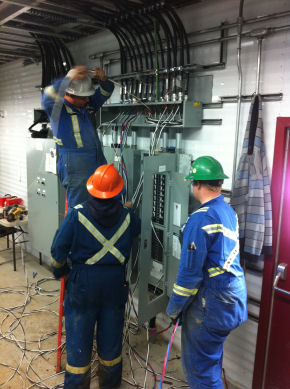
Source : electricianinformationresource.com
The Minimum Timeline
If everything lines up perfectly, and you’re in a state with a straightforward path, you’re looking at a minimum of four years. This usually means a four-year apprenticeship program, passing the exam at the end, and getting that journeyman card.
But “minimum” is the keyword here. Life happens. Schedules shift. It’s rarely that clean.
The More Typical Experience
Realistically, factoring in potential delays, exam retakes (hey, it happens!), or additional required experience hours, you’re often looking at five years or more to become a fully certified journeyman electrician. Maybe even six if you’re moving into a master electrician track immediately.
It’s a marathon, not a sprint. Don’t expect to be a master in three years. That’s just not how the trade works. Check out resources like Indeed’s career advice for more insights into timelines.
Factors Influencing Your Timeline
Several things can speed up or slow down your journey. Your state’s specific requirements are huge. The type of apprenticeship you enter matters. Even your personal learning pace plays a role. Some people just grasp concepts faster than others.
Plus, job availability can affect how quickly you find an apprenticeship or secure the necessary hours. It’s a Active process.
| Stage | Typical Duration | Key Activities | Outcome |
|---|---|---|---|
| High School Foundation | 4 Years | Math, Science, Vocational Courses | Basic Knowledge, Hand Skills |
| Apprenticeship (On-the-Job & Classroom) | 4-5 Years | Practical Training, Code Study, Safety | Skilled Worker, Eligibility for Exam |
| State Certification Exam | Varies (Study + Testing Window) | Exam Preparation, Test Administration | Journeyman Electrician License |
| Additional Experience (for Master) | 2-4+ Years Post-Journeyman | Advanced Projects, Supervision | Master Electrician Qualification |
How Long Does It Take To Become A Certified Electrician Near Me
Source : trdsf.com
Alright, let’s cut to the chase. You’re wondering how long this whole electrician certification gig is going to take, and specifically, if finding it near me makes any difference. Short answer? It’s a grind, but location can speed things up, or at least make the journey smoother.
Local Training Program Availability
The biggest factor when you’re looking for training near me is just that – the availability of local programs. Are there established trade schools or community colleges with solid electrical programs? Or are you looking at a longer commute to a bigger city’s offerings? This can significantly impact your daily schedule and how quickly you can rack up those required hours.
Apprenticeship Opportunities in Your Area
Finding an apprenticeship is key. Some areas have a booming demand for electricians, meaning more companies are willing to take on apprentices. This isn’t just about getting your foot in the door; it’s about finding a place that offers consistent work and good mentorship. A Strong local job market can mean a faster path to completing your apprenticeship requirements. Don’t underestimate the power of local connections here.
State-Specific Licensing Requirements
Every state dances to its own tune when it comes to licensing. While the core concepts of electrical work are universal, the specific number of hours, classroom time, and exam hurdles can vary wildly. So, that electrician certification near me might have different hoops to jump through than one a few states over. Always check your state’s Department of Labor or equivalent board.
Geographic Variations in Demand
It: urban centers often have more complex projects and a higher demand for specialized electrical skills, potentially leading to faster career progression once certified. Rural areas might have fewer opportunities, but demand is still present, especially for maintenance and residential work. The pace of your certification can be influenced by the local economic climate for trades.
How To Become A Certified Electrician Without An Apprenticeship

Source : contractortrainingcenter.com
So, you’re thinking about skipping the traditional apprenticeship route? It’s a path less traveled, for sure, and often a tougher climb. But is it impossible? Nope. It just requires a different kind of hustle.
Vocational School vs. Apprenticeship Trade-offs
Many folks opt for intensive vocational school programs. These can cram a lot of theory and hands-on training into a shorter timeframe than a typical apprenticeship. However, the practical, on-the-job experience gained during an apprenticeship is often Crucial and sometimes hard to replicate solely in a classroom. You trade real-world site experience for structured, accelerated learning. It’s a critical trade-off to consider.
Alternative Training Pathways and Certifications
Beyond traditional schools, there are other avenues. Some companies offer company-specific training programs that might not be formal apprenticeships but still provide the necessary skills and hours. There are also specialized courses, like those focused on solar installations or industrial controls, that can fast-track you into a niche. These aren’t always a direct substitute, but they can be stepping stones. Getting alternative certifications is possible.
Meeting Hour Requirements Through Other Means
The biggest hurdle without an apprenticeship is accumulating those required hours of practical experience. This might involve working as a helper for a licensed electrician, taking on smaller freelance jobs (where legal and safe!), or even volunteering for electrical projects with non-profits. Documenting every single hour meticulously is Top. You’ll need proof, and it’s the most challenging part.
The Role of Licensing Exams
Becoming a certified electrician, with or without an apprenticeship, hinges on passing the licensing exam. A strong performance in a vocational program, combined with diligent self-study and any alternative experience you’ve gathered, can prepare you adequately. It’s about demonstrating competence, regardless of how you acquired the knowledge. The exam is the gatekeeper.
Timeline To Become A Journeyman Electrician From Apprentice
Source : blog.servicedirect.com
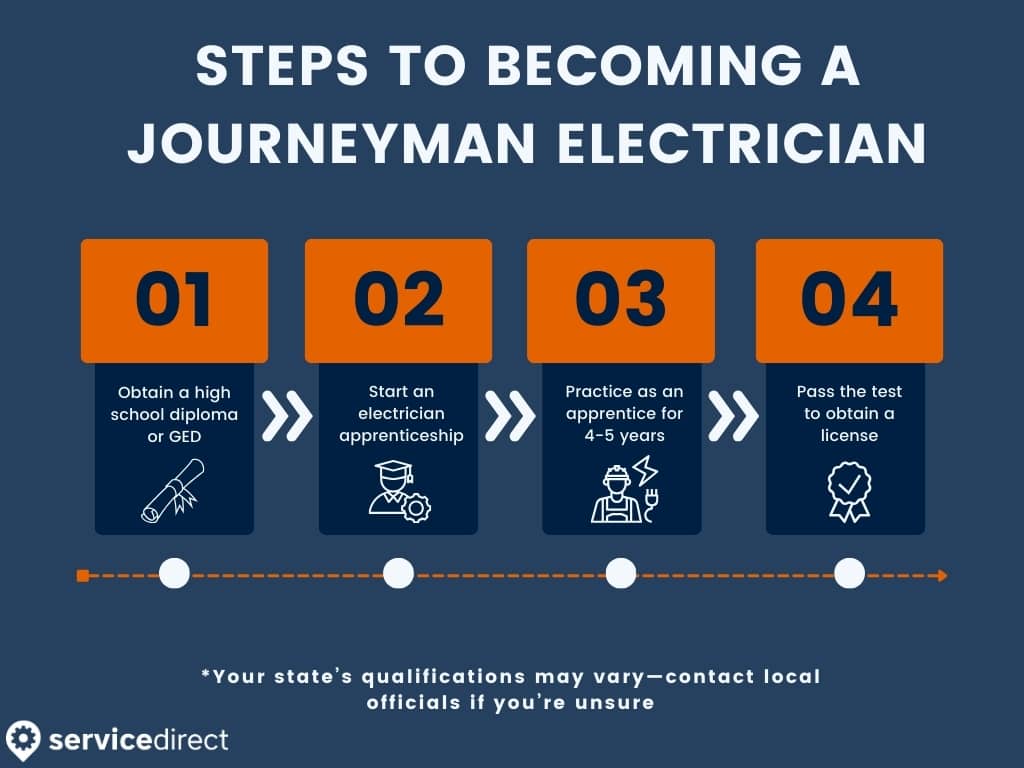
Ah, the journeyman dream. This is where you transition from learning the ropes to actually being a qualified, independent electrician. The timeline here is pretty well-defined, though there’s some wiggle room.
Typical Apprenticeship Duration
Generally, most electrician apprenticeships clock in between 4 to 5 years. This isn’t just arbitrary; it’s designed to Make sure you get a broad range of experience across different types of electrical work – residential, commercial, industrial, and sometimes even specialized fields.
Required Classroom Hours
On top of the on-the-job training, apprenticeships usually mandate a certain number of classroom hours. We’re talking hundreds of hours dedicated to theory, code interpretation, safety protocols, and advanced electrical concepts. This is where you really learn the ‘why’ behind the ‘how’. These classroom hours are non-negotiable.
On-the-Job Training Hours
This is the meat and potatoes. Apprentices are required to log a Large number of practical work hours. We’re talking thousands of hours, often around 8,000 hours, give or take. This is where you gain the real-world skills, troubleshoot problems, and learn to work efficiently and safely under various conditions.
The Final Hurdle: The Journeyman Exam
Once you’ve successfully completed your apprenticeship hours (both on-the-job and in the classroom), the final step is passing the journeyman licensing exam. Nail this, and boom – you’re a journeyman! This marks a significant milestone in your career. It’s the culmination of years of hard work.
How Many Hours Do You Need To Become A Certified Electrician
Source : goldcoastschools.com
Let’s talk numbers. Because honestly, that’s what it boils down to for a lot of folks trying to plan their career path. How many hours are we really talking about here?
Combining Classroom and Field Hours
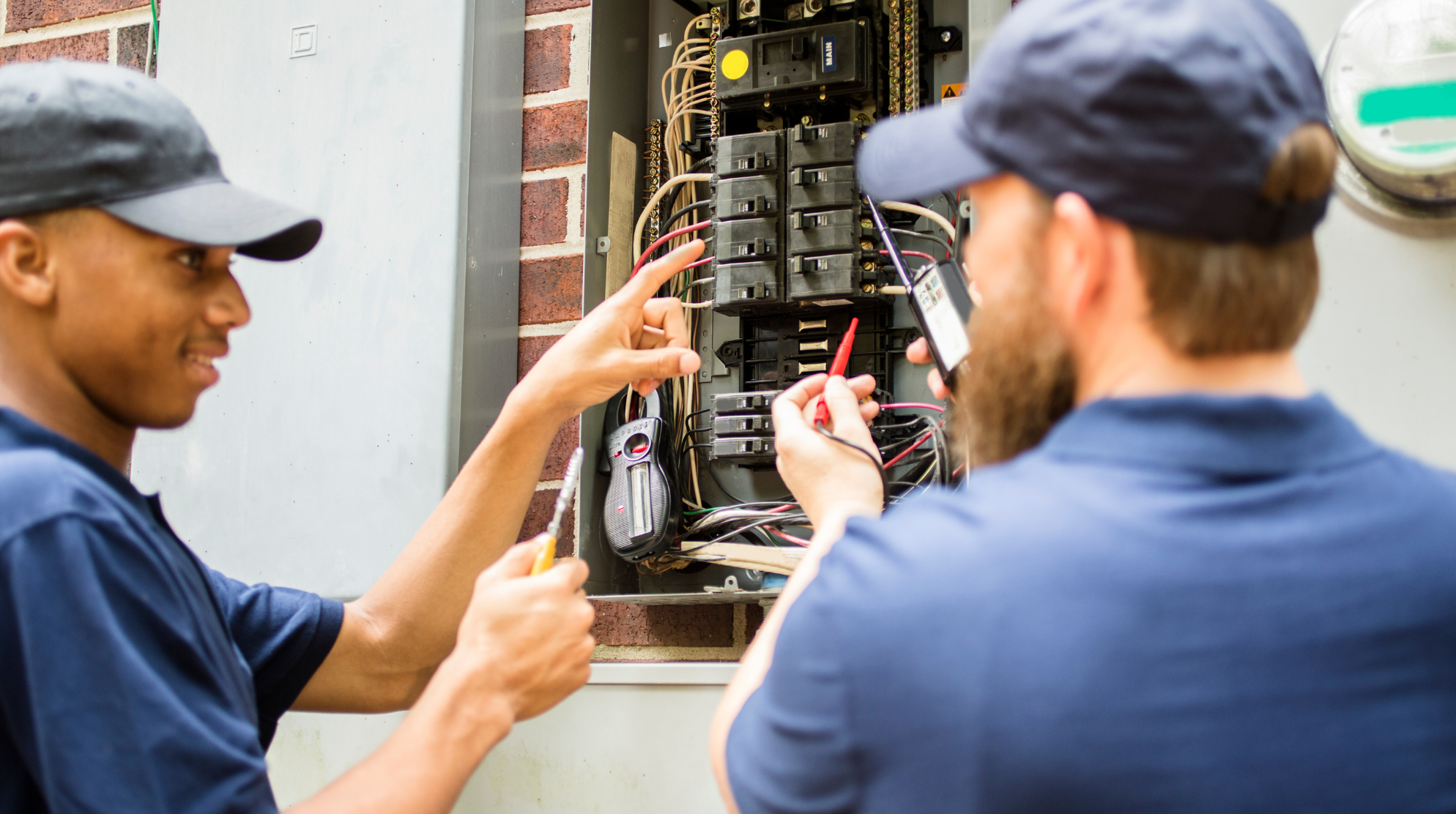
It’s not just about sweat equity. To become a certified electrician, you’re typically looking at a combined total of practical, on-the-job hours and structured classroom instruction. Think of it as a dual-pronged approach to building your expertise. You can’t just do one and expect to pass muster.
Typical On-the-Job Training Requirements
The on-the-job training is Large. Most states and apprenticeship programs require anywhere from 6,000 to 10,000 hours of practical experience. This ensures you’ve seen a wide variety of installations, troubleshooting scenarios, and project types. It’s the real-world seasoning.
Mandatory Technical Instruction Hours
Alongside the field work, there’s the classroom component. Apprentices usually need to complete between 400 and 1,000 hours of technical instruction. This covers everything from the National Electrical Code (NEC) to blueprint reading and safety regulations. This structured learning is Key for building a solid theoretical foundation. Don’t skip this part; it’s Key for passing the exam. These are non-negotiable technical hours.
Example Hour Breakdown (Varies by State/Program)
Here’s a simplified look, keeping in mind this is just an example and actual requirements differ:
| Category | Typical Range | Purpose |
|---|---|---|
| On-the-Job Training (OJT) | 6,000 – 10,000 hours | Practical skills, site experience, troubleshooting |
| Technical Instruction (Classroom) | 400 – 1,000 hours | Theory, code, safety, advanced concepts |
| Total Estimated Time | 4 – 5 years | Combined duration to reach journeyman status |
This table gives you a rough idea, but always verify with your local authorities. The total hours required are significant.
Fastest Way To Become A Certified Electrician In Texas

Source : itap.edu
Alright, Texas. You want to get certified, and you want to do it yesterday. Texas has its own set of rules, and like anywhere else, speed often comes down to dedication and choosing the right path. Let’s break down the quickest routes.
Exploring Texas’s Apprentice Programs
Texas has numerous registered apprenticeship programs, often run by unions or contractor associations. Joining one of these is typically the most structured and often the fastest way to gain the required experience and training. Look for programs known for efficient progression and strong industry ties. The key is a good program.
Accelerated Vocational Training Options in Texas
Some trade schools in Texas offer accelerated programs designed to get you through the theoretical and basic practical training faster than a traditional apprenticeship might. While this won’t replace the on-the-job hours entirely, it can significantly shorten the initial learning phase. You’ll still need to log hours, but you’ll be better prepared. Check out programs with good reputations for hands-on experience.
Meeting Texas Master Electrician Requirements
Becoming a “certified electrician” in Texas often refers to obtaining a Journeyman Electrician license. To reach this level, you’ll need to meet specific hour requirements and pass the state exam. The fastest route involves minimizing downtime and maximizing productive training. The Texas Department of Licensing and Regulation (TDLR) is your best friend here.
The “Helper” Route vs. Formal Apprenticeship
Some might try the “helper” route, working under a licensed electrician without a formal apprenticeship. While this can build experience, it often doesn’t count towards the official hour requirements as efficiently as a registered apprenticeship. Formal programs are designed to track your progress systematically, making them the more reliable fast track. Think of the guy running a pizza shop on 4th Street – he might be a great cook, but he’s not getting formal culinary training unless he signs up. A formal apprenticeship is that structured training.
Frequently Asked Questions
How fast can I become a licensed electrician?
Honestly, it depends. Some guys get through apprenticeship programs in about four to five years. But you can’t rush this stuff; you need real hands-on experience. Rushing it is a recipe for disaster, and frankly, a good way to get hurt.
What is the number one killer of electricians?
It’s not just about faulty wiring, though that’s a huge part of it. The real killer is falls. Working at heights, on ladders, scaffolding – it’s dangerous business. Plus, let’s not forget electrocution. It’s a constant risk you have to respect.
Is being a certified electrician hard?
Yeah, it can be. It’s not rocket science, but it demands a sharp mind and a lot of patience. You’re dealing with complex systems and safety is Top. Plus, the training itself requires dedication, both in the classroom and on the job site. It’s a career that tests you.
Can I become an electrician online?
Not really, not for the certification part. While you can take some online courses to prep for exams or learn theory, the bulk of becoming a certified electrician involves hands-on training. You need to be in the field, working with tools and systems, under supervision. That practical experience is non-negotiable.
Do electricians make good money?
Absolutely. Once you’re through the apprenticeship and get your master electrician license, the earning potential is solid. Experienced electricians, especially those who go into business for themselves or specialize in high-demand areas like industrial settings, can make a very comfortable living. It’s hard work, but the pay reflects that.
