So, You Wanna Be an Electrician? Let’s Talk Hours.
Alright, settle in. You’re curious about the grind, right? How many sweaty, wire-pulling, blueprint-deciphering hours does it really take to pin that electrician certification on your wall? It ain’t just a quick weekend workshop, believe me. We’re talking a significant chunk of your life dedicated to mastering the art of not electrocuting yourself or anyone else.
Forget those glossy brochures promising you’ll be a master in months. The path to becoming a certified electrician is a marathon, not a sprint. It involves classroom learning, hands-on training, and a whole lot of on-the-job experience. Let’s break down exactly what that looks like, hour by hour, step by step.
The Non-Negotiable Foundation: Education & Training Hours

Source : contractortrainingcenter.com
Before you can even think about touching a live wire on a job site, you’ve got to hit the books. This is where the bulk of your structured learning happens. It’s not just about theory; it’s about understanding electrical principles so deeply you can troubleshoot a faulty circuit blindfolded.
Trade School vs. Apprenticeship: Where Do the Hours Go?
So, you’ve got two main avenues. You can dive headfirst into a trade school program, or you can jump into an apprenticeship. Both are valid, but the hours are allocated differently. Trade schools offer a concentrated dose of education upfront.
Apprenticeships blend classroom time with actual paid work. You’re learning as you earn, which is a sweet deal for many. But don’t think it means fewer hours overall; it’s just a different pacing. The total commitment remains Large, regardless of the path you choose. This is a Key decision point early on.
Classroom Hours: The Theoretical Backbone
Think of these as your foundational hours. You’re absorbing everything from basic electrical theory, Ohm’s Law, and AC/DC circuits to the National Electrical Code (NEC). This is where you learn the “why” behind everything you’ll do later.
Expect anywhere from 400 to 1,000+ classroom hours depending on the program. It’s intense. You’ll be studying schematics, learning about different types of wiring, safety protocols (super important!), and the physics that makes electricity behave. This isn’t just memorization; it’s deep conceptual understanding.
Hands-On Lab Hours: Getting Your Fingers Dirty
Theory is great, but can you actually wire a breaker box? Lab hours are where you bridge that gap. You’ll be in a controlled environment, practicing installations, troubleshooting simulated problems, and getting comfortable with tools and equipment.
These hours often run parallel to your classroom time. It’s a practical application of what you’re learning. You might spend 100 to 300+ hours in a lab setting, making mistakes in a safe space before you’re on a real job site. This practical experience is Crucial.

Source : esfi.org
The Apprenticeship Gauntlet: Earning While You Learn
This is where the real-world grind begins. Apprenticeships are the traditional route for a reason. They offer structured, supervised on-the-job training that’s hard to replicate solely in a classroom. And yes, it takes a significant number of hours.
An apprenticeship isn’t just about showing up; it’s about immersing yourself in the trade. You’re paired with experienced electricians, learning the ropes from the ground up. This phase is critical for developing the practical skills and problem-solving abilities that define a good electrician.
Minimum Apprenticeship Hours: The Standard Requirement
Most apprenticeship programs require a minimum of 4,000 to 6,000 hours of on-the-job training. That’s typically spread over three to five years. It’s a serious time commitment, often demanding 20-30 hours of work per week, plus your required classroom time.
This isn’t just about clocking in and out. You’re expected to learn, observe, and actively participate. You’ll start with simpler tasks, like pulling wire or assisting with installations, and gradually progress to more complex responsibilities under supervision. The goal is to become proficient in all aspects of the trade.
Beyond the Minimum: Real-World Hours Accumulate
The 4,000-6,000 hour figure is a baseline. Many apprentices end up accumulating more hours, especially if they work overtime or take on extra projects. This extra time is Crucial for solidifying skills and gaining exposure to a wider variety of electrical work.
It: the more varied projects you work on, the more scenarios you encounter. Residential wiring is different from commercial or industrial. Each type presents unique challenges and requires specific knowledge. Those extra hours translate directly into a more experienced and versatile electrician.
Classroom Component of Apprenticeships: Still Key!
Don’t forget, apprenticeships aren’t all on-the-job. You’ll still have required classroom or related technical instruction (RTI) hours. This typically amounts to around 144 to 250+ hours per year for the duration of the apprenticeship.
So, you’re looking at an additional 400-1000+ hours of formal instruction on top of your practical work. It’s a blended approach designed to give you both the theoretical knowledge and the practical skills. It’s a demanding schedule, balancing work and study.
The Journey to Journeyman: Meeting State Requirements
Becoming a “Journeyman” electrician is a major milestone. It means you’re qualified to work independently on electrical systems, though usually under the general supervision of a Master Electrician. Each state has its own specific requirements, and this is where the exact hour count can vary.
These requirements are designed to Make sure a baseline level of competence and safety. Passing the Journeyman exam is a significant hurdle, and meeting the experience hours is the prerequisite to even sitting for it. It’s a gatekeeping process, for good reason.
State-Specific Hour Requirements: The Devil’s in the Details
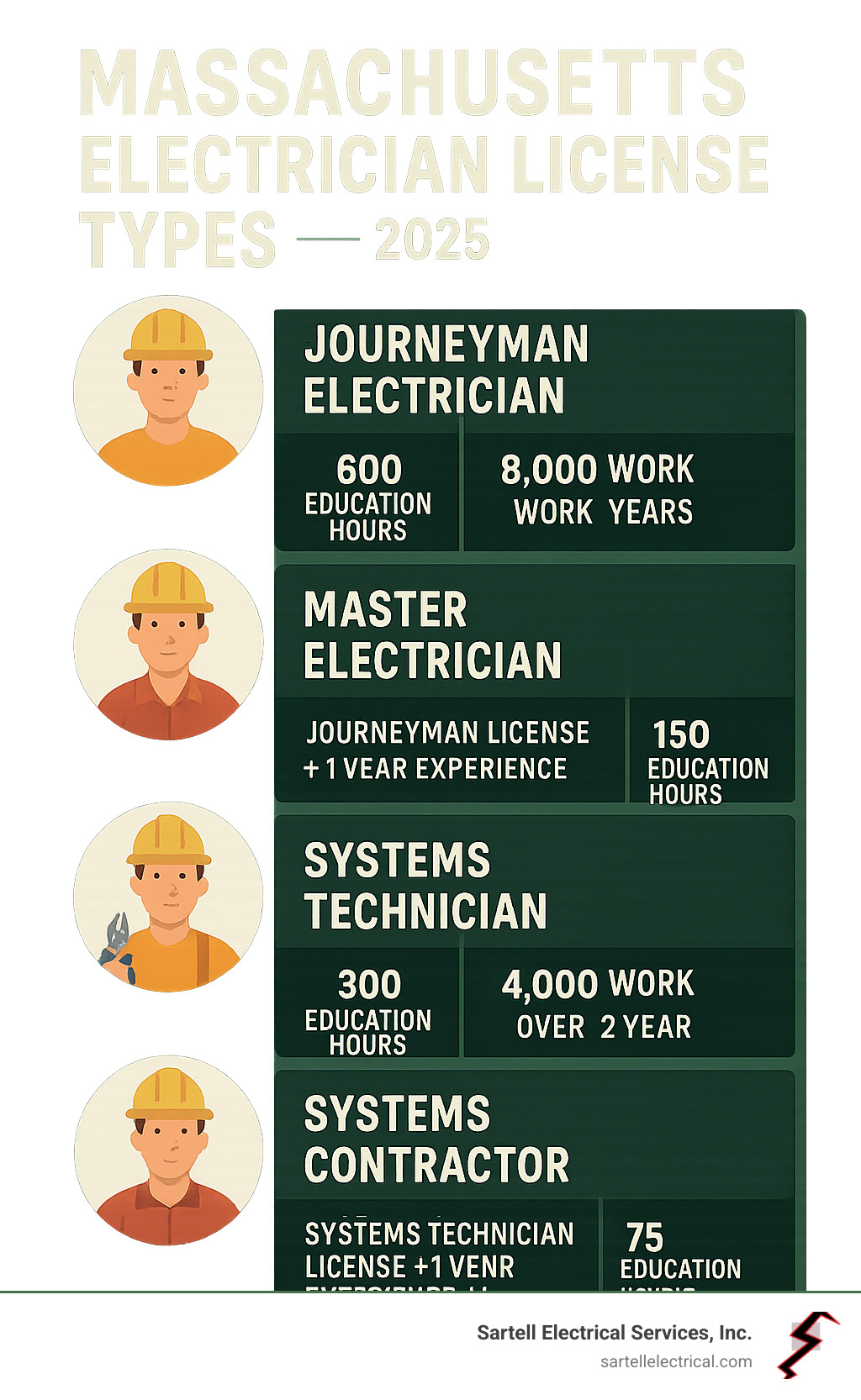
This is where it gets tricky. There’s no single national standard. Some states might require as little as 4,000 hours of documented experience, while others push it up to 8,000 hours or more. That’s roughly two to four years of full-time work experience.
For example, California often requires around 8,000 hours for its journeyman license. Meanwhile, other states might have lower thresholds but perhaps more stringent testing. It’s absolutely Key to check the specific regulations for the state where you plan to work. You can often find this information on your state’s Department of Labor or contractor licensing board website. For a general overview, resources like University of Tennessee Chattanooga’s professional education page can sometimes offer insights into training requirements, though state specifics always rule.
Documenting Your Hours: The Paper Trail Matters
You can’t just eyeball it. You’ll need Careful records of your hours. This usually involves timesheets signed by your supervising electrician or employer, detailing the type of work performed. Electrical contractors are required to keep these records, and you’ll need them for your license application.
Failure to document properly can set you back significantly. Imagine putting in years of work only to be told your application is incomplete because your hour logs are messy. Keep copies of everything. This is your proof of experience, your ticket to the next level.
The Journeyman Exam: Testing Your Knowledge
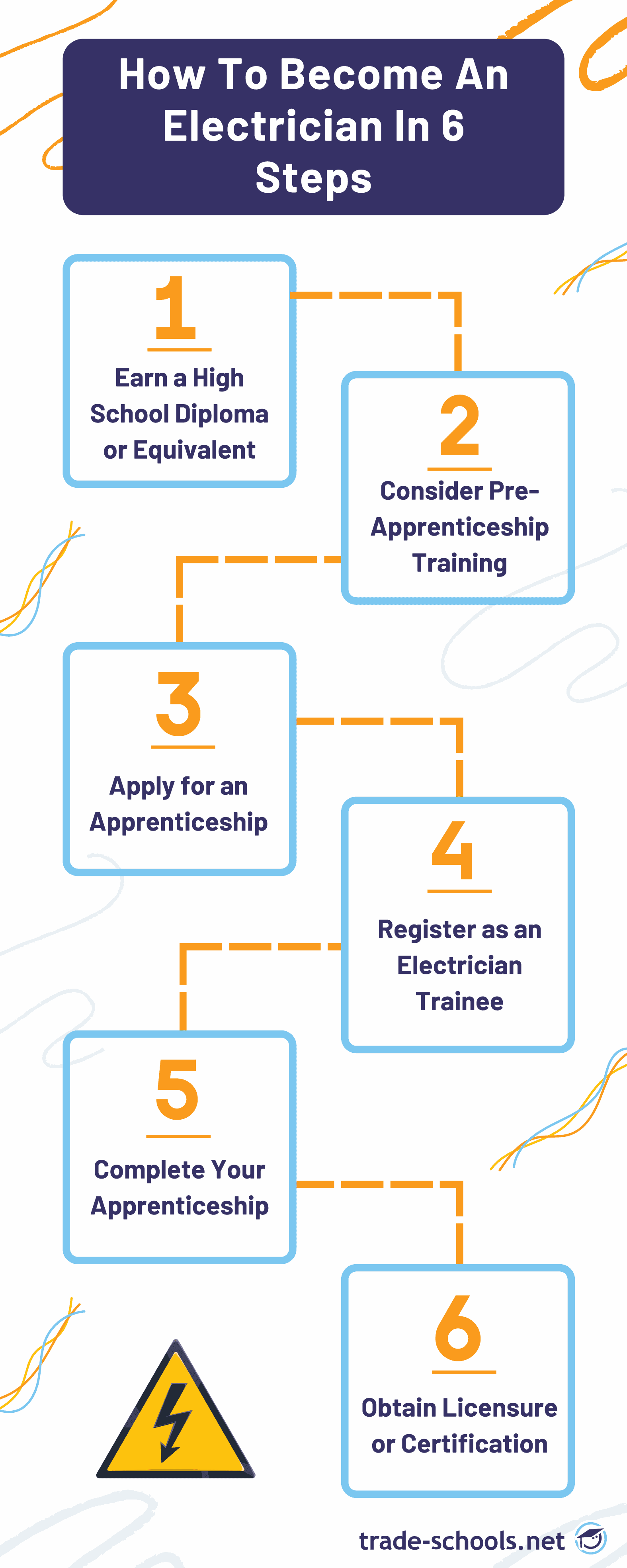
Once you’ve logged the required hours and met any other prerequisites (like specific training courses), you’ll be eligible to take the Journeyman Electrician exam. This isn’t a walk in the park. It tests your knowledge of electrical theory, the NEC, and practical application.
Source : trade-schools.net
Passing this exam is the final step to becoming a Journeyman. It often requires dedicated study time on top of your work hours. Think of it as a final academic hurdle after all the practical training. Many electricians spend weeks, even months, studying specifically for this test.
The Master Electrician: The Pinnacle of Experience
Think Journeyman is the end? Nope. For those aiming for the top, becoming a Master Electrician is the goal. This signifies a higher level of expertise, often involving supervision, design, and business management. It requires even more hours, but this time, it’s all about experience at a higher level.
A Master Electrician is essentially qualified to design, install, and maintain complex electrical systems. They often lead teams, pull permits, and are responsible for the overall electrical integrity of a project. This isn’t just about knowing how to connect wires; it’s about understanding the entire system.
Accumulating Master-Level Experience Hours
This is where the hours really start to stack up. To qualify for a Master Electrician license, you typically need several more years of experience beyond your Journeyman status. We’re talking an additional 2,000 to 5,000+ hours, often with a focus on supervisory or design-related tasks.
So, if you add it all up, you’re looking at potentially 10,000 to 15,000+ total hours from the start of training to achieving Master status. That’s the equivalent of 5-7 years of full-time work, give or take. It’s a significant investment of time and effort.
Supervisory and Design Experience
Simply working as a Journeyman might not be enough. Master licenses often specifically require documented experience in supervising other electricians, reading and interpreting blueprints, performing load calculations, and understanding electrical system design. You need to prove you can lead and plan.
Actively seeking out opportunities to take on more responsibility during your Journeyman years. Volunteering for complex tasks, assisting with planning, and mentoring newer apprentices are all ways to build the specific experience needed for the Master level. It’s about demonstrating leadership potential.
The Master Electrician Exam
Just like the Journeyman exam, the Master Electrician exam is another significant hurdle. It’s generally more Full and challenging, covering advanced electrical theory, complex code interpretation, system design, and business management aspects (like bidding and contracts).
Passing this exam requires a deep, nuanced understanding of electrical work. It’s the culmination of years of practical experience and dedicated study. Some electricians pursue additional certifications or courses to prepare specifically for this advanced test.
Comparing Pathways: Trade School vs. Apprenticeship Hours
Let’s get real about how these two primary paths stack up in terms of hours. Neither is necessarily “easier,” they just structure the learning and earning differently. Understanding this can help you decide which route fits your life and learning style best.
The key difference lies in when you accumulate the bulk of your hours and how you’re compensated during the training. One path prioritizes structured education first, the other blends work and study from the outset.
Trade School: Intense Initial Hours, Less On-the-Job
A typical trade school program might involve 900 to 1,800 hours of coursework and lab work over 6 months to 2 years. This gets you a solid theoretical and practical foundation. However, after graduation, you still need to gain significant on-the-job experience to qualify for licensing exams.
So, while the initial schooling hours are concentrated, you’ll still need to put in thousands of hours in the field afterward to become a Journeyman. Think of it as getting your prerequisites done quickly, then facing the longer-term experience requirement. Indeed.com’s career advice often highlights this distinction.
Apprenticeship: Spread-Out Hours, Earn While You Learn
As we’ve discussed, apprenticeships bundle the classroom and on-the-job hours. Over 3-5 years, you might complete ~6,000 to 10,000+ total hours (combining ~144-250+ hours/year of classroom time with ~4,000-8,000+ hours of on-the-job training). You’re earning a wage throughout this period.
This path requires a longer, sustained commitment but provides continuous income and experience. It’s a more integrated learning process. DeltaWye’s breakdown emphasizes the integrated nature of this training model.
The Total Commitment: It’s Always Large
Regardless of the path, becoming a licensed electrician requires a significant investment of time. You’re looking at a minimum of 4,000-6,000 hours to reach Journeyman level (often longer depending on the state), and potentially double that for Master status.
Source : sartellelectrical.com
This isn’t a career you can rush. The demanding nature of electrical work and the potential dangers involved necessitate thorough training and Plenty of experience. The hours are a proxy for the skills and knowledge you Get. They Make sure you’re not just qualified, but truly competent.
Factors Influencing Your Hour Count
Okay, so we’ve thrown around a lot of numbers. But the exact hour count isn’t always a fixed equation. Several factors can speed up or slow down your journey toward becoming a certified electrician. It’s not just about the clock; it’s about how you spend that time.
Your personal drive, the opportunities available, and even where you live can all play a role. Think of these as variables in the grand equation of your electrical career.
Program Efficiency and Structure
Some trade school programs are more intensive than others. A full-time program will naturally pack more hours into a shorter period than a part-time one. Similarly, some apprenticeships might have more structured training schedules or offer opportunities for apprentices to gain hours more quickly.
The quality and efficiency of the training program itself is a major factor. A well-organized curriculum that maximizes learning during allocated hours will feel more productive. Conversely, a poorly run program can feel like a slog, making those hours drag.
Your Personal Drive and Initiative
This is huge. Are you someone who just clocks the minimum hours, or do you actively seek out extra knowledge and experience? Taking initiative to ask questions, volunteer for challenging tasks, and pursue additional training or certifications can significantly accelerate your learning curve.
Some apprentices make it a point to work overtime whenever possible, or they might seek out side projects (if permitted by their contract) to gain more exposure. This drive is what separates those who simply meet the requirements from those who excel in the field. Your personal ambition is a powerful tool.
Type of Electrical Work Pursued
The specific field of electrical work you get into can also influence the type of hours you accumulate and how quickly you gain broad experience. Residential electricians might focus on different skills than industrial or commercial electricians. Power line work (linemen) is another entirely different ballgame with its own hour requirements.
While the basic licensing hours might be similar, specializing early can shape your expertise. Gaining experience across multiple sectors (residential, commercial, industrial) will likely take longer but result in a more well-rounded skillset. This breadth of experience is often highly valued.
Geographic Location and Local Regulations
State and even local regulations dictate the minimum hours required. Living in a state with higher hour requirements will naturally mean a longer path. The availability of apprenticeship programs and job opportunities can also vary significantly by region.
Demand for electricians can also influence opportunities. In areas with high construction growth, you might find more openings for apprentices and more chances to log hours quickly. Conversely, in slower markets, opportunities might be scarcer, potentially extending your training timeline.
The Data Breakdown: Hours by the Numbers
Let’s try to visualize the hours involved. It’s a lot, no matter how you slice it. This table gives you a ballpark idea of the time commitment across different stages and pathways.
| Stage/Pathway | Typical Training Hours (Classroom/Lab) | Typical On-the-Job Hours (Apprenticeship/Experience) | Total Estimated Hours | Estimated Duration |
|---|---|---|---|---|
| Trade School Graduate (Initial) | 600 – 1800 | 0 (Requires separate OJT post-graduation) | ~1,000 – 2,000 (School only) | 6 months – 2 years (School) |
| Apprenticeship (Combined) | 400 – 1000 (Over years) | 4000 – 8000+ (Varies by state) | ~4,400 – 9,000+ | 3 – 5 years |
| Journeyman Level (Minimum State Req.) | /A (Assumed completed in training) | 4000 – 8000+ (Post-training/Apprenticeship) | ~4,000 – 8,000+ (Post-training OJT) | 2 – 4 years (OJT) |
| Master Electrician Level | /A (Assumed completed) | 2000 – 5000+ (Post-Journeyman) | ~2,000 – 5,000+ (Advanced OJT) | 1 – 3 years (Post-Journeyman) |
| Total to Master (Apprentice Route) | 400 – 1000 | 6000 – 13000+ | ~6,400 – 14,000+ | 5 – 8+ years |
Note: These are general estimates. Actual hours vary significantly by state, program, and individual progress.
See? It’s a marathon. The minimum hours to become a licensed electrician are Large, and reaching master status takes years of dedicated work and learning. This table provides a clearer picture of the time investment.
Is It Worth the Hours? The Payoff
So, after all those hours, the late nights studying, the early mornings on job sites, the endless training – is it worth it? For most who stick with it, the answer is a resounding yes. The career path of an electrician offers stability, good earning potential, and the satisfaction of working in a skilled trade.

Source : wikihow.com
It’s a career that demands respect and offers tangible rewards. You’re not just punching a clock; you’re building a tangible skill set that’s always in demand. The return on your time investment is significant.
Earning Potential: Beyond the Training Wages
While apprentices don’t earn top dollar, their wages increase as they gain experience and proficiency. Once you’re a Journeyman, your earning potential jumps significantly. Master Electricians, with their advanced skills and responsibilities, command the highest salaries.
According to industry data, Journeymen electricians can often earn anywhere from $50,000 to $80,000+ annually, depending on location and experience. Master Electricians can push well into the six figures. Compare that to entry-level jobs requiring less training – the payoff for those hours is clear. It’s a solid career for long-term financial security.
Job Security and Demand
Electricity powers everything. Buildings need wiring, infrastructure needs maintenance, and technology constantly evolves, requiring new electrical installations. This means electricians are almost always in demand. It’s a trade that’s resistant to automation and outsourcing.
The need for skilled electricians is projected to remain strong for years to come. This translates into excellent job security. You won’t likely face the same volatility as some other industries. Knowing you have a valuable, in-demand skill provides peace of mind.
The Satisfaction of Skilled Work
There’s a unique satisfaction that comes from mastering a complex trade. As an electrician, you’re solving problems, working with your hands, and contributing to the physical infrastructure of society. You see the direct results of your labor.
Fixing a complex wiring issue or completing the electrical installation for a new building provides a sense of accomplishment. It’s a career where you can take genuine pride in your work and your expertise. It’s far more than just a job; it’s a craft.
Final Thoughts: Welcome the Hours, Reap the Rewards
So, how many hours do you need? It’s not a simple number, but a range, typically starting around 4,000-6,000 hours for a Journeyman license and going up significantly from there for Master status, not to mention the initial training hours.
The path to becoming a certified electrician is demanding, requiring a Large investment of your time and energy. But view those hours not as a burden, but as the building blocks of a rewarding, stable, and well-paying career. Welcome the process, put in the work, and the rewards will follow.
Frequently Asked Questions
How many total hours are typically required to become a certified electrician?
It really varies a bit, but generally, you’re looking at around 8,000 hours. This breaks down into about 4 years of on-the-job training through an apprenticeship, plus potentially some classroom instruction. It’s a significant time commitment, but worth it for a solid career as an electrician.
What’s the breakdown of hours for an electrician apprenticeship?
So, the bulk of those hours, usually around 7,000 to 8,000, are spent doing actual electrician work hands-on. Then, you’ll typically have a few hundred hours of related classroom or technical training. Think of it as learning by doing, with a solid theoretical foundation thrown in.
Are there specific hour requirements for different types of electrician certifications?
Yeah, sometimes! Depending on the state or the specific electrical trade you’re aiming for (like residential, industrial, or commercial), there might be slight variations in the exact hour requirements. It’s always best to check with your local licensing board for the most accurate info.
Can I count my hours working before an official apprenticeship towards certification?
Usually, no. Most apprenticeship programs require you to start logging hours within their structured system. While prior experience is great, those early hours might not count towards the official apprentice hours needed for certification unless they were part of a recognized, supervised program.
How long does the classroom hour component typically take?
The classroom part is usually a few hundred hours spread out over the course of your apprenticeship, often a few evenings a week or on specific days. It complements your on-the-job training, focusing on theory, safety codes, and technical knowledge that you’ll need for your journeyman electrician exam.
