Forget The Grind: Becoming A Certified Electrician Without The Long Haul
Look, nobody likes being stuck. Especially not when you’re trying to build a solid career. The traditional path to becoming an electrician often means years of grunt work, fetching tools, and coffee runs. It feels like yesterday’s news. But what if I told you there’s a way to cut through that? A way to get your electrician certification and start earning real money faster, bypassing the apprenticeship grind that so many folks get bogged down in.
It’s not some magic trick. It’s about knowing the system, understanding the alternative routes, and putting in the work smart. We’re talking about leveraging training programs and focusing on the knowledge that truly matters. This is about becoming a skilled tradesperson without feeling like you’re serving a life sentence. Let’s dive into how you can actually do this.
The Apprenticeship Myth: Is It Really The Only Way?
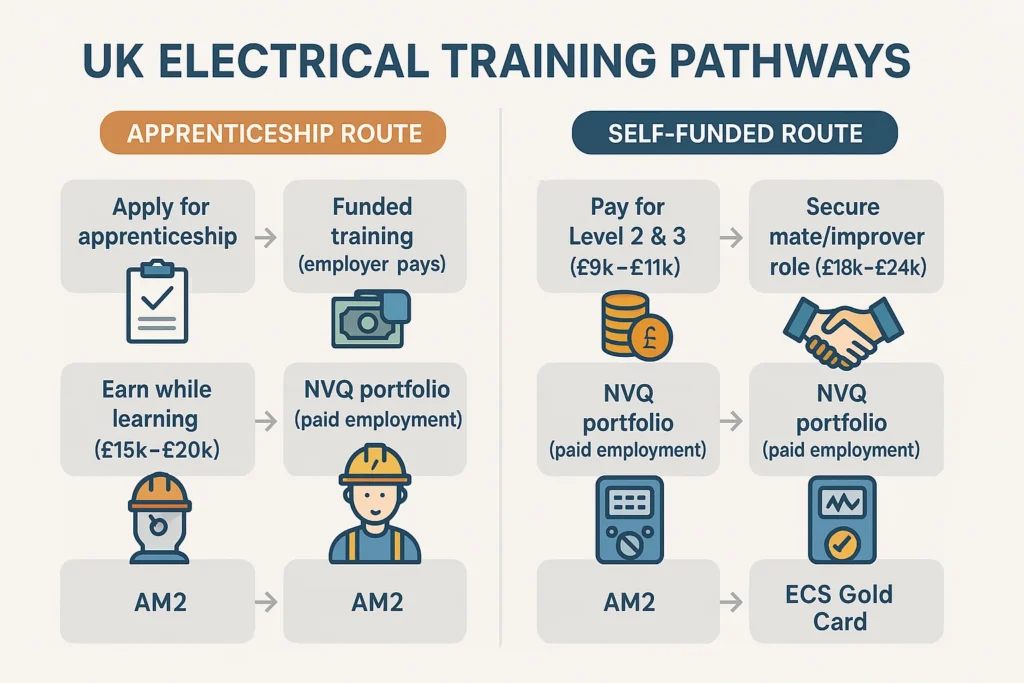
Source : elec.training
What Exactly Is An Apprenticeship, Anyway?
Traditionally, an apprenticeship is a structured program where you learn a trade under the guidance of experienced professionals. You’re essentially an employee, earning a bit while you learn the ropes. Think of it as on-the-job training, but with a formal curriculum tacked on. It’s supposed to provide hands-on experience and a clear path to journeyman status. It’s the old-school way, the way your dad or grandpa probably did it.
The idea is solid: learn by doing. You’re in the trenches, seeing real-world problems and solutions. You build relationships, understand site dynamics, and pick up practical skills that textbooks can’t teach. It’s a time-tested method for a reason. But it’s not the only reason.
The Downside of the Traditional Route
Let’s be real, apprenticeships can be a drag. You’re often at the bottom of the totem pole. The pay? It starts low. Like, really low. You might spend a significant chunk of your time doing tasks that feel more like busywork than actual skill development. It requires a huge time commitment, often 3-5 years, sometimes longer.
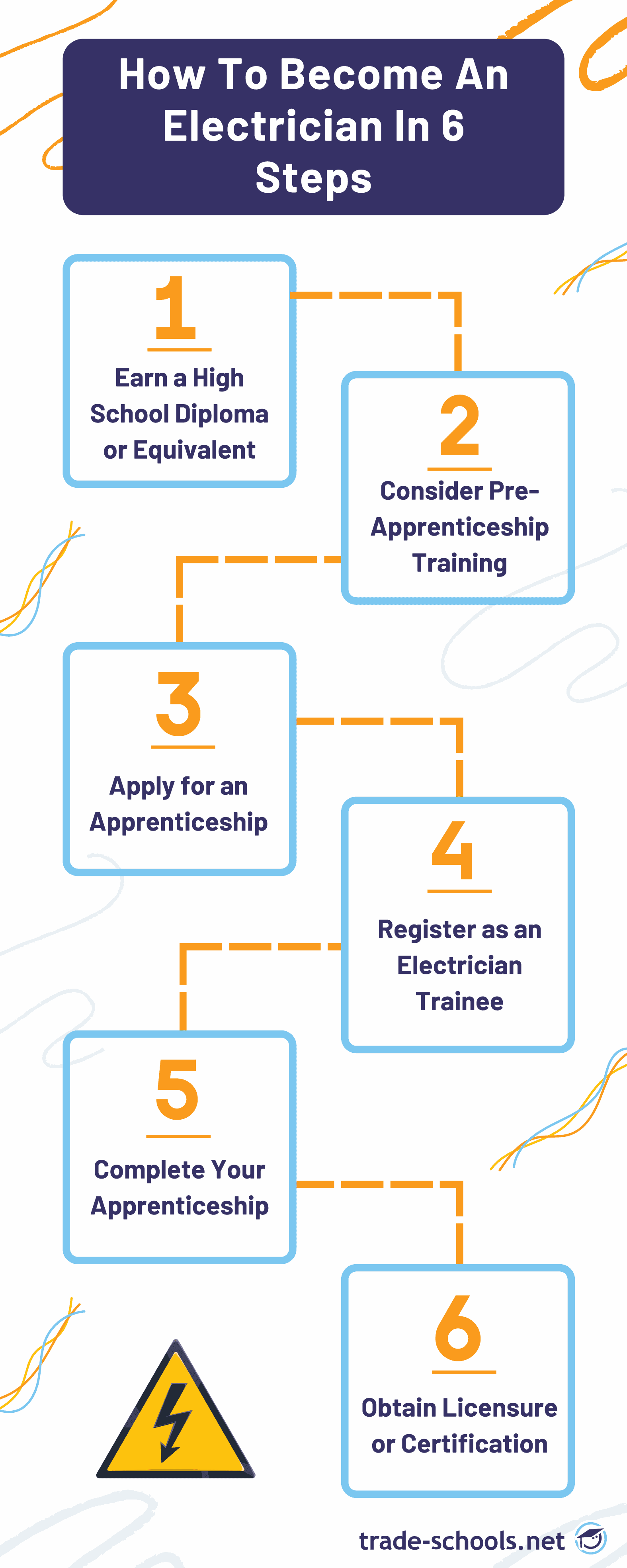
Source : trade-schools.net
And the competition? Fierce. Getting into a good apprenticeship program can be harder than landing a spot at a top university. Plus, you’re tied to a specific company or union, which might not always Match with your career goals. It’s a long, often slow, climb.
Breaking Free: Why Alternative Paths Exist
The world is changing. Industries need skilled workers, and they need them now. Waiting five years for someone to graduate from an apprenticeship just doesn’t cut it for many businesses, especially in specialized fields. This demand has created space for alternative training models. These programs are designed to be more efficient, more focused, and frankly, more appealing to people who want to get started.
They recognize that not everyone thrives in a strict hierarchical system or has the luxury of dedicating half a decade to entry-level tasks. These paths offer a direct route to certification, focusing on the Needed knowledge and skills needed to pass licensing exams and perform the job effectively. It’s about getting you job-ready, not just experience-ready.
The Vocational School & Trade Program Advantage
What Are Vocational Schools Really Offering?
Think of trade schools and vocational programs as the express lane. These institutions are built specifically to train people for skilled trades like electrical work. They offer concentrated courses that cover all the necessary theory and practical application you’ll need. You’re not fetching coffee; you’re in a classroom or a workshop, actively learning and doing.
The curriculum is usually designed to Match with industry standards and, crucially, with the requirements for passing state licensing exams. You get focused instruction from instructors who are often former industry professionals themselves. It’s a highly structured learning environment, but with a much shorter timeline than a traditional apprenticeship.
Curriculum Focus: Theory Meets Practice
These programs are pretty intense. You’ll dive deep into electrical theory, understanding things like Ohm’s Law, circuit analysis, and power distribution. But it’s not just book smarts. You’ll also get hands-on training with tools and equipment. We’re talking about wiring actual circuits, installing fixtures, and troubleshooting common issues.
Many programs even simulate real-world job scenarios. You might work on mock electrical systems, learn safety protocols rigorously, and practice reading blueprints. The goal is to equip you with a Full skillset that makes you immediately employable and capable of passing your licensing exam. It’s about practical, applicable knowledge.
Finding the Right Program For You
This is where you need to do your homework. Not all trade schools are created equal. Look for accredited institutions. Check their job placement rates. Talk to former students if you can. Does their curriculum cover the specific areas required for the license you’re aiming for? Are their facilities up-to-date?
Consider the length of the program. Some are intensive, lasting a few months, while others might be a year or two. Think about your learning style. Do you prefer a fast-paced environment or something a bit more drawn out? Researching programs like those offered for residential electricians can give you a good starting point. For example, schools near you might offer specific training for residential electrician careers.
Understanding Licensing Requirements: Your Ticket to Work

Source : esfi.org
State-Specific Regulations: It’s Not One-Size-Fits-All
Here’s the kicker: becoming a certified electrician isn’t a national process. It’s governed by individual states. Each state has its own set of rules, its own governing body, and its own requirements for licensure. What works in Texas might not fly in California. You absolutely need to know the specific regulations for the state where you plan to work.
This is critical. Getting your paperwork wrong or missing a specific requirement can set you back months, even years. Don’t assume anything. Dive deep into the official state board or department of labor website. For instance, if you’re looking at working in Tennessee, you’ll need to understand their specific rules, which can be found on resources detailing Tennessee electrician licenses.
The Experience Hourglass: How To Count It
This is where bypassing the apprenticeship becomes tricky but doable. While many states prefer or recommend a formal apprenticeship, they often allow alternative forms of experience. This can include documented hours working under a licensed electrician, even if it wasn’t part of a formal apprenticeship program. Some vocational training hours might also count towards your required experience.
The key is documentation. You need proof. Time sheets, letters from employers, detailed project logs – whatever the state board requires. Vocational programs often help with this, providing certificates of completion and sometimes even assistance in documenting your training hours as qualifying experience. You might need to log a specific number of hours, say 4,000 to 8,000 hours, of documented electrical work.
The Licensing Exam: Your Final Hurdle
Once you’ve met the education and experience requirements, you’ll need to pass a licensing exam. These exams are no joke. They are designed to test your knowledge of the National Electrical Code (NEC), electrical theory, safety practices, and state-specific regulations. They’re often multiple-choice and can be quite challenging.
Many vocational programs specifically prepare you for this exam. They’ll have practice tests, review sessions, and instructors who know exactly what to expect. Some people even take specialized prep courses just for the licensing exam, regardless of how they got their experience. Passing this exam is the final gatekeeper to becoming a licensed electrician.
Alternative Experience Pathways: Getting Your Hours In
Working Under a Licensed Electrician (Non-Apprentice)
This is probably the most common alternative. You can work for a company or a licensed master electrician, logging your hours as you gain practical experience. While it might not be a formal ‘apprenticeship,’ the state often recognizes these hours as valid experience if properly documented. You’re doing the actual work, learning on the job, just without the official apprenticeship label.
The challenge here? Finding someone willing to hire you for this specific purpose and then properly documenting your hours. You’ll need to Make sure your employer is on board with providing the necessary paperwork. It requires a proactive approach to managing your career development. Ask potential employers upfront about how they handle experience documentation for licensing purposes.
Military Training and Experience
Served in the military? Your electrical or engineering training likely counts for a lot. Many branches have highly technical roles that involve electrical systems, power generation, and maintenance. These skills are directly transferable and are often recognized by state licensing boards as valid experience. You’ll need to get your service records and training certificates in order.
The military provides structured, high-stakes training that’s often equivalent to or even surpasses civilian programs. Specific roles like those in the Navy’s electrician’s mate program or the Air Force’s electrical systems specialties can be Crucial. Check with the specific state board about how they evaluate military electrical experience.
Watch: How To Become an Electrician FAST Without Trade School
Union-Based Training Programs (Beyond Traditional Apprenticeships)
While unions are famous for apprenticeships, some also offer other training pathways or continuing education that can supplement or, in some cases, substitute for traditional routes. These might be specialized courses or journeyman upgrade programs. It’s worth investigating if your local union offers programs that can accelerate your path to certification.
Sometimes, these programs are designed for existing workers looking to advance or cross-train. While they might not be a full replacement for an apprenticeship, they can significantly Strengthen your skillset and potentially count towards certain experience requirements depending on the state and the specific program. It’s a niche option, but one worth exploring if you’re connected to the union.
The Role of Online Training and Certification
Can You Really Get Certified Online?
This is a hot topic. You can absolutely get a significant portion of your education online. Many reputable trade schools and online learning platforms offer Full electrical courses. These cover the theoretical knowledge you need and prepare you for the licensing exams. Think of resources that offer residential electrician training online.
However, licensing boards generally require a combination of education and hands-on experience. You can’t typically get a full electrician’s license solely through online courses without any documented practical experience. The online component is usually the educational piece that complements your on-the-job training or vocational school work.
Online Courses vs. In-Person Training
Online courses offer incredible flexibility. You can study at your own pace, on your own schedule, from anywhere. This is a massive advantage for people working full-time or with other commitments. You can often access updated course materials and digital resources easily. It’s a modern solution for modern schedules.
In-person training, especially at a vocational school, offers direct access to instructors for immediate feedback and hands-on lab work. Building physical circuits and troubleshooting with guidance is hard to replicate perfectly online. The best approach for many is a hybrid model – using online resources for theory and seeking out practical, hands-on experience elsewhere, or attending a program with both components.
Accreditation and Recognition Matter
Just because a course is online doesn’t mean it’s valuable. You need to Make sure any online training you undertake is from an accredited institution or a recognized provider. Check if the program’s curriculum is designed to meet state licensing requirements. Some online courses are specifically marketed as exam prep, which can be very useful.
Board recognition is key. Will the state licensing board accept the training hours or certificate from this specific online provider? This information is usually available on the board’s website or by contacting them directly. Don’t waste time and money on a program that won’t count towards your ultimate goal: getting your electrician license.
Preparing for the Licensing Exam: Strategy is Key
Know Your National Electrical Code (NEC)
The NEC is the bible for electricians in the United States. It’s a Full set of standards for safe electrical design and installation. Your licensing exam will heavily feature questions based on the NEC. You need to be intimately familiar with its layout, key articles, and common applications. Seriously, learn this thing inside and out.

Source : youtube.com
Many training programs dedicate significant time to NEC training. You’ll learn how to navigate the codebook efficiently, find specific requirements quickly, and understand its underlying principles. Practice using the codebook during study sessions – it’s an Needed skill for both the exam and the job itself.
Mastering Electrical Theory and Calculations
Beyond the code, you need a solid grasp of electrical principles. This includes understanding voltage, current, resistance, power, AC/DC circuits, grounding, and more. You’ll also need to be proficient in performing common electrical calculations related to load calculations, voltage drop, conduit fill, and circuit sizing.
Practice problems are your best friend here. Work through as many calculation examples as possible. Understand the formulas and why they work, not just how to plug in numbers. A strong foundation in theory will make the code seem less arbitrary and more logical. Think of it as understanding the physics behind the rules.
State-Specific Laws and Safety
Don’t forget the state-specific stuff! Each state might have additional regulations, amendments to the NEC, or specific safety requirements that are tested. You need to be aware of these. Your training program or exam prep materials should cover these nuances. It’s a detail that often trips people up.
Safety is Top in this field. Expect questions covering OSHA regulations, proper use of personal protective equipment (PPE), lockout/tagout procedures, and emergency response. Demonstrating a strong understanding of safety protocols is non-negotiable for any aspiring certified electrician.
Making the Leap: From Training to Licensed Professional
Networking and Job Placement Assistance
Many vocational schools and training programs offer career services, including resume building, interview coaching, and job placement assistance. They often have established relationships with local contractors and companies looking to hire newly trained electricians. Leveraging these resources can significantly speed up your job search after completing your training.
Don’t underestimate the power of networking. Attend industry events, connect with instructors and fellow students, and reach out to professionals in the field. Building connections can open doors to opportunities you might not find through formal job boards. A good program will help you build this network.
Starting Your Career: What to Expect
Once you’re licensed, you’ve crossed a major threshold. You can now command a higher wage and take on more responsibility. You might start working for an electrical contractor, a construction company, or even in maintenance departments of larger organizations. Some people even branch out into specialized fields like solar installation or industrial maintenance.
Remember, your education doesn’t stop at the license. The electrical field is constantly evolving with new technologies and code updates. Continuous learning is Needed for staying relevant and advancing your career. Look into advanced certifications or specialized training as you gain experience. You’re ready for a real career now.
Source : trdsf.com
The Long-Term Outlook for Electricians
The job outlook for electricians is incredibly strong. Demand is high and projected to grow consistently. This is driven by new construction, an aging infrastructure that needs upgrading, and the increasing reliance on electricity for everything from electric vehicles to smart homes. It’s a stable, well-paying career path with plenty of room for growth.
Companies like the Tennessee Valley Authority (TVA) often have specific programs or needs for skilled electricians, sometimes offering apprentice-style programs that can be competitive but valuable. Exploring options like the TVA electrician apprentice program can offer insights, even if you aim to bypass traditional apprenticeships elsewhere. The demand for skilled trades is only going up.
Comparing Paths: Apprenticeship vs. Vocational Training
| Feature | Traditional Apprenticeship | Vocational School / Trade Program | Online Education + Experience |
|---|---|---|---|
| Time Commitment | 3-5+ years | 6 months – 2 years (Program specific) | Variable (Self-paced education, ongoing experience) |
| Initial Earnings | Low, but increases over time | None during training; higher starting wage post-licensure | None during education; higher starting wage post-licensure |
| Learning Style | Primarily on-the-job, structured mentorship | Classroom and hands-on lab work, structured curriculum | Self-directed learning, supplemented by practical experience |
| Cost | Often minimal tuition; lower initial wages | Tuition fees, potentially significant | Variable tuition/course fees; cost of tools and materials |
| Flexibility | Low; tied to employer/union schedule | Moderate; set class schedules | High; study at your own pace |
| Path to Licensure | Standard, well-defined route | Direct route via education + documented experience | Requires careful planning to meet experience requirements |
| Pros | Deep OJT, established network, potential for union benefits | Faster completion, focused curriculum, strong exam prep | Maximum flexibility, cost-effective education options |
| Cons | Long commitment, low initial pay, potentially slow progress | Upfront cost, less “real-world” exposure during training | Requires high self-discipline, potential gaps in practical skills without OJT |
| Ideal For | Those seeking deep, traditional mentorship and union paths | Individuals wanting a faster, structured path to a license | Self-motivated learners needing schedule flexibility |
Final Thoughts: Your Career, Your Rules
The path to becoming a certified electrician doesn’t have to be a decade-long slog through apprenticeship. By leveraging vocational training, online education, and focusing on documenting your practical experience, you can absolutely chart a faster course. Programs focused on specific needs, like residential electrician training, are designed to get you working sooner.
It takes initiative, smart planning, and a commitment to learning. But the reward is a stable, in-demand career with excellent earning potential. Don’t let outdated models hold you back. Explore the options, understand the requirements in your state (like understanding regulations in Tennessee at ServiceTitan’s guide), and build the electrical career you want. The wires are waiting.
Frequently Asked Questions
What are the 4 main types of electricians?
Generally, you’ve got residential, commercial, industrial, and construction electricians. Each focuses on different environments and systems. Residential folks deal with homes, commercial with businesses, industrial with factories and plants, and construction electricians handle wiring for new builds. Understanding these types of electricians helps you figure out where you want to work.
How can I make $100,000 as an electrician?
To hit that $100k mark, you’ll likely need to gain significant experience, specialize in a high-demand area like industrial or commercial electrical work, and maybe even start your own business or move into a supervisory role. High-voltage work or specialized certifications can also boost your earning potential. Consistent high earnings often come with expertise and leadership.
What’s the quickest way to become an electrician?
The quickest path usually involves vocational training programs or trade schools, combined with a faster-track apprenticeship if available, and then passing your licensing exams. While some states allow you to test out of apprenticeship requirements with enough documented experience, it’s still a demanding process. Focusing on electrical certification is key.
Can I become an electrician without going through a formal apprenticeship?
Yes, some states allow you to qualify for licensing exams by demonstrating a certain number of years of verifiable work experience under a licensed electrician, often referred to as ‘on-the-job training’ or ‘experience pathways’. It’s not always the easiest route, but it’s definitely a way to bypass a structured electrician apprenticeship.
What are the challenges of becoming a certified electrician without an apprenticeship?
The biggest hurdles are proving your skills and knowledge without the structured training an apprenticeship provides, and meeting state-specific requirements for experience. You might need to meticulously document all your work hours and projects. Also, some employers still prefer candidates with formal apprenticeship backgrounds, so building your professional network becomes extra important.
