So, you’re eyeing that Workday Pro certification, huh? Good for you. It’s not just another checkbox; it’s a serious commitment that separates the dabblers from the doers in the world of Workday. Forget thinking this is a quick weekend course. We’re talking about a strategic path, a marathon, not a sprint, with very real training timeline and requirements to nail down. Let’s break down what it actually takes to get that coveted badge.
The Real Deal: Why Bother With Workday Pro?
It’s More Than Just a Certificate
Look, anyone can take a course. But a Workday Pro certification? That screams you’ve gone the extra mile. It’s your proof to the world that you don’t just know Workday, you master it. Think of it as your professional superpower, validated. It’s tangible. It’s respected. And frankly, it makes your resume pop like a champagne cork at a wedding.
This isn’t just about looking good on paper. It’s about the skills. The deep dives. The ability to actually solve complex problems within the Workday ecosystem. Companies are clamoring for people who can navigate this beast, not just point at it. And that’s where the Pro certification shines.
What “Pro” Actually Means Here
When Workday talks “Pro,” they mean business. It’s not their entry-level stuff. This is for folks who are already knee-deep in the platform, who’ve logged the hours, and who are ready to prove they’ve got the advanced knowledge. It’s about demonstrating you can handle intricate configurations, strategic implementations, and maybe even troubleshoot like a seasoned pro. This is the certification Standard for Workday expertise.
It signifies a level of competence that goes beyond the basics. You’re not just a user; you’re a potential architect, a problem-solver, a true Workday guru. And that comes with some serious benefits, trust me.
The Perks: Beyond Just Bragging Rights
Let’s be honest, the bragging rights are sweet. But the certification benefits are the real prize. We’re talking about enhanced career prospects. Higher earning potential. And the quiet confidence that you’re among the best. Employers actively seek out individuals with these credentials. It’s a direct signal of your commitment and advanced skill set.
Hiring manager scanning through a hundred resumes. That “Workday Pro Certified” line? It’s a shortcut. It tells them you’re a safe bet, someone who’s been vetted and validated. It can be the difference between getting that interview or getting lost in the shuffle. It truly helps multiply your success.
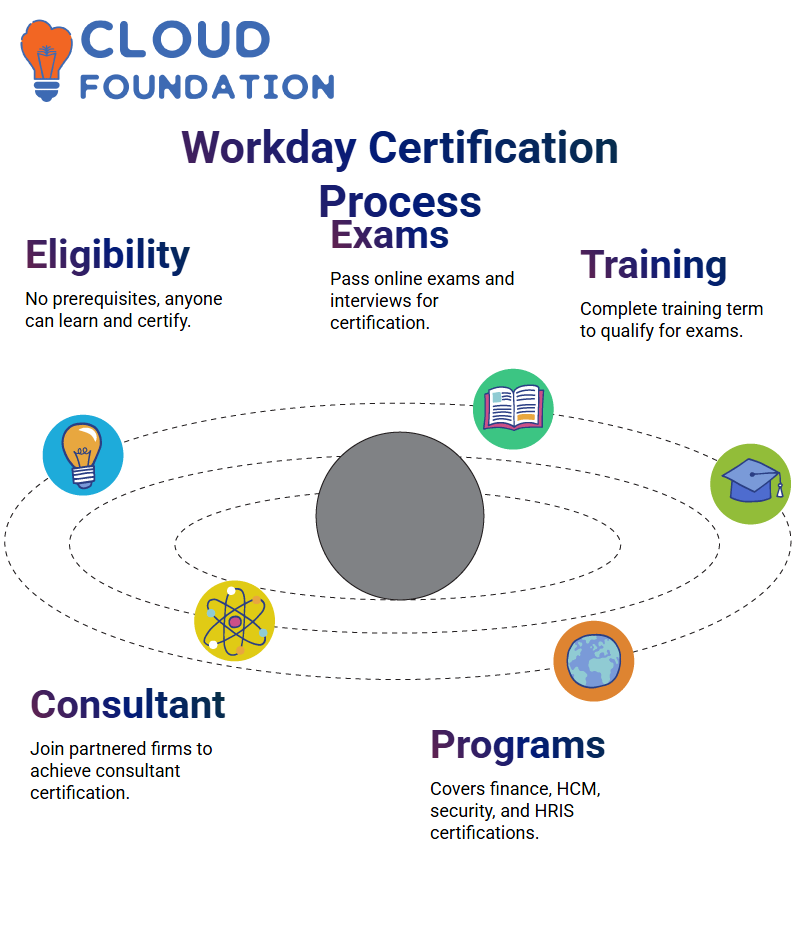
Mapping Your Workday Pro Journey: The Timeline
Source : cloudfoundation.com
Pre-Certification Groundwork: Are You Ready?
Before you even think about signing up, you need to do some serious self-assessment. Have you been actively using Workday for a good chunk of time? Are you comfortable with its core modules relevant to the certification you’re targeting? For instance, if you’re eyeing the Workday Pro Platform Administrator Certification, you’d better have hands-on experience with configuring and managing the platform itself. This isn’t the place to learn the ABCs.
The official Workday site, Workday Pro certifications, clearly states that these are advanced credentials. You’re expected to have significant practical experience. Jumping in too early is like trying to run a marathon without training – you’ll just end up sore and disappointed. Solidify your foundational knowledge first.
The Core Training Phase: Diving Deep
Once you’ve assessed your readiness, it’s time for the dedicated training. Workday offers various training paths, often delivered through their own certified partners or directly. The length here is highly variable. It could range from a few intensive weeks of full-time study to several months if you’re balancing it with your existing job. For example, a specific certification like the Workday Pro Platform Administrator Certification program offered by ASU’s W. P. Carey Executive Education might outline a clear schedule. They often structure it for focused learning over a defined period.
You can’t just skim the surface. This phase demands your full attention. It involves lectures, hands-on labs, case studies, and often, simulated real-world scenarios. Expect to dedicate significant hours each week, possibly requiring a leave of absence or a Large cutback in other responsibilities. It’s a commitment. This is where you’ll gain targeted training that helps you hit your goals.
Source : cloudshinepro.com
Post-Training Practice and Refinement
Think the training is the end? Nope. The real work often begins after the formal sessions. You’ll need to reinforce what you’ve learned through practice. This might involve setting up practice environments (if available), working through additional complex scenarios, or collaborating with peers. This is Key for solidifying your understanding and building confidence for the exam. It’s about making the knowledge stick.
Many find value in revisiting the training materials, focusing on areas where they felt less confident. This period can last anywhere from a few weeks to a couple of months, depending on your learning pace and the complexity of the certification. Don’t rush this. It’s the bridge between knowing and doing. Solid practice is key to mastering Workday skills.
The Exam Window: Scheduling and Preparation
Once you feel confident, it’s time to schedule the exam. Workday certifications typically have a defined window during which you must take the test after completing the required training. Scheduling involves checking availability, potentially paying exam fees, and booking a slot at a testing center or arranging for online proctoring. Plan this strategically; don’t book it for the week you have a major project deadline.
This phase is about focused review and exam strategy. Understand the exam format, question types, and time limits. Many candidates Use study guides or practice exams provided by Workday or third-party providers. Give yourself enough lead time to prepare without burning out. The official Workday training and certifications page offers resources to help you plan.
Handling the Requirements: What You Absolutely Need
Experience: The Unspoken Prerequisite
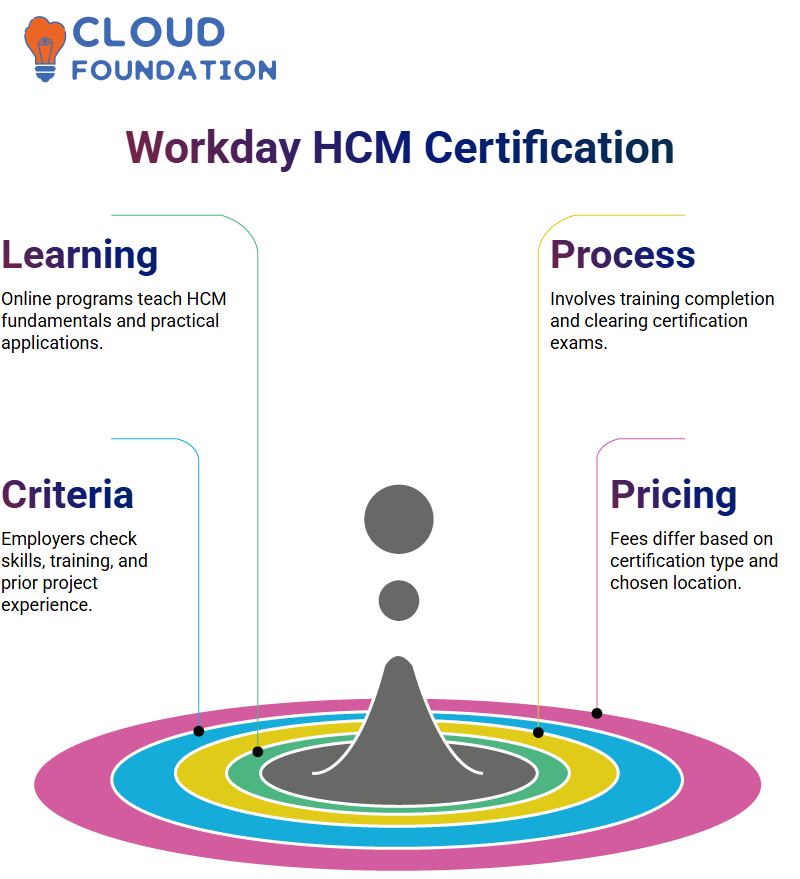
This cannot be stressed enough: real-world Workday experience is non-negotiable. Workday doesn’t publish a strict “X years required” for every certification, but the content itself is geared towards professionals who have spent considerable time actively configuring, managing, or implementing Workday solutions. If you’ve only dabbled or used it as an end-user, you’re not ready for Pro.
Guy running a pizza shop on 4th Street. He knows dough, sauce, and ovens. He wouldn’t try to perform open-heart surgery. It’s the same principle. You need to be comfortable in the Workday environment. This is where you’ll truly validate your expertise.
Specific Training Modules: No Cutting Corners
Workday has specific training courses tied to each certification. You can’t just skip these and expect to pass. These modules are designed to cover the precise knowledge and skills required for the certification exam. For example, to get certified as a Workday Pro for a specific area, you’ll need to complete the designated “focal” training. These are often intensive, instructor-led courses.
These aren’t just optional workshops; they’re often mandatory prerequisites. Check the specific certification details carefully. The details provided by educational institutions, like the Workday Pro Platform Administrator Certification at ASU, outline the specific curriculum you’ll undertake.
Technical Proficiency and Aptitude
Beyond specific Workday knowledge, you need a certain level of technical aptitude. This includes strong analytical and problem-solving skills. Can you break down a complex business requirement and translate it into a Workday configuration? Are you comfortable working with data, understanding system logic, and potentially even basic scripting or reporting concepts (depending on the certification)?
You’ll need to be comfortable Handling complex software interfaces and understanding interconnected business processes. It’s not just about clicking buttons; it’s about understanding the ‘why’ behind the configuration. This requires a sharp mind and a keen analytical aptitude.
The Financial Investment: Be Prepared
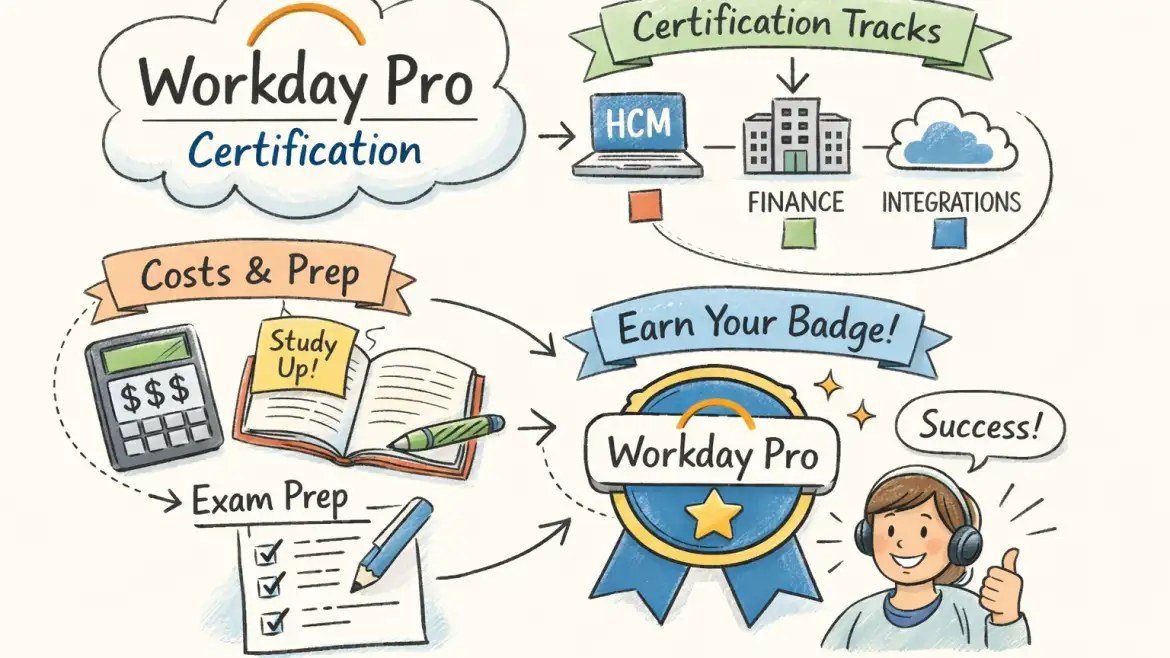
Let’s talk brass tacks. Certifications aren’t free. There are costs associated with the training courses, exam fees, and potentially study materials. The exact amount varies significantly depending on the specific certification, the training provider (Workday direct vs. a partner institution), and the delivery method (online vs. in-person). It’s an investment, plain and simple.
You need to budget for this. Consider the costs for course fees, exam registration, and possibly travel or accommodation if you’re attending in-person training. Make sure you have the financial resources lined up before you commit. This is a Key part of planning your success.
Understanding the Workday Pro Certification Domains
Core HR and HCM Focus
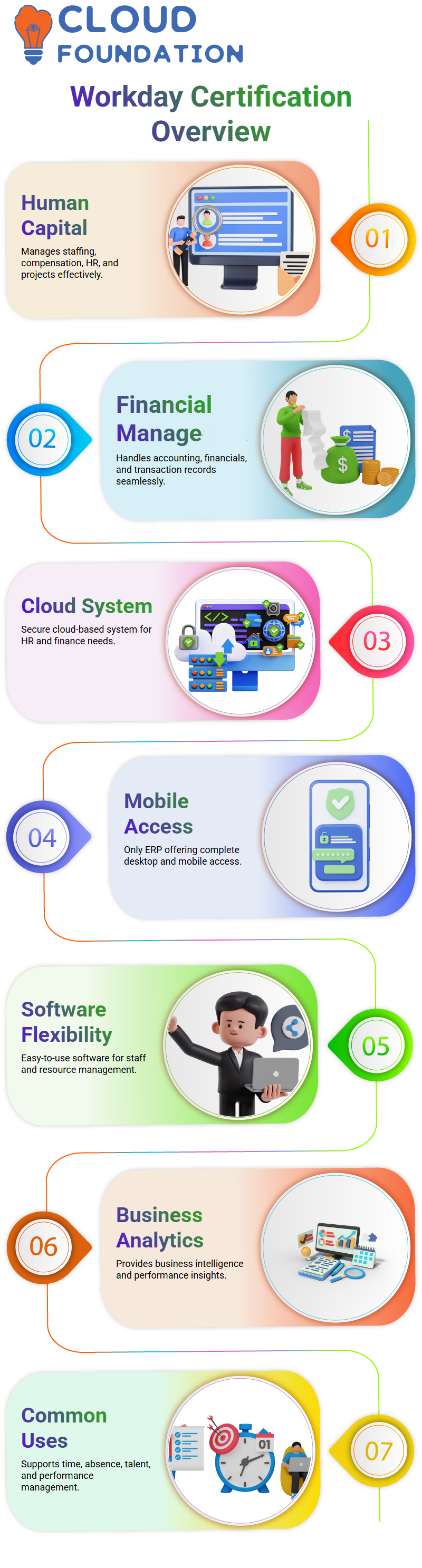
Many Workday Pro certifications will heavily feature Human Capital Management (HCM) functionalities. This includes everything from core employee data management, organizational structures, security roles, and business process configuration. You’ll need to understand how these elements interact to Make sure smooth HR operations. This is often the bedrock of many Workday implementations.
Proficiency here means you can manage the employee lifecycle from hire to termination, configure complex approval workflows, and Make sure data integrity. It’s about mastering the heart of the Workday system.
Financial Management and Accounting
For certifications focused on finance, expect deep dives into Workday Financial Management. This covers areas like the general ledger, accounts payable/receivable, procurement, budgeting, and financial reporting. Understanding accounting principles is often as important as understanding the Workday configuration for these roles. You’ll be the one setting up how the money flows.
Demonstrating expertise here means you can configure financial structures, manage spend, and Make sure compliance with financial regulations. It’s about ensuring the financial backbone is solid.
Payroll and Time Tracking Complexities
If your path involves Payroll or Time Tracking, be ready for intricate details. Workday Payroll is notoriously complex, involving tax calculations, garnishments, pay runs, and compliance with various regulations. Similarly, Time Tracking requires understanding different work schedules, overtime rules, absence management, and integrations with payroll. These aren’t areas for the faint of heart.
Mastery means you can accurately process payroll, manage timekeeping processes effectively, and Make sure compliance. Errors here have significant real-world consequences, so accuracy is Top.
Source : cloudfoundation.com
Talent Management and Analytics
Certifications related to Talent Management will focus on recruiting, onboarding, performance management, compensation, and succession planning. Furthermore, understanding Workday’s Strong analytics and reporting capabilities is often a key component across many certifications. How do you extract meaningful insights from the data?
You’ll need to show you can configure these talent modules to support business objectives and Use Workday’s reporting tools to provide actionable insights for decision-makers. It’s about leveraging data for strategic talent decisions.
Choosing the Right Workday Pro Certification Path
Identify Your Career Goals
What do you want to do? Are you aiming to be a technical Workday administrator, a functional consultant specializing in HR, finance, or payroll, or perhaps an analyst focusing on reporting and data? Your ultimate career aspirations should guide your choice. Don’t just pick the easiest one; pick the one that aligns with your professional trajectory. It’s about future-proofing your career.
Consider where you excel and what aspects of Workday genuinely interest you. Passion fuels perseverance, especially during those challenging training periods. Choose a path that excites you, not just one that looks good on paper.
Research Specific Certification Offerings
Workday offers a growing portfolio of Pro certifications. You need to research them individually. Visit the official Workday certification pages and dive into the details for each. Look at the specific skills covered, the target audience, and the recommended background experience. Some might be role-based, others module-based.
Don’t rely on hearsay. Go straight to the source. Understand the curriculum, the exam objectives, and any prerequisites. This detailed research is Key for making an informed decision. Knowing the exact focus is critical for success.
Consider Third-Party Educational Partners
While Workday offers its own training, reputable universities and training organizations also provide Workday certification programs. For example, institutions like ASU’s W. P. Carey Executive Education offer specialized programs like the Workday Pro Platform Administrator Certification. These programs can sometimes offer a different learning structure or cater to specific professional development needs. Explore these options too.
These partners often have experienced instructors and well-structured curricula designed for working professionals. Compare their offerings, schedules, and costs against Workday’s direct training. It’s about finding the best learning fit for you.
Evaluate Training Delivery Methods
Workday and its partners offer training in various formats: instructor-led classroom sessions, virtual live classrooms, and sometimes self-paced online modules. Each has its pros and cons. In-person training offers direct interaction but requires travel. Virtual classrooms offer flexibility but demand strong self-discipline. Self-paced options provide the most flexibility but require the highest level of motivation.
Personal learning style, your schedule, and your budget. Which format will allow you to absorb the material most effectively and successfully complete the training? Choose the delivery method that suits you best.
Preparing for the Workday Pro Exam: Tips for Success
Master the Official Training Material
This sounds obvious, but it’s the foundation. The official training materials provided by Workday or your chosen certified partner are your primary study guide. Don’t just passively attend; actively engage. Take notes, ask questions, and Make sure you understand every concept presented. This material directly maps to what you’ll see on the exam.
Review your notes regularly. Create summaries of key topics. The goal is to internalize the information, not just memorize it for a short period. This is your core knowledge base.
Use Practice Environments and Labs
Hands-on experience is irreplaceable. If your training included access to a practice environment or sandbox, use it extensively. Replicate the configurations discussed in training. Try different scenarios. Break things and fix them. This practical application solidifies theoretical knowledge and builds confidence. You learn by doing.
Work through all the lab exercises provided. If possible, create your own scenarios based on real-world problems you’ve encountered. This active engagement is Key for practical skill development.
Use Study Guides and Practice Exams
Many candidates find immense value in supplementary study guides and practice exams. These resources can help you gauge your readiness, identify weak areas, and get accustomed to the exam format. Look for reputable sources, whether provided by Workday, training partners, or trusted third-party vendors. Remember, always cross-reference with official documentation.
Take practice exams under timed conditions to simulate the real exam environment. Analyze your results thoroughly. Focus your study efforts on the areas where you scored lowest. This targeted approach is key to efficient exam preparation.
Understand Exam Structure and Timing
Before sitting for the exam, familiarize yourself with its structure. How many questions are there? What types of questions will you encounter (multiple-choice, scenario-based, etc.)? How much time do you have per question? Knowing this helps you manage your time effectively during the actual exam. Rushing can lead to careless mistakes.
Develop a strategy for tackling the exam. Will you answer questions sequentially? Will you skip difficult ones and return later? Having a plan helps reduce anxiety and improves performance. Strategic exam-taking matters.
Source : cloudfoundation.com
Post-Certification: What Happens Next?
Maintaining Your Credential
Workday Pro certifications aren’t usually valid forever. They often require renewal to Make sure your knowledge stays current with platform updates and new releases. Understand the renewal process, which might involve completing continuing education credits, passing a delta exam, or demonstrating ongoing professional experience. Neglecting this can render your certification obsolete.
Stay informed about Workday’s release cycles and certification maintenance policies. Proactive management ensures your credential remains valuable. This is about continuous professional development.
Leveraging Your Certified Status
Now that you’re certified, flaunt it! Update your LinkedIn profile, your resume, and any professional bios. Mention it in conversations with colleagues and potential employers. Use it as a springboard for new opportunities, whether it’s taking on more complex projects at your current job or seeking new roles elsewhere. It’s a valuable career advancement tool.
Consider mentoring others who are pursuing certification. Sharing your experience and knowledge can be incredibly rewarding and further solidifies your own expertise. You’ve earned it; now use it to its fullest potential.
Continuing Education and Skill Expansion
The Workday ecosystem is constantly evolving. Achieving one Pro certification is a significant accomplishment, but it shouldn’t be the end of your learning journey. Consider pursuing additional Workday certifications in related areas or advanced specializations. Continuous learning keeps you relevant and valuable in the market.
Stay updated on new Workday features and functionalities through Workday Community, webinars, and industry conferences. The most successful professionals are lifelong learners. Keep expanding your Workday skill set.
Networking Within the Workday Community
The Workday ecosystem has a vibrant community of professionals. Engaging with this community through events, online forums (like Workday Community), and user groups can provide Crucial insights, support, and networking opportunities. Connecting with peers can lead to collaborations, shared learning experiences, and even job leads. It’s about connecting talent with opportunity.
Share your experiences, ask questions, and help others. Being an active and contributing member of the community not only enhances your own learning but also builds your professional reputation. It’s a two-way street.
| Factor | Description | Impact on Timeline | Requirement Level |
|---|---|---|---|
| Prior Experience | Hands-on Workday configuration, implementation, or administration experience. | Shorter if experienced; longer if needing to gain experience first. | High (Often unstated but critical) |
| Chosen Certification | Specific module/role (e.g., HCM, Finance, Payroll, Platform Admin). | Varies based on module complexity and training duration. | High (Determines training path) |
| Formal Training Duration | Instructor-led courses, virtual labs, self-paced modules. | Directly dictates the core training phase length (weeks to months). | Mandatory |
| Self-Study & Practice | Reinforcing learned concepts, hands-on lab work, mock exams. | Adds several weeks to months post-formal training. | High (Key for exam success) |
| Exam Scheduling & Prep | Booking the exam, final review, understanding test format. | Typically 1-4 weeks of focused prep after feeling ready. | Moderate |
| Financial Resources | Budgeting for training fees, exam fees, potential travel. | Can delay start if funding isn’t secured. | High (Practical necessity) |
| Learning Aptitude | Ability to grasp complex technical and functional concepts quickly. | Faster learners may condense self-study phases. | High (Influences overall efficiency) |
Frequently Asked Questions
How long do Workday Pro certifications last?
Because Workday Pro certifications don’t technically ‘expire’ in the traditional sense, they remain valid indefinitely. However, to stay current with the latest features and functionalities, it’s highly recommended to complete the required continuous learning or delta exams aually. This keeps your skills sharp and demonstrates your commitment to the platform.
What are the typical requirements for Workday Pro certification training?
But generally, you’ll need to have completed the foundational Workday training relevant to the certification you’re pursuing. Some roles might also require a certain amount of hands-on experience with Workday before you can even enroll in the Pro training. Check the specific certification details on Workday’s learning portal.
How long does the Workday Pro certification training itself usually take?
It varies quite a bit depending on the specific module and your existing knowledge. Some might take a few days, others a couple of weeks. You’ll often find a mix of online modules and instructor-led sessions. Factor in time for studying and the final assessment.
Are there different levels of Workday Pro certifications?
Yeah, absolutely! Workday offers various certification paths, often broken down by functional area like HCM, Financial Management, or Payroll. Within those, you can find specialized tracks that lead to different Workday Pro credentials. It’s not one-size-fits-all.
What’s the timeline for getting certified after starting the training?
Because it depends on how quickly you can complete the training modules and pass the exams, and also how frequently the training sessions are offered. Some people might get certified in a matter of weeks, while others might take a few months, especially if they’re balancing it with a full-time job. Plan your training schedule accordingly.
