How To Become CPR And First Aid Certified Online For Free
Look, let’s cut to the chase. Nobody wakes up wanting to learn CPR. It’s usually a necessity, right? Maybe your job demands it, or you just want to be that person who actually knows what to do when the unthinkable happens. You see those heart emojis all over social media, but do you know how to bring a heart back to life? Probably not. And that’s okay! But here’s the kicker: getting certified doesn’t have to cost an arm and a leg. Forget those pricey in-person classes that drag on forever. I’m talking about scoring your CPR and First Aid certification without opening your wallet. Seriously. It’s totally doable.
You might be thinking, “Free? There’s got to be a catch.” And yeah, there often is. Most places offering ‘free’ certification are just giving you the knowledge, not the official card. But stick with me, because I’m going to lay out exactly how you can get both the training and a legitimate certificate, often completely free, or at least for a fraction of the cost of traditional classes. It’s about being smart, knowing where to look, and understanding the different types of certification out there. Let’s dive in.
Understanding the Need for CPR and First Aid
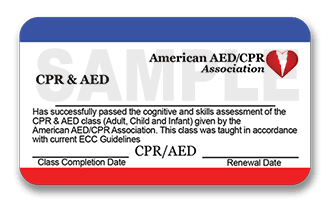
Source : aedcpr.com
So, why bother with this whole certification thing in the first place? It’s more than just a piece of plastic you stick in your wallet. It’s about equipping yourself with the skills to potentially save a life. Think about it.
The Grim Reality of Emergencies
Accidents happen. Every single day. From a child choking on a toy to an adult collapsing from cardiac arrest, emergencies don’t check the clock or your schedule. They strike when you least expect it. These situations are terrifying, and the seconds that tick by are critical. Having the knowledge to act can literally be the difference between life and death for someone.
Legal and Professional Requirements
Let’s be honest, for a lot of us, it’s about the job. Many professions require you to have a current CPR certification. We’re talking healthcare workers, teachers, childcare providers, lifeguards, EMTs, even some office jobs that want an extra layer of safety. Not having it can mean you can’t get hired, or worse, you could lose your current position. It’s a non-negotiable for many employers.

Source : aedcpr.com
Personal Empowerment and Peace of Mind
Beyond the job requirements, there’s a profound sense of personal empowerment that comes with knowing you can help. Imagine being at a restaurant, at the park, or even at home, and someone needs urgent medical attention. You won’t just stand there frozen; you’ll know how to administer life-saving techniques. That confidence, that ability to make a tangible difference? It’s huge. It offers incredible peace of mind.
Handling the “Free” CPR Certification Field
Okay, this is where things get interesting. The term “free CPR certification online” can be a bit of a minefield. Many organizations offer free training but charge for the actual certification card. Others might offer a very basic level of certification that isn’t widely recognized. You need to be savvy.
The Difference Between Training and Certification
This is the most Key distinction. You can find tons of videos and articles online that teach you CPR techniques. That’s the training part. It’s valuable, absolutely! But it won’t get you an official card. For that, you typically need to complete a course from an accredited organization, pass a test (often both written and practical, though online practicals are becoming more common), and then you receive a certificate. Many sites offer the training for free, but then hit you with a fee for the official document.
Recognized vs. Unrecognized Certifications
Not all CPR cards are created equal. Big, reputable organizations like the American Heart Association and the American Red Cross have programs that are recognized virtually everywhere. Employers trust their certifications. Then you have smaller, less-known providers. Some might be legitimate, but others could be offering something that looks official but won’t be accepted by your employer or any official body. Always research the provider. Check if they are affiliated with national organizations or if they have a strong reputation in emergency response training.
Understanding Online vs. Blended Learning
When you search for online CPR certification, you’ll mostly find two types: fully online courses and blended learning. Fully online courses cover everything through videos, readings, and online tests. Blended learning typically involves an online component for the theoretical knowledge, followed by a mandatory in-person skills session to demonstrate your proficiency. This hybrid approach is often required for certain certifications, especially for healthcare professionals. Be clear about what kind of course you’re signing up for, as a fully online course might not meet all requirements.
Top Providers for Online CPR Training (and How to Find Free Options)
So, where do you actually go? There are a few major players in the CPR and First Aid training world. Some are more likely to offer free or low-cost options than others. It requires a bit of digging, but it’s definitely possible to get good training without breaking the bank.
The American Red Cross: Reputable but Rarely Free
The American Red Cross is a household name when it comes to emergency preparedness. They offer a variety of online and blended CPR and First Aid courses. You can find courses like “CPR/AED for the Professional Rescuer” or “Basic Life Support.” While they offer some free introductory materials and courses (like “CPR/AED & First Aid”), their official certifications usually come with a fee. Sometimes, specific employers or organizations might sponsor Red Cross training, making it free for participants, but this is less common for general public enrollment.
- Online CPR Training: They offer various online modules covering CPR, AED, and First Aid.
- Blended Learning Options: Combine online study with in-person skills practice.
- Cost: Generally, paid courses range from $30 to $100+, depending on the certification level.
- Free Resources: Look for their free apps and basic online courses that offer knowledge but not formal certification.
American Heart Association: The Gold Standard (Usually Paid)

Source : valuecpr.com
The American Heart Association (AHA) is another titan in cardiovascular care and resuscitation training. Their courses, particularly those focused on healthcare providers (like BLS), are highly respected. They offer online and blended learning options through their network of Training Centers. Like the Red Cross, their official certifications typically require payment for the course materials and the certification itself. Their focus is often on in-depth training that leads to widely recognized credentials.
- BLS Certification: Needed for many healthcare professionals.
- Heartsaver® Courses: Designed for lay rescuers.
- Cost: Similar to the Red Cross, expect fees that vary based on the course.
- Online Access: You can often purchase online modules separately to prepare for an in-person skills test.
ValueCPR and Similar Providers: The Free Frontier
This is where you’re most likely to find genuinely free CPR certification online. Companies like ValueCPR specifically market themselves as offering affordable, sometimes completely free, online certification. They often provide the training material and allow you to take the exam online. Upon passing, you can usually download a certificate instantly. The key question here is the recognition factor. While ValueCPR states their certifications are valid and accepted by many employers, it’s always wise to verify with your specific employer or regulatory body if they accept certifications from less established providers.
- Free CPR Courses: Focus on providers explicitly offering $0 certification options.
- Instant Certification: Get your certificate emailed or downloadable immediately after passing the online exam.
- Verification Needed: Always confirm if the certification meets your employer’s requirements. Their website is ValueCPR.
- Potential Limitations: These may not be suitable for all healthcare roles requiring AHA or Red Cross credentials.
How to Find Truly Free CPR Certification Courses
Okay, so how do you actually snag one of these elusive free certifications? It takes a bit of strategic searching and understanding what you’re getting.
Targeting “Free CPR Certification” Keywords
When you hit Google, use very specific search terms. Don’t just type “CPR class.” Instead, try variations like:
- “Free online CPR certification no hidden fees”
- “Online CPR and First Aid certification free card”
- “Get certified CPR online for free”
You’ll find a mix of results – some free training, some paid courses with ‘free’ tacked on, and hopefully, a few gems that offer the whole package for $0.
Checking Community Organizations and Non-Profits
Sometimes, local fire departments, community centers, or non-profit health organizations offer free or heavily subsidized CPR and First Aid classes. These might be in-person, but occasionally they’ll partner with online providers or have grant funding that covers online courses. It’s worth checking the websites of organizations in your area or even giving them a quick call.
Leveraging Employer or Educational Institution Resources
If you’re a student, check with your university or college. Many educational institutions offer CPR certification for free or at a very low cost to their students, especially for those in health-related programs. Similarly, if your employer is pushing for certification, they might provide access to a specific online course for free as part of your employment benefits. Don’t be afraid to ask!
Looking for Limited-Time Promotions
Some online CPR providers occasionally run promotional offers where they make their courses free for a limited time. Keep an eye out for these deals. Signing up for email newsletters from CPR training sites or following them on social media can alert you to these opportunities. It’s a waiting game, but it can pay off.
The Online CPR Course Experience: What to Expect
Alright, you’ve found a promising free online CPR course. What’s the actual process like? It’s generally pretty straightforward, but there are a few things to keep in mind.
Watch: CPR, AED & First Aid – Free Online Course with Certificate
Course Structure and Content Delivery
Most online courses are broken down into modules. You’ll typically work through video lessons, read accompanying text materials, and maybe even engage with interactive scenarios. The content covers the basics: how to recognize an emergency, call for help, perform chest compressions, use an AED, and administer basic first aid for common injuries like bleeding or burns. The quality can vary, but reputable providers stick to established guidelines.
Taking the Online Exam
After you’ve completed the training modules, you’ll need to pass an exam. This is usually a multiple-choice or true/false test delivered online. The number of questions and the passing score can differ. Many free courses allow you to retake the exam multiple times if you don’t pass the first go-around, which is a definite plus.
Receiving Your CPR and First Aid Certification Card
This is the moment of truth! Once you pass the exam, you should be able to download and print your certificate immediately. Some providers will also email it to you. Check the validity period – most CPR certifications are valid for two years, after which you’ll need to recertify. Make sure the certificate clearly states what type of CPR and First Aid you are certified in (e.g., Adult, Child, Infant, AED, Basic First Aid).
Is an Online Skills Check Necessary?
This is a big one, especially for certain certifications. While many knowledge-based aspects of CPR can be learned online, the hands-on skills – like proper hand placement for chest compressions and rescue breaths – are traditionally assessed in person. Some fully online certifications might suffice for basic awareness or non-healthcare roles. However, if you need a certification recognized by major healthcare bodies or employers (like the American Heart Association or American Red Cross), you might still need to complete a separate in-person skills check or a blended learning course. Always check the specific requirements of the certifying body and your employer.
Pros and Cons of Free Online CPR Certification
Like anything, going the free route has its advantages and disadvantages. It’s not a one-size-fits-all solution.
The Upside: Cost Savings and Convenience
The most obvious benefit? Zero cost. Getting certified without spending money is a massive win. Plus, the convenience is undeniable. You can study and take the test whenever and wherever you want – on your lunch break, late at night, or early in the morning. No need to travel to a classroom or adhere to a rigid schedule. This flexibility makes it accessible for almost anyone.
The Downside: Recognition and Hands-On Practice
Here’s the potential catch. As mentioned, not all free certifications are universally recognized. If your job requires a specific credential (like AHA or Red Cross), a certificate from a less-known provider might not cut it. Furthermore, online-only courses lack the Key in-person skills assessment. Practicing compressions on a manikin with an instructor watching is different from just watching a video. Some employers might see an online-only certification as less valuable than one that includes a practical component.
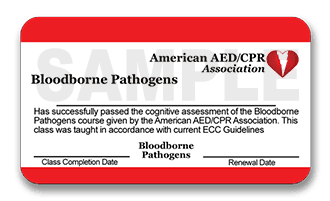
Source : aedcpr.com
When Free Certification Might Be Sufficient
So, when is a free online CPR certification enough? It’s often perfectly adequate for:
- General public awareness and personal preparedness.
- Fulfilling basic requirements for volunteer positions that don’t involve direct patient care.
- Situations where the employer is less stringent about the specific certifying body.
- As a refresher course to brush up on knowledge before attending a paid, accredited skills session.
If you’re in doubt, always, always check with the entity that requires the certification.
Creating a Comparison Table: Free vs. Paid Online Options
Let’s break down the key differences you might encounter. This should help you decide which route is best for your specific needs.
| Feature | Free Online Certification | Paid Online/Blended Certification (e.g., Red Cross, AHA) |
|---|---|---|
| Cost | $0 (Potentially with “hidden fees” for expedited cards or specific formats) | $30 – $100+ (Varies by course type and provider) |
| Provider Recognition | Varies widely; often from less-known organizations. May not be accepted by all employers/healthcare institutions. | Widely recognized and accepted (e.g., American Red Cross, American Heart Association). |
| Course Content | Covers Needed knowledge; quality can vary. | Full, up-to-date curriculum based on current guidelines. |
| Skills Assessment | Typically online exam only. Lacks in-person practical skills validation. | Often includes an online knowledge component with a mandatory in-person skills session (blended learning) or a more rigorous online practical simulation. |
| Certification Validity | Usually 2 years, but acceptance depends on the provider. | Standard 2 years, widely accepted. |
| Best For | General public, volunteers, personal knowledge, less stringent job requirements. | Healthcare professionals, teachers, childcare providers, jobs requiring official credentials. |
| Convenience | High – study and test anytime, anywhere. | Moderate to High – online portion is convenient, but requires scheduling an in-person session for blended courses. |
Tips for Choosing the Right Online Course
Don’t just jump into the first free course you find. Take a moment to evaluate your options to Make sure you get the certification you need and a quality learning experience.
Verify Employer Requirements First
Seriously, this is the most critical step. Before you even start looking, find out exactly what kind of CPR and First Aid certification your employer (or potential employer) requires. Do they mandate the American Heart Association? The Red Cross? Or are they flexible? If they insist on a specific provider, then your “free” options might be limited to finding sponsored training or accepting that you’ll likely need to pay for the official course. Don’t waste time getting a certificate that won’t be accepted.
Read Reviews and Testimonials
If you’re considering a provider that isn’t one of the big names (like ValueCPR), do your homework. Search for online reviews. What are other users saying about the course quality, the ease of the process, and, most importantly, the acceptance of their certification? Be wary of sites with only glowing, generic testimonials – they might be fabricated. Look for detailed feedback, both positive and negative.
Check for Accreditation and Affiliations
Reputable online CPR training providers often mention their accreditation or affiliations. Are they recognized by any national safety organizations? Do they follow guidelines set by bodies like the ECC (Emergency Cardiovascular Care) or the AHA/Red Cross? While free providers might not be officially affiliated in the same way, look for indicators that they are adhering to established standards. You can often find information about this on their “About Us” or “FAQ” pages.
Understand the Certification Details
Once you’ve completed a course, look closely at your certificate. Does it specify the type of CPR covered (adult, child, infant)? Does it include AED and First Aid? What is the expiration date? Make sure all the necessary information is present and accurate. If anything looks off, or if the certificate seems unprofessional, it might be a red flag about the provider’s legitimacy.
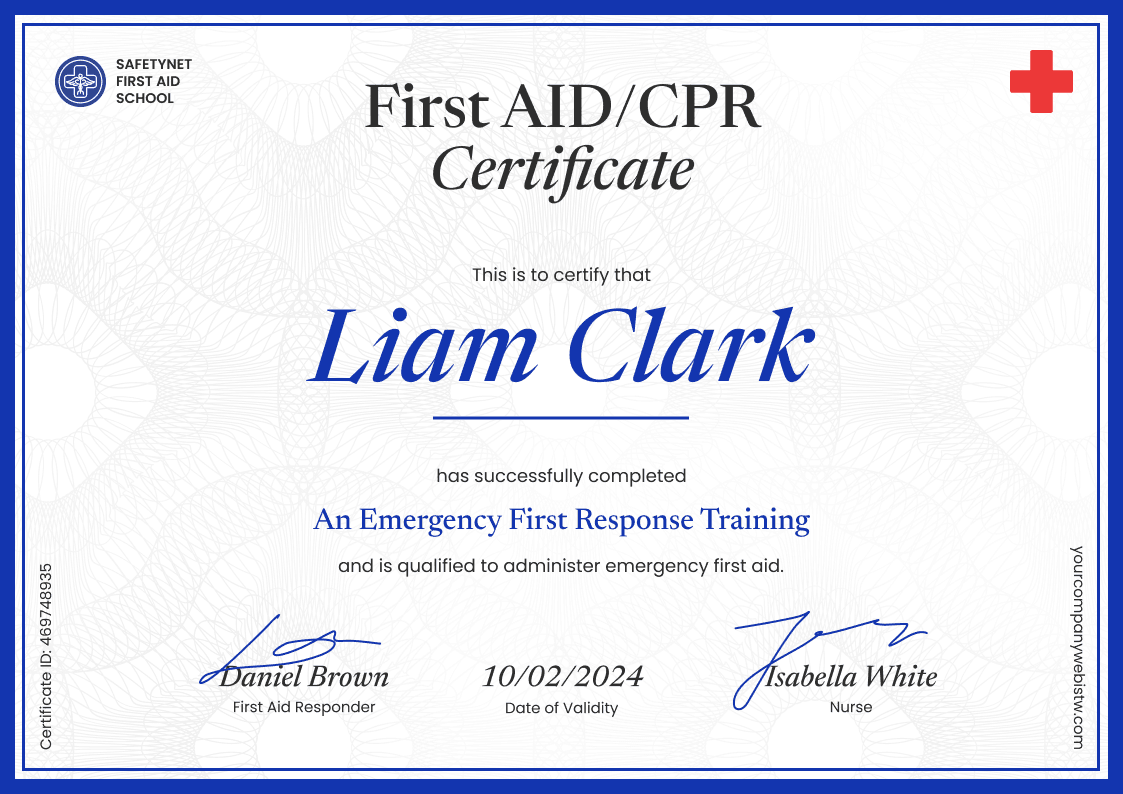
Source : certifier.io
The Future of Online CPR and First Aid Training
The world of emergency response training is constantly evolving, and online learning is playing an increasingly significant role. We’re seeing more sophisticated ways to teach and assess skills remotely.
Advancements in Virtual Reality and Simulation
Practicing CPR on a realistic virtual patient, getting instant feedback on your technique. Virtual reality (VR) and advanced simulation software are making this a reality. While currently expensive and mostly used in professional training settings, these technologies could eventually become more accessible, perhaps even integrated into online courses, offering a more immersive and effective learning experience without the need for physical manikins.
AI-Powered Feedback Systems
Artificial intelligence is being developed to analyze CPR performance through video. By uploading a recording of yourself performing compressions, AI could potentially provide feedback on rate, depth, and recoil, mimicking aspects of an in-person skills check. This could revolutionize how skills are assessed remotely, making truly Full online certification more feasible.
Greater Accessibility and Integration
As technology improves and costs come down, we’ll likely see even more widespread adoption of online and blended learning for CPR and First Aid. This increased accessibility means more people can become certified, potentially saving more lives. We might also see CPR certification becoming more integrated into other areas, like workplace safety programs or even general health and wellness initiatives.
Getting your CPR and First Aid certification online for free isn’t a myth, but it requires a clear understanding of what you need and where to look. By being discerning about providers, verifying requirements, and knowing the difference between training and a recognized certification, you can gain valuable life-saving skills without spending a dime. It’s a smart move for anyone looking to be prepared for the unexpected. Don’t wait; find a course that works for you today!
Frequently Asked Questions
Does it cost money to get CPR certified online?
Because some places offer free CPR certification, it doesn’t always have to cost you. But, sometimes those free options are just for the training part, and you’ll still need to pay for the official certification card. It really depends on the provider.
Can I do first aid training for free?
Yeah, totally! You can find a lot of reputable organizations that offer free first aid training materials online. Think videos, guides, the whole shebang. It’s a great way to learn the ropes without opening your wallet, especially for the basic knowledge part of first aid.
How much is a full first aid course?
A full, Full first aid course that includes hands-on practice and an official certification can vary a lot. You might see prices anywhere from $50 to $200 or even more, depending on the provider and what’s included. It’s usually more if it’s an in-person class or includes advanced modules.
Are online CPR certifications recognized?
It depends on who needs to recognize it. For many general situations or volunteer work, an online CPR certification might be totally fine. But if you’re in healthcare or a job that strictly requires it, they might insist on a course with a hands-on skills component, often done in person. Always check with the organization that requires the certification!
What’s the difference between CPR certification and first aid training?
Basically, CPR (Cardiopulmonary Resuscitation) is all about knowing how to help someone whose heart has stopped beating, focusing on chest compressions and rescue breaths. First aid is broader; it covers a whole range of immediate care for injuries and sudden illnesses, like cuts, burns, choking, or allergic reactions. You can often get both certifications together, but they teach different skills for emergencies.
